Loading genres...
Explore the best books about 20th Century genre.

"Solennels parmi les couples sans amour, ils dansaient, d'eux seuls préoccupés, goûtaient l'un à l'autre, soigneux, profonds, perdus. Béate d'être tenue et guidée, elle ignorait le monde, écoutait le bonheur dans ses veines, parfois s'admirant dans les hautes glaces des murs, élégante, émouvante, exceptionnelle, femme aimée, parfois reculant la tête pour mieux le voir qui lui murmurait des merveilles point toujours comprises, car elle le regardait trop, mais toujours de toute son âme approuvées, qui lui murmurait qu'ils étaient amoureux, et elle avait alors un impalpable rire tremblé, voilà, oui, c'était cela, amoureux, et il lui murmurait qu'il se mourait de baiser et bénir les longs cils recourbés, mais non pas ici, plus tard, lorsqu'ils seraient seuls, et alors elle murmurait qu'ils avaient toute la vie, et soudain elle avait peur de lui avoir déplu, trop sûre d'elle, mais non, ô bonheur, il lui souriait et contre lui la gardait et murmurait que tous les soirs ils se verraient."Ariane devant son seigneur, son maître, son aimé Solal, tous deux entourés d'une foule de comparses : ce roman n'est rien de moins que le chef-d'œuvre de la littérature amoureuse de notre époque.Grand Prix de l'Académie Française 1968.

This is the first integral collection of Pessoa's Caeiro heteronym in English, and the poems are accompanied by the introductions of Ricardo Reis and a memoir by Álvaro de Campos, two of Pessoa's other major poetic heteronyms, as well as a poem dedicated to Caeiro by Coelho Pacheco, believed by many commentators to be another one-off heteronym.Ricardo Reis "Alberto Caeiro da Silva was born in Lisbon on April 16, 1889, and died of tuberculosis in the same city on (. . .), 1915. He spent nearly all his life in a village in Ribatejo, and only returned to the city of his birth in his final months. In Ribatejo he wrote nearly all his poems . . ."Fernando Pessoa was educated in English in Durban, as the stepson of a Portuguese diplomat, and was completely bilingual. During his lifetime he was to publish only one collection of his poems in Portuguese, although many appeared in literary journals, under a number of alter egos, or heteronyms, chief amongst them Alberto Caeiro, Alvaro de Campos and Ricardo Reis. At his death in 1935, Pessoa left more than 20,000 manuscripts, both poetry and prose, in a large trunk, the contents of which are still being transcribed and deciphered to this day. He is the greatest modern poet in the Portuguese language, but also always considered himself a poet in the English tradition.

Light in August, a novel that contrasts stark tragedy with hopeful perseverance in the face of mortality, which features some of Faulkner’s most memorable characters: guileless, dauntless Lena Grove, in search of the father of her unborn child; Reverend Gail Hightower, a lonely outcast haunted by visions of Confederate glory; and Joe Christmas, a desperate, enigmatic drifter consumed by his mixed ancestry.

Découvrez ou redécouvrez A la recherche du temps perdu, de Marcel Proust, dans cette nouvelle édition enrichie. — CONTENU DU LIVRE — Vous trouverez dans ce livre électronique, l’intégralité de l’œuvre A la recherche du temps perdu de Proust : - Les 7 livres - Du côté de chez Swann - A l’ombre des jeunes filles en fleurs - Le côté de Guermantes - Sodome et Gomorrhe - La prisonnière - Albertine disparue - Le temps retrouvé — BONUS — - L’histoire d’A la recherche du temps perdu - La biographie détaillée de Marcel Proust - Le portrait en image de Marcel Proust Le livre a été entièrement adapté et optimisé pour être lu sur tous les supports : - Navigation ergonomique et intuitive - Table des matières détaillée et fonctionnelle - Images d’illustrations adaptées - Compatible Kindle, Tablette, Smartphone et Ordinateur (PC et Mac) — A PROPOS DE L’EDITEUR — Les Editions Vattolo sont spécialisées dans l’édition et la réédition de livres au format numérique. Une équipe de passionnés au service de lecteurs exigeants, pour vous offrir la meilleure expérience de lecture de livres électroniques, au prix le plus bas possible !

The only English translation authorized by Aleksandr Solzhenitsyn First published in the Soviet journal Novy Mir in 1962, One Day in the Life of Ivan Denisovich stands as a classic of contemporary literature. The story of labor-camp inmate Ivan Denisovich Shukhov, it graphically describes his struggle to maintain his dignity in the face of communist oppression. An unforgettable portrait of the entire world of Stalin's forced work camps, One Day in the Life of Ivan Denisovich is one of the most extraordinary literary documents to have emerged from the Soviet Union and confirms Solzhenitsyn's stature as "a literary genius whose talent matches that of Dosotevsky, Turgenev, Tolstoy"--Harrison SalisburyThis unexpurgated 1991 translation by H. T. Willetts is the only authorized edition available, and fully captures the power and beauty of the original Russian.

Naked Lunch is one of the most important novels of the twentieth century, a book that redefined not just literature but American culture. An unnerving tale of a narcotics addict unmoored in New York, Tangier, and ultimately a nightmarish wasteland known as Interzone, its formal innovation, taboo subject matter, and tour de force execution have exerted a significant influence on authors like Thomas Pynchon, J. G. Ballard, and William Gibson; on the relationship of art and obscenity; and on the shape of music, film, and media generally. Naked Lunch: The Restored Text includes many editorial corrections to errors present in previous editions, and incorporates Burroughs’s notes on the text, several essays he wrote over the years about the book, and an appendix of 20 percent new material and alternate drafts from the original manuscript, which predates the first published version. For the Burroughs enthusiast and the neophyte, this volume is a valuable and fresh experience of this classic of our culture.

Anthony Powell's universally acclaimed epic encompasses a four-volume panorama of twentieth century London. Hailed by Time as "brilliant literary comedy as well as a brilliant sketch of the times," A Dance to the Music of Time opens just after World War I. Amid the fever of the 1920s and the first chill of the 1930s, Nick Jenkins and his friends confront sex, society, business, and art. In the second volume they move to London in a whirl of marriage and adulteries, fashions and frivolities, personal triumphs and failures. These books "provide an unsurpassed picture, at once gay and melancholy, of social and artistic life in Britain between the wars" (Arthur Schlesinger, Jr.). The third volume follows Nick into army life and evokes London during the blitz. In the climactic final volume, England has won the war and must now count the losses.Four very different young men on the threshold of manhood dominate this opening volume of A Dance to the Music of Time. The narrator, Jenkins—a budding writer—shares a room with Templer, already a passionate womanizer, and Stringham, aristocratic and reckless. Widermerpool, as hopelessly awkward as he is intensely ambitious, lurks on the periphery of their world. Amid the fever of the 1920s and the first chill of the 1930s, these four gain their initiations into sex, society, business, and art. Considered a masterpiece of modern fiction, Powell's epic creates a rich panorama of life in England between the wars.Includes these novels: A Question of Upbringing A Buyer's Market The Acceptance World

Brings together three hilarious pieces by America's comic genius: Without Feathers, a secret journal that addresses life's "big" questions; Getting Even, Woody as psychologist, historian, and philosopher; and Side Effects, Woody's take on UFOs and more.

Conjectures and Refutations is one of Karl Popper's most wide-ranging and popular works, notable not only for its acute insight into the way scientific knowledge grows, but also for applying those insights to politics and to history. It provides one of the clearest and most accessible statements of the fundamental idea that guided his work: not only our knowledge, but our aims and our standards, grow through an unending process of trial and error.

As I Lay Dying is Faulkner’s harrowing account of the Bundren family’s odyssey across the Mississippi countryside to bury Addie, their wife and mother. Narrated in turn by each of the family members -- including Addie herself -- as well as others; the novel ranges in mood, from dark comedy to the deepest pathos. Considered one of the most influential novels in American fiction in structure, style, and drama, As I Lay Dying is a true 20th-century classic. This edition reproduces the corrected text of As I Lay Dying as established in 1985 by Noel Polk.

Between 1927 and his death in 1973, W. H. Auden endowed poetry in the English language with a new face. Or rather, with several faces, since his work ranged from the political to the religious, from the urbane to the pastoral, from the mandarin to the invigoratingly plain-spoken.This collection presents all the poems Auden wished to preserve, in the texts that received his final approval. It includes the full contents of his previous collected editions along with all the later volumes of his shorter poems. Together, these works display the astonishing range of Auden's voice and the breadth of his concerns, his deep knowledge of the traditions he inherited, and his ability to recast those traditions in modern times.

The Collected Poems of W. B. Yeats includes all of the poems authorized by Yeats for inclusion in his standard canon. Breathtaking in range, it encompasses the entire arc of his career, from luminous reworking of ancient Irish myths and legends, to passionate meditations on the demands and rewards of youth and old age, from exquisite, occasionally whimsical songs of love, nature, and art to somber and angry poems of life in a nation torn by war and uprising. In observing the development of rich and recurring images and themes over the course of his body of work, we can trace the quest of this century's greatest poet to unite intellect and artistry in a single magnificent vision.Revised and corrected, this edition includes Yeat's own notes on his poetry, complemented by explanatory notes from esteemed Yeats scholar Richard J. Finneran. The Collected Poems of W. B. Yeats is the most comprehensive edition of one of the world's most beloved poets available in paperback.

"Fante was my god." —Charles Bukowski, in his introduction to Ask the DustArturo Bandini, a young, struggling Italian-American writer living in a seedy hotel in 1930s Los Angeles, falls hard for the elusive, mocking, unstable Camilla Lopez, a Mexican waitress. The pair embark on a strange and strained love-hate relationship, which slowly, but inexorably, descends into the realm of madness.Ask the Dust is one of the truly great, yet unsung, American novels of the twentieth century. A tough and unsentimental story with a soft and tender heart, it remains as fresh and affecting as the day it was written.

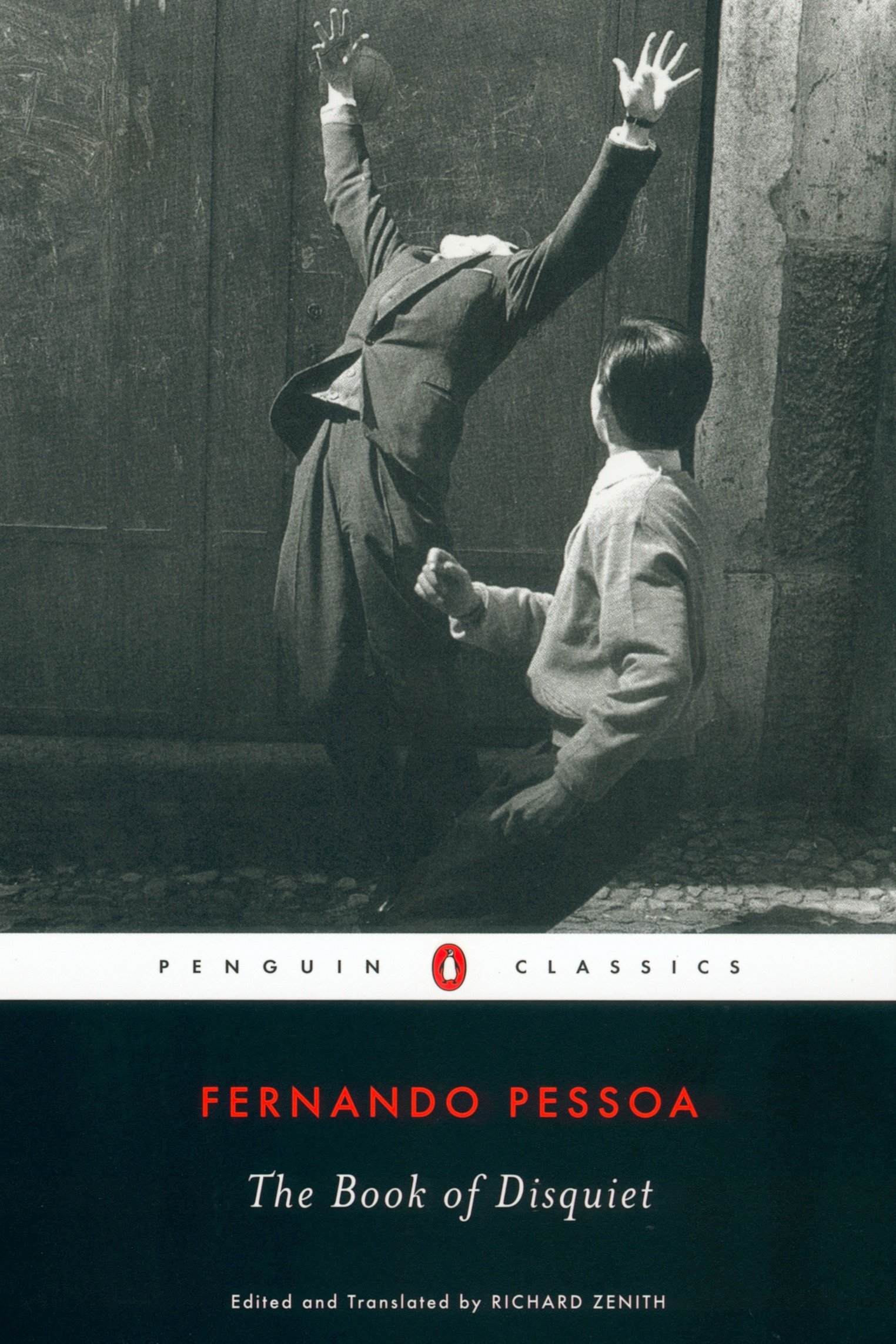
Fernando Pessoa was many writers in one. He attributed his prolific writings to a wide range of alternate selves, each of which had a distinct biography, ideology, and horoscope. When he died in 1935, Pessoa left behind a trunk filled with unfinished and unpublished writings, among which were the remarkable pages that make up his posthumous masterpiece, The Book of Disquiet, an astonishing work that, in George Steiner's words, "gives to Lisbon the haunting spell of Joyce's Dublin or Kafka's Prague." Published for the first time some fifty years after his death, this unique collection of short, aphoristic paragraphs comprises the "autobiography" of Bernardo Soares, one of Pessoa's alternate selves. Part intimate diary, part prose poetry, part descriptive narrative, captivatingly translated by Richard Zenith, The Book of Disquiet is one of the greatest works of the twentieth century.

Jessica Mitford, the great muckraking journalist, was part of a legendary English aristocratic family. Her sisters included Nancy, doyenne of the 1920s London smart set and a noted novelist and biographer; Diana, wife to the English fascist chief Sir Oswald Mosley; Unity, who fell head over in heels in love with Hitler; and Deborah, later the Duchess of Devonshire. Jessica swung left and moved to America, where she took part in the civil rights movement and wrote her classic expose of the undertaking business, The American Way of Death.Hons and Rebels is the hugely entertaining tale of Mitford's upbringing, which was, as she dryly remarks, not exactly conventional. . . Debo spent silent hours in the chicken house learning to do an exact imitation of the look of pained concentration that comes over a hen's face when it is laying an egg. . . . Unity and I made up a complete language called Boudledidge, unintelligible to any but ourselves, in which we translated various dirty songs (for safe singing in front of the grown-ups). But Mitford found her family's world as smothering as it was singular and, determined to escape it, she eloped with Esmond Romilly, Churchill's nephew, to go fight in the Spanish Civil War. The ensuing scandal, in which a British destroyer was dispatched to recover the two truants, inspires some of Mitford's funniest, and most pointed, pages.A family portrait, a tale of youthful folly and high-spirited adventure, a study in social history, a love story, Hons and Rebels is a delightful contribution to the autobiographer's art.

Both an exploration of character and a reflection on the meaning of history, Memoirs of Hadrian has received international acclaim since its first publication in France in 1951. In it, Marguerite Yourcenar reimagines the Emperor Hadrian's arduous boyhood, his triumphs and reversals, and finally, as emperor, his gradual reordering of a war-torn world, writing with the imaginative insight of a great writer of the twentieth century while crafting a prose style as elegant and precise as those of the Latin stylists of Hadrian's own era.

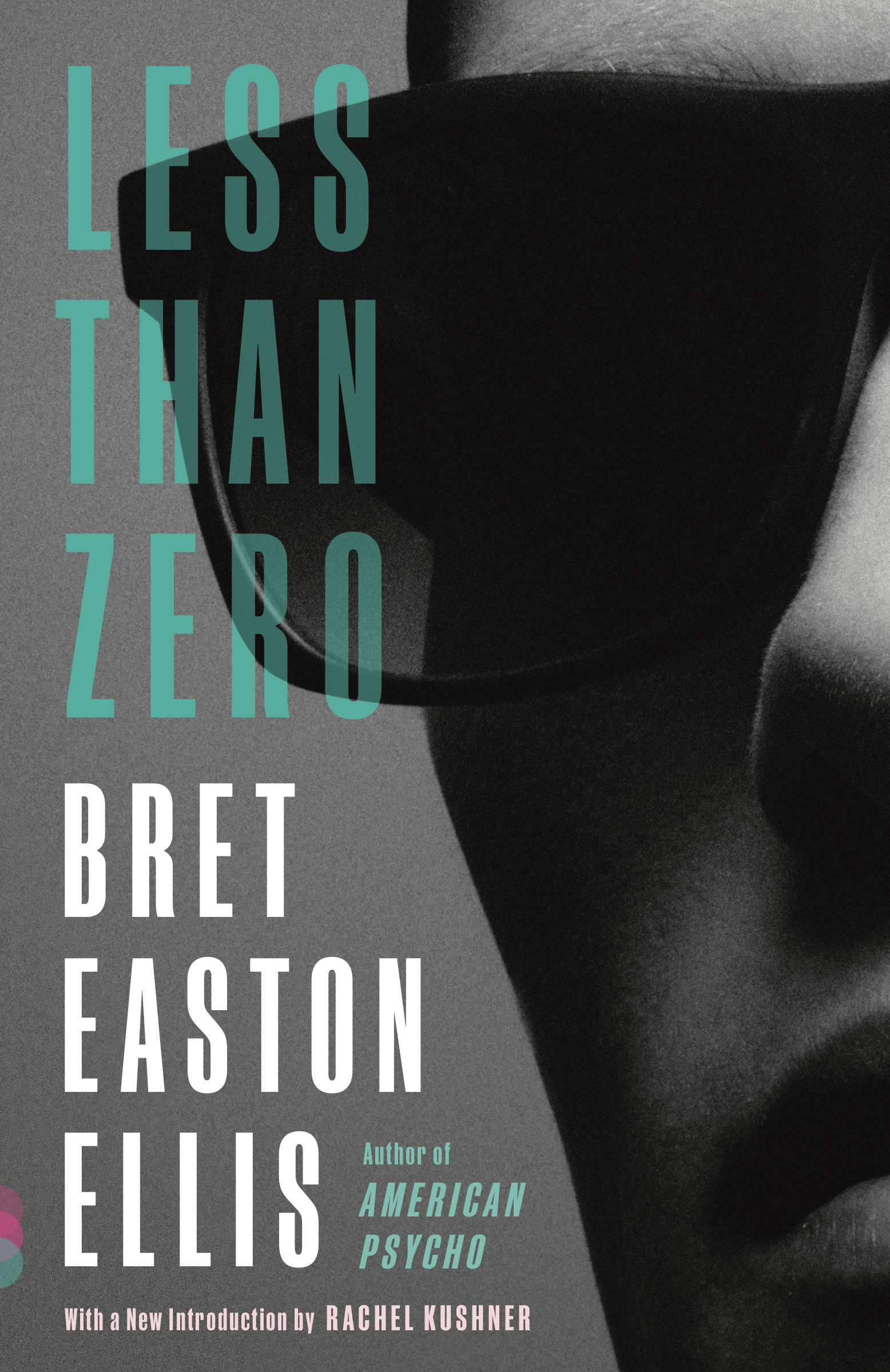
Set in Los Angeles in the early 1980s, this coolly mesmerizing novel is a raw, powerful portrait of a lost generation that experienced sex, drugs, and disaffection at too early an age, growing up in a world shaped by casual nihilism, passivity, and too much money.Clay comes home for Christmas vacation from his Eastern college and re-enters a landscape of limitless privilege and absolute moral entropy, where everyone drives Porches, dines at Spago, and snorts mountains of cocaine. He tries to renew feelings for his girlfriend, Blair, and for his best friend from high school, Julian, who is careering into hustling and heroin. Clay's holiday turns into a dizzying spiral of desperation that takes him through the relentless parties in glitzy mansions, seedy bars, and underground rock clubs, and into the seamy world of L.A. after dark.

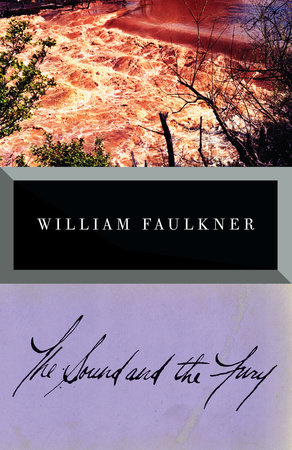
The tragedy of the Compson family features some of the most memorable characters in literature: beautiful, rebellious Caddy; the manchild Benjy; haunted, neurotic Quentin; Jason, the brutal cynic; and Dilsey, their black servant. Their lives fragmented and harrowed by history and legacy, the character’s voices and actions mesh to create what is arguably Faulkner’s masterpiece and one of the greatest novels of the twentieth century.

When "The Moviegoer" was first published in 1961, it won the National Book Award and established Walker Percy as one of the supplest and most deftly modulated new voices in Southern literature. In his portrait of a boyish New Orleans stockbroker wavering between ennui and the longing for redemption, Percy managed to combine Bourbon Street elegance with the spiritual urgency of a Russian novel.On the eve of his thirtieth birthday, Binx Bolling is adrift. He occupies himself dallying with his secretaries and going to movies, which provide him with the "treasurable moments" absent from his real life. But one fateful Mardi Gras, Binx embarks on a quest - a harebrained search for authenticity that outrages his family, endangers his fragile cousin Kate, and sends him reeling through the gaudy chaos of the French Quarter. Wry and wrenching, rich in irony and romance, "The Moviegoer" is a genuine American classic.

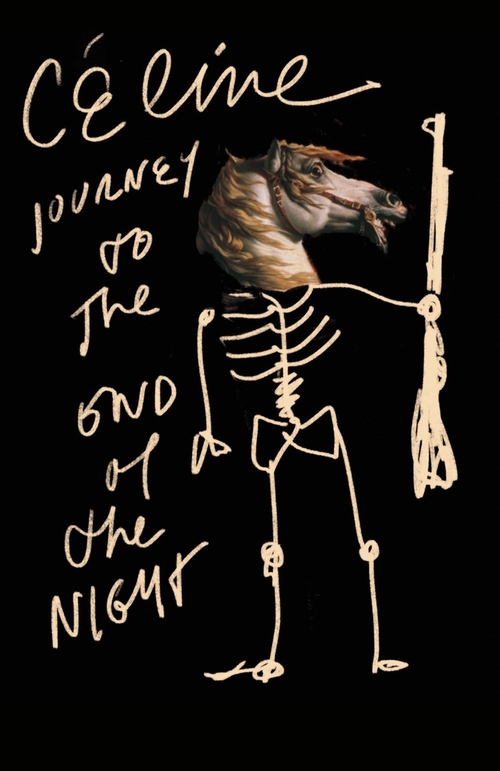
Louis-Ferdinand Celine's revulsion and anger at what he considered the idiocy and hypocrisy of society explodes from nearly every page of this novel. Filled with slang and obscenities and written in raw, colloquial language, Journey to the End of the Night is a literary symphony of violence, cruelty and obscene nihilism. This book shocked most critics when it was first published in France in 1932, but quickly became a success with the reading public in Europe, and later in America where it was first published by New Directions in 1952. The story of the improbable yet convincingly described travels of the petit-bourgeois (and largely autobiographical) antihero, Bardamu, from the trenches of World War I, to the African jungle, to New York and Detroit, and finally to life as a failed doctor in Paris, takes the readers by the scruff and hurtles them toward the novel's inevitable, sad conclusion.

First published in 1905, THE HOUSE OF MIRTH shocked the New York society it so deftly chronicles, portraying the moral, social and economic restraints on a woman who dared to claim the privileges of marriage without assuming the responsibilities.Lily Bart, beautiful, witty and sophisticated, is accepted by ‘old money’ and courted by the growing tribe of nouveaux riches. But as she nears thirty, her foothold becomes precarious; a poor girl with expensive tastes, she needs a husband to preserve her social standing and to maintain her in the luxury she has come to expect. Whilst many have sought her, something – fastidiousness or integrity- prevents her from making a ‘suitable’ match.

The great maritime state of Orsenna has long been lulled by settled peace and prosperity. It is three hundred years since it was actively at war with its traditional enemy two days' sail across the water, the savage land of Farghestan - a slumbering but by no means extinct volcano. The narrator of this story, Aldo, a world-weary young aristocrat, is posted to the coast of Syrtes, where the Admiralty keeps the seas constantly patrolled to defend the demarcation between the two powers still officially at war. His duties are to be the eyes and ears of the Signory, to report back any rumours of interest to the State. Goaded, however, by his mistress, Vanessa Aldobrandi, he takes a patrol boat across the boundary to within cannon-shot of the Farghestani coastal batteries. The age-old undeclared truce is no more than a boil ripe to be lanced.

This definitive poetry collection, originally published in 1954 to honor Stevens on his 75th birthday, contains:- "Harmonium"- "Ideas of Order"- "The Man With the Blue Guitar"- "Parts of the World"- "Transport Summer"- "The Auroras of Autumn"- "The Rock"

Frederick Exley's inimitable "fictional memoir" A Fan's Notes has assumed the status of a classic since its first publication in 1968. Mordantly and poignantly, Exley describes the profound failures of his life; professional, sexual, and personal. His attempts to find a place for himself in an unaccommodating world take him from the University of Southern California to Chicago, where he meets the dangerously seductive, lovely, Bunny Sue Allorgee, to New York City's Greenwich Village saloons, and back to Watertown, his hometown in upstate New York, where he spends months on his mother's living room davenport watching television before undergoing shock treatment at Avalon Valley hospital. Between bars, women and jobs, Exley exercises his obsession with the New York Giants and their great halfback Frank Gifford, until he at last realizes his life's ambition: writing A Fan's Notes, an Institute of Arts and Letters' Rosenthal Award for "that work which...is a considerable literary achievement." It was described by Robert Penn Warren as "a moving and memorable book," by Michael Crichton as "a devastating novel," and by William Gass as "an instructive, powerful and bruising experience." In Newsweek, Jack Kroll wrote that the novel is "a welcome reminder of what the basic business of literature and of living really is. All fans of life and art should read it." This Modern Library edition includes an Introduction by Frederick Exley's biographer, Washington Post book critic and columnist Jonathan Yardley. A Fan's Notes was nominated for a National Book Award, won the William Faulkner Award for "the year's most notable first novel," and was awarded the National Academy...

Alternate-cover edition can be found here In his second collection, Carver establishes his reputation as one of the most celebrated and beloved short-story writers in American literature—a haunting meditation on love, loss, and companionship, and finding one’s way through the dark.

Written in 1914 but not published until 1925, a year after Kafka’s death, The Trial is the terrifying tale of Josef K., a respectable bank officer who is suddenly and inexplicably arrested and must defend himself against a charge about which he can get no information. Whether read as an existential tale, a parable, or a prophecy of the excesses of modern bureaucracy wedded to the madness of totalitarianism, The Trial has resonated with chilling truth for generations of readers.

Universally acclaimed for their compelling narrative, their fresh insights, and their objective renderings of Winston Churchill's life, The Last Lion trilogy presents a revelatory and unparalleled portrait of this brilliant, flawed, and dynamic adventurer, aristocrat, soldier, and statesman. Born at the end of the 19th century when Imperial Britain still stood at the splendid pinnacle of her power, Churchill would witness the shift a few years later as the Empire hovered on the brink of a catastrophic new era. One of the greatest wartime leaders of our time, he would go on to stand alone, politically isolated in Parliament, as he took the lead in warning of the growing Nazi threat, and would lead Britain to victory against Nazi Germany and the Axis powers in World War II. Now, celebrated historian William Manchester's landmark biographies are collected together for the first time, along with the eagerly anticipated final installment Churchill's last years in power. More than thirty years in the making, The Last Lion is the definitive work on this remarkable man whose courageous vision guided the destiny of a nation during darkly troubled times-and who looms as one of the greatest figures of our century.

Throughout history, some books have changed the world. They have transformed the way we see ourselves—and each other. They have inspired debate, dissent, war and revolution. They have enlightened, outraged, provoked and comforted. They have enriched lives—and destroyed them. Now Penguin brings you the works of the great thinkers, pioneers, radicals and visionaries whose ideas shook civilization and helped make us who we are. Inspired by the myth of a man condemned to ceaselessly push a rock up a mountain and watch it roll back to the valley below, The Myth of Sisyphus transformed twentieth-century philosophy with its impassioned argument for the value of life in a world without religious meaning.

Novelist, poet, dramatist and author of many of the best American short stories of our time, Joyce Carol Oates shows yet another aspect of her unbounded creativity in these tales of the grotesque. Haunted, a collection of sixteen tales that range from classic ghost stories to portrayals of chilling psychological terror, raises the genre to the level of fine literature - complex, multi-layered, and gripping fiction that is very scary indeed. In the title story, "Haunted, " the pubescent Melissa and her best friend, the sexually precocious Mary Lou, ignore "no trespassing" signs to explore forbidden houses. But the deserted Minton farm is one place where they should not have gone, and years later Melissa is tormented by her memories of its malevolence...and the murder of Mary Lou. In the novella, "The Model, " a sexual threat seems to underlie the interaction between young Sybil Blake and "Mr. Starr, " who asks her to be his model, but the truth about her own identity, and his, shows that the danger is lurking in a different part of the heart. The "Accursed Inhabitants of the House of Bly, " a macabre reworking of Henry James's "The Turn of the Screw, " resurrects the evil of Miss Jessel and Quint, who are up to their old tricks with the children, Miles and Flora, but with new, perverse, and brilliant revelations. The tales in this collection plunge the reader into nightmare worlds where violence slips in unexpectedly, where reality turns into a funhouse mirror, and where American culture goes awry in shocking, provocative ways. Joyce Carol Oates is a master storyteller of the dark side. She writes with skillfully controlled prose, tightly woven plots, and deep psychological insight that m her fictional horror worthy to set alongside the stories of Edgar Allan Poe - and far above all the rest.Haunted --The doll --The bingo master --The white cat --The model --Extenuating circumstances --Don't you trust me --The guilty party --The premonition --Phase change --Poor Bibi --Thanksgiving --Blind --The radio astronomer --Accursed inhabitants of the House of Bly --Martyrdom

Set against the backdrop of a lush and exotic Greece, The Names is considered the book which began to drive "sharply upward the size of his readership" (Los Angeles Times Book Review). Among the cast of DeLillo's bizarre yet fully realized characters in The Names are Kathryn, the narrator's estranged wife; their son, the six-year-old novelist; Owen, the scientist; and the neurotic narrator obsessed with his own neuroses. A thriller, a mystery, and still a moving examination of family, loss, and the amorphous and magical potential of language itself, The Names stands with any of DeLillo's more recent and highly acclaimed works. "The Names not only accurately reflects a portion of our contemporary world but, more importantly, an original world of its own is created."--Chicago Sun-Times"DeLillo sifts experience through simultaneous grids of science and poetry, analysis and clear sight, to make a high-wire prose that is voluptuously stark."--Village Voice Literary Supplement"DeLillo verbally examines every state of consciousness from eroticism to tourism, from the idea of America as conceived by the rest of the world, to the idea of the rest of the world as conceived by America, from mysticism to fanaticism."--New York Times

Low-life writer and unrepentant alcoholic Henry Chinaski was born to survive. After decades of slacking off at low-paying dead-end jobs, blowing his cash on booze and women, and scrimping by in flea-bitten apartments, Chinaski sees his poetic star rising at last. Now, at fifty, he is reveling in his sudden rock-star life, running three hundred hangovers a year, and maintaining a sex life that would cripple Casanova.

A ruthless dissection of American life in the late 1960s, Play It as It Lays captures the mood of an entire generation, the ennui of contemporary society reflected in spare prose that blisters and haunts the reader. Set in a place beyond good and evil - literally in Hollywood, Las Vegas, and the barren wastes of the Mojave Desert, but figuratively in the landscape of an arid soul - it remains more than three decades after its original publication a profoundly disturbing novel, riveting in its exploration of a woman and a society in crisis and stunning in the still-startling intensity of its prose.

In this masterpiece of historical fiction by the Nobel Prize-winning Yugoslavian author, a stone bridge in a small Bosnian town bears silent witness to three centuries of conflict.The town of Visegrad was long caught between the warring Ottoman and Austro-Hungarian Empires, but its sixteenth-century bridge survived unscathed until 1914 when tensions in the Balkans triggered the first World War. The Bridge on the Drina brilliantly illuminates the lives that swirl around the majestic stone arches, spanning generations, nationalities, and creeds. The bridge's builder is a Serbian who was kidnapped as a boy by the Ottomans and converted to Islam; he returns in old age as the empire's Grand Vizier, determined to build a bridge at the spot where he last saw his mother. A workman named Radisav tries to hinder its construction and is impaled alive on its highest point. Later the beautiful Fata leaps from its parapet to escape an arranged marriage, and later still an inveterate gambler named Milan risks all in one final game on it. With humor and compassion, Ivo Andric chronicles the ordinary Catholics, Muslims, and Orthodox Christians whose lives are connected by the bridge, in a land that has itself been a bridge between East and West for centuries.

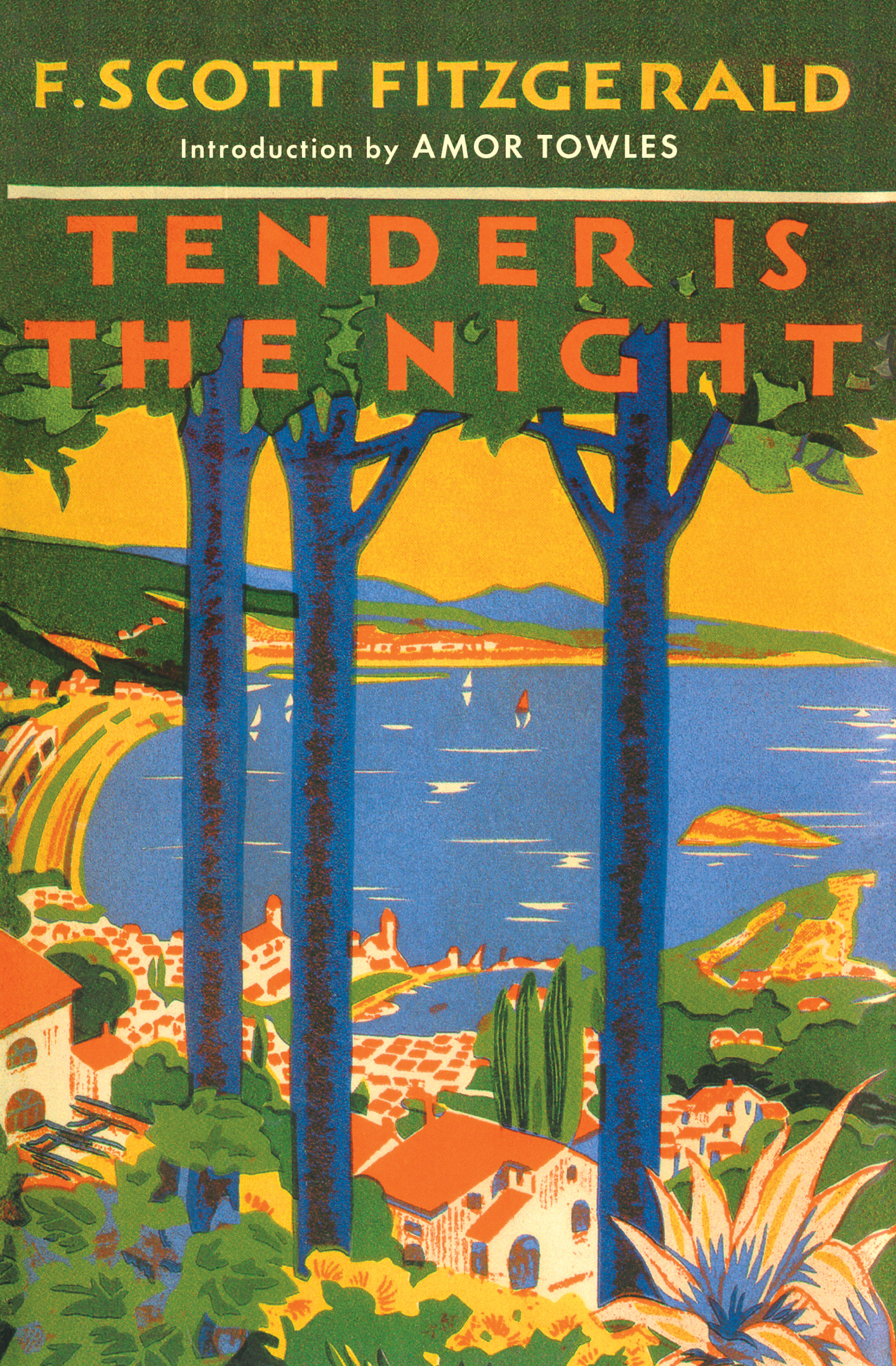
Set on the French Riviera in the late 1920s, Tender Is the Night is the tragic romance of the young actress Rosemary Hoyt and the stylish American couple Dick and Nicole Diver. A brilliant young psychiatrist at the time of his marriage, Dick is both husband and doctor to Nicole, whose wealth goads him into a lifestyle not his own, and whose growing strength highlights Dick's harrowing demise. A profound study of the romantic concept of character, Tender Is the Night is lyrical, expansive, and hauntingly evocative.

Anthony Powell's universally acclaimed epic encompasses a four-volume panorama of twentieth century London. Hailed by Time as "brilliant literary comedy as well as a brilliant sketch of the times," A Dance to the Music of Time opens just after World War I. Amid the fever of the 1920s and the first chill of the 1930s, Nick Jenkins and his friends confront sex, society, business, and art. In the second volume they move to London in a whirl of marriage and adulteries, fashions and frivolities, personal triumphs and failures. These books "provide an unsurpassed picture, at once gay and melancholy, of social and artistic life in Britain between the wars" (Arthur Schlesinger, Jr.). The third volume follows Nick into army life and evokes London during the blitz. In the climactic final volume, England has won the war and must now count the losses.In this third volume of A Dance to the Music of Time, we again meet Widmerpool, doggedly rising in rank; Jenkins, shifted from one dismal army post to another; Stringham, heroically emerging from alcoholism; Templer, still on his eternal sexual quest. Here, too, we are introduced to Pamela Flitton, one of the most beautiful and dangerous women in modern fiction. Wickedly barbed in its wit, uncanny in its seismographic recording of human emotions and social currents, this saga stands as an unsurpassed rendering of England's finest yet most costly hour.Includes these novels:The Valley of BonesThe Soldier's ArtThe Military Philosophers"Anthony Powell is the best living English novelist by far. His admirers are addicts, let us face it, held in thrall by a magician."—Chicago Tribune"A book which creates a world and explores it in depth, which ponders changing relationships and values, which creates brilliantly living and diverse characters and then watches them grow and change in their milieu. . . . Powell's world is as large and as complex as Proust's."—Elizabeth Janeway, New York Times"One of the most important works of fiction since the Second World War. . . . The novel looked, as it began, something like a comedy of manners; then, for a while, like a tragedy of manners; now like a vastly entertaining, deeply melancholy, yet somehow courageous statement about human experience."—Naomi Bliven, New Yorker

Whatever the cause of Bertie Wooster's consternation — Bobbie Wickham gives away fierce Aunt Agatha's dog; again in the bad books of Sir Roderick Glossop; Tuppy crushes on robust opera singer — Jeeves can untangle the most ferocious muddle. 1 Jeeves and the Impending Doom2 The Inferiority Complex of Old Sippy3 Jeeves and the Yule-Tide Spirit4 Jeeves and the Song of Songs5 Episode of the Dog McIntosh6 The Spot of Art7 Jeeves and the Kid Clementina8 The Love that Purifies9 Jeeves and the Old School Chum10 Indian Summer of an Uncle11 The Ordeal of Young Tuppy

This is Wodehouse's last, unfinished chronicle of Blandings and includes a treasure trove of detailed notes on the final stages of the plot, enabling us to watch over his shoulder to observe the master at work. The revels at Blandings Castle are now ended but, as Richard Usborne confirms delightedly, its cloud-capped towers shall not dissolve. Although written when Wodehouse was ninety-three, the pages of Sunset at Blandings remain 'funny, fresh, young in heart and full of hammocks, sunshine and four pairs of lovers headed for altars'.

Part memoir, part study, The Making of a Philosopher is the self–portrait of a deeply intelligent mind as it develops over a life on both sides of the Atlantic.The Making of a Philosopher follows Colin McGinn from his early years in England reading Descartes and Anselm, to his years in the states, first in Los Angeles, then New York. McGinn presents a contemporary academic take on the great philosophical figures of the twentieth century, including Bertrand Russell, Jean–Paul Sartre, and Noam Chomsky, alongside stories of the teachers who informed his ideas and often became friends and mentors, especially the colorful A.J. Ayer at Oxford. McGinn's prose is always elegant and probing; students of contemporary philosophy and the general reader alike will absorb every page.

Αυτή η συλλογή αποτελείται από τέσσερα κείμενα που γράφτηκαν το 1936 και το 1937 κι εκδόθηκαν το 1950."Οι γάμοι στην Τιπαζά": Ένας νεαρός, παιδί «ενός λαού γεννημένου από τον ήλιο και τη θάλασσα», τραγουδά τη χαρά του για τη ζωή και την υπερηφάνεια του που μπορεί ν' αγαπά απεριόριστα."Ο άνεμος στην Τζεμιλά": Στον τραγικό διάκοσμο μιας νεκρής πολιτείας που τη σαρώνει ο άνεμος, ο συγγραφέας εκφράζει «τη συνειδητή βεβαιότητά του ενός ανέλπιδου θανάτου». Μα ακόμα κι η φρίκη αυτού του θανάτου δεν θα τον αποσπάσει από τους στοχασμούς του."Το καλοκαίρι στο Αλγέρι": Ψυχολογική περιγραφή μιας πόλης χωρίς παρελθόν, που αγνοεί την έννοια της αρετής, μα που έχει την ηθική της και που οι άνθρωποί της βρίσκουν «καθ’ όλη τη διάρκεια της νιότης τους μια ζωή στα μέτρα της ομορφιάς τους»."Η έρημος": Ο συγγραφέας ανακαλύπτει ότι η συμφωνία που ενώνει έναν άνθρωπο με τη ζωή του, σ' έναν κόσμο που η ομορφιά του θα χαθεί, είναι «η διπλή συνείδηση της επιθυμίας του να διαρκέσει και της μοίρας του να πεθάνει».

A doomed lord, an emergent hero, and a dazzling array of bizarre creatures inhabit the magical world of the Gormenghast novels which, along with Tolkien's Lord of the Rings, reign as one of the undisputed fantasy classics of all time. At the center of it all is the seventy-seventh Earl, Titus Groan, who stands to inherit the miles of rambling stone and mortar that form Gormenghast Castle and its kingdom, unless the conniving Steerpike, who is determined to rise above his menial position and control the House of Groan, has his way.In these extraordinary novels, Peake has created a world where all is like a dream - lush, fantastical, and vivid. Accompanying the text are Peake's own drawings, illustrating the whole assembly of strange and marvelous creatures that inhabit Gormenghast.Also featuring:Introductory essays by Anthony Burgess and Quentin CrispTwelve critical essays, curated by Peake scholar Peter G. WinningtonFragment of the unpublished novel, Titus Awakes

Nous sommes en Afrique Equatoriale Française (A.E.F., aujourd'hui le Tchad), dans les années cinquante, alors qu'apparaissent timidement les premiers signes avant-coureurs de la décolonisation et que l'administration française vit ses dernières heures de tranquillité. Une tranquillité qui serait parfaite sans l'agitation suscitée par un dénommé Morel et son acharnement à protéger les éléphants, massacrés par milliers pour l'ivoire de leurs défenses, et sous couvert d'éviter les dégradations qu'ils causent aux plantations...

In a small village in the Sologne, Fifteen-year-old François Seurel narrates the story of his relationship with seventeen-year-old Augustin Meaulnes. Impulsive, reckless and heroic, Meaulnes embodies the romantic ideal, the search for the unobtainable, and the mysterious world between childhood and adulthood.

Just thirty, with a well-paid job, depression and no love life, the narrator and anti-hero par excellence of this grim, funny, and clever novel smokes four packs of cigarettes a day and writes weird animal stories in his spare time.Houellebecq's debut novel is painfully realistic portrayal of the vanishing freedom of a world governed by science and by the empty rituals of daily life.

An epic chess match on a transatlantic liner unearths a story of persecution and obsession. One of the most perfectly gripping novellas from a master of the form, Stefan Zweig.Chess world champion Mirko Czentovic is travelling on an ocean liner to Buenos Aires. Dull-witted in all but chess, he entertains himself on board by allowing others to challenge him in the game, before beating each of them and taking their money. But there is another passenger with a passion for chess: Dr B, previously driven to insanity during Nazi imprisonment by the chess games in his imagination. But in agreeing to take on Czentovic, what price will Dr B ultimately pay?A moving portrait of one man's madness, A Chess Story is a searing examination of the power of the mind and the evil it can do."The rediscovery of this extraordinary writer could well be on a par with last year's refinding of the long-lost Stoner, by John Williams, and which similarly could pluck his name out of a dusty obscurity." - Simon Winchester, Telegraph"Perhaps the best chess story ever written, perhaps the best about any game. Never mind that you may have never moved a pawn to King four; the story will grip you." - Economist"His great achievement in short form" - The TimesA staunch pacifist after his time in the Ministry of War during the First World War, Stefan Zweig was, at his peak, one of the bestselling and most widely acclaimed authors in the world. Following Hitler's rise to power, he and his second wife fled Austria; first to England, then to America, and finally, in 1940, they travelled together to Brazil, where the couple took an overdose and died. Much of his work is available from Pushkin Press.

Steppenwolf is a poetical self-portrait of a man who felt himself to be half-human and half-wolf. This Faust-like and magical story is evidence of Hesse's searching philosophy and extraordinary sense of humanity as he tells of the humanization of a middle-aged misanthrope. Yet his novel can also be seen as a plea for rigorous self-examination and an indictment of the intellectual hypocrisy of the period. As Hesse himself remarked, "Of all my books Steppenwolf is the one that was more often and more violently misunderstood than any of the others".

The Woman in the Dunes, by celebrated writer and thinker Kobo Abe, combines the essence of myth, suspense and the existential novel. After missing the last bus home following a day trip to the seashore, an amateur entomologist is offered lodging for the night at the bottom of a vast sand pit. But when he attempts to leave the next morning, he quickly discovers that the locals have other plans. Held captive with seemingly no chance of escape, he is tasked with shoveling back the ever-advancing sand dunes that threaten to destroy the village. His only companion is an odd young woman, and together their fates become intertwined as they work side by side through this Sisyphean of tasks.

An award-winning poet's testimony of the war in Vietnam.

Eve Babitz captured the voluptuous quality of L.A. in the1960s in a wildly original, totally unique voice. These stories are time capsule gems, as poignant and startling today as they were when published in the early 1970s. Eve Babitz is not well known today, but she should be. Her first hand experiences in the L.A. cultural scene, translated into haunting fiction, are an unforgettable glimpse at a lost world and a magical time.

"Written with precise skill and beautifully controlled power. The translation by Ivan Morris is outstanding." -- The New York Times**Winner of the 1952 Yomiuri Prize**This haunting novel explores the complete degradation and isolation of a man by war. Fires on the Plain is set on the island of Leyte in the Philippines during World War II, where the Japanese army is disintegrating under the hammer blows of the American landings. Within this broader disintegration is another, that of a single human being, Private Tamura. The war destroys each of his ties to society, one by one, until Tamura, a sensitive and intelligent man, becomes an outcast.Nearly losing the will to survive, he hears of a port still in Japanese hands and struggles to walk through the American lines. Unfazed by danger, he welcomes the prospect of dying, but first, he loses his hope, and then his sanity. Lost among his hallucinations, Tamura comes to fancy himself an angel enjoined by God to eat no living thing--but even angels fall.Tamura is never less than human, even when driven to the ultimate sin against humanity. Shocking as the outward events are, the greatness of the novel lies in its uplifting vision during a time of crushing horror. As relevant today as when it was originally published, Fires on the Plain will strike a chord with anyone who has lived through the horrors of war.

In Ballard's hallucinatory novel, the car provides the hellish tableau in which Vaughan, a "TV scientist" turned "nightmare angel of the highways," experiments with erotic atrocities among auto crash victims, each more sinister than the last. James Ballard, his friend and fellow obsessive, tells the story of this twisted visionary as he careens rapidly toward his own demise in an intentionally orchestrated car crash with Elizabeth Taylor. A classic work of cutting edge fiction, Crash explores the disturbing potentialities of contemporary society's increasing dependence on technology as intermediary in human relations.

Edwin Williamson’s major new biography is the first in any language to encompass the entire span of Jorge Luis Borges’s life and work. Drawing upon previously unknown or unavailable sources, it brings out the human side of Borges: his roots in Argentina, the evolution of his political ideas, his relations with family and friends, the conflicts, desires, and obsessions that drove the man and shaped his work. Williamson’s definitive biography finally unlocks the mysteries that still surround the life of Borges, resulting in a compelling and poignant portrait that will radically transform established views of this modern master.

Widely recognized as the finest definition of existentialist philosophy ever written, this book introduced existentialism to America in 1958. Barrett speaks eloquently and directly to concerns of the 1990 a period when the irrational and the absurd are no better integrated than before and when humankind is in even greater danger of destroying its existence without ever understanding the meaning of its existence.Irrational Man begins by discussing the roots of existentialism in the art and thinking of Augustine, Aquinas, Pascal, Baudelaire, Blake, Dostoevski, Tolstoy, Hemingway, Picasso, Joyce, and Beckett. The heart of the book explains the views of the foremost existentialists—Kierkegaard, Nietzsche, Heidegger, and Sartre. The result is a marvelously lucid definition of existentialism and a brilliant interpretation of its impact.

Time Magazine included the book in its list of the 100 Best English-language Novels from 1923 to 2005. The story of John Self and his insatiable appetite for money, alcohol, fast food, drugs, pornography, and more, Money is ceaselessly inventive and thrillingly savage; a tale of life lived without restraint, of money and the disasters it can precipitate.

The Collected Stories of Colette beings together in one volume for the first time in any language the comprehensive collection of short stories by the novelist known worldwide as Colette, and now acknowledged, with Proust, as the most original French narrative writer of the first half of our century. of the one hundred stories gathered here, thirty-one appear for the first time in English and another twenty-nine have been newly translated for this volume.

At Canaan's Edge concludes America in the King Years, a three-volume history that will endure as a masterpiece of storytelling on American race, violence, and democracy. Pulitzer Prize-winner and bestselling author Taylor Branch makes clear in this magisterial account of the civil rights movement that Martin Luther King, Jr., earned a place next to James Madison and Abraham Lincoln in the pantheon of American history.

Mad Love has been acknowledged an undisputed classic of the surrealist movement since its first publication in France in 1937. Its adulation of love as both mystery and revelation places it in the most abiding of literary traditions, but its stormy history and technical difficulty have prevented it from being translated into English until now. "There has never been any forbidden fruit. Only temptation is divine," writes André Breton, leader of the surrealists in Paris in the 1920s and '30s. Mad Love is dedicated to defying "the widespread opinion that love wears out, like the diamond, in its own dust." Celebrating breton's own love and lover, the book unveils the marvelous in everyday encounters and the hidden depths of ordinary things.

Selected Poems: 1931 - 2004 celebrates Czeslaw Milosz's lifetime of poetry. Widely regarded as one of the greatest poets of our time, Milosz is a master of expression and probing inquiry. Life opened for Czeslaw Milosz at a crossroads of civilizations in northeastern Europe. This was less a melting pot than a torrent of languages and ideas, where old folk traditions met Catholic, Protestant, Judaic, and Orthodox rites. What unfolded next around him was a century of catastrophe and madness: two world wars, revolutions, invasions, and the murder of tens of millions, all set to a cacophony of hymns, gunfire, national anthems, and dazzling lies. In the thick of this upheaval, wide awake and in awe of living, dodging shrapnel, imprisonment, and despair, Milosz tried to understand both history and the moment, with humble respect for the suffering of each individual. He read voraciously in many languages and wrote masterful poetry that, even in translation, is infused with a tireless spirit and a penetrating insight into fundamental human dilemmas and the staggering yet simple truth that "to exist on the earth is beyond any power to name." Unflinching, outspoken, timeless, and unsentimental, Milosz digs through the rubble of the past, forging a vision -- and a warning -- that encompasses both pain and joy. "His intellectual life," writes Seamus Heaney, "could be viewed as a long single combat with shape-shifting untruth."

Rappelle-toi BarbaraIl pleuvait sans cesse sur Brest ce jour làEt tu marchais sourianteÉpanouie ravie ruisselanteSous la pluieRappelle-toi Barbara...Oh BarbaraQuelle connerie la guerreQu'es-tu devenue maintenantSous cette pluie de ferDe feu d'acier et de sangEt celui qui te serrait dans ses brasAmoureusementEst-il mort disparu ou bien encore vivant...

A. J. P. Taylor was one of the most acclaimed and uncompromising historians of the twentieth century. In this clear, lively and now-classic account of the First World War, he tells the story of the conflict from the German advance in the West, through the Marne, Gallipoli, the Balkans and the War at Sea to the offensives of 1918 and the state of Europe after the war. Containing photographs and maps, this an essential history of the war that 'cut deep into the consciousness of modern man'.

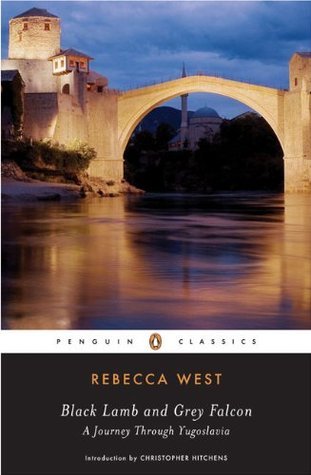
Written on the brink of World War II, Rebecca West's classic examination of the history, people, and politics of Yugoslavia illuminates a region that is still a focus of international concern. A magnificent blend of travel journal, cultural commentary, and historical insight, Black Lamb and Grey Falcon probes the troubled history of the Balkans, and the uneasy relationships amongst its ethnic groups. The landscape and the people of Yugoslavia are brilliantly observed as West untangles the tensions that rule the country's history as well as its daily life.

A budding poet and his adoring mother are the central characters of this early novel.

Thomas Nagel's Mortal Questions explores some fundamental issues concerning the meaning, nature and value of human life. Questions about our attitudes to death, sexual behaviour, social inequality, war and political power are shown to lead to more obviously philosophical problems about personal identity, consciousness, freedom, and value. This original and illuminating book aims at a form of understanding that is both theoretical and personal in its lively engagement with what are literally issues of life and death.

'I regret to see that my book has turned out un fiasco solenne.' James Joyce's disillusion with the publication of Dubliners in 1914 was the result of ten years battling with publishers, resisting their demands to remove swear words, real place names and much else, including two entire stories. Although only 24 when he signed his first publishing contract for the book, Joyce already knew its worth: to alter it in any way would 'retard the course of civilisation in Ireland'.Joyce's aim was to tell the truth — to create a work of art that would reflect life in Ireland at the turn of the last century and by rejecting euphemism, reveal to the Irish the unromantic reality the recognition of which would lead to the spiritual liberation of the country.Each of the fifteen stories offers a glimpse of the lives of ordinary Dubliners — a death, an encounter, an opportunity not taken, a memory rekindled — and collectively they paint a portrait of a nation.

Adorno's literary and philosophical masterpiece, built from aphorisms and reflections.A reflection on everyday existence in the 'sphere of consumption of late Capitalism', this work is Adorno's literary and philosophical masterpiece. Built from aphorisms and reflections, he shifts in register from personal experience to the most general theoretical problems.

The Machiavellian Moment is a classic study of the consequences for modern historical and social consciousness of the ideal of the classical republic revived by Machiavelli and other thinkers of Renaissance Italy. J.G.A. Pocock suggests that Machiavelli's prime emphasis was on the moment in which the republic confronts the problem of its own instability in time, and which he calls the "Machiavellian moment."After examining this problem in the thought of Machiavelli, Guicciardini, and Giannotti, Pocock turns to the revival of republican thought in Puritan England and in Revolutionary and Federalist America. He argues that the American Revolution can be considered the last great act of civic humanism of the Renaissance. He relates the origins of modern historicism to the clash between civic, Christian, and commercial values in the thought of the eighteenth century.

A story with no real beginning or end (it ends in the middle of a sentence and begins in the middle of the same sentence), this "book of Doublends Jined" is as remarkable for its prose as for its circular structure. Written in a fantastic dream-language, forged from polyglot puns and portmanteau words, the Wake features some of Joyce's most hilarious characters: the Irish barkeep Humphrey Chimpden Earwicker, Shem the Penman, Shaun the Postman, and Anna Livia Plurabelle. Joyce's final work, Finnegan's Wake is his masterpiece of the night as Ulysses is of the day. Supreme linguistic virtuosity conjures up the dark underground worlds of sexuality and dream. Joyce undermines traditional storytelling and all official forms of English and confronts the different kinds of betrayal - cultural, political and sexual - that he saw at the heart of Irish history. Dazzlingly inventive, with passages of great lyrical beauty and humour, Finnegans Wake remains one of the most remarkable works of the twentieth century.

The Collected Poems of Dylan Thomas contains poems that Thomas personally decided best represented his work. A year before its publication Thomas died from swelling of the brain triggered by excessive drinking. Since its initial publication in 1953, this book has become the definitive edition of the poet’s work. Thomas wrote “Prologue” addressed to “my readers, the strangers” — an introduction in verse that was the last poem he would ever write. Also included are classics such as “And Death Shall Have No Dominion,” “Do Not Go Gentle into that Good Night,” and “Fern Hill” that have influenced generations of artists from Bob Dylan (who changed his last name from Zimmerman in honor of the poet), to John Lennon (The Beatles included Thomas’ portrait on the cover of Sgt. Pepper’s Lonely Hearts Club Band); this collection even appears in the film adaptation of Cormac McCarthy’s The Road when it is retrieved from the rubble of a bookshelf.

Notice: "In the First Circle" and "The First Circle": "In The First Circle" is 200pp longer; "The first circle" is a censored and abridged version.Set in Moscow during a three-day period in December 1949, 'The First Circle' is the story of the prisoner Gleb Nerzhin, a brilliant mathematician. At the age of thirty-one, Nerzhin has survived the war years on the German front and the postwar years in a succession of Russian prisons and labor camps. His story is interwoven with the stories of a dozen fellow prisoners - each an unforgettable human being - from the prison janitor to the tormented Marxist intellectual who designed the Dnieper dam; of the reigning elite and their conflicted subordinates; and of the women, wretched or privileged, bound to these men. A landmark of Soviet literature, 'The First Circle' is as powerful today as it was when it was first published, nearly thirty years ago.

“Here is poetry of courage and passion, which manages to be tender and achingly sensual and what is often called ‘political’ at the same time. This is a major new voice.” — Margaret AtwoodThe Country Between Us opens with a series of poems about El Salvador, where Carolyn Forché worked as a journalist and was closely involved with the political struggle in that tortured country in the late 1970's. Forché's other poems also tend to be personal, immediate, and moving. Perhaps the final effect of her poetry is the image of a sensitive, brave, and engaged young woman who has made her life a journey. She has already traveled to many places, as these poems indicate, but beyond that is the sense of someone who is, in Ignazio Silone's words, coming from far and going far.

"A definitive portrait of the madness of big-time moviemaking" ( Newsweek ), now the basis for the new season of TCM's hit podcast, "The Plot Thickens"When Brian De Palma agreed to allow Julie Salamon unlimited access to the film production of Tom Wolfe's best-selling book The Bonfire of the Vanities , both director and journalist must have felt like they were on to something big. How could it lose? But instead Salamon got a front-row seat at the Hollywood disaster of the decade. She shadowed the film from its early stages through the last of the eviscerating reviews, and met everyone from the actors to the technicians to the studio executives. They'd all signed on for a blockbuster, but there was a sense of impending doom from the start--heart-of-gold characters replaced Wolfe's satiric creations; affable Tom Hanks was cast as the patrician heel; Melanie Griffith appeared mid-shoot with new, bigger breasts. With a keen eye and ear, Salamon shows us how the best of intentions turned into a legendary Hollywood debacle.The Devil's Candy joins John Gregory Dunne's The Studio, Steven Bach's Final Cut, and William Goldman's Adventures in the Screen Trade as a classic for anyone interested in the workings of Hollywood. With a new afterword profiling De Palma ten years after the movie's devastating flop (and this book's best-selling publication), Julie Salamon has created a riveting insider's portrait of an industry where art, talent, ego, and money combine and clash on a monumental scale.

From the rear cover of this 738 page "A phenomenal achievement, clear, authoritative and compelling......Thomas Pakenham's fine book tells the story of this particular gold rush with admirable and judicious poise....Contains some of the best-known episodes of 19th-Century history as well as some of the most mythologized and colorful characters the world has ever seen.....Livingstone and Stanley, Brazza and Rhodes, Kitchener and Gordon, Lugard and Jameson.....Highly readable." and "Taking the entire continent as his canvas, Pakenham has painted a picture of heroism and horror. He writes both with compassion and with an effective combination of detachment and judgement. A splendid book."

Among the characters you'll find in this collection of twelve stories by Tobias Wolff, are a teenage boy who tells morbid lies about his home life, a timid professor who, in the first genuine outburst of her life, pours out her opinions in spite of a protesting audience, a prudish loner who gives an obnoxious hitchhiker a ride, and an elderly couple on a golden anniversary cruise who endure the offensive conviviality of the ship's social director.Fondly yet sharply drawn, Wolff's characters stumble over each other in their baffled yet resolute search for the "right path."

This classic humour novel chronicles the momentous journey of Steeple Sinderby (an unremarkable Fenland village) from the mire of obscurity to national heroics. This unbelievable feat is contrived by the serendipitous meeting of three great Mr Fangfoss (who cares nothing for football), Dr Kossuth - a Hungarian academic and headmaster of the village school, and the Wanderers captain Alex Slingsby, a mighty warrior biding his time in quiet Sinderby for the chance to rise once more. The story takes an affectionate look at small-minded Middle England, and the glories of God's own game while taking in love and death, bigotry, bigamy and good old-fashioned English snobbery.

“The gardens of Blandings Castle are that original garden from which we are all exiled. All those who know them long to return.” ―Evelyn Waugh When Lord Tilbury receives a letter from Galahad Threepwood stating he will no longer be publishing his memoir, he decides to travel to Blandings Castle and steal the manuscript. But he isn’t the only one after the memoir. Sir Gregory Parsloe-Parsloe and Lady Constance Keeble are also trying to lay their hands on it to prevent Ronnie Fish and Sue Brown from getting married. Monty Bodkin, Lord Emsworth’s new secretary, is also after the manuscript in order to secure a year’s employment at the Mammoth Publishing Company. Who will get their hands on the manuscript? Only the Empress of Blandings knows!

Examines the work of international relief organizations, such as UNICEF, CARE, the Red Cross, OXFAM, and the World Council of Churches, in Cambodia

Birth of Our Power is an epic novel set in Spain, France, and Russia during the heady revolutionary years 1917–1919. Serge’s tale begins in the spring of 1917, the third year of mass slaughter in the blood-and-rain-soaked trenches of World War I, when the flames of revolution suddenly erupt in Russia and Spain. Although the Spanish uprising eventually fizzles, in Russia the workers, peasants, and common soldiers are able to take power and hold it. Serge’s “tale of two cities” is constructed from the opposition between Barcelona, the city “we” could not take, and Petrograd, the starving, beleaguered capital of the Russian Revolution besieged by counter-revolutionary Whites. Between the romanticism of radicalized workers awakening to their own power in a sun-drenched Spanish metropolis to the grim reality of workers clinging to power in Russia’s dark, frozen revolutionary outpost. The novel was composed a decade after the revolution in Leningrad, where Serge was living in semicaptivity because of his declared opposition to Stalin’s dictatorship over the revolution.

A tale of bitterness and division with the main plot focusing on the divisions and boundaries that Apartheid and international capitalism create within South African society.

When her ex-husband commits suicide after the failure of his anti-government activities, Liz Van Den Sandt struggles to decide whether to become involved in the South African Black nationalist movement

This trilogy of novels about World War II, largely based on his own experiences as an army officer, is the crowning achievement of Evelyn Waugh's career. Its central character is Guy Crouchback, head of an ancient but decayed Catholic family, who at first discovers new purpose in the challenge to defend Christian values against Nazi barbarism, but then gradually finds the complexities and cruelties of war too much for him. Yet, though often somber, the Sword of Honour trilogy is also a brilliant comedy, peopled by the fantastic figures so familiar from Waugh's early satires. The deepest pleasures these novels afford come from observing a great satiric writer employ his gifts with extraordinary subtlety, delicacy, and human feeling, for purposes that are ultimately anything but satiric.

A punch in the face of the puritanism & conservatism he raged against, My Life & Loves is the highly-charged, erotic autobiography of Frank Harris (1856-1931), an Irish writer & editor who founded "Pearson's Magazine" in the USA (1914-18). When 1st published, the book elicited hostile criticism because of its blunt & frank detail of his sexual exploits, beginning in childhood. A biographer of Oscar Wilde & Shakespeare, Harris fought the US government & postal service over the content of his publications--battles included herein along with his blunt, colorful depictions of his sexual exploits with willing Victorian Age debutantes. My Life & Loves remains a landmark in erotic literature, as relevant & provocative today as it was when 1st privately printed in Paris.

The Complete Stories brings together all of Kafka’s stories, from the classic tales such as “The Metamorphosis,” “In the Penal Colony,” and “A Hunger Artist” to shorter pieces and fragments that Max Brod, Kafka’s literary executor, released after Kafka’s death. With the exception of his three novels, the whole of Kafka’s narrative work is included in this volume. --penguinrandomhouse.comTwo Introductory parables: Before the law --Imperial message --Longer stories: Description of a struggle --Wedding preparations in the country --Judgment --Metamorphosis --In the penal colony --Village schoolmaster (The giant mole) --Blumfeld, and elderly bachelor --Warden of the tomb --Country doctor --Hunter Gracchus --Hunter Gracchus: A fragment --Great Wall of China --News of the building of the wall: A fragment --Report to an academy --Report to an academy: Two fragments --Refusal --Hunger artist --Investigations of a dog --Little woman --The burrow --Josephine the singer, or the mouse folk --Children on a country road --The trees --Clothes --Excursion into the mountains --Rejection --The street window --The tradesman --Absent-minded window-gazing --The way home --Passers-by --On the tram --Reflections for gentlemen-jockeys --The wish to be a red Indian --Unhappiness --Bachelor's ill luck --Unmasking a confidence trickster --The sudden walk --Resolutions --A dream --Up in the gallery --A fratricide --The next village --A visit to a mine --Jackals and Arabs --The bridge --The bucket rider --The new advocate --An old manuscript --The knock at the manor gate --Eleven sons --My neighbor --A crossbreed (A sport) --The cares of a family man --A common confusion --The truth about Sancho Panza --The silence of the sirens --Prometheus --The city coat of arms --Poseidon --Fellowship --At night --The problem of our laws --The conscripton of troops --The test --The vulture --The helmsman --The top --A little fable --Home-coming --First sorrow --The departure --Advocates --The married couple --Give it up! --On parables.

When Muhammad Ali met Joe Frazier in Manila for their third fight, their rivalry had spun out of control. The Ali-Frazier matchup had become a madness, inflamed by the media and the politics of race. When the "Thrilla in Manila" was over, one man was left with a ruin of a life; the other was battered to his soul. Mark Kram covered that fight for Sports Illustrated in an award-winning article. Now his riveting book reappraises the boxers -- who they are and who they were. And in a voice as powerful as a heavyweight punch, Kram explodes the myths surrounding each fighter, particularly Ali. A controversial, no-holds-barred account, Ghosts of Manila ranks with the finest boxing books ever written.

'I want to begin by declaring that I regard scientific knowledge as the most important kind of knowledge we have', writes Sir Karl Popper in the opening essay of this book, which collects his meditations on the real improvements science has wrought in society, in politics and in the arts in the course of the twentieth century. His subjects range from the beginnings of scientific speculation in classical Greece to the destructive effects of twentieth century totalitarianism, from major figures of the Enlightenment such as Kant and Voltaire to the role of science and self-criticism in the arts. The essays offer striking new insights into the mind of one of the greatest twentieth century philosophers.

Bathed in the warm clarity of the summer sun in Provence, Marcel Pagnol's childhood memories celebrate a time of rare beauty and delight.Called by Jean Renoir "the leading film artist of his age," Pagnol is best known for such films as The Baker's Wife, Harvest, Fanny, and Topaze, as well as the screen adaptations of his novels Jean de Florette and Manon of the Springs (North Point, 1988). But he never forgot the magic of his Provencal childhood, and when he set his memories to paper late in life the result was a great new success. My Father's Glory and My Mother's Castle appeared on the scene like a fresh breeze, captivating readers with its sweet enchantments. Pagnol recalls his days hunting and fishing in the hill country, his jaunts about Marseilles, his schoolboy diversions, and above all his his anticlerical father and sanctimonious uncle, his mild and beautiful mother, and many others. This bright and lively book sparkles with the charm and magic that were Marcel Pagnol's own.

Budd Schulberg's celebrated novel of the prize ring has lost none of its power since its first publication almost fifty years ago. Crowded with unforgettable characters, it is a relentless expose of the fight racket. A modern Samson in the form of a simple Argentine peasant is ballyhooed by an unscrupulous fight promoter and his press agent and then betrayed and destroyed by connivers. Mr. Schulberg creates a wonderfully authentic atmosphere for this book that many critics hailed as even better than What Makes Sammy Run? "The quintessential novel of boxing and corruption."― USA Today "The book will stand not only as the novel about boxing but also as a book that indirectly tells more about civilization than do most books about civilization itself."―Arthur Miller. "Brilliant, witty, and amusing―the best book on fighting that I have read."―Gene Tunney.

The World of Yesterday, mailed to his publisher a few days before Stefan Zweig took his life in 1942, has become a classic of the memoir genre. Originally titled “Three Lives,” the memoir describes Vienna of the late Austro-Hungarian Empire, the world between the two world wars and the Hitler years.Translated from the German by Benjamin W. Huebsch and Helmut Ripperger; with an introduction by Harry Zohn, 34 illustrations, a chronology of Stefan Zweig’s life and a new bibliography, by Randolph Klawiter, of works by and about Stefan Zweig in English.“The best single memoir of Old Vienna by any of the city’s native artists.” — Clive James“A book that should be read by anyone who is even slightly interested in the creative imagination and the intellectual life, the brute force of history upon individual lives, the possibility of culture and, quite simply, what it meant to be alive between 1881 and 1942.” — The Guardian“It is not so much a memoir of a life as it is the memento of an age.” — The New Republic

Auf einer Safari am Fuße des Kilimandscharo erleidet der Schriftsteller Harry eine Beinverletzung, die Wundbrand entwickelt. Während seine Frau und er auf das Rettungsflugzeug warten, lässt er sein Leben in Gedanken Revue passieren.

Set in the Igbo heartland of eastern Nigeria, one of Africa's best-known writers describes the conflict between old and new in its most poignant aspect: the personal struggle between father and son.Ezeulu, the headstrong chief priest of the god Ulu, is worshipped by the six villages of Umuaro. But his authority is increasingly under threat—from rivals within his tribe, from functionaries of the colonial government, and even from his own family members. Yet he believes himself to be untouchable: surely he is an arrow in the bow of his God? Armed with this belief, he is prepared to lead his people, even if it is towards their own destruction. But his people will not be dominated so easily. Spare and powerful, Arrow of God is an unforgettable portrayal of the loss of faith, and the downfall of a man in a society forever altered by colonialism.

From the writer who shocked and delighted the world with his novels Lolita, Pale Fire, and Ada, or Ardor, and so many others, comes a magnificent collection of stories. Written between the 1920s and 1950s, these sixty-five tales—eleven of which have been translated into English for the first time—display all the shades of Nabokov's imagination. They range from sprightly fables to bittersweet tales of loss, from claustrophobic exercises in horror to a connoisseur's samplings of the table of human folly. Read as a whole, The Stories of Vladimir Nabokov offers an intoxicating draft of the master's genius, his devious wit, and his ability to turn language into an instrument of ecstasy.The Wood-SpriteRussian Spoken HereSoundsWingstrokeGodsA Matter of ChanceThe SeaportRevengeBeneficenceDetails of A SunsetThe ThunderstormLa VenezianaBachmannThe DragonChristmasA Letter That Never Reached RussiaThe FightThe Return of ChorbA Guide to BerlinA Nursery TaleTerrorRazorThe PassengerThe DoorbellAn Affair of HonorThe Christmas StoryThe Potato ElfThe AurelianA Dashing FellowA Bad DayThe Visit to the MuseumA Busy ManTerra IncognitaThe ReunionLips to LipsOracheMusicPerfectionThe Admiralty SpireThe LeonardoIn Memory of L.I. ShigaevThe CircleA Russian BeautyBreaking the NewsTorpid SmokeRecruitingA Slice of LifeSpring in FialtaCloud, Castle, LakeTyrants DestroyedLikMademoiselle OVasiliy ShishkovUltima ThuleSolus RexThe Assistant ProducerThat in Aleppo OnceA Forgotten PoetTime and EbbConversation Piece, 1945Signs and SymbolsFirst LoveScenes From the Life of A Double MonsterThe Vane SistersLance

The Fifties is a sweeping social, political, economic, and cultural history of the ten years that Halberstam regards as seminal in determining what our nation is today. Halberstam offers portraits of not only the titans of the age: Eisenhower Dulles, Oppenheimer, MacArthur, Hoover, and Nixon, but also of Harley Earl, who put fins on cars; Dick and Mac McDonald and Ray Kroc, who mass-produced the American hamburger; Kemmons Wilson, who placed his Holiday Inns along the nation's roadsides; U-2 pilot Gary Francis Powers; Grace Metalious, who wrote Peyton Place; and "Goody" Pincus, who led the team that invented the Pill.A NEW YORK TIMES BESTSELLER

Regarded as the classic standard biography on Thomas Edison. It is the only biography written in the last 40 years to be recommended by the official voice of the caretakers of the Edison Laboratory National Monument in New Jersey which houses all of Edison's original records, sketches, notes, correspondence and memoranda. Depicts Edison as a pivotal figure in America's economic and industrial revolution success and at the same time as a human being, including his exploitative and, at times, crude qualities.

Written in 1908, this is Lawrence's first novel and one that he found himself compelled to write and rewrite, to pour himself into, in order to prove himself to himself. Begun when he was 21 and published in 1911, it shows many of Lawrence's major themes.

Eloise has been delighting readers for more than sixty years —though she’s still not a day over six!Eloise is a very special little girl who lives at The Plaza Hotel in New York City. She may not be pretty yet, but she’s definitely already a real person. She loves learning about people who aren’t boring. Take Eloise home with you and she’ll introduce you to life at The Plaza. You’ll be glad you did!

Cette histoire est vraie, mais elle s'est passée il y a bien longtemps, quand vos grands-parents étaient encore des enfants...A cette époque, des charrettes et des fiacres roulaient dans les rues, et quand une auto arrivait, on l'entendait venir de bien loin... Alors les chevaux prenaient le mors aux dents, et les gens couraient s'abriter sous les portes cochères... C'est pour vous dire que le monde change vite... Mais il y a une chose qui ne changera jamais : c'est l'amour des enfants pour leur mère, et j'ai écrit ce livre pour apprendre aux petites filles comment leurs fils les aimeront un jour...

Painting and Experience in Fifteenth Century Italy An introduction to 15th century Italian painting and the social history behind it, arguing that the two are interlinked and that the conditions of the time helped fashion distinctive elements in the painter's style. Serving as both an introduction to fifteenth-century Italian painting and as a text on how to interpret social history from the style of pictures in a given historical period, this new edition to Baxandall's pre-eminent scholarly volume examines early Renaissance painting, and explains how the style of painting in any society reflects the visual skills and habits that evolve out of daily life. Renaissance painting, for example, mirrors the experience of such activities as preaching, dancing, and gauging barrels. The volume includes discussions of a wide variety of painters, including Filippo Lippi, Fra Angelico, Stefano di Giovanni, Sandro Botticelli, Masaccio, Luca Signorelli, Boccaccio, and countless others. Baxandall also defines and illustrates sixteen concepts used by a contemporary critic of painting, thereby assembling the basic equipment needed to explore fifteenth-century art.