
Charles Bukowski
Henry Charles Bukowski (born as Heinrich Karl Bukowski) was a German-born American poet, novelist and short story writer. His writing was influenced by the social, cultural and economic ambience of his home city of Los Angeles.It is marked by an emphasis on the ordinary lives of poor Americans, the act of writing, alcohol, relationships with women and the drudgery of work. Bukowski wrote thousands of poems, hundreds of short stories and six novels, eventually publishing over sixty books Charles Bukowski was the only child of an American soldier and a German mother. At the age of three, he came with his family to the United States and grew up in Los Angeles. He attended Los Angeles City College from 1939 to 1941, then left school and moved to New York City to become a writer. His lack of publishing success at this time caused him to give up writing in 1946 and spurred a ten-year stint of heavy drinking. After he developed a bleeding ulcer, he decided to take up writing again. He worked a wide range of jobs to support his writing, including dishwasher, truck driver and loader, mail carrier, guard, gas station attendant, stock boy, warehouse worker, shipping clerk, post office clerk, parking lot attendant, Red Cross orderly, and elevator operator. He also worked in a dog biscuit factory, a slaughterhouse, a cake and cookie factory, and he hung posters in New York City subways. Bukowski published his first story when he was twenty-four and began writing poetry at the age of thirty-five. His first book of poetry was published in 1959; he went on to publish more than forty-five books of poetry and prose, including Pulp (1994), Screams from the Balcony (1993), and The Last Night of the Earth Poems (1992). He died of leukemia in San Pedro on March 9, 1994.
31 Books Written

Edited by Abel Debritto, the definitive collection of poems from an influential writer whose transgressive legacy and raw, funny, and acutely observant writing has left an enduring mark on modern culture.Few writers have so brilliantly and poignantly conjured the desperation and absurdity of ordinary life as Charles Bukowski. Resonant with his powerful, perceptive voice, his visceral, hilarious, and transcendent poetry speaks to us as forcefully today as when it was written. Encompassing a wide range of subjects—from love to death and sex to writing—Bukowski’s unvarnished and self-deprecating verse illuminates the deepest and most enduring concerns of the human condition while remaining sharply aware of the day to day.With his acute eye for the ridiculous and the troubled, Bukowski speaks to the deepest longings and strangest predilections of the human experience. Gloomy yet hopeful, this is tough, unrelenting poetry touched by grace.This is Essential Bukowski.

This collection of previously unpublished poems offers the author's take on squabbling neighbours, off-kilter lovers, would-be hangers-on, and the loneliness of a man afflicted with acute powers of observation. The tone is gritty and amusing, spiralling out towards a cock-eyed wisdom.

In what is widely hailed as the best of his many novels, Charles Bukowski details the long, lonely years of his own hardscrabble youth in the raw voice of alter ego Henry Chinaski. From a harrowingly cheerless childhood in Germany through acne-riddled high school years and his adolescent discoveries of alcohol, women, and the Los Angeles Public Library's collection of D. H. Lawrence, "Ham on Rye" offers a crude, brutal, and savagely funny portrait of an outcast's coming-of-age during the desperate days of the Great Depression.
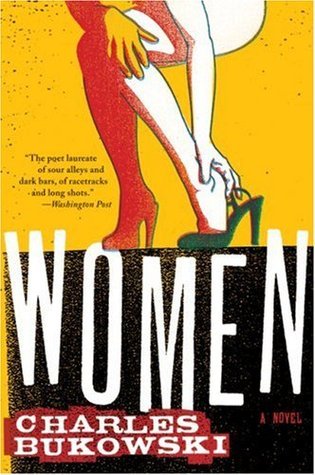
Low-life writer and unrepentant alcoholic Henry Chinaski was born to survive. After decades of slacking off at low-paying dead-end jobs, blowing his cash on booze and women, and scrimping by in flea-bitten apartments, Chinaski sees his poetic star rising at last. Now, at fifty, he is reveling in his sudden rock-star life, running three hundred hangovers a year, and maintaining a sex life that would cripple Casanova.

You Get So Alone at Times That it Just Makes Sense
by Charles Bukowski
Rating: 4.2 ⭐
• 2 recommendations ❤️
Charles Bukowski examines cats and his childhood in You Get So Alone at Times, a book of poetry that reveals his tender side. The iconic tortured artist/everyman delves into his youth to analyze its repercussions.“The Walt Whitman of Los Angeles.” —Joyce Carol Oates“[Bukowski] brought everybody down to earth, even the angels.” —Leonard Cohen, songwriter

A classic in the Bukowski poetry canon, Love Is a Dog from Hell is a raw, lyrical exploration of the exigencies, heartbreaks, and limits of love.Charles Bukowski was a man of intense emotions, someone an editor once called a “passionate madman.” Alternating between tough and gentle, sensitive and gritty, Bukowski lays bare the myriad facets of love—its selfishness and its narcissism, its randomness, its mystery and its misery, and, ultimately, its true joyfulness, endurance, and redemptive power.

"It began as a mistake." By middle age, Henry Chinaski has lost more than twelve years of his life to the U.S. Postal Service. In a world where his three true, bitter pleasures are women, booze, and racetrack betting, he somehow drags his hangover out of bed every dawn to lug waterlogged mailbags up mud-soaked mountains, outsmart vicious guard dogs, and pray to survive the day-to-day trials of sadistic bosses and certifiable coworkers. This classic 1971 novel--the one that catapulted its author to national fame--is the perfect introduction to the grimly hysterical world of legendary writer, poet, and Dirty Old Man Charles Bukowski and his fictional alter ego, Chinaski.

One of Bukowski's best, this beer-soaked, deliciously degenerate novel follows the wanderings of aspiring writer Henry Chinaski across World War II-era America. Deferred from military service, Chinaski travels from city to city, moving listlessly from one odd job to another, always needing money but never badly enough to keep a job. His day-to-day existence spirals into an endless litany of pathetic whores, sordid rooms, dreary embraces, and drunken brawls, as he makes his bitter, brilliant way from one drink to the next.Charles Bukowski's posthumous legend continues to grow. Factotum is a masterfully vivid evocation of slow-paced, low-life urbanity and alcoholism, and an excellent introduction to the fictional world of Charles Bukowski.

“The Walt Whitman of Los Angeles.”—Joyce Carol Oates, bestselling author “He brought everybody down to earth, even the angels.”—Leonard Cohen, songwriter Opening with the exotic Lady Death entering the gumshoe-writer's seedy office in pursuit of a writer named Celine, this novel demonstrates Charles Bukowski's own brand of humor and realism, opening up a landscape of seamy Los Angeles. Pulp is essential fiction from Buk himself.

Exceptional stories that came pounding out of Bukowski's violent and depraved life. Horrible and holy, you cannot read them and ever come away the same again.With Bukowski, the votes are still coming in. There seems to be no middle ground—people seem either to love him or hate him. Tales of his own life and doings are as wild and weird as the very stories he writes. In a sense, Bukowski was a legend in his time: a madman, a recluse, a lover; tender, vicious; never the same.From prostitutes to classical music, Bukowski ingeniously mixes high and low culture in his "tales of ordinary madness." These stories are humorous and haunting, angry yet tender portrayals of life in the underbelly of Los Angeles.
This rare and vintage book is a perfect addition to any bibliophile's collection
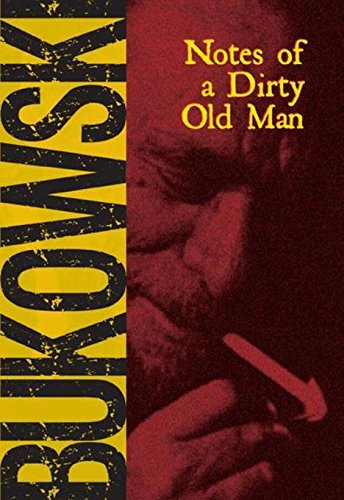
Notes of a Dirty Old Man is a collection of articles written by Charles Bukowski for the underground, L.A.-based newspaper Open City, which operated from 1967 to 1969. Bukowski uses his own life as the basis for his series of articles, and characteristically leaves nothing out.

With his characteristic raw and minimalist style, Charles Bukowski takes us on a walk through his side of town in Hot Water Music. He gives us little vignettes of depravity and lasciviousness, bite-sized pieces of what is both beautiful and grotesque.The stories in Hot Water Music dash around the worst parts of town -- a motel room stinking of sick, a decrepit apartment housing a perpetually arguing couple, a bar tended by a skeleton -- and depict the darkest parts of human existence. Bukowski talks simply and profoundly about the underbelly of the working class without raising judgement. In the way he writes about sex, relationships, writing, and inebriation, Bukowski sets the bar for irreverent art -- his work inhabits the basest part of the mind and the most extreme absurdity of the everyday.

Revolving around themes of alcoholism, gambling, sex, and violence, this short story collection demonstrates Bukowski's compelling semi-autobiographical style and mastery of visceral language and depiction of seamy underworlds.Bukowski's writings have addicted legions of American readers, even though the high literary establishment continues to ignore them. In Europe, however (particularly in Germany, Italy, and France, where he is published by the great publishing houses), Bukowski is critically recognized as one of America's greatest realist writers.

South of No North contains some of Bukowski's best work. Among the short stories collected in the book are Love for $17.50, about a man named Robert whose infatuation with a mannequin in a junk shop leads him first to buy it, then make love to it, and then eventually fall in love with "her," much to the consternation of his real-life girlfriend; Maja Thurup, about a South American tribesman with an enormous penis who is brought to Los Angeles by the woman anthropologist who has "discovered" him and become his lover; and The Devil is Hot, about an encounter with Old Nick at an amusement pier in Santa Monica, where Scratch himself is caged and on display, fed only peanut butter and dogfood, exploited by a cynical carnie.The collection also features two of Bukowski's finest and most famous short stories: All the Assholes in the World Plus Mine, an autobiographical rumination on the treatment of his hemorrhoids, and Confessions of a Man Insane Enough to Live With Beasts. (The latter story originally was published as a chapbook of 500 copies by Bensenville Mimeo Press in 1965.)The short stories collected in the volume are evocative of Bukowski at his best, when he was one of the premier short story writers still at the top of his talent.- Wikipedia
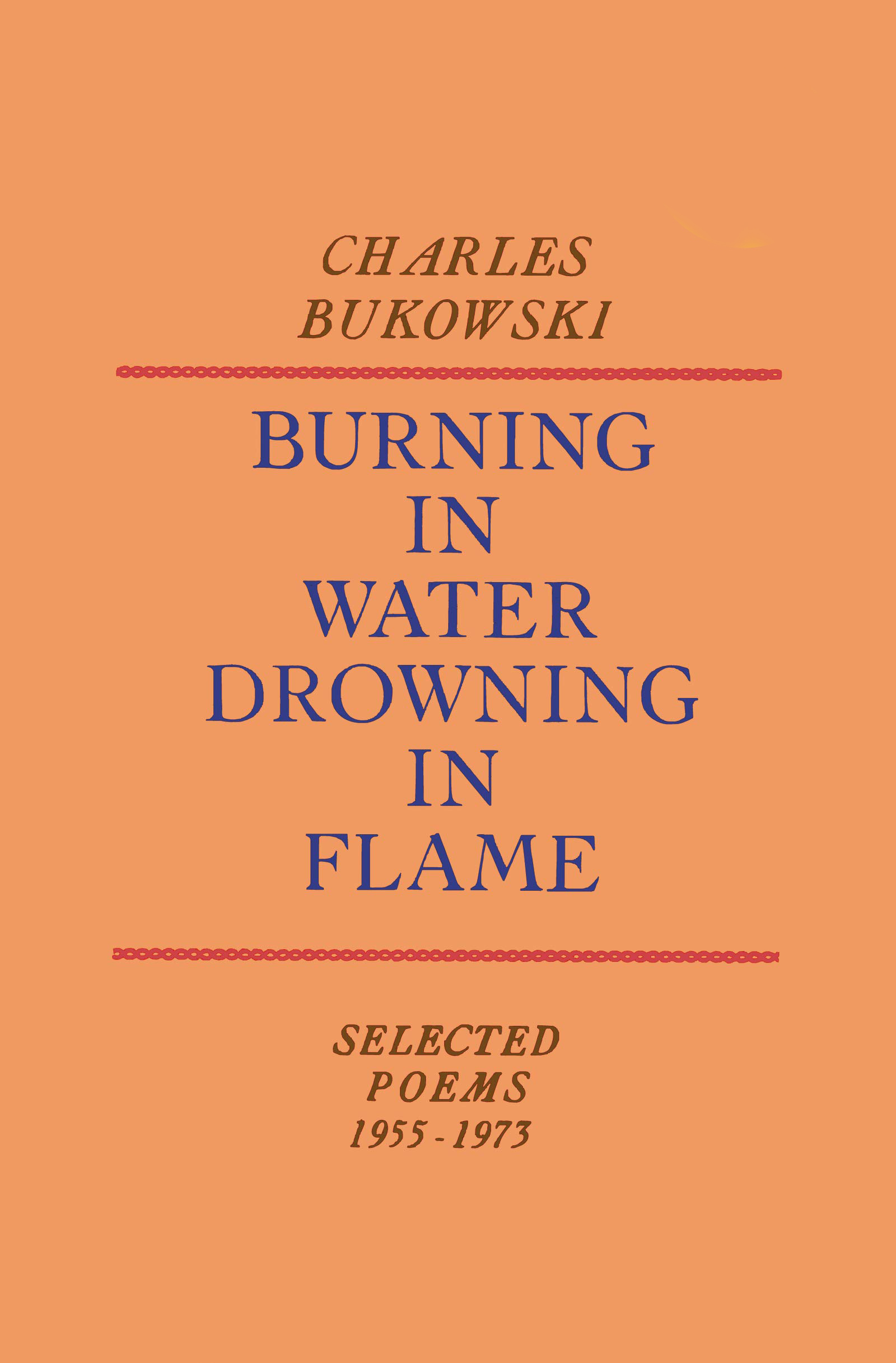
Burning in Water, Drowning in Flame is poetry full of gambling, drinking and women. In this selection of poems written between 1955 and 1973, Charles Bukowski writes realistically about the seedy underbelly of life.

The final poetry collection published in Bukowski's lifetime, The Last Night of the Earth Poems explores writing, death, immortality, city life, war, and the past.

To his legions of fans, Charles Bukowski was—and remains—the quintessential counterculture icon. A hard-drinking wild man of literature and a stubborn outsider to the poetry world, he wrote unflinchingly about booze, work, and women, in raw, street-tough poems whose truth has struck a chord with generations of readers.Edited by John Martin, the legendary publisher of Black Sparrow Press and a close friend of Bukowski's, The Pleasures of the Damned is a selection of the best works from Bukowski's long poetic career, including the last of his never-before-collected poems. Celebrating the full range of the poet's extraordinary and surprising sensibility, and his uncompromising linguistic brilliance, these poems cover a rich lifetime of experiences and speak to Bukowski's “immense intelligence, the caring heart that saw through the sham of our pretenses and had pity on our human condition” (New York Quarterly). The Pleasures of the Damned is an astonishing poetic treasure trove, essential reading for both longtime fans and those just discovering this unique and legendary American voice.

This second posthumous poetry collection from Charles Bukowski takes readers deep into a raw, wild vein of writing that extends from the early '70s to the 1990s.

The Captain is Out to Lunch and the Sailors Have Taken Over the Ship
by Charles Bukowski
Rating: 4.0 ⭐
“The Walt Whitman of Los Angeles.”—Joyce Carol Oates, bestselling author “He brought everybody down to earth, even the angels.”—Leonard Cohen, songwriter A book length collaboration between two underground legends, Charles Bukowski and Robert Crumb. In The Captain is Out to Lunch, Bukowski's last journals candidly and humorously reveal the events in the writer's life as death draws inexorably nearer, thereby illuminating our own lives and natures, and to give new meaning to what was once only familiar. Crumb has illustrated the text with 12 full-page drawings and a portrait of Bukowski.
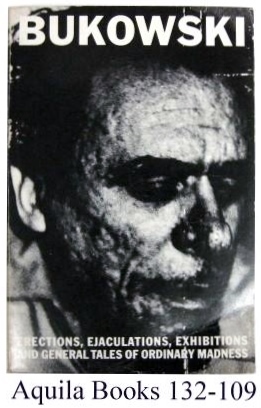
Erections, Ejaculations, Exhibitions, and General Tales of Ordinary Madness
by Charles Bukowski
Rating: 3.9 ⭐
Erections, Ejaculations, Exhibitions, and General Tales of Ordinary Madness was a paperback collection of short stories by Charles Bukowski, first published by City Lights Publishers in 1972.[1] It was the first collection of Bukowski's stories to be published, and it was republished in two volumes in 1983, as Tales of Ordinary Madness and The Most Beautiful Woman in Town.Charles Bukowski, born 8/16/20, Andernach, Germany. Brought to America at the age of two. Eighteen or 20 books of prose and poetry. Bukowski, after publishing prose in Story and Portfolio stopped writing for ten years. He arrived in the charity ward of the Los Angeles County General Hospital, hemorrhaging as a climax of a ten-year drinking bout. Some say he didn't die. After leaving the hospital he got a tyewriter and began writing again - this time, poetry. He later returned to prose and gained some fame with his column, Notes of a Dirty Old Man, which he wrote mainly for the paper, Open City. After 14 years in the Post Office he resigned at age 50, he says, to keep from going insane. He now claims to be unemployable and eats typewriter ribbons. Once married, once divorced, many times shacked, he has a seven-year-old daughter.These dirty and immortal stories appeared mainly in Underground newspapers, with Open City and Nola Express leading in the publication of them. Others have appeared in Evergreen Review, Knight, Pix, Berkeley Barb, Adam, and Adam Reader.With Bukowski, the votes are still coming in. There seems to be no middle ground - people seem either to love him or hate him. Tales of his own life and doings are as wild and weird as the very stories he writes. In a sense, Bukowski is a legend in his time...a madman, a recluse, a lover...tender, vicious...never the same...these are exceptional stories that come pounding out of his violent and depraved life...horrible and holy...you cannot read them and ever come away the same again.

Play the Piano Drunk Like a Percussion Instrument Until the Fingers Begin to Bleed a Bit
by Charles Bukowski
Rating: 4.2 ⭐
“The Walt Whitman of Los Angeles.”—Joyce Carol Oates, bestselling author“He brought everybody down to earth, even the angels.”—Leonard Cohen, songwriterPlay the Piano introduces Charles Bukowski's poetry from the 1970s. He leads a life full of gambling and booze but also finds love. These poems are full of lechery and romance as he struggles to mature.

A book of poems written by Charles Bukowski for Jane, his first love. These poems explore a more emotional side of Bukowski.
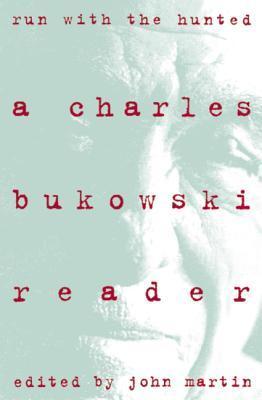
Excellent Book

A raw and tenderly funny look at the human-cat relationship, from one of our most treasured and transgressive writers. “The cat is the beautiful devil.” Felines touched a vulnerable spot in Charles Bukowski’s crusty soul. For the writer, there was something majestic and elemental about these inscrutable creatures he admired, sentient beings whose searing gaze could penetrate deep into our being. Bukowski considered cats to be unique forces of nature, elusive emissaries of beauty and love.On Cats offers Bukowski’s musings on these beloved animals and their toughness and resiliency. He honors them as fighters, hunters, survivors who command awe and respect as they grip tightly onto the world around “A cat is only ITSELF, representative of the strong forces of life that won’t let go.”Funny, moving, tough, and caring, On Cats brings together the acclaimed writer’s reflections on these animals he so admired. Bukowski’s cats are fierce and demanding—he captures them stalking their prey; crawling across his typewritten pages; waking him up with claws across the face. But they are also affectionate and giving, sources of inspiration and gentle, insistent care.Poignant yet free of treacle, On Cats is an illuminating portrait of this one-of-a-kind artist and his unique view of the world, witnessed through his relationship with the animals he considered his most profound teachers.

The People Look like Flowers at Last is the last of five collections of never-before-published poetry from the late, great Dirty Old Man, Charles Bukowski. In it, he speaks on topics ranging from war and fatherhood to lost love and the fear of death.

Septuagenarian Stew is a combination of poetry and stories written by Charles Bukowski that delve into the lives of different people on the backstreets of Los Angeles. He writes of the housewife, the bum, the gambler and the celebrity to evoke a portrait of Los Angeles

A companion to On Writing and On Cats: A raw and tender poetry collection that captures the Dirty Old Man of American letters at his fiercest and most vulnerable, on a subject that hits home with all of us.Charles Bukowski was a man of intense emotions, someone an editor once called a “passionate madman.” In On Love, we see Bukowski reckoning with the complications and exaltations of love, lust, and desire. Alternating between tough and gentle, sensitive and gritty, Bukowski lays bare the myriad facets of love—its selfishness and its narcissism, its randomness, its mystery and its misery, and, ultimately, its true joyfulness, endurance and redemptive power.Bukowski is brilliant on love—often amusing, sometimes playful, and fleetingly sweet. On Love offers deep insight into Bukowski the man and the artist; whether writing about his daughter, his lover, his friends, or his work, he is piercingly honest and poignantly reflective, using love as a prism to see the world in all its beauty and cruelty, and his own fragile place in it. “My love is a hummingbird sitting that quiet moment on the bough,” he writes, “as the same cat crouches.”Brutally honest, flecked with humor and pathos, On Love reveals Bukowski at his most candid and affecting.

Sifting Through the Madness for the Word, the Line, the Way: New Poems
by Charles Bukowski
Rating: 4.2 ⭐
One of the most recognizable poets of the last century, Charles Bukowski is simultaneously a common man and an icon of urban depravity. He uses strong, blunt language to describe life as he lives it, and through it all charts the mutations of morality in modern America.Sifting Through the Madness for the Word, the Line, the Way is a treasure trove of confessional poetry written towards then end of Bukowski’s life. With the overhang of failing health and waning fame, he reflects on his travels, his gambling and drinking, working, not working, sex and love, eating, cats, and more.Sifting Through is Bukowski at his most meditative – published posthumously, it’s completely non-performative, and gets to the heart of Bukowski’s lifelong pursuit of natural language and raw honesty.We recommend you read this as Bukowski wrote: by sifting through the madness for what hits you as the word, the line, the way.

Virtually everything Black Sparrow publishes is worthwhile, but without Bukowski, whose 40-odd books kept Black Sparrow's bread buttered right up until his death in 1994, none of the rest of it would be possible. Fortunately, "Buk" left plenty of unpublished manuscript behind that, judging from this culling from it, is of a piece with the published stuff. That is, it consists of quasi-autobiographical poems and stories. The poems' lines are only one to six words long, and the stories' sentences aren't much longer. Poems and stories relay the adventures and attitudes, at all stages of his life, of loafer and lumpen intellectual Henry Chinaski. They are occasionally laugh-out-loud funny, occasionally laughable because Henry and his women and pals are such a bunch of slobs, and occasionally as boring as Henry and company claim their lives are. And, to tell the truth, they are effortlessly, magnetically readable, especially if you are susceptible to their bargain-basement existentialist charm. Plenty are. Ray Olson

War All the Time is a selection of poetry from the early 1980s. Charles Bukowski shows that he is still as pure as ever but he has evolved into a slightly happier man that has found some fame and love. These poems show how he grapples with his past and future colliding.