
Albert Camus
Works, such as the novels The Stranger (1942) and The Plague (1947), of Algerian-born French writer and philosopher Albert Camus concern the absurdity of the human condition; he won the Nobel Prize of 1957 for literature. Origin and his experiences of this representative of non-metropolitan literature in the 1930s dominated influences in his thought and work. He also adapted plays of Pedro Calderón de la Barca, Lope de Vega, Dino Buzzati, and Requiem for a Nun of William Faulkner. One may trace his enjoyment of the theater back to his membership in l'Equipe, an Algerian group, whose "collective creation" Révolte dans les Asturies (1934) was banned for political reasons. Of semi-proletarian parents, early attached to intellectual circles of strongly revolutionary tendencies, with a deep interest, he came at the age of 25 years in 1938; only chance prevented him from pursuing a university career in that field. The man and the times met: Camus joined the resistance movement during the occupation and after the liberation served as a columnist for the newspaper Combat. The essay Le Mythe de Sisyphe (The Myth of Sisyphus), 1942, expounds notion of acceptance of the absurd of Camus with "the total absence of hope, which has nothing to do with despair, a continual refusal, which must not be confused with renouncement - and a conscious dissatisfaction." Meursault, central character of L'Étranger (The Stranger), 1942, illustrates much of this essay: man as the nauseated victim of the absurd orthodoxy of habit, later - when the young killer faces execution - tempted by despair, hope, and salvation. Besides his fiction and essays, Camus very actively produced plays in the theater (e.g., Caligula, 1944). The time demanded his response, chiefly in his activities, but in 1947, Camus retired from political journalism. Doctor Rieux of La Peste (The Plague), 1947, who tirelessly attends the plague-stricken citizens of Oran, enacts the revolt against a world of the absurd and of injustice, and confirms words: "We refuse to despair of mankind. Without having the unreasonable ambition to save men, we still want to serve them." People also well know La Chute (The Fall), work of Camus in 1956. Camus authored L'Exil et le royaume (Exile and the Kingdom) in 1957. His austere search for moral order found its aesthetic correlative in the classicism of his art. He styled of great purity, intense concentration, and rationality. Camus died at the age of 46 years in a car accident near Sens in le Grand Fossard in the small town of Villeblevin. Chinese 阿尔贝·加缪
31 Books Written

Since it was first published in English, in 1946, Albert Camus's first novel, THE STRANGER (L'etranger), has had a profound impact on millions of American readers. Through this story of an ordinary man who unwittingly gets drawn into a senseless murder on a sun-drenched Algerian beach, Camus explored what he termed "the nakedness of man faced with the absurd."Now, in an illuminating new American translation, extraordinary for its exactitude and clarity, the original intent of THE STRANGER is made more immediate. This haunting novel has been given a new life for generations to come.

La notion d’absurde et le rapport entre l’absurde et le suicide forment le sujet de cet essai.Une fois reconnu le divorce entre son désir raisonnable de compréhension et de bonheur et le silence du monde, l’homme peut-il juger que la vie vaut la peine d’être vécue? Telle est la question fondamentale de la philosophie.Mais si l’absurde m’apparaît évident, je dois le maintenir par un effort lucide et accepter en le vivant de vivre. Ma révolte, ma liberté, ma passion seront ses conséquences. Assuré de mourir tout entier, mais refusant la mort, délivré de l’espoir surnaturel qui le liait, l’homme va pouvoir connaître la passion de vivre dans un monde rendu à son indifférence et à sa beauté périssable. Les images de Don Juan, du comédien, de l’aventurier illustrent la liberté et la sagesse lucide de l’homme absurde. Mais la création – une fois admis qu’elle peut ne pas être – est pour lui la meilleure chance de maintenir sa conscience éveillée aux images éclatantes et sans raison du monde. Le travail de Sisyphe qui méprise les dieux, aime la vie et hait la mort, figure la condition humaine. Mais la lutte vers les sommets porte sa récompense en elle-même. Il faut imaginer Sisyphe heureux.

Αυτή η συλλογή αποτελείται από τέσσερα κείμενα που γράφτηκαν το 1936 και το 1937 κι εκδόθηκαν το 1950."Οι γάμοι στην Τιπαζά": Ένας νεαρός, παιδί «ενός λαού γεννημένου από τον ήλιο και τη θάλασσα», τραγουδά τη χαρά του για τη ζωή και την υπερηφάνεια του που μπορεί ν' αγαπά απεριόριστα."Ο άνεμος στην Τζεμιλά": Στον τραγικό διάκοσμο μιας νεκρής πολιτείας που τη σαρώνει ο άνεμος, ο συγγραφέας εκφράζει «τη συνειδητή βεβαιότητά του ενός ανέλπιδου θανάτου». Μα ακόμα κι η φρίκη αυτού του θανάτου δεν θα τον αποσπάσει από τους στοχασμούς του."Το καλοκαίρι στο Αλγέρι": Ψυχολογική περιγραφή μιας πόλης χωρίς παρελθόν, που αγνοεί την έννοια της αρετής, μα που έχει την ηθική της και που οι άνθρωποί της βρίσκουν «καθ’ όλη τη διάρκεια της νιότης τους μια ζωή στα μέτρα της ομορφιάς τους»."Η έρημος": Ο συγγραφέας ανακαλύπτει ότι η συμφωνία που ενώνει έναν άνθρωπο με τη ζωή του, σ' έναν κόσμο που η ομορφιά του θα χαθεί, είναι «η διπλή συνείδηση της επιθυμίας του να διαρκέσει και της μοίρας του να πεθάνει».


Jean-Baptiste Clamence is a soul in turmoil. Over several drunken nights in an Amsterdam bar, he regales a chance acquaintance with his story. From this successful former lawyer and seemingly model citizen a compelling, self-loathing catalogue of guilt, hypocrisy and alienation pours forth.The Fall (French: La Chute) is a philosophical novel by Albert Camus. First published in 1956, it is his last complete work of fiction. The Fall explores themes of innocence, imprisonment, non-existence, and truth. In a eulogy to Albert Camus, existentialist philosopher Jean-Paul Sartre described the novel as "perhaps the most beautiful and the least understood" of Camus' books.

An alternative cover edition for this ISBN can be found here.A gripping tale of human unrelieved horror, of survival and resilience, and of the ways in which humankind confronts death, The Plague is at once a masterfully crafted novel, eloquently understated and epic in scope, and a parable of ageless moral resonance, profoundly relevant to our times. In Oran, a coastal town in North Africa, the plague begins as a series of portents, unheeded by the people. It gradually becomes an omnipresent reality, obliterating all traces of the past and driving its victims to almost unearthly extremes of suffering, madness, and compassion.

"Je me souviens du moins d'une grande fille magnifique qui avait dansé tout l'après-midi. Elle portait un collier de jasmin sur sa robe bleue collante, que la sueur mouillait depuis les reins jusqu'aux jambes. Elle riait en dansant et renversait la tête. Quand elle passait près des tables, elle laissait après elle une odeur mêlée de fleurs et de chair."
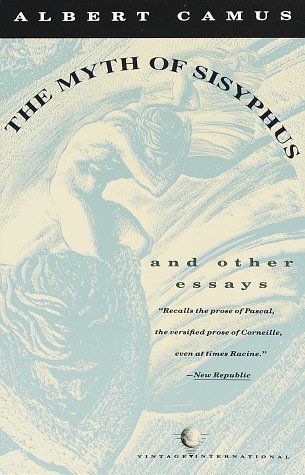
One of the most influential works of this century, this is a crucial exposition of existentialist thought. Influenced by works such as Don Juan, and the novels of Kafka, these essays begin with a meditation on suicide: the question of living or not living in an absurd universe devoid of order or meaning. With lyric eloquence, Camus posits a way out of despair, reaffirming the value of personal existence, and the possibility of life lived with dignity and authenticity.

Is it possible to die a happy death? This is the central question of Camus's astonishing early novel, published posthumously and greeted as a major literary event. It tells the story of a young Algerian, Mersault, who defies society's rules by committing a murder and escaping punishment, then experimenting with different ways of life and finally dying a happy man. In many ways A Happy Death is a fascinating first sketch for The Outsider, but it can also be seen as a candid self-portrait, drawing on Camus's memories of his youth, travels, and early relationships. It is infused with lyrical descriptions of the sun-drenched Algiers of his childhood - the place where, eventually, Mersault is able to find peace and die 'without anger, without hatred, without regret'.
By one of the most profoundly influential thinkers of our century, The Rebel is a classic essay on revolution. For Albert Camus, the urge to revolt is one of the "essential dimensions" of human nature, manifested in man's timeless Promethean struggle against the conditions of his existence, as well as the popular uprisings against established orders throughout history. And yet, with an eye toward the French Revolution and its regicides and deicides, he shows how inevitably the course of revolution leads to tyranny, as old regimes throughout the world collapse, The Rebel resonates as an ardent, eloquent, and supremely rational voice of conscience for our tumultuous times.Translated from the French by Anthony Bower.

Alternate cover edition of ISBN 9782070386703.Ange en quête d'absolu ? Monstre sanguinaire ? Avant la guerre, Albert Camus conçoit Caligula, ainsi que Sisyphe ou Meursault (L'Étranger), comme un héros de l'Absurde. En 1945, la pièce est reçue comme une fable sur les horreurs du nazisme. Ses versions et ses mises en scène successives, l'évolution de la sensibilité du public ont contribué à faire de Caligula une des figures les plus troublantes de notre théâtre. À l'image du tyran se superposent, dans notre mémoire, les visages de Gérard Philipe, qui créa le rôle, et celui d'Albert Camus, qui mêla toujours au besoin de tendresse et à l'exigence de pureté une étrange «fixation au meurtre» et «cette violence intérieure» (Jean Grenier) qui anime son empereur romain.

These six stories, written at the height of Camus' artistic powers, all depict people at decisive, revelatory moments in their lives. Translated from the French by Justin O'Brien.The six works featured in this volume are: "The Adulterous Woman" ("La Femme adultère") "The Renegade or a Confused Spirit" ("Le Renégat ou un esprit confus") "The Silent Men" ("Les Muets") "The Guest" ("L'Hôte") "Jonas or the Artist at Work" ("Jonas ou l’artiste au travail") "The Growing Stone" ("La Pierre qui pousse")

The unfinished manuscript of The First Man was discovered in the wreckage of a car accident in which Camus died in 1960. Although it was not published for over thirty years, it was an instant bestseller when it finally appeared in 1994. The 'first man' is Jacques Cormery, whose poverty-stricken childhood in Algiers is made bearable by his love for his silent and illiterate mother, and by the teacher who transforms his view of the world. The most autobiographical of Camus's novels, it gives profound insights into his life, and the powerful themes underlying his work.

À Moscou, en 1905, un groupe de socialistes révolutionnaires projette d'assassiner le grand-duc Serge, qui gouverne la ville en despote, afin de lutter contre la tyrannie exercée sur eux. Kaliayev, un jeune terroriste, lancera la bombe. Dora restera en arrière, mais c'est elle qui a fabriqué les bombes servant à l'attentat. Dora et Kaliayev sont amants. Kaliayev est emprisonné, la grande-duchesse Élisabeth lui propose d'être gracié, il refuse et il est pendu. Dora, à la fin, s'apprête à faire le prochain attentat et peut ainsi rejoindre Kaliayev.

Ο ήρωας επιστρέφει στην οικογένειά του και στη γενέθλια γη γιανα δολοφονηθεί από τη μητέρα του και την αδερφή του που δεν τοναναγνωρίζουν. Και τα τρία πρόσωπα έχουν εγκληματήσει πρινκάνουν τα εγκλήματα. Η Μάρθα προσδοκώντας μάταια τιςηλιόλουστες χώρες και τη θάλασσα μαζί μ έναν ιδανικό έρωτα. Ημάνα με το να τυραννιέται από την κούραση, ενώ κιόλαςαισθάνεται παραιτημένη από τη ζωή. Ο Γιαν τέλος με το να τοντυραννάει ο νόστος για την πατρίδα και για τους αγαπημένους -μητέρα, αδερφή.
'To create today is to create dangerously'Camus argues passionately that the artist has a responsibility to challenge, provoke and speak up for those who cannot in this powerful speech, accompanied here by two others.Penguin Modern: fifty new books celebrating the pioneering spirit of the iconic Penguin Modern Classics series, with each one offering a concentrated hit of its contemporary, international flavour. Here are authors ranging from Kathy Acker to James Baldwin, Truman Capote to Stanislaw Lem and George Orwell to Shirley Jackson; essays radical and inspiring; poems moving and disturbing; stories surreal and fabulous; taking us from the deep South to modern Japan, New York's underground scene to the farthest reaches of outer space.

In the speech he gave upon accepting the Nobel Prize for Literature in 1957, Albert Camus said that a writer "cannot serve today those who make history; he must serve those who are subject to it." And in these twenty-three political essays, he demonstrates his commitment to history's victims, from the fallen maquis of the French Resistance to the casualties of the Cold War. Resistance, Rebellion and Death displays Camus's rigorous moral intelligence addressing issues that range from colonial warfare in Algeria to the social cancer of capital punishment. But this stirring book is above all a reflection on the problem of freedom, and, as such, belongs in the same tradition as the works that gave Camus his reputation as the conscience of our century: The Stranger, The Rebel and The Myth of Sisyphus.

In this book you find a (Russian) foreword, then "The Stranger" and "The Plague".I'm not sure that adding this book in this form is not against don't 2-in-1 books or boxed sets that include the given book.

"Brice Parain, sık sık, yazdıklarımın en iyisini bu küçük kitabın içerdiğini ileri sürer... Hayır, aldanıyor, çünkü deha bir yana bırakılırsa, insan yirmi iki yaşında yazı yazmasını pek bilemez. Ama Parain'in söylemek istediğini anlıyorum. Bu acemice sayfalarda, sonradan yazdıklarımdakilerden daha çok gerçek aşk bulunduğunu söylemek istiyor; haksız da değil... Bu sayfaların yazıldığı zamandan beri yaşlandım, çok şeyler görüp geçirdim. Sınırlarımı, sonra hemen hemen bütün zayıflıklarımı tanıyarak kendi hakkımda bilgi edindim... Herkes gibi ben de düşlerim bazı bazı. Ama iki sakin melek onun eşiğinden hiçbir zaman geçirmediler beni; biri dostun yüzünü gösterir, öbürü düşmanın suratını. Evet, bütün bunları biliyorum, aşkın neye patladığını da öğrendim ya da aşağı yukarı. Ama yaşamın kendisi hakkında, Tersi ve Yüzü'nde acemice söylenenden daha fazlasını bilmiyorum."ALBERT CAMUS

The Arab prisoner temporarily placed in his care forms a bizarre partnership with an Algerian schoolteacher, giving him the opportunity to decide his own fate.

An essay on capital punishment by the 1957 Nobel Prize winner.

This English edition includes the plays Caligula, The Misunderstanding (Le Malentendu), State of Siege (L'État de siège), and The Just Assassins (Les Justes).

"Caligula : C'est une vérité toute simple et toute claire, un peu bête, mais difficile à découvrir et lourde à porter.Hélicon : Et qu'est-ce donc que cette vérité, Caïus ?Caligula : Les hommes meurent et ils ne sont pas heureux.Hélicon : Allons, Caïus, c'est une vérité dont on s'arrange très bien. Regarde autour de toi. Ce n'est pas cela qui les empêche de déjeuner.Caligula : Alors, c'est que tout, autour de moi, est mensonge, et moi, je veux qu'on vive dans la vérité !"

Les quatre Lettres à un ami allemand, écrites sous l'Occupation et destinées à des publications clandestines, expriment déjà la doctrine de La peste et de L'homme révolté. Elles se placent sous l'invocation de Senancour qui, en une formule saisissante, avait résumé la philosophie de la révolte : 'L'homme est périssable. Il se peut ; mais périssons en résistant, et si le néant nous est réservé, ne faisons pas que ce soit une justice!'

From 1935 until his death, Albert Camus kept a series of notebooks to sketch out ideas for future works, record snatches of conversations and excerpts from books he was reading, and jot down his reflections on death and the horror of war, his feelings about women and loneliness and art, and his appreciations for the Algerian sun and sea. These three volumes, now available together for the first time in paperback, include all entries made from the time when Camus was still completely unknown in Europe, until he was killed in an automobile accident in 1960, at the height of his creative powers. In 1957 he had been awarded the Nobel Prize for Literature. A spiritual and intellectual auto biography, Camus' Notebooks are invariably more concerned with what he felt than with what he did. It is intriguing for the reader to watch him seize and develop certain themes and ideas, discard others that at first seemed promising, and explore different types of experience.

Le 19 mars 1944, Albert Camus et Maria Casarès se croisent chez Michel Leiris, lors de la fameuse représentation-lecture du Désir attrapé par la queue de Pablo Picasso. L'ancienne élève du Conservatoire national d'art dramatique, originaire de La Corogne (Galice) et fille d'un ancien président du Conseil de la Seconde République espagnole exilé à Paris en 1936, n'a alors que vingt-deux ans. Parlant parfaitement français, elle a débuté sa carrière d'actrice en 1942 au Théâtre des Mathurins, au moment où Albert Camus publiait L'Etranger et Le Mythe de Sisyphe chez Gallimard. Albert Camus vit alors seul à Paris, la guerre l'ayant éloigné depuis deux ans de son épouse Francine, enseignante à Oran. Sensible au jeu, au tempérament et à la beauté de l'actrice, Albert Camus lui confie le rôle de Martha pour la création de sa pièce Le Malentendu en juin 1944. Et durant la nuit du Débarquement en Normandie, sortant d'une soirée chez leur ami Charles Dullin, Albert Camus et Maria Casarès deviennent amants. Il ne s'agit là encore que du prélude à une grande histoire amoureuse ; car Maria décide de mettre fin à cette relation qui lui semble sans avenir, au vu de la situation conjugale de son amant. Mais quatre ans exactement après leur première déclaration, le 6 juin 1948, Albert et Maria se retrouvent, par un heureux hasard, sur un boulevard parisien ; leur histoire commune reprend alors, plus passionnée que jamais, et sans interruption jusqu'à la mort accidentelle de l'écrivain, au début de l'année 1960. Durant toutes ces années, Albert et Maria n'ont jamais cessé de s'écrire, notamment lors des longues semaines de séparation dues à leur engagement artistique et intellectuel, aux séjours au grand air ou aux obligations familiales. Sur fond de vie publique et d'activité créatrice (les livres et les conférences, pour l'écrivain ; les tournées avec la Comédie-Française et le TNP pour l'actrice), leur correspondance croisée, demeurée inédite jusqu'à ce jour, révèle quelle fut l'intensité de leur relation intime, s'éprouvant dans le manque et l'absence autant que dans le consentement mutuel, la brûlure du désir, la jouissance des jours partagés, les travaux en commun et la quête du véritable amour, de sa parfaite formulation et de son accomplissement. Nous savions que l'oeuvre d'Albert Camus était traversée par la pensée et l'expérience de l'amour, jusqu'aux dossiers préparatoires du Premier Homme. La publication de cette immense correspondance révèle la pierre angulaire de cette constante préoccupation : l'amour, l'inévitable amour. "Quand on a aimé quelqu'un, on l'aime toujours", confiait Maria Casarès bien après la mort d'Albert Camus ; "lorsqu'une fois, on n'a plus été seule, on ne l'est plus jamais".

From one of the most brilliant and influential thinkers of the twentieth century–two novels, six short stories, and a pair of essays in a single volume. In both his essays and his fiction, Albert Camus (1913—1960) de-ployed his lyric eloquence in defense against despair, providing an affirmation of the brave assertion of humanity in the face of a universe devoid of order or meaning.The Plague–written in 1947 and still profoundly relevant–is a riveting tale of horror, survival, and resilience in the face of a devastating epidemic. The Fall (1956), which takes the form of an astonishing confession by a French lawyer in a seedy Amsterdam bar, is a haunting parable of modern conscience in the face of evil. The six stories of Exile and the Kingdom (1957) represent Camus at the height of his narrative powers, masterfully depicting his characters–from a renegade missionary to an adulterous wife –at decisive moments of revelation. Set beside their fictional counterparts, Camus’s famous essays “The Myth of Sisyphus” and “Reflections on the Guillotine” are all the more powerful and philosophically daring, confirming his towering place in twentieth-century thought.

Part of the Penguin Classics campaign celebrating 100 years of Albert Camus, A Sea Close By reveals the writer as a sensual witness of landscapes, the sea and sailing. It is a light, summery day-dream. Accompanying The Sea Close By is the essay Summer in Algiers, a lovesong to his Mediterranean childhood.
"Here now, for the first time in a complete English translation, we have Camus's three little volumes of essays, plus a selection of his critical comments on literature and his own place in it. As might be expected, the main interest of these writings is that they illuminate new facets of his usual subject matter."--The New York Times Book Review"A new single work for American readers that stands among the very finest."--The Nation

Dans la moins connue de ses pièces, Camus raconte l'apparition de la peste dans une ville maritime, mais les protagonistes ne ressemblent guère à ceux du roman. «Notre XXe siècle est le siècle de la peur», écrivait Camus en 1946. C'est le fil directeur de l'œuvre. Qu'est-ce qui peut vaincre la peur, sinon l'amour ? C'est-à-dire, dans un contexte politique, la solidarité. Car la pièce est une allégorie de l'Occupation, de la dictature, des totalitarismes. Par là, elle n'a rien perdu de son actualité. Elle montre en effet comment une collectivité (et non un individu, comme dans Caligula) réagit face au malheur. Elle est écrite dans un style lyrique, qui chante l'amour, la solitude de l'homme face à son destin, la communion d'une cité

She was waiting, but she didn't know for what. She was aware only of her solitude, and of the penetrating cold, and of a greater weight in the region of her heart. The author's writing confronts the great philosophical dilemmas of our time with piercing clarity