
W.B. Yeats
William Butler Yeats was an Irish poet and dramatist, and one of the foremost figures of 20th century literature. A pillar of both the Irish and British literary establishments, in his later years Yeats served as an Irish Senator for two terms. He was a driving force behind the Irish Literary Revival, and along with Lady Gregory and Edward Martyn founded the Abbey Theatre, serving as its chief during its early years. In 1923 he was awarded the Nobel Prize in Literature for what the Nobel Committee described as "inspired poetry, which in a highly artistic form gives expression to the spirit of a whole nation." He was the first Irishman so honored. Yeats is generally considered one of the few writers who completed their greatest works after being awarded the Nobel Prize; such works include The Tower (1928) and The Winding Stair and Other Poems (1929). Yeats was born and educated in Dublin but spent his childhood in County Sligo. He studied poetry in his youth, and from an early age was fascinated by both Irish legends and the occult. Those topics feature in the first phase of his work, which lasted roughly until the turn of the century. His earliest volume of verse was published in 1889, and those slow paced and lyrical poems display debts to Edmund Spenser and Percy Bysshe Shelley, as well as to the Pre-Raphaelite poets. From 1900, Yeats' poetry grew more physical and realistic. He largely renounced the transcendental beliefs of his youth, though he remained preoccupied with physical and spiritual masks, as well as with cyclical theories of life. --from Wikipedia
29 Books Written

W. B. Yeats was Romantic and Modernist, mystical dreamer and leader of the Irish Literary Revival, Nobel prizewinner, dramatist and, above all, poet. He began writing with the intention of putting his 'very self' into his poems. T. S. Eliot, one of many who proclaimed the Irishman's greatness, described him as 'one of those few whose history is the history of their own time, who are part of the consciousness of an age which cannot be understood without them'. For anyone interested in the literature of the late nineteenth century and the twentieth century, Yeats's work is essential. This volume gathers the full range of his published poetry, from the hauntingly beautiful early lyrics (by which he is still fondly remembered) to the magnificent later poems which put beyond question his status as major poet of modern times. Paradoxical, proud and passionate, Yeats speaks today as eloquently as ever.

Autobiographies consists of six autobiographical works that William Butler Yeats published together in the mid-1930s to form a single, extraordinary memoir of the first fifty-eight years of his life, from his earliest memories of childhood to winning the Nobel Prize for Literature.This volume provides a vivid series of personal accounts of a wide range of figures, and it describes Yeats's work as poet and playwright, as a founder of Dublin's famed Abbey Theatre, his involvement with Irish nationalism, and his fascination with occultism and visions.This book is most compelling as Yeats's own account of the growth of his poetic imagination. Yeats thought that a poet leads a life of allegory, and that his works are comments upon it.Autobiographies enacts his ruling belief in the connections and coherence between the life that he led and the works that he wrote. It is a vision of personal history as art, and so it is the one truly essential companion to his poems and plays.Edited by William H. O'Donnell and Douglas N. Archibald, this volume is available for the first time with invaluable explanatory notes and includes previously unpublished passages from candidly explicit first drafts.

"All things can tempt me from this craft of verse: ""One time it was a woman's face, or worse-""The seeming needs of my fool-driven land;""Now nothing but comes readier to the hand""Than this accustomed toil.""--"From" All Things Can Tempt Me" Nobel Prize winner W.B. Yeats laid the foundations for an Irish literary revival, drawing inspiration from his country's folklore, the occult, and Celtic philosophy. A writer of both poems and plays, he helped found Dublin's famed Abbey Theatre. The poems here provide an example of his life's work and artistry, beginning with verses such as "The Stolen Child" from his debut collection "Crossways "(written when he was 24) through "Why Should Not Old Men Be Mad?" from "On the Boiler," published a year prior to his death.

Best known for his poetry, William Butler Yeats (1865–1939) was also a dedicated exponent of Irish folklore. Yeats took a particular interest in the tales' mythic and magical roots. The Celtic Twilight ventures into the eerie and puckish world of fairies, ghosts, and spirits. "This handful of dreams," as the author referred to it, first appeared in 1893, and its title refers to the pre-dawn hours, when the Druids performed their rituals. It consists of stories recounted to the poet by his friends, neighbors, and acquaintances. Yeats' faithful transcription of their narratives includes his own visionary experiences, appended to the storytellers' words as a form of commentary.

This brand new collection, impeccably edited by James Pethica, presents a comprehensive selection of Yeats's major contributions in poetry, drama, prose fiction, autobiography, and criticism. "Criticism" includes twenty-four interpretive essays by T. S. Eliot, Daniel Albright, Douglas Archibald, Harold Bloom, George Bornstein, Elizabeth Cullingford, Paul de Man, Richard Ellman, R. F. Foster, Stephen Gwynn, Seamus Heaney, Marjorie Howes, John Kelly, Declan Kiberd, Lucy McDiarmid, Michael North, Thomas Parkinson, Marjorie Perloff, James Pethica, Jahan Ramazani, Ronald Schuchard, Michael J. Sidnell, Anita Sokolsky, and Helen Vendler. A Chronology and Selected Bibliography are included.

Since its first appearance in 1962, M. L. Rosenthal's classic selection of Yeats's poems and plays has attracted hundreds of thousands of readers. This newly revised edition includes 211 poems and 4 plays. It adds The Words Upon the Window-Pane, one of Yeats's most startling dramatic works in its realistic use of a seance as the setting for an eerily powerful reenactment of Jonathan Swift's rigorous idealism, baffling love relationships, and tragic madness. The collection profits from recent scholarship that has helped to establish Yeats's most reliable texts, in the order set by the poet himself. And his powerful lyrical sequences are amply represented, culminating in the selection from Last Poems and Two Plays, which reaches its climax in the brilliant poetic plays The Death of Cuchulain and Purgatory.Scholars, students, and all who delight in Yeats's varied music and sheer quality will rejoice in this expanded edition. As the introduction observes, "Early and late he has the simple, indispensable gift of enchanting the ear....He was also the poet who, while very much of his own day in Ireland, spoke best to the people of all countries. And though he plunged deep into arcane studies, his themes are most clearly the general ones of life and death, love and hate, man's condition, and history's meanings. He began as a sometimes effete post-Romantic, heir to the pre-Raphaelites, and then, quite naturally, became a leading British Symbolist; but he grew at last into the boldest, most vigorous voice of this century." Selected Poems and Four Plays represents the essential achievement of the greatest twentieth-century poet to write in English.

'But I, being poor, have only my dreams; / I have spread my dreams under your feet...'By turns joyful and despairing, some of the twentieth century's greatest verse on fleeting youth, fervent hopes and futile sacrifice.

The first edition of W. B. Yeats's The Tower appeared in bookstores in London on Valentine's Day, 1928. His English publisher printed just 2,000 copies of this slender volume of twenty-one poems, priced at six shillings. The book was immediately embraced by book buyers and critics alike, and it quickly became a bestseller.Subsequent versions of the volume made various changes throughout, but this Scribner facsimile edition reproduces exactly that seminal first edition as it reached its earliest audience in 1928, adding an introduction and notes by esteemed Yeats scholar Richard J. Finneran.Written between 1912 and 1927, these poems ("Sailing to Byzantium," "Leda and the Swan," and "Among School Children" among them) are today considered some of the best and most famous in the entire Yeats canon. As Virginia Woolf declared in her unsigned review of this collection, "Mr. Yeats has never written more exactly and more passionately."

Ireland's most influential poet, Yeats's poems express both powerful personal feelings and something of the whole human dilemma of the 20th century.

THIS 20 PAGE ARTICLE WAS EXTRACTED FROM THE BOOK: Representative British Dramas Victorian and Modern V2, by William Butler Yeats.

A collection of 15 of Yeats' most famous poems, including "The Second Coming" and "Easter, 1916.""The Second Coming" is viewed as a prophetic poem that envisions the close of the Christian epoch and the violent birth of a new age. The poem's title makes reference to the Biblical reappearance of Christ, prophesied in Matthew 24 and the Revelations of St. John, which according to Christianity, will accompany the Apocalypse and divine Last Judgment. Other symbols in the poem are drawn from mythology, the occult, and Yeats's view of history as defined in his cryptic prose volume A Vision. The principal figure of the work is a sphinx-like creature with a lion's body and man's head, a "rough beast" awakened in the desert that makes its way to Christ's birthplace, Bethlehem.Other poems in this collect include 'Easter, 1916,' which chronicles Yeats' complicated feelings on the execution of Irish patriots of the Easter Rebellion in Dublin.

William Butler Yeats ( 13 June 1865 – 28 January 1939) was an Irish poet and one of the foremost figures of 20th-century literature. A pillar of both the Irish and British literary establishments, in his later years he served as an Irish Senator for two terms. Yeats was a driving force behind the Irish Literary Revival and, along with Lady Gregory, Edward Martyn, and others, founded the Abbey Theatre, where he served as its chief during its early years. In 1923, he was awarded the Nobel Prize in Literature as the first Irishman so honoured for what the Nobel Committee described as "inspired poetry, which in a highly artistic form gives expression to the spirit of a whole nation". Yeats is considered to be one of the few writers who completed their greatest works after being awarded the Nobel Prize; such works include The Tower (1928) and The Winding Stair and Other Poems (1933).

The Wild Swans at Coole is a lyric poem by the Irish poet William Butler Yeats (1865–1939). Written between 1916 and early 1917. It is a beautiful poem much loved by many, considered to be one of his finest works.

Mythologies is the definitive edition of W.B. Yeats's folklore & early prose fiction, edited according to Yeats's final textual instructions.Its extensive annotation makes luminous Yeats's 'fibrous darkness', that 'matrix out of which everything else has come', by dealing with oral & written sources, abandoned & unpublished writings. Mythologies is a must-have for any fan of Yeats.

As a young man, William Butler Yeats was deeply affected by the idea of romantic love, or, as he called it, "the old high way of love." Characteristically, much of his early poetry that which was written prior to 1910, is poetry that belongs to courtship.When Yeats was twenty-three years old, he met and fell in love with the beautiful Irish nationalist, Maud Gonne. Although she repeatedly refused to marry Yeats, Maud would become the object of his passion and his poetry. The emotional power in many of Yeats' early poems is shaped by the one-sidedness of his affair with Maud, but the poems themselves remain hopeful and bitter-sweet, pure in their language and attitudes about love.The forty-one poems collected in A Poet to his Beloved represent some of Yeats's most evocative and passionate early love poems. These versed are simple, lyrical, and often dreamy, and they speak knowingly of innocence and beauty, passion and desire, devotion and the fear of rejection.

In a letter to his publisher, Yeats referred to The Wind Among the Reeds as "a book of short lyrics Irish & personal." It may also be described as a collection of love poems both intense and indirect. Now considered a watershed in Yeats's career, the book received mixed reviews when it was first published in April of 1899. More recently, Richard Ellmann has asserted that in The Wind Among the Reeds, "Yeats set the method for the modern movement." For the present volume, Carolyn Holdsworth has assembled and transcribed all holographic materials for each of the 37 poem in the book. She also supplies the complete typescripts and earlier printed versions corrected by Yeats, as well as providing a brief critical introduction. Photographic facsimiles supplement the transcriptions, and the apparatus criticus indicates variant readings. The manuscripts collected here range from drafts on scraps of paper through heavily worked-over typescripts, to neatly copied texts from later years and proof sheets revised by hand. The result is an exhaustive guide to Yeats's work on the poems up to the publication of the book and a full record of his post-publication revisions. Offering a close-up view of the various stages of composition of The Wind Among the Reeds, this edition affords a unique understanding of Yeats's creative process.
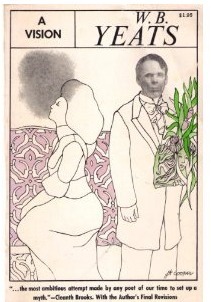
This Collier's edition contains all of Yeat's final revisions, including the major addition to the second edition, "A Packet for Ezra Pound".

"A terrible beauty is born," observed the greatest modern Irish poet after his country's 1916 Easter Rebellion against the British. This streak of proud nationalism, interwoven with elements of Celtic lore and mysticism, and infused with a hard-earned wisdom, makes Yeats's works resonate to this day. His career spanned five decades, earning him the Nobel Prize in Literature in 1923, and he is widely regarded as the finest English-language poet of the twentieth century.This volume contains a rich selection of poems from Yeat's mature work, including all the poems from The Wild Swans at Coole (1919) and Michael Robartes and the Dancer (1921). These memorable verses, embodying subtlety and objectivity in language of stark beauty and simplicity, offer a cross-section of Yeat's multifaceted poetic production.In addition to the famous title poem, the works collected here include the oft-quoted "The Second Coming" as well as "An Irish Airman Foresees His Death," "The Wild Swans at Coole," "In Memory of Major Robert Gregory," "Under the Round Tower," "Michael Robartes and the Dancer," "The Rose Tree," "A Prayer for My Daughter," "A Meditation in Time of War," and many more.

Ireland's greatest and most influential poet.Yeats's early poems reveal his interest in myth and fairy tale, his hopeless passion for beautiful revolutionary Maud Gonne, and his concern with the violent, tragic politics of Ireland. Later he turned to a vision of perfect, idealized beauty and wrote with wit and lyricism of the tension between the ageing body and the force of the mind.Yeats described himself as one of the last romantics. His poems are filled with exhilirating energy and teasing, wondrous images.

This Halcyon Classics collection contains dozens of works by William Butler Yeats, one of the foremost figures of 20th-Century English-language poetry, drama, and literature. Yeats (1865-1939) is best known for his poetry, for which he was awarded the Nobel Prize in Literature in 1923, the first Irish writer so honored.Yeats was born and educated in Dublin, studying poetry in his youth. From an early age he was fascinated by both Irish legends and the occult. Those topics feature in the first phase of his work, which lasted roughly until the turn of the century. His earliest volume of poetry was published in 1889. Yeats was also an important figure in the Irish Literary Revival, and a fervent Irish nationalist as well.Contents:Poetry CollectionsIn the Seven WoodsMichael Robartes and the DancerThe Celtic TwilightThe Green Helmet and Other PoemsThe Wild Swans and CooleDramaThe Countess CathleenThe Hour-GlassThe Land of Heart’s DesireThe Unicorn from the StarsFictionIrish Fairy TalesRosa AlchemicaStories of Red HanrahanThe Secret RoseBiographyFour YearsSynge and the Ireland of His TimeThis unexpurgated edition contains the complete text with errors and omissions corrected.

This volume of Yeats's poetry contains all the work from the 1933 edition of the "Collected Poems", the last anthology to be published in the poet's lifetime.

This book was converted from its physical edition to the digital format by a community of volunteers. You may find it for free on the web. Purchase of the Kindle edition includes wireless delivery.

From A to Z, the Penguin Drop Caps series collects 26 unique hardcovers—featuring cover art by Jessica HischeIt all begins with a letter. Fall in love with Penguin Drop Caps, a new series of twenty-six collectible and hardcover editions, each with a type cover showcasing a gorgeously illustrated letter of the alphabet. In a design collaboration between Jessica Hische and Penguin Art Director Paul Buckley, the series features unique cover art by Hische, a superstar in the world of type design and illustration, whose work has appeared everywhere from Tiffany & Co. to Wes Anderson's recent film Moonrise Kingdom to Penguin's own bestsellers Committed and Rules of Civility . With exclusive designs that have never before appeared on Hische's hugely popular Daily Drop Cap blog, the Penguin Drop Caps series debuted with an 'A' for Jane Austen's Pride and Prejudice , a 'B' for Charlotte Brönte's Jane Eyre , and a 'C' for Willa Cather's My Ántonia . It continues with more perennial classics, perfect to give as elegant gifts or to showcase on your own shelves.Y is for Yeats. A specially compiled edition for the Penguin Drop Caps series, When You Are Old will include the most accessible, best-known poems by W.B. Yeats from his early years that made the Nobel Prize winning writer and poet popular in his day. The volume will include all the major love poems written most notably for the brilliant yet elusive Irish revolutionary Maude Gonne. Recalling Yeats’s 1890s fascination in aestheticism and the arts and crafts movement, selections will draw from the first published versions of poems from works such as Crossways , The Rose , The Wind Among the Reeds , In the Seven Woods , The Green Helmet and Other Poems , Responsibilities , The Wild Swans at Coo l e , and Michael Robartes and the Dancer . A selection Irish myths and fairytales including “The Wanderings of Oisin,” a Celtic fable and his first major poem, represent his fascination with mysticism, spiritualism and the rich and imaginative heritage of his native land.

A revised and expanded edition of the classic volume of Yeats' work, including the play The Death of Cuchulain.

One of the greatest poets of any century, the Nobel laureate William Butler Yeats (1865–1939) drew upon Irish folklore and myth as inspiration for much of his early poetry. Mythic themes as well as many other topics are masterfully explored in this rich selection of 134 lyrics chiefly selected from six volumes of verse published between 1889 and 1914. Among the poems included are "The Stolen Child" and "Down by the Salley Gardens" ( Crossways , 1889); "To the Rose upon the Rood of Time," "The Lake Isle of Innisfree," "When You Are Old," and "To Ireland in the Coming Times" ( The Rose , 1893); "The Song of Wandering Aengus" and "A Poet to His Beloved" ( The Wind Among the Reeds , 1899); "The Song of Red Hanrahan" ( In the Seven Woods , 1903); "No Second Troy" and "The Fascination of What's Difficult" ( The Green Helmet and Other Poems , 1910); "To a Friend Whose Work Has Come to Nothing" and "To a Shade" ( Responsibilities , 1914); and many more. This representative selection offers readers a splendid sampling of the distinctive Yeatsian voice — romantic, yearning, full of the magic and mysticism Yeats imbibed as a boy in the West of Ireland, later counterbalanced by an anguished realism grounded in the poet's nationalistic and political sympathies.

Near Fine Soft cover Text/folded corner to pg 13, else NEW. Softcove/NF w/light edge wear. Anthology. Collection of 195 poems and two verse plays from Irish and British world of literature from William Butler Yeats (1865 - 1939), co-founder of the Abbey Theatre, and in his later years a two-term Irish Senator. 236 pgs. 2 1. Calvaryn(1921), and 2, Purgatory (1939). Selected poem 1, Crossways (1889); 2, The Rose (1893); 3, The Wind Among the Reeds (1899); 4, The Seven Woods (1904); 5, The Green Helmet & Other Poems (1910); 6, Responsibilities (1914); 7, The Wild Swans at Coole (1919); 8, The Winding Star & Other Poems (1933); 9, Words for Music Perhaps; 10, A Woman Young & Old; 11, A Full Moon in March; and 12, Last Poems (1936 - 1939). As ancients review their "I heard the old, old men say/ 'Everything alters/ And one by one we drop away"/ They had hands like clawsm and their knees/ Were twisted like like the old thorn-trees/ By the waters/ I heard the old, old men say/ 'Al that's beautiful drifts away/ Like the waters".

For those who are familiar with Yeats' poetry, particulary his beloved early poems like "The Lake Isle of Innisfree," reading "Rosa Alchemica" is an experience of joy. Called by critics his best work of fiction, "Rosa Alchemica" incorporates not only the lush language and imagery of early Yeats, but also his personal interests: Irish culture, myth and legend, and his lifelong membership in the society of the Golden Dawn, a secret society that believed it could practice magic. Yeats believed that "poetry and romance cannot be made by the most conscientious study of famous moments and of the thoughts and feelings of others, but only by looking into that little, infinite, faltering, eternal flame that we call ourselves."

The first collection by Irish-born poet William Butler Yeats. Many decades before his mysterious and austere Modernist verse earned him a Nobel prize, Yeats achieved renown as one of the last major poets in the High Romantic tradition. These poems showcase his Celtic imagination, his love for Irish folk-tales, and his commitment to the Romantic ideal of love.(Summary by Kasper Nijsen)

"The Countess Cathleen" is a poetic play written by William Butler Yeats, one of the most celebrated Irish poets and playwrights. First performed in 1899, the play delves into themes of sacrifice, morality, and the clash between materialism and spirituality. Set in 12th-century Ireland during a time of famine, the play revolves around the character of Countess Cathleen, a noblewoman who is deeply moved by the suffering of her people. In an act of selflessness, she sells her soul to the devil in order to provide food and relief for the starving villagers. However, as the consequences of her decision unfold, she faces moral dilemmas and grapples with the true nature of her sacrifice. "The Countess Cathleen" explores profound questions about the human condition, the nature of evil, and the power of selflessness. It showcases Yeats' poetic brilliance and his ability to weave intricate themes into a dramatic narrative. The play also reflects Yeats' interest in Irish folklore and mythology, incorporating elements of Irish culture and spirituality.