
William Faulkner
William Cuthbert Faulkner was an American writer. He is best known for his novels and short stories set in the fictional Yoknapatawpha County, Mississippi, a stand-in for Lafayette County where he spent most of his life. A Nobel laureate, Faulkner is one of the most celebrated writers of American literature and often is considered the greatest writer of Southern literature. Faulkner was born in New Albany, Mississippi, and raised in Oxford, Mississippi. During World War I, he joined the Royal Canadian Air Force, but did not serve in combat. Returning to Oxford, he attended the University of Mississippi for three semesters before dropping out. He moved to New Orleans, where he wrote his first novel Soldiers' Pay (1925). He went back to Oxford and wrote Sartoris (1927), his first work set in the fictional Yoknapatawpha County. In 1929, he published The Sound and the Fury. The following year, he wrote As I Lay Dying. Later that decade, he wrote Light in August, Absalom, Absalom! and The Wild Palms. He also worked as a screenwriter, contributing to Howard Hawks's To Have and Have Not and The Big Sleep, adapted from Raymond Chandler's novel. The former film, adapted from Ernest Hemingway's novel, is the only film with contributions by two Nobel laureates. Faulkner's reputation grew following publication of Malcolm Cowley's The Portable Faulkner, and he was awarded the 1949 Nobel Prize in Literature for "his powerful and unique contribution to the modern American novel." He is the only Mississippi-born Nobel laureate. Two of his works, A Fable (1954) and The Reivers (1962), won the Pulitzer Prize for Fiction. Faulkner died from a heart attack on July 6, 1962, following a fall from his horse the month before. Ralph Ellison called him "the greatest artist the South has produced".
30 Books Written
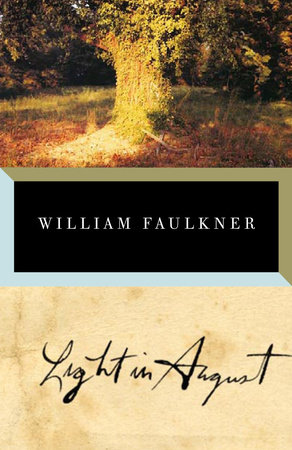
Light in August, a novel that contrasts stark tragedy with hopeful perseverance in the face of mortality, which features some of Faulkner’s most memorable characters: guileless, dauntless Lena Grove, in search of the father of her unborn child; Reverend Gail Hightower, a lonely outcast haunted by visions of Confederate glory; and Joe Christmas, a desperate, enigmatic drifter consumed by his mixed ancestry.

One of William Faulkner's finest novels, As I Lay Dying was originally published in 1930, and remains a captivating and stylistically innovative work. The story revolves around a grim yet darkly humorous pilgrimage, as Addie Bundren's family sets out to fulfill her last wish: to be buried in her native Jefferson, Mississippi, far from the miserable backwater surroundings of her married life. Told through multiple voices, it vividly brings to life Faulkner's imaginary South, one of the great invented landscapes in all of literature, and is replete with the poignant, impoverished, violent, and hypnotically fascinating characters that were his trademark.

“I give you the mausoleum of all hope and desire. . . . I give it to you not that you may remember time, but that you might forget it now and then for a moment and not spend all of your breath trying to conquer it. Because no battle is ever won he said. They are not even fought. The field only reveals to man his own folly and despair, and victory is an illusion of philosophers and fools.” —from The Sound and the Fury The Sound and the Fury is the tragedy of the Compson family, featuring some of the most memorable characters in literature: beautiful, rebellious Caddy; the manchild Benjy; haunted, neurotic Quentin; Jason, the brutal cynic; and Dilsey, their black servant. Their lives fragmented and harrowed by history and legacy, the character’s voices and actions mesh to create what is arguably Faulkner’s masterpiece and one of the greatest novels of the twentieth century.

Set in Mississippi during the Civil War and Reconstruction, THE UNVANQUISHED focuses on the Sartoris family, who, with their code of personal responsibility and courage, stand for the best of the Old South's traditions.

The Hamlet, the first novel of Faulkner's Snopes trilogy, is both an ironic take on classical tragedy and a mordant commentary on the grand pretensions of the antebellum South and the depths of its decay in the aftermath of war and Reconstruction. It tells of the advent and the rise of the Snopes family in Frenchman's Bend, a small town built on the ruins of a once-stately plantation. Flem Snopes -- wily, energetic, a man of shady origins -- quickly comes to dominate the town and its people with his cunning and guile.
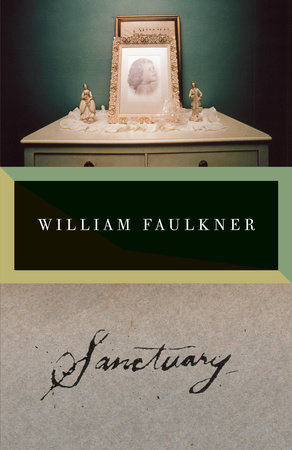
Psychologically astute and wonderfully poetic, Sanctuary is a powerful novel examining the nature of true evil, through the prisms of mythology, local lore, and hard-boiled detective fiction. This is the dark, at times brutal, story of the kidnapping of Mississippi debutante Temple Drake, who introduces her own form of venality into the Memphis underworld where she is being held.
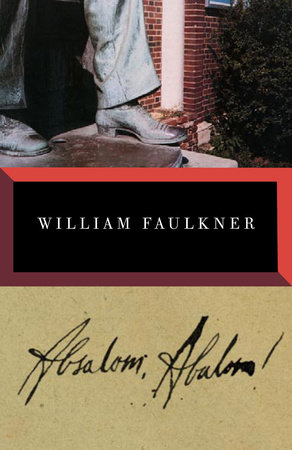
Published in 1936, Absalom, Absalom! is considered by many to be William Faulkner's masterpiece. Although the novel's complex and fragmented structure poses considerable difficulty to readers, the book's literary merits place it squarely in the ranks of America's finest novels. The story concerns Thomas Sutpen, a poor man who finds wealth and then marries into a respectable family. His ambition and extreme need for control bring about his ruin and the ruin of his family. Sutpen's story is told by several narrators, allowing the reader to observe variations in the saga as it is recounted by different speakers. This unusual technique spotlights one of the novel's central questions: To what extent can people know the truth about the past?

Emily is a member of a family in the antebellum Southern aristocracy; after the Civil War, the family has fallen on hard times.

Emily is a member of a family in the antebellum Southern aristocracy; after the Civil War, the family has fallen on hard times.

“I believe that man will not merely endure: he will prevail. He is immortal, not because he alone among creatures has an inexhaustible voice, but because he has a soul, a spirit capable of compassion and sacrifice and endurance.” —William Faulkner, on receiving the Nobel Prize Go Down, Moses is composed of seven interrelated stories, all of them set in Faulkner’s mythic Yoknapatawpha County. From a variety of perspectives, Faulkner examines the complex, changing relationships between blacks and whites, between man and nature, weaving a cohesive novel rich in implication and insight.

“A Bear Hunt,” “A Rose for Emily,” “Two Soldiers,” “Victory,” “The Brooch,” “Beyond”—these are among the forty-two stories that make up this magisterial collection by the writer who stands at the pinnacle of modern American fiction. Compressing an epic expanse of vision into narratives as hard and wounding as bullets, William Faulkner’s stories evoke the intimate textures of place, the deep strata of history and legend, and all the fear, brutality, and tenderness of which human beings are capable. These tales are set not only in Yoknapatawpha County but in Beverly Hills and in France during World War I; they are populated by such characters as the Faulknerian archetypes Flem Snopes and Quentin Compson (“A Justice”) as well as ordinary men and women who emerge in these pages so sharply and indelibly that they dwarf the protagonists of most novels.--back coverContains:Barn burning --Shingles for the Lord --The tall men --A bear hunt --Two soldiers --Shall not perish --A rose for Emily --Hair --Centaur in brass --Dry September --Death drag --Elly --Uncle Willy --Mule in the yard --That will be fine --That evening sun --Red leaves --A justice --A courtship --Lo! --Ad Astra --Victory --Crevasse --Turnabout --All the dead pilots --Wash --Honor --Dr. Martino --Fox hunt --Pennsylvania Station --Artist at home --The brooch --My Grandmother Millard --Golden land --There was a queen --Mountain victory --Beyond --Black music --The leg --Mistral --Divorce in Naples --Carcassonne.

One of Faulkner's comic masterpieces, The Reivers is a picaresque that tells of three unlikely car thieves from rural Mississippi. Eleven-year-old Lucius Priest is persuaded by Boon Hogganbeck, one of his family's retainers, to steal his grandfather's car and make a trip to Memphis. The Priests' black coachman, Ned McCaslin, stows away, and the three of them are off on a heroic odyssey, for which they are all ill-equipped, that ends at Miss Reba's bordello in Memphis. From there a series of wild misadventures ensues--involving horse smuggling, trainmen, sheriffs' deputies, and jail.

Set in the deep south that provided the backdrop for all of Faulkner's finest fiction, Intruder in the Dust is the novel that marks the final phase of its author's outstanding creative period. The chronicle of an elderly black farmer arrested for the murder of a white man and under threat from the lynch mob is a characteristically Faulknerian tale of dark omen, its sole ray of hope the character of the young white boy who repays an old favour by proving the innocence of the man who saved him from drowning in an icy creek.

In this feverishly beautiful novel— subsequently titled If I Forget Thee, Jerusalem and now published in the authoritative Library of America text—William Faulkner interweaves two narratives, each wholly absorbing in its own right, each subtly illuminating the other. In New Orleans in 1937, a man and a woman embark on a headlong flight into the wilderness of illicit passion, fleeing her husband and the temptations of respectability. In Mississippi ten years earlier, a convict sets forth across a flooded river, risking his own chance at freedom to rescue a pregnant woman. From these separate stories Faulkner composes a symphony of deliverance and damnation, survival and self-sacrifice, a novel in which elemental danger is juxtaposed wiht fatal injuries of the spirit. The Wild Palms is grandly inventive, heart-stopping in its prose, and suffused on every page with the physical presence of the country that Faulkner made his own.

This novel won both the Pulitzer Prize and the National Book Award in 1955. An allegorical story of World War I, set in the trenches in France and dealing ostensibly with a mutiny in a French regiment, it was originally considered a sharp departure for Faulkner. Recently it has come to be recognized as one of his major works and an essential part of the Faulkner oeuvre.

"Barn Burning" is a short story by the American author William Faulkner which first appeared in Harper's in 1939 and has since been widely anthologized. The story deals with class conflicts, the influence of fathers, and vengeance as viewed through the third-person perspective of a young, impressionable child. It is a prequel to The Hamlet, The Town, and The Mansion, the three novels make up the Snopes trilogy.

This is the second volume of Faulkner's trilogy about the Snopes family, his symbol for the grasping, destructive element in the post-bellum South.Like its predecessor The Hamlet and its successor The Mansion, The Town is completely self-contained, but it gains resonance from being read with the other two. The story of Flem Snopes' ruthless struggle to take over the town of Jefferson, Mississippi, the book is rich in typically Faulknerian episodes of humor and of profundity.

Three different ways to approach Faulkner, each of them representative of his work as a whole. Includes "Spotted Horses," "Old Man," and his famous "The Bear."

A wounded aviator returns home after his time in World War One. Escorted to his small hometown in Georgia by another wounded veteran of the war and a widow, he faces the many realities that come with his his anything-but-loyal fiancée, the silence he lives in because of his head injury, and the widow who plans to marry him herself.

The Mansion completes Faulkner’s great trilogy of the Snopes family in the mythical county of Yoknapatawpha, Mississippi, which also includes The Hamlet and The Town. Beginning with the murder of Jack Houston, and ending with the murder of Flem Snopes, it traces the downfall of this indomitable post-bellum family, who managed to seize control of the town of Jefferson within a generation.

Portrays the decay of the Mississippi aristocracy following the social upheaval of the American Civil War. The 1929 edition is an abridged version of Faulkner's original work. The full text was published in 1973 as Flags in the Dust.

From the Modern Library’s new set of beautifully repackaged hardcover classics by William Faulkner—also available are Snopes, As I Lay Dying, The Sound and the Fury, Light in August, and Absalom, Absalom!William Faulkner was a master of the short story. Most of the pieces in this collection are drawn from the greatest period in his writing life, the fifteen or so years beginning in 1929, when he published The Sound and the Fury . They explore many of the themes found in the novels and feature characters of small-town Mississippi life that are uniquely Faulkner’s. In “A Rose for Emily,” the first of his stories to appear in a national magazine, a straightforward, neighborly narrator relates a tale of love, betrayal, and murder. The vicious family of the Snopes trilogy turns up in “Barn Burning,” about a son’s response to the activities of his arsonist father. And Jason and Caddy Compson, two other inhabitants of Faulkner’s mythical Yoknapatawpha County, are witnesses to the terrorizing of a pregnant black laundress in “That Evening Sun.” These and the other stories gathered here attest to the fact that Faulkner is, as Ralph Ellison so aptly noted, “the greatest artist the South has produced.”Including these “Barn Burning”“Two Soldiers”“A Rose for Emily”“Dry September”“That Evening Sun”“Red Leaves”“Lo!”“Turnabout”“Honor”“There Was a Queen”“Mountain Victory”“Beyond”“Race at Morning”

The complete text of Faulkner's third novel, published for the first time in 1973, appeared with his reluctant consent in a much cut version in 1929 as SARTORIS.

Novels 1930-1935: As I Lay Dying / Sanctuary / Light in August / Pylon
by William Faulkner
Rating: 4.3 ⭐
Between 1930 and 1935, William Faulkner came into full possession of the genius and creativity that made him one of America’s finest writers of the twentieth century. The four novels in this Library of America collection display an astonishing range of characters and treatments in his Depression-era fiction.As I Lay Dying (1930) is a combination of comedy, horror, and compassion, a narrative woven from the inarticulate desires of a peasant family in conflict. It presents the conscious, unconscious, and sometimes hallucinatory impressions of the husband, daughter, and four sons of Addie Bundren, the long-suffering matriarch of her rural Mississippi clan, as the family marches her body through fire and flood to its grave in town.Sanctuary (1931) is a novel of sex and social class, of collapsed gentility and amoral justice, that moves from the back roads of Mississippi and the fleshpots of Memphis to the courthouse of Jefferson and the appalling spectacle of popular vengeance. With its fascinating portraits of Popeye, a sadistic gangster and rapist, and Temple Drake, a debutante with an affinity for evil, it offers a horrific and sometimes comically macabre vision of modern life.Light in August (1932) incorporates Faulkner’s religious vision of the hopeful stubbornness of ordinary life. The guileless Lena Grove, in search of the father of her unborn child; the disgraced minister Gail Hightower, who dreams of Confederate cavalry charges; Byron Bunch, who thought working Saturdays would keep a man out of trouble, and the desperate, enigmatic Joe Christmas, consumed by his mixed ancestry—all find their lives entangled in the inexorable succession of love, birth, and death.Pylon (1935), a tale of barnstorming aviators in the carnival atmosphere of an air show in a southern city, examines the bonds of desire and loyalty among three men and a woman, all characters without a past. Dramatizing what, in accepting his Nobel Prize, Faulkner called “the human heart in conflict with itself,” it illustrates how he became one of the great humanists of twentieth-century literature.The Library of America edition of Faulkner’s work publishes, for the first time, new, corrected texts of these four works. Manuscripts, typescripts, galleys, and published editions have been collated to produce versions that are free of the changes introduced by the original editors and that are faithful to Faulkner’s intentions.

This sequel to Faulkner's SANCTUARY written 20 years later, takes up the story of Temple Drake eight years after the events related in SANCTUARY.

"'The Bear' is a composite narrative of the initiation and inheritance of Isaac McCaslin (born in 1867), the last direct male descendant of Lucius Quintus Carothers McCaslin, who purchased land from the Chickasaw Indians." --A William Faulkner Encyclopedia. A version of it was published as a short story in The Saturday Evening Post on May 9, 1942. It was subsequently incorporated into the author's novel Go Down, Moses (1942); but has since sometimes been published as a free-standing novella.

A delightful surprise, Faulkner wrote his second novel "for the sake of writing because it was fun." Mosquitoes centers around a colorful assortment of passengers, out on a boating excursion from New Orleans. The rich and the aspiring, social butterflies and dissolute dilettantes are all easy game for Faulkner's barbed wit in this engaging high-spirited novel which offers a fascinating glimpse of Faulkner as a young artist."It approaches in the first half and reaches in the second half a brilliance that you can rightfully expect only in the writings of a few men. It is full of the fine kind of swift and lusty writing that comes from a healthy, fresh pen."--Lillian Hellman, New York Herald Tribune

In prose of biblical grandeur and feverish intensity, William Faulkner reconstructed the history of the American South as a tragic legend of courage and cruelty, gallantry and greed, futile nobility and obscene crimes. No single volume better conveys the scope of Faulkner's vision than The Portable Faulkner. Edited by Malcolm CowleyContents:The Old PeopleThe UnvanquishedThe Last WildernessThe PeasantsThe End of an OrderMississippi FloodModern TimesThe Undying Past
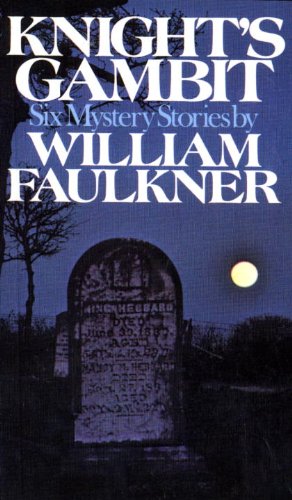
Gavin Stevens, the wise student of crime and folkways of Mississippi's Yoknapatawpha county, plays the major role in these six stories of violence.

Here, published in a single volume as Faulkner always hoped they would be, are the three novels that comprise the famous Snopes trilogy, a saga that stands as perhaps the greatest feat of Faulkner's imagination. The Hamlet, the first book of the series chronicling the advent and rise of the grasping Snopes family in mythical Yoknapatawpha County, is a work that Cleanth Brooks called "one of the richest novels in the Faulkner canon." It recounts how the wily, cunning Flem Snopes dominates the rural community of Frenchman's Bend - and claims the voluptuous Eula Varner as his bride. The Town, the second novel, records Flem's ruthless struggle to take over the county seat of Jefferson, Mississippi. Finally, The Mansion tells of Mink Snopes, whose archaic sense of honor brings about the downfall of his cousin Flem. "For all his concerns with the South, Faulkner was actually seeking out the nature of man," noted Ralph Ellison. "Thus we must turn to him for that continuity of moral purpose which made for the greatness of our classics."