
Evelyn Waugh
Evelyn Waugh's father Arthur was a noted editor and publisher. His only sibling Alec also became a writer of note. In fact, his book “The Loom of Youth” (1917) a novel about his old boarding school Sherborne caused Evelyn to be expelled from there and placed at Lancing College. He said of his time there, “…the whole of English education when I was brought up was to produce prose writers; it was all we were taught, really.” He went on to Hertford College, Oxford, where he read History. When asked if he took up any sports there he quipped, “I drank for Hertford.” In 1924 Waugh left Oxford without taking his degree. After inglorious stints as a school teacher (he was dismissed for trying to seduce a school matron and/or inebriation), an apprentice cabinet maker and journalist, he wrote and had published his first novel, “Decline and Fall” in 1928. In 1928 he married Evelyn Gardiner. She proved unfaithful, and the marriage ended in divorce in 1930. Waugh would derive parts of “A Handful of Dust” from this unhappy time. His second marriage to Audrey Herbert lasted the rest of his life and begat seven children. It was during this time that he converted to Catholicism. During the thirties Waugh produced one gem after another. From this decade come: “Vile Bodies” (1930), “Black Mischief” (1932), the incomparable “A Handful of Dust” (1934) and “Scoop” (1938). After the Second World War he published what is for many his masterpiece, “Brideshead Revisited,” in which his Catholicism took centre stage. “The Loved One” a scathing satire of the American death industry followed in 1947. After publishing his “Sword of Honour Trilogy” about his experiences in World War II - “Men at Arms” (1952), “Officers and Gentlemen” (1955), “Unconditional Surrender" (1961) - his career was seen to be on the wane. In fact, “Basil Seal Rides Again” (1963) - his last published novel - received little critical or commercial attention. Evelyn Waugh, considered by many to be the greatest satirical novelist of his day, died on 10 April 1966 at the age of 62. See http://en.wikipedia.org/wiki/Evelyn_W...
30 Books Written
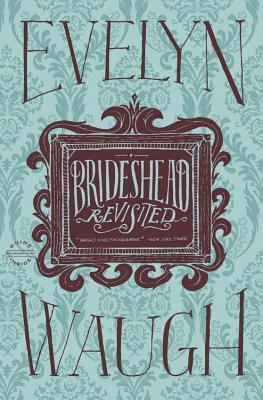
The wellsprings of desire and the impediments to love come brilliantly into focus in Evelyn Waugh's masterpiece -- a novel that immerses us in the glittering and seductive world of English aristocracy in the waning days of the empire.Through the story of Charles Ryder's entanglement with the Flytes, a great Catholic family, Evelyn Waugh charts the passing of the privileged world he knew in his own youth and vividly recalls the sensuous pleasures denied him by wartime austerities. At once romantic, sensuous, comic, and somber, Brideshead Revisited transcends Waugh's early satiric explorations and reveals him to be an elegiac, lyrical novelist of the utmost feeling and lucidity."A genuine literary masterpiece." --Time "Heartbreakingly beautiful...The twentieth century's finest English novel." --Los Angeles TimesSelected by Modern Library as one of the 100 best novels of the century and called "Evelyn Waugh's finest achievement" by the New York Times, Brideshead Revisited is a stunning exploration of desire, duty, and memory.

Expelled from Oxford for indecent behaviour, Paul Pennyfeather is oddly unsurprised to find himself qualifying for the position of schoolmaster at Llanabba Castle. His colleagues are an assortment of misfits, including Prendy (plagued by doubts) and captain Grimes, who is always in the soup (or just plain drunk). Then Sports Day arrives, and with it the delectable Margot Beste-Chetwynde, floating on a scented breeze. As the farce unfolds and the young run riot, no one is safe, least of all Paul. Taking its title from Edward Gibbon's Decline and Fall of the Roman Empire, Evelyn Waugh's first, funniest novel immediately caught the ear of the public with his account of an ingénu abroad in the decadent confusion of 1920s high society.

The Sword of Honour Trilogy: Men at Arms/Officers & Gentlemen/Unconditional Surrender
by Evelyn Waugh
Rating: 4.0 ⭐
• 2 recommendations ❤️
This trilogy spanning World War II, based in part on Evelyn Waugh's own experiences as an army officer, is the author's surpassing achievement as a novelist. Its central character is Guy Crouchback, head of an ancient but decayed Catholic family, who at first discovers new purpose in the challenge to defend Christian values against Nazi barbarism, but then gradually finds the complexities and cruelties of war overwhelming. Though often somber, Sword of Honor is also a brilliant comedy, peopled by the fantastic figures so familiar from Waugh's early satires. The deepest pleasures these novels afford come from observing a great satiric writer employ his gifts with extraordinary subtlety, delicacy, and human feeling, for purposes that are ultimately anything but satiric.
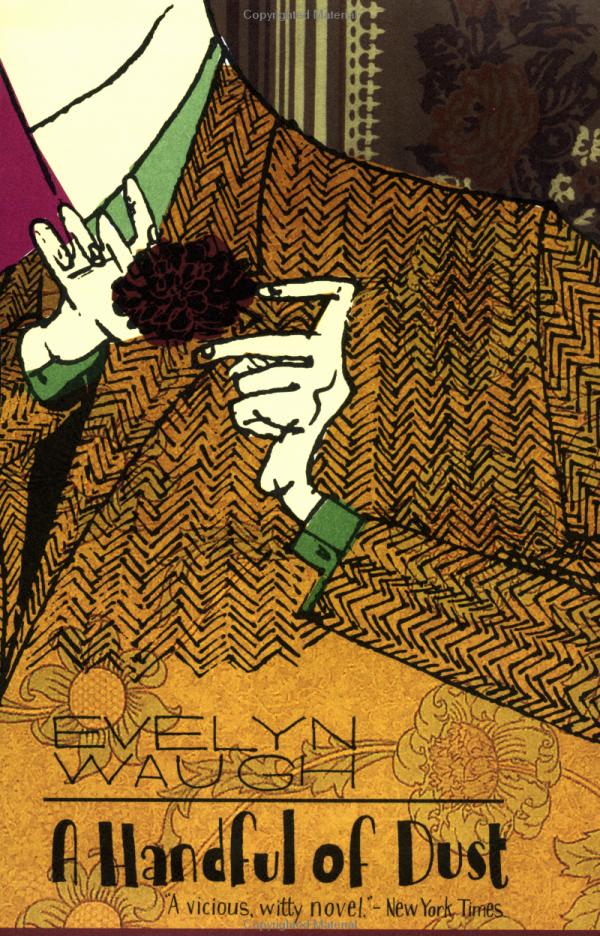
Laced with cynicism and truth, "A Handful of Dust" satirizes a certain stratum of English life where all the characters have wealth, but lack practically every other credential. Murderously urbane, it depicts the breakup of a marriage in the London gentry, where the errant wife suffers from terminal boredom, and becomes enamoured of a social parasite and professional luncheon-goer.

Lord Copper, newspaper magnate and proprietor of the "Daily Beast", has always prided himself on his intuitive flair for spotting ace reporters. That is not to say he has not made the odd blunder, however, and may in a moment of weakness make another. Acting on a dinner-party tip from Mrs Algernon Smith, he feels convinced that he has hit on just the chap to cover a promising little war in the African Republic of Ishmaelia. One of Evelyn Waugh's most exuberant comedies, "Scoop" is a brilliantly irreverent satire of "Fleet Street" and its hectic pursuit of hot news.
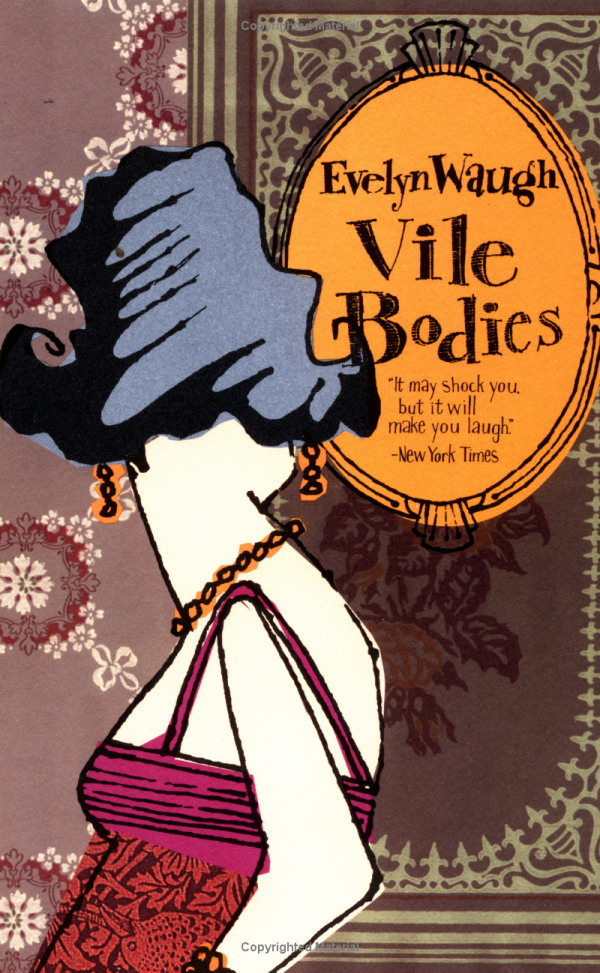
The Bright Young Things of 1920s Mayfair, with their paradoxical mix of innocence and sophistication, exercise their inventive minds and vile bodies in every kind of capricious escapade, whether it is promiscuity, dancing, cocktail parties or sports cars. A vivid assortment of characters, among them the struggling writer Adam Fenwick-Symes and the glamorous, aristocratic Nina Blount, hunt fast and furiously for ever greater sensations and the hedonistic fulfilment of their desires. Evelyn Waugh’s acidly funny and experimental satire shows a new generation emerging in the years after the First World War, revealing the darkness and vulnerability beneath the glittering surface of the high life.

Following the death of a friend, British poet and pets' mortician Dennis Barlow finds himself entering the artificial Hollywood paradise of the Whispering Glades Memorial Park. Within its golden gates, death, American-style, is wrapped up and sold like a package holiday. There, Dennis enters the fragile and bizarre world of Aimée, the naïve Californian corpse beautician, and Mr Joyboy, the master of the embalmer's art...A dark and savage satire on the Anglo-American cultural divide, The Loved One depicts a world where love, reputation, and death cost a very great deal.This is an alternate cover edition: https://www.goodreads.com/book/show/3....

Guy Crouchback, determined to get into the war, takes a commission in the Royal Corps of Halberdiers. His spirits high, he sees all the trimmings but none of the action. And his first campaign, an abortive affair on the West African coastline, ends with an escapade which seriously blots his Halberdier copybook. Men at Arms is the first book in Waugh’s brilliant trilogy, Sword of Honour, which chronicles the fortunes of Guy Crouchback. The second and third volumes, Officers and Gentlemen and Unconditional Surrender, are also published in Penguin. Sword of Honour has recently been made into a television drama series, with screenplay by William Boyd.
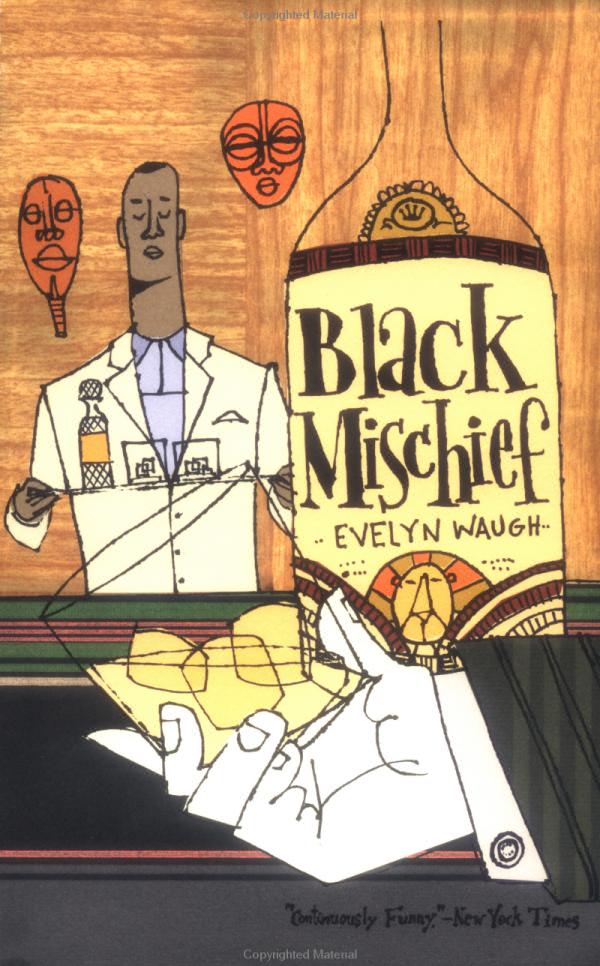
"Black Mischief," Waugh's third novel, helped to establish his reputation as a master satirist. Set on the fictional African island of Azania, the novel chronicles the efforts of Emperor Seth, assisted by the Englishman Basil Seal, to modernize his kingdom. Profound hilarity ensues from the issuance of homemade currency, the staging of a "Birth Control Gala," the rightful ruler's demise at his own rather long and tiring coronation ceremonies, and a good deal more mischief.

Upper-class scoundrel Basil Seal, mad, bad, and dangerous to know, creates havoc wherever he goes, much to the despair of the three women in his life-his sister, his mother, and his mistress. When Neville Chamberlain declares war on Germany, it seems the perfect opportunity for more action and adventure. So Basil follows the call to arms and sets forth to enjoy his finest hour-as a war hero. Basil's instincts for self-preservation come to the fore as he insinuates himself into the Ministry of Information and a little-known section of Military Security. With Europe frozen in the "phoney war," when will Basil's big chance to fight finally arrive?

Fueled by idealism and eagerness to contribute to the war effort, Guy Crouchback becomes attached to a commando unit undergoing training on the Hebridean isle of Mugg, where the whisky flows freely and respect must be paid to the laird. But the comedy of Mugg is soon followed by the bitterness of Crete, where chaos reigns and a difficult evacuation must be accomplished.Officers and Gentlemen is the second novel in Waugh's brilliant Sword of Honor trilogy recording the tumultuous wartime adventures of Guy Crouchback, which also comprises Men at Arms and Unconditional Surrender.

Evelyn Waugh, author of the internationally acclaimed bestseller Brideshead Revisited and one of the greatest writers of the twentieth century, considered Helena to be perhaps his finest novel. Based on the life of St. Helena, mother of the Emperor Constantine and finder of the true cross, this spiritual adventure brings to life the political intrigues of ancient Rome and the early years of Christianity.

Guy Crouchback has lost his Halberdier idealism. A desk job in London gives him the chance of reconciliation with his former wife. Then, in Yugoslavia, as a liaison officer with the partisans, he finally becomes aware of the futility of a war he once saw in terms of honour.

The Ordeal of Gilbert Pinfold remains one of Eveyln Waugh's most remarkable and self-revealing works. Three years before he wrote it, Waugh suffered "a brief bout of hallucination" similar to the one that besets Mr. Pinfold in this wildly witty and occasionally frightening novel.A successful, middle-aged novelist with a case of "bad nerves," Gilbert Pinfold embarks on a recuperative trip to Ceylon. Almost as soon as the gangplank lifts, Mr. Pinfold hears sounds coming out of the ceiling of his cabin: wild jazz bands, barking dogs, loud revival meetings. He can only infer that somewhere concealed in his room an erratic public-address system is letting him hear everything that goes on aboard ship. And then, instead of just sounds, he hears voices. But they are not just any voices. These voices are talking, in the most frightening intimate way, about him!

Evelyn Waugh's short fiction reveals in miniaturized perfection the elements that made him the greatest satirist of the twentieth century. The stories collected here range from delightfully barbed portraits of the British upper classes to an alternative ending to Waugh's novel A Handful of Dust; from a "missing chapter" in the life of Charles Ryder, the nostalgic hero of Brideshead Revisited, to a plot-packed morality tale that Waugh composed at a very tender age; from an epistolary lark in the voice of "a young lady of leisure" to a darkly comic tale of scandal in a remote (and imaginary) African outpost.The Complete Stories is a dazzling distillation of Waugh's genius-abundant evidence that one of the twentieth century's most admired and enjoyed English novelists was also a master of the short form.

Evelyn Waugh presented his biography of St. Edmund Campion, the Elizabethan poet, scholar and gentleman who became the haunted, trapped and murdered priest as a simple, perfectly true story of heroism and holiness.But it is written with a novelist's eye for the telling incident and with all the elegance and feeling of a master of English prose. From the years of success as an Oxford scholar, to entry into the newly founded Society of Jesus and a professorship in Prague, Campion's life was an inexorable progress towards the doomed mission to England. There followed pursuit, betrayal, a spirited defense of loyalty to the Queen, and a horrifying martyr's death at Tyburn.
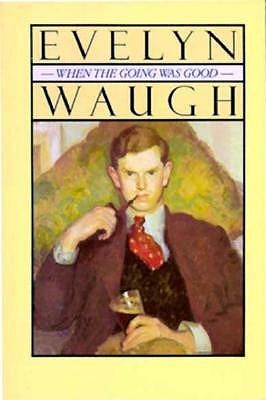
When The Going Was Good presents five long excerpts from the four travel books Evelyn Waugh wrote between 1929 and 1935, chosen by the author. Starting with a tour of Mediterranean pleasure dens, Waugh pushes on to Abyssinia (where he reports indelibly on the coronation of Haile Selassie), across the continent of South Africa, to the wilds of Brazil and British Guiana, and back to Abyssinia in the wake of the Italian invasion.

Evelyn Waugh chose the name Labels for his first travel book because, he said, the places he visited were already “fully labeled” in people's minds.But even the most seasoned traveler could not fail to be inspired by Waugh's quintessentially English attitude and his eloquent and frequently outrageous wit. From Europe to the Middle East and North Africa, from Egyptian porters and Italian priests to Maltese sailors and Moroccan merchants—as he cruises around the Mediterranean his pen cuts through the local color to give a highly entertaining portrait of the Englishman abroad.

A Little Learning The author's childhood was warm, bright and serene. The Hampstead and Lancing schooldays which followed were sometimes agreeable, but often not. His life at Oxford - which he evokes in Brideshead Revisited - was essentially a catalogue of friendship. This title presents a portrait of his recollection of those hedonistic days. Full description

Includes stories such as - Mr Loveday's Little Outing; Cruise; Period Piece; On Guard; An Englishman's Home; Excursion in Reality; Bella Fleace Gave a Party; Winner Takes All; Work Suspended; Scott-King's Modern Europe; Basil Seal Rides Again; and Charles Ryder's Schooldays.

Perhaps the funniest travel book ever written, Remote People begins with a vivid account of the coronation of Emperor Ras Tafari - Haile Selassie I, King of Kings - an event covered by Evelyn Waugh in 1930 as special correspondent for The Times. It continues with subsequent travels throughout Africa, where natives rub shoulders with eccentric expatriates, settlers with Arab traders and dignitaries with monks. Interspersed with these colourful tales are three 'nightmares' which describe the vexations of travel, including returning home.

Evelyn Waugh was a loving Husband, a wise and affectionate father and the funniest English novelist of the century. This selection of letters does full justice to these splendid attribute's " Phillip Toynbee.

A collection of short fiction by "the only first-rate comic genius that has appeared in England since Bernard Shaw" (according to Edmund Wilson), Charles Ryder's Schooldays returns to print eleven short stories by Evelyn Waugh, together with a recently discovered sketch about the early life and family background of Charles Ryder, the nostalgic hero of Brideshead Revisited. Likely intended as the first chapter of a novel tracing the emotional roots of the Brideshead narrator, the title story is a sensitive, convincing portrait of a young man emerging from schoolboy conformity to a tentative criticism of the "subhuman, wholly respectable" world around him. The other stories--brilliant entertainments in the manner of Waugh's early comic novels--include "By Special Request" (written as an alternative ending to A Handful of Dust) and "Incident in Azania," a return to the scene of Black Mischief. A worthy and welcome addition to Waugh's published works, these stories display all the outrageous wit and satiric intelligence for which Time awarded him "a roomy cell in the murderer's row (Swift, Pope, Wilde, and Shaw) of English letters."

Hardcover with plastic coated unclippe dust jacket, in very good condition. From the collection of Ian Angus, British Librarian and scholar on George Orwell, whose name and date are pencilled to FEP. Light shelf wear to the jacket, and page block is slightly blemished. Binding is sound, boards are clean and pages are clear. LW

Scoop, Evelyn Waugh's bestselling comedy of England's newspaper business of the 1930s, is the closest thing foreign correspondents have to a bible -- they swear by it. But few readers are acquainted with Waugh's memoir of his stint as a London Daily Mail correspondent in Abyssinia (now Ethiopia) during the Italian invasion in the 1930s. Waugh in Abyssinia is an entertaining account by a cantankerous and unenthusiastic war reporter that provides a fascinating short history of Mussolini's imperial adventure as well as a wickedly witty preview of the characters and follies that figure into Waugh's famous satire. In the forward, veteran foreign correspondent John Maxwell Hamilton explores in how Waugh ended up in Abyssinia, which real-life events were fictionalized in Scoop, and how this memoir fits into Waugh's overall literary career, which includes the classic Brideshead Revisited. As Hamilton explains, Waugh was the right man (a misfit), in the right place (a largely unknown country that lent itself to farcical imagination), at the right time (when the correspondents themselves were more interesting than the scraps of news they could get.) The result, Waugh in Abyssinia, is a memoir like no other.

From Wikipedia:"Love Among the Ruins is a satire set in a dystopian quasi-egalitarian Britain. The protagonist, Miles Plastic, is an orphan who at the beginning of the story is finishing a prison term for arson. Crime is treated very leniently by the state, and conditions in prison are actually quite superior to those among the population at large, leading to an understandably high recidivism rate. Upon release, Plastic goes to work at a state-run euthanasia center. The centers are not restricted to the terminally ill and are so popular that Plastic's sole responsibility is to stem "the too eager rush" of perfectly healthy but "welfare weary" citizens..."

In this unique collection of Waugh's early short stories, some of which became the inspirations for his novels, Waugh displays his unique talent for comedy and narration. 'Mr Loveday's Little Outing' is a blackly comic tale of a mental asylum and its favourite resident, while 'Cruise' sees a hilarious series of letters from a naïve young woman as she travels with her family. These witty and immaculately crafted stories display the finest writing of a master of satire and comic twists.

An elderly settler, living deep within the Amazon forest, rescues and holds captive a lost explorer and requires him to read aloud the novels of Dickens.

This is "the story of a summer holiday, a light tale." Scott-King is a middle-aged English schoolmaster, "an adult, an intellectual, a classical scholar, almost a poet" - slightly bald and slightly corpulent. After twenty-one years as classical master at Granchester he has become a school institution, "old Scottie," given to precise lamentations on the subject of modern decadence. He found his special subject for study in the works of the obscure poet, Bellorius, who had died three centuries, before that is in 1646, in Neutralia, then a happy kingdom of the Habsburg Empire but now a totalitarian state in modern Europe. Scott-King wrote an essay to commemorate the approaching tercentenary of Bellorius's death, and the publication of this essay in a learned journal brought Scott-King an invitation from the Neutralian Government to take part, along with distinguished scholars from all over the world, in the tercentenary celebration. He accepted and, in teh company of a professor of Roman Law and a columnist, Miss Bombaum, was flown to Neutralia and plunged at once into the nightmare of totalitarian hospitality and into the life of Modern Europe.

The last tranche of the fabulous new hardback library of 24 Evelyn Waugh books, publishing in chronological order. In this brilliant travel diary Evelyn Waugh captures a portrait of Africa and the Levant as it was emerging from the shadow of WW II and into the post- colonial order. He reports on Port Said, Aden, Kenya, Mt. Kilimanjaro, Tanganyika, Rhodesia, Mozambique, Bechuanaland and South Africa. Waugh was no defender of the established order, but nor did he succumb to hype, either. He knew the emergers were going to get something far different from what they expected.