
Colin McGinn
Colin McGinn is a British philosopher currently working at the University of Miami. McGinn has also held major teaching positions at Oxford University and Rutgers University. He is best known for his work in the philosophy of mind, though he has written on topics across the breadth of modern philosophy. Chief among his works intended for a general audience is the intellectual memoir The Making of a Philosopher: My Journey Through Twentieth-Century Philosophy (2002). Colin McGinn was born in Blackpool, England in 1950. He enrolled in Manchester University to study psychology. However, by the time he received his degree in psychology from Manchester in 1971 (by writing a thesis focusing on the ideas of Noam Chomsky), he wanted to study philosophy as a postgraduate. By 1972, McGinn was admitted into Oxford University's B.Litt postgraduate programme, in hopes of eventually gaining entrance into Oxford's postgraduate B.Phil. programme. McGinn quickly made the transition from psychology to philosophy during his first term at Oxford. After working zealously to make the transition, he was soon admitted into the B.Phil programme under the recommendation of his advisor, Michael R. Ayers. Shortly after entering the philosophy programme, he won the John Locke Prize in 1972. By 1974, McGinn received the B.Phil degree from Oxford, writing a thesis under the supervision of P.F. Strawson, which focused on the semantics of Donald Davidson. In 1974, McGinn took his first philosophy position at University College London. In January 1980, he spent two semesters at University of California, Los Angeles (UCLA) as a visiting professor. Then, shortly after declining a job at University of Southern California, he succeeded Gareth Evans as Wilde Reader at Oxford University. In 1988, shortly after a visiting term at City University of New York (CUNY), McGinn received a job offer from Rutgers University. He accepted the offer from Rutgers, joining ranks with, among others, Jerry Fodor in the philosophy department. McGinn stayed at Rutgers until 2006, when he accepted a job offer from University of Miami as full time professor. Although McGinn has written dozens of articles in philosophical logic, metaphysics, and the philosophy of language, he is best known for his work in the philosophy of mind. In his 1989 article "Can We Solve the Mind-Body Problem?", McGinn speculates that the human mind is innately incapable of comprehending itself entirely, and that this incapacity spawns the puzzles of consciousness that have preoccupied Western philosophy since Descartes. Thus, McGinn's answer to the hard problem of consciousness is that humans cannot find the answer. This position has been nicknamed the "New Mysterianism". The Mysterious Flame: Conscious Minds in a Material World (2000) is a non-technical exposition of McGinn's theory. Outside of philosophy, McGinn has written a novel entitled The Space Trap (1992). He was also featured prominently as an interviewee in Jonathon Miller's Brief History of Disbelief, a documentary miniseries about atheism's history. He discussed the philosophy of belief as well as his own beliefs as an atheist.
30 Books Written

Making of a Philosopher, The: My Journey Through Twentieth-Century Philosophy
by Colin McGinn
Rating: 3.6 ⭐
• 2 recommendations ❤️
Part memoir, part study, The Making of a Philosopher is the self–portrait of a deeply intelligent mind as it develops over a life on both sides of the Atlantic.The Making of a Philosopher follows Colin McGinn from his early years in England reading Descartes and Anselm, to his years in the states, first in Los Angeles, then New York. McGinn presents a contemporary academic take on the great philosophical figures of the twentieth century, including Bertrand Russell, Jean–Paul Sartre, and Noam Chomsky, alongside stories of the teachers who informed his ideas and often became friends and mentors, especially the colorful A.J. Ayer at Oxford. McGinn's prose is always elegant and probing; students of contemporary philosophy and the general reader alike will absorb every page.

Shakespeare's plays are usually studied by literary scholars and historians and the books about him from those perspectives are legion. It is most unusual for a trained philosopher to give us his insight, as Colin McGinn does here, into six of Shakespeare's greatest plays— A Midsummer Night's Dream , Hamlet , Othello , Macbeth , King Lear , and The Tempest . In his brilliant commentary, McGinn explores Shakespeare's philosophy of life and illustrates how he was influenced, for example, by the essays of Montaigne that were translated into English while Shakespeare was writing. In addition to chapters on the great plays, there are also essays on Shakespeare and gender and his plays from the aspects of psychology, ethics, and tragedy. As McGinn says about Shakespeare, "There is not a sentimental bone in his body. He has the curiosity of a scientist, the judgement of a philosopher, and the soul of a poet." McGinn relates the ideas in the plays to the later philosophers such as David Hume and the modern commentaries of critics such as Harold Bloom. The book is an exhilarating reading experience, especially at a time when a new audience has opened up for the greatest writer in English.

Being surrounded by bullshit is one thing. Having your mind fucked is quite another. The former is irritating, but the latter is violating and intrusive (unless you give your consent). If someone manipulates your thoughts and emotions, messing with your head, you naturally feel resentment: he or she has distorted your perceptions, disturbed your feelings, maybe even usurped your self. Mindfucking is a prevalent aspect of contemporary culture and the agent can range from an individual to a whole state, from personal mind games to wholesale propaganda. In Mindfucking Colin McGinn investigates and clarifies this phenomenon. Taking in the ancient Greeks, Shakespeare and modern techniques of thought control, McGinn assembles the conceptual components of this most complex of concepts - trust, deception, emotion, manipulation, false belief, vulnerability - and explores its very nature. He elucidates the sexual implications of the metaphor of mindfucking, stressing both its positive and negative features and exposes its essence of psychological upheaval and disorientation. Delusion is the general result, sometimes insanity. How mindfucked are you? It's hard to say from the inside, but being aware of the phenomenon offers at least some protection.

Is consciousness nothing more than brain tissue, as Daniel Dennett argues in his best-selling Consciousness Explained? Or, as others claim, is it a fundamental reality like space, time, and matter? In recent years the nature of consciousness—our immediately known experiences—has taken its place as the most profound problem that science faces. Now in this brilliant and thoroughly accessible new book Colin McGinn takes a provocative position on this perplexing problem. Arguing that we can never truly “know” consciousness—that the human intellect is simply not equipped to unravel this mystery—he demonstrates that accepting this limitation in fact opens up a whole new field of investigation. Indeed, he asserts, consciousness is the best place from which to begin to understand the internal make-up of human intelligence, to investigate our cognitive strengths and weaknesses, and to explore the possibility of machine minds. In elegant prose, McGinn explores the implications of this Mysterian position—such as the new value it gives to the power of dreams and of introspection—and challenges the reader with intriguing questions about the very nature of our minds and brains.

How is watching a movie similar to dreaming? What goes on in our minds when we become absorbed in a movie? How does looking “into” a movie screen allow us to experience the thoughts and feelings of a movie’s characters? These and related questions are at the heart of The Power of Movies, a thoughtful, invigorating, and remarkably accessible book about a phenomenon seemingly beyond reach of our understanding. Colin McGinn–“an ingenious philosopher who thinks like a laser and writes like a dream,” according to Steven Pinker–enhances our understanding of both movies and ourselves in this book of rare and refreshing insight.
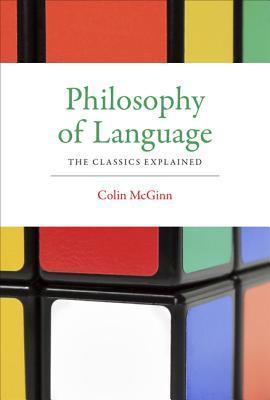
Many beginning students in philosophy of language find themselves grappling with dense and difficult texts not easily understood by someone new to the field. This book offers an introduction to philosophy of language by explaining ten classic, often anthologized, texts. Accessible and thorough, written with a unique combination of informality and careful formulation, the book addresses sense and reference, proper names, definite descriptions, indexicals, the definition of truth, truth and meaning, and the nature of speaker meaning, as addressed by Frege, Kripke, Russell, Donnellan, Kaplan, Evans, Putnam, Tarski, Davidson, and Grice. The explanations aim to be as simple as possible without sacrificing accuracy; critical assessments are included with the exposition in order to stimulate further thought and discussion. Philosophy of Language will be an essential resource for undergraduates in a typical philosophy of language course or for graduate students with no background in the field. It can be used in conjunction with an anthology of classic texts, sparing the instructor much arduous exegesis. Contents Frege on Sense and ReferenceKripke on NamesRussell on Definite DescriptionsDonnellan's DistinctionKaplan on DemonstrativesEvans on Understanding DemonstrativesPutnam on Semantic ExternalismTarski's Theory of TruthDavidson's Semantics for Natural LanguageGrice's Theory of Speaker Meaning


How to imagine the imagination is a topic that draws philosophers the way flowers draw honeybees. From Plato and Aristotle to Wittgenstein and Sartre, philosophers have talked and written about this most elusive of topics--that is, until contemporary analytic philosophy of mind developed. Perhaps it is the vast range of the topic that has scared off our contemporaries, ranging as it does from mental images to daydreams.The guiding thread of this book is the distinction Colin McGinn draws between perception and imagination. Clearly, seeing an object is similar in certain respects to forming a mental image of it, but it is also different. McGinn shows what the differences are, arguing that imagination is a sui generis mental faculty. He goes on to discuss the nature of dreaming and madness, contending that these are primarily imaginative phenomena. In the second half of the book McGinn focuses on what he calls cognitive (as opposed to sensory) imagination, and investigates the role of imagination in logical reasoning, belief formation, the understanding of negation and possibility, and the comprehension of meaning. His overall claim is that imagination pervades our mental life, obeys its own distinctive principles, and merits much more attention.
"A great resource for beginning ethics courses. The book is short and yet it richly embodies the methods of ethical thinking about practical moral problems that are hard for students to learn unless they see them in action. McGinn perspicuously sets out a small set of basic principles and then attacks the problems of our treatment of animals, abortion, sex, censorship, and so on, with a masterful blend of attention to real-life cases and imaginary thought experiments. McGinn hardly claims to have the last word on the complex issues he discusses, and students will find many exciting problems and points to take up." —Owen Flanagan, Duke University

The Character of Mind provides a sweeping and accessible general introduction to the philosophy of mind. Colin McGinn covers all of the main topics--the mind-body problem, the nature of acquaintance, the relation between thought and language, agency, and the self.In particular, McGinn addresses the issue of consciousness, and the difficulty of combining the two very different perspectives on the mind that arise from introspection and from the observation of other people. This second edition has been updated with three new cutting-edge chapters on consciousness, content, and cognitive science to make it the reader of choice on this vital topic.
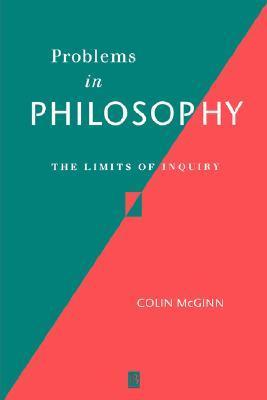
This advanced introductory text offers a synoptic view of philosophical inquiry, discussing such topics as consciousness, the self, meaning, free will, the a priori, and knowledge. The emphasis is on the fundamental intractability of these questions, and a theory is proposed as to why the human mind has so much difficulty in resolving them. This theory turns upon a naturalistic picture of the scope and limits of human intelligence.

McGinn's latest brings together moral philosophy and literary analysis in a way that illuminates both. Setting out to enrich the domain of moral reflection by showing the value of literary texts as sources of moral illumination, McGinn starts by setting out an uncompromisingly realist ethical theory, arguing that morality is an area of objective truth and genuine knowledge. He goes on to address such subjects as the nature of goodness, evil character, and the meaning of monstrosity in the context of an aesthetic theory of virtue, which maintains that goodness of character is the same thing as beauty of soul. Looking at such literary works as Billy Budd , Lolita , The Picture of Dorian Gray , and Frankenstein , as well as examples from film and painting, Ethics, Evil, and Fiction is an original and compelling book by a leading philosopher who is also a critic and novelist.

Can consciousness be fitted into a naturalistic worldview or is it inherently mysterious? In virtue of what does a physical organism come to have an inner conscious life? This book argues that we are not equipped to understand the workings of conciousness, despite its objective naturalness. Introspection does not reveal the hiddent structure of consciousness and it is this that joins experience to the material world.
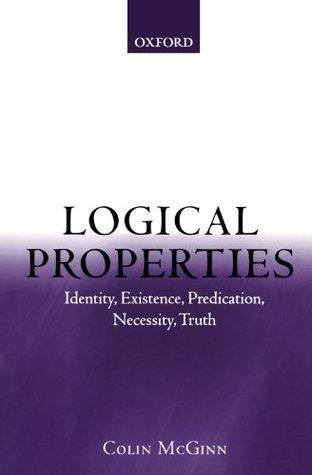
Identity, existence, predication, necessity, and truth are vital concepts at the center of philosophy. Yet Colin McGinn believes that orthodox views of these topics are misguided in important ways. Philosophers and logicians have often distorted the nature of these concepts in an attempt to define them according to preconceived ideas. Logical Properties aims to respect the ordinary ways we talk and think when we employ these concepts, while at the same time showing that they are far more interesting and peculiar than some have assumed; these notions correspond to real properties--logical properties--that challenge naturalistic metaphysical views. Written with a minimum of formal terminology, this book deals with logico-linguistic issues as well as ontological ones. The focus is on trying to get to the essence of the concept concerned, not merely finding some established notation for providing formal interpretations.

In praise of the A philosopher considers the crucial role of the hand in human evolution, particularly with respect to language. “McGinn is an ingenious philosopher who thinks like a laser and writes like a dream.”—Steven Pinker This book is a hymn to the hand. In Prehension , Colin McGinn links questions from science to philosophical concerns to consider something that we take for the importance of the hand in everything we do. Drawing on evolutionary biology, anatomy, archaeology, linguistics, psychology, and philosophy, among other disciplines, McGinn examines the role of the hand in shaping human evolution. He finds that the development of our capacity to grasp, to grip, to take hold (also known as prehension ) is crucial in the emergence of Homo sapiens. The human species possesses language, rational thought, culture, and a specific affective capacity; but there was a time when our ancestors had none of these. How did we become what we so distinctively are, given our early origins? McGinn, following Darwin and others, calls the hand the source of our biological success. When our remote ancestors descended from trees, they adopted a bipedal gait that left the hands free for other work; they began to make tools, which led to social cooperation and increased brain capacity. But McGinn goes further than others in arguing for the importance of the hand; he speculates that the hand played a major role in the development of language, and presents a theory of primitive reference as an outgrowth of prehension. McGinn sings the praises of the hand, and evolution, in a philosophical key. He mixes biology, anthropology, analytical philosophy, existential philosophy, sheer speculation, and utter amazement to celebrate humans' achievement of humanity.

Disgust has a strong claim to be a distinctively human emotion. But what is it to be disgusting? What unifies the class of disgusting things? Colin McGinn sets out to analyze the content of disgust, arguing that life and death are implicit in its meaning. Disgust is a kind of philosophical emotion, reflecting the human attitude to the biological world. Yet it is an emotion we strive to repress. It may have initially arisen as a method of curbing voracious human desire, which itself results from our powerful imagination. Because we feel disgust towards ourselves as a species, we are placed in a fraught emotional we admire ourselves for our achievements, but we also experience revulsion at our necessary organic nature. We are subject to an affective split. Death involves the disgusting, in the shape of the rotting corpse, and our complex attitudes towards death feed into our feelings of disgust. We are beings with a "disgust consciousness", unlike animals and gods-andwe cannot shake our self-ambivalence. Existentialism and psychoanalysis sought a general theory of human emotion; this book seeks to replace them with a theory in which our primary mode of feeling centers around disgust. The Meaning of Disgust is an original study of a fascinating but neglected subject, which attempts to tell the disturbing truth about the human condition.

This book investigates the subjective and objective representations of the world, developing analogies between secondary qualities and indexical thoughts and arguing that subjective representations are ineliminable. Throughout, McGinn brings together historical and contemporary discussions to illuminate old problems in a novel way.

Whether it's conkers in the schoolyard, kicking a football in the park, or playing tennis on Wimbledon Centre Court, sport impacts all of our lives. But what is sport and why do we do it? Colin McGinn, renowned philosopher (and kiteboarder), reflects on our love of sport and explores the value it has for us and the part it plays in a life lived well. Written in the form of a memoir, McGinn discusses many of the sports he has engaged in - from pole-vaulting and gymnastics to windsurfing and tennis - and describes the athletic experience from the inside, as a participant, articulating what is uniquely valuable about sport as an activity. Sport, argues McGinn, takes us to our fullest potential as human beings, it's what we fling at mortality to keep it at bay, a holiday from the Unbearable Heaviness of Being. "Sport" expresses our nature, it bears upon our self-realization. If a happy life consists in one that expresses fully our natural faculties, then sports must play an essential role in our lifes. Mind-body unity, the nature of practical knowledge and physical skill, success and failure, the ethics of competition, peak experiences, the spectacle of professional sport, aesthetics and death, McGinn discusses these and many other issues while telling of his own sporting mishaps and adventures. To use the vernacular of philosophy, "Sport" captures the phenomenology of sport - what it's like to do it - and in doing so shows how sport is a way of expressing and understanding who and what we are, way beyond whether we are a good sportsman, a bad loser or a team-player. For anyone who has ever thought that there must be less humiliating ways to enjoy yourself than being thrashed on the tennis court, "Sport" will reassure you that it's time not wasted.

Fourteen lectures exploring the profound questions of existence, human behavior and human consciousness.

An argument that nativism is true and important but mysterious, examining the particular case of ideas of sensible qualities. In this book, Colin McGinn presents a concise, clear, and compelling argument that the origins of knowledge are innate—that nativism, not empiricism, is correct in its theory of how concepts are acquired. McGinn considers the particular case of sensible qualities—ideas of color, shape, taste, and so on. He argues that these, which he once regarded as the strongest case for the empiricist position, are in fact not well explained by the empiricist account that they derive from interactions with external objects. Rather, he contends, ideas of sensible qualities offer the strongest case for the nativist position—that a large range of our knowledge is inborn, not acquired through the senses. Yet, McGinn cautions, how this can be is deeply problematic; we have no good theories about how innate knowledge is possible. Innate knowledge is a mystery, though a fact. McGinn describes the traditional debate between empiricism and nativism; offers an array of arguments against empiricism; constructs an argument in favor of nativism; and considers the philosophical consequences of adopting the nativist position, discussing perception, the mind–body problem, the unconscious, metaphysics, and epistemology.

Pithy, direct, and essays that propose new ways to think about old problems, spanning a range of philosophical topics. In Philosophical Provocations , Colin McGinn offers a series of short, sharp essays that take on philosophical problems ranging from the concept of mind to paradox, altruism, and the relation between God and the Devil. Avoiding the usual scholarly apparatus and embracing a blunt pithiness, McGinn aims to achieve as much as possible in as short a space as possible while covering as many topics as possible. Much academic philosophical writing today is long, leaden, citation heavy, dense with qualifications, and painful to read. The essays in Philosophical Provocations are short, direct, and engaging, often challenging philosophical orthodoxy as they consider issues in mind, language, knowledge, metaphysics, biology, ethics, and religion. McGinn is looking for new ways to think about old problems. Thus he writes, about consciousness, “I think we have been all wrong,” and goes on to suggest that both consciousness and the unconscious are mysteries. Summing up his proposal on altruism, he remarks, “My suggestion can now be stated, somewhat brutally, as human altruism is the result of parasitic manipulation.” He takes a moment to “I really don't know why it is good to be alive, though I am convinced that the standard suggestions don't work.” McGinn gets straight to the point and states his position with maximum clarity. These essays offer provocative invitations to think again.

Colin McGinn presents his latest work on consciousness in ten interlinked essays, four of them previously unpublished. He extends and deepens his controversial solution to the mind-body problem, defending the view that consciousness is both ontologically unproblematic and epistemologicallyimpenetrable. He discusses the status of first-person authority; argues that all intentionality involves non-existent objects; and suggests that atomism about the conscious mind might be true, and that mind-body dualism is more credible the more extreme it is. On all these topics his views aresurprising, in line with his belief that what the philosophy of mind needs now is "methodological radicalism"--a willingness to consider new and seemingly extravagant ideas.

Shipped from UK, please allow 10 to 21 business days for arrival. Published 1987. first paperback edition. Minor shelfwear to covers and extremities of book, otherwise fine.

In Basic Structures of Reality , Colin McGinn deals with questions of metaphysics, epistemology, and philosophy of mind from the vantage point of physics. Combining general philosophy with physics, he covers such topics as the definition of matter, the nature of space, motion, gravity, electromagnetic fields, the character of physical knowledge, and consciousness and meaning. Throughout, McGinn maintains an historical perspective and seeks to determine how much we really know of the world described by physics. He defends a version of "structuralism": the thesis that our knowledge is partial and merely abstract, leaving a large epistemological gap at the center of physics. McGinn then connects this element of mystery to parallel mysteries in relation to the mind. Consciousness emerges as just one more mystery of physics. A theory of matter and space is developed, according to which the impenetrability of matter is explained as the deletion of volumes of space. McGinn proposes aphilosophy of science that distinguishes physics from both psychology and biology, explores the ontology of energy, and considers the relevance of physics to seemingly remote fields such as the theory of meaning. In the form of a series of aphorisms, the author presents a metaphysical system that takes laws of nature as fundamental. With its broad scope and deep study of the fundamental questions at the heart of philosophy of physics, this book is not intended primarily for specialists, but for the general philosophical reader interested in how physics and philosophy intersect.

In Minds and Bodies , Colin McGinn offers proof that contemporary philosophy, in the hands of a consummate reviewer, can be the occasion not only sharp critical assessment, but also writing so clear and engaging that readers with no special background in the subject but simply a taste for challenging idea can feel welcome.Gathering nearly forty review-essays printed mainly in nonspecialist publications over the past twenty years, McGinn, a distinguished philosopher and teacher, measures the best of recent Anglo-American philosophical writing, considering books by Thomas Nagel, John Searle, and Daniel Dennett, among others, and navigating with energy and wit important new work in ethics, philosophy of language, and philosophy of mind. Opening with a section on philosophical lives--books written on or by Ludwig Wittgenstein, Bertrand Russell, Charles Peirce, and A. J. Ayer-- McGinn moves to the question of consciousness, offering readers two dozen crisp and provocative pieces on work seeking to define and illuminate the mind, its activity, and its relation to the world of physical objects. Closing with a section on ethics, McGinn brings a bold and sharply original perspective to argument in such controversial areas as animal rights and feminist moral theory.A bracing collection of masterfully written reviews that together form an accessible picture of philosophy as it is practiced today, Minds and Bodies makes permanent the critical reflections of a gifted philosopher and writer and is destined to find an appreciative audience both within the philosophical community and in the wider culture of intellectually curious readers.

What kind of subject is philosophy? Colin McGinn takes up this perennial question, defending the view that philosophy consists of conceptual analysis, construed broadly. Conceptual analysis is understood to involve the search for de re essences, but McGinn takes up various challenges to this that some concepts are merely family resemblance concepts with no definition in terms of necessary and sufficient conditions ("game", "language"); that it is impossible to provide sufficient conditions for some philosophically important concepts without circularity ("knowledge", "intentional action"); that there exists an unsolved paradox of analysis; that there is no well-defined analytic-synthetic distinction; that names have no definition; and that conceptual analysis is not properly naturalistic. Ultimately, McGinn finds none of these objections analysis emerges as both possible and fruitful.At the same time, he rejects the idea of the "linguistic turn", arguing that analysis is not directed to language as such, but at reality. Going on to distinguish several types of analysis, with an emphasis on classical decompositional analysis, he shows different philosophical traditions to be engaged in conceptual analysis when properly understood. Philosophical activity has the kind of value possessed by play, McGinn claims, which differs from the kind of value possessed by scientific activity. The book concludes with an analytic discussion of the prospects for traditional ontology and the nature of instantiation.McGinn's study of the nature of philosophy shows us how philosophy can maintain its connection to the past while looking forward to a bright future.

This book brings together a selection of Colin McGinn's philosophical essays from the 1970s to the 1990s, whose unifying theme is the relation between the mind and the world. The essays range over a set of prominent topics in contemporary philosophy, including the analysis of knowledge, the a priori, necessity, possible worlds, realism, mental representation, appearance and reality, and color.

Aimed at philsophy graduates this book investigates mental content in a systematic way and advances a number of claims about how mental content states are related to the body and the world. Internalism is the thesis that they are; externalism is the theory that they are not.

El asco está considerado como una emoción peculiarmente humana. ¿Pero en qué consiste el que algo sea asqueroso? ¿Qué es lo que agrupa a ciertas cosas en tanto que desencadenantes de una emoción de asco? Colin McGinn pretende analizar lo que hay en el fondo del asco, argumentando que la vida y la muerte están implícitas en su significado. El asco es un tipo de emoción filosófica que refleja la actitud humana hacia el mundo biológico. Incluso aunque sea una emoción que nos esforzamos por reprimir. Inicialmente surge, con toda probabilidad, como un método para refrenar el insaciable deseo humano, que, a su vez, es el resultado de nuestra poderosa imaginación. Al sentir asco hacia nosotros mismos como especie, nos situamos ante un tenso dilema nos admiramos por nuestros logros, pero también experimentamos un sentimiento de repulsión hacia nuestra necesaria naturaleza orgánica. Somos presa de una división en nuestros afectos.

Bad Patches
by Colin McGinn
Dave Green arrives in London with nothing. He is an artist, in search of success. Success does not come easy. His sufferings may or may not bring him redemption.