
J.G. Ballard
James Graham "J. G." Ballard (15 November 1930 – 19 April 2009) was an English novelist, short story writer, and essayist. Ballard came to be associated with the New Wave of science fiction early in his career with apocalyptic (or post-apocalyptic) novels such as The Drowned World (1962), The Burning World (1964), and The Crystal World (1966). In the late 1960s and early 1970s Ballard focused on an eclectic variety of short stories (or "condensed novels") such as The Atrocity Exhibition (1970), which drew closer comparison with the work of postmodernist writers such as William S. Burroughs. In 1973 the highly controversial novel Crash was published, a story about symphorophilia and car crash fetishism; the protagonist becomes sexually aroused by staging and participating in real car crashes. The story was later adapted into a film of the same name by Canadian director David Cronenberg. While many of Ballard's stories are thematically and narratively unusual, he is perhaps best known for his relatively conventional war novel, Empire of the Sun (1984), a semi-autobiographical account of a young boy's experiences in Shanghai during the Second Sino-Japanese War as it came to be occupied by the Japanese Imperial Army. Described as "The best British novel about the Second World War" by The Guardian, the story was adapted into a 1987 film by Steven Spielberg. The literary distinctiveness of Ballard's work has given rise to the adjective "Ballardian", defined by the Collins English Dictionary as "resembling or suggestive of the conditions described in J. G. Ballard's novels and stories, especially dystopian modernity, bleak man-made landscapes and the psychological effects of technological, social or environmental developments." The Oxford Dictionary of National Biography entry describes Ballard's work as being occupied with "eros, thanatos, mass media and emergent technologies".
32 Books Written

When J. G. Ballard, our narrator, smashes his car into another and watches a man die in front of him, he finds himself drawn with increasing intensity to the mangled impacts of car crashes. Robert Vaughan, a former TV scientist turned nightmare angel of the expressway, has gathered around him a collection of alienated crash victims and experiments with a series of autoerotic atrocities, each more sinister than the last. But Vaughan craves the ultimate crash―a head-on collision of blood, semen, engine coolant, and iconic celebrity.First published in 1973, Crash remains one of the most shocking novels of the twentieth century and was made into an equally controversial film by David Cronenberg.

Oriental Collection: Empire of the Sun/Memoirs of a Geisha/Seven Years in Tibet
by J.G. Ballard
Rating: 3.7 ⭐
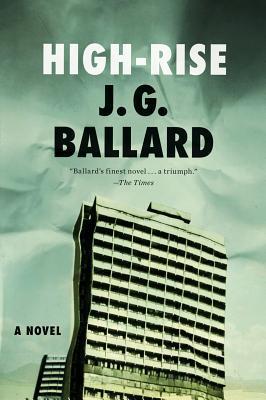
When a class war erupts inside a luxurious apartment block, modern elevators become violent battlegrounds and cocktail parties degenerate into marauding attacks on "enemy" floors. In this visionary tale, human society slips into violent reverse as once-peaceful residents, driven by primal urges, re-create a world ruled by the laws of the jungle.

The classic, award-winning novel, made famous by Steven Spielberg's film, tells of a young boy's struggle to survive World War II in China.Jim is separated from his parents in a world at war. To survive, he must find a deep strength greater than all the events that surround him.Shanghai, 1941 — a city aflame from the fateful torch of Pearl Harbor. In streets full of chaos and corpses, a young British boy searches in vain for his parents. Imprisoned in a Japanese concentration camp, he is witness to the fierce white flash of Nagasaki, as the bomb bellows the end of the war...and the dawn of a blighted world.Ballard's enduring novel of war and deprivation, internment camps and death marches, and starvation and survival is an honest coming-of-age tale set in a world thrown utterly out of joint.

First published in 1962, J.G. Ballard's mesmerizing and ferociously prescient novel imagines a terrifying future in which solar radiation and global warming have melted the polar ice caps and Triassic-era jungles have overrun a submerged and tropical London. Set during the year 2145, the novel follows biologist Dr. Robert Kerans and his team of scientists as they confront a surreal cityscape populated by giant iguanas, albino alligators, and endless swarms of malarial insects. Nature has swallowed all but a few remnants of human civilization, and, slowly, Kerans and his companions are transformed—both physically and psychologically—by this prehistoric environment. Echoing Joseph Conrad's Heart of Darkness—complete with a mad white hunter and his hordes of native soldiers—this "powerful and beautifully clear" (Brian Aldiss) work becomes a thrilling adventure and a haunting examination of the effects of environmental collapse on the human mind.

On a day in April, just after three o'clock in the afternoon, Robert Maitland's car crashes over the concrete parapet of a high-speed highway onto the island below, where he is injured and, finally, trapped. What begins as an almost ludicrous predicament in Concrete Island soon turns into horror as Maitland - a wickedly modern Robinson Crusoe - realizes that, despite evidence of other inhabitants, this doomed terrain has become a mirror of his own mind. Seeking the dark outer rim of the everyday, Ballard weaves private catastrophe into an intensely specular allegory.

Easily one of the 20th century's most visionary writers, J. G. Ballard lived far ahead of his time. Called his "prophetic masterpiece" by many, The Atrocity Exhibition practically lies outside of any literary tradition. Part science fiction, part eerie historical fiction, part pornography, its characters adhere to no rules of linearity or stability. This reissued edition features an introduction by William S. Burroughs, extensive text commentary by Ballard, and four additional stories. Of specific interest are the illustrations by underground cartoonist and professional medical illustrator Phoebe Gloeckner. Her ultrarealistic images of eroticism and destruction add an important dimension to Ballard's text.

Club Nautico is an exclusive Spanish resort for the rich, retired British. After five people die in an unexplained house fire, club manager Frank Prentice pleads guilty-but nobody believes him, least of all the police. When Frank's brother Charles arrives, intent on unravelling the mystery, gradually he uncovers the secret world behind the resort's civilized image.

Eden-Olympia is more than just a multinational business park, it is a virtual city-state in itself, built for the most elite high-tech industries. Isolated and secure, the residents lack nothing, yet one day, a doctor at the clinic goes on a suicidal shooting spree. Dr. Jane Sinclair is hired as his replacement, and her husband Paul uncovers the dangerous psychological vents that maintain Eden-Olympia's smoothly-running surface.

J. G. Ballard's fourth novel, which established his reputation as a writer of extraordinary talent and imaginative powers, tells the story of a physician specializing in the treatment of leprosy who is invited to a small outpost in the interior of Africa. Finding the roadways blocked, he takes to the river, and embarks on a frightening journey through a strange petrified forest whose area expands daily, affecting not only the physical environment but also its inhabitants.Through a 'leaking' of time, the West African jungle starts to crystallize. Trees are metamorphosed into enormous jewels. Crocodiles encased in second glittering skins lurch down the river. Pythons with huge blind gemstone eyes rear in heraldic poses.Fearing this transformation as a herald of the apocalypse, most flee the area in terror, afraid to face a catastrophe they cannot understand. But some, dazzled and strangely entranced, remain to drift through this dreamworld forest. Travelling through this gilded land, the doctor tries to resist its strange allure, while a tribe of lepers search for Paradise…

The thirty-two adult members of an exclusive residential community in West London are brutally murdered, and their children are abducted, leaving no trace. Through the forensic diary of Dr. Richard Greville, Deputy Psychiatric Adviser to the London Metropolitan Police, the brutal details of the massacre that has baffled the entire police department unfold.

A violent novel filled with insidious twists, Kingdom Come follows the exploits of Richard Pearson, a rebellious, unemployed advertising executive, whose father is gunned down by a deranged mental patient in a vast shopping mall outside Heathrow Airport. When the prime suspect is released without charge, Richard’s suspicions are aroused. Investigating the mystery, Richard uncovers at the Metro-Centre mall a neo-fascist world whose charismatic spokesperson is whipping up the masses into a state of unsustainable frenzy. Riots regularly terrorize the complex, immigrant communities are attacked by hooligans, and sports events mushroom into jingoistic political rallies. In this gripping, dystopian tour de force, J.G. Ballard holds up a mirror to suburban mind rot, revealing the darker forces at work beneath the gloss of consumerism and flag-waving patriotism.

An apocalyptic dystopia like no other, one whose "originality and power [of] vision can be felt" ( Times Literary Supplement ). Weird and mesmerizingly grotesque, The Drought tells the chilling story of the world on the brink of extinction, where a global drought, brought on by industrial waste, has left mankind in a life-or-death search for water. Violence erupts and insanity reigns as the human race struggles for survival in a worldwide desert of despair.

"The most cosmically elegiac writer in literature . . . no one reading Ballard could doubt the tidal gravity of his intellect." ―Jonathan Lethem, New York Times Book Review Violent rebellion comes to London’s middle classes in this “fascinating” ( San Francisco Chronicle ) novel from the same author of Crash and Empire of the Sun . Never more timely, Millennium People “seeks to illuminate our hearts of darkness while undermining our assumptions about what literature is meant to do” ( Los Angeles Times ).


For four decades, J.G. Ballard has been one of Britain's most celebrated novelists. From the beginning he has been equally admired for his distinctive and highly influential short stories, the first of which - "Prima Belladonna" and "Escapement" - appeared in Science Fantasy and New Worlds in 1956. Now, all of his published stories - including four not previously featured in a collection - have been arranged in the order of original publication, providing an unprecedented opportunity to review the career of one of Britain's greatest writers.A Washington Post Best Book of 2009, Boston Globe Best Book, Los Angeles Times Favorite Book, and San Francisco Chronicle Best Book.Contents:- Prima Belladonna [Vermilion Sands] (1956)- Escapement (1956)- The Concentration City (1957, variant of Build-Up)- Venus Smiles [Vermilion Sands] (1957)- Manhole 69 (1957)- Track 12 (1958)- The Waiting Grounds (1959)- Now: Zero (1959)- The Sound-Sweep (1960)- Zone of Terror (1960)- Chronopolis (1960)- The Voices of Time (1960)- The Last World of Mr. Goddard (1960)- Studio 5, The Stars [Vermilion Sands] (1961)- Deep End (1961)- The Overloaded Man (1961)- Mr F. is Mr F. (1961)- Billennium (1961)- The Gentle Assassin (1961)- The Insane Ones (1962)- The Garden of Time (1962)- The Thousand Dreams of Stellavista [Vermilion Sands] (1962)- Thirteen to Centaurus (1962)- Passport to Eternity (1962)- The Cage of Sand (1962)- The Watch-Towers (1962)- The Singing Statues [Vermilion Sands] (1962)- The Man on the 99th Floor (1962)- The Subliminal Man (1963)- The Reptile Enclosure (1963)- A Question of Re-Entry (1963)- The Time-Tombs (1963)- Now Wakes the Sea (1963)- The Venus Hunters (1963)- End-Game (1963)- Minus One (1963)- The Sudden Afternoon (1963)- The Screen Game [Vermilion Sands] (1963)- Time of Passage (1964)- Prisoner of the Coral Deep (1964)- The Lost Leonardo (1964)- The Terminal Beach (1964)- The Illuminated Man (1964)- The Delta at Sunset (1964)- The Drowned Giant (1964)- The Gioconda of the Twilight Noon (1964)- The Volcano Dances (1964)- The Beach Murders (1966)- The Day of Forever (1966)- The Impossible Man (1966)- Storm-Bird, Storm-Dreamer (1966)- Tomorrow Is a Million Years (1966)- The Assassination of John Fitzgerald Kennedy Considered as a Downhill Motor Race (1966)- Cry Hope, Cry Fury! [Vermilion Sands] (1967)- The Recognition (1967)- The Cloud-Sculptors of Coral D [Vermilion Sands] (1967)- Why I Want to Fuck Ronald Reagan (1968)- The Dead Astronaut (1968)- The Comsat Angels (1968)- The Killing Ground (1969)- A Place and a Time to Die (1969)- Say Goodbye to the Wind [Vermilion Sands] (1970)- The Greatest Television Show on Earth (1972)- My Dream of Flying to Wake Island (1974)- The Air Disaster (1975)- Low-Flying Aircraft (1975)- The Life and Death of God (1976)- Notes Towards a Mental Breakdown (1976)- The 60 Minute Zoom (1976)- The Smile (1976)- The Ultimate City (1976)- The Dead Time (1977)- The Index (1977)- The Intensive Care Unit (1977)- Theatre of War (1977)- Having a Wonderful Time (1978)- One Afternoon at Utah Beach (1978)- Zodiac 2000 (1978)- Motel Architecture (1978)- A Host of Furious Fancies (1980)- News from the Sun (1981)- Memories of the Space Age (1982)- Myths of the Near Future (1982)- Report on an Unidentified Space Station (1982)- The Object of the Attack (1984)- Answers to a Questionnaire (1985)- The Man Who Walked on the Moon (1985)- The Secret History of World War 3 (1988)- Love in a Colder Climate (1989)- The Enormous Space (1989)- The Largest Theme Park in the World (1989)- War Fever (1989)- Dream Cargoes (1990)- A Guide to Virtual Death (1992)- The Message from Mars (1992)- Report from an Obscure Planet (1992)

"A remarkable piece of invention, a flight from the world of the familiar and the real into the exotic universe of dream and desire." ― New York Times Book Review When a light aircraft crashes into the Thames at Shepperton, the young pilot who struggles to the surface minutes later seems to have come back from the dead. Within hours everything in the dormitory suburb is transformed. Vultures invade rooftops, luxuriant tropical vegetation overruns the quiet avenues, and the local inhabitants are propelled by the young man’s urgent visions through ecstatic sexual celebrations toward an apocalyptic climax. In this characteristically inventive novel Ballard displays to devastating effect the extraordinary imagination that has established him as one of the twentieth century’s most visionary writers.

Like a latter-day Palm Springs, Vermillion Sands is a fully automated desert resort designed to fulfill the most exotic whims of the idle rich. But now it languishes in uneasy decay, populated only by forgotten movie stars, solitary impresarios and artistic and literary failures, a place where love and lust pall before the stronger pull of evil.Contents:· The Cloud-Sculptors of Coral D [Vermillion Sands] · ss F&SF Dec ’67 · Prima Belladonna [Vermillion Sands] · ss Science-Fantasy #20 ’56 · The Screen Game [Vermillion Sands] · nv Fantastic Oct ’63 · The Singing Statues [Vermillion Sands] · ss Fantastic Jul ’62 · Cry Hope, Cry Fury! [Vermillion Sands] · ss F&SF Oct ’67 · Venus Smiles [“Mobile”; Vermillion Sands] · ss Science-Fantasy #23 ’57 · Say Goodbye to the Wind [Vermillion Sands] · ss Fantastic Aug ’70 · Studio 5, The Stars [Vermillion Sands] · nv Science-Fantasy #45 ’61 · The Thousand Dreams of Stellavista [Vermillion Sands] · nv Amazing Mar ’62

First published in 1978, this collection of nineteen of Ballard's best short stories is as timely and informed as ever. His tales of the human psyche and its relationship to nature and technology, as viewed through a strong microscope, were eerily prescient and now provide greater perspective on our computer-dominated culture. Ballard's voice and vision have long served as a font of inspiration for today's cyber-punks, the authors and futurist who brought the information age into the mainstream.

The Terminal Beach is one of Ballard's most brilliant collections of short stories, ranging from the title story's disturbing picture of an abandoned atomic testing island in the Pacific to the shocking Oedipal fantasy of "The Gioconda of the Twilight Noon". At the heart of the stories lies the bitter paradox that the extraordinary creative power of man's imagination is matched only by his reckless instinct for destruction. Contents:- A Question Re-entry- The Drowned Giant- End-Game- The Illuminated Man- The Reptile Enclosure- The Delta at Sunset- The Terminal Beach- Deep End- The Volcano Dances- Billennium- The Gioconda of the Twilight Noon- The Lost LeonardoFront cover illustration by David Pelham

Following the energy crisis of the late twentieth century, America has been abandoned. Now, a century later, a small group of European explorers returns to the now climatically mutated continent. But America is unrecognizable—the Bering Strait has been dammed and much of the country has become a desert, populated by isolated natives and the bizarre remnants of a disintegrated culture. The expedition sets off from Manhattan on a cross-country journey, through Holiday Inns and abandoned theme parks, to uncover a shocking new power right in the heart of Las Vegas.
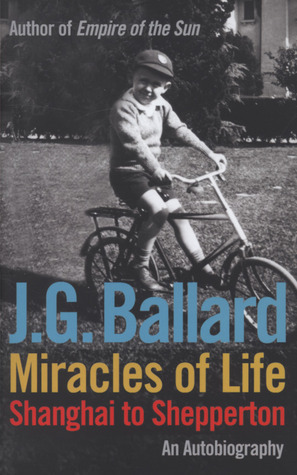
'Miracles of Life' opens and closes in Shanghai, the city where J.G.Ballard was born, and where he spent the most of the Second World War interned with his family in a Japanese concentration camp. In the intervening chapters Ballard creates a memoir that is both an enthralling narrative and a detailed examination of the events which would profoundly influence his work. Beginning with his early childhood spent exploring the vibrant surroundings of pre-war Shanghai, Ballard charts the course of his remarkable life from the deprivations and unexpected freedoms of the Lunghua Camp to his return to a Britain physically and psychologically crippled by war. He explores his subsequent involvement in the dramatic social changes of the 1960s, and the adjustments to life following the premature death of his wife. In prose displaying his characteristic precision and eye for detail, Ballard recounts the experiences which would fundamentally shape his writing, while simultaneously providing an striking social analysis of the fragmented post-war Britain that lies behind so many of his novels. 'Miracles of Life' is an utterly captivating account of an extraordinary writer's extraordinary life.

Ballard here writes a brilliant hybrid of autobiography and fiction. The sequel to The Empire of the Sun, this work puts his earlier account of a boy’s experiences in occupied Shanghai in the context of a lifetime. Ballard’s eye has never been more cinematic, and his writing, especially in the love scenes, is a masterful blend of the raw and the tender.
"Compulsively the white heat of its images seems to burn off the page, and the surreal landscapes linger on in the mind." ― Independent On the arid, war-plagued terrain of central Africa, a manic doctor is consumed with visions of transforming the Sahara into a land of abundance. But Dr. Mallory’s obsession quickly spirals dangerously out of control. First published in 1987, this classic Ballard thriller continues to resonate “with dark implications for the future of humanity” ( Publishers Weekly ).

The wind came from nowhere … a super-hurricane that blasted round the globe at hundreds of miles per hour burying whole communities beneath piles of rubble, destroying all organized life and driving those it did not kill to seek safety in tunnels and sewers – where they turned against each other in their desperate struggle to survive.
Led by a charismatic and slightly unhinged woman, a group of environmentalists wrest control over a small South Pacific island in hopes of cultivating it into their own private Eden. But paradise is not quite what it seems in this “searing” (Kirkus Reviews) send-up of environmentalism, feminism, and extremism of all sorts.

First in a two volume collection of short stories by the acclaimed author of ‘Empire of the Sun’, ‘Crash’ and ‘Super-Cannes’. The new edition is introduced by Adam Thirwell.With eighteen novels over four decades – from ‘The Drowned World’ in 1962 to his final novel ‘Kingdom Come’ in 2006 – J.G. Ballard is known as one of Britain’s most celebrated and original novelists.However, during his long career he was also a prolific writer of short stories; in fact, many people consider that he is at his best in the short-story format. These highly influential stories have appeared in magazines such as New Worlds, Amazing Stories and Interzone, and in several separate collections, including ‘The Terminal Beach’, ‘The Venus Hunters’, ‘Vermilion Sands’, ‘Low-Flying Aircraft’ and ‘Myths of the Near Future’.Set out in the original order of publication and frequently the point of conception for ideas he further developed in his novels, these stories provide an unprecedented opportunity to see the imagination of one of Britain’s greatest writers at work. This edition is part of a new commemorative series of Ballard’s works, featuring introductions from a number of his admirers (including Robert Macfarlane, Iain Sinclair, James Lever and Ali Smith) and brand-new cover designs from the artist Stanley Donwood.

A war-ravaged Beirut is the setting for the title story of this visionary collection, a tale in which a young street fighter inadvertently discovers how to bring an to the bloodshed only to find that his solution is all too effective as far as some supposedly neutral observers are concerned. Other stories feature an assassination plot against an American astronaut, the leader of an authoritarian religious movement; a man who is destroyed by a car crash and resolves never to leave his apartment again; and the survivor of a toxic-waste ship wrecked on a deserted Caribbean island.Includes:"War Fever" (1989)"The Secret History of World War 3" (1988)"Dream Cargoes" (1990)"The Object of the Attack" (1984)"Love in a Colder Climate" (1989)"The Largest Theme Park in the World" (1989)"Answers to a Questionnaire" (1985)"The Air Disaster" (1975)"Report on an Unidentified Space Station" (1982)"The Man Who Walked on the Moon" (1985)"The Enormous Space" (1989)"Memories of the Space Age" (1982)"Notes Towards a Mental Breakdown" (1976)"The Index" (1977)

A collection of ten J G Ballard short stories originally written for magazines in the late seventies and early eighties.

Over the course of his career, J.G. Ballard has revealed hidden truths about the modern world. The essays, reviews, and ruminations gathered here—spanning the breadth of this long career—approach reality with the same sharp prose and sharper vision that distinguish his fiction. Ballard's fascination for and fixation upon this century take him from Mickey Mouse to Salvador Dali, from Los Angeles to Shanghai, from William Burroughs to Winnie the Pooh, from the future to today.

Susan Sontag, Anthony Burgess, Graham Greene, William Burroughs, Robert Nye and Angela Carter are among the host of admirers of J. G. Ballard's fiction. His extraordinary inventiveness and the unfailing grace and energy of his writing are triumphantly displayed in this classic collection of stories, which includes 'The Overloaded Man', 'Chronopolis' and 'The Garden of Time', which Anthony Burgess called 'one of the most beautiful stories of the world canon of short fiction'.These haunting tales of pity and terror and longing, firmly grounded in psychological realism and tightly plotted, transcend classification as fantasy or science fiction; they are literature of the highest order. (Jacket description)

Collected here in a stunning box set, these ten books novels, memoirs and one very unusual biography that make up our Matchbook Classics series, a beautifully redesigned collection of some of the best loved titles on our backlist. In the mid-twentieth century, the matchbox industry was booming. Companies had to stand out, so they began commissioning designers and illustrators to create works of graphic art for their labels. Despite its limitations, the tiny canvas did not inhibit artists foxes skipping through Polish forests, celebrations of Russia s space race successes and orchards coming into blossom. These micro-masterpieces serve as the inspiration for the 4th Estate Matchbook Classics series. The ten books novels, memoirs and one very unusual biography are some of the best loved and most admired that 4th Estate has published. Revolutions, mental illness, a vicarage upbringing, families caught in civil war, soldiers in Vietnam and a man who can only communicate by blinking his left these books display a full range of the human experience and thrillingly bring it to life. Each can be considered one of the great books of our time, as unique as the matchbox that inspired its cover. Empire of the Sun by J.G. BallardThe Diving Bell and the Butterfly by Jean-Dominique BaubyBlue Flower by Penelope FitzgeraldThe Corrections by Jonathan FranzenA Place of Greater Safety by Hilary Mantel A Life Backwards by Alexander MastersAmericanah by Chimamanda Ngozi AdichieThe Things They Carried by Tim O BrienThe Shipping News by Annie ProulxBad Blood by Lorna Sage