
Aleksandr Solzhenitsyn
also known as Alexander Solzenitsyn (English, alternate) Αλεξάντρ Σολζενίτσιν (Greek) Works, including One Day in the Life of Ivan Denisovich (1962) and The Gulag Archipelago (1973-1975), of Soviet writer and dissident Aleksandr Isayevich Solzhenitsyn, awarded the Nobel Prize for literature in 1970, exposed the brutality of the labor camp system. This known Russian novelist, dramatist, and historian best helped to make the world aware of the forced Gulag. Exiled in 1974, he returned to Russia in 1994. Solzhenitsyn fathered of Ignat Solzhenitsyn, a conductor and pianist. https://en.wikipedia.org/wiki/Aleksan...
30 Books Written

Solzhenitsyn's first book, this economical, relentless novel is one of the most forceful artistic indictments of political oppression in the Stalin-era Soviet Union. The simply told story of a typical, grueling day of the titular character's life in a labor camp in Siberia, is a modern classic of Russian literature and quickly cemented Solzhenitsyn's international reputation upon publication in 1962. It is painfully apparent that Solzhenitsyn himself spent time in the gulags--he was imprisoned for nearly a decade as punishment for making derogatory statements about Stalin in a letter to a friend. Introduction by Yevgeny Yevtushenko
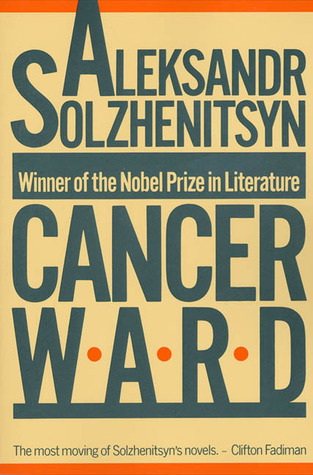
Cancer Ward examines the relationship of a group of people in the cancer ward of a provincial Soviet hospital in 1955, two years after Stalin's death. We see them under normal circumstances, and also reexamined at the eleventh hour of illness. Together they represent a remarkable cross-section of contemporary Russian characters and attitudes. The experiences of the central character, Oleg Kostoglotov, closely reflect the author's Solzhenitsyn himself became a patient in a cancer ward in the mid-1950s, on his release from a labor camp, and later recovered. Translated by Nicholas Bethell and David Burg.

The First Circle of Dante’s Hell—where the souls of the pre-Christian philosophers are doomed to exist throughout eternity—stands in this novel as a metaphor for certain penal institutions of Stalin’s Russia. These were scientific research centers, operating within special prisons and staffed by political prisoners—physicists, mathematicians, electrical engineers, technicians. They were luxurious in comparison with other prisons and the hard-labor camps of the far north—from which many of their inmates were drawn, to which many would return: the prisoners were fed enough to ensure their effectiveness; they slept between sheets. But their prison terms were long, their contacts with the world of freedom minimal, and an administrator’s whim was enough to ship them to the lower circles of Hell.Much of the action of The First Circle takes place in one such research center on the outskirts of Moscow, during the four days from December 24 through 27, 1949. It ranges from there to the apartments and streets of Moscow…to a university dormitory…to the offices of awesome men with absolute power over the lives of others, who are themselves the terror-ridden chattels of one man. It enters even his small, fortified, windowless workroom. There the 70-year-old Stalin plans a new purge, a new assassination, greater moments to himself…The hero of The First Circle is the prisoner Nerzhin, a brilliant mathematician. At the age of 31, Nerzhin has, like the author, survived the war years on the German front and the poswar years in a succession of Russian prisons and labor camps. His story is interwoven with the stories of a dozen fellow prisoners—each an unforgettable human being—from the prison janitor to the nearsighted genius who designed the Dnieper dam; the reigning intellectuals and their friends in high places; and the women, wretched or privileged, bound to these men. As we follow Nerzhin’s fortunes we become familiar with the inner paths of an entire society—one vast Inferno—and the diverse ways by which different men and women managed—or failed—to live within it.Each scene intensely felt; each person passionately realized; a narrative power that seizes the reader and will not turn him loose; a literary mastery unsurpassed by any novelist of our time…these are the qualities of The First Circle. It is a sublime hymn of praise to man, an outpouring of love and pride, a celebration of nobility, courage, selflessness, honor. Nerzhin and his friends are slaves of the most pervasive tyranny modern history has known, deprived of every human right, their wives and families hounded and persecuted. Yet, in the tradition of Russia’s martyr-patriots, they stand radiant as archangels in their afflicted land, their own survival less to them now—dearly though they still love life—than the survival of truth, justice, mercy, freedom.It is also a denunciation…of one man in particular and the many other men he found to do his will: those he perverted; those who were already corrupt; all those who blighted the bright promise of human life and imposed the dominion of evil on millions. It is the author’s masterpiece…the offering he has created out of his own substance—his pain, his love and his belief—to the place on the altar of humanity.

Le 8 juin 1978 Alexandre Soljénitsyne disait aux étudiants de l'université de Harvard :« Non, je ne peux pas recommander votre société comme idéal pour transformation de la nôtre. (…) Nous avions placé trop d’espoirs dans les transformations politico-sociales, et il se révèle qu’on nous enlève ce que nous avons de plus précieux : notre vie intérieure. À l’Est, c’est la foire du Parti qui la foule aux pieds, à l’Ouest la foire du Commerce : ce qui est effrayant, ce n’est même pas le fait du monde éclaté, c’est que les principaux morceaux en soient atteints d’une maladie analogue. »

Volume 1 of the gripping epic masterpiece, Solzhenitsyn's chilling report of his arrest and interrogation, which exposed to the world the vast bureaucracy of secret police that haunted Soviet society

Drawing on his own incarceration and exile, as well as on evidence from more than 200 fellow prisoners and Soviet archives, Aleksandr I. Solzhenitsyn reveals the entire apparatus of Soviet repression—the state within the state that ruled all-powerfully. Through truly Shakespearean portraits of its victims—men, women, and children—we encounter secret police operations, labor camps and prisons; the uprooting or extermination of whole populations, the welcome that awaited Russian soldiers who had been German prisoners of war. Yet we also witness the astounding moral courage of the incorruptible, who, defenseless, endured great brutality and degradation. The Gulag Archipelago 1918–1956—a grisly indictment of a regime, fashioned here into a veritable literary miracle—has now been updated with a new introduction that includes the fall of the Soviet Union and Solzhenitsyn's move back to Russia.

The Gulag Archipelago, 1918-1956: An Experiment in Literary Investigation, Books III-IV
by Aleksandr Solzhenitsyn
Rating: 4.5 ⭐
Drawing on his own incarceration and exile, as well as on evidence from more than 200 fellow prisoners and Soviet archives, Aleksandr I. Solzhenitsyn reveals the entire apparatus of Soviet repression -- the state within the state that ruled all-powerfully. Through truly Shakespearean portraits of its victims -- men, women, and children -- we encounter secret police operations, labor camps and prisons; the uprooting or extermination of whole populations, the "welcome" that awaited Russian soldiers who had been German prisoners of war. Yet we also witness the astounding moral courage of the incorruptible, who, defenseless, endured great brutality and degradation. The Gulag Archipelago 1918-1956 -- a grisly indictment of a regime, fashioned here into a veritable literary miracle -- has now been updated with a new introduction that includes the fall of the Soviet Union and Solzhenitsyn's move back to Russia.

The Gulag Archipelago, 1918-1956: An Experiment in Literary Investigation, Books V-VII
by Aleksandr Solzhenitsyn
Rating: 4.5 ⭐
The Gulag Archipelago is Solzhenitsyn's attempt to compile a literary-historical record of the vast system of prisons and labor camps that came into being shortly after the Bolsheviks seized power in Russia in 1917 and that underwent an enormous expansion during the rule of Stalin from 1924 to 1953. Various sections of the three volumes describe the arrest, interrogation, conviction, transportation, and imprisonment of the Gulag's victims by Soviet authorities over four decades. The work mingles historical exposition and Solzhenitsyn's own autobiographical accounts with the voluminous personal testimony of other inmates that he collected and committed to memory during his imprisonment.Upon publication of the first volume of The Gulag Archipelago, Solzhenitsyn was immediately attacked in the Soviet press. Despite the intense interest in his fate that was shown in the West, he was arrested and charged with treason on February 12, 1974, and was exiled from the Soviet Union the following day.

In his monumental narrative of the outbreak of the First World War and the ill-fated Russian offensive into East Prussia, Solzhenitsyn has written what Nina Krushcheva, in The Nation , calls "a dramatically new interpretation of Russian history." The assassination of tsarist prime minister Pyotr Stolypin, a crucial event in the years leading up to the Revolution of 1917, is reconstructed from the alienating viewpoints of historical witnesses. The sole voice of reason among the advisers to Tsar Nikolai II, Stolypin died at the hands of the anarchist Mordko Bogrov, and with him perished Russia's last hope for reform. Translated by H.T. Willetts.August 1914 is the first volume of Solzhenitsyn's epic, The Red Wheel; the second is November 1916. Each of the subsequent volumes will concentrate on another critical moment or "knot," in the history of the Revolution. Translated by H.T. Willetts.

A new edition of the Russian Nobelist's collection of novellas, short stories, and prose poems Stories and Prose Poems collects twenty-two works of wide-ranging style and character from the Nobel Prize-winner Aleksandr Solzhenitsyn, whose shorter pieces showcase the extraordinary mastery of language that places him among the greatest Russian prose writers of the twentieth century.When the two superb stories Matryona's House and An Incident at Krechetovka Station were first published in Russia in 1963, the Moscow Literary Gazette, the mouthpiece of the Soviet literary establishment, wrote: His talent is so individual and so striking that from now on nothing that comes from his pen can fail to excite the liveliest interest. The novella For the Good of the Cause and the short story Zakhar-the-Pouch in particular--both published in the Soviet Union before Solzhenitsyn's exile--fearlessly address the deadening stranglehold of Soviet bureaucracy and the scandalous neglect of Russia's cultural heritage. But readers who best know Solzhenitsyn through his novels will be delighted to discover the astonishing group of sixteen prose poems. In these works of varying lengths--some as short as an aphorism--Solzhenitsyn distills the joy and bitterness of Russia's fate into language of unrivaled lyrical purity.

In "An Incident at Krechetovka Station," a Red Army lieutenant is confronted by a disturbing straggler soldier and must decide what to do with him. "Matryona's House" is the tale of an old peasant woman, whose tenacious struggle against cold, hunger, and greedy relatives is described by a young man who only understands her after her death.

Alexander Solzhenitsyn's Warning to the West includes the texts of the Nobel Prize-winning author's three speeches in the United States in the summer of 1975, his first major public addresses since his expulsion from the Soviet Union in 1974: on June 30 and July 9 to trade-union leaders of the AFL-CIO in Washington, D.C., and in New York City, and on July 15 to the United States Congress; and also the texts of his BBC interview and radio speech, which sparked widespread public controversy when they were aired in London in March 1976.Solzhenitsyn's outspoken criticism of the West's growing weakness and complacency and his belief that Russia's growing strength will enable her to establish supremacy over the West without risk of a nucelar holocaust are expressed with the moral authority of a great novelist and historian."Solzhenitsyn mounts a public indictment of the supine inattention of the West that rings like the blows of the hammer with which Luther nailed his manifesto to the doors at Wittenberg."-- Times Literary Supplement

Una giornata di Ivan Denisovič / La casa di Matrjona / Alla stazione
by Aleksandr Solzhenitsyn
Rating: 3.7 ⭐
Una giornata di Ivan Denisovič è il libro che ha rivelato al mondo lo scrittore Solzenicyn. In un'opera di classica sobrietà, che per nitore espressivo rimanda alle dostoevskiane Memorie di una casa morta, viene descritta per la prima volta una giornata qualsiasi in un campo di lavoro staliniano dove è rinchiuso un uomo semplice, Ivan. La stessa autonomia poetica si ritrova nei due racconti successivi. Protagonista della Casa di Matrjona è una povera contadina, presso la quale va a vivere un ex deportato, che mitemente subisce ripetute ingiustizie. Alla stazione di Krecetovka illustra invece la parabola morale di un «uomo sovietico» nel quale il germe della sospettosità staliniana s'è tanto radicato da portarlo a commettere una mostruosa ingiustizia.

After years of living in exile, Aleksandr Solzhenitsyn returned to Russia in 1994 and published a series of eight powerfully paired stories. These groundbreaking stories— interconnected and juxtaposed using an experimental method Solzhenitsyn referred to as “binary”—join Solzhenitsyn’s already available work as some of the most powerful literature of the twentieth century.With Soviet and post-Soviet life as their focus, they weave and shift inside their shared setting, illuminating the Russian experience under the Soviet regime. In “The Upcoming Generation,” a professor promotes a dull but proletarian student purely out of good will. Years later, the same professor finds himself arrested and, in a striking twist of fate, his student becomes his interrogator. In “Nastenka,” two young women with the same name lead routine, ordered lives—until the Revolution exacts radical change on them both.The most eloquent and acclaimed opponent of government oppression, Solzhenitsyn was awarded the Nobel Prize in Literature in 1970, and his work continues to receive international acclaim. Available for the first time in English, Apricot Jam: And Other Stories is a striking example of Solzhenitsyn’s singular style and only further solidifies his place as a true literary giant.

English, Russian (translation)

In time for the centenary of the beginning of the Russian Revolution, a new edition of the Russian Nobelist's major workThe month of November 1916 in Russia was outwardly quiet—the proverbial calm before the storm—but beneath the placid surface, society seethed fiercely. In Petrograd, as St. Petersburg was then known, luxury-store windows are still brightly lit; the Duma debates the monarchy, the course of war, and clashing paths to reform; the workers in the miserable munitions factories veer toward sedition. At the front, all is stalemate, while in the countryside sullen anxiety among hard-pressed farmers is rapidly replacing patriotism. In Zurich, Lenin, with the smallest of all revolutionary groups, plots his sinister logistical miracle.With masterly and moving empathy, through the eyes of both historical and fictional protagonists, Solzhenitsyn unforgettably transports us to that time and place—the last of pre-Soviet Russia.November 1916 is the second volume in Aleksandr Solzhenitsyn's multipart work, The Red Wheel. This volume concentrates on a historical turning point, or "knot," as the wheel rolls inexorably toward revolution.

Propriul trup te trimite în anticamera morţii. Cum poţi fi mai tare decât tine însuţi? Cum să nu te laşi învins de cei care te condamnă nevinovat la moarte civilă? În Pavilionul canceroşilor, singurul care încearcă să găsească răspuns acestor întrebări e Oleg, protagonistul romanului. Deportat într‑un lagăr de concentrare, ca şi Soljeniţîn însuşi în anii ’50, şi bolnav de cancer Oleg crede cu toată fiinţa lui că în om există o putere ascunsă de a ieşi învingător din toate încercările la care e supus. Singura condiţie e să nu te îndoieşti nicio clipă de această forţă şi să o ajuţi, cu libertatea gândului, să iasă la iveală atunci când totul pare pierdut.

Separate publication of chapters on Vladimir Lenin, none of them published before this point, from The Red Wheel.

"Solženitsynin taide on kahdessa mielessä 'uutta'. Hän näyttää inhimillisen elämän Neuvostoliitossa saamia uusia piirteitä, uusia uria; ja hän on uudelleen ja persoonallisesti lähtenyt toteuttamaan venäläisen ajattelun ja romaanin suurta linjaa. Ei ole sattuma, että Jevtušenko jokin aika sitten puhuessaan Venäjän kirjallisuuden humanistisesta perinteestä mainitsi Puškinin ja Tolstoin rinnalla Solženitsynin ainoana elossa olevista Neuvostoliiton kirjailijoista." – Leo Lindeberg Parnassossa"Solženitsyn on todella suuri ihminen ja suuri kirjailija. Hän jatkaa Venäjän suurten klassikoiden linjaa. Hän on kriittinen, mutta hän on ennen kaikkea inhimillinen. Hän on kokenut ja nähnyt liian paljon voidakseen vaieta kaikesta." – Tapani Lepola Satakunnan Kansassa"Kaiken kaikkiaan Syöpäosasto on rehellinen ja inhimillinen, vaikuttavalla tavalla tosi kirja yhteiskunnasta ja ihmisten tarpeista. . . . Ilman muuta se on viime aikojen tärkeimpiä käännöskirjoja." – Kalevi Kalemaa Kansan Uutisissa

The Oak and the Calf: Sketches of Literary Life in the Soviet Union
by Aleksandr Solzhenitsyn
Rating: 4.0 ⭐
Hardcover book.

A World Split Apart: Commencement Address Delivered at Harvard University, June 8, 1978
by Aleksandr Solzhenitsyn
Rating: 4.3 ⭐
English, Russian (translation)

"Iubeşte revoluţia!" este, înainte de toate, o operă neterminată. Cine are chef să citească un roman căruia nu-i ştim sfarşitul? Şi de ce ar fi publicată o operă abandonată de autorul său? Volumul de faţă este un roman scris de Soljeniţîn la 23 de ani, la sfarşitul anilor '40, înainte de a fi trimis în lagăr, fiind o primă dovadă a geniului care va excela printr-o manuire abilă a destinelor individuale şi colective, o impresionantă forţă poetică, simţ al detaliului, ironie subtilă.Nerjin, eroul romanului şi un alter ego idealist al autorului, este un tânăr matematician însetat de cunoaştere şi atras de literatură şi de istorie. Puternic instalat în utopismul vârstei sale, face tot posibilul pentru a servi regimul sovietic. El, intelectualul puţin naiv, câteodată prostănac, întotdeauna curajos, înfruntă frigul, foamea, batjocura şi pedepsele nedrepte, cu speranţa că într-o zi va fi primit în rândurile artileriei. În faţa realităţii crude, pe care o dezbate alături de colegi, Nerjin închide ochii. Nimic nu este întâmplător, toată suferinţa trebuie să aibă un sens, crede el. Nici o nedreptate nu-i poate anihila avântul revoluţionar."Iubeşte revoluţia!" este autoportretul unui Soljeniţîn încă exaltat şi candid, din ce în ce mai lucid, însă fidel convingerilor sale – un visător ce refuză realitatea.
This Nobel Lecture by Alexander Solzhenitsyn is an excellent read. The 1970 Nobel Prize winner in Literature was unable to leave Russia to give the customary Nobel Lecturer in Stockholm.

"A tale of romance set over the course of about one week in 1945 in a Joseph Stalin-era Soviet prison camp."--Amazon.com.

This edition is an abridged version. Alexander Solzhenitsyn, who first exposed the horrors of the Stalinist gulag, is now attempting to tackle one of the most sensitive topics of his writing career - the role of the Jews in the Bolshevik revolution and Soviet purges. In his latest book Solzhenitsyn, 84, deals with one of the last taboos of the communist revolution: that Jews were as much perpetrators of the repression as its victims. Two Hundred Years Together - a reference to the 1772 partial annexation of Poland and Russia which greatly increased the Russian Jewish population - contains three chapters discussing the Jewish role in the revolutionary genocide and secret police purges of Soviet Russia.

"Things have almost reached rock bottom. A universal spiritual death has already touched us all, and physical death will soon flare up and consume us both and our children—but as before we still smile in a cowardly way and mumble without tounges tied. But what can we do to stop it? We haven't the strength?"Read the whole essay: http://www.orthodoxytoday.org/article...

English, Russian (translation)

NY 1974 Harper and Row. Translasted by H. Sternberg. Hardcover. 12mo., cloth. Fine in VG DJ.

Первый том 30-томного собрания сочинений Александра Исаевича Солженицына являет собой полное собрание его рассказов и крохоток. Ранние рассказы взорвали литературную и общественную жизнь 60-х годов, сделали имя автора всемирно известным, а имена его литературных героев нарицательными. Обратившись к крупной форме - В круге первом, Раковый корпус, Архипелаг ГУЛАГ, Красное Колесо, - автор лишь через четверть века вернулся к жанру рассказов, существенно преобразив его. Тексты снабжены обширными комментариями, которые позволят читателю в подробностях ощутить исторический и бытовой контекст времени.

To commemorate the 100th anniversary of the Russian Revolution, the University of Notre Dame Press is proud to publish Nobel Prize–winner Aleksandr Solzhenitsyn’s epic work March 1917, Node III, Book 1, of The Red Wheel.The Red Wheel is Solzhenitsyn’s magnum opus about the Russian Revolution. Solzhenitsyn tells this story in the form of a meticulously researched historical novel, supplemented by newspaper headlines of the day, fragments of street action, cinematic screenplay, and historical overview. The first two nodes—August 1914 and November 1916—focus on Russia’s crises and recovery, on revolutionary terrorism and its suppression, on the missed opportunity of Pyotr Stolypin’s reforms, and how the surge of patriotism in August 1914 soured as Russia bled in World War I.March 1917—the third node—tells the story of the Russian Revolution itself, during which not only does the Imperial government melt in the face of the mob, but the leaders of the opposition prove utterly incapable of controlling the course of events. The action of book 1 (of four) of March 1917 is set during March 8–12. The absorbing narrative tells the stories of more than fifty characters during the days when the Russian Empire begins to crumble. Bread riots in the capital, Petrograd, go unchecked at first, and the police are beaten and killed by mobs. Efforts to put down the violence using the army trigger a mutiny in the numerous reserve regiments housed in the city, who kill their officers and rampage. The anti-Tsarist bourgeois opposition, horrified by the violence, scrambles to declare that it is provisionally taking power, while socialists immediately create a Soviet alternative to undermine it. Meanwhile, Emperor Nikolai II is away at military headquarters and his wife Aleksandra is isolated outside Petrograd, caring for their sick children. Suddenly, the viability of the Russian state itself is called into question.The Red Wheel has been compared to Tolstoy’s War and Peace, for each work aims to narrate the story of an era in a way that elevates its universal significance. In much the same way as Homer’s Iliad became the representative account of the Greek world and therefore the basis for Greek civilization, these historical epics perform a parallel role for our modern world.