
Marcel Proust
Marcel Proust was a French novelist, best known for his 3000 page masterpiece À la recherche du temps perdu (Remembrance of Things Past or In Search of Lost Time), a pseudo-autobiographical novel told mostly in a stream-of-consciousness style. Born in the first year of the Third Republic, the young Marcel, like his narrator, was a delicate child from a bourgeois family. He was active in Parisian high society during the 80s and 90s, welcomed in the most fashionable and exclusive salons of his day. However, his position there was also one of an outsider, due to his Jewishness and homosexuality. Towards the end of 1890s Proust began to withdraw more and more from society, and although he was never entirely reclusive, as is sometimes made out, he lapsed more completely into his lifelong tendency to sleep during the day and work at night. He was also plagued with severe asthma, which had troubled him intermittently since childhood, and a terror of his own death, especially in case it should come before his novel had been completed. The first volume, after some difficulty finding a publisher, came out in 1913, and Proust continued to work with an almost inhuman dedication on his masterpiece right up until his death in 1922, at the age of 51. Today he is widely recognized as one of the greatest authors of the 20th Century, and À la recherche du temps perdu as one of the most dazzling and significant works of literature to be written in modern times.
31 Books Written

On the surface a traditional "Bildungsroman" describing the narrator’s journey of self-discovery, this huge and complex book is also a panoramic and richly comic portrait of France in the author’s lifetime, and a profound meditation on the nature of art, love, time, memory and death. But for most readers it is the characters of the novel who loom the largest: Swann and Odette, Monsieur de Charlus, Morel, the Duchesse de Guermantes, Françoise, Saint-Loup and so many others — Giants, as the author calls them, immersed in Time. "In Search of Lost Time" is a novel in seven volumes. The novel began to take shape in 1909. Proust continued to work on it until his final illness in the autumn of 1922 forced him to break off. Proust established the structure early on, but even after volumes were initially finished he kept adding new material, and edited one volume after another for publication. The last three of the seven volumes contain oversights and fragmentary or unpolished passages as they existed in draft form at the death of the author; the publication of these parts was overseen by his brother Robert.For this authoritative English-language edition, D. J. Enright has revised the late Terence Kilmartin’s acclaimed reworking of C. K. Scott Moncrieff’s translation to take into account the new definitive French editions of À la recherche du temps perdu (the final volume of these new editions was published by the Bibliothèque de la Pléiade in 1989).
The gift-boxed set of the three paperbacks.
Marcel Proust’s In Search of Lost Time is one of the most entertaining reading experiences in any language and arguably the finest novel of the twentieth century. But since its original prewar translation there has been no completely new version in English. Now, Penguin Classics brings Proust’s masterpiece to new audiences throughout the world, beginning with Lydia Davis’s internationally acclaimed translation of the first volume, Swann’s Way.

In the Shadow of Young Girls in Flower is Proust’s spectacular dissection of male and female adolescence, charged with the narrator’s memories of Paris and the Normandy seaside. At the heart of the story lies his relationships with his grandmother and with the Swann family. As a meditation on different forms of love, In the Shadow of Young Girls in Flower has no equal. Here, Proust introduces some of his greatest comic inventions, from the magnificently dull M. de Norpois to the enchanting Robert de Saint-Loup. It is memorable as well for the first appearance of the two figures who for better or worse are to dominate the narrator’s life—the Baron de Charlus and the mysterious Albertine.First time in Penguin ClassicsA Penguin Classics Deluxe EditionThe first completely new translation of Proust's novel since the 1920s, following Lydia Davis's brilliant translation of Swann's Way

After the relative intimacy of the first two volumes of In Search of Lost Time, The Guermantes Way opens up a vast, dazzling landscape of fashionable Parisian life in the late nineteenth century, as the narrator enters the brilliant, shallow world of the literary and aristocratic salons. Both a salute to, and a devastating satire of a time, place, and culture, The Guermantes Way defines the great tradition of novels that follow the initiation of a young man into the ways of the world. This elegantly packaged new translation will introduce a new generation of American readers to the literary richness of Marcel Proust.First time in Penguin ClassicsA Penguin Classics Deluxe Edition with french flaps and luxurious designPenguin Classics' superb new edition of In Search of Lost Time is the first completely new translation of Proust's masterwork since the 1920s
Sodom and Gomorrah – now in a superb translation by John Sturrock – takes up the theme of homosexual love, male and female, and dwells on how destructive sexual jealousy can be for those who suffer it. Proust's novel is also an unforgiving analysis of both the decadent high society of Paris, and the rise of a philistine bourgeoisie that is on the way to supplanting it. Characters who had lesser roles in earlier volumes now reappear in a different light and take center stage, notably Albertine, with whom the narrator believes he is in love, and also the insanely haughty Baron de Charlus.
The final volume of In Search of Lost Time chronicles the years of World War I, when, as M. de Charlus reflects on a moonlit walk, Paris threatens to become another Pompeii. Years later, after the war's end, Proust's narrator returns to Paris, where Mme. Verdurin has become the Princesse de Guermantes. He reflects on time, reality, jealousy, artistic creation, and the raw material for literature-his past life. This volume also includes the indispensable Guide to Proust, an index to all six volumes of the novel.

En Albertine desaparecida sexto y penultimo volumen de En busca del tiempo perdido Proust prosigue su detallada y obsesiva narracion de los delirios amorosos de la angustia del deseo y en especial de los celos el sentimiento que alienta con mayor fuerza en estas paginas protagonizadas por Albertine una de las amantes mas perdurables de la literatura universal. En esta ocasion Proust sigue su peculiar tour de force en torno a la figura de la amante ausente del dolor por el cuerpo perdido. Sin duda estamos ante una de las reflexiones mas hondas y elaboradas sobre el amor el deseo y el paso del tiempo. Carlos Manzano a punto de culminar su titanica labor proustiana confirma de nuevo que estamos ante la mejor version castellana de una de las grandes obras de todos los tiempos.

Albertine a renoncé à faire une croisière et lorsque, à la fin de l’été, elle rentre de Balbec avec le narrateur, elle s’installe chez lui, à Paris: il ne se sent plus amoureux d’elle, elle n’a plus rien à lui apprendre, elle lui semble chaque jour moins jolie, mais la possibilité d’un mariage reste ouverte, et en lui rendant la vie agréable, peut-être songe-t-il à éveiller en elle le désir de l’épouser. Il se préoccupe en tout cas de son emploi du temps, l’interroge sur ses sorties sans pouvoir bien percer si sa réponse est un mensonge, et le désir que visiblement elle suscite chez les autres fait poindre la souffrance en lui.Paru en 1923, La Prisonnière est le premier des trois volumes publiés après la mort de Proust et, quoique solidaire, bien sûr, de Sodome et Gomorrhe qui le précède comme d’Albertine disparue qui le suit, une certaine unité lui est propre, entre l’enfermement initial du narrateur et le départ final de la jeune fille. Pour l’essentiel, trois journées simplement se déroulent ici –le plus souvent dans l’espace clos de l’appartement –, et ce sont comme les trois actes d’un théâtre où la jalousie occupe toute la place.

Remembrance of Things Past: Volume I - Swann's Way & Within a Budding Grove
by Marcel Proust
Rating: 4.3 ⭐
'The transmutation of sensation into sentiment, the ebb tide of memory, waves of emotion such as desire, jealousy, and artistic euphoria — this is the material of this enormous and yet singularly light and translucid work' — Vladimir NabokovOriginally rendered by C.K. Scott Moncrieff from an early and unreliable French edition, Proust’s masterpiece has now been flawlessly translated by Terence Kilmartin in this acclaimed version.

Un amour de Swann est un fragment de À la recherche du temps perdu, la deuxième partie de Du côté de chez Swann.Son sujet en est l'amour et la jalousie qu'éprouve Swann pour Odette de Crécy. C'est pourquoi il a depuis toujours fait l'objet d'éditions séparées, comme s'il constituait un petit roman autonome.

The Modern Library’s fifth volume of In Search of Lost Time contains both The Captive (1923) and The Fugitive (1925). In The Captive, Proust’s narrator describes living in his mother’s Paris apartment with his lover, Albertine, and subsequently falling out of love with her. In The Fugitive, the narrator loses Albertine forever. Rich with irony, The Captive and The Fugitive inspire meditations on desire, sexual love, music, and the art of introspection. For this authoritative English-language edition, D. J. Enright has revised the late Terence Kilmartin’s acclaimed reworking of C. K. Scott Moncrieff’s translation to take into account the new definitive French editions of Á la recherché du temps perdu (the final volume of these new editions was published by the Bibliothèque de la Pléiade in 1989).

In these inspiring essays about why we read, Proust explores all the pleasures and trials that we take from books, as well as explaining the beauty of Ruskin and his work, and the joys of losing yourself in literature as a child. Throughout history, some books have changed the world. They have transformed the way we see ourselves - and each other. They have inspired debate, dissent, war and revolution. They have enlightened, outraged, provoked and comforted. They have enriched lives - and destroyed them. Now Penguin brings you the works of the great thinkers, pioneers, radicals and visionaries whose ideas shook civilization and helped make us who we are.Marcel Proust (1871 - 1922) is now generally viewed as the greatest French novelist and perhaps the greatest European novelist of the 20th century. He lived much of his later life as a reclusive semi-invalid in a sound-proofed flat in Paris giving himself over entirely to writing In Search of Lost Time.

In French with footnoted explanations of difficult words and elements of culture, history and civilization. A long introduction in English by Germaine Brée and Carlos Lynes.
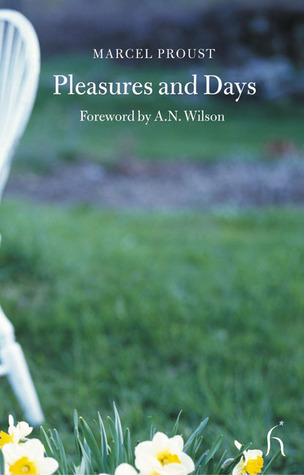
A stunning volume of philosophical reflections, short narratives, and prose poems, Pleasures and Days provides an early glimpse into Proust’s genius as a collector of exquisitely poignant sensations and recollections. Set amid the salon society of fin-du-siècle Paris, these sketches and short stories depict the lives, loves, manners, and motivations of a host of characters, all viewed with a famously knowing eye. By turns cuttingly satirical and bitterly moving, Proust’s portrayals are layered with imagery and feeling—whether they be of the aspiring Bouvard and Pécuchet, the deluded Madame de Breyves, or of Baldassare Silvande, steeped in memories, regret, and final understanding at the end of his life. Novelist Marcel Proust was a prominent figure in the French salons of the late 19th century; he is best remembered for his seven-volume masterpiece In Search of Lost Time.

Remembrance of Things Past: Volume II - The Guermantes Way & Cities of the Plain
by Marcel Proust
Rating: 4.5 ⭐
Including THE GUERMANTES WAY and CITIES OF THE PLAIN.

Remembrance of Things Past: Volume III - The Captive, The Fugitive, & Time Regained
by Marcel Proust
Rating: 4.5 ⭐
From the French intellectual, novelist, essayist, and one of the greatest writers of the twentieth the third and final volume of his monumental achievement, including The Captive, The Fugitive, and Time Regained.Marcel Proust's masterpiece is one of the towering literary works of the twentieth century. Relating its narrator's experiences in Belle Epoque France as he grows up, falls in love, and lives through the First World War, it has mesmerized generations of readers with its profound reflections on art, time, and memory. C. K. Scott Moncrieff's original English translation was heralded as an artistic achievement in its own right; the later revisions to it by Terence Kilmartin were based on the definitive French Pleiade edition.

Ο "Αδιάφορος" και άλλα κείμενα των νεανικών του χρόνωνΑπό το 1893 µέχρι το 1896 ο νεαρός Προυστ ακονίζει τα µαχαίρια του ως συγγραφέας στο περιοδικό La Revue blanche. Αποσπασµατικά, προσχεδιάζει ένα προσωπικό, µελλοντικό ακόµη, σύµπαν. Η οµοφυλοφιλική εξοµολόγηση στο "Πριν πέσει η νύχτα" εκθέτει τα άγχη του πόθου-πόνου, το σύντοµο "Ανάµνηση" επικεντρώνεται εξ ολοκλήρου στη δύναµη της αίσθησης, ενώ το "Κατά της ασάφειας", τελευταίο του κείµενο για το La Revue blanche, επιβεβαιώνει το ενδιαφέρον του για την υιοθέτηση µιας µαχητικής στάσης, αλλά και τη βούλησή του να αναπτύξει έναν προβληµατισµό γύρω από την αλήθεια της λογοτεχνίας. Τα κείµενα αυτά, που δε θα συµπεριληφθούν στη συλλογή "Τέρψεις και Ηµέραι", το πρώτο του βιβλίο που εκδόθηκε το 1896, προσεγγίζουν θέµατα που θα διατρέξουν συνολικά ολόκληρο το έργο του "Αναζητώντας τον χαµένο χρόνο".Στον "Αδιάφορο", όπως και στο "Πριν πέσει η νύχτα", κυριαρχεί ο πόθος. Το διήγηµα αυτό πρωτοδηµοσιεύεται την 1η Μαρτίου του 1896 στο La vie contemporaine et Revue parisienne reunies. Με τη συµπυκνωµένη αφηγηµατική πλοκή και το τέλειο κλείσιµο της ιστορίας ο συγγραφέας µένει πιστός στις υφολογικές απαιτήσεις του διηγήµατος. Ακολουθεί την οπτική µιας ερωτευµένης γυναίκας και θεµελιώνει τη φαινοµενολογία της παθιασµένης συνείδησης, µελετώντας και αναλύοντας τον έρωτα σε όλη τη διάρκειά του (από τη στιγµή που γεννιέται µέχρι το τέλος του), στις ποικίλες περιπλοκές του (κοινωνικές και διαπροσωπικές) και στη συναισθηµατική του υπόσταση (ο έρωτας στον Προυστ είναι ένας γολγοθάς)...

Can we truly know the one we love? In this painfully candid book Marcel Proust looks straight into the green eye of every lover’s jealous struggle. He broods on why we are driven to try and possess one another, how jealousy can outlive death, and whether we can ever reclaim those careless days of first love. There is no greater chronicler of jealousy’s darkest fears and destructive suspicions than Proust.Selected from the book In Search of Lost Time by Marcel ProustVINTAGE MINIS: GREAT MINDS. BIG IDEAS. LITTLE BOOKS.Also in the Vintage Minis series:Desire by Haruki MurakamiEating by Nigella LawsonHome by Salman RushdieBabies by Anne Enright

Marcel Proust’s genius for illuminating pain is on spectacular display in this recently discovered trove of his correspondence, Letters to His Neighbor. Already suffering from noise within his cork-lined walls, his poor soul was not ready for the fresh hell when his neighbor Dr. Williams married a widow with small children.Chiefly to Mrs. Williams, these ever-polite letters (often accompanied by flowers, compliments, books, even pheasants) are frequently hilarious—Proust couches his fury in a gracious tone. In Lydia Davis’s hands, the digressive brilliance of his sentences shines: “Don't speak of annoying neighbors, but of neighbors so charming (an association of words contradictory in principle since Montesquiou claims that most horrible of all are 1) neighbors 2) the smell of post offices) that they leave the constant tantalizing regret that one cannot take advantage of their neighborliness.”Proust makes fine distinctions among his auditory torments: “The valet de chambre makes noise and that doesn't matter. But later he knocks with little tiny raps. And that is worse.”Lydia Davis has written a generous translator’s note, tracing much of what we can know about Proust’s perpetually dark room; she details the furnishings as well as the life he lived there: burning his powders, talking with friends, hiring musicians, and, most of all, suffering. Letters to His Neighbor is richly illustrated with facsimile letters and photographs—catnip for lovers of Proust.
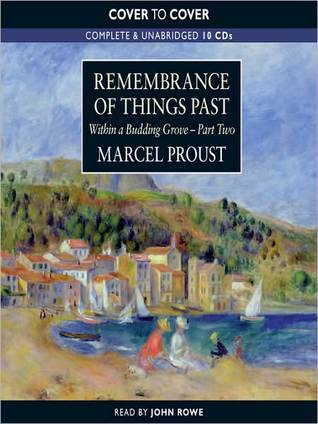
Within a Budding Grove, Part 2 is the second volume of Proust's monumental, seven volume, quasi-autobiographical novel Remembrance of Things Past, , in which young Marcel falls under the spell of an enchanting group of adolescent girls. At first, intoxicated by their beauty and athletic energy, he finds it difficult to choose between them. But gradually he finds himself drawn to the beautiful Albertine, without guessing how much she is to mean to him in the future.

Après les déceptions d'A l'Ombre des jeunes filles en fleurs, Le Côté de Guermantes, versant opposé du Côté de chez Swann, est encore un roman de la désillusion. Introduit dans le monde des Guermantes - auréolé depuis l'enfance des couleurs du mythe -, le narrateur prend progressivement et douloureusement conscience de la non-coïncidence des noms et des personnes, que seul l'écrivain qu'il deviendra parviendra après coup à réconcilier.

Profondément épris de la belle Françoise Seaune, Honoré de Tenvres s'émeut sans cesse de cet incroyable amour. Jusqu'au jour où on lui dit qu'elle a la réputation d'être une femme facile. Bouleversé, il découvre brutalement les tourments de la jalousie...Mondains, voluptueux et cruels, les personnages de ces nouvelles de Proust virevoltent avec un raffinement qui annonce les héros d'À la recherche du temps perdu.

«Etait-ce vraiment à cause de dîners tels que celui-ci que toutes ces personnes faisaient toilette et refusaient de laisser pénétrer des bourgeoises dans leurs salons si fermés ? Pour des dîners tels que celui-ci ? Pareils si j'en avais été absent ? J'en eus un instant le soupçon, mais il était trop absurde. Ainsi s'interroge le narrateur, au sortir d'un diner chez la duchesse de Guermantes, qui lui a fait la surprise de l'inviter. De la mort de la grand-mère à l'annonce de celle de Swann, visites et surprises se succèdent dans ce volume où l'on découvre que le paillasson du vestibule des Guermantes n'était pas le seuil mais «le terme du monde enchanté des noms». Au cours de divers déplacements en voiture, le narrateur réfléchit à la place que les heures perdues dans le monde devront tenir dans l'œuvre à faire. Et c'est dans le salon des Guermantes qu'il élabore une théorie de la composition qui semble bien être celle de A la recherche du temps perdu. Cette édition a été préparée d'après l'édition originale de 1921 et en collationnant tous les documents autographes - brouillons, manuscrits, additions sur les dactylographies et corrections sur épreuves - qui ont formé les couches successives du texte. E. D.-J. Texte intégral

Alternate cover edition of ASIN 2070324281À la fin de l’automne 1908, Proust rentre de Cabourg épuisé. Depuis longtemps, il a renoncé à son œuvre. Profitant d’un répit que lui laisse sa maladie, il commence un article pour Le Figaro : «Contre Sainte-Beuve». Six mois plus tard, l’article est devenu un essai de trois cents pages. Conversant librement avec sa mère, l’auteur entrelace, autour d’une réflexion sur Sainte-Beuve les souvenirs personnels, les portraits d’amis, les impressions de lecture. Voici le château de Guermantes : voici M. de Quercy et Mme de Cardaillac, grands lecteurs de Balzac, mais qui ressemblent à s’y méprendre à Charlus et à Gilberte. Sans le savoir, Proust venait de libérer son génie.Proust ne voulait pas qu’on mît des idées dans un roman. Toutes les analyses qu’il a écartées d’À la recherche du temps perdu, on les trouvera ici. Elles confirment que Proust, le plus grand romancier de son siècle, pourrait en être aussi le plus grand critique.
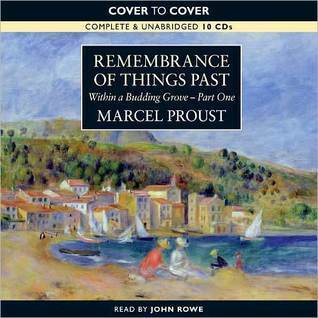
First published in 1919, Within a Budding Grove was awarded the Prix Goncourt, bringing the author immediate fame. In this second volume of Remembrance of Things Past, the narrator turns from the childhood reminiscences of Swann’s Way to memories of his adolescence. Having gradually become indifferent to Swann’s daughter Gilberte, the narrator visits the seaside resort of Balbec with his grandmother and meets a new object of attention—Albertine, “a girl with brilliant, laughing eyes and plump, matt cheeks.”

'Startlingly audacious.' Literary ReviewNew writing from the literary masterThroughout Proust’s life, nine of his short stories remained unseen – the writer never even spoke of them. Perhaps he was not ready to share the early themes he was nurturing for his masterpiece, In Search of Lost Time . Or perhaps, in dealing directly with gay desire, they were too audacious – too near to life – for the censorious society of the time.In these stories, published in English for the first time, we find an intimate portrait of a young author full of darkness, complexity and melancholy, longing to reveal himself to the world.

« Tout d'un coup, dans le petit chemin creux, je m'arrêtai touché au cœur par un doux souvenir d'enfance : je venais de reconnaître, aux feuilles découpées et brillantes qui s'avançaient sur le seuil, un buisson d'aubépines défleuries, hélas, depuis la fin du printemps. Autour de moi flottait une atmosphère d'anciens mois de Marie, d'après-midi du dimanche, de croyances, d'erreurs oubliées. J'aurais voulu la saisir. Je m'arrêtai une seconde et Andrée, avec une divination charmante, me laissa causer un instant avec les feuilles de l'arbuste. Je leur demandai des nouvelles des fleurs, ces fleurs de l'aubépine pareilles à de gaies jeunes filles étourdies, coquettes et pieuses. "Ces demoiselles sont parties depuis déjà longtemps", me disaient les feuilles. »À l'ombre des jeunes filles en fleurs (deuxième partie) - Le Côté de Guermantes - Esquisses

Ce volume contient:Sodome et Gomorrhe - La Prisonnière - Esquisses Édition sous la direction de Jean-Yves Tadié avec la collaboration de Antoine Compagnon, Pierre-Edmond Robert

This is the first-ever translation into English of this startling tour-de-force by one of the twentieth century’s greatest writers.The Lemoine Affair was inspired by the real-life French scandal involving Henri Lemoine, who claimed he could manufacture diamonds from coal and convinced numerous people—including officers of the De Beers diamond mine company and Proust himself—to invest in the scheme. In a series of pastiches—imitations written in the style of other writers—Proust tells the story of the embarrassment rippling across high society Paris in the wake of the scandal, poking fun at himself (in one story, a character declares that Marcel Proust is so embarrassed he’s suicidal) while lampooning some of France’s greatest writers, including Flaubert, Balzac, and Saint-Simon. Full of sophisticated wit and dazzling wordplay, and rife with allusions to his friend and fictional characters, many Proust scholars see the dead-on mimicry of The Lemoine Affair—written soon after Proust’s rejection of society life—as the work by which he honed his own unique, masterly voice.The Art of The Novella SeriesToo short to be a novel, too long to be a short story, the novella is generally unrecognized by academics and publishers. Nonetheless, it is a form beloved and practiced by literature's greatest writers. In the Art Of The Novella series, Melville House celebrates this renegade art form and its practitioners with titles that are, in many instances, presented in book form for the first time.

Just då var det ingen annan där förutom monsieur de Laléande, som inte kunde hitta sin spatserkäpp. Françoise roade sig en sista gång med att betrakta honom. Han gick förbi henne, lät sin armbåge snudda vid hennes, och just när de var jämsides vände han sig mot henne med skimrande ögon och sade, till synes alltjämt letande:– Kom hem till mig, rue Royale 5.Publicerad första gången i novellsamlingen Les plaisirs et les jours med titeln Mélancolique villégiature de Mme Breyves.