
Mervyn Peake
Mervyn Laurence Peake was an English modernist writer, artist, poet and illustrator. He is best known for what are usually referred to as the Gormenghast books, though the Titus books would be more accurate: the three works that exist were the beginning of what Peake conceived as a lengthy cycle, following his protagonist Titus Groan from cradle to grave, but Peake's untimely death prevented completion of the cycle, which is now commonly but erroneously referred to as a trilogy. They are sometimes compared to the work of his older contemporary J.R.R. Tolkien, but his surreal fiction was influenced by his early love for Charles Dickens and Robert Louis Stevenson rather than Tolkien's studies of mythology and philology. Peake also wrote poetry and literary nonsense in verse form, short stories for adults and children ("Letters from a Lost Uncle"), stage and radio plays, and Mr Pye, a relatively tightly-structured novel in which God implicitly mocks the evangelical pretensions and cosy world-view of the eponymous hero. Peake first made his reputation as a painter and illustrator during the 1930s and 1940s, when he lived in London, and he was commissioned to produce portraits of well-known people. A collection of these drawings is still in the possession of his family. Although he gained little popular success in his lifetime, his work was highly respected by his peers, and his friends included Dylan Thomas and Graham Greene. His works are now included in the collections of the National Portrait Gallery and the Imperial War Museum.
27 Books Written

A doomed lord, an emergent hero, and a dazzling array of bizarre creatures inhabit the magical world of the Gormenghast novels which, along with Tolkien's Lord of the Rings, reign as one of the undisputed fantasy classics of all time. At the center of it all is the seventy-seventh Earl, Titus Groan, who stands to inherit the miles of rambling stone and mortar that form Gormenghast Castle and its kingdom, unless the conniving Steerpike, who is determined to rise above his menial position and control the House of Groan, has his way.In these extraordinary novels, Peake has created a world where all is like a dream - lush, fantastical, and vivid. Accompanying the text are Peake's own drawings, illustrating the whole assembly of strange and marvelous creatures that inhabit Gormenghast.Also featuring:Introductory essays by Anthony Burgess and Quentin CrispTwelve critical essays, curated by Peake scholar Peter G. WinningtonFragment of the unpublished novel, Titus Awakes
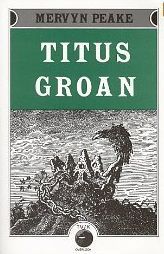
Starts with the birth and ends with the first birthday celebrations of the heir to the grand, tradition-bound castle of Gormenghast. A grand miasma of doom and foreboding weaves over the sterile rituals of the castle. Villainous Steerpike seeks to exploit the gaps between the formal rituals and the emotional needs of the ruling family for his own profit.

An alternative cover edition for this ISBN can be found here.Titus Groan is seven years old. Lord and heir to the crumbling castle Gormenghast. A gothic labyrinth of roofs and turrets, cloisters and corridors, stairwells and dungeons, it is also the cobwebbed kingdom of Byzantine government and age-old rituals, a world primed to implode beneath the weight of centuries of intrigue, treachery, and death. Steerpike, who began his climb across the roofs when Titus was born, is now ascending the spiral staircase to the heart of the castle, and in his wake lie imprisonment, manipulation, and murder.Gormenghast is the second volume in Mervyn Peake’s widely acclaimed trilogy, but it is much more than a sequel to Titus Groan—it is an enrichment and deepening of that book.The Gormenghast Trilogy ranks as one of the twentieth century’s most remarkable feats of imaginative writing.

Titus, almost 20, flees oppressive Castle Rituals. Lost in a sandstorm, helped by Muzzlehatch owner of traveling zoo and his ex-lover Juno, stranded in big city, arrested for vagrancy, he longs for home. Nobody has heard of Gormenghast, few believe. Titus wants to prove it is real.

Dapper and smiling, Mr. Pye comes to the island of Sark with a mission--to conquer evil. He immediately sets about changing everyone he meets, but is unfortunately prone to excess. When the struggle between good and evil becomes embarrassingly personal, Mr. Pye is forced to embark on a campaign of unparalleled sin.

A must-have for fans of the Gormenghast books, this anthology constitutes a chapter in the life of Titus Groan that unfolds beyond the pages of the author's monumental trilogy. Disturbingly atmospheric, these stories are told with the force and simplicity of allegory. This special volume includes rare stories as well as some never-before-seen illustrations.

Titus escapes for adventure, but tired and suffering from lack of food and water, he is captured by Hyena and Goat - a mysterious pair who hate each other. But both realize he will be the perfect sacrifice for Lamb who has waited many years for a mortal on which to use his diabolical art.

Lost in the frozen polar wastes, an explorer writes a journal of his extraordinary exploits, preparing to send it to the nephew he has never seen.
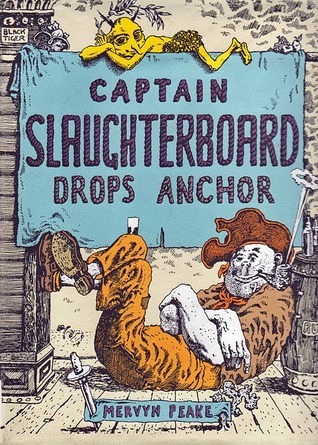
On a fantastic island populated by unusual animals, a pirate captain finds a trustworthy companion in the little "Yellow Creature."

Brilliant, disturbing, fantastical and addicitive, Mervyn Peake at one time or another during his brief life touched on almost every literary form. For the aficionado and for the first-time reader, this selection of his less well-known works offers a treasure trove. It includes a wealth of short stories, poems, nonsense verse and drawings - all of them adding new perspectives on this prolific and astonishingly original writer.

A collection of illustrated nonsensical poems from the celebrated author and illustrator of the Gormenghast Trilogy.

Published to mark the 40th anniversary of his death, this comprehensive edition of the poetry of Mervyn Peake includes pieces that touch on some of the most significant historical moments of the 20th century. His celebrated works range from the unemployment epidemic in pre-war Britain to the horrors of the blitz and the concentration camp at Bergen–Belsen, with each serving to anchor the fantasy world of his celebrated Gormenghast books. Black and white illustrations, drafted by the author, accompany the verse, along with previously unpublished illustrations and photographs.

Libro usado en buenas condiciones, por su antiguedad podria contener señales normales de uso

British writer and artist Mervyn Peake is not only well-known for his Gormenghast trilogy of novels, but also for his work as an illustrator, most notably for Lewis Carroll's Alice in Wonderland. In the Craft of the Lead Pencil, Peake draws on his own experience as an illustrator to offer an unusual and charming guide for anyone looking to experiment with pencil drawing.Originally published in 1946, this little treatise on the simple art of drawing is more than just a how-to book, placing Peake's own literary and artistic sensibilities alongside many of his beautiful line drawings, which clearly illustrate his instructions and showcase his love of the medium.This will be a charming gift book for anyone interested in drawing, sketching, and process of making art as well as a treasured token for the numerous Peake fans.

Libro usado en buenas condiciones, por su antiguedad podria contener señales normales de uso

I cannot give the Reasons,I only sing the Tunes:The sadness of the Seasons,The madness of the Moons.I cannot be didacticOr lucid but I canBe quite obscure and practic-Ally marzipan from I Cannot Give the Reasons"Nonsense," wrote Mervyn Peake, "can take you by the hand and lead you nowhere. It's magic." Peake (1911-68) is one of the great English nonsense poets, in the tradition of Lewis Carroll and Edward Lear. His verses "glitter with divine lunacy", propelling the reader to places where malicious bowler hats threaten their owners, a cake is chased across the sea by a rakish knife, aunts become flatfish or live exclusively on sphagnum moss.Fully annotated with a detailed introduction, Complete Nonsense contains all the poems and illustrations from Peake's Book of Nonsense (1972), with forty unpublished poems discovered poems discovered in manuscripts and thirty from uncollected sources, including all the nonsense verses from his novels. It reprints complete - for the first time and in colour - the words and images from Rhymes Without Reason (1944), and Peake's comic masterpiece Figures of Speech (1954). All the poems have been newly edited by Robert Maslen, editor of Peake's Collected Poems (Carcanet), and Peter Winnington, the leading Peake scholar and biographer.Cover Painting: Mervyn Peake, Sensitive, Seldom and Sad (1944)

The eccentric talent of the legendary Mervyn Peake figures prominently in FIGURES OF SPEECH, a playful series of drawings that challenge the reader to guess what familiar saying each picture portrays."We give no table of contents here, for to do so would spoil your pleasure," wrote author-illustrator Mervyn Peake when this quirky book was first published in 1939. "Each drawing represents a particular Figure of Speech." Following were twenty-nine drawings, identified only by a couple with their noses on fire; a gentleman cutting pages from a book; a tropical explorer resting his heels inside water glasses. Revealed in a key at the end were the "figures of speech" the drawings portrayed (in this case, "burning their bridges," "cutting a long story short," and, of course, "cooling his heels").Now this idiosyncratic volume has been lovingly reissued, its original black-and-white drawings set against colorful panels. Whether enjoyed simply for its witty, intriguing, and masterly pictures or used as a game book with family or friends, Figures of Speech will delight devoted followers of Mervyn Peake and everyone else who loves visual puns.

This fills an important gap in the canon of Peake's works in print. Although written after the Second World War, the poem uses it for its theme. While its central characters, the sailor and the child are symbolic, this was not consciously planned. Peake said of the poem that "it shows man's continuing hopefulness in adversity".



В третьей части трилогии Мервина Пика "Горменгаст", романе "Одиночество Титуса" (1959), юный граф становится бродягой и, находясь на грани безумия, скитается по миру в поисках своего древнего Дома. В книгу вошли также начало четвертого романа о Титусе Гроане (но лишь первые страницы, потом почерк автора становится неразборчивым) и повесть "Мальчик во мгле" (1956), имеющая непосредственное отношение к миру "Горменгаста".Содержание Одиночество ТитусаТитус пробуждаетсяМальчик во мгле

Maeve Gilmore writes "Shapes and Sounds was the first book of poems published by my husband Mervyn Peake. It appeared in 1941 [Chatto & Windus], and when the Village Press expressed the wish to re-publish it, I was immeasurably happy. It is strange to think that when these poems appeared, Titus Groan and Gormenghast were buried in a nebulous future.

In Mervyn Peake’s short story, ‘Danse Macabre’, the weird play of crossing the boundaries between life and death is enhanced by objects (here, clothes) developing a life of their own.


A collection of poetry by Mervyn Peake
Peake Plays
by Mervyn Peake
One. Celebrating the centenary of Mervyn Peakes birth in 2011 this new collection of his plays will make available again these all but forgotten masterpieces.

Мервин Пик в переводах Максима Калинина
by Mervyn Peake
В книге представлены лучшие стихотворения английского поэта, писателя и художника Мервина Пика (1911 – 1968), автора знаменитой трилогии «Замок Горменгаст». Во всех произведениях этого, быть может, самого оригинального мастера прошлого столетия, обыденное соседствует с фантастическим. В своей поэзии он всегда оставался романтиком, видевшим крылатых коней на улицах двадцатого заасфальтированного века.Стихотворения Мервина Пика в переводе Максима Калинина, на протяжении двадцати лет печатавшиеся в периодике, впервые собраны под одной обложкой.