
J.G.A. Pocock
John Greville Agard Pocock was a historian of political thought, best known for his studies of republicanism in the early modern period (mostly in Europe, Britain, and America), his work on the history of English common law, his treatment of Edward Gibbon and other Enlightenment historians, and, in historical method, for his contributions to the history of political discourse. Pocock taught at Washington University in St. Louis from 1966 until 1975, and at Johns Hopkins University in Baltimore from 1975 until 2011.
27 Books Written

The Machiavellian Moment: Florentine Political Thought and the Atlantic Republican Tradition
by J.G.A. Pocock
Rating: 4.0 ⭐
• 2 recommendations ❤️
"The Machiavellian Moment" is a classic study of the consequences for modern historical and social consciousness of the ideal of the classical republic revived by Machiavelli and other thinkers of Renaissance Italy. J.G.A. Pocock suggests that Machiavelli's prime emphasis was on the moment in which the republic confronts the problem of its own instability in time, and which he calls the "Machiavellian moment."After examining this problem in the thought of Machiavelli, Guicciardini, and Giannotti, Pocock turns to the revival of republican thought in Puritan England and in Revolutionary and Federalist America. He argues that the American Revolution can be considered the last great act of civic humanism of the Renaissance. He relates the origins of modern historicism to the clash between civic, Christian, and commercial values in the thought of the eighteenth century.

The Ancient Constitution and the Feudal Law: A Study of English Historical Thought in the Seventeenth Century
by J.G.A. Pocock
Rating: 4.4 ⭐
Professor Pocock's subject is how the seventeenth century looked at its own past. In the sixteenth and seventeenth centuries, one of the most important modes of studying the past was the study of the law - the historical outlook which arose in each nation was in part the product of its law, and therefore, in turn of its history. In clarifying the relation of the historical outlook of seventeenth-century Englishmen to the study of law, and pointing out its political implication, Pocock shows how history's ground was laid for a more philosophical approach in the eighteenth century.

Virtue, Commerce, and History: Essays on Political Thought and History, Chiefly in the Eighteenth Century
by J.G.A. Pocock
Rating: 4.5 ⭐
This book collects essays by Professor Pocock concerned principally with the history of British political thought in the eighteenth century. Several of the essays have been previously published (though they have not all been widely available), and several appear here for the first time in print.
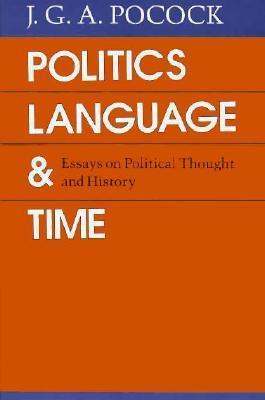
In his first essay, "Languages and Their Implications," J. G. A. Pocock announces the emergence of the history of political thought as a discipline apart from political philosophy. Traditionally, "history" of political thought has meant a chronological ordering of intellectual systems without attention to political languages; but it is through the study of those languages and of their changes, Pocock claims, that political thought will at last be studied historically.Pocock argues that the solution has already been approached by, first, the linguistic philosophers, with their emphasis on the importance of language study to understanding human thought, and, second, by Thomas Kuhn's The Structure of Scientific Revolutions , with its notion of controlling intellectual paradigms. Those paradigms within and through which the scientist organizes his intellectual enterprise may well be seen as analogous to the worlds of political discourse in which political problems are posed and political solutions are proffered. Using this notion of successive paradigms, Pocock demonstrates its effectiveness by analyzing a wide range of subjects, from ancient Chinese philosophy to Machiavelli, Hobbes, and Burke.

In this first volume, The Enlightenments of Edward Gibbon, John Pocock follows Gibbon through his youthful exile in Switzerland and his criticisms of the Encyclopédie and traces the growth of his historical interests down to the conception of the Decline and Fall itself.

John Pocock is arguably the most original and imaginative historian of ideas of modern times. Over the past half century he has created an audience for his work which is truly global, and he has marked the way in which the history of political thought is studied as deeply and personally as any historian of the period. The essays in this major new collection are selected from a lifetime of thinking about political thought, and how we should study it in history. What in fact does it mean to write the history of a political society, and what kind of political thought is this? Professor Pocock emphasises both the theory and practice of political thought considered as action in history, and the political theory of historiography considered as a form of political thought. Together these essays constitute a collection that any serious student of politics and intellectual history needs to possess.

This fourth volume in John Pocock's great sequence on Barbarism and Religion focuses on the idea of barbarism. Barbarism was central to the history of western historiography, to the history of the enlightenment, and to Edward Gibbon himself. As a concept it was deeply problematic to enlightened historians seeking to understand their own civil societies in the light of exposure to newly-discovered civilizations hitherto beyond the reach of history. The troubled relationship between philosophy and history is addressed directly in this fourth volume.

'Barbarism and Religion'--Edward Gibbon's own phrase--is the title of an acclaimed sequence of works by John Pocock designed to situate Gibbon, and his Decline and Fall of the Roman Empire, in a series of contexts in the history of eighteenth-century Europe. This is a major intervention from one of the world's leading historians of ideas, challenging the notion of any one 'Enlightenment' and positing instead a plurality of enlightenments, of which the English was one. In this third volume in the sequence, The First Decline and Fall, John Pocock offers an historical introduction to the first fourteen chapters of Gibbon's great work, arguing that Decline and Fall is a phenomenon of 'ancient' history. Having set out classical and Christian histories side by side, and considering Enlightened historiography as the partial escape from both, Pocock finally turns his incisive lens on Gibbon's text itself. J.G.A Pocock is a prize-winning historian of political, including historical, thought and discourse. He has been active since 1984 in founding and directing the Folger Institute Center for the History of British Political Thought at the Folger Shakespeare Library in Washington, DC, for which he edited The Varieties of British Political Thought, 1500-1800 (Cambridge, 1993). His work has focused on the early modern period, but he is active also in the history of New Zealand, where he comes from. Other books he has written include Barbarism and Religion, I: The Enlightenments of Edward Gibbon; II: Narratives of Civil Government (Cambridge, 1999), Virtue, Commerce and History (Cambridge, 1985), and Machiavellian Monument (Princeton, 1975).

Written by one of the world's leading historians of political thought and published over the past three decades, the purpose of these essays is to present British history as the history of several nations interacting with--and sometimes seceding from--association with an imperial state. The commentary presents this history as that of an archipelago, situated in oceans and expanding across them to the Antipodes. Both New Zealand history and ways of seeing history formed in New Zealand enter into the vision.

The second volume of Barbarism and Religion explores the historiography of Enlightenment, and looks at Gibbon's intellectual relationship with writers sucah as Giannone, Voltaire, Hume, Robertson, Ferguson and Adam Smith. Edward Gibbon's intellectual trajectory is both similar but at points crucially distinct from the dominant Latin "Enlightened narrative" these thinkers developed. The interaction of philosophy, erudition and narrative is central to enlightened historiography, and John Pocock again shows how the Decline and Fall is both akin to but distinct from the historiographical context within which Gibbon wrote his great work.

In this collection of essays, a group of distinguished American and British historians explores the relations between the American Revolution and its predecessors, the Puritan Revolution of 1641 and the Glorious Revolution of 1688.Originally published in 1980.The Princeton Legacy Library uses the latest print-on-demand technology to again make available previously out-of-print books from the distinguished backlist of Princeton University Press. These editions preserve the original texts of these important books while presenting them in durable paperback and hardcover editions. The goal of the Princeton Legacy Library is to vastly increase access to the rich scholarly heritage found in the thousands of books published by Princeton University Press since its founding in 1905.

O historiador britânico John Pocock vê seu interesse pela historiografia como um trabalho de análise e reconstrução do discurso político produzido pelos atores históricos engajados na ação política de seu tempo. Seu maior interesse está nas diferentes maneiras pelas quais esses atores percebem tais fatos e refletem sobre eles. Esta coletânea de ensaios, selecionados por Sergio Miceli em conjunto com o próprio Pocock, traz textos que sintetizam os pontos de vista do autor sobre a história do pensamento político anglo-americano, principalmente do século XVIII, e sobre a própria natureza do trabalho historiográfico. Nos ensaios, reconstrói a estrutura das linguagens políticas do período, analisando seu emprego e inovação pelos escritores políticos de sua época.

There is at present no overall history of English and British political thought and literature in the early modern period. This volume attempts to review the period from the English Reformation to the French Revolution, to suggest new ways of studying the articulation of political consciousness and the conduct of political argument, and to point out the extraordinary intellectual and linguistic richness of the ongoing English and British political debate.

This fifth volume in John Pocock's acclaimed sequence on Barbarism and Religion turns to the controversy caused by Edward Gibbon's treatment of the early Christian church. Examining this controversy in unprecedented depth, Pocock challenges the assumption that Gibbon wrote with the intention of destroying belief in the Christian revelation, and questions our understanding of the character of ‘enlightenment'. Reconsidering the genesis, inception and reception of these crucial chapters of Decline and Fall, Pocock explores the response of Gibbon's critics, affirming that his reputation as an unbeliever was established before his history of the Church had been written. The magnitude of Barbarism and Religion is already apparent. The First Triumph will be read not just as a remarkable analysis of the making of Decline and Fall, but also as a comment on the collision of belief and disbelief, a subject as pertinent now as it was to Gibbon's eighteenth-century readers.

Pensamiento político e historia. Ensayos sobre teoría y método (Universitaria)
by J.G.A. Pocock
Rating: 4.0 ⭐
En este magnífico libro, J. G. A. Pocock reúne sus ensayos más significados, publicados a lo largo de los últimos cincuenta años de investigación, en torno a la metodología utilizada en el estudio del pensamiento político en su contexto histórico. En ellos reflexiona en torno a la teoría y la práctica de un pensamiento político y esboza asimismo una teoría política de la historiografía, entendida, a su vez, como una forma de pensamiento político.

J.G.A. Pocock's valedictory lecture : presented at Johns Hopkins University, 1994 J G A Pocock [Baltimore, Md.] : Archangul Foundation, 2006. Edition/ Book : English Pocock, J. G. A. -- (John Greville Agard), -- 1924- Historians -- Biography. Historiography.

Момент Макиавелли. Политическая мысль Флоренции и атлантическая республиканская традиция
by J.G.A. Pocock
Rating: 4.0 ⭐
Монография Дж.Г.А. Покока «Момент Макиавелли» принадлежит к числу наиболее авторитетных и цитируемых исследований в общественных науках за последние пятьдесят лет. Яркий представитель Кембриджской школы изучения политической мысли, Покок предложил новую концепцию истории западной политической философии Нового времени: место либерального канона от Локка до Смита заняла республиканская традиция. Книга описывает историю республиканского языка политического мышления, которая включает сочинения Аристотеля, Полибия, Цицерона, Макиавелли, Гвиччардини, Харрингтона, Мэдисона и Джефферсона. Автор прослеживает эволюцию этого типа политического языка от споров гражданских гуманистов ренессансной Флоренции до полемики британских мыслителей в XVII и XVIII веке и дискуссий о характере новой республики в США в конце XVIII столетия. Ключевая тема исследования — роль активного гражданства и его добродетелей в эволюции западноевропейской политической мысли. Идеи Покока не теряют актуальности и сегодня, особенно в России, переживающей собственный «момент Макиавелли», — время столкновения молодой республики с кризисом провозглашенных ею ценностей и институтов.

THE MACHIAVELLIAN Florentine Political Thought and the Atlantic Republican Tradition
by J.G.A. Pocock

Barbarism and Religion: Volume 2, Narratives of Civil Government
by J.G.A. Pocock
The second volume of Barbarism and Religion explores the historiography of Enlightenment, and looks at Gibbon's intellectual relationship with writers sucah as Giannone, Voltaire, Hume, Robertson, Ferguson and Adam Smith. Edward Gibbon's intellectual trajectory is both similar but at points crucially distinct from the dominant Latin Enlightened narrative these thinkers developed. The interaction of philosophy, erudition and narrative is central to enlightened historiography, and John Pocock again shows how the Decline and Fall is both akin to but distinct from the historiographical context within which Gibbon wrote his great work.
Time, History and Eschatology in the Thought of Thomas Hobbes.
by J.G.A. Pocock

Die andere Buergergesellschaft Zur Dialektik von Tugend und Korruption. Edition Pandora; Bd. 12
by J.G.A. Pocock

La Ancient Constitution y el derecho feudal: Texto de la segunda edición con un estudio retrospectivo del autor
by J.G.A. Pocock
La Ancient Constitution y el derecho feudal, publicado en 1957, es el primer libro de John Pocock, redactado sobre los materiales que habían formado su tesis doctoral preparada en Cambridge entre 1948 y 1951. Orientada por Butterfield, la tesis de Pocock gozó de la ventaja de haber sido concebida en un clima intelectual enormemente renovador que empezaba a tratar los problemas del pensamiento desde una óptica que rompía con el por entonces todavía omnipresente mundo de las ideologías, para adentrarse en el terreno de los discursos o lenguajes políticos. Al igual que los trabajos de Laslett (véase en esta colección Segundo Tratado sobre el Gobierno Civil de Locke), el libro de Pocock supone un hito en la investigación del pensamiento y de la historia del derecho inglés que estudia como se forjó la noción de Ancient Constitution en el contexto de la mentalidad common law, partiendo de una cierta lectura del discurrir de la historia nacional. Su interés para el lector español estriba, tanto en lo ejemplar de su tratamiento historiográfico, como en las pistas concretas que sugieren que nuestra concepción de la historia del derecho, y la misma idea de Constitución histórica hasta ahora manejada, necesitan ser reconsideradas; y ello en un momento en que la estructura de la relación entre fuentes del derecho y el principio de jerarquía normativa construido en el siglo XVIII se encuentra sujeta a notables controversias que esconden un fondo polémico de una magnitud desconocida desde la codificación ilustrada.

Barbarism and Religion, Volume 6, Barbarism: Triumph in the West
by J.G.A. Pocock
This sixth and final volume in John Pocock's acclaimed sequence of works on Barbarism and Religion examines Volumes II and III of Edward Gibbon's Decline and Fall of the Roman Empire, carrying Gibbon's narrative to the end of empire in the west. It makes two general first, that this is in reality a mosaic of narratives, written on diverse premises and never fully synthesized with one another; and second, that these chapters assert a progress of both barbarism and religion from east to west, leaving much history behind as they do so. The magnitude of Barbarism and Religion is already apparent. Triumph in the West represents the culmination of a remarkable attempt to discover and present what Gibbon was saying, what he meant by it, and why he said it in the ways that he did, as well as an unparalleled contribution to the historiography of Enlightened Europe.

Cidadania, Historiografia e Res Publica
by J.G.A. Pocock
Os estudos reunidos neste volume, situados no cruzamento da história e da política, sinalizam alguns dos momentos marcantes do investimento historiográfico de John Pocock. Um investimento que, para além da sua manifesta originalidade metodológica, tem permitido ao autor elucidar o lugar ocupado, no quadro da tradição republicana, por conceitos tão nucleares do ideário político como são os de "cidadania", "res publica", "representação", "fortuna", "virtude" ou "corrupção", compondo, tudo somado, aquilo que foi já definido como "uma proposta de releitura tão revolucionária que de facto pressupõe a condenação ao anacronismo de bibliotecas inteiras".