
Martin Amis
Martin Amis was an English novelist, essayist, and short story writer. His works included the novels Money, London Fields and The Information. The Guardian writes that "all his critics have noted what Kingsley Amis [his father] complained of as a 'terrible compulsive vividness in his style... that constant demonstrating of his command of English'; and it's true that the Amis-ness of Amis will be recognisable in any piece before he reaches his first full stop." Amis's raw material is what he sees as the absurdity of the postmodern condition with its grotesque caricatures. He has thus sometimes been portrayed as the undisputed master of what the New York Times has called "the new unpleasantness."
30 Books Written

One of Time’s 100 best novels in the English language—by the acclaimed author of Lionel Asbo: State of England and London FieldsPart of Martin Amis’s “London Trilogy,” along with the novel London Fields and The Information, Money was hailed as "a sprawling, fierce, vulgar display" (The New Republic) and "exhilarating, skillful, savvy" (The Times Literary Supplement) when it made its first appearance in the mid-1980s. Amis’s shocking, funny, and on-target portraits of life in the fast lane form a bold and frightening portrait of Ronald Reagan’s America and Margaret Thatcher’s England. Money is the hilarious story of John Self, one of London’s top commercial directors, who is given the opportunity to make his first feature film—alternately titled Good Money and Bad Money. He is also living money, talking money, and spending money in his relentless pursuit of pleasure and success. As he attempts to navigate his hedonistic world of drinking, sex, drugs, and excessive quantities of fast food, Self is sucked into a wretched spiral of degeneracy that is increasingly difficult to surface from.

Explores the complex lives of five very different men, including Xan Meo, a one-time familial paragon who suffers a personality change following a brutal assault, and King Henry IX of England, whose life is complicated by his incapacitated wife.

In his uproarious first novel Martin Amis, author of the bestselling London Fields, gave us one of the most noxiously believable -- and curiously touching -- adolescents ever to sniffle and lust his way through the pages of contemporary fiction. On the brink of twenty, Charles High-way preps desultorily for Oxford, cheerfully loathes his father, and meticulously plots the seduction of a girl named Rachel -- a girl who sorely tests the mettle of his cynicism when he finds himself falling in love with her.

In Success Martin Amis pens a mismatched pair of foster brothers--one "a quivering condom of neurosis and ineptitude," the other a "bundle of contempt, vanity and stock-response"--in a single London flat. He binds them with ties of class hatred, sexual rivalry, and disappointed love, and throws in a disloyal girlfriend and a spectacularly unstable sister to create a modern-day Jacobean revenge comedy that soars with malicious poetry.

In Time's Arrow the doctor Tod T. Friendly dies and then feels markedly better, breaks up with his lovers as a prelude to seducing them, and mangles his patients before he sends them home. And all the while Tod's life races backward in time toward the one appalling moment in modern history when such reversals make sense.

This is an alternative cover edition. The main entry for ISBN 9780099748618 can be found here.London Fields is Amis's murder story for the end of the millennium. The murderee is Nicola Six, a "black hole" of sex and self-loathing intent on orchestrating her own extinction. The murderer may be Keith Talent, a violent lowlife whose only passions are pornography and darts. Or is the killer the rich, honorable, and dimly romantic Guy Clinch?
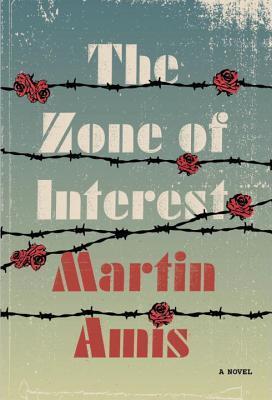
Once upon a time there was a king, and the king commissioned his favorite wizard to create a magic mirror. This mirror didn’t show you your reflection. It showed you your soul—it showed you who you really were. The wizard couldn’t look at it without turning away. The king couldn’t look at it. The courtiers couldn’t look at it. A chestful of treasure was offered to anyone who could look at it for sixty seconds without turning away. And no one could. The Zone of Interest is a love story with a violently unromantic setting. Can love survive the mirror? Can we even meet each other’s eye, after we have seen who we really are? Powered by both wit and compassion, and in characteristically vivid prose, Martin Amis’s unforgettable new novel excavates the depths and contradictions of the human soul.From the Hardcover edition.

Fame, envy, lust, violence, intrigues literary and criminal - they're all here in The Information. How does one writer hurt another writer? This is the question novelist Richard Tull mills over, for his friend Gwyn Barry has become a darling of book buyers, award committees, and TV interviewers, even as Tull himself sinks deeper into the sub-basement of literary failure. The only way out of this predicament, Tull believes, is to plot the demise of Barry."With The Information, Amis delivers a portrait of middle-age realignment with more verbal felicity and unbridled reach than [anyone] since Tom Wolfe forged Bonfire of the Vanities."—Houston Chronicle

Detective Mike Hoolihan has seen it all. A fifteen-year veteran of the force, she's gone from walking a beat, to robbery, to homicide. But one case--this case--has gotten under her skin.When Jennifer Rockwell, darling of the community and daughter of a respected career cop--now top brass--takes her own life, no one is prepared to believe it. Especially her father, Colonel Tom. Homicide Detective Mike Hoolihan, longtime colleague and friend of Colonel Tom, is ready to "put the case down." Suicide. Closed. Until Colonel Tom asks her to do the one thing any grieving father would ask: take a second look.Not since his celebrated novel Money has Amis turned his focus on America to such remarkable effect. Fusing brilliant wordplay with all the elements of the classic whodunit, Amis exposes a world where surfaces are suspect (no matter how perfect), where paranoia is justified (no matter how pervasive), and where power and pride are brought low by the hidden recesses of our humanity.

If the Marquis de Sade were to crash one of P.G. Wodehouse's house parties, the chaos might resemble the nightmarishly funny goings-on in this novel by the author of London Fields. The residents of Appleseed Rectory have primed themselves both for a visit from a triad of Americans and a weekend of copious drug taking and sexual gymnastics. There's even a heifer to be slugged and a pair of doddering tenants to be ingeniously harassed. But none of these variously bright and dull young things has counted on the intrusion of "dead babies" — dreary spasms of reality. Or on the uninvited presence of a mysterious prankster named Johnny, whose sinister idea of fun makes theirs look like a game of backgammon.

The son of the comic novelist Kingsley Amis, Martin Amis explores his relationship with this father and writes about the various crises of Kingsley's life. He also examines the life and legacy of his cousin, Lucy Partington, who was abducted and murdered by one of Britain’s most notorious serial killers. Experience also deconstructs the changing literary scene, including Amis' portraits of Saul Bellow, Salman Rushdie, Allan Bloom, Philip Larkin, and Robert Graves, among others.

A savage, funny, and mysteriously poignant saga by a renowned author at the height of his powers. Lionel Asbo, a terrifying yet weirdly loyal thug (self-named after England's notorious Anti-Social Behaviour Order), has always looked out for his ward and nephew, the orphaned Desmond Pepperdine. He provides him with fatherly career advice (always carry a knife, for example) and is determined they should share the joys of pit bulls (fed with lots of Tabasco sauce), Internet porn, and all manner of more serious criminality. Des, on the other hand, desires nothing more than books to read and a girl to love (and to protect a family secret that could be the death of him). But just as he begins to lead a gentler, healthier life, his uncle—once again in a London prison—wins £140 million in the lottery and upon his release hires a public relations firm and begins dating a cannily ambitious topless model and “poet.” Strangely, however, Lionel's true nature remains uncompromised while his problems, and therefore also Desmond's, seem only to multiply.

An extraordinary novel that ratifies Martin Amis’s standing as “a force unto himself,” as The Washington Post has “There is, quite simply, no one else like him.”House of Meetings is a love story, gothic in timbre and triangular in shape. In 1946, two brothers and a Jewish girl fall into alignment in pogrom-poised Moscow. The fraternal conflict then marinates in Norlag, a slave-labor camp above the Arctic Circle, where a tryst in the coveted House of Meetings will haunt all three lovers long after the brothers are released. And for the narrator, the sole survivor, the reverberations continue into the new century.Harrowing, endlessly surprising, epic in breadth yet intensely intimate, House of Meetings reveals once again that “Amis is a stone-solid genius . . . a dazzling star of wit and insight” ( The Wall Street Journal ).

The 1960s, as is well known, saw the launch of the sexual revolution, which radically affected the lives of every Westerner fortunate enough to be born after the Second World War. But a revolution is a revolution - contingent and sanguinary. In the words of the Russian thinker Alexander Herzen: The death of the contemporary forms of social order ought to gladden rather than trouble the soul. Yet what is frightening is that what the departing world leaves behind it is not an heir but a pregnant widow. Between the death of the one and the birth of the other, much water will flow by, a long night of chaos and desolation will pass. In many senses, including the literal, it was a velvet revolution; but it wasn't bloodless. Nor was it complete. Even today, in 2009, the pregnancy is still in its second trimester. Martin Amis, in The Pregnant Widow, takes as his control experiment a long, hot summer holiday in a castle in Italy, where half a dozen young lives are afloat on the sea change of 1970. The result is a tragicomedy of manners, combining the wit of Money with the historical sense of Time's Arrow and House of Meetings.It was summer 1970 - a long, hot summer. In a castle in Italy, half a dozen young lives are afloat on the sea of change, trapped inside the history of the sexual revolution. The girls are acting like boys, and the boys are going on acting like boys, and Keith Nearing - twenty years old, a literature student all clogged up with the English novel - is struggling to twist feminism and the rise of women towards his own ends. The sexual revolution may have been a velvet revolution (in at least two senses), but it wasn't bloodless - and now, in the twenty-first century, the year 1970 finally catches up with Keith Nearing. "The Pregnant Widow" is a comedy of manners and a nightmare, brilliant, haunting and gloriously risque. It is the most eagerly anticipated novel of the year and Martin Amis at his fearless best.About the AuthorMartin Amis is the author of ten novels, the memoir Experience, two collections of stories and six collections of non-fiction, most recently The Second Plane. He lives in London.

A brilliant weave of personal involvement, vivid biography and political insight, Koba the Dread is the successor to Martin Amis’s award-winning memoir, Experience.Koba the Dread captures the appeal of one of the most powerful belief systems of the 20th century — one that spread through the world, both captivating it and staining it red. It addresses itself to the central lacuna of 20th-century thought: the indulgence of Communism by the intellectuals of the West. In between the personal beginnings and the personal ending, Amis gives us perhaps the best one-hundred pages ever written about Stalin: Koba the Dread, Iosif the Terrible.The author’s father, Kingsley Amis, though later reactionary in tendency, was a “Comintern dogsbody” (as he would come to put it) from 1941 to 1956. His second-closest, and then his closest friend (after the death of the poet Philip Larkin), was Robert Conquest, our leading Sovietologist whose book of 1968, The Great Terror, was second only to Solzhenitsyn’s The Gulag Archipelago in undermining the USSR. The present memoir explores these connections.Stalin said that the death of one person was tragic, the death of a million a mere “statistic.” Koba the Dread, during whose course the author absorbs a particular, a familial death, is a rebuttal of Stalin’s aphorism.From the Hardcover edition.

Is there anything that Martin Amis can’t write about? In this virtuosic, career-spanning collection he takes on James Joyce and Elvis Presley, Nabokov and English football, Jane Austen and Penthouse Forum, William Burroughs and Hillary Clinton. But above all, Amis is concerned with literature, and with the deadly cliches–not only of the pen, but of the mind and the heart. In The War Against Cliché, Amis serves up fresh assessments of the classics and plucks neglected masterpieces off their dusty shelves. He tilts with Cervantes, Dickens and Milton, celebrates Bellow, Updike and Elmore Leonard, and deflates some of the most bloated reputations of the past three decades. On every page Amis writes with jaw-dropping felicity, wit, and a subversive brilliance that sheds new light on everything he touches.

This extraordinary novel gives the reader the heart-to-heart testimony of one of our finest writers – a wonder of literary invention and a boisterous modern classicHis most intimate and epic work to date, Inside Story is the unseen portrait of Martin Amis’ extraordinary life, as a man and a writer. This novel had its birth in a death – that of the author's closest friend, Christopher Hitchens. We also encounter the vibrant characters who have helped define Martin Amis, from his father Kingsley, to his hero Saul Bellow, from Philip Larkin to Iris Murdoch and Elizabeth Jane Howard, and to the person who captivated his twenties, the alluringly amoral Phoebe Phelps. What begins as a thrilling tale of romantic entanglements, family and friendship, evolves into a tender, witty exploration of the hardest questions: how to live, how to grieve, and how to die? In his search for answers, Amis surveys the great horrors of the twentieth century, and the still unfolding impact of the 9/11 attacks on the twenty-first – and what all this has taught him about how to be a writer. The result is one of Amis’ greatest achievements: a love letter to life that is at once exuberant, meditative, heartbreaking and ebullient, to be savoured and cherished for many years to come.

She wakes in an emergency room in a London hospital, to a voice that tells her: "You're on your own now. Take care. Be good." She has no knowledge of her name, her past, or even her species. It takes her a while to realize that she is human — and that the beings who threaten, befriend, and violate her are other people. Some of whom seem to know all about her.In this eerie, blackly funny, and sometimes disorienting novel, Martin Amis gives us a mystery that is as ambitious as it is intriguing, an investigation of a young woman's violent extinction that also traces her construction of a new and oddly innocent self.

A wickedly delightful collection of stories establishing Amis as one of the most versatile and gifted writers of his generation"Amis applies his comic timing, his perfect pitch and his curatorial eye to some of the burning issues of our time." — The New York Times Book Review"Martin Amis is a force unto himself.... There is, quite simply, no one else like him."— The Washington PostMartin Amis once again demonstrates why he is a modern master of the short story form. In "Career Move," screenwriters struggle for their art, while poets are the darlings of Hollywood. In "Straight Fiction," the love that dare not speak its name calls out to the hero when he encounters a forbidden object of desire—the opposite sex. And in "State of England," Mal, a former "minder to the superstars," discovers how to live in a country where "class and race and gender were supposedly gone."

A collection of stories about a frightening world inhabited by people dehumanized by the daily threat of nuclear war and postwar survivors deformed by its results.“Amis's introduction to these five stories is a beautifully judged piece of polemic; a carefully reasoned emotionally charged attack on the unthinkable folly of nuclear war - an elegant, funny, moving book”—Daily Telegraph“A phenomenal writer. He has style as quick and efficient as a flick-knife, and a gift for the grotesque that makes other people's nightmares look like Victorian watercolours”— Sunday TimesAn ex-circus strongman, veteran of Warsaw, 1939, and Notting Hill rough-justice artist, meets his own personal holocaust and 'Einsteinian' destiny; maximum boredom and minimum love-making are advised in a 2020 epidemic; a virulent new strain of schizophrenia overwhelms the young son of a 'father of the nuclear age'; evolution takes a rebarbative turn in a Kafkaesque love story; and the history of the earth is frankly discussed by one who has witnessed it all.The stories in this collection form a unity and reveal a deep '"Einstein's Monsters" refers to nuclear weapons but also to ourselves,' writes Amis in his enlightening introductory essay, 'We are Einstein's not fully human, not for now.'“Amis is first-rate; arguing inventing, demonstrating, parodying, being funny and shocking in the same breath”— Observer

A collection of essays on America by the author of London Fields, Money and Yellow Dog.At the age of ten, when Martin Amis spent a year in Princeton, New Jersey, he was excited and frightened by America. As an adult he has approached that confusing country from many arresting angles, and interviewed its literati, filmmakers, thinkers, opinion makers, leaders and crackpots with characteristic discernment and wit.Included in a gallery of Great American Novelists are Norman Mailer, Gore Vidal, Truman Capote, Joseph Heller, William Burroughs, Kurt Vonnegut, John Updike, Paul Theroux, Philip Roth and Saul Bellow. Amis also takes us to Dallas, where presidential candidate Ronald Reagan is attempting to liaise with born-again Christians. We glimpse the beau monde of Palm Beach, where each couple tries to out-Gatsby the other, and examine the case of Claus von Bulow. Steven Spielberg gets a visit, as does Brian de Palma, whom Amis asks why his films make no sense, and Hugh Hefner's sybaritic fortress and sanitised image are penetrated.There can be little that escapes the eye of Martin Amis when his curiosity leads him to a subject, and America has found in him a superlative chronicler.
Fuelled by innumerable cigarettes, Martin Amis provides dazzling portraits of contemporaries and mentors alike: Larkin and Rushdie; Greene and Pritchett; Ballard and Burgess and Nicholson Baker; John Updike - warts and all. Vigorously zipping across to Washington, he exposes the double-think of nuke-speak; in New Orleans the Republican Convention gets a going over. And then there's sport: he visits the world of darts and its disastrous attempt to clean itself up; dirty tricks in the world of chess; and some brisk but vicious poker with Al Alvarez and David Mamet.Sex without Madonna, expulsion from school, a Stones gig that should have been gagged, on set with Robocop, or on court with Gabriela Sabatini, this is Martin Amis at his electric best.

The Rub of Time: Bellow, Nabokov, Hitchens, Travolta, Trump: Essays and Reportage, 1986-2016
by Martin Amis
Rating: 3.9 ⭐
Of all the great novelists writing today, none shows the same gift as Martin Amis for writing non-fiction – his essays, literary criticism and journalism are justly acclaimed. As Rachel Cusk wrote in the The Times, reviewing a previous collection, ‘Amis is as talented a journalist as he is a novelist, but these essays all manifest an unusual extra quality, one that is not unlike friendship. He makes an effort; he makes readers feel that they are the only person there.’ The essays in The Rub of Time range from superb critical pieces on Amis’s heroes Nabokov, Bellow and Larkin to brilliantly funny ruminations on sport, Las Vegas, John Travolta and the pornography industry. The collection includes his essay on Princess Diana and a tribute to his great friend Christopher Hitchens, but at the centre of the book, perhaps inevitably, are essays on politics, and in particular the American election campaigns of 2012 and 2016. One of the very few consolations of Donald Trump’s rise to power is that Martin Amis is there to write about him.

Martin Amis first wrote about September 11 a week later in a piece for "The Guardian" beginning, 'It was the advent of the second plane, sharking in low over the Statue of that was the defining moment.' And he has kept returning to September 11, in essays and reviews, and in two remarkable short stories, 'In the Place of the End' and 'The Last Days of Muhammad Atta'. All are collected here, together with an expanded account of his travels with Tony Blair in 2007 - to Belfast, to Washington, and to Baghdad and Basra. 'We are arriving at an axiom in long-term thinking about international terrorism,' he 'the real danger lies, not in what it inflicts, but in what it provokes. Thus by far the gravest consequence of September 11, to date, is Iraq ...Meanwhile, September 11 continues, it goes on, with all its mystery, its instability, and its terrible dynamism.'

In this offbeat book, introduced by Stephen Spielberg, acclaimed author Martin Amis explores how 1980s video games took a generation by storm. Delving into the electric atmosphere of the arcades where he misspent his youth, he asks: Why did Space Invaders invade our hearts and minds? How much time, loose change and sex appeal did they cost us? And most importantly, which secret cheats and tactics must we master to reach the next level?Part cautionary tale, part celebration of a lifelong addiction, this is an essential manual for many a self-confessed cyber geek, computer nerd and joystick junkie.

Two sombre stories from "Einstein's Monsters". One is about a middle-aged Pole living in Ladbroke Grove whose wife is murdered in their flat while he's away for the weekend. The second is a strange tale about a puppy and a human community in a post-apocalyptic world.

A perfect introduction to one of the world’s greatest modern writers who is equally at home in satirical novels and biting critical essays, wickedly funny short stories and intimate autobiography.“Amis throws off more provocative ideas and images in a single paragraph than most writers get into complete novels.”— The Seattle TimesMartin Amis is widely regarded as one of the most influential yet inimitable voices in contemporary fiction, a writer whose prose captures the warp-speed rush of modernity.Vintage Amis displays this versatility in an excerpt from the author’s award-winning memoir, Experience; the “Horrorday” chapter from London Fields; a vignette from his novel Money; the stories “State of England,” “Insight at Flam Lake,” and “Coincidence of the Arts”; and the essays “Visiting Mrs. Nabokov,” “Phantom of the Opera.”Also included, for the first time in book form, the short story “Porno’s Last Summer.”

"Whatever porno is, whatever porno does, you may regret it, but you cannot reject it. To paraphrase banish porno, and you banish all of the world." Martin Amis A land where sex is simulated, evoked, glorified, supercharged in the extreme, a land where everything is about the body, in its possible and perverse sexual combinations....This is Pornoland, a strange, parallel universe where pornographic films are churned out on a daily basis. Photographs by Stefano de Luigi and a text by Martin Amis are the guides through this world, filled with actors capable of extraordinary performances (although not the kind that would ever win Oscars), directors who can make an entire film in just one day, improvised sets, almost nonexistent plots, and locations that stay exactly the same from one day to the next. The journey encompasses Milan, Berlin, Budapest, Prague, Tokyo, Dortmund, and Los Angeles. It includes no trite moralizing, hasty judgments, or yearnings for redemption. Stefano de Luigi's images and Martin Amis's words use respect, humor, and irony to tell the story of a rarely glimpsed world full of crude colors and harsh brutality, bodily contortions and bursts of laughter, unexpected tenderness and situations on the very edge of the absurd. 54 color illustrations.

Original Fiction, Short Story: “The crowd was diversified by thin streams of dark-skinned and dark-clothed refugees, their eyes haunted and determined, their tread leaden but firm.”

In this issue of Bold Type we offer "Career Move," a story... that imagines a world where poets are treated like Hollywood royalty and screenwriters toil away in oblivion.