
Karl Popper
Sir Karl Raimund Popper, FRS, rose from a modest background as an assistant cabinet maker and school teacher to become one of the most influential theorists and leading philosophers. Popper commanded international audiences and conversation with him was an intellectual adventure—even if a little rough—animated by a myriad of philosophical problems. He contributed to a field of thought encompassing (among others) political theory, quantum mechanics, logic, scientific method and evolutionary theory. Popper challenged some of the ruling orthodoxies of philosophy: logical positivism, Marxism, determinism and linguistic philosophy. He argued that there are no subject matters but only problems and our desire to solve them. He said that scientific theories cannot be verified but only tentatively refuted, and that the best philosophy is about profound problems, not word meanings. Isaiah Berlin rightly said that Popper produced one of the most devastating refutations of Marxism. Through his ideas Popper promoted a critical ethos, a world in which the give and take of debate is highly esteemed in the precept that we are all infinitely ignorant, that we differ only in the little bits of knowledge that we do have, and that with some co-operative effort we may get nearer to the truth. Nearly every first-year philosophy student knows that Popper regarded his solutions to the problems of induction and the demarcation of science from pseudo-science as his greatest contributions. He is less known for the problems of verisimilitude, of probability (a life-long love of his), and of the relationship between the mind and body. Popper was a Fellow of the Royal Society, Fellow of the British Academy, and Membre de I'Institute de France. He was an Honorary member of the Harvard Chapter of Phi Beta Kappa, and an Honorary Fellow of the London School of Economics, King's College London, and of Darwin College Cambridge. He was awarded prizes and honours throughout the world, including the Austrian Grand Decoration of Honour in Gold, the Lippincott Award of the American Political Science Association, and the Sonning Prize for merit in work which had furthered European civilization. Karl Popper was knighted by Queen Elizabeth II in 1965 and invested by her with the Insignia of a Companion of Honour in 1982. (edited from http://www.tkpw.net/intro_popper/intr...)
31 Books Written
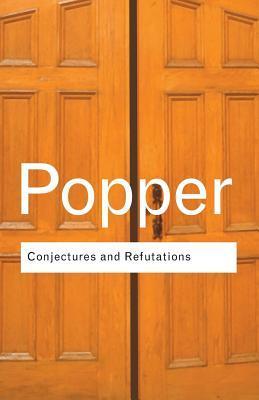
Conjectures and Refutations: The Growth of Scientific Knowledge
by Karl Popper
Rating: 4.2 ⭐
• 4 recommendations ❤️
Conjectures and Refutations is one of Karl Popper's most wide-ranging and popular works, notable not only for its acute insight into the way scientific knowledge grows, but also for applying those insights to politics and to history. It provides one of the clearest and most accessible statements of the fundamental idea that guided his work: not only our knowledge, but our aims and our standards, grow through an unending process of trial and error.

A landmark defense of democracy that has been hailed as one of the most important books of the twentieth centuryOne of the most important books of the twentieth century, The Open Society and Its Enemies is an uncompromising defense of liberal democracy and a powerful attack on the intellectual origins of totalitarianism. An immediate sensation when it was first published, Karl Popper's monumental achievement has attained legendary status on both the Left and Right. Tracing the roots of an authoritarian tradition represented by Plato, Marx, and Hegel, Popper argues that the spirit of free, critical inquiry that governs scientific investigation should also apply to politics. In a new foreword, George Soros, who was a student of Popper, describes the "revelation" of first reading the book and how it helped inspire his philanthropic Open Society Foundations.

2014 Reprint of Original 1959 Edition. Exact facsimile of the original edition, not reproduced with Optical Recognition Software. This book by one of the world's foremost philosophers of science presented a striking new picture of the logical character of scientific discovery--a picture which does full justice to the liberating effect of the Einsteinian revolution in physics and its immense impact upon scientific thought in general. For this new English edition Dr. Popper did his own translation and has written 150 pages of entirely new text. Ernest Nagel considered this work "a first rate contribution to the logic of scientific method. The book contains a very interesting chapter on quantum mechanics, which performs one of the few sensible analyses of the Indeterminacy Principle which I have seen in print... The book is highly stimulating and contains much that is bed-rock for future work."--From the Dusk Jacket.

These excerpts from the writings of Sir Karl Popper are an outstanding introduction to one of the most controversial of living philosophers, known especially for his devastating criticisms of Plato and Marx and for his uncompromising rejection of inductive reasoning. David Miller, a leading expositor and critic of Popper's work, has chosen thirty selections that illustrate the profundity and originality of his ideas and their applicability to current intellectual and social problems. Miller's introduction demonstrates the remarkable unity of Popper's thought and briefly describes his philosophy of critical rationalism, a philosophy that is distinctive in its emphasis on the way in which we learn through the making and correcting of mistakes.Popper has relentlessly challenged both the authority and the appeal to authority of the most fashionable philosophies of our time. This book of selections from his nontechnical writings on the theory of knowledge, the philosophy of science, metaphysics, and social philosophy is imbued with his emphasis on the role and by reason in exposing and eliminating the errors among them.

'I want to begin by declaring that I regard scientific knowledge as the most important kind of knowledge we have', writes Sir Karl Popper in the opening essay of this book, which collects his meditations on the real improvements science has wrought in society, in politics and in the arts in the course of the twentieth century. His subjects range from the beginnings of scientific speculation in classical Greece to the destructive effects of twentieth century totalitarianism, from major figures of the Enlightenment such as Kant and Voltaire to the role of science and self-criticism in the arts. The essays offer striking new insights into the mind of one of the greatest twentieth century philosophers.

The World of Parmenides: Essays on the Presocratic Enlightenment
by Karl Popper
Rating: 4.1 ⭐
• 2 recommendations ❤️
This unique collection of essays not only explores the complexity of ancient Greek thought, but also reveals Popper's engagement with Presocratic philosophy and the enlightenment he experienced in reading Parmenides. It includes writings on Greek science, philosophy and history, and demonstrates Popper's lifelong fascination and admiration of the Presocratic philosophers, in particular Parmenides, Xenophanes and Heraclitus.
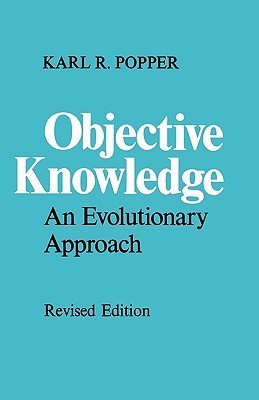
The essays in this volume represent an approach to human knowledge that has had a profound influence on many recent thinkers. Popper breaks with a traditional commonsense theory of knowledge that can be traced back to Aristotle. A realist and fallibilist, he argues closely and in simple language that scientific knowledge, once stated in human language, is no longer part of ourselves but a separate entity that grows through critical selection.

The Myth of the Framework: In Defence of Science and Rationality
by Karl Popper
Rating: 4.2 ⭐
• 2 recommendations ❤️
In a career spanning sixty years, Sir Karl Popper has made some of the most important contributions to the twentieth century discussion of science and rationality. The Myth of the Framework is a new collection of some of Popper's most important material on this subject.Sir Karl discusses such issues as the aims of science, the role that it plays in our civilization, the moral responsibility of the scientist, the structure of history, and the perennial choice between reason and revolution. In doing so, he attacks intellectual fashions (like positivism) that exagerrate what science and rationality have done, as well as intellectual fashions (like relativism) that denigrate what science and rationality can do. Scientific knowledge, according to Popper, is one of the most rational and creative of human achievements, but it is also inherently fallible and subject to revision.In place of intellectual fashions, Popper offers his own critical rationalism - a view that he regards both as a theory of knowlege and as an attitude towards human life, human morals and democracy.Published in cooperation with the Central European University.

"Although most of us know the date and place of our birth...few know when and how their intellectual life began. .." Here one of the greatest thinkers of our age recalls the landmarks of his development. Apprenticed to a cabinet maker, Popper found that philosophical daydreams interfered with the quality of his French polish, making him realize that he was too 'ignorant and fallible' for manual work. Popper's memories of the first world war, love affair with Marxism and the working class, involvement in music, and reactions to antisemitism are as vital to this story as his encounters with Einstein, Russell, carnap, and Wittgenstein."

Popper was born in 1902 to a Viennese family of Jewish origin. He taught in Austria until 1937, when he emigrated to New Zealand in anticipation of the Nazi annexation of Austria the following year, and he settled in England in 1949. Before the annexation, Popper had written mainly about the philosophy of science, but from 1938 until the end of the Second World War he focused his energies on political philosophy, seeking to diagnose the intellectual origins of German and Soviet totalitarianism. The Open Society and Its Enemies was the result. In the book, Popper condemned Plato, Marx, and Hegel as "holists" and "historicists"--a holist, according to Popper, believes that individuals are formed entirely by their social groups; historicists believe that social groups evolve according to internal principles that it is the intellectual's task to uncover. Popper, by contrast, held that social affairs are unpredictable, and argued vehemently against social engineering. He also sought to shift the focus of political philosophy away from questions about who ought to rule toward questions about how to minimize the damage done by the powerful. The book was an immediate sensation, and--though it has long been criticized for its portrayals of Plato, Marx, and Hegel--it has remained a landmark on the left and right alike for its defense of freedom and the spirit of critical inquiry.
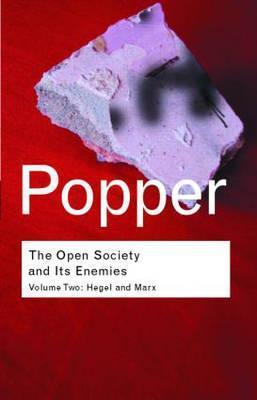
Written in political exile in New Zealand during the World War II and first published in two volumes in 1945, Karl Poppers The Open Society and its Enemies was hailed by Bertrand Russell as a vigorous and profound defence of democracy. Its now legendary attack on the philosophies of Plato, Hegel and Marx prophesied the collapse of communism in Eastern Europe and exposed the fatal flaws of socially engineered political systems.

Bilim ve toplum felsefesi alanlarının büyük filozofu Karl Popper’ın Tarihselciliğin Sefaleti adlı eseri, her iki felsefe disiplininin de problemlerini kendi kavşağında buluşturan çarpıcı bir kitaptır. Filozofun gerek Açık Toplum ve Düşmanları gerekse Bilimsel Araştırmanın Mantığı adlı eserleri, daha esaslı bir probleme ışık tutmak üzere bu kitapta bir araya gelmişlerdir.Sosyal bilimlerin tabiat bilimlerine indirgenip indirgenmeyeceği probleminin tartışıldığı eser, daha temelde “tarihin bilimsel yöntemlerle tahmin edilebilir yasaları” olduğuna inanan toplum felsefelerinin bilimsellik iddialarını çürütmek istemektedir.Bilim ve sosyal bilim ilişkilerinin incelendiği kitap boyunca merkezî kavram “tarih”tir. Fakat sefaleti öne sürülen asıl fikir “tarihsel” yöntem değil, tarihin modern ve tehlikeli bir kavranışı olan “tarihselci” düşünce tavrıdır.Popper, tarihteki değişmez ve önceden kestirilebilir kanunların bu etkileyici eleştirisini tüm “tarihsel kaderin amansız kanunlarındaki faşist ve komünist inançların kurbanı olmuşlara” ithaf etmiştir.Kısa ve etkileyici şekilde yazılmış bu eser; okurlara, entelektüellere ve politika yapıcılara nesiller boyunca ilham kaynağı olmuştur. İkinci Dünya Savaşı’ndan bu yana sosyal bilimler alanında yazılmış en önemli kitaplardan biri olarak kabul edilen Tarihselciliğin Sefaleti, bu büyük düşünürün fikirlerini anlama yolunda ışık tutuyor.
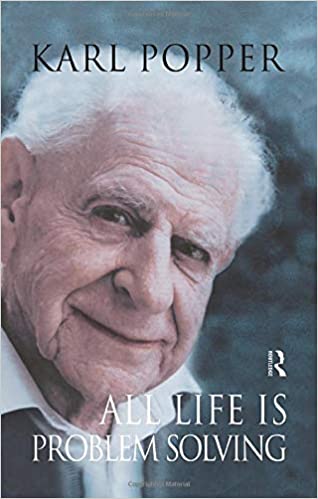
'Never before has there been so many and such dreadful weapons in so many irresponsible hands.' - Karl Popper, from the PrefaceAll Life is Problem Solving is a stimulating and provocative selection of Popper's writings on his main preoccupations during the last twenty-five years of his life. This collection illuminates Popper's process of working out key formulations in his theory of science, and indicates his view of the state of the world at the end of the Cold War and after the collapse of communism.

«Una democrazia non può esistere se non si mette sotto controllo la televisione, o più precisamente non può esistere a lungo fino a quando il potere della televisione non sarà pienamente scoperto» Karl R. Popper Un classico che ha avuto grande fortuna e ha suscitato un dibattito inesauribile e oggi più che mai attuale, in un'edizione arricchita da un saggio introduttivo di Giancarlo Bosetti e dai testi di John Condry, di Karol Wojtyla, di Raimondo Cubeddu e Jean Baudouin.

لا جدال في أن الفلسفة عالمية وإنسانية بطبيعتها وخلاصة للعقل والجهد البشري، ليس لها من سلطة غير سلطة العقل والبرهان، فكل ما هو عقلي هو فلسفي وإنساني وعالمي ومحلي في الوقت نفسه، لأن الفلسفة تقول بالمظهر والماهية، بالشكل والمحتوى، بالعقل ولتمظهراته. ولما كانت كذلك فإنها لا تؤمن بالحدود والحواجز والخصوصيات، لأنها بحث في الحقيقة ونشدان للمعنى وتأسيس للتواصل والحوار واللقاء بين الحضارات والأمم، مهما اختلفت أديانها وعقائدها ونظمها ونحلها ومللها وفرقها ولغاتها. من هنا سعت الفلسفة قديماً وحديثاً للتغلب على عقبة اللغة من خلال الترجمة، من مختلف لغات الأمم، وكانت بذلك تجسيداً لنزعة إنسانية مبكرة،

سال نشر: چاپ اول 1379، چاپ چهارم 1383این رساله کوچک، که در اصل متن یک سخنرانی است، محتوی یکی از مهمترین نظریهها، و بهتر بگوییم محتوی لبلباب نظریات فلسفی پوپر در زمینه شناخت و آگاهی و شناختشناسی و ارزش و اعتبار نسبی فرضیهها و تئوریهای علمی و قابل رد بودن آنها و عدم قاطعیت دانستههای بشری است؛ ضمن آنکه، چون برای سخنرانی تنظیم شده به زبانی سادهتر از آثار دیگر او و طبعا سودمندتر برای همگان به نوشته درآمده است.گفتوگو در باره نظریات پوپر، به ویژه هنگامی که این نظریهها در زمینه علوم انسانی بهکارمیرود و بر جامعههای انسانی انطباق مییابد، گسترده و پر دامنه است. تا آنجا که هیچ دانشمندی نیست که از کنار حرفهای او بیاعتنا بگذرد و عقایدش را نادیده انگارد و اما برای همگان کمترین سود خواندن آثار پوپر، بهویژه این کتاب کوچک اما پرمحتوا آمادگی برای ((بازاندیشی)) و تحمل ((دگراندیشی)) است.

The problem of the relation between our bodies and our minds, and espe cially of the link between brain structures and processes on the one hand and mental dispositions and events on the other is an exceedingly difficult one. Without pretending to be able to foresee future developments, both authors of this book think it improbable that the problem will ever be solved, in the sense that we shall really understand this relation. We think that no more can be expected than to make a little progress here or there. We have written this book in the hope that we have been able to do so. We are conscious of the fact that what we have done is very conjectur al and very modest. We are aware of our fallibility; yet we believe in the intrinsic value of every human effort to deepen our understanding of our selves and of the world we live in. We believe in humanism: in human rationality, in human science, and in other human achievements, however fallible they are. We are unimpressed by the recurrent intellectual fashions that belittle science and the other great human achievements. An additional motive for writing this book is that we both feel that the debunking of man has gone far enough - even too far. It is said that we had to learn from Copernicus and Darwin that man's place in the universe is not so exalted or so exclusive as man once thought. That may well be."

سال نشر: 1384 چاپ اولعنوان فرعی: گفت و گوهایی در باب سیاست، فیزیک و فلسفه
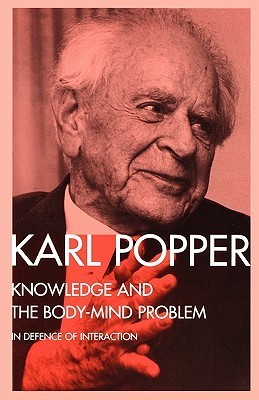
Based upon the Kenan Lectures that Karl Popper delivered at Emory University in 1969, Knowledge and the Body-Mind Problem raises problems connected with human freedom, creativity, rationality, and the relationship between human beings and their actions. These are what Popper calls big issues - too big for easy answers, but too important to be ignored. In these lectures, and in the discussions that follow them, Sir Karl develops a theory of body-mind interaction. This theory involves evolutionary emergence, human language, and that realm of autonomous products of the human mind which Popper calls World 3. According to Popper, consciousness emerged in the course of evolution as a kind of control system for the body, like a driver is a control system for a car. Objective knowledge - the kind of knowledge that is found in books and libraries - then emerged in the course of evolution as a higher level control system for the mind. Simply put, objective knowledge is the mind's control system for critical problem solving. In this way, full consciousness - the kind of consciousness that humans can have - is anchored in World 3 and is closely linked to human language, problems, theories, and criticism. And it is mainly through this use of objective knowledge as a control system for critical problem solving that we are able to exercise our freedom, creativity, and rationality - first by making contributions, like science books and works of art, to World 3; and then by using these contributions to bring about changes in Worlds 1 and 2. The Kenan Lectures were well-attended and provoked lively discussions. This book is published in the same informal language in which they were originally delivered and so can be easily understood by a general audience.

The Open Universe: An Argument for Indeterminism From the Postscript to The Logic of Scientific Discovery
by Karl Popper
Rating: 4.1 ⭐
The Open Universe is one of the three volumes of Karl Popper’s Postscript to the Logic of scientific Discovery. The Postscript is the culmination of Popper’s work in the philosophy of physics and a new famous attack on subjectivist approaches to philosophy of science.

Realism and the Aim of Science: From the Postscript to The Logic of Scientific Discovery
by Karl Popper
Rating: 4.3 ⭐
Realism and the Aim of Science is one of the three volumes of Karl Popper's Postscript to the Logic of scientific Discovery. The Postscript is the culmination of Popper's work in the philosophy of physics and a new famous attack on subjectivist approaches to philosophy of science.

Expanded versions of two lectures - given in 1988 and 1989 respectively - by Sir Karl Popper. The first introduces a new view of causality, based on Popper's interpretation of quantum theory. The second lecture gives a glimpse of human knowledge as it evolves from animal knowledge.
In a letter of 1932, Karl Popper described Die beiden Grundprobleme der Erkenntnistheorie – The Two Fundamental Problems of the Theory of Knowledge – as ‘…a child of crises, above all of …the crisis of physics.’ Finally available in English, it is a major contribution to the philosophy of science, epistemology and twentieth century philosophy generally. The two fundamental problems of knowledge that lie at the centre of the book are the problem of induction, that although we are able to observe only a limited number of particular events, science nevertheless advances unrestricted universal statements; and the problem of demarcation, which asks for a separating line between empirical science and non-science. Popper seeks to solve these two basic problems with his celebrated theory of falsifiability, arguing that the inferences made in science are not inductive but deductive; science does not start with observations and proceed to generalise them but with problems, which it attacks with bold conjectures. The Two Fundamental Problems of the Theory of Knowledge is essential reading for anyone interested in Karl Popper, in the history and philosophy of science, and in the methods and theories of science itself.

Al principio del verano de 1919 en Viena, la policía abría fuego contra una manifestación de jóvenes comunistas causando muertos y heridos. Poco antes, en el mes de mayo, al otro extremo del mundo, una expedición ciéntifica observaba un eclipse solar total que iba a trastocar todas las reglas de la geometría euclidiana. Una sola persona pone en relación estos acontecimientos : el joven vienés de 17 años, Karl Raimund Popper , que asistió al enfrentamiento con la policía vienesa a principios del 19 y también había seguido muy de cerca la observación del eclipse, que confirmaba las heterodoxas teorías de Einstein . En 1903, un año después de Popper , y en la misma ciudad, nacía Konrad Lorenz , etólogo y Premio Nobel en 1973 de filosofía y medicina , con quien el primero trabó, de niño y adolescente, estrechos lazos de amistad. Ya adultos, al emprender sus vidas y sus respectivas carreras científicas caminos divergentes, los dos sabios terminaron por perderse totalmente de vista, hasta el punto de que, décadas después, durante un encuentro científico, Popper tuvo que interpelar a Lorenz de la siguiente manera : «Pero Konrad, si soy Karl !…». La conversación que se reproduce en la primera parte de este libro, y que sostuvieron Popper y Lorenz el 21 de febrero de 1983 ante la chimenea de la residencia de los Lorenz en Altenberg, ilustra a la perfección la notable convergencia de descubrimientos y convicciones a las que, pese a esos largos años de «separación», llegaron estos dos sabios, dando prueba flagrante de la inevitable confluencia de los pensamientos científico y filosófico en nuestro siglo, según los cuales «nada ha existido ya, y ¡todo es posible ! ». Sin embargo, la proximidad entre estos dos universos revela también ciertos desacuerdos de apreciación : por ejemplo en lo que concierne el porvenir de la humanidad . En la segunda parte del libro, el lector encontrará la ponencia que leyó Popper en el simposio organizado en Viena entre el 24 y el 26 de mayo de 1983 con motivo de su ochenta aniversario sobre « Ciencia e hipótesis », « Los tres mundos » y « La sociedad abierta », temas todos ellos que desarrollan los que él había debatido tres meses antes, en una fría tarde de invierno, con su amigo de infancia.

In this long-awaited volume, Jeremy Shearmur and Piers Norris Turner bring to light Popper's most important unpublished and uncollected writings from the time of The Open Society until his death in 1994. After The Open Selected Social and Political Writings reveals the development of Popper's political and philosophical thought during and after the Second World War, from his early socialism through to the radical humanitarianism of The Open Society . The papers in this collection, many of which are available here for the first time, demonstrate the clarity and pertinence of Popper's thinking on such topics as religion, history, Plato and Aristotle, while revealing a lifetime of unwavering political commitment. After The Open Society illuminates the thought of one of the twentieth century's greatest philosophers and is essential reading for anyone interested in the recent course of philosophy, politics, history and society.

Used book in good condition, due to its age it could contain normal signs of use

Popper, Karl Raimund


Questi saggi offrono non solo una sintesi omogenea e coerente di gran parte delle tesi popperiane, ma anche un tracciato della sua epistemologia; si pongono gran parte delle questioni che sarebbero diventate oggetto di riflessioni future e si indica il percorso da seguire per giungere ad una concezione sempre più approfondita e critica di quegli stessi nuclei tematici.

Voor dit boek, dat een compleet beeld geeft van Poppers denken, is een keuze gemaakt uit zijn Conjectures and Refutations (1963). Alle hoofdstukken zijn variaties op het thema: wij kunnen van onze fouten leren. Omdat we van onze fouten leren, groeit onze kennis. Kennis groeit door gissingen en weerleggingen.Van Descartes tot Wittgenstein: vijftien titels uit de moderne filosofie waar men niet omheen kan, geselecteerd uit de succesvolle reeks BOOM KLASSIEK. In drie sets van vijf wordt met deze cruciale teksten een representatief beeld gegeven van de geschiedenis van het denken in de laatste vier eeuwen.

Popper i urval: Kunskapsteori, Vetenskapsteori, Metafysik, Samhällsfilosofi
by Karl Popper
Rating: 4.3 ⭐