
F. Scott Fitzgerald
Francis Scott Key Fitzgerald, widely known simply as Scott Fitzgerald, was an American novelist, essayist, and short story writer. He is best known for his novels depicting the flamboyance and excess of the Jazz Age, a term he popularized in his short story collection Tales of the Jazz Age. During his lifetime, he published four novels, four story collections, and 164 short stories. Although he achieved temporary popular success and fortune in the 1920s, Fitzgerald received critical acclaim only after his death and is now widely regarded as one of the greatest American writers of the 20th century. Born into a middle-class family in Saint Paul, Minnesota, Fitzgerald was raised primarily in New York state. He attended Princeton University where he befriended future literary critic Edmund Wilson. Owing to a failed romantic relationship with Chicago socialite Ginevra King, he dropped out in 1917 to join the United States Army during World War I. While stationed in Alabama, he met Zelda Sayre, a Southern debutante who belonged to Montgomery's exclusive country-club set. Although she initially rejected Fitzgerald's marriage proposal due to his lack of financial prospects, Zelda agreed to marry him after he published the commercially successful This Side of Paradise (1920). The novel became a cultural sensation and cemented his reputation as one of the eminent writers of the decade. His second novel, The Beautiful and Damned (1922), propelled him further into the cultural elite. To maintain his affluent lifestyle, he wrote numerous stories for popular magazines such as The Saturday Evening Post, Collier's Weekly, and Esquire. During this period, Fitzgerald frequented Europe, where he befriended modernist writers and artists of the "Lost Generation" expatriate community, including Ernest Hemingway. His third novel, The Great Gatsby (1925), received generally favorable reviews but was a commercial failure, selling fewer than 23,000 copies in its first year. Despite its lackluster debut, The Great Gatsby is now hailed by some literary critics as the "Great American Novel". Following the deterioration of his wife's mental health and her placement in a mental institute for schizophrenia, Fitzgerald completed his final novel, Tender Is the Night (1934). Struggling financially because of the declining popularity of his works during the Great Depression, Fitzgerald moved to Hollywood, where he embarked upon an unsuccessful career as a screenwriter. While living in Hollywood, he cohabited with columnist Sheilah Graham, his final companion before his death. After a long struggle with alcoholism, he attained sobriety only to die of a heart attack in 1940, at 44. His friend Edmund Wilson edited and published an unfinished fifth novel, The Last Tycoon (1941), after Fitzgerald's death. In 1993, a new edition was published as The Love of the Last Tycoon, edited by Matthew J. Bruccoli.
31 Books Written
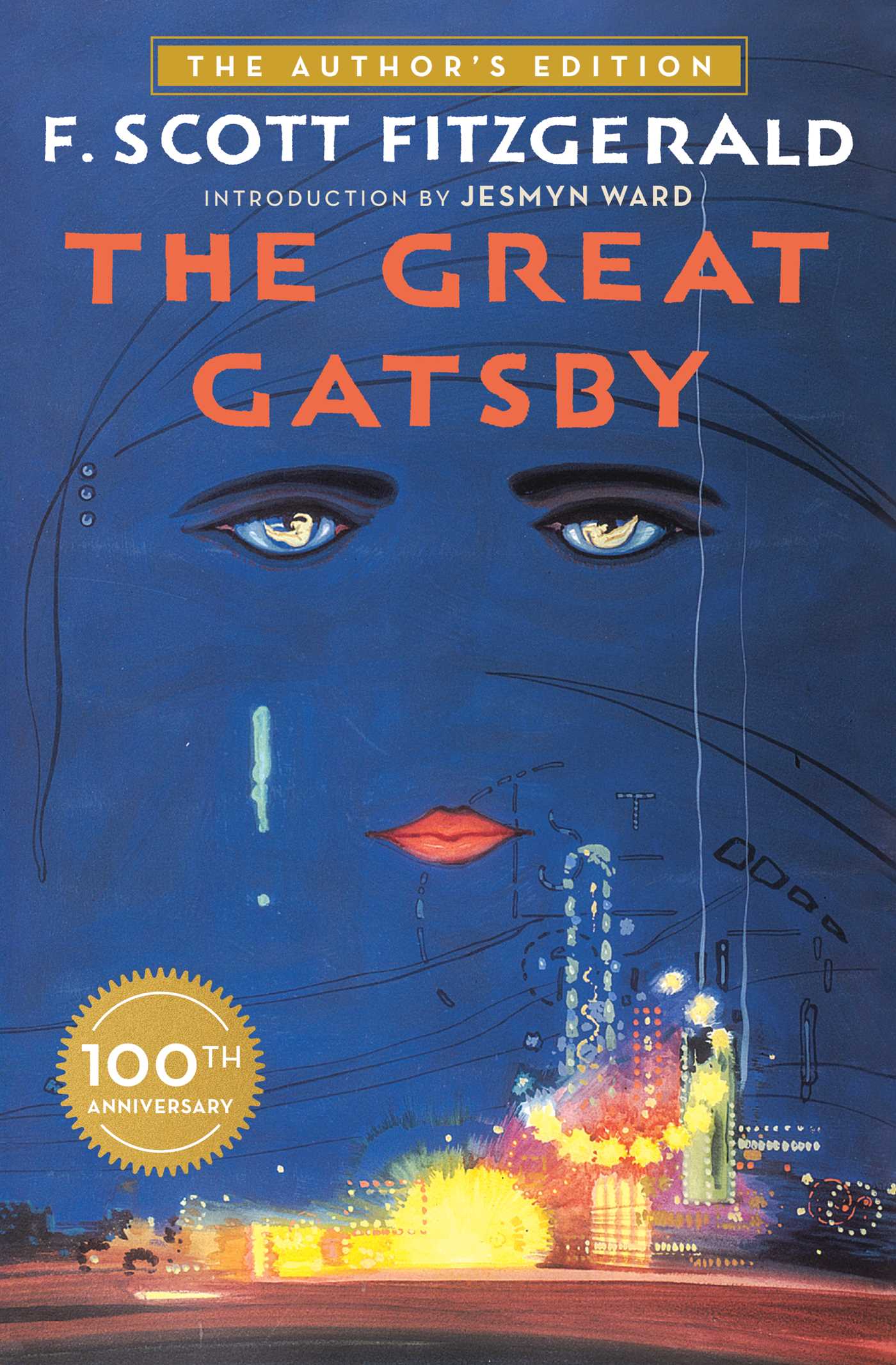
The only edition of the beloved classic that is authorized by Fitzgerald’s family and from his lifelong publisher.This edition is the enduring original text, updated with the author’s own revisions, a foreword by his granddaughter, and with a new introduction by National Book Award winner Jesmyn Ward.The Great Gatsby, F. Scott Fitzgerald’s third book, stands as the supreme achievement of his career. First published by Scribner in 1925, this quintessential novel of the Jazz Age has been acclaimed by generations of readers. The story of the mysteriously wealthy Jay Gatsby and his love for the beautiful Daisy Buchanan is an exquisitely crafted tale of America in the 1920s.

Set on the French Riviera in the late 1920s, Tender Is the Night is the tragic romance of the young actress Rosemary Hoyt and the stylish American couple Dick and Nicole Diver. A brilliant young psychiatrist at the time of his marriage, Dick is both husband and doctor to Nicole, whose wealth goads him into a lifestyle not his own, and whose growing strength highlights Dick's harrowing demise. A profound study of the romantic concept of character, Tender Is the Night is lyrical, expansive, and hauntingly evocative.

F. Scott Fitzgerald's second novel, which brilliantly satirizes a doomed and glamorous marriage, anticipated the master stroke— The Great Gatsby —that would follow, and marks a key moment in the writer’s career. Would-be Jazz Age aristocrats Anthony and Gloria Patch embody the corrupt high society of 1920s New they are beautiful, shallow, pleasure-seeking, and vain. As presumptive heirs to a large fortune, they begin their married life by living well beyond their means. Their days are marked by endless drinking, dancing, luxury, and play. But when the expected inheritance is withheld, their lives become consumed with the pursuit of wealth, and their alliance begins to fall apart. Inspired in part by Fitzgerald's own tumultuous union with his wife Zelda, hauntingly rendered and keenly observed, these characters evoke a vivid portrait of a lost a city steeped in vice, a society without direction, and the rootless and decadent generation that inhabited it.

A self-portrait of a great writer 's rise and fall, intensely personal and etched with Fitzgerald's signature blend of romance and realism. The Crack-Up tells the story of Fitzgerald's sudden descent at the age of thirty-nine from glamorous success to empty despair, and his determined recovery. Compiled and edited by Edmund Wilson shortly after F. Scott Fitzgerald's death, this revealing collection of his essays―as well as letters to and from Gertrude Stein, Edith Wharton, T.S. Eliot, John Dos Passos―tells of a man with charm and talent to burn, whose gaiety and genius made him a living symbol of the Jazz Age, and whose recklessness brought him grief and loss. "Fitzgerald's physical and spiritual exhaustion is described brilliantly," noted The New York Review of Books : "the essays are amazing for the candor."

One of the great American novels--and one of America's most popular--featuring a new introduction by Min Jin Lee, the New York Times bestselling author of Pachinko, and extensive resources to enhance discussion of it in classroomsThe basis for the Broadway musical starring Jeremy Jordan and Eva NoblezadaOne of The Atlantic's Great American Novels of the Past 100 YearsYoung, handsome, and fabulously rich, Jay Gatsby seems to have everything. But at his mansion east of New York City, in West Egg, Long Island, where the party never seems to end, he's often alone in the glittering Jazz Age crowd, watching and waiting, as speculation swirls around him--that he's a bootlegger, that he was a German spy during the war, that he even killed a man. As writer Nick Carraway is drawn into this decadent orbit, he begins to see beneath the shimmering surface of the enigmatic Gatsby, for whom one thing will always be out of Nick's cousin, the married Daisy Buchanan, whose house is visible from Gatsby's just across the bay.A brilliant evocation of the Roaring Twenties and a satire of a postwar America obsessed with wealth and status, The Great Gatsby is a novel whose power remains undiminished after a century. This edition, based on scholarship dating back to the novel's first publication in 1925, restores Fitzgerald's masterpiece to the original American classic he envisioned, and features an introduction addressing how gender, race, class, and sexuality complicate the pursuit of the American Dream and suggestions of a wide variety of multimedia resources for exploring the novel's themes.

This Side of Paradise, F. Scott Fitzgerald's romantic and witty first novel, was written when the author was only twenty-three years old. This semi-autobiographical story of the handsome, indulged, and idealistic Princeton student Amory Blaine received critical raves and catapulted Fitzgerald to instant fame. Now, readers can enjoy the newly edited, authorized version of this early classic of the Jazz Age, based on Fitzgerald's original manuscript. In this definitive text, This Side of Paradise captures the rhythms and romance of Fitzgerald's youth and offers a poignant portrait of the "Lost Generation."
Today, F. Scott Fitzgerald is known for his novels, but in his lifetime, his fame stemmed from his prolific achievement as one of America's most gifted story writers. "The Curious Case of Benjamin Button," a witty and fantastical satire about aging, is one of his most memorable stories. In 1860 Benjamin Button is born an old man and mysteriously begins aging backward. At the beginning of his life he is withered and worn, but as he continues to grow younger he embraces life -- he goes to war, runs a business, falls in love, has children, goes to college and prep school, and, as his mind begins to devolve, he attends kindergarten and eventually returns to the care of his nurse. This strange and haunting story embodies the sharp social insight that has made Fitzgerald one of the great voices in the history of American literature.

Today, F. Scott Fitzgerald is known for his novels, but in his lifetime, his fame stemmed from his prolific achievement as one of America's most gifted (and best-paid) writers of stories and novellas. In 'The Short Stories of F. Scott Fitzgerald', Matthew J. Bruccoli, the country's premier Fitzgerald scholar and biographer, assembles a sparkling collection that encompasses the full scope of Fitzgerald's short fiction. The forty-three masterpieces range from early stories that capture the fashion of the times to later ones written after the author's fabled crack-up, which are sober reflections on his own youthful excesses. Included are classic novellas, such as "The Rich Boy," "May Day," and "The Diamond as Big as the Ritz," as well as a remarkable body of work he wrote for the Saturday Evening Post and its sister "slicks." These stories can be read as an autobiographical journal of a great writer's career, an experience deepened by the illuminating introductory headnotes that Matthew Bruccoli has written for each story, placing it in its literary and biographical context.Together, these forty-three stories compose a vivid picture of a lost era, but their brilliance is timeless. This essential collection is a monument to the genius of one of the great voices in the history of American literature.

The Last Tycoon, edited by the renowned literary critic Edmund Wilson, was first published a year after Fitzgerald's death and includes the author's notes and outline for his unfinished literary masterpiece. It is the story of the young Hollywood mogul Monroe Stahr, a character inspired by the life of boy-genius Irving Thalberg, and is an exposé of the studio system in its heyday.

"The Jelly-Bean" "The Camel's Back" "May Day" "Porcelain and Pink" "The Diamond as Big as the Ritz "The Curious Case of Benjamin Button" "Tarquin of Cheapside" "Oh Russet Witch!" "The Lees of Happiness" "Mr. Icky" "Jemina"

6 of the Roaring Twenties chronicler's most scintillating short stories, chosen from Flappers and Philosophers (1920) and Tales of the Jazz Age (1922). This inexpensive volume comprises "The Diamond as Big as the Ritz," "The Ice Palace," "Bernice Bobs Her Hair," "May Day," "The Jelly-Bean," and "The Offshore Pirate." Publisher's Note.

Written between 1920 and 1937, when F. Scott Fitzgerald was at the height of his creative powers, these ten lyric tales represent some of the author's finest fiction. In them, Fitzgerald creates vivid, timeless characters -- a dissatisfied southern belle seeking adventure in the north; the tragic hero of the title story who lost more than money in the stock market; giddy and dissipated young men and women of the interwar period. From the lazy town of Tarleton, Georgia, to the glittering cosmopolitan centers of New York and Paris, Fitzgerald brings the society of the "Lost Generation" to life in these masterfully crafted gems, showcasing the many gifts of one of our most popular writers.

By the Irish American Jazz Age novelist and short story writer regarded as one of the greatest American writers of the twentieth century. He was the self-styled spokesman of the "Lost Generation" and author of The Great Gatsby (1925). His debut novel, This Side of Paradise (1920) examines the lives and morality of post-World War I youth. Flappers and Philosophers (1920) was his first collection of short stories. His second novel, The Beautiful and Damned (1922), demonstrates an evolution and maturity in his writing, and provides an excellent portrait of America during the Jazz Age, as does Tales of the Jazz Age (1922).
In this imaginative fable of ageing and the other stories collected here, F. Scott Fitzgerald displays his unmatched gift as a writer of short stories.This collection includes 7 stories: * The Curious Case of Benjamin Button: Full grown with a long, smoke-coloured beard, requiring the services of a cane and fonder of cigars than warm milk, Benjamin Button is a very curious baby indeed. And, as Benjamin becomes increasingly youthful with the passing years, his family wonders why he persists in the embarrassing folly of living in reverse. * Head and Shoulders* The Cut-Glass Bowl: An ill-meant gift haunts a family's misfortunes.* The Four Fists: A man's life shaped by a series of punches to his face.* May Day* 'O Russet Witch'* Crazy Sunday
What happens when a man lives his life backwards, or a family owns a diamond as big as the Ritz Hotel?How can a boring girl become more popular, a careless young woman become more sensible, or a cut-glass bowl destroy a married woman's life?What does a young man do to save the girl that he likes from an evil ghost, or to forget old feelings for a woman when she marries another man?Read this collection of short stories by one of America's finest storytellers to find out.

I want to be a society vampire, you see, she announced coolly, and went on to inform him that bobbed hair was the necessary prelude. She added that she wanted to ask his advice, because she had heard he was so critical about girls.

The fantastical story by beloved Jazz Age writer, F. Scott Fitzgerald—a dark and gleaming fairy tale about the excesses of wealth and the promise of the American West—selected from Fitzgerald’s exuberant collection, Tales of the Jazz Age.On a summer break from his New England education, John T. Unger of Hades, accompanies a new friend to his father’s private estate—a hidden palace carved out of one solid diamond mountain where extravagance knows no bounds, and everything feels a spectacular dream to modest Unger until he discovers the frightful lengths to which the family will go to protect their secret and their treasure.

"Winter Dreams" is a short story by F. Scott Fitzgerald that first appeared in Metropolitan Magazine in December 1922, and was collected in All the Sad Young Men in 1926. It is considered one of Fitzgerald's finest stories and is frequently anthologized. In the Fitzgerald canon, it is considered to be in the "Gatsby-cluster," as many of its themes were later expanded upon in his famous novel The Great Gatsby in 1925.
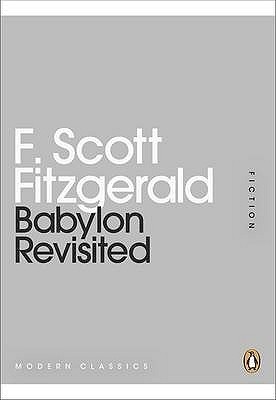
But it hadn't been given for nothing. It had been given, even the most wildly squandered sum, as an offering to destiny that he might not remember the things most worth remembering, the things that he would now always remember.F. Scott Fitzgerald's stories defined the 1920s 'Jazz Age' generation, with their glittering dreams and tarnished hopes. In these three tales of a fragile recovery, a cut-glass bowl and a life lost, Fitzgerald portrays, in exquisite prose and with deep human sympathy, the idealism of youth and the ravages of success. This book includes Babylon Revisited, The Cut-Glass Bowl and The Lost Decade.

Dear Scott, Dearest Zelda: The Love Letters of F. Scott and Zelda Fitzgerald
by F. Scott Fitzgerald
Rating: 4.2 ⭐
Through his alcoholism and her mental illness, his career highs (and lows) and her institutional confinement, Scott and Zelda Fitzgerald's devotion to each other endured for more than twenty-two years. Now, for the first time, the story of the love of these two glamorous and hugely talented writers can be given in their own letters. Introduced by an extensive narrative of the Fitzgeralds' marriage, the 333 letters - three-quarters of them previously unpublished or out of print - have been edited by noted Fitzgerald scholars, Jackson R. Bryer and Cathy W. Barks. They are illustrated throughout with a generous selection of familiar and unpublished photographs.

В настоящем издании представлены знаменитые романы, которые составили славу одного из интереснейших писателей ХХ столетия Фрэнсиса Скотта Фицджеральда. Он стал рупором идей и выразителем душевных настроений молодежи 1920-х. Устами героя публикуемого здесь романа — «По эту сторону рая» (1920) — он объявил, что пришло поколение, для которого «все боги умерли, все войны отгремели, всякая вера подорвана». Фицджеральд первым сообщил миру о начале «века джаза» с его карнавальным стилем жизни, которого придерживался и сам…Однако, будучи тонко чувствующим художником, он не мог не увидеть двойственной природы данного явления. В своем лучшем романе «Великий Гэтсби» (1925) Фицджеральд дал ясно понять, что карнавал бытия закономерно завершается жизненным банкротством его участников.
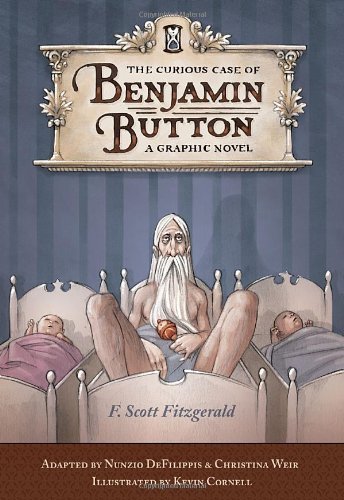
Upon completing "The Curious Case of Benjamin Button" in 1922, F. Scott Fitzgerald declared it "the funniest story ever written" and "one of my two favorite stories." It's the strange tale of a man who is "born" 70 years old and mysteriously ages in reverse. This stunning graphic novel adaptation illustrates Benjamin Button's many adventures: He falls in love, starts a family, and runs a successful business. In his later years, he goes to war and attends Harvard University. As an old man, he resembles a newborn baby and returns to the care of a nurse.Complete with Fitzgerald's original text, dazzling watercolor illustrations, and an afterword describing the story's origins and critical reception, this edition offers a fresh look at a literary masterpiece.

A collection including the last complete unpublished short stories by F. Scott Fitzgerald, the iconic American writer of The Great Gatsby who is more widely read today than ever.I’d Die For You is a collection of the last remaining unpublished and uncollected short stories by F. Scott Fitzgerald, edited by Anne Margaret Daniel. Fitzgerald did not design the stories in I’d Die For You as a collection. Most were submitted individually to major magazines during the 1930s and accepted for publication during Fitzgerald’s lifetime, but were never printed. Some were written as movie scenarios and sent to studios or producers, but not filmed. Others are stories that could not be sold because their subject matter or style departed from what editors expected of Fitzgerald. They date from the earliest days of Fitzgerald’s career to the last. They come from various sources, from libraries to private collections, including those of Fitzgerald’s family.Readers will experience Fitzgerald writing about controversial topics, depicting young men and women who actually spoke and thought more as young men and women did, without censorship. Rather than permit changes and sanitizing by his contemporary editors, Fitzgerald preferred to let his work remain unpublished, even at a time when he was in great need of money and review attention.“I’d Die For You,” the collection’s title story, is drawn from Fitzgerald’s stays in the mountains of North Carolina when his health, and that of his wife Zelda, was falling apart. With the addition of a Hollywood star and film crew to the Smoky Mountain lakes and pines, Fitzgerald brings in the cinematic world in which he would soon be living. Most of the stories printed here come from this time period, during the middle and late1930s, though the collection spans Fitzgerald’s career from 1920 to the end of his life.The book is subtitled And Other Lost Stories in recognition of an absence until now. Some of the eighteen stories were physically lost, coming to light only in the past few years. All were lost, in one sense or another: lost in the painful shuffle of the difficulties of Fitzgerald’s life in the middle 1930s; lost to readers because contemporary editors did not understand or accept what he was trying to write; lost because archives are like that, and good things can wait patiently in libraries for many centuries sometimes. I’d Die For You And Other Lost Stories echoes as well the nostalgia and elegy in Gertrude Stein’s famous phrase “a lost generation,” that generation for whom Fitzgerald was a leading figure.Written in his characteristically beautiful, sharp, and surprising language, exploring themes both familiar and fresh, these stories provide new insight into the bold and uncompromising arc of Fitzgerald’s career. I’d Die For You is a revealing, intimate look at Fitzgerald’s creative process that shows him to be a writer working at the fore of modern literature—in all its developing complexities.

A collection of F. Scott Fitzgerald’s best drinking stories makes this the most intoxicating New Directions Pearl yet! “First you take a drink,” F. Scott Fitzgerald once noted, “then the drink takes a drink, then the drink takes you.” Fitzgerald wrote alcohol into almost every one of his stories. On Booze gathers debutantes and dandies, rowdy jazz musicians, lost children and ragtime riff-raff into a newly compiled collection taken from The Crack-Up , and other works never before published by New Directions. On Booze portrays “The Jazz Age” as Fitzgerald experienced it: roaring, rambunctious, and lush ― with quite a hangover.

Pulling her cloak close about her Edith darted across the Avenue. She started nervously as a solitary man passed her and said in a hoarse whisper --"Where bound, kid do?" She was reminded of a night in her childhood when she had walked around the block in her pajamas and a dog had howled at her from a mystery-big back yard.

A fascinating study in self-satire that brings to life the Hollywood years of F. Scott FitzgeraldThe the Pat Hobby, a down-and-out screenwriter trying to break back into show business, but having better luck getting into bars. Written between 1939 and 1940, when F. Scott Fitzgerald was working for Universal Studios, the seventeen Pat Hobby stories were first published in Esquire magazine and present a bitterly humorous portrait of a once-successful writer who becomes a forgotten hack on a Hollywood lot. "This was not art" Pat Hobby often said, "this was an industry" where whom "you sat with at lunch was more important than what you dictated in your office."The Pat Hobby sequence, as Arnold Gingrich writes in his introduction, is Fitzgerald's "last word from his last home, for much of what he felt about Hollywood and about himself permeated these stories."

Often described as the “Great American Novel,” F. Scott Fitzgerald’s The Great Gatsby is the quintessential story of love, ambition, and wealth in the Roaring Twenties. In the Long Island village of West Egg, the rich and mysterious Jay Gatsby pursues the now-married Daisy Buchanan, whom he last saw five years ago, before amassing his fortune. Along with the eleven short stories from Fitzgerald’s collection Tales of the Jazz Age—including “The Curious Case of Benjamin Button”—this handsome Word Cloud edition makes a fine addition to anyone’s bookshelf.

The Ice Palace is a short story written by F. Scott Fitzgerald. The story is set in the fictional town of Tarleton, Georgia, and follows the life of a young girl named Sally Carrol Happer. Sally is a beautiful and popular girl who is engaged to a local man named Harry Bellamy. However, Sally feels restless and longs for adventure and excitement.One day, Sally meets a young man named Jack Frost. Jack is from the North and is in Tarleton to visit his uncle. Sally is immediately drawn to Jack's mysterious and adventurous nature, and the two quickly become friends. Jack takes Sally on a wild ride through the countryside, and they end up at an abandoned ice palace.The ice palace is a beautiful and magical place, but Sally becomes frightened and wants to leave. Jack convinces her to stay, and they spend the night together in the palace. The next morning, Sally returns home and realizes that she has fallen in love with Jack.The Ice Palace is a story about the search for adventure and excitement, and the consequences that come with it. It is a tale of youthful passion and the desire to break free from the constraints of society. Fitzgerald's writing is poetic and evocative, and the story is a haunting and beautiful exploration of the human heart.She rose at six and sliding uncomfortably into her clothes stumbled up to the diner for a cup of coffee. The snow had filtered into the vestibules and covered the floor with a slippery coating. It was intriguing, this cold, it crept in everywhere. Her breath was quite visible and she blew into the air with a nave enjoyment. Seated in the diner she stared out the window at white hills and valleys and scattered pines whose every branch was a green platter for a cold feast of snow.This scarce antiquarian book is a facsimile reprint of the old original and may contain some imperfections such as library marks and notations. Because we believe this work is culturally important, we have made it available as part of our commitment for protecting, preserving, and promoting the world's literature in affordable, high quality, modern editions, that are true to their original work.

With an Introduction and Notes by Henry Claridge, Senior Lecturer, School of English, University of Kent at Canterbury.Tender is the Night is a story set in the hedonistic high society of Europe during the ‘Roaring Twenties’. A wealthy schizophrenic, Nicole Warren, falls in love with Dick Diver - her psychiatrist. The resulting saga of the Divers’ troubled marriage, and their circle of friends, includes a cast of aristocratic and beautiful people, unhappy love affairs, a duel, incest, and the problems inherent in the possession of great wealth. Despite cataloguing a maelstrom of interpersonal conflict, Tender is the Night has a poignancy and warmth that springs from the quality of Fitzgerald's writing and the tragic personal experiences on which the novel is based.Six years separate Tender is the Night and The Last Tycoon, the novel Fitzgerald left unfinished at his death in December 1940. Fitzgerald lived in Hollywood more or less continuously from July 1937 until his death, and a novel about the film industry at the height of 'the studio system' centred on the working life of a top producer was begun in 1939. Even in its incomplete state The Last Tycoon remains the greatest American novel about Hollywood and contains some of Fitzgerald's most brilliant writing.

The Rich Boy --The Bridal Party --The Last of the Belles.Fitzgerald's short story "The Rich Boy" (like his novel The Great Gatsby) utilizes an outside narrator to tell the story of a wealthy protagonist in a sympathetic but still somewhat distanced way. Here the protagonist is Anson Hunter, a well-to-do young New Yorker, who would seem to have the whole world ahead of him and the streets paved in gold.By his early twenties, he has found his ideal woman as the exquisite -- and very rich -- Paula Legendre. On the surface, Paula would not seem to be the type of girl that would exert such a pull on Anson. Anson seems to have a lot of oats to sow, and Fitzgerald describes Paula as being "conservative and rather proper." But he is, nonetheless, obsessed by her, not because she represents the money he wants -- after all, he already has enough of his own -- but because she represents the social system that justifies his existence. In his world, responsible older men (like his uncle Robert) hold the reins of government and business; chaste and proper women (like Paula and her mother) maintain the rules of propriety and etiquette; and, until they get old enough to assume the mantle of responsible older manhood, playboys like Anson play. That is all Anson thinks he is doing right now. Just as he sees in himself the undeveloped kernel of a future leader, he sees in Paula the kernel of a future society matron. He thinks they would make a good pair.What he doesn't realize, however, is that his virtually unlimited wealth has within it the power to corrupt him, and it's already doing a good job. His first problem is that he sees himself as superior. He carries himself that way; Fitzgerald says that ". . . He had a confident charm and a certain brusque style, and the upper-class men who passed him on the street knew without being told that he was a rich boy and had gone to one of the best schools. . . . Anson accepted without reservation the world of high finance and high extravagance, of divorce and dissipation, of snobbery and of privilege."Anson doesn't see any reason why, being young and rich, he has to play by anyone else's rules. If he wants to drink himself under the table, why shouldn't he have the right to do that? And regardless of where or with whom he happens to be when he acts drunkenly, or obscenely, or boorishly, why should he apologize for his behavior? He's rich, and the rich make the rules, don't they? People should just accept his natural superiority, regardless of how he behaves.It would seem very difficult to sympathize with a character who holds these beliefs and acts upon them so wholeheartedly; but we do, because we sense that he is headed for a fall. His first mistake lies in his inability to commit himself to Paula. Fate gave Anson every opportunity to take Paula as his own. In doing so, he would be asserting his adulthood; he would be taking his place alongside the other well-to-do movers and shakers of New York. But, true to his status as a tragic hero, he constantly tries to defy fate. The role ordained for him is to be a wealthy, responsible scion of business, a lord of some suburban manor, the benefactor of deserving charities; for far too long, he refuses. Anson doesn't want to grow up. He gets a job, "entering a brokerage house, joining half a dozen clubs, [and] dancing late." Even as he moves up the corporate ladder, there is still that part of him that is unable to give up the schoolboy carousing, the indifference toward the responsibilities that fate has laid upon his shoulders as the wages of being rich.His second mistake is in self-righteously condemning his aunt Edna for having an affair. Anson, of all people, ought to be the last person to condemn anyone for moral lapses, and certainly not lapses of the heart; Anson's heart is far more lapsed than Edna and Cary's. He himself had just broken up with Dolly Karger, whom he dated all the while knowing she meant nothing to him, and her careless behavior merely mirrored his own. He has no right to threaten to expose Edna and Cary, and he is thus directly responsible for Cary's suicide. But "Anson never blamed himself for his part in the affair [because he believed] the situation which brought it about had not been of his making." But there, of course, he is wrong.His third mistake lies in the belief that when he is ready, Paula will be waiting. He is disturbed when he hears she has married someone else, but, as we have pointed out, Anson lives in a world characterized by "divorce and dissipation", and he seems to feel Paula will come around on his timetable. What this basically amounts to is a belief that fate is on his side; it must be, because he was born rich. But the overriding lesson of Anson's life is that of those to whom much is given, much is asked. Anson does not seem to realize that payback is a lifelong process.The rich boy --The brid...

This volume of the Cambridge Fitzgerald Edition includes the original nine stories selected by Fitzgerald for All the Sad Young Men, together with eleven additional stories, published between 1925 and 1928, which were not collected by Fitzgerald during his lifetime. This edition is based on extensive surviving manuscripts and typescripts. The volume contains a scholarly introduction, historical notes, a textual apparatus, illustrations, and appendices. The complex history of composition for 'The Rich Boy' is untangled, and Fitzgerald's thorough revision of 'Winter Dreams' is described. Important passages of sexual innuendo and tabloid-style scandal in 'Jacob's Ladder', 'The Love Boat', and 'Magnetism' - removed by editors at the Saturday Evening Post - are restored to the Cambridge texts.