
Edith Wharton
Edith Wharton emerged as one of America’s most insightful novelists, deftly exposing the tensions between societal expectation and personal desire through her vivid portrayals of upper-class life. Drawing from her deep familiarity with New York’s privileged “aristocracy,” she offered readers a keenly observed and piercingly honest vision of Gilded Age society. Her work reached a milestone when she became the first woman to receive the Pulitzer Prize for Fiction, awarded for The Age of Innocence. This novel highlights the constraining rituals of 1870s New York society and remains a defining portrait of elegance laced with regret. Wharton’s literary achievements span a wide canvas. The House of Mirth presents a tragic, vividly drawn character study of Lily Bart, navigating social expectations and the perils of genteel poverty in 1890s New York. In Ethan Frome, she explores rural hardship and emotional repression, contrasting sharply with her urban social dramas. Her novella collection Old New York revisits the moral terrain of upper-class society, spanning decades and combining character studies with social commentary. Through these stories, she inevitably points back to themes and settings familiar from The Age of Innocence. Continuing her exploration of class and desire, The Glimpses of the Moon addresses marriage and social mobility in early 20th-century America. And in Summer, Wharton challenges societal norms with its rural setting and themes of sexual awakening and social inequality. Beyond fiction, Wharton contributed compelling nonfiction and travel writing. The Decoration of Houses reflects her eye for design and architecture; Fighting France: From Dunkerque to Belfort presents a compelling account of her wartime observations. As editor of The Book of the Homeless, she curated a moving, international collaboration in support of war refugees. Wharton’s influence extended beyond writing. She designed her own country estate, The Mount, a testament to her architectural sensibility and aesthetic vision. The Mount now stands as an educational museum celebrating her legacy. Throughout her career, Wharton maintained friendships and artistic exchanges with luminaries such as Henry James, Sinclair Lewis, Jean Cocteau, André Gide, and Theodore Roosevelt—reflecting her status as a respected and connected cultural figure. Her literary legacy also includes multiple Nobel Prize nominations, underscoring her international recognition. She was nominated for the Nobel Prize in Literature more than once. In sum, Edith Wharton remains celebrated for her unflinching, elegant prose, her psychological acuity, and her capacity to illuminate the unspoken constraints of society—from the glittering ballrooms of New York to quieter, more remote settings. Her wide-ranging work—novels, novellas, short stories, poetry, travel writing, essays—offers cultural insight, enduring emotional depth, and a piercing critique of the customs she both inhabited and dissected.
30 Books Written

The House of Mirth tells the story of Lily Bart, aged 29, beautiful, impoverished and in need of a rich husband to safeguard her place in the social elite, and to support her expensive habits – her clothes, her charities and her gambling. Unwilling to marry without both love and money, Lily becomes vulnerable to the kind of gossip and slander which attach to a girl who has been on the marriage market for too long.Wharton charts the course of Lily’s life, providing, along the way, a wider picture of a society in transition, a rapidly changing New York where the old certainties of manners, morals and family have disappeared and the individual has become an expendable commodity.The House of Mirth was published in October 1905 to widespread critical acclaim. It became an instant bestseller and is regarded today as one of Edith Wharton’s most accomplished and compelling social satires.

Edith Wharton’s Pulitzer Prize-winning novel, The Age of Innocence, is both a poignant story of frustrated love and an extraordinarily vivid, delightfully satirical record of a vanished world.Part of the Macmillan Collector’s Library; a series of stunning, clothbound, pocket sized classics with gold foiled edges and ribbon markers. These beautiful books make perfect gifts or a treat for any book lover. This edition features an introduction by award-winning novelist, Rachel Cusk.As the scion of one of New York’s leading families, Newland Archer has been born into a life of sumptuous privilege and strict duty. But the arrival of the Countess Olenska, a free spirit who breathes clouds of European sophistication, makes him question the path on which his upbringing has set him. As his fascination with her grows, he discovers just how hard it is to escape the bonds of the society that has shaped him.
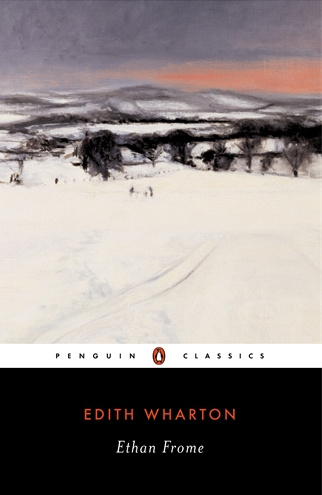
The classic novel of despair, forbidden emotions, and sexual undercurrents set against the austere New England countrysideEthan Frome works his unproductive farm and struggles to maintain a bearable existence with his difficult, suspicious and hypochondriac wife, Zeena. But when Zeena's vivacious cousin enters their household as a hired girl, Ethan finds himself obsessed with her and with the possibilities for happiness she comes to represent.In one of American fiction's finest and most intense narratives, Edith Wharton moves this ill-starred trio toward their tragic destinies. Different in both tone and theme from Wharton's other works, Ethan Frome has become perhaps her most enduring and most widely read book.

A naive girl from a humble background meets an ambitious city boy, and a torrid romance ensues. Despite her pride, independence, and honesty, Charity Royall feels shadowed by her past--especially in her ardent relationship with the educated and refined Lucius Harney. Can passion overcome the effects of heredity and environment?With its frank treatment of a woman's sexual awakening, Summer created a sensation upon its 1917 publication. Edith Wharton — the author of Ethan Frome and a peerless observer and chronicler of society — completely shattered the standards of conventional love stories with this novel's candor and realism. The Pulitzer Prize-winning author declared Summer a personal favorite among her works, and liked to refer to it as "the Hot Ethan." Over a century later, it remains fresh and relevant.

Considered by many to be her masterpiece, Edith Wharton's epic work is a scathing yet personal examination of the exploits and follies of the modern upper class. As she unfolds the story of Undine Spragg, from New York to Europe, Wharton affords us a detailed glimpse of what might be called the interior décor of this America and its nouveau riche fringes. Through a heroine who is as vain, spoiled, and selfish as she is irresistibly fascinating, and through a most intricate and satisfying plot that follows Undine's marriages and affairs, she conveys a vision of social behavior that is both supremely informed and supremely disenchanted. - Anita Brookner

On a bleak New England farm, a taciturn young man has resigned himself to a life of grim endurance. Bound by circumstance to a woman he cannot love, Ethan Frome is haunted by a past of lost possibilities until his wife's orphaned cousin, Mattie Silver, arrives and he is tempted to make one final, desperate effort to escape his fate. In language that is spare, passionate, and enduring, Edith Wharton tells this unforgettable story of two tragic lovers overwhelmed by the unrelenting forces of conscience and necessity.Included with Ethan Frome are the novella The Touchstone and three short stories, "The Last Asset," "The Other Two," and "Xingu." Together, this collection offers a survey of the extraordinary range and power of one of America's finest writers.

Nan and Jinny St George have both wealth and beauty in generous supply. In the New York society of the 1870s, however, only those with old money can achieve the status of the elite, and it is here that the sisters seem doomed to failure.Nan's new governess, Laura Testvalley, herself an outsider, takes pity on their plight and launches them instead on the unsuspecting British aristocracy. Lords, dukes, marquesses and MPs, it seems, not only appreciate beauty, but also the money that New York's nouveaux riches can supply.A love story of love and marriage among the old and new moneyed classes, The Buccaneers is a delicately perceptive portrayal of a world on the brink of change.

These 11 spine-tingling tales of the supernatural bring to light the author's interest in the traditional New England ghost story and her fascination with spirits, hauntings, and other phenomena. Fine line-drawings by Laszlo Kubinyi enhance the mysterious and sometimes chilling mood.The lady's maid's bell (1904)The eyes (1910)Afterward (1910)Kerfol (1916)The triumph of night (1914)Miss Mary Pask (1925)Bewitched (1925)Mr Jones (1928)Pomegranate seed (1931)The looking glass (1935)All souls' (1937)

Set in the 1920s, Glimpses of the Moon details the romantic misadventures of Nick Lansing and Susy Branch, a couple with the right connections but not much in the way of funds. They devise a shrewd bargain: they'll marry and spend a year or so sponging off their wealthy friends, honeymooning in their mansions and villas. As Susy explains, "We should really, in a way, help more than hamper each other. We both know the ropes so well; what one of us didn't see the other might - in the way of opportunities, I mean". The other part of the plan states that if either one of them meets someone who can advance them socially, they're free to dissolve the marriage. How their plan unfolds is a comedy of errors that will charm all fans of Wharton's work.

Edith Wharton firma una nouvelle magistral, que explota la que fuera una de sus obsesiones recurrentes: las opciones de la mujer de su tiempo y estatus en la tramoya social que la coarta.En 1850 la alta burguesía neoyorquina disfruta de una desentendida prosperidad. Delia, «reina» del endogámico clan de los Ralston, ultima los detalles de su vestuario para brillar en el acontecimiento social del año: el enlace de su prima Charlotte Lovell con Joe Ralston, que además sellará una alianza entre las dos familias hegemónicas de Nueva York. Cuando nada parece poder desbaratar tan idílico porvenir, una desquiciada Charlotte irrumpe en casa de Delia para desvelarle un secreto que alterará para siempre la placidez de sus vidas y que, de saberse, tumbaría los códigos éticos de los que ambas se han venido nutriendo. Los destinos de Charlotte y Delia quedan trágicamente atados bajo la inviolabilidad del secreto que comparten, consolidándose entre ambas una tormentosa relación en la que convergerán los celos, la compasión, el amor filial y la suspicacia.

Spanning four decades in the mid-nineteenth century, the interconnected novellas of Old New York lay out in vivid detail the complex and inscrutable codes, customs, and taboos of New York society in classic Wharton style.In False Dawn (1840s), Mr. Halston Raycie sends his son Lewis to Europe to buy art, as Mr. Raycie aims to ascend to the upper crust of society by means of a well-respected art collection. But when Lewis returns from Europe with daring pieces by artists unknown to the New York socialites and tastemakers, his appalled father disinherits him, only to discover, too late, the wisdom of his son's intuition.The Old Maid (1850s), the best known of the four novellas, follows the life of Tina, a young woman caught between the mother who adopted her--the beautiful, upstanding Delia--and her true mother, her plain, unmarried aunt Charlotte, who gave Tina up to provide her with a socially acceptable life. The three women live quietly together until Tina's wedding day, when Delia's and Charlotte's hidden jealousies rush to the surface.Then in The Spark (1860s), Mr. Hayley Delane recounts how his life has turned out since he was wounded in the Civil War, where, during his rehabilitation, he chances to meet a certain American poet whose memory stays with him all his life.And finally in New Year's Day (1870s), Mrs. Lizzie Hazeldean's suspected affair with the unmarried Henry Prest is the center of scandal and gossip in the city, but the true nature of the relationship is not what it may seem.

Set mostly at a villa near Paris, "The Reef" is a story of complex morality and its intricately woven place in society. This narrative primarily follows George Darrow and Anna Leath, a young gentleman and a widowed lady who plan to marry. Both of them experience doubts about their union, with surprising outcomes. Darrow has a brief liaison with the delicate, generous Sophy Viner, a kind woman of the working class. She later meets Anna's stepson Owen Leath, who wishes to upset social conventions and marry her. When Anna discovers the intimate history of Darrow and Sophy, she worries about her stepson's affections and feels concerned about the alliance she herself is about to create. Wharton's talent for balancing emotional turmoil and all the social manners of her time is blended into this philosophical work that explores the metaphorical reefs in the hearts of women.

"Bunner Sisters," written in 1892 but not published until 1916 in Xingu and Other Stories, takes place in a shabby neighborhood in New York City. The two Bunner sisters, Ann Eliza the elder, and Evelina the younger, keep a small shop selling artificial flowers and small handsewn articles to Stuyvesant Square's "female population."Ann Eliza gives Evelina a clock for her birthday. The clock leads the sisters to become involved with Herbert Ramy, owner of "the queerest little store you ever laid eyes on." Soon Ramy is a regular guest of the Bunner sisters, who realize that their "treadmill routine," once so comfortable, is now "intolerably monotonous."

These short works display Wharton's talent as a satirist "skilled at dissecting the elements of emotional subtleties, moral ambiguities, and the implications of social constrictions" (Cythina Griffin Wolfe, from the Introduction).Roman fever (1934)Xingu (1911)The other two (1904)Souls belated (1899)The angel at the grave (1901)The last asset (1904)After Holbein (1928)Autres temps (1911)

While visiting Rome with their daughters, two middle-aged women reminisce about their romantic rivalry for the dashing Delphin Slade. Although Mrs. Slade admits to falsifying the letter that led to her eventual marriage to Slade, Mrs. Ansley holds her own secret regarding the gentleman.Written by esteemed American author Edith Wharton in 1934, “Roman Fever” was adapted into a play, as well as two operas.

The book is a satire of a pretentious ladies lunch and literature group set in the early 1900's. The 6 ladies are reminiscent of an elite high school clique where there is heavy competition and an odd man out. The story focuses on the visit of a famous guest author, that doesn't turn out quite as planned. The only topic presented that the guest will discuss is Xingu. The ladies all state that they have just studied it ... but have they and do they even know what it is?

Opening on the French Riviera among a motley community of American expatriates, The Mother's Recompense tells the story of Kate Clephane and her reluctant return to New York society after being exiled years before for abandoning her husband and infant daughter. Oddly enough, Kate has been summoned back by that same daughter, Anne, now fully grown and intent on marrying Chris Fenno, a war hero, dilettante, and social opportunist. Chris's questionable intentions toward her daughter are, however, the least of Kate's worries since she was once, and still is, deeply in love with him. Kate's moral quandary and the ensuing drama evoke comparison with Oedipus and Hamlet and lead to an ending that startled the mores of the day.

A young man scorns the love of a tortured novelist, only to have her words come back to haunt him from the dead. The Touchstone shows off the skills Wharton became famous for in later novels such as Ethan Frome and House of Mirth, particularly her piercing and delicious talent for satiric observation.

One of Edith Wharton’s few works of fiction that takes place outside of an urban, upper-class setting, Ethan Frome draws upon the bleak, barren landscape of rural New England. A poor farmer, Ethan finds himself stuck in a miserable marriage to Zeenie, a sickly, tyrannical woman, until he falls in love with her visiting cousin, the vivacious Mattie Silver. As Mattie is forced to leave his household, Frome steals one last afternoon with her—one that culminates in a ruinous sled ride with unspeakably tragic results.Unhappily married herself, Edith Wharton projected her dark views of love onto people far removed from her social class in Ethan Frome. Her sensitivity to natural beauty and human psychology, however, make this slim novel a convincing and compelling portrait of rural life. A powerful tale of passion and loss—and the wretched consequences thereof—Ethan Frome is one of American literatures great tragic love stories.Also included in this volume are four of Edith Wharton’s finest short stories: “The Pretext,” “Afterward,” “The Legend,” and “Xingu.”Kent P. Ljungquist, Professor of English at Worcester Polytechnic Institute, is the author of The Grand and the Fair: Poe’s Landscape Aesthetics and Pictorial Techniques, co-editor of the SUNY Press edition of James Fenimore Cooper's The Deerslayer, and editor of several reference works of American fiction.(back cover)

Edith Wharton's superb satirical novel of the Jazz Age, a critically praised best-seller when it was first published. Sex, drugs, work, money, infatuation with the occult and spiritual healing - these are the remarkably modern themes that animate Twilight Sleep. The extended family of Mrs. Manford is determined to escape the pain, boredom and emptiness of life through whatever form of 'twilight sleep' they can devise or procure. And though the characters and their actions may seem more in keeping with today's society, this is still a classic Wharton tale of the upper crust and its undoing - wittily, masterfully told.

John Durham, while he waited for Madame de Malrive to draw on her gloves, stood in the hotel doorway looking out across the Rue de Rivoli at the afternoon brightness of the Tuileries gardens. His European visits were infrequent enough to have kept unimpaired the freshness of his eye, and he was always struck anew by the vast and consummately ordered spectacle of Paris: by its look of having been boldly and deliberately planned as a background for the enjoyment of life, instead of being forced into grudging concessions to the festive instincts, or barricading itself against them in unenlightened ugliness, like his own lamentable New York. But to-day, if the scene had never presented itself more alluringly, in that moist spring bloom between showers, when the horse-chestnuts dome themselves in unreal green against a gauzy sky, and the very dust of the pavement seems the fragrance of lilac made visible-to-day for the first time the sense of a personal stake in it all, of having to reckon individually with its effects and influences, kept Durham from an unrestrained yielding to the spell. Paris might still be-to the unimplicated it doubtless still was-the most beautiful city in the world; but whether it were the most lovable or the most detestable depended for him, in the last analysis, on the buttoning of the white glove over which Fanny de Malrive still lingered.

This scarce antiquarian book is a facsimile reprint of the original. Due to its age, it may contain imperfections such as marks, notations, marginalia and flawed pages. Because we believe this work is culturally important, we have made it available as part of our commitment for protecting, preserving, and promoting the world's literature in affordable, high quality, modern editions that are true to the original work.

Edith Wharton wrote about New York as only a native can. Her Manhattan is a city of well-appointed drawing rooms, hansoms and broughams, all-night cotillions, and resplendent Fifth Avenue flats. Bishops’ nieces mingle with bachelor industrialists; respectable wives turn into excellent mistresses. All are governed by a code of behavior as rigid as it is precarious. What fascinates Wharton are the points of weakness in the structure of Old New York: the artists and writers at its fringes, the free-love advocates testing its limits, the widows and divorcées struggling to hold their own.The New York Stories of Edith Wharton gathers twenty stories of the city, written over the course of Wharton’s career. From her first published story, “Mrs. Manstey’s View,” to one of her last and most celebrated, “Roman Fever,” this new collection charts the growth of an American master and enriches our understanding of the central themes of her work, among them the meaning of marriage, the struggle for artistic integrity, the bonds between parent and child, and the plight of the aged. Illuminated by Roxana Robinson’s Introduction, these stories showcase Wharton’s astonishing insight into the turbulent inner lives of the men and women caught up in a rapidly changing society.

As her marriage to an eminent and wealthy bachelor approaches, Kate Orme should feel nothing but bliss. But when she learns of Denis's guilty secret, she becomes painfully aware of her fiancé's flawed morality. Determined that no child of hers should inherit such character traits, she does everything in her power to instill in their son the highest moral code. Yet, when Dick is faced with a moral choice of his own, she can only watch to see if history will repeat itself. American novelist Edith Wharton (1862–1937) is celebrated for her finely crafted stories of New York mores, including The Age of Innocence.

Edith Wharton, the first woman to win the Pulitzer Prize, vividly reflects on her public and private life in this stunning memoir.With richness and delicacy, it describes the sophisticated New York society in which Wharton spent her youth, and chronicles her travels throughout Europe and her literary success as an adult. Beautifully depicted are her friendships with many of the most celebrated artists and writers of her day, including her close friend Henry James.In his introduction to this edition, Louis Auchincloss calls the writing in A Backward Glance “as firm and crisp and lucid as in the best of her novels.” It is a memoir that will charm and fascinate all readers of Wharton’s fiction.

No history of the American uncanny tale would be complete without mention of Edith Wharton, yet many of Wharton’s most dedicated admirers are unaware that she was a master of the form. In fact, one of Wharton’s final literary acts was assembling Ghosts, a personal selection of her most chilling stories, written between 1902 and 1937.In “The Lady’s Maid’s Bell,” the earliest tale included here, a servant’s dedication to her mistress continues from beyond the grave, and in “All Souls,” the last story Wharton wrote, an elderly woman treads the permeable line between life and the hereafter.In all her writing, Wharton’s great gift was to mercilessly illuminate the motives of men and women, and her ghost stories never stray far from the preoccupations of the living, using the supernatural to investigate such worldly matters as violence within marriage, the horrors of aging, the rot at the root of new fortunes, the darkness that stares back from the abyss of one’s own soul.These are stories to “send a cold shiver down one’s spine,” not to terrify, and as Wharton explains in her preface, her goal in writing them was to counter “the hard grind of modern speeding-up” by preserving that ineffable space of “silence and continuity,” which is not merely the prerogative of humanity but—“in the fun of the shudder”—its delight.Contents:All Souls’The EyesAfterwardThe Lady’s Maid’s BellKerfolThe Triumph of NightMiss Mary PaskBewitchedMr. JonesPomegranate SeedA Bottle of Perrier

'If marriage was the slow life-long acquittal of a debt contracted in ignorance, then marriage was a crime against human nature.' Two moving stories of love, loss, desire and divorce, from one of the great chroniclers of nineteenth-century New York life. Introducing Little Black Classics: 80 books for Penguin's 80th birthday. Little Black Classics celebrate the huge range and diversity of Penguin Classics, with books from around the world and across many centuries. They take us from a balloon ride over Victorian London to a garden of blossom in Japan, from Tierra del Fuego to 16th-century California and the Russian steppe. Here are stories lyrical and savage; poems epic and intimate; essays satirical and inspirational; and ideas that have shaped the lives of millions. Edith Wharton (1862-1937).Wharton's works available in Penguin Classics are Ethan Frome, The Age of Innocence, The Custom of the Country and The House of Mirth.

A bestseller when it was first published, The Children is a comic, bittersweet novel about the misadventures of a bachelor and a band of precocious children. The seven Wheater children, stepbrothers and stepsisters grown weary of being shuttled from parent to parent are eager for their parents' latest reconciliation to last. A chance meeting between the children and the solitary 46-year old Martin Boyne leads to a series of unforgettable encounters.

In 1917, amid the turmoil of World War I, Edith Wharton, the author of The Age of Innocence and The House of Mirth, travelled to Morocco. A classic of travel writing, In Morocco is her account of this journey through the country's cities and through its deserts. The Ecco Travels edition of In Morocco brings this previously rare and hard-to-obtain Edith Wharton classic back into print after an absence of many decades.

This edition presents Wharton's two most controversial stories, which she considered inseparable, in one volume for the first time. Set in frigid New England, both deal with sexual awakening and appetite and their devastating consequences. This text includes newly commissioned notes.