
Franz Kafka
Prague-born writer Franz Kafka wrote in German, and his stories, such as " The Metamorphosis " (1916), and posthumously published novels, including The Trial (1925), concern troubled individuals in a nightmarishly impersonal world. Jewish middle-class family of this major fiction writer of the 20th century spoke German. People consider his unique body of much incomplete writing, mainly published posthumously, among the most influential in European literature. His stories include "The Metamorphosis" (1912) and " In the Penal Colony " (1914), whereas his posthumous novels include The Trial (1925), The Castle (1926) and Amerika (1927). Despite first language, Kafka also spoke fluent Czech. Later, Kafka acquired some knowledge of the French language and culture from Flaubert, one of his favorite authors. Kafka first studied chemistry at the Charles-Ferdinand University of Prague but after two weeks switched to law. This study offered a range of career possibilities, which pleased his father, and required a longer course of study that gave Kafka time to take classes in German studies and art history. At the university, he joined a student club, named Lese- und Redehalle der Deutschen Studenten, which organized literary events, readings, and other activities. In the end of his first year of studies, he met Max Brod, a close friend of his throughout his life, together with the journalist Felix Weltsch, who also studied law. Kafka obtained the degree of doctor of law on 18 June 1906 and performed an obligatory year of unpaid service as law clerk for the civil and criminal courts. Writing of Kafka attracted little attention before his death. During his lifetime, he published only a few short stories and never finished any of his novels except the very short "The Metamorphosis." Kafka wrote to Max Brod, his friend and literary executor: "Dearest Max, my last request: Everything I leave behind me ... in the way of diaries, manuscripts, letters (my own and others'), sketches, and so on, [is] to be burned unread." Brod told Kafka that he intended not to honor these wishes, but Kafka, so knowing, nevertheless consequently gave these directions specifically to Brod, who, so reasoning, overrode these wishes. Brod in fact oversaw the publication of most of work of Kafka in his possession; these works quickly began to attract attention and high critical regard. Max Brod encountered significant difficulty in compiling notebooks of Kafka into any chronological order as Kafka started writing in the middle of notebooks, from the last towards the first, et cetera. Kafka wrote all his published works in German except several letters in Czech to Milena Jesenská.
33 Books Written

"The Metamorphosis" (original German title: "Die Verwandlung") is a short novel by Franz Kafka, first published in 1915. It is often cited as one of the seminal works of fiction of the 20th century and is widely studied in colleges and universities across the western world. The story begins with a traveling salesman, Gregor Samsa, waking to find himself transformed into an insect.

The story of The Trial's publication is almost as fascinating as the novel itself. Kafka intended his parable of alienation in a mysterious bureaucracy to be burned, along with the rest of his diaries and manuscripts, after his death in 1924. Yet his friend Max Brod pressed forward to prepare The Trial and the rest of his papers for publication.

An assessment of the works of Franz Kafka aimed at a definiton of the basic components of his style

Unearthed by the master Kafka biographer and scholar Reiner Stach and translated by the peerless Michael Hofmann, this collection comes as a prize and a joy. Some stories are several pages long; some run about a page; a handful are only a few lines long. Lost to English-language readers until now, all are marvels: even the most fragmentary texts are revelations. Has any writer given so many pleasures and mysteries, and both so unstintingly.

The Complete Stories brings together all of Kafka’s stories, from the classic tales such as “The Metamorphosis,” “In the Penal Colony,” and “A Hunger Artist” to shorter pieces and fragments that Max Brod, Kafka’s literary executor, released after Kafka’s death. With the exception of his three novels, the whole of Kafka’s narrative work is included in this volume. Two Introductory parables: - Before the law - Imperial message Longer stories: - Description of a struggle - Wedding preparations in the country - Judgment - Metamorphosis - In the penal colony - Village schoolmaster (The giant mole) - Blumfeld, and elderly bachelor - Warden of the tomb - Country doctor - Hunter Gracchus - Hunter Gracchus: A fragment - Great Wall of China - News of the building of the wall: A fragment - Report to an academy - Report to an academy: Two fragments - Refusal - Hunger artist - Investigations of a dog - Little woman - The burrow - Josephine the singer, or the mouse folk Shorter Stories- Children on a country road - The trees - Clothes - Excursion into the mountains- Rejection - The street window - The tradesman - Absent-minded window-gazing - The way home - Passers-by - On the tram - Reflections for gentlemen-jockeys- The wish to be a red Indian - Unhappiness - Bachelor's ill luck - Unmasking a confidence trickster - The sudden walk - Resolutions - A dream- Up in the gallery - A fratricide - The next village - A visit to a mine - Jackals and Arabs - The bridge - The bucket rider - The new advocate - An old manuscript - The knock at the manor gate - Eleven sons - My neighbor - A crossbreed (A sport) - The cares of a family man - A common confusion - The truth about Sancho Panza - The silence of the sirens - Prometheus - The city coat of arms - Poseidon - Fellowship - At night - The problem of our laws - The conscription of troops - The test - The vulture - The helmsman - The top - A little fable - Home-coming - First sorrow - The departure - Advocates - The married couple - Give it up! - On parables.
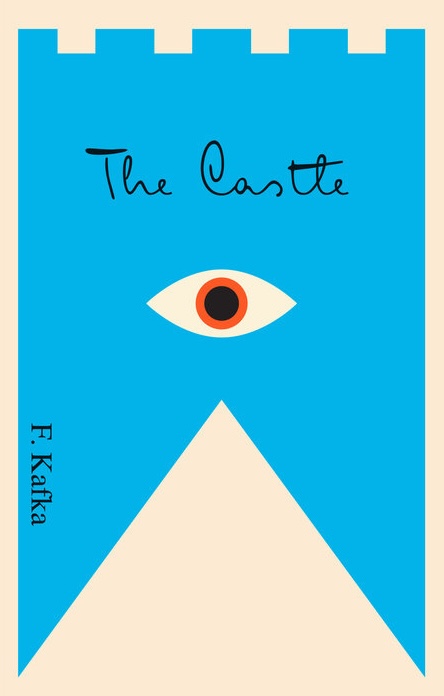
Translated and with a preface by Mark HarmanLeft unfinished by Kafka in 1922 and not published until 1926, two years after his death, The Castle is the haunting tale of K.’s relentless, unavailing struggle with an inscrutable authority in order to gain access to the Castle. Scrupulously following the fluidity and breathlessness of the sparsely punctuated original manuscript, Mark Harman’s new translation reveals levels of comedy, energy, and visual power, previously unknown to English language readers.
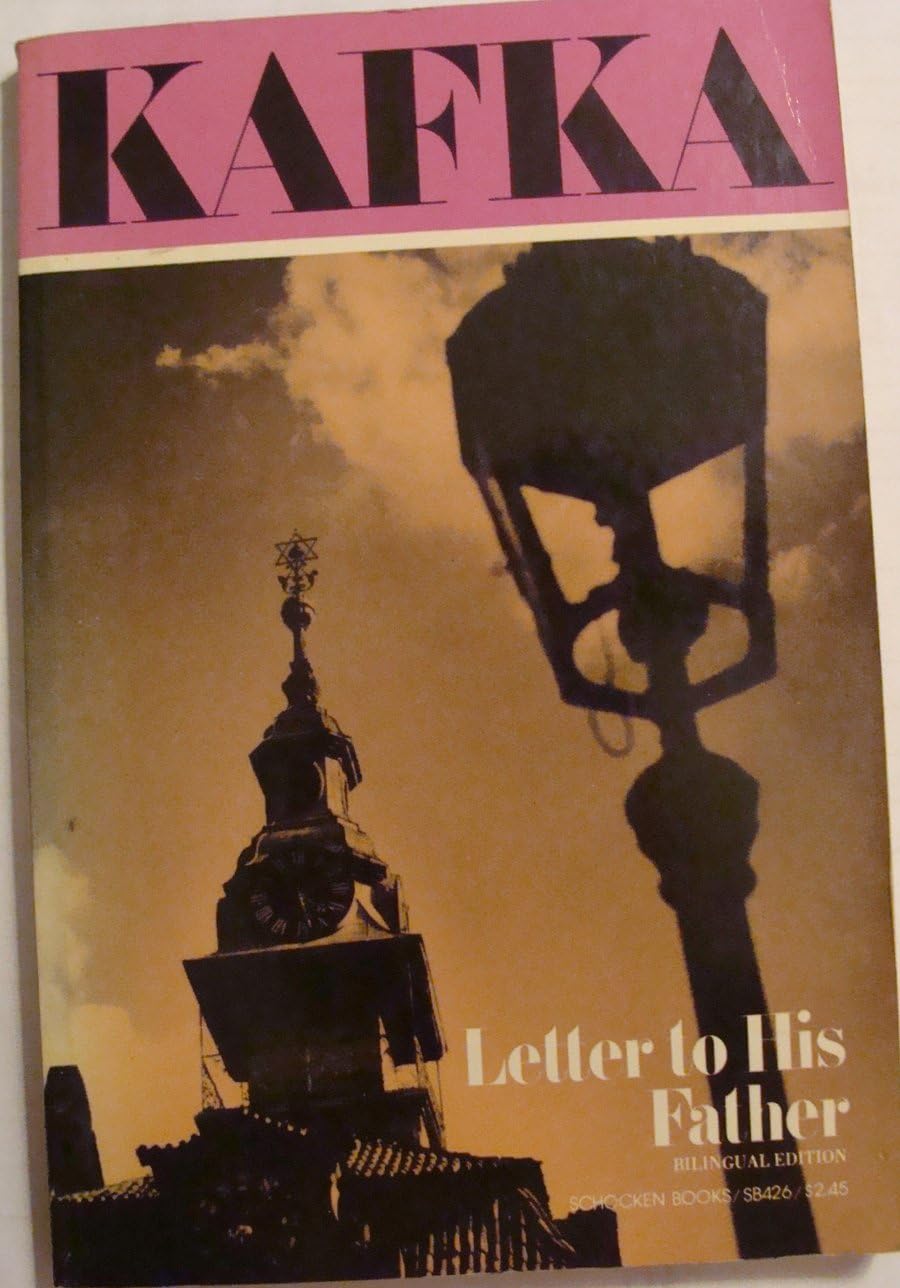
This is the bilingual edition with German verso, English recto.
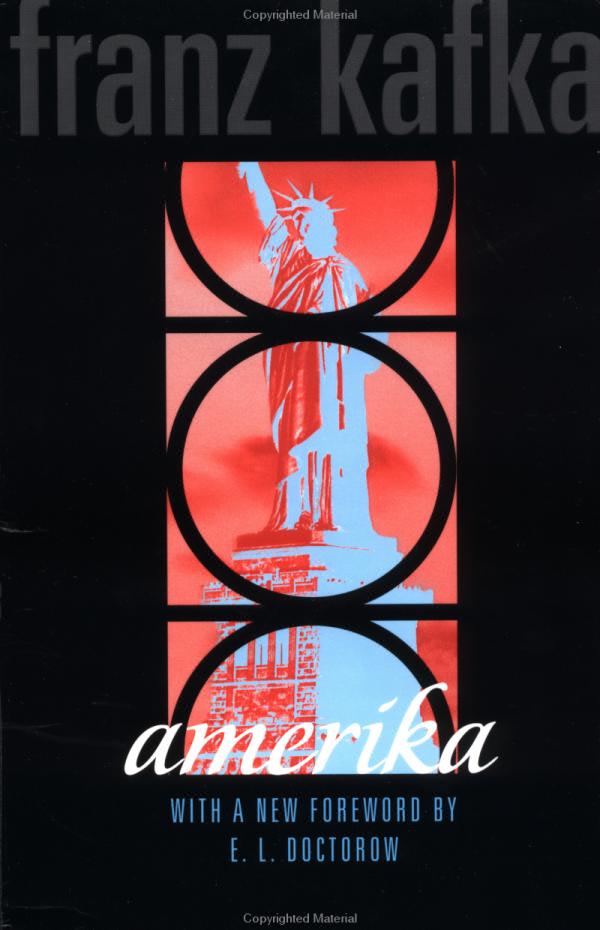
Kafka's first and funniest novel, Amerika tells the story of the young immigrant Karl Rossmann who, after an embarrassing sexual misadventure, finds himself "packed off to America" by his parents. Expected to redeem himself in this magical land of opportunity, young Karl is swept up instead in a whirlwind of dizzying reversals, strange escapades, and picaresque adventures.Although Kafka never visited America, images of its vast landscape, dangers, and opportunities inspired this saga of the "golden land." Here is a startlingly modern, fantastic and visionary tale of America "as a place no one has yet seen, in a historical period that can't be identified," writes E. L. Doctorow in his new foreword. "Kafka made his novel from his own mind's mythic elements," Doctorow explains, "and the research data that caught his eye were bent like rays in a field of gravity."

The Penal Colony: Stories and Short Pieces is a collection of short stories and recollections by Franz Kafka, with additional writings by Max Brod. First published in 1948 by Schocken Books, this volume includes all the works Kafka intended for publication, and published during his lifetime (the only exception in The Stoker which serves as a first chapter for the novel Amerika). It also includes critical pieces by Kafka, "The First Long Train Journey" by Kafka and Brod (which was initially intended to be the first chapter of a book), and an Epilogue by Brod. This collection was translated by Willa and Edwin Muir.
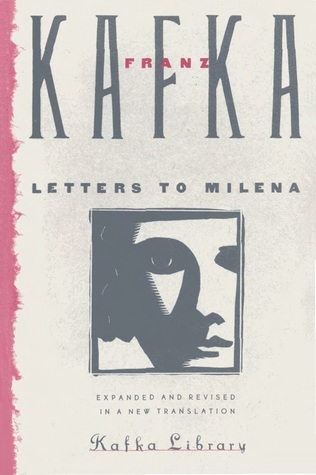
In no other work does Kafka reveal himself as in the Letters to Milena, which begin essentially as a business correspondence but soon develop into a passionate "letter love." Milena Jesenská was a gifted and charismatic woman of twenty-three. Kafka's Czech translator, she was uniquely able to recognize his complex genius and his even more complex character. For the thirty-six-year-old Kafka, she was "a living fire, such as I have never seen." It was to her that he revealed his most intimate self. It was to her that, after the end of the affair, he entrusted the safekeeping of his diaries.Newly translated, revised, and expanded, this edition contains material previously omitted because of its extreme sensitivity. Also included for the first time are letters and essays by Milena Jesenská, herself a talented writer as well as the recipient of these documents of Kafka's love, anxiety, and despair.
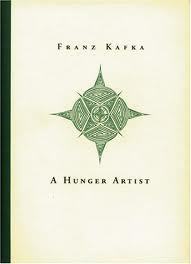
The last book published during Kafka's lifetime, A Hunger Artist (1924) explores many of the themes that were close to him: spiritual poverty, asceticism, futility, and the alienation of the modern artist. He edited the manuscript just before his death, and these four stories are some of his best known and most powerful work, marking his maturity as a writer. In addition to "First Sorrow," "A Little Woman," and "Josephine the Singer, or the Mouse People" is the title story, "A Hunger Artist," which has been called by the critic Heinz Politzer "a perfection, a fatal fulfillment that expresses Kafka's desire for permanence." The three volumes Twisted Spoon Press has published: Contemplation, A Country Doctor, and A Hunger Artist are the collections of stories that Kafka had published during his lifetime. Though each volume has its own distinctive character, they have most often appeared in English in collected editions. They are presented here as separate editions, in new translations by Kevin Blahut, each with its own illustrator from the Prague community.

The Metamorphosis, In the Penal Colony, and Other Stories: The Great Short Works of Franz Kafka
by Franz Kafka
Rating: 4.1 ⭐
Translated by PEN translation award-winner Joachim Neugroschel, The Metamorphosis, In the Penal Colony, and Other Stories has garnered critical acclaim and is widely recognized as the preeminent English-language anthology of Kafka's stories. These translations illuminate one of this century's most controversial writers and have made Kafka's work accessible to a whole new generation. This classic collection of forty-one great short works -- including such timeless pieces of modern fiction as "The Judgment" and "The Stoker" -- now includes two new stories, "First Sorrow" and "The Hunger Artist."

"The judgment" is considered the most autobiographical of Kafka's stories. First, there are Kafka's own commentaries and entries in his diary. When he re-read the story, for instance, he noted that only he could penetrate to the core of the story which, much like a newborn child, "was covered with dirt and mucus as it came out of him"; he also commented in his diary that he wanted to write down all possible relationships within the story that were not clear to him when he originally wrote it. This is not surprising for a highly introverted writer like Kafka, but it does illustrate the enormous inner pressure under which he must have written "The judgment."

In the bizarre world of Franz Kafka, salesmen turn into giant bugs, apes give lectures at college academies, and nightmares probe the mysteries of modern humanity’s unhappiness. More than any other modern writer in world literature, Kafka captures the loneliness and misery that fill the lives of 20th-century humanity. The Metamorphosis and Other Stories reveals the author’s extraordinary talent in a variety of forms—prose poems, short stories, sketches, allegories, and novelettes—and showcases the straight–faced humor, startling psychological insight, and haunting imagination for which he is revered as a modern master. This collection of new translations brings together the small proportion of Kafka's works that he thought worthy of publication. It includes "Metamorphosis", his most famous work, an exploration of horrific transformation and alienation; "Meditation", a collection of his earlier studies; "The Judgement", written in a single night of frenzied creativity; "The Stoker", the first chapter of a novel set in America and a fascinating occasional piece, and "The Aeroplanes at Brescia", Kafka's eyewitness account of an air display in 1909. Together, these stories reveal the breadth of Kafka's literary vision and the extraordinary imaginative depth of his thought.

La condanna (Das Urteil), conosciuto in italiano anche come Il verdetto o La sentenza, è un racconto di Franz Kafka, scritto nella notte tra il 22 e il 23 settembre 1912, dalle 22 alle 6 di mattina (come dice Kafka stesso nel Diario)[1]. In esso è particolarmente evidente il tema del conflitto tra padre e figlio.

Written during the winter of 1916-17 when Kafka was living in one of the tiny houses on Golden Lane (formerly Alchimistengasse) at Prague Castle, and published in spring 1920 by Kurt Wolff Verlag, the 14 short fictions comprising this volume are interconnected by a persistent exploration of identity, where even animals anthropomorphize into a new identity. "Before the Law," "A Country Doctor," and "A Report for an Academy" are among the most renowned stories he produced, and Kevin Blahut has rendered them in an English that is contemporary and fresh, capturing perfectly the nightmarish humor of Kafka's prose.1. The New Advocate2. A Country Doctor3. Up in the Gallery4. A Leaf from an Old Manuscript5. Before the Law6. Jackals and Arabs7. A Visit to the Mine8. The Next Village9. A Message from the Emperor10. A Problem for the Father of the Family 11. Eleven Sons12. A Fratricide13. A Dream14. Report to the Academy

'When Gregor Samsa woke one morning from uneasy dreams, he found himself transformed into some kind of monstrous vermin.'With a bewildering blend of the everyday and the fantastical, Kafka thus begins his most famous short story, The Metamorphosis. A commercial traveller is unexpectedly freed from his dreary job by his inexplicable transformation into an insect, which drastically alters his relationship with his family. Kafka considered publishing it with two of the stories included here in a volume to be called Punishments. The Judgement also concerns family tensions, when a power struggle between father and son ends with the father passing an enigmatic judgement on the helpless son. The third story, In the Penal Colony, explores questions of power, justice, punishment, and the meaning of pain in a colonial setting. These three stories are flanked by two very different works. Meditation, the first book Kafka published, consists of light, whimsical, often poignant mood-pictures, while in the autobiographical Letter to his Father, Kafka analyses his difficult relationship in forensic and devastating detail. For the 125th anniversary of Kafka's birth comes an astonishing new translation of his best-known stories, in a spectacular graphic package.Table of contents: MeditationThe JudgementThe MetamorphosisIn the Penal Colony(Autobiographical) Letter to his Father

These diaries cover the years 1910 to 1923, the year before Kafka’s death at the age of forty. They provide a penetrating look into life in Prague and into Kafka’s accounts of his dreams, his feelings for the father he worshipped, and the woman he could not bring himself to marry, his sense of guilt, and his feelings of being an outcast. They offer an account of a life of almost unbearable intensity.From the Trade Paperback edition.The Diaries of Franz Kafka 1910-13 translated from the German by Joseph KreshThe Diaries of Franz Kafka 1914-23 translated from the German by Martin Greenberg with the cooperation of Hannah Arendt

"Investigations of a Dog" (German: "Forschungen eines Hundes") is a short story by Franz Kafka written in 1922. It was published posthumously in Beim Bau der Chinesischen Mauer (Berlin, 1931). The first English translation by Willa and Edwin Muir was published by Martin Secker in London in 1933. It appeared in The Great Wall of China. Stories and Reflections (New York: Schocken Books, 1946).[1] Told from the perspective of a dog, the story concerns the nature and limits of knowledge, by way of the dog's inquiries into the practices of his culture."Investigations of a Dog" was written in September and October 1922, soon after Kafka ended work on his unfinished novel The Castle. Similar to other Kafka stories such as "A Report to an Academy", "Josephine the Singer", and "The Burrow", the protagonist is an animal.

The essential philosophical writings of one of the twentieth century’s most influential writers are now gathered into a single volume with an introduction and afterword by the celebrated writer and publisher Roberto Calasso.Illness set him free to write a series of philosophical some narratives, some single images, some parables. These “aphorisms” appeared, sometimes with a few words changed, in other writings–some of them as posthumous fragments published only after Kafka’s death in 1924. While working on K ., his major book on Kafka, in the Bodleian Library, Roberto Calasso realized that the Zürau aphorisms, each written on a separate slip of very thin paper, numbered but unbound, represented something unique in Kafka’s opus–a work whose form he had created simultaneously with its content.The notebooks, freshly translated and laid out as Kafka had intended, are a distillation of Kafka at his most powerful and enigmatic. This lost jewel provides the reader with a fresh perspective on the collective work of a genius.

Normaler Versicherungsangestellter im Leben, hat Franz Kafka ein eigenwilliges Werk voll grotesker Begebenheiten hinterlassen. Ein Handlungsreisender zum Beispiel verwandelt sich in Kafkas berühmtester Erzählung in einen Käfer, ein Sohn geht auf die Prophetie seines Vaters hin ins Wasser. Irrwitzig, rätselhaft, doch mit überzeugender Plausibilität erzählt Kafka vom Kampf des Menschen gegen eine verborgene Übermacht.

Una mañana, al despertar de sueños intranquilos, Gregor Samsa se encontró en su cama convertido en un monstruoso bicho.

Before the Law (German: Vor dem Gesetz) is a parable contained in the novel The Trial (German: Der Prozess), by Franz Kafka. Before the Law was published in Kafka's lifetime, first in the 1915 New Year's edition of the independent Jewish weekly Selbstwehr, then in 1919 as part of the collection Ein Landarzt (A Country Doctor). The Trial, however, was not published until 1925, after Kafka's death.

Kafka's first published book (1913), Contemplation is composed of eighteen "prose poems," displaying the full range of Kafka's compact metaphorical style. In this new translation, Kevin Blahut has been faithful to the original German while rendering it in a fresh, contemporary English. This edition is complemented by 18 black & white illustrations, attesting to the lasting inspiration of Kafka's prose.

The Burrow" (German: "Der Bau") is an unfinished short story by Franz Kafka in which a mole-like being burrows through an elaborate system of tunnels it has built over the course of its life. The story was published posthumously in Beim Bau der Chinesischen Mauer (Berlin, 1931). The first English translation appeared in The Great Wall of China. Stories and Reflections (New York: Schocken Books, 1946. Translated by Willa and Edwin Muir).

Mit dem Werkbeitrag aus Kindlers Literatur Lexikon.Mit dem Autorenporträt aus dem Metzler Lexikon Weltliteratur.Mit Daten zu Leben und Werk, exklusiv verfasst von der Redaktion der Zeitschrift für Literatur TEXT + KRITIK.An sein "äffisches Vorleben" kann sich berühmte Varietékünstler Rotpeter kaum mehr erinnern. Nach seiner Gefangennahme an der afrikanischen Goldküste war ihm klar: Sein einziger Ausweg bestand darin, das "Affentum" aufzugeben und die Menschen zu imitieren. Das gelingt ihm erstaunlich schnell. Allegorie, geniale Satire auf die Assimilation, Zerrbild der Menschheit, Zivilisationskritik oder Darstellung der Künstlerexistenz? Jeder, der den Text liest, schafft neuen Sinn und neue Bedeutungen.

One of 60 low-priced classic texts published to celebrate Penguin's 60th anniversary. All the titles are extracts from "Penguin Classics" titles.

Esta no solo es una obra maestra de Kafka, es una novela clave, piedra de toque de la literatura del siglo XX.

Drawing directly on original manuscripts, this collection comprises the major short stories published after Kafka’s death. It includes The Great Wall of China, Blumfeld, An Elderly Bachelor, Investigations of a Dog and his great sequences of aphorisms, with fables and parables on subjects ranging from the legend of Prometheus to the Tower of Babel. Allegorical, disturbing and possessing a dream-like clarity, these writings are quintessential Kafka.

«في النهاية، ليس بيدك إلا أن تقبل الأشياء كما هي. وقبل هذا وذاك، لا تلفت الأنظار إليك! أبق على فمك مغلقًا، مهما كان ذلك ضد طبيعتك! وجب أن تفهم أن وراء هذا النظام العظيم للعدالة حالة من التوازن».في هذه المعالجة الأخاذة لرواية «المحاكمة» كرواية مصورة، نقرأ القصة الكئيبة لجوزيف ك، الذي اعتقل ذات صباح دون أن تُشرح له الأسباب، ليجد نفسه في صراع مرير ضد إجراءات قضائية في غاية الغموض. ويُقذف به من مواجهة تبعث على التشوش إلى التي تليها، ومن ثَمَّ تتنامى بداخله مشاعر الإحباط من أن يثبت براءته في مواجهة تُهم مجهولة. في لوحة شديدة الوضوح للبيروقراطية المتسلطة التي تدهس حياة مواطنيها المغرَّبين. ولهذا فإن «المحاكمة» مناسبة لمقتضى الحال الآن مثلما كانت دائمًا.تحميل رواية المحاكمة لفرانز كافكا من هذا الرابط

Ein junger Mann, Gregor, wohnt noch in seinem Elternhaus und arbeitet im Geschäft seines Vaters. Zu seiner Überraschung wird Gregor von seiner Familie allmählich als Ungeziefer betrachtet. Allerdings mündet die Überraschung in Verständnis, da die Veränderung von Gregors Gestalt auch für ihn selber unverkennbar ist. Immerhin kümmert sich seine geliebte Schwester rührend um ihn, indem sie ihm regelmäßig einen Teller mit Küchenabfällen vor sein Zimmer stellt. Gregor darf sein Zimmer zwar nicht mehr verlassen, aber auch das dient dem Wohl der Familie. Die Elemente Einsamkeit, (Un)Verständnis und Abhängigkeit(en) werden durch das Groteske gebündelt und wirken in das Reale.

This work has been selected by scholars as being culturally important, and is part of the knowledge base of civilization as we know it. This work was reproduced from the original artifact, and remains as true to the original work as possible. Therefore, you will see the original copyright references, library stamps (as most of these works have been housed in our most important libraries around the world), and other notations in the work.This work is in the public domain in the United States of America, and possibly other nations. Within the United States, you may freely copy and distribute this work, as no entity (individual or corporate) has a copyright on the body of the work.As a reproduction of a historical artifact, this work may contain missing or blurred pages, poor pictures, errant marks, etc. Scholars believe, and we concur, that this work is important enough to be preserved, reproduced, and made generally available to the public. We appreciate your support of the preservation process, and thank you for being an important part of keeping this knowledge alive and relevant.

New translation of the best stories by one of the twentieth century's greatest and most influential writersNo one has captures the modern experience, its wild dreams, strange joys, its neuroses and boredom, better than Franz Kafka. His vision, with its absurdity and twisted humour, has lost none of its force or relevance today. This essential collection, newly selected and translated by Alexander Starritt, casts fresh light on Kafka's genius.Alongside brutal depictions of violence and justice are jokes and deceptively slight, mysterious fables. These unforgettable pieces reflect the brilliance at the core of Franz Kafka, arguably most fully expressed within his short stories. Together they showcase a writer of unmatched imaginative depth, capable of expressing the most profound reality with a wry smile.