
Joan Didion
Joan Didion was an American writer and journalist. She is considered one of the pioneers of New Journalism along with Gay Talese, Hunter S. Thompson, and Tom Wolfe. Didion's career began in the 1950s after she won an essay contest sponsored by Vogue magazine. Over the course of her career, Didion wrote essays for many magazines, including The Saturday Evening Post, Life, Esquire, The New York Review of Books and The New Yorker. Her writing during the 1960s through the late 1970s engaged audiences in the realities of the counterculture of the 1960s, the Hollywood lifestyle, and the history and culture of California. Didion's political writing in the 1980s and 1990s often concentrated on the subtext of political rhetoric and the United States's foreign policy in Latin America. In 1991, she wrote the earliest mainstream media article to suggest the Central Park Five had been wrongfully convicted. In 2005, Didion won the National Book Award for Nonfiction and was a finalist for both the National Book Critics Circle Award and the Pulitzer Prize for The Year of Magical Thinking, a memoir of the year following the death of her husband, writer John Gregory Dunne. She later adapted the book into a play that premiered on Broadway in 2007. In 2013, she was awarded the National Humanities Medal by president Barack Obama. Didion was profiled in the Netflix documentary The Center Will Not Hold, directed by her nephew Griffin Dunne, in 2017.
31 Books Written

First published in 1979, Joan Didion's The White Album records indelibly the upheavals and aftermaths of the 1960s. Examining key events, figures, and trends of the era—including Charles Manson, the Black Panthers, and the shopping mall—through the lens of her own spiritual confusion, Joan Didion helped to define mass culture as we now understand it. Written with a commanding sureness of tone and linguistic precision, The White Album is a central text of American reportage and a classic of American autobiography.

The first nonfiction work by one of the most distinctive prose stylists of our era, Slouching Towards Bethlehem remains, forty years after its first publication, the essential portrait of America— particularly California—in the sixties. It focuses on such subjects as John Wayne and Howard Hughes, growing up a girl in California, ruminating on the nature of good and evil in a Death Valley motel room, and, especially, the essence of San Francisco's Haight-Ashbury, the heart of the counterculture.

A ruthless dissection of American life in the late 1960s, Play It as It Lays captures the mood of an entire generation, the ennui of contemporary society reflected in spare prose that blisters and haunts the reader. Set in a place beyond good and evil - literally in Hollywood, Las Vegas, and the barren wastes of the Mojave Desert, but figuratively in the landscape of an arid soul - it remains more than three decades after its original publication a profoundly disturbing novel, riveting in its exploration of a woman and a society in crisis and stunning in the still-startling intensity of its prose.

'An act of consummate literary bravery, a writer known for her clarity allowing us to watch her mind as it becomes clouded with grief.'From one of America's iconic writers, a stunning book of electric honesty and passion. Joan Didion explores an intensely personal yet universal experience: a portrait of a marriage–and a life, in good times and bad–that will speak to anyone who has ever loved a husband or wife or child.Several days before Christmas 2003, John Gregory Dunne and Joan Didion saw their only daughter, Quintana, fall ill with what seemed at first flu, then pneumonia, then complete septic shock. She was put into an induced coma and placed on life support. Days later–the night before New Year's Eve–the Dunnes were just sitting down to dinner after visiting the hospital when John Gregory Dunne suffered a massive and fatal coronary. In a second, this close, symbiotic partnership of forty years was over. Four weeks later, their daughter pulled through. Two months after that, arriving at LAX, she collapsed and underwent six hours of brain surgery at UCLA Medical Center to relieve a massive hematoma.This powerful book is Didion's attempt to make sense of the "weeks and then months that cut loose any fixed idea I ever had about death, about illness . . . about marriage and children and memory . . . about the shallowness of sanity, about life itself."

From one of our most powerful writers, a work of stunning frankness about losing a daughter. Richly textured with bits of her own childhood and married life with her husband, John Gregory Dunne, and daughter, Quintana Roo, this book by Joan Didion examines her thoughts, fears, and doubts regarding having children, illness, and growing old. Blue Nights opens on July 26, 2010, as Didion thinks back to Quintana’s wedding in New York seven years before. Today would be her wedding anniversary. This fact triggers vivid snapshots of Quintana’s childhood—in Malibu, in Brentwood, at school in Holmby Hills. Reflecting on her daughter but also on her role as a parent, Didion asks the candid questions any parent might about how she feels she failed either because cues were not taken or perhaps displaced. “How could I have missed what was clearly there to be seen?” Finally, perhaps we all remain unknown to each other. Seamlessly woven in are incidents Didion sees as underscoring her own age, something she finds hard to acknowledge, much less accept. Blue Nights—the long, light evening hours that signal the summer solstice, “the opposite of the dying of the brightness, but also its warning”—like The Year of Magical Thinking before it, is an iconic book of incisive and electric honesty, haunting and profoundly moving.

From one of our most iconic and influential writers: a timeless collection of mostly early pieces that reveal what would become Joan Didion's subjects, including the press, politics, California robber barons, women, and her own self-doubt.Here are six pieces written in 1968 from the "Points West" Saturday Evening Post column Joan Didion shared from 1964 to 1969 with her husband, John Gregory Dunne about: American newspapers; a session with Gamblers Anonymous; a visit to San Simeon; being rejected by Stanford; dropping in on Nancy Reagan, wife of the then-governor of California, while a TV crew filmed her at home; and an evening at the annual reunion of WWII veterans from the 101st Airborne Association at the Stardust Hotel in Las Vegas. Here too is a 1976 piece from the New York Times magazine on "Why I Write"; a piece about short stories from New West in 1978; and from The New Yorker, a piece on Hemingway from 1998, and on Martha Stewart from 2000. Each one is classic Didion: incisive, bemused, and stunningly prescient.

From the best-selling author of the National Book Award-winning The Year of Magical Thinking two extended excerpts from her never-before-seen notebooks--writings that offer an illuminating glimpse into the mind and process of a legendary writer.Joan Didion has always kept notebooks: of overheard dialogue, observations, interviews, drafts of essays and articles--and here is one such draft that traces a road trip she took with her husband, John Gregory Dunne, in June 1970, through Louisiana, Mississippi, and Alabama. She interviews prominent local figures, describes motels, diners, a deserted reptile farm, a visit with Walker Percy, a ladies' brunch at the Mississippi Broadcasters' Convention. She writes about the stifling heat, the almost viscous pace of life, the sulfurous light, and the preoccupation with race, class, and heritage she finds in the small towns they pass through. And from a different notebook: the "California Notes" that began as an assignment from Rolling Stone on the Patty Hearst trial of 1976. Though Didion never wrote the piece, watching the trial and being in San Francisco triggered thoughts about the city, its social hierarchy, the Hearsts, and her own upbringing in Sacramento. Here, too, is the beginning of her thinking about the West, its landscape, the western women who were heroic for her, and her own lineage, all of which would appear later in her acclaimed 2003 book, Where I Was From.

In her moving and insightful new book, Joan Didion reassesses parts of her life, her work, her history and ours. A native Californian, Didion applies her scalpel-like intelligence to the state’s ethic of ruthless self-sufficiency in order to examine that ethic’s often tenuous relationship to reality.Combining history and reportage, memoir and literary criticism, Where I Was From explores California’s romances with land and water; its unacknowledged debts to railroads, aerospace, and big government; the disjunction between its code of individualism and its fetish for prisons. Whether she is writing about her pioneer ancestors or privileged sexual predators, robber barons or writers (not excluding herself), Didion is an unparalleled observer, and her book is at once intellectually provocative and deeply personal.
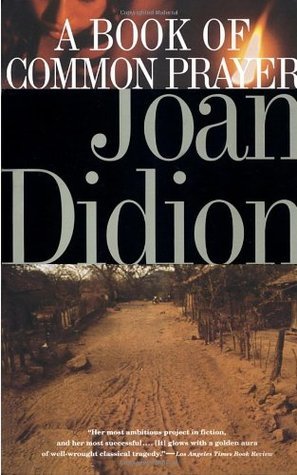
Writing with the telegraphic swiftness and microscopic sensitivity that have made her one of our most distinguished journalists, Joan Didion creates a shimmering novel of innocence and evil.A Book of Common Prayer is the story of two American women in the derelict Central American nation of Boca Grande. Grace Strasser-Mendana controls much of the country's wealth and knows virtually all of its secrets; Charlotte Douglas knows far too little. "Immaculate of history, innocent of politics," she has come to Boca Grande vaguely and vainly hoping to be reunited with her fugitive daughter. As imagined by Didion, her fate is at once utterly particular and fearfully emblematic of an age of conscienceless authority and unfathomable violence.

The iconic writer's electrifying first novel is a story of marriage, murder and betrayal that only she could tell with such nuance, sympathy, and suspense—f rom the bestselling, award-winning author of The Year of Magical Thinking and Let Me Tell You What I Mean.Everett McClellan and his wife, Lily, are the great-grandchildren of pioneers, and what happens to them is a tragic epilogue to the pioneer experience—a haunting portrait of a marriage whose wrong turns and betrayals are at once absolutely idiosyncratic and a razor-sharp commentary on the history of California.

Inez Victor knows that the major casualty of the political life is memory. But the people around Inez have made careers out of losing track. Her senator husband wants to forget the failure of his last bid for the presidency. Her husband's handler would like the press to forget that Inez's father is a murderer. And, in 1975, the year in which much of this bitterly funny novel is set, America is doing its best to lose track of its one-time client, the lethally hemorrhaging republic of South Vietnam.As conceived by Joan Didion, these personages and events constitute the terminal fallout of democracy, a fallout that also includes fact-finding junkets, senatorial groupies, the international arms market, and the Orwellian newspeak of the political class. Moving deftly from Honolulu to Jakarta, between romance, farce, and tragedy, Democracy is a tour de force from a writer who can dissect an entire society with a single phrase.

An extraordinary work from the author of The Year of Magical Thinking and Blue Nights In November 1999, Joan Didion began seeing a psychiatrist because, as she wrote to a friend, her family had had “a rough few years.” She described the sessions in a journal she created for her husband, John Gregory Dunne.For several months, Didion recorded conversations with the psychiatrist in meticulous detail. The initial sessions focused on alcoholism, adoption, depression, anxiety, guilt, and the heartbreaking complexities of her relationship with her daughter, Quintana. The subjects evolved to include her work, which she was finding difficult to maintain for sustained periods. There were discussions about her own childhood—misunderstandings and lack of communication with her mother and father, her early tendency to anticipate catastrophe—and the question of legacy, or, as she put it, “what it’s been worth.” The analysis would continue for more than a decade.Didion’s journal was crafted with the singular intelligence, precision, and elegance that characterize all of her writing. It is an unprecedently intimate account that reveals sides of her that were unknown, but the voice is unmistakably hers—questioning, courageous, and clear in the face of a wrenchingly painful journey.

"Terror is the given of the place." The place is El Salvador in 1982, at the ghastly height of its civil war. The writer is Joan Didion, who delivers an anatomy of that country's particular brand of terror–its mechanisms, rationales, and intimate relation to United States foreign policy. As ash travels from battlefields to body dumps, interviews a puppet president, and considers the distinctly Salvadoran grammar of the verb "to disappear," Didion gives us a book that is germane to any country in which bloodshed has become a standard tool of politics.

An intricate, fast-paced novel about trying to create a context for democracy and getting hands a little dirty in the process, complete with conspiracies, arms dealing, and assassinations. From the author of The Year of Magical Thinking and Let Me Tell You What I MeanThe narrator introduces Elena McMahon, estranged from a life of celebrity fundraisers and from her powerful West Coast husband, Wynn Janklow, whom she has left, taking Catherine, her daughter, to become a reporter for The Washington Post . She finds herself boarding a plane for Florida to see her father. She becomes embroiled in her his business even though "she had trained herself since childhood not to have any interest in what he was doing." It is from this moment that she is caught up in something much larger than she could have imagined.Didion makes connections among Dallas, Iran-Contra, and Castro, and points out how "spectral companies with high-concept names tended to interlock." As this book builds to its terrifying finish, we see the underpinnings of a dark historical underbelly.

“this happened on December 30, 2003. That may seem a while ago but it won’t when it happens to you . . .”In this dramatic adaptation of her award-winning, bestselling memoir (which Michiko Kakutani in The New York Times called “an indelible portrait of loss and grief . . . a haunting portrait of a four-decade-long marriage), Joan Didion transforms the story of the sudden and unexpected loss of her husband and their only daughter into a stunning and powerful one-woman play.The first theatrical production of The Year of Magical Thinking opened at the Booth Theatre on March 29, 2007, starring Vanessa Redgrave and directed by David Hare.From the Trade Paperback edition.

Miami is not just a portrait of a city, but a masterly study of immigration and exile, passion, hypocrisy, and political violence, f rom the bestselling, award-winning author of The Year of Magical Thinking and Let Me Tell You What I Mean.It is where Fidel Castro raised money to overthrow Batista and where two generations of Castro's enemies have raised armies to overthrow him, so far without success. It is where the bitter opera of Cuban exile intersects with the cynicism of U.S. foreign policy. It is a city whose skyrocketing murder rate is fueled by the cocaine trade, racial discontent, and an undeclared war on the island ninety miles to the south.As Didion follows Miami's drift into a Third World capital, she also locates its position in the secret history of the Cold War, from the Bay of Pigs to the Reagan doctrine and from the Kennedy assassination to the Watergate break-in.

Joan Didion’s incomparable and distinctive essays and journalism are admired for their acute, incisive observations and their spare, elegant style. Now the seven books of nonfiction that appeared between 1968 and 2003 have been brought together into one thrilling collection.Slouching Towards Bethlehem captures the counterculture of the sixties, its mood and lifestyle, as symbolized by California, Joan Baez, Haight-Ashbury. The White Album covers the revolutionary politics and the “contemporary wasteland” of the late sixties and early seventies, in pieces on the Manson family, the Black Panthers, and Hollywood. Salvador is a riveting look at the social and political landscape of civil war. Miami exposes the secret role this largely Latin city played in the Cold War, from the Bay of Pigs through Watergate. In After Henry Didion reports on the Reagans, Patty Hearst, and the Central Park jogger case. The eight essays in Political Fictions–on censorship in the media, Gingrich, Clinton, Starr, and “compassionate conservatism,” among others–show us how we got to the political scene of today. And in Where I Was From Didion shows that California was never the land of the golden dream.

In her latest forays into the American scene, Joan Didion covers ground from Washington to Los Angeles, from a TV producer's gargantuan "manor" to the racial battlefields of New York's criminal courts. At each stop she uncovers the mythic narratives that elude other observers: Didion tells us about the fantasies the media construct around crime victims and presidential candidates; she gives us new interpretations of the stories of Nancy Reagan and Patty Hearst; she charts America's rollercoaster ride through evanescent booms and hard times that won't go away. A bracing amalgam of skepticism and sympathy, After Henry is further proof of Joan Didion's infallible radar for the true spirit of our age.

In these coolly observant essays, the iconic bestselling writer looks at the American political process and at that handful of insiders who invent, year in and year out, the narrative of public life.Through the deconstruction of the sound bites and photo ops of three presidential campaigns, one presidential impeachment, and an unforgettable sex scandal, Didion reveals the mechanics of American politics. She tells us the uncomfortable truth about the way we vote, the candidates we vote for, and the people who tell us to vote for them. These pieces build, one on the other, into a disturbing portrait of the American political landscape, providing essential reading on our democracy.

“Self-respect: Its Source, Its Power" was first published in Vogue in 1961, and which was republished as “On Self-Respect” in the author’s 1968 collection, Slouching Towards Bethlehem. Didion wrote the essay as the magazine was going to press, to fill the space left after another writer did not produce a piece on the same subject. She wrote it not to a word count or a line count, but to an exact character count.

In 1967, Joan Didion wrote an essay called Goodbye to All That, a work of such candid and penetrating prose that it soon became the gold standard for personal essays. Like no other story before it, Didion’s tale of loving and leaving New York captured the mesmerizing allure Manhattan has always had for writers, poets, and wandering spirits.

In Fixed Ideas Joan Didion describes how, since September 11, 2001, there has been a determined effort by the administration to promote an imperial America--a "New Unilateralism"--and how, in many parts of America, there is now a "disconnect" between the government and citizens."[Americans] recognized even then [immediately after 9/11], with flames still visible in lower Manhattan, that the words 'bipartisanship' and 'national unity' had come to mean acquiescence to the administration's preexisting agenda--for example the imperative for further tax cuts, the necessity for Arctic drilling, the systematic elimination of regulatory and union protections, even the funding for the missile shield."Frank Rich in his preface notes: "The reassuring point of the fixed ideas was to suppress other ideas that might prompt questions or fears about either the logic or hidden political agendas of those conducting what CNN branded as 'America's New War.'"He adds, "This White House is famously secretive and on-message, but its skills go beyond that. It knows the power of narrative, especially a single narrative with clear-cut heroes and evildoers, and it knows how to drown out any distracting subplots before they undermine the main story."Book and cover design by Milton Glaser, Inc.

Vintage Readers are a perfect introduction to some of the greatest modern writers presented in attractive, accessible paperback editions.“Didion has the instincts of an exceptional reporter and the focus of a historian . . . a novelist’s appreciation of the surreal.” — Los Angeles Times Book ReviewWhether she’s writing about civil war in Central America, political scurrility in Washington, or the tightl -braided myths and realities of her native California, Joan Didion expresses an unblinking vision of the truth.Vintage Didion includes three chapters from Miami; an excerpt from Salvador ; and three separate essays from After Henry that cover topics from Ronald Reagan to the Central Park jogger case . Also included is “Clinton Agonistes” from Political Fictions , and “Fixed Opinions, or the Hinge of History,” a scathing analysis of the ongoing war on terror.
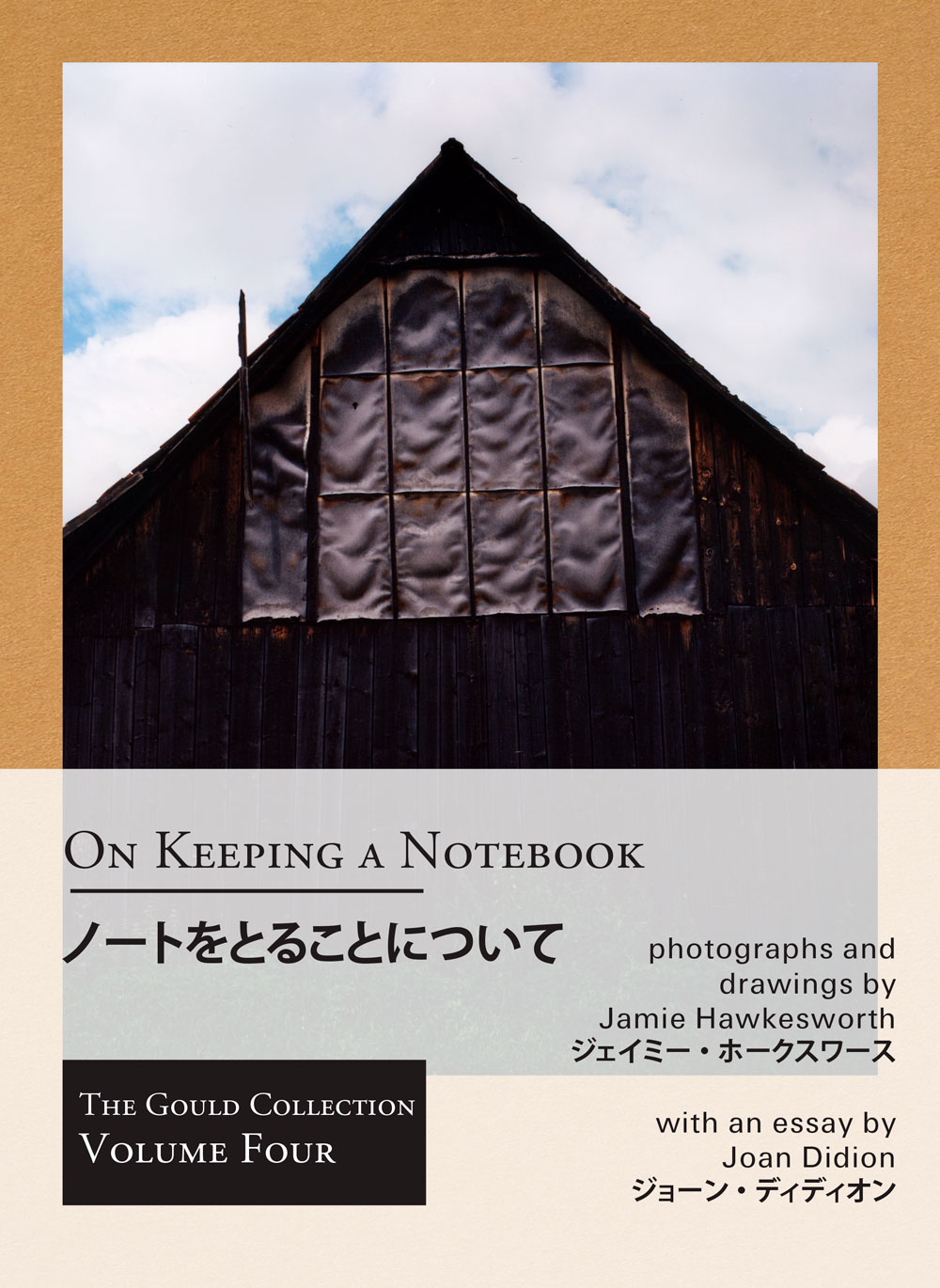

Two books under one cover. "Slouching Towards Bethlehem" and "Play it as it Lays". Both by reknowned essayist Joan Didion. Published by the Quality Paperback Book Club.
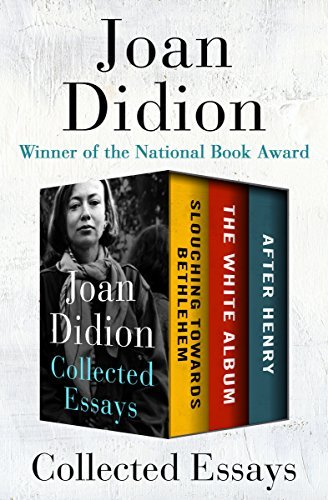
Collected Essays: Slouching Towards Bethlehem, The White Album, and After Henry
by Joan Didion
Rating: 4.4 ⭐
Three essential works that redefined the art of journalism by “one of our sharpest and most trustworthy cultural observers” (The New York Times). In these masterpieces of razor-sharp reportage, the National Book Award–winning and New York Times–bestselling author proves herself one of the premier essayists of the twentieth century, “an articulate witness to the most stubborn and intractable truths of our time” (Joyce Carol Oates, The New York Times Book Review). Slouching Towards America in the 1960s—a pivotal era of social change and generational divide. Here is Joan Didion on the “misplaced children” of Haight-Ashbury as well as John Wayne in Hollywood; folk singer Joan Baez and reclusive billionaire Howard Hughes; the extremes of both Death Valley and Las Vegas. Named to Time magazine’s list of the one hundred best and most influential nonfiction books, this is “a rare display of some of the best prose written today in this country” (The New York Times Book Review). The White A New York Times bestseller, this landmark essay collection confronts the dark aftermath of the 1960s. From a jailhouse visit to Huey Newton, cofounder of the Black Panther Party, to a recording session with The Doors, from the culture of shopping malls to the contradictions of the women’s movement, Joan Didion captures the paranoia and absurdity of the era with irony and insight. And in the iconic title essay, she documents her uneasy state of mind during the years leading up to and following the Manson murders—a terrifying crime that, in her memory, surprised no one. After Whether reporting on a Hollywood murder or the “sideshows” of foreign wars, Joan Didion crystalizes her reputation as a brilliant essayist. Highlights include a portrait of the White House under the Reagans, two “actors on location”; an unexpected meditation on the Patty Hearst case; and an exposé on the racial divisions and class fault lines of New York City following the rape of the Central Park jogger. An indispensable collection from a writer on whom we can rely “to get the story straight” (Los Angeles Times).

I write entirely to find out what I'm thinking, what I'm looking at, what I see and what it means.Acting as both a personal narrative and a reflection, the essay describes Didion's unique creative method and details the reasons why she became a writer. In order to demonstrate her creative process, Didion describes the inspiration behind two of her novels, Play It As It Lays and A Book of Common Prayer.

Sentimental Journeys book paperback by Joan Didion

The 1960s & 70s: Run, River / Slouching Towards Bethlehem / Play It As It Lays / A Book of Common Prayer / The White Album
by Joan Didion
Rating: 4.1 ⭐
Cool, dispassionate, and incisive, Joan Didion’s voice is electric on the page. Using autobiographical elements to stunning literary effect, she has captured the anarchic convulsions and anxious contradictions of the waning American Century and the coming new millennium with incomparable clarity and force. Now, Library of America inaugurates a definitive three-volume edition of Didion’s collected writings with the landmark works of the 1960s and 1970s, books that established her as one of the most original and influential literary figures of our time.Didion’s darkly nostalgic debut novel Run River (1963) is set among the ranch families of her native Sacramento Valley, their prosperity and pioneer traditions threatened by suburban sprawl and the changing values of a postwar world. A riveting chronicle of passion, infidelity, and betrayal in the twenty-year marriage of Lily Knight and Everett McClellan, it eloquently evokes one woman’s alienation amid the landscapes of a disappearing California.A major milestone in the rise of the New Journalism, Slouching Towards Bethlehem (1968) gathers Didion’s kaleidoscopic essays of the mid-1960s: masterpieces whose subjects include an aging John Wayne, a Los Angeles Maoist, the Las Vegas wedding industry, and the acid-tripping counterculture of San Francisco’s Haight-Ashbury. The collection showcases Didion’s signature literary persona—“a memorable voice, partly eulogistic, partly despairing, always in control” (Joyce Carol Oates)—while introducing a style of reportage that transformed the expectations of generations of readers and writers.In Play It As It Lays (1970) model and actress Maria Wyeth, her brief career fading, finds herself adrift in a sun-drenched, air-conditioned, and utterly benumbed world in which pills, fast cars, and casual sex have replaced human connection. The pared-down, impressionistic prose frames a harrowing story of a Hollywood life gone wrong.Well-meaning norteamericana Charlotte Douglas arrives in the lush, dangerously chaotic Central American republic of Boca Grande, in Didion’s third novel, A Book of Common Prayer (1977), hoping to trace the whereabouts of her daughter Marin, an affluent teenager turned Marxist-revolutionary terrorist. “Immaculate of history, innocent of politics,” Douglas is swept up in intrigues and violence beyond her ability to comprehend, as Didion dissects the menacing realities of imperialism and revolution.In The White Album (1979) Didion continues her intense, intimate, clear-eyed investigations of a California coming apart at the seams. In trips to shopping malls and to the Getty Museum; visits with Nancy Reagan, The Doors, and the Black Panthers; accounts of the prosecution of the Manson Family—all counterpointed with her own dark moods and obsessions—she offers a brilliant mosaic of a time that continues to shape our own and a monument of superlative literary nonfiction.

This comprehensive edition brings together for the first time three seminal collections by legendary essayist and journalist Joan Didion: Slouching toward Bethlehem, White Album and Sentimental Journeys. Prefaced with a new introduction by Joan Didion. Live and Learn comprises three of the personal essay collections that established Joan Didion as a major figure in the modern canon - arranged in chronological order so that readers can appreciate not only the qualities of the essays per se, but also their evolution over time. It also includes a new introduction by Joan Didion herself. The stylistic masterpiece Slouching Towards Bethlehem (1968) has become a modern classic, capturing the mood of 1960s America and especially the center of its counterculture, California. The cornerstone essay, an extraordinary report on San Francisco's Haight-Ashbury, sets the agenda for the rest of this book - depicting and America where, in some way or another, things are falling apart and "the center cannot hold". The White Album (1979) is a syncopated, swirling mosaic of the 60s and 70s, covering people and artifacts from the Black Panthers and the Manson family to John Paul Getty's museum. Sentimental Journeys (1992) shifts its perspective slightly to take in Vietnamese refugee camps in Hong Kong, the Reagan campaign trail, and the inequities of Los Angeles real estate. An important collection, Live and Learn is the perfect one-stop primer on Joan Didion, and an essential reference for readers old and new. It confirms the power of this uniquely unbiased, moving writer, and showcases her artful yet simple prose.

Joan Didion at the 92nd Street Y
by Joan Didion
Joyce Carol Oates called Joan Didion "an articulate witness to the most stubborn and intractable truths of our time." Ms. Didion is the author of the novels Play It as It Lays and The Last Thing He Wanted, the essay collections Slouching Toward Bethlehem and The White Album, and the memoirs Where I Was From and The Year of Magical Thinking.