
Michael Baxandall
Art historian who developed the theory of period eye. He worked as a curator at the Victoria and Albert Museum, London as well as teaching at the Warburg Institute and the University of California.
26 Books Written

Painting and Experience in Fifteenth-Century Italy: A Primer in the Social History of Pictorial Style
by Michael Baxandall
Rating: 4.0 ⭐
• 2 recommendations ❤️
Painting and Experience in Fifteenth Century Italy An introduction to 15th century Italian painting and the social history behind it, arguing that the two are interlinked and that the conditions of the time helped fashion distinctive elements in the painter's style. Serving as both an introduction to fifteenth-century Italian painting and as a text on how to interpret social history from the style of pictures in a given historical period, this new edition to Baxandall's pre-eminent scholarly volume examines early Renaissance painting, and explains how the style of painting in any society reflects the visual skills and habits that evolve out of daily life. Renaissance painting, for example, mirrors the experience of such activities as preaching, dancing, and gauging barrels. The volume includes discussions of a wide variety of painters, including Filippo Lippi, Fra Angelico, Stefano di Giovanni, Sandro Botticelli, Masaccio, Luca Signorelli, Boccaccio, and countless others. Baxandall also defines and illustrates sixteen concepts used by a contemporary critic of painting, thereby assembling the basic equipment needed to explore fifteenth-century art.
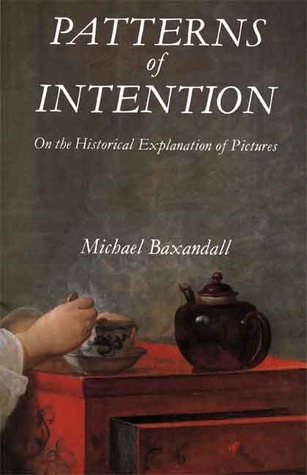
This book is an inquiry into the historical understanding of pictures -- something sought not only by art historians but by anyone who looks at a picture in the knowledge that it is old or comes out of a culture different from his own. Michael Baxandall begins by developing a scheme for the explanation of concrete historical objects in general, taking as an example how we think about a complex artifact such as a bridge, the Forth Bridge in Scotland. He then shows how this scheme is adapted to the explanation -- or inferential criticism -- of pictures. Analyzing in detail Picasso's Portrait of Kahnweiler, Chardin's A Lady Taking Tea, and Piero della Francesca's Baptism of Christ, Baxandall discusses the painter's goal, his sense of what is wanted from him and what he wants, the market in which he works, the culture from which he draws resources, his relation to other painters, and the use he makes of philosophical or scientific ideas. Baxandall then reflects on how far we can understand the mind of an artist living in a different culture and to what extent we can test and evaluate a historical interpretation of a picture. Braxandall does not claim that the method of inferential criticism is the only way to think about pictures. But if we accept that behind a superior picture there is a superior organization -- perceptual, emotional, and constructive -- it seems evident that attempting to discover the artist's intentions will sharpen our legitimate satisfaction in the picture itself.

Giotto and the Orators: Humanist Observers of Painting in Italy and the Discovery of Pictorial Composition
by Michael Baxandall
Rating: 4.2 ⭐
This highly acclaimed volume examines the one firm bridge between the art of the humanists and the painters of the early Italian Renaissance: what Petrarch and other humanists wrote about painting. Baxandall surveys the main themes of their art criticism and describes how their language conditioned their insights into painting.

A detail examination of the craftsmanship and lives of German woodcarvers from 1475 to 1525 discusses their artistic styles, techniques of carving, and place in society
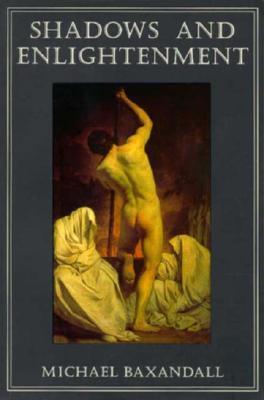
In this book, an eminent art historian draws on contemporary cognitive science, eighteenth-century theories of visual perception, and art history to discuss shadows and the visual knowledge they can offer.

L'oeil du Quattrocento: L'usage de la peinture dans l'Italie de la Renaissance
by Michael Baxandall
Rating: 3.3 ⭐
Histoire sociale et histoire de l'art ne font qu'un : c'est ce qu'après tant d'études qui ne se sont intéressées qu'à la signification propre de l'oeuvre d'art, ou à sa signification purement sociale, illustre admirablement Michael Baxandall (1933-2008), historien anglais, sur l'exemple de la peinture italienne de la Renaissance. À quelle demande exacte répondaient Masaccio, Filippo Lippi, Andrea del Castagno ou Fra Angelico ? De quel sens leurs oeuvres étaient-elles chargées, et comment les regardaient leurs destinataires et leurs commanditaires ? C'est à ce type de questions que répond l'auteur en analysant le marché de l'art, à travers les contrats, les correspondances et les registres de comptes. En montrant aussi comment les dispositions visuelles nées de la vie quotidienne, religieuse, sociale ou commerciale de l'époque sont devenues des éléments déterminants du style du peintre. Retrouver l'oeil du Quattrocento, c'est rafraîchir le nôtre.

The Italian Renaissance was a creative period for art criticism as well as for art itself. The early efforts to give verbal accounts of visual representations and their quality throw light not only on the art of the period but also on art criticism at any time. This collection of papers by art historian and critic Michael Baxandall represents his thinking over the past forty years on the relation between language and art. He offers seven thought-provoking pieces, three of which are new and written specifically for this book. Focusing on works of the fifteenth century, Baxandall shows with fresh insight how words match the experience of looking at paintings and sculptures. The author introduces the basic Renaissance framework for art criticism and proceeds to explore various humanist critical writings of the fifteenth and early sixteenth centuries. He concludes with a major new essay on Piero della Francesca's Resurrection of Christ in which he probes the visual experience of a painting that criticism seeks to verbalize.

Presenting a mesmerizing picture both of British intellectual life in the 1940's and ‘50's and the mental, emotional, and cultural formation of a man destined to transform many aspects of that world over the next 40 years, Episodes is both a gripping story and a vividly analytic tour de force. From early childhood in Cardiff and the valleys of South Wales to school and adolescence in Manchester and more, the book brilliantly recaptures the formation of the young man who finally decides not to write novels but to become a scholar. First recounting, in coruscating detail, life and work with John Pope-Hennessy at the Victoria and Albert Museum, and then narrating the debate and final acceptance of an invitation from the Warburg Institute at London University, Episodes shows the formation of the extraordinarily learned and original mature scholar. A personal testimony, a spellbinding series of vignettes and characterizations of famous and infamous contemporaries, and a contribution to the cultural history of the mid-20th century, this is an essential and unforgettable book.

Munich 1956. The war is over but not forgotten. The West German economic miracle is underway, and American investors are looking for opportunities, but some companies have skeletons in the closet. When Will Briggs agrees to investigate a German textile company for an American friend, he half-knows how deep and how murky the water might be. But he is intrigued by the challenge, and he could use the money to fund his own historical research. Traveling first to Switzerland to investigate what he thinks may be tax fraud, he becomes involved with Mechtild, the mercurial wife of the boss, Kaspar Leinberger. Discovered eavesdropping on a suspicious conversation about Nazi gold, he is pursued to Italy where war crimes replace tax fraud as the focus of his quest . . . Raising eternal questions about historical truth, witch hunts, and the use of evidence, A Grasp of Kaspar is an engrossing thriller reminiscent of John Buchan, Erskine Childers, and John le Carré.

Cap. II: "El Ojo de la Época". Pintura y Vida Cotidiana en el Renacimiento. Arte y Experiencia
by Michael Baxandall
Rating: 3.5 ⭐
p. 45-137.
Substance, Sensation and Perception: Interview with Michael Baxandall
by Michael Baxandall
Rating: 3.5 ⭐
Shadows and Enlightenment
by Michael Baxandall
Painting and Experience in the Fifteenth Century
by Michael Baxandall
A Grasp of Kaspar: A Novel by Michael Baxandall
by Michael Baxandall
Painting and experience in fifteenth century Italy: A primer in the social history of pictorial style
by Michael Baxandall
Painting and Experience in Fifteenth Century Italy: A Primer in the Social History of Pictorial Style
by Michael Baxandall
German wood statuettes 1500-1800
by Michael Baxandall
The Masters 60 Piero Della Francesca
by Michael Baxandall
Has some tearing on back cover (like it had been stuck to something and pulled away), otherwise Very Good - No names or inscriptions. Pages have some soil but are clean and intact. Front cover has light soil some possible foxing , some wear (see pictures), back spine and cover have light wear, soil. A Knowledge Publication from the UK, Published 1966 by Purnell & Sons Limited. Contains Bio, Art discussion and Historical data, black and white photographs, as well as 15 COLOR PLATES.
Painting and Experience in Fifteenth Century Italian [new edition]
by Michael Baxandall

ombres et lumieres
by Michael Baxandall

Ursachen der Bilder. Über das historische Erklären von Kunst.
by Michael Baxandall

Parole per le immagini. L'arte rinascimentale e la critica
by Michael Baxandall

ルネサンス絵画の社会史
by Michael Baxandall
Dialogue on Art from Court of Leonello D'Este
by Michael Baxandall

Löcher im Licht. Der Schatten und die Aufklärung.
by Michael Baxandall
South German Sculpture 1480 - 1530
by Michael Baxandall