
John Fante
Fante's early years were spent in relative poverty. The son of an Italian born father, Nicola Fante, and an Italian-American mother, Mary Capolungo, Fante was educated in various Catholic schools in Boulder and Denver, Colorado, and briefly attended the University of Colorado. In 1929, he dropped out of college and moved to Southern California to concentrate on his writing. He lived and worked in Wilmington, Long Beach, and in the Bunker Hill district of downtown Los Angeles, California. He is known to be one of the first writers to portray the tough times faced by many writers in L.A. His work and style has influenced such similar authors as "Poet Laureate of Skid Row" Charles Bukowski and influential beat generation writer Jack Kerouac. He was proclaimed by Time Out magazine as one of America's "criminally neglected writers."
29 Books Written
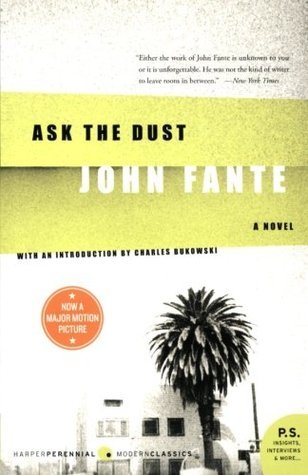
"Fante was my god." —Charles Bukowski, in his introduction to Ask the DustArturo Bandini, a young, struggling Italian-American writer living in a seedy hotel in 1930s Los Angeles, falls hard for the elusive, mocking, unstable Camilla Lopez, a Mexican waitress. The pair embark on a strange and strained love-hate relationship, which slowly, but inexorably, descends into the realm of madness.Ask the Dust is one of the truly great, yet unsung, American novels of the twentieth century. A tough and unsentimental story with a soft and tender heart, it remains as fresh and affecting as the day it was written.

"Mean, moody, disturbing and intensely atmospheric.” —The TimesJohn Fante's first published novel, Wait Until Spring, Bandini chronicles a trying winter in the lives of the Bandinis, a poor and dysfunctional but oddly endearing Italian-American family living in Colorado during the Great Depression.

From the Editorial Note:This novel introduces Fante's alter ego Arturo Bandini who reappears in Wait Until Spring, Bandini (1938), Ask the Dust (1939), and Dreams from Bunker Hill (1982). The manuscript was discovered among John Fante's papers after his death in May, 1983 by his widow Joyce, and now may be included in that short, distinguished list of important first novels by American authors.

Henry Molise, a 50 year old, successful writer, returns to the family home to help with the latest drama; his aging parents want to divorce. Henry's tyrannical, brick laying father, Nick, though weak and alcoholic, can still strike fear into the hearts of his sons. His mother, though ill and devout to her Catholicism, still has the power to comfort and confuse her children. This is typical of Fante's novels, it's autobiographical, and brimming with love, death, violence and religion. Writing with great passion Fante powerfully hits home the damage family can wreck upon us all.

My first collision with fame was hardly memorable. I was a busboy at Marx's Deli. The year was 1934. The place was Third and Hill, Los Angeles. I was twenty-one years old, living in a world bounded on the west by Bunker Hill, on the east by Los Angeles Street, on the south by Pershing Square, and on the north by Civic Center. I was a busboy nonpareil, with great verve and style for the profession, and though I was dreadfully underpaid (one dollar a day plus meals) I attracted considerable attention as I whirled from table to table, balancing a tray on one hand, and eliciting smiles from my customers. I had something else beside a waiter's skill to offer my patrons, for I was also a writer.

Trapped in a dysfunctional, Italian-American family in a small, poverty-ridden town, seventeen-year-old Dominic Molise clings to his deluded belief that he is destined to be a great baseball star.Published posthumously in 1985, 1933 Was a Bad Year offers a superb slice of American life, both funny and sad, and a pungent taste of the Italian-American experience, exploring such issues as the gulf between immigrant parents and their American-born children.

The narrator is an Italian-American writer living in Los Angeles with his pregnant wife, Joyce. As the novel follows the course of Joyce's pregnancy, John deals with Joyce's shifting emotional moods, her growing interest in Roman Catholicism (from which John himself has fallen away), and termite infestation in the house. All of this is further complicated by John's problematic relationship with his father Nick, a retired bricklayer who isn't shy about sharing his own strong opinions about family life.

West of Rome's two novellas, "My Dog Stupid" and "The Orgy," fulfill the promise of their rousing titles. The latter novella opens with virtuoso description: "His name was Frank Gagliano, and he did not believe in God. He was that most singular and startling craftsman of the building trade-a left-handed bricklayer. Like my father, Frank came from Torcella Peligna, a cliff-hugging town in the Abruzzi. Lean as a spider, he wore a leather cap and puttees the year around, and he was so bowlegged a dog could lope between his knees without touching them."

Contains the stories in the legendary Dago Red, first published in 1940, together with seven new stories, including "A Nun No More" and "My Father’s God."

Coincé entre une progéniture ingrate et un talent de plus en plus incertain, le personnage principal de Mon chien stupide oscille entre un cynisme salvateur et des envies de fuite. Fils d'immigrés italiens, il caresse le rêve d'un retour à ses racines, fantasmant sur une vie paisible aux terrasses des cafés de la Piazza Navona à Rome. Mais pour l'heure, il faut courir le cachet, écrire des scénarios médiocres pour des séries télé affligeantes... ou le plus souvent aller encaisser un chèque des allocations de chômage. L'existence tumultueuse de la famille est bouleversée lorsqu'un gigantesque chien décide de s'installer dans la maison, pour le plus grand bonheur de l'auteur raté mais au grand dam du reste de sa tribu. Mon chien stupide est une tragicomédie de la crise individuelle : crises d'adolescence à retardement, démon de midi, couple en déliquescence.

Published here for the first time, this text presents a collection of recently-discovered stories by John Fante.

The Bandini Wait Until Spring, The Road to Los Ask the Dreams from Bunker Hill [Paperback] Fante, John; Fante, Dan and Bukowski, Charles

Com'è tradizione nella storia della migliore prosa moderna americana, il Fante delle short stories non ha nulla da invidiare all'autore dei grandi romanzi, e dimostra fin dall'inizio degli anni Trenta di essere in grado di utilizzare questo genere narrativo con virtuosismo stilistico e una sempre nuova capacità di divertire e commuovere. In racconti come il "Muratore nella neve", Fante raggiunge alcuni dei suoi vertici espressivi, e lo stesso può dirsi di tanti testi scritti e pubblicati dopo "Dago Red", anche se lo scrittore, eternamente insoddisfatto della sua opera, non pensò mai a raccoglierli in un nuovo volume.

Κολοράντο, μέσα της δεκαετίας του ’20.Ο Νικ Στεφανίνι ξεκίνησε απλός χτίστης, αλλά δούλεψε πολύ στη ζωή του κι έχει πια γίνει εργολάβος με δικό του συνεργείο. Είναι πατέρας τριών παιδιών, νοικοκύρης, προκομμένος.Ώσπου μια μέρα ένας εργάτης του, ο Φούριας, πιάνει την καλή στο χρηματιστήριο και κάνει ένα απίστευτο δώρο στον Νικ: ένα ανεκμετάλλευτο χρυσωρυχείο.Ο Νικ συνεταιρίζεται με τον Φρανκ Γκαλιάνο, που ξέρει από ορυχεία αλλά δεν πιστεύει στον Θεό, κι οι δυο μαζί αρχίζουν τη σκληρή δουλειά.Ω, πόσο θ’ αλλάξει η ζωή της οικογένειας Στεφανίνι! Θα ζήσουν σ’ έναν πύργο, θα έχουν υπηρέτριες, μπάτλερ και σοφέρ!Κανένας δεν είναι τόσο ενθουσιασμένος όσο ο αφηγητής μας, ο 10χρονος γιος του Νικ, που βιάζεται να μεγαλώσει και να γίνει άντρας.Όταν όμως μια μέρα ανεβαίνει στο ορυχείο να δει την πρόοδο των εργασιών, τον περιμένει μια τρομερή έκπληξη…Μια κωμωδία γεμάτη ζωή για το οδυνηρό τέλος της παιδικής αθωότητας.

It's not every day that a writer, almost unheard of in his lifetime, emerges twenty years after his death as a voice of his generation. But then again, there aren't many writers with such irrepressible genius as John Fante. The John Fante Reader is the important next step in the reintroduction of this influential author to modern audiences. Combining excerpts from his novels and stories, as well as his never-before-published letters, this collection is the perfect primer on the work of a writer -- underappreciated in his time -- who is finally taking his place in the pantheon of twentieth-century American writers.

Fante's captivating letters trace his emergence from poverty to life as a Hollywood screenwriter. Complemented by many photos and interesting appendices, the book is most distinguished by Fante's letters to his mother-letters in which he is just as apt to lie about church attendance as he is to describe, with peculiar candor, skinny-dipping with a girl friend.


Dopo Aspetta primavera, Bandini, il suo primo romanzo pubblicato nel 1938, seguito l'anno successivo da Chiedi alla polvere, John fante raccoglie in volume i racconti tra il 1932 e il 1938, alcuni apparsi su riviste e altri inediti, con il titolo dago Red (1940).È un momento magico nella carriera dello scrittore italoamericano, che nei testi qui selezionati offre al lettore una serie di istantanee, ora comiche ora struggenti, del suo mondo narrativo, profondamente radicato nelle storie di emigrazione della sua famiglia.

John Fante può celebrare gioie e misfatti del proprio impossibile padre. Oppure raccontare una fuga da casa per cercare di entrare a far parte della squadra di baseball dei New York Giants. O ancora descrivere l'eroica epopea di un lavoratore filippino alla conquista di una bionda americana e con lei di tutta l'America. Questi racconti risalgono per lo più agli anni Quaranta e ai primi anni Cinquanta e sono un'ulteriore conferma della vitalità di uno scrittore che come pochi ha saputo descrivere il mondo dell'infanzia e dell'adolescenza.

Romans, Tome 1: La Route De Los Angeles / Bandini / Demande à La Poussière
by John Fante
Rating: 4.7 ⭐
« Un jour j’ai sorti un livre, je l’ai ouvert et c’était ça. Je restai planté un moment, lisant et comme un homme qui a trouvé de l’or à la décharge publique. J’ai posé le livre sur la table, les phrases filaient facilement à travers les pages comme un courant. Chaque ligne avait sa propre énergie et était suivie d’une semblable et la vraie substance de chaque ligne donnait sa forme à la page, une sensation de quelque chose sculpté dans le texte. Voilà enfin un homme qui n’avait pas peur de l’émotion. L’humour et la douleur mélangés avec une superbe simplicité. Le début du livre était un gigantesque miracle pour moi. J’avais une carte de la bibliothèque. Je sortis le livre et l’emportai dans ma chambre. Je me couchai sur mon lit et le lus. Et je compris bien avant de le terminer qu’il y avait là un homme qui avait changé l’écriture. Le livre était Demande à la poussière et l’auteur, John Fante. Il allait toute ma vie m’influencer dans mon travail. » (Charles Bukowski, 1979)« Une ligne, dix lignes, une page. On ouvre un livre de John Fante et l’on se dit que c’est ça. Que la vie est là, brute, brutale, brûlante. L’émotion à l’état pur. Des mots qui mordent dans le tendre. Et toute cette souffrance qui jaillit d’un volcan jamais éteint, jamais refroidi. » (André Clavel, L’Express)


»Fante war mein Gott.« Charles Bukowski.Die Bandini-Romane sind das opus magnum von John Fante, dem großen, erst kürzlich weltweit triumphal wiederentdeckten Outsider der amerikanischen Literatur. Die Romane erzählen die Geschichte von Fantes Alter Ego Arturo Bandini, einem aus bitterarmen Verhältnissen stammenden jungen Italiener. Beseelt von dem unbändigen Wunsch Romane zu schreiben und Bedeutung zu erlangen, entflieht er seiner engstirnigen Heimat Colorado, um sein Glück im Los Angeles der Dreißigerjahre zu suchen. Nach langer Zeit sind nun sämtliche Romane der Reihe wieder lieferbar, allesamt in glänzender Übersetzung von Alex Capus.»Ich habe angefangen zu schreiben, weil ich von John Fante so begeistert war.« Benjamin von Stuckrad-Barre.»John Fante ist einer der ganz großen West-Coast-Autoren – italienische Leidenschaft gepaart mit californischer Coolness.« Alex Capus

Nelle opere di John Fante, picaresco resoconto della lunga odissea di un immigrato d'origine italiano, il lettore trova una carica di grande vitalità, quasi il segno di un'adolescenza infinita. Il volume, curato da Francesco Durante, raccoglie i quattro romanzi del ciclo di Arturo Bandini (La strada per Los Angeles, Chiedi alla polvere, Aspetta primavera, Bandini e Sogni di Bunker Hill), i romanzi più tardi (Full of life, La confraternita dell'uva, Il mio cane Stupido) e una scelta di racconti.

Due racconti degli anni trenta, tratti da La grande fame: "Il caso dello scrittore tormentato" e "Sogno di mamma"Testo originale e traduzione italiana a fronte.

Non mi faceva fesso, Pat Lannon. Lo conoscevo bene quel tipo, e sapevo come uccideva polli e gattini. Lo sapevo. Forse stava facendosi prete, ma certo non avrebbe potuto essere uno dei più ispirati. Li avevo visti, i gattini morti. Non puoi fare quelle cose e poi fare il santo.Dissi vigorosamente a me stesso che a trentatré anni Nietzsche mi avrebbe ancora influenzato. "Ma" pensai "metti che Nietzsche si presenti su questa pista e Ehi tu, ragazzo. Va' fuori e fatti saltare le cervella". Quanto male l'avrei presa? La ragazza in raso nero mi scivolò accanto e mi scordai di lui e dalla mia mente zampillò un soliloquio sull'amore che le portavo.Mi scompiscio, Dibber Lannon è un racconto inedito del 1939. Una persona mostruosamente intelligente, anch'esso inedito, risale al 1941. Che insulti, giovanotto, un improbabile papa in erba o si angusti, uomo fatto, diviso fra Nietzsche e le piste da ballo, il protagonista di questi racconti è un 'ragazzo troppo in gamba', ovvero un inarrestabile, candido, gioioso John Fante. La traduzione è di Francesco Durante. Nota editoriale di Stephen Cooper, biografo di Fante.

A detta di tutti il periodo di massima creatività nella vita di John Fante è quello compreso fra il 1930 e il 1940, ossia fra i suoi venti e i suoi trent’anni. Scrittore giovane per antonomasia, dunque, come l’Arturo Bandini protagonista dei suoi primi romanzi, provvido alter ego sempre a ridosso della sua vita vera. E i due racconti qui proposti sono un po’ l’incunabolo della saga di Bandini. Lui ancora non c’è, ma ci sono gli ambienti, gli uomini, le passioni da cui nascerà. In Casa, dolce casa il futuro Bandini si chiama Jimmy, e sta tornando a rivedere la famiglia che ha lascito per inseguire i suoi sogni di gloria letteraria: proprio come fante. Ancora più direttamente autobiografico è Uno di noi, che rievoca la morte di un cuginetto di John fante, investito da un camion mentre andava in bicicletta.


