
Thomas Pakenham
Thomas Francis Dermot Pakenham, 8th Earl of Longford, is known simply as Thomas Pakenham. He is an Anglo-Irish historian and arborist who has written several prize-winning books on the diverse subjects of Victorian and post-Victorian British history and trees. He is the son of Frank Pakenham, 7th Earl of Longford, a Labour minister and human rights campaigner, and Elizabeth Longford. The well known English historian Antonia Fraser is his sister. After graduating from Belvedere College and Magdalen College, Oxford, in 1955, Thomas Pakenham traveled to Ethiopia, a trip which is described in his first book The Mountains of Rasselas. On returning to Britain, he worked on the editorial staff of the Times Educational Supplement and later for ,i>The Sunday Telegraph and The Observer. He divides his time between London and County Westmeath, Ireland, where he is the chairman of the Irish Tree Society and honorary custodian of Tullynally Castle. Thomas Pakenham does not use his title and did not use his courtesy title before succeeding his father. However, he has not disclaimed his British titles under the Peerage Act 1963, and the Irish peerages cannot be disclaimed as they are not covered by the Act. He is unable to sit in the House of Lords as a hereditary peer as his father had, due to the House of Lords Act 1999 (though his father was created a life peer in addition to his hereditary title in order to be able to retain his seat).
29 Books Written

The Scramble for Africa: The White Man's Conquest of the Dark Continent from 1876 to 1912
by Thomas Pakenham
Rating: 4.2 ⭐
• 2 recommendations ❤️
From the rear cover of this 738 page "A phenomenal achievement, clear, authoritative and compelling......Thomas Pakenham's fine book tells the story of this particular gold rush with admirable and judicious poise....Contains some of the best-known episodes of 19th-Century history as well as some of the most mythologized and colorful characters the world has ever seen.....Livingstone and Stanley, Brazza and Rhodes, Kitchener and Gordon, Lugard and Jameson.....Highly readable." and "Taking the entire continent as his canvas, Pakenham has painted a picture of heroism and horror. He writes both with compassion and with an effective combination of detachment and judgement. A splendid book."

The war declared by the Boers of South Africa on October 11, 1899, gave the British, as Kipling said, "no end of a lesson." The public expected it to be over by Christmas. It proved to be the longest (thirty-three months), the costliest (almost half a billion dollars), the bloodiest (at least 22,000 British lives, 25,000 Boer and 12,000 African lives), and most humiliating war that Great Britain fought between 1815 and 1914.Thomas Pakenham, whose narrative is based on firsthand but largely unpublished sources, has written the first full-scale documentary history of the war to be attempted since 1910. He has combed the original British documents in the Public Record Office and the material in South African archives, and has traced the private papers of most of the principals (for example, he found the letters of Sir Redvers Buller—the British commander-in-chief in 1899—hidden under the billiard table at Buller's house in Devon). He also unearthed new material from the trunkloads of Lord Roberts's papers, discovered a massive secret journal of the war compiled by the War Office Intelligence Department, and found the private letters from the War Minister, Lord Lansdowne, and other members of the Cabinet. In addition, through research and by advertising in newspapers, he read several hundred sets of letters and diaries written by the men who fought in the war. Finally, he tape-recorded the memories of nearly sixty survivors from both sides—most of them enlisted men, the youngest of whom was eighty-six years old.Out of this historical gold mine, Mr. Pakenham has constructed a narrative as vivid and fast-moving as a novel. In many ways he challenges the accepted view of historians. He exposes the crucial role of the two "gold bugs"—the richest of the South African millionaires—in precipitating the war. He throws new light on the blunders of the British generals, Sir Redvers Buller and Lord Roberts, revealing the personal feud between the men comparable to the one between Lords Lucan and Cardigan that led to the Charge of the Light Brigade. He writes movingly of the plight of the 100,000 black Africans who served both armies, and explains how the final political victory of the Boers—who lost the war but won the peace—had far reaching consequences, not only for Europe and South Africa, but for the world today.In scope, scholarship, breadth and impact, The Boer War is a work that will not be superseded for many years.
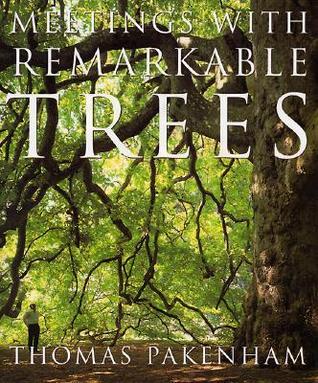
Thomas Pakenham's bestselling book of tree portraits. With this astonishing collection of tree portraits, Thomas Pakenham produced a new kind of tree book. The arrangement owed little to conventional botany. The sixty trees were grouped according to their own strong personalities: Natives, Travellers, Shrines, Fantasies and Survivors. From the ancient native trees, many of which are huge and immeasurably old, to the exotic newcomers from Europe, the East and North America, MEETINGS WITH REMARKABLE TREES captures the history and beauty of these entrancing living structures. Common to all these trees is their power to inspire awe and wonder. This is a lovingly researched book, beautifully illustrated with colour photographs, engravings and maps - a moving testimonial to the Earth's largest and oldest living structures.

"A stunning volume" ( Time ) and the most magnificent book on the world's trees published in years. The publication of Remarkable Trees of the World took American audiences by storm. Thomas Pakenham embarks on a five-year odyssey to most of the temperate and tropical regions of the world to photograph sixty trees of remarkable personality and presence: Dwarfs, Giants, Monuments, and Aliens; the lovingly tended midgets of Japan; the enormous strangler from India; and the 4,700-year "Old Methusalehs." American readers will be fascinated by Pakenham's first examination of North American trees, including the towering Redwoods of Sequoia and Yosemite, the gaunt Joshua Trees of Death Valley and the Bristlecone pines discovered in California's White Mountains.Many of these trees were already famous―champions by girth, height, volume or age―while others had never previously been caught by the camera. Pakenham's five-year odyssey, sweating it out with a 30 pound Linhof camera and tripod, took him to most of the temperate and many of the tropical regions of the world. Although North American trees dominate this book, Pakenham also trekked to remote regions in Mexico, all over Europe, parts of Asia including Japan, northern and southern Africa, Madagascar, Australia and New Zealand.Remarkable Trees of the World is a lavish work that will be treasured for generations by all those who marvel at nature. Color photographs throughout

The Year of Liberty: The History of the Great Irish Rebellion of 1798
by Thomas Pakenham
Rating: 3.9 ⭐
Now available for the first time in trade the newly revised, definitive account of the most important event in Irish history--the rebellion of 1798.

From the best-selling author of Remarkable Trees of the World , a celebration of the most extraordinary tree of them all. Standing tall on the sunburned plains of Africa and Australia, baobabs may be the oldest life forms on the planet. Many of the specimens still standing today have been around for well over two thousand years. Tremendous in size and bizarre in appearance, they have provided food, medicine, and places of refuge and worship to countless peoples, even serving as prisons and tombs on occasion. Long before European explorers opened up the African continent, the news of these "gnarled upside-down giants" had astonished the world of science and stoked the imagination of naturalists everywhere. Thomas Pakenham chronicles his personal encounters with the baobabs of Africa, Australia, Madagascar, and America and shares the countless superstitions and myths, as well as the often-strange history, that surround these enigmatic trees. With 60 color photos and 144 pages with color throughout, The Remarkable Baobab will be a great, and reasonably priced, gift book for the Christmas season.

Thomas Pakenham, indefatigable champion of trees, narrates a story of exploration and discovery, and of life-cycles that are longer than our own. Lavishly illustrated, The Company of Trees recounts his personal quest to establish a large arboretum at Tullynally, his forays to other tree-filled parks and plantations, his often hazardous seed-hunting expeditions, and his efforts to preserve magnificent old trees and historic woodlands.The book is structured in the form of a travel diary. Almost every chapter shelters stories about the life of his large trees. He takes us on a tour of Tullynally's demesne and its trees, evaluating the condition of the oaks, alders, ash and limes that were among the first plantings.He travels to the Tibetan border in search of a magnolia (magnolias are Pakenham's particular passion), to Eastern Patagonia to see the last remaining giants of the Monkey Puzzle tree, while the first of the Chinese-inspired gardens at Tullynally was planted entirely with seeds from south-west China. An expedition to Tibet's Tsangpo Gorge goes awry only to lead to a fruitful exploration of the Rongchu Valley, which yields more than 100 bags of seeds, including the Tibetan golden oak, the Tsangpo cypress and blue-stemmed maples. All of the collected trees and plants are thriving at Tullynally. Whether writing about the terrible storms breaking the backs of majestic trees which have stood sentinel for hundreds of years, or a fire in the 50-acre peat bog on Tullynally which threatens to spread to 'the main commercial spruce-woods to the west of the peat bog'; his fear of climate change and disease, or the sturdy young sapling giving him hope for the future, the book is never less than enthralling. Pakenham is a passionate writer, educator and entertainer, and brings both wit and wisdom to a subject of universal appeal.

Rasselas is a tale of the royal princes of Abyssinia, who were condemned to live on the prison-mountain of Wehni until they died or the order of succession called them to the throne. How much of this was truth and how much legend? The author of Meetings with Remarkable Trees, Thomas Pakenham traveled to Ethiopia to find out. The predicament of the prisoners had been even more melodramatic than previously surmised. And an incredible archeological discovery was a medieval church of the finest style ever recorded. Nearly 40 years after the story was published in 1959, Pakenham returned to the Mountain. In this edition, historical insight and new color photography are added to the original story. 176 pages (all in color), 9 1/2 x 11 3/8.

Dublin's turbulent history, its intensely literary and theatrical character of long literary lineage, its revolutionary ideals and heroes, and its ordinary life are all brought to life in this collection of letters, diaries and memoirs of travellers to the city and by Dubliners themselves. The extracts, from medieval times onwards, include Red Hugh O'Donnell's escape from Dublin Castle, James Joyce's plans for a novel while staying at the Martello Tower, and the seizure of the GPO by Irish volunteers during the Easter Rising. The book also includes gossip and story-telling in the humorous sketches of many famous Dubliners.

The Tree Hunters: How the Cult of the Arboretum Transformed Our Landscape
by Thomas Pakenham
Rating: 4.8 ⭐
For centuries, English country gentlemen had collected exotic pictures for their saloons and rare books for their libraries. By the end of the 17th century, they had begun to plant nurseries. Within the space of a few years thousands of new plantations enriched the British landscape, and demand was high for the most splendid maples and pines from the American colonies, cypresses and cedars from Europe and Lebanon, oriental plane from Greece and Turkey, with its romantic associations with Plato's Academy.How did these extraordinary plants make their way to the forests of Britain and Ireland? Who were the scholars and daredevils who combed the new and old worlds in search of green treasure? What crimes did they commit, and what price did they pay, to bring the world's charismatic megaflora to the gardens of home? In this exuberant history, Thomas Pakenham reveals the marvellous tales of adventure, discovery, rivalry and passion that created the modern British landscape.

Thomas Pakenham, no stranger to Africa with his award-winning books The Boer War and The Scramble for Africa, nor to remarkable trees with his bestselling Remarkable Trees of the World, combines his two interests on safari in Southern Africa. His particular quarry is the rare, the giant, the very old, the extraordinary, or the simply beautiful - from a giant baobab and a prickly quiver tree in Namibia to a glorious jacaranda in South Africa and sesame bushes attacked by elephants in Botswana. He uncovers trees written about by the great explorers of the past, or associated with magic, folklore, or ritual.The narrative accompanying each image interweaves the stories of Pakenham's own journey - at some moments scaling trees to escape from enraged wildlife, while at others standing in awe before a particular tree, connected by some primitive, atavistic bond - with those of the trees themselves, imbuing each with personality and presence. The result is a beautifully crafted blend of botany and social history, the product of a brilliant photographer, an original mind, and a superlative writer.


The Scramble for Africa astonished everyone.In 1880 most of the continent was ruled by Africans, and barely explored. By 1902, five European Powers (and one extraordinary individual) had grabbed almost the whole continent, giving themselves 30 new colonies and protectorates and 10 million square miles of new territory, and 110 million bewildered new subjects. Thomas Pakenham's story of the conquest of Africa is recognised as one of the finest narrative histories of the last few decades.



The Year of Liberty, the Story of the Great Irish Rebellion of 1798
by Thomas Pakenham
(The Year Of Liberty: The Great Irish Rebellion of 1789) [By: Pakenham, Thomas] [Apr, 2000]
by Thomas Pakenham
(The Company of Trees: A Year in a Lifetime's Quest) [By: Thomas Pakenham] [Sep, 2015]
by Thomas Pakenham

Remarkable Trees of the World DO NOT USE
by Thomas Pakenham
The Year of Liberty the Story of the Great Irich Rebellion of 1798
by Thomas Pakenham
1798
by Thomas Pakenham
THE YEAR OF LIBERTY
by Thomas Pakenham
. with slightly chipped dustjacket, 1969 Lierary guild clean bright copy
The year of liberty : the story of the great Irish Rebellion of 1798
by Thomas Pakenham

Afrika'nin Paylasimi
by Thomas Pakenham
Paperback. 16,00 / 24,00 cm. In Turkish. 784 p. Çevirmen : Dilan Pamuk Afrika'nin Paylasimi, pek çok yönüyle Batili gözün Afrika'yi nasil ötekilestirip yoksullastirdiginin yani sira insan disi olarak gördükleri kara kitayi nasil bir vahsetin içine çektiginin fotografidir açikçasi. ‘Muazzam, bilgece ve enfes' -Spectator ‘Pakenham, hikâyeyi hizini iyi ayarlayarak ve çekici bir okunurluk ile anlatiyor… Bir tarihçinin eline bundan daha muhtesem bir konu geçemez ve Pakenham bunun hakkini vermis… Devasa bir boyutta, usta bir sanatçinin tüm renkleri ve hâkimiyeti ile tasavvur edilmis' -Evening Standard ‘Koloniden metropole ve tekrar geriye dönmek suretiyle aksiyonu akici kilarak Pakenham bir kez daha, hikâyeyi bas döndürücü ve neredeyse bir film gibi anlatma yetenegini gözler önüne sermis' -Independent on Sunday ‘Ustaca, süratli ve karakter dolu' -TLS

Le tour du monde en 80 arbres
by Thomas Pakenham
Passionné par les arbres, et fort du succès international de Meetings with remarkable trees , Thomas Pakenham traque, photographie et recense les plus belles espèces du règne végétal, aux quatre coins de la planète. À travers des textes riches et de magnifiques photographies fourmillent des informations, des légendes, des anecdotes et des mythes, dépeignant ces 80 arbres hors du commun, témoins vivants de notre propre histoire depuis plusieurs siècles, voire plusieurs millénaires. L'ouvrage nous présente avec ferveur des spécimens extraordinaires, véritables personnages du règne végétal qui composent une galerie de portraits inoubliables où défilent le "Général Sherman" de la Sierra Nevada, en Californie - le plus gros arbre, voire le plus gros être vivant, au monde -, le cyprès de Tule, au Mexique, qui affiche un tour de taille de 58 mètres, mais aussi le "Old Methuselah", un pin de plus de 4 000 ans, ou encore les légendaires baobabs d'Afrique et les plus vieux arbres sacrés du Japon.

Rencontres avec des arbres remarquables
by Thomas Pakenham
Historien, auteur d'ouvrages qui ont fait date, Thomas Pakenham est aussi propriétaire terrien. Sur son domaine irlandais poussent plus de deux cents variétés d'arbres et il est président de The Irish Tree Society. C'est un arboriculteur passionné. Il nous parle ici de soixante arbres remarquables, choisis parmi les espèces indigènes ou exotiques, dont l'ancienneté, la bizzarrerie des formes, la majesté, l'histoire ou la légende font le charme de ce livre.

µrboles excepcionales del mundo
by Thomas Pakenham
Sesenta árboles únicos y excepcionales elegidos por su acentuada personalidad o su originalidad. Árboles clasificados en Gigantes y Enanos, Matusalenes, Santuarios, Sueños, Amantes y Bailarines, Espectros y Árboles en peligro. Obra indispensable para aquellos que sepan apreciar las maravillas de la naturaleza. El espíritu de los exploradores del siglo XIX permanece vivo en el historiador británico Thomas Pakenham. Después del éxito internacional de su obra anterior, una maravillosa colección de sesenta árboles o grupos de árboles del Reino Unido e Irlanda, decidió proseguir y fotografiar otros sesenta árboles únicos de todo el planeta. De hecho, una buena parte de estos árboles eran ya célebres por uno u otro motivo (el grosor del tronco, su altura, su volumen o su edad), aunque también los hay que nunca antes habían sido inmortalizados por cámara fotográfica alguna. A pesar del profundo conocimiento de que hace gala el autor, el libro resultante poco tiene que ver con las obras de botánica convencionales. El criterio seguido viene marcado por los propios rasgos característicos de los árboles. Un espléndido libro que obsequia al lector con la prosa y las fotografías del autor de una calidad excepcional. Sin duda, será una de esas obras que pasará de generación en generación entre los amantes de la naturaleza.