
Don DeLillo
Donald Richard DeLillo is an American novelist, short story writer, playwright, screenwriter and essayist. His works have covered subjects as diverse as television, nuclear war, the complexities of language, art, the advent of the Digital Age, mathematics, politics, economics, and sports. DeLillo was already a well-regarded cult writer in 1985, when the publication of White Noise brought him widespread recognition and the National Book Award for fiction. He followed this in 1988 with Libra, a novel about the Kennedy assassination. DeLillo won the PEN/Faulkner Award for Mao II, about terrorism and the media's scrutiny of writers' private lives, and the William Dean Howells Medal for Underworld, a historical novel that ranges in time from the dawn of the Cold War to the birth of the Internet. He was awarded the 1999 Jerusalem Prize, the 2010 PEN/Saul Bellow Award for Achievement in American Fiction in 2010, and the 2013 Library of Congress Prize for American Fiction. DeLillo has described his themes as "living in dangerous times" and "the inner life of the culture." In a 2005 interview, he said that writers "must oppose systems. It's important to write against power, corporations, the state, and the whole system of consumption and of debilitating entertainments... I think writers, by nature, must oppose things, oppose whatever power tries to impose on us."
30 Books Written

Falling Man is a magnificent, essential novel about the event that defines turn-of-the-century America. It begins in the smoke and ash of the burning towers and tracks the aftermath of this global tremor in the intimate lives of a few people.There is September 11, and then there are the days after, and finally the years. Falling Man is a magnificent, essential novel about the event that defines turn-of-the-century America. It begins in the smoke and ash of the burning towers and tracks the aftermath of this global tremor in the intimate lives of a few people. First there is Keith, walking out of the rubble into a life that he’d always imagined belonged to everyone but him. Then Lianne, his estranged wife, memory-haunted, trying to reconcile two versions of the same shadowy man. And their small son Justin, standing at the window, scanning the sky for more planes. These are lives choreographed by loss, grief, and the enormous force of history. Brave and brilliant, Falling Man traces the way the events of September 11 have reconfigured our emotional landscape, our memory and our perception of the world. It is cathartic, beautiful, and heartbreaking.

A troubling satire of the romantic myth of stardom and the empty heart of rock and roll, more relevant than ever in our celebrity-obsessed times.Bucky Wunderlick is a rock and roll star. Dissatisfied with a life that has brought fame and fortune, he suddenly decides he no longer wants to be a commodity. He leaves his band mid-tour and holes up in a dingy, unfurnished apartment in Great Jones Street. Unfortunately, his disappearing act only succeeds in inflaming interest. As faithful fans await messages, Bucky encounters every sort of roiling force he is trying to escape.DeLillo’s third novel is more than a musical satire: it probes the rights of the individual, foreshadows the struggle of the artist within a capitalist world and delivers a scathing portrait of our culture’s obsession with the lives of the few.


Set against the backdrop of a lush and exotic Greece, The Names is considered the book which began to drive "sharply upward the size of his readership" (Los Angeles Times Book Review). Among the cast of DeLillo's bizarre yet fully realized characters in The Names are Kathryn, the narrator's estranged wife; their son, the six-year-old novelist; Owen, the scientist; and the neurotic narrator obsessed with his own neuroses. A thriller, a mystery, and still a moving examination of family, loss, and the amorphous and magical potential of language itself, The Names stands with any of DeLillo's more recent and highly acclaimed works. "The Names not only accurately reflects a portion of our contemporary world but, more importantly, an original world of its own is created."--Chicago Sun-Times"DeLillo sifts experience through simultaneous grids of science and poetry, analysis and clear sight, to make a high-wire prose that is voluptuously stark."--Village Voice Literary Supplement"DeLillo verbally examines every state of consciousness from eroticism to tourism, from the idea of America as conceived by the rest of the world, to the idea of the rest of the world as conceived by America, from mysticism to fanaticism."--New York Times

Jeffrey Lockhart’s father, Ross, is a billionaire in his sixties, with a younger wife, Artis, whose health is failing. Ross is the primary investor in a remote and secret compound where death is exquisitely controlled and bodies are preserved until a future time when biomedical advances and new technologies can return them to a life of transcendent promise. Jeff joins Ross and Artis at the compound to say “an uncertain farewell” to her as she surrenders her body.Don DeLillo’s seductive, spectacularly observed and brilliant new novel weighs the darkness of the world against the beauty and humanity of everyday life. It is a glorious, soulful work from one of the great writers of our time.

The National Book Award-winning classic from the author of Underworld and Libra, now a Netflix film starring Adam Driver, Don Cheadle, and Greta GerwigWhite Noise tells the story of Jack Gladney, his fourth wife, Babette, and four ultramodern offspring as they navigate the rocky passages of family life to the background babble of brand-name consumerism. When an industrial accident unleashes an "airborne toxic event," a lethal black chemical cloud floats over their lives. The menacing cloud is a more urgent and visible version of the "white noise" engulfing the Gladneys—radio transmissions, sirens, microwaves, ultrasonic appliances, and TV murmurings—pulsing with life, yet suggesting something ominous.Part of the Penguin Orange Collection, a limited-run series of twelve influential and beloved American classics in a bold series design offering a modern take on the iconic Penguin paperbackWinner of the 2016 AIGA + Design Observer 50 Books | 50 Covers competition

While Eisenstein documented the forces of totalitarianism and Stalinism upon the faces of the Russian peoples, DeLillo offers a stunning, at times overwhelming, document of the twin forces of the Cold War and American culture, compelling that "swerve from evenness" in which he finds events and people both wondrous and horrifying.Underworld opens with a breathlessly graceful prologue set during the final game of the Giants-Dodgers pennant race in 1951. Written in what DeLillo calls "super-omniscience" the sentences sweep from young Cotter Martin as he jumps the gate to the press box, soars over the radio waves, runs out to the diamond, slides in on a fast ball, pops into the stands where J. Edgar Hoover is sitting with a drunken Jackie Gleason and a splenetic Frank Sinatra, and learns of the Soviet Union's second detonation of a nuclear bomb. It's an absolutely thrilling literary moment. When Bobby Thomson hits Branca's pitch into the outstretched hand of Cotter—the "shot heard around the world"—and Jackie Gleason pukes on Sinatra's shoes, the events of the next few decades are set in motion, all threaded together by the baseball as it passes from hand to hand."It's all falling indelibly into the past," writes DeLillo, a past that he carefully recalls and reconstructs with acute grace. Jump from Giants Stadium to the Nevada desert in 1992, where Nick Shay, who now owns the baseball, reunites with the artist Kara Sax. They had been brief and unlikely lovers 40 years before, and it is largely through the events, spinoffs, and coincidental encounters of their pasts that DeLillo filters the Cold War experience. He believes that "global events may alter how we live in the smallest ways," and as the book steps back in time to 1951, over the following 800-odd pages, we see just how those events alter lives. This reverse narrative allows the author to strip away the detritus of history and pop culture until we get to the story's pure elements: the bomb, the baseball, and the Bronx. In an epilogue as breathless and stunning as the prologue, DeLillo fast-forwards to a near future in which ruthless capitalism, the Internet, and a new, hushed faith have replaced the Cold War's blend of dread and euphoria.Through fragments and interlaced stories—including those of highway killers, artists, celebrities, conspiracists, gangsters, nuns, and sundry others—DeLillo creates a fragile web of connected experience, a communal Zeitgeist that encompasses the messy whole of five decades of American life, wonderfully distilled.

It is a stunningly eventful day in the life of Eric Packer, a multi-billionaire who has recently married the heiress of a vast European fortune. A violent protest is being staged by anti-globalist groups and Eric fears that he may be a target. He is very much the target - but not by the protestors.

"One of the most intelligent, grimly funny voices to comment on life in present-day America" (The New York Times), Don DeLillo presents an extraordinary new novel about words and images, novelists and terrorists, the mass mind and the arch-individualist. At the heart of the book is Bill Gray, a famous reclusive writer who escapes the failed novel he has been working on for many years and enters the world of political violence, a nightscape of Semtex explosives and hostages locked in basement rooms. Bill's dangerous passage leaves two people stranded: his brilliant, fixated assistant, Scott, and the strange young woman who is Scott's lover—and Bill's.

The Body Artist begins with normality: breakfast between a married couple, Lauren and Rey, in their ramshackle rented house on the New England coast. Recording their delicate, intimate, half-complete thoughts and words, Don DeLillo proves himself a stunningly unsentimental observer of our idiosyncratic relationships. But after breakfast, Rey makes a decision that leaves Lauren utterly alone, or seems to.As Lauren, the body artist of the title, becomes strangely detached from herself and the temporal world, the novel becomes an exploration of a highly abnormal grieving process; a fascinating exposé of 'who we are when we are not rehearsing who we are'; and a rarefied study of trauma and creativity, absence and presence, isolation and communion.

From one of the most dazzling and essential voices in American fiction, a timely and compelling novel set in the near future about five people gathered together in a Manhattan apartment, in the midst of a catastrophic event.Don DeLillo completed this novel just weeks before the advent of Covid-19. The Silence is the story of a different catastrophic event. Its resonances offer a mysterious solace.It is Super Bowl Sunday in the year 2022. Five people, dinner, an apartment on the east side of Manhattan. The retired physics professor and her husband and her former student waiting for the couple who will join them from what becomes a dramatic flight from Paris. The conversation ranges from a survey telescope in North-central Chile to a favorite brand of bourbon to Einstein's 1912 Manuscript on the Special Theory of Relativity.Then something happens and the digital connections that have transformed our lives are severed.What follows is a dazzling and profoundly moving conversation about what makes us human. Never has the art of fiction been such an immediate guide to our navigation of a bewildering world. Never have DeLillo's prescience, imagination, and language been more illuminating and essential.

Don DeLillo looks into the mind and heart of a "defense intellectual," one of the men involved in the management of the country's war machine.Don DeLillo has been "weirdly prophetic about twenty-first-century America" (The New York Times Book Review). In his earlier novels, he has written about conspiracy theory, the Cold War and global terrorism. Now, in Point Omega, he looks into the mind and heart of a "defense intellectual", one of the men involved in the management of the country's war machine. Richard Elster was a scholar—an outsider—when he was called to a meeting with government war planners, asked to apply "ideas and principles to such matters as troop deployment and counterinsurgency". We see Elster at the end of his service. He has retreated to the desert, "somewhere south of nowhere", in search of space and geologic time. There he is joined by a filmmaker, Jim Finley, intent on documenting his experience. Finley wants to persuade Elster to make a one-take film, Elster its single character—"Just a man and a wall."Weeks later, Elster's daughter Jessica visits—an "otherworldly" woman from New York, who dramatically alters the dynamic of the story. The three of them talk, train their binoculars on the landscape, and build an odd, tender intimacy, something like a family. Then a devastating event throws everything into question. In this compact and powerful novel, it is finally a lingering human mystery that haunts the landscape of desert and mind.

En nous lançant aux trousses de David Bell, l’inquiet et séduisant narrateur du roman, Don DeLillo nous entraîne dans les arcanes d’une société où l’on bascule facilement du confort de l’establishment au vagabondage, sous l’influence de mythes, fantasmes et obsessions auxquels se raccrochent les personnages irrésistibles qui peuplent cette aventure.Premier roman de l’écrivain reconnu qu’est aujourd’hui Don DeLillo, Americana apporte une nouvelle preuve que l’Amérique est encore et toujours à découvrir.

From one of the greatest writers of our time, a collection of short stories, written between 1979 and 2011; chronicling—and foretelling—three decades of American culture.From one of the greatest writers of our time, his first collection of short stories, written between 1979 and 2011, chronicling—and foretelling—three decades of American lifeSet in Greece, the Caribbean, Manhattan, a white-collar prison and outer space, these nine stories are a mesmerizing introduction to Don DeLillo’s iconic voice, from the rich, startling, jazz-infused rhythms of his early work to the spare, distilled, monastic language of the later stories.In “Creation,” a couple at the end of a cruise somewhere in the West Indies can’t get off the island—flights canceled, unconfirmed reservations, a dysfunctional economy. In “Human Moments in World War III,” two men orbiting the earth, charged with gathering intelligence and reporting to Colorado Command, hear the voices of American radio, from a half century earlier. In the title story, Sisters Edgar and Grace, nuns working the violent streets of the South Bronx, confirm the neighborhood’s miracle, the apparition of a dead child, Esmeralda.Nuns, astronauts, athletes, terrorists and travelers, the characters in The Angel Esmeralda propel themselves into the world and define it. DeLillo’s sentences are instantly recognizable, as original as the splatter of Jackson Pollock or the luminous rectangles of Mark Rothko. These nine stories describe an extraordinary journey of one great writer whose prescience about world events and ear for American language changed the literary landscape.

Don DeLillo's second novel, a sort of Dr. Strangelove meets North Dallas Forty, solidified his place in the American literary landscape in the early 1970s. The story of an angst-ridden, war-obsessed running back for Logos College in West Texas, End Zone is a heady and hilarious conflation of Cold War existentialism and the parodied parallelism of battlefield/sports rhetoric. When not arguing nuclear endgame strategy with his professor, Major Staley, narrator Gary Harkness joins a brilliant and unlikely bunch of overmuscled gladiators on the field and in the dormitory. In characteristic fashion, DeLillo deliberately undermines the football-is-combat cliché by having one of his characters explain: "I reject the notion of football as warfare. Warfare is warfare. We don't need substitutes because we've got the real thing." What remains is an insightful examination of language in an alien, postmodern world, where a football player's ultimate triumph is his need to play the game.
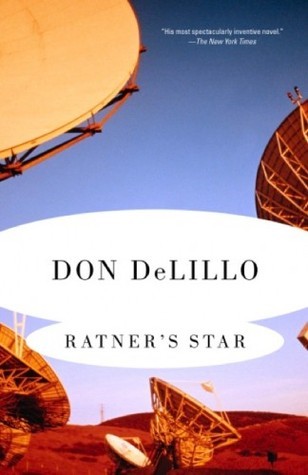
Billy Twillig has won the first Nobel Prize ever to be given in mathematics. Set in the near future, this book charts an innocent's education when Billy is sent to live in the company of 30 Nobel laureates and he is asked to decipher transmissions from outer space.

DeLillo's Running Dog, originally published in 1978, follows Moll Robbins, a New York city journalist trailing the activities of an influential senator. In the process she is dragged into the black market world of erotica and shady, infatuated men, where a cat-and-mouse chase for an erotic film rumored to 'star' Adolf Hitler leads to trickery, maneuvering, and bloodshed. With streamlined prose and a thriller's narrative pace, Running Dog is a bright star in the modern master's early career.

In this remarkable novel of menace and mystery Pammy and Lyle Wynant are an attractive, modern couple who seem to have it all. Yet behind their "ideal" life is a lingering boredom and quiet desperation which leads both of them into separate but equally fatal adventures. And still they remain untouched, "players" indifferent to the violence that surrounds them, and that they have helped to create.

"There's a long drive. It's gonna be. I believe. The Giants win the pennant. The Giants win the pennant. The Giants win the pennant. The Giants win the pennant." -- Russ Hodges, October 3, 1951 On the fiftieth anniversary of "The Shot Heard Round the World," Don DeLillo reassembles in fiction the larger-than-life characters who on October 3, 1951, witnessed Bobby Thomson's pennant-winning home run in the bottom of the ninth inning. Jackie Gleason is razzing Toots Shor in Leo Durocher's box seats; J. Edgar Hoover, basking in Sinatra's celebrity, is about to be told that the Russians have tested an atomic bomb; and Russ Hodges, raw-throated and excitable, announces the game -- the Giants and the Dodgers at the Polo Grounds in New York. DeLillo's transcendent account of one of the iconic events of the twentieth century is a masterpiece of American sportswriting.

A man sets out on an ordinary business trip to Valparaiso, Indiana. It turns out to be a mock-heroic journey toward identity and transcendence. This is Don DeLillo's second play and it is funny, sharp, and deep-reaching. Its characters tend to have needs and desires shaped by the forces of broadcast technology. This is the way we talk to each other today. This is the way we tell each other things, in public, before listening millions, that we don't dare to say privately. This is also a play that makes obsessive poetry out of the language of routine airline announcements and the flow of endless information.


Love-Lies-Bleeding, Don DeLillo's third play, is a daring, profoundly compassionate story about life, death, art and human connection. Three people gather to determine the fate of the man who sits in a straight-backed chair saying nothing. He is Alex Macklin, who gave up easel painting to do land art in the southwestern desert, and he is seventy now, helpless in the wake of a second stroke. The people around him are the bearers of a complicated love, his son, his young wife, the older woman—his wife of years past—who feels the emotional tenacity of a love long-ended. It is their question to answer. When does life end, and when should it end? In this remote setting, without seeking medical or legal guidance, they move unsteadily toward last things. Luminous, spare, unnervingly comic and always deeply moving, Love-Lies-Bleeding explores a number of perilous questions about the value of life and how we measure it.


In novel after award-winning novel, Don DeLillo (b. 1936) exhibits his deep distrust of language and the way it can conceal as much as it reveals. Not surprisingly, DeLillo treats interviews with the same care and caution. For years, he shunned them altogether. As his fiction grew in popularity, especially with White Noise, and he began to confront the historical record of our times in books such as Libra, DeLillo felt compelled to make himself available to his readers. Despite claims by interviewers about his elusiveness, he now hides in plain sight.In Conversations with Don DeLillo, the renowned author makes clear his distinctions between historical fact and his own creative leaps, especially in his masterwork, Underworld. There it seems the true events are unbelievable and imaginary ones not. Throughout long profiles and conversations ranging from 1982 to 2001 and published in the New Yorker, the Paris Review, and Rolling Stone, DeLillo parries personal inquiries. He counters with the details of his work habits, his understanding of the novelist's role in the world, and his sense of our media-saturated culture. A number of interviews detail DeLillo's less-heralded work in the theater, from The Day Room to a recent production of Valparaiso, itself a stinging satire on the interviewing process.DeLillo also finds time to comment on his nonliterary passions, primarily the movies and baseball. Lee Harvey Oswald also inspires much extraliterary discussion, not just as the subject of Libra, but as a figure who, like the terrorists always lurking in DeLillo's fictions, captures our attention in ways novelists cannot. For DeLillo, a writer who eschews celebrity, the ultimate response might be the one he offered in his very first interview, paraphrasing Joyce: "Silence, exile, cunning, and so on. It's my nature to keep quiet about most things." Fortunately for his many readers and fans, he proves himself here to be a talker.

Don DeLillo rastrea parecidos de familia entre tres películas, una novela y una vieja foto. Las películas son Atanarjuat, la leyenda del hombre veloz (Zacharias Kunuk, 2001), Treinta y dos cortometrajes sobre Glenn Gould (François Girard, 1993) y Thelonius Monk: Straight, No Chaser (Charlotte Zwerin, 1988). La novela es "El malogrado" (1983) de Thomas Bernhard. La fotografía de 1953 que cuelga de la pared de la habitación donde DeLillo trabaja incluye a Monk al piano, Haynes a la batería, Mingus en el bajo y Charlie Parker al saxo.

Es este un libro donde se realiza una breve e intensa reflexión sobre el atentado ocurrido el 11 de Septiembre contra las Torres Gemelas. El texto, que combina la emotividad de los hechos con la descripción del dolor de las víctimas, constituye un documento valiosísimo sobre uno de los episodios más terribles de la historia reciente y, al mismo tiempo, una pieza de un valor literario extraordinario que, con valentía y delicadeza, analiza el atentado como síntoma de una enfermedad religiosa, tecnológica, moral y económica: la guerra entre el pasado y el futuro.


https://granta.com/human-moments-in-w...Fiction, Short StoryA note about Vollmer. He no longer describes the earth as a library globe or a map that has come alive, as a cosmic eye staring into deep space.

Der Zeit enthoben sein - wer würde davon nicht träumen? Mit diesen Geschichten gelingt es federleicht, denn sie setzen die Uhr außer Kraft: Da gibt es Glücksoasen, Sonnenjahre und eine fünfte Jahreszeit. Eine Extremtour ans Kap Hoorn und Eskapaden auf der Parkbank. Ja selbst ein Sommerlager auf der Marihuanaplantage. Es schenken überraschende Lesemomente: Erling Kagge, T. C. Boyle und Kurt Tucholsky, Isabelle Autissier, George Orwell, Jorge Luis Borges, Martin Suter und viele mehr. Mit einer exklusiven Geschichte von Grégoire Hervier

*short“They show it because it exists, because they have to show it, because this is why they’re out there.”The short story "Videotape" revolves around a man at home attentively watching the video; he continuously called on his wife to watch the video with him. The Videotape represents how everyone is being desensitized to violence, how there is a growing obsession with violence, and also how quickly life can be taken away.