
Rebecca West
Cicely Isabel Fairfield, known by her pen name Rebecca West, or Dame Rebecca West, DBE was an English author, journalist, literary critic, and travel writer. She was brought up in Edinburgh, Scotland, where she attended George Watson's Ladies College. A prolific, protean author who wrote in many genres, West was committed to feminist and liberal principles and was one of the foremost public intellectuals of the twentieth century. She reviewed books for The Times, the New York Herald Tribune, the Sunday Telegraph, and the New Republic, and she was a correspondent for The Bookman. Her major works include Black Lamb and Grey Falcon (1941), on the history and culture of Yugoslavia; A Train of Powder (1955), her coverage of the Nuremberg trials, published originally in The New Yorker; The Meaning of Treason, later The New Meaning of Treason, a study of World War II and Communist traitors; The Return of the Soldier, a modernist World War I novel; and the "Aubrey trilogy" of autobiographical novels, The Fountain Overflows, This Real Night, and Cousin Rosamund. Time called her "indisputably the world's number one woman writer" in 1947. She was made CBE in 1949, and DBE in 1959, in recognition of her outstanding contributions to British letters.
30 Books Written
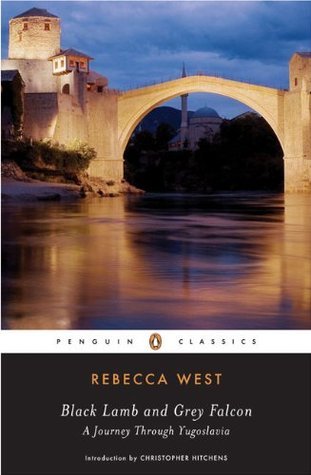
Written on the brink of World War II, Rebecca West's classic examination of the history, people, and politics of Yugoslavia illuminates a region that is still a focus of international concern. A magnificent blend of travel journal, cultural commentary, and historical insight, Black Lamb and Grey Falcon probes the troubled history of the Balkans, and the uneasy relationships amongst its ethnic groups. The landscape and the people of Yugoslavia are brilliantly observed as West untangles the tensions that rule the country's history as well as its daily life.

Writing her first novel during World War I, West examines the relationship between three women and a soldier suffering from shell-shock. This novel of an enclosed world invaded by public events also embodies in its characters the shifts in England's class structures at the beginning of the twentieth century.

The lives of the talented Aubrey children have long been clouded by their father's genius for instability, but his new job in the London suburbs promises, for a time at least, reprieve from scandal and the threat of ruin. Mrs. Aubrey, a former concert pianist, struggles to keep the family afloat, but then she is something of a high-strung eccentric herself, as is all too clear to her daughter Rose, through whose loving but sometimes cruel eyes events are seen. Still, living on the edge holds the promise of the unexpected, and the Aubreys, who encounter furious poltergeists, turn up hidden masterpieces, and come to the aid of a murderess, will find that they have adventure to spare.In The Fountain Overflows, a 1957 best seller, Rebecca West transmuted her own volatile childhood into enduring art. This is an unvarnished but affectionate picture of an extraordinary family, in which a remarkable stylist and powerful intelligence surveys the elusive boundaries of childhood and adulthood, freedom and dependency, the ordinary and the occult.

The exquisitely written sequel to Rebecca West's classic The Fountain Overflows.In the second novel of Rebecca West's Cousin Rosamund trilogy, Rose Aubrey gives us an intimate, unforgettable picture of the Aubrey family, who now lead an idyllic, almost carefree, life in England in the years before World War I. The family has acquired some money. Rose and Mary, the twins, exist for their music. Their brother, Richard Quin, appears destined for literary greatness at Oxford. Brilliant conversation, their forte, is at a premium. The Aubreys do not perceive the dark foreshadowings contained in their father's rumored death, Cordelia's rejection of music for marriage, and their quiet cousin Rosamund's increasingly important role in the family. As the "Real Night" of World War I descends, painful changes await the Aubrey family and all of England.

The touching sequel to The Fountain Overflows and This Real Night, in which Rose and Mary are forced into maturity when Rosamund marries a man of dubious morals.

Through a vivid canvas layered with intrigue, conspiracy and murder, Rebecca West has created a story that is at once a family saga, a political thriller, a philosophical drama and a historical novel.Rebecca West’s gripping psychological mystery—part thriller, part historical novel—The Birds Fall Down takes readers inside the intrigue of revolutionaries preparing to overthrow an empire. During early revolutionary stirrings in Russia, after an unexpected turn of events, Laura Rowan, the coddled granddaughter of an exiled British nobleman, becomes her grandfather’s sole companion on a fateful train ride. In France, a young revolutionary approaches Laura and her grandfather with information that will turn her world upside down, and their travels become a thrilling journey into the heart of the struggle against Tsarist Russia.In this suspenseful novel, West brings to life a battle between entitled imperials and the passionate, savvy communist revolutionaries who dare to face them.

Harriet Hume’s unchanging beauty and commitment to her art stand in stark contrast to Arnold Condorex's more worldly goals. After a romantic tryst, she discovers that she can read his mind, but Arnold, with his sights set on moving up in the world, quickly parts from the mysterious lady. As they encounter each other over the years, Harriet's intuitive powers continue to unsettle Arnold, opening his eyes to the darker elements of his political and financial aspirations, even as he remains drawn to her. Beautifully drawn and filled with magical touches, West's fantasy explores innate and learned gender roles, as her characters uncover the mystery surrounding their otherworldly connection. Dame Rebecca West (1892–1983) is one of the most critically acclaimed English novelists, journalists, and literary critics of the twentieth century. Uniquely wide-ranging in subject matter and breathtakingly intelligent in her ability to take on the oldest and knottiest problems of human relations, West was a thoroughly entertaining public intellectual. In her eleven novels, beginning with The Return of the Soldier, she explored topics including feminism, socialism, love, betrayal, and identity. West's prolific journalistic works include her coverage of the Nuremberg trials for the New Yorker, published as A Train of Powder, and Black Lamb and Grey Falcon, her epic study of Yugoslavia. She had a son with H.G. Wells, and later married banker Henry Maxwell Andrews, continuing to write, and publish, until she died in London at age ninety.

Isabelle, a wealthy American widow, arrives in France to restart her life and discovers she has her choice of eligible suitors. Torn between a placid liaison with a southerner and a tortuous affair with a Frenchman, Isabelle's plans suddenly take an unexpected turn that will ultimately lead her to a love that will force her to reconsider the implications of her affluent existence. With her signature wit and wisdom, West presents a captivating ode to marriages depth and the romance of the bond between husband and wife.

Like most all of Rebecca West's reportage, A Train of Powder approaches great literature. Written between 1946 and 1954, these accounts of four controversial trials explore the nature of crime and punishment, innocence and guilt, retribution and forgiveness. The centerpiece of the book is "Greenhouse with Cyclamens," a three-part essay on the Nuremberg trials written with precision, clarity, and daring insight. She also reports on two particularly brutal murder trials - one for a lynching in North Carolina, the other for a "torso murder" in England - and the espionage trial of a British telegrapher.Throughout, the question of guilt inspires Ms. West to feats of psychological detection wherein unerring craftsmanship and a powerful narrative sense combine to a high purpose - the pursuit of truth.

West’s acclaimed examination of traitors, this gripping profile takes readers inside World War II spy rings and gets to the heart of what it means to betray one’s country Throughout her career, Rebecca West dug into psyches, real and fictional, to try to understand the meaning of betrayal. In the aftermath of World War II, West was incensed when several wartime turncoats were tried with seeming indifference—and worse, sympathy—from the British public. In exploring these traitors’ origins, crimes, and motivations, West exposes how class division, greed, and discrimination can taint loyalties and redraw the relationships between individuals and their fatherland. A fascinating book, The Meaning of Treason combines the intrigue of a spy novel with West’s classic, careful dissection of man’s moral struggles.


The Saga of the Century Trilogy: The Fountain Overflows, This Real Night, and Cousin Rosamund
by Rebecca West
Rating: 4.1 ⭐
Three eloquent and powerful semi-autobiographical novels about the multi-talented Aubrey family striving to find their place in the world In The Fountain Overflows, Papa Aubrey’s wife and twin daughters, Mary and Rose, are piano prodigies, his young son, Richard Quin, is a lively boy, and his eldest daughter, Cordelia, is a beautiful and driven young woman with musical aspirations. But the talented and eccentric Aubrey family rarely enjoys a moment of harmony, as its members struggle to overcome the effects of their patriarch’s spendthrift ways. Now they must move so that their father can find stable employment. Despite the daunting odds, the Aubreys hope that art will save them from the cacophony of a life sliding toward poverty. In The Real Night, a talented musician and her kin ponder what being young women on their own will entail. Abandoned by their feckless father, Rose and her family must move beyond their comfortable drawing room to discover a world of kind patrons, music teachers, and concert hall acclaim, but also domestic strife, anti-Semitism, and social pressure to marry. Set before World War I, Rebecca West’s intimate, eloquent family portrait brings to life a time when women recognized their own voices and the joys of living off one’s own talents. In Cousin Rosamund, Mary and Rose Aubrey have found success as accomplished pianists in the years after the war. But despite their travels and material rewards, they remain apart from society. When their cherished cousin Rosamund surprises them by marrying a man they feel is beneath her, the sisters must reconsider what love means to them and how they can find a sense of spiritual wellbeing on their own, without the guidance of their family.

Mlaga. 23 cm. 63 p. Encuadernacin en tapa blanda de editorial ilustrada. West, Rebecca 1892-1983. Edicin de Yolanda Morat ; traduccin y notas, Yolanda Morat. Ttulo Indissoluble matrimony .. Este libro es de segunda mano y tiene o puede tener marcas y seales de su anterior propietario. 9788461383122

In these four short novels set in America, England and Paris, Rebecca West explores the lives and relationships of rich women and men who are ruled by 'the harsh voice we hear when money talks, or hate'. There is Josie, a flower of American girlhood with boundless ambition for wealth. There is Etienne de Sefavenac, a dilettante French aristocrat whose courtly stratagems are intended to ensnare Nancy Sarle - a plain American businesswoman. There is Alice Pemberton, a sensible Englishwoman - the very salt of the earth - in her own estimation. And lastly there is Sam Hartley, an American businessman who has fought his way to riches with his wife at his side, but whose life is now haunted by visions of beautiful young women.

Rebecca West’s never-before-published Survivors in Mexico brings to readers a daring and provocative work by a major twentieth-century author. An exhilarating exploration of Mexican history, religion, art, and culture, it explores the inner lives of figures ranging from Cortés and Montezuma to Diego Rivera, Frida Kahlo, and Leon Trotsky.“Witty and entertaining, substantive and reflective, insightful and well documented, in splendid and uncommon prose, Rebecca West’s travelogue . . . is a model of British sophistication and knack for seeing the other.”—Jorge G. Castañeda, New York Times Book Review “An enthrallingly readable book . . . full of sharp impressions and stimulating insights.”—Merle Rubin, Los Angeles Times Book Review“Luscious reading. . . . The book succeeds beautifully as a travelogue thanks to West’s intellect and experience, with Mexico serving as the vehicle for it all.”—Sam Quinones, Washington Post Book World

Never completed or previously published, Sunflower is a fictional record of a shattering period in West's the end of her lengthy relationship with H. G. Wells and her misdirected passion for the colorful Lord Beaverbrook. The novel's protagonist is Sybil "Sunflower" Fassendyll, actress and popular beauty of the 1920s, who leads a miserable private life despite wealth and fame. Insecure without male admiration, Sunflower struggles with the increasing aridity of her 10-year liaison with brilliant, married Lord Essington. At last she breaks with him in hopes of conventional happiness with Francis Pitt, a charismatic public figure. Here the plot stops, but West's outline confirms that Sunflower's romantic fortune would parallel her own. A fascinating psychological portrait of female anxiety.

This is a pre-1923 historical reproduction that was curated for quality. Quality assurance was conducted on each of these books in an attempt to remove books with imperfections introduced by the digitization process. Though we have made best efforts - the books may have occasional errors that do not impede the reading experience. We believe this work is culturally important and have elected to bring the book back into print as part of our continuing commitment to the preservation of printed works worldwide.

A dynamic selection of previously uncollected writing from Rebecca West, hailed as one of the greatest woman writers of the 20th century. West's wit and clear-eyed observations explore many of the great leaders and thinkers of modern times -- from Winston Churchill and Vladimir Nabokov to Aldous Huxley, Bertrand Russell and many others. Essays include a wrenching description of everyday life in wartime Britain and an excerpt from her last novel, "Survivors in Mexico," which vividly imagines the life and times of Montezuma and his fateful encounter with Cortes.

Radio Treason: The Trials of Lord Haw-Haw, the British Voice of Nazi Germany
by Rebecca West
Rating: 3.6 ⭐
The gripping courtroom drama of a Brooklyn-born Englishman who became the voice of Nazi Germany, by “one of the most brilliant and erudite journalists of the century” (The New York Times).In 1945, The New Yorker commissioned star reporter Rebecca West to cover the London trial of William Joyce, who stood accused by the British government of aiding the Third Reich. Captured by British forces in Germany, Joyce was alleged to have hosted a radio program, Germany Calling, devoted to Nazi propaganda and calls for a British surrender.The legal case against Joyce (known as “Lord Haw-Haw” for his supposedly posh accent) proved to be tenuous and full of uncertainties. Yet each new piece of evidence added to West’s timeless portrait of a social reject who turned to the far right, who rose through the ranks without ever being liked, and who sought validation through a set of shared hatreds—of elites, of communists, and especially of Jews.As a work of psychological suspense, Rebecca West’s Radio Treason anticipates Truman Capote, Janet Malcolm, and Joan Didion at their best. As a study in political extremism, as Katie Roiphe writes in her foreword, “It is as if Lord Haw-Haw has been transported from her time into ours.”

VIKING Date of 1982 Hardcover This is the OVERSIZED (it barely fit in my scanner!) only statedViking Edition from 1982. Other than a clipped back cardholder flyleaf (ex libris) and cover to spine could use a bit of tape (fully intact!), both the mylar-covered DJ and the book are in very good condition. There are no rips, tears, etc.---and the pages and binding are tight (see photo). ** All books listed as FIRST EDITIONS are stated by the publisher in words or number lines--or--only stated editions that include only the publisher and publication date. Check my feedback to see that I sell exactly as I describe. So bid now for this magnificent, impossible-to-find HISTORY COLLECTIBLE.

From the time that George Bernard Shaw remarked that "Rebecca West could handle a pen as brilliantly as ever I could and much more savagely," West's writings and her politics have elicited strong reactions. This collection of her letters—the first ever published—has been culled from the estimated ten thousand she wrote during her long life. The more than two hundred selected letters follow this spirited author, critic, and journalist from her first feminist campaign for woman suffrage when she was a teenager through her reassessments of the twentieth century written in 1982, in her ninetieth year.The letters, which are presented in full, include correspondence with West's famous lover H. G. Wells and with Shaw, Virginia Woolf, Emma Goldman, Noël Coward, any many others; offer pronouncements on such contemporary authors as Norman Mailer, Nadine Gordimer, and Arthur Schlesinger, Jr.; and provide new insights into her battles against misogyny, fascism, and communism. West deliberately fashions her own biography through this intensely personal correspondence challenging rival accounts of her groundbreaking professional career, her frustratinglove life, and her tormented family relations. Engrossing to read, the collection sheds new light on this important figure and her social and literary milieu. About the Author: Bonnie Kim Scott is a professor and director of graduate studies in English at the University of Delaware.

Rebecca West’s gripping chronicle of England’s World War II traitors, expanded and updated for the Cold War era In The Meaning of Treason, Rebecca West tackled not only the history and facts behind the spate of World War II traitors, but the overriding social forces at work to challenge man’s connection to his fatherland. As West reveals in this expanded edition, the ideologically driven amateurs of World War II were followed by the much more sinister professional spies for whom the Cold War era proved a lucrative playground and put Western safety at risk. Filled with real-world intrigue and fascinating character studies, West’s gripping narrative connects the war’s treasonous acts with the rise of Communist spy rings in England and tackles the ongoing issue of identity in a complex world.


"Family Memories tells the story of three families: Rebecca West's maternal line, the Mackenzies, which she traces back to Highland pipers on one side and wealthy textile manufacturers on the other; her paternal line, the Fairfields, a dispossessed Anglo-Irish Army family with aristocratic connections and the Maxwell Andrews, her husband's family, an exotic mixture of Lithuanian, Lancastrian and Scottish."--Introduction

Thomas More books to live EditionSt Augustine (Biography) by Rebecca WestRebecca West, was a British author, journalist, literary critic and travel writer. An author who wrote in many genres, West reviewed books for The Times, the New York Herald Tribune, the Sunday Telegraph, and the New Republic, and she was a correspondent for The Bookman. Her major works include Black Lamb and Grey Falcon (1941), on the history and culture of Yugoslavia; A Train of Powder (1955), her coverage of the Nuremberg trials, published originally in The New Yorker; The Meaning of Treason, later The New Meaning of Treason, a study of the trial of the British Fascist William Joyce and others; The Return of the Soldier, a modernist World War I novel; and the "Aubrey trilogy" of autobiographical novels, The Fountain Overflows, This Real Night, and Cousin Rosamund. Time called her "indisputably the world's number one woman writer" in 1947. She was made CBE in 1949, and DBE in 1959,in each case, the citation "writer and literary critic".

En Cordero negro y halcón gris, Rebecca West viaja por los Balcanes de entreguerras junto con su marido, y analiza con gran profundidad y perspicacia las fuerzas en juego en esa zona desde tiempos inmemoriales. La intensidad de los nacionalismos y los odios mantenidos con vida a lo largo de siglos, que se manifestarían de nuevo durante la Segunda Guerra Mundial, si bien subsumidos por el conflicto general, y que estallarían en toda su crudeza y violencia en la sangrienta Guerra de los Balcanes de 1991-2001. Pero describe también maravillosamente toda la belleza de los territorios recorridos, así como los muchos tipos de seres humanos y acontecimientos, llenos de grandeza o miseria, con los que se encuentra, en una cultura muy alejada de la de Europa Occidental, que en esos momentos empieza a vivir el auge del nazismo.«He de confesar que no había leído Cordero negro y halcón gris, el libro cuya primera parte, en la que llegaremos a Serbia, es esta. Lo he leído finalmente y se me ha quedado cara de lelo: llevo más de veinte años predicando de literatura de viajes y no era consciente de la carencia que significaba no tener leído el libro de Rebecca West. La autora que nos lleva de viaje con ella a una Yugoslavia que iba a explosionar tan pronto en una tormenta de odios y sangre es, sobre todo, una intelectual sutil y perspicaz, y una persona firmemente comprometida con unas ideas progresistas muy claras de humanidad, democracia y moralidad, además de feminista. Al publicar el libro, tenía una intención no sólo literaria, sino activamente política: fomentar que los Aliados ayudaran a Yugoslavia a salir del imperio de las sombras en que los había precipitado la invasión nazi.En el país convivían en frágil unidad, en sus diferentes provincias, gentes a las habían enemistado hábilmente entre sí el Imperio otomano y luego los austríacos, a fin de que no pudieran organizar una revuelta común, como apunta West, que reconoce que al principio, «la violencia era lo único que yo asociaba los Balcanes, lo único que yo sabía de los eslavos del sur» –[Yugoslavia significa «reino de los eslavos del sur»]–. Mi presencia en Yugoslavia se debía a que yo sabía que el pasado es lo que forja el presente y quería ver cómo funciona ese proceso». Un ominoso presagio. Pero arranquen su propio viaje con Rebecca West y no lo posterguen, como hice yo. Nos veremos próximamente en Macedonia. Zdravo!».

Due testi sulla battaglia tra i sessi che trasportano il lettore nelle atmosfere del femminismo militante di inizio Novecento.Matrimonio indissolubile e Penso al matrimonio con paura e orrore, usciti dalla penna di una giovane Rebecca West, suffragetta che percorreva instancabile le strade di Edimburgo manifestando per la concessione del voto alle donne, mettono in scena una riflessione straordinariamente moderna e progressista sul vincolo matrimoniale, dando vita a un personaggio femminile che preannuncia, nella sua vitalità e nel suo anticonformismo, i tratti delle eroine dei romanzi della maturità.Contiene: Matrimonio indissolubile (tit. orig.: Indissoluble matrimony) ; Penso al matrimonio con paura e orrore (tit. orig.: I regard marriage with fear and horror).

In this book, Rebecca West examines a line of major writers-Shakespeare, the chief author of the flourishing period of the English novel, and Proust and Kafka-to pursue and clarify the enigmatic, recurring theme of the nature of man and his universe, with which in one fashion or another they have all been involved.

Part One Of Three Parts Written on the brink of World War II, West's classic examination of the history, people, and politics of Yugoslavia illuminates a region that is once again the center of international concern. A magnificent blend of travel journal, cultural commentary and historical insight, it probes into the troubled history of the Balkans and the uneasy relationships among its ethnic groups. The landscape and people of Yugoslavia are brilliantly observed as Rebecca West untangles the tensions that rule the country's history as well as its daily life. "A masterpieceas astonishing in its range, in the subtlety and power of its judgment, as it is brilliant in expression." (London Times)