
André Breton
After World War I, French poet and literary theorist André Breton began to link at first with Dadaism but broke with that movement to write the first manifesto of surrealism in 1924. People best know this theorist as the principal founder. His writings include the Surrealist Manifesto (Manifeste du surréalisme), in which he defined this "pure psychic automatism." https://en.wikipedia.org/wiki/Andr%C3...
29 Books Written

Actuellement il n'y a pas de description détaillée pour cet article.

" Je vous souhaite d'être follement aimée. " Un des textes fondamentaux du surréalisme. Un des ouvrages de Breton dans lequel s'offre le plus ouvertement la gamme entière de ses " charmes ". Le hasard et le désir, la vie et le rêve, le monde et l'homme entretiennent ici une mystérieuse correspondance de tous les instants.From backcover
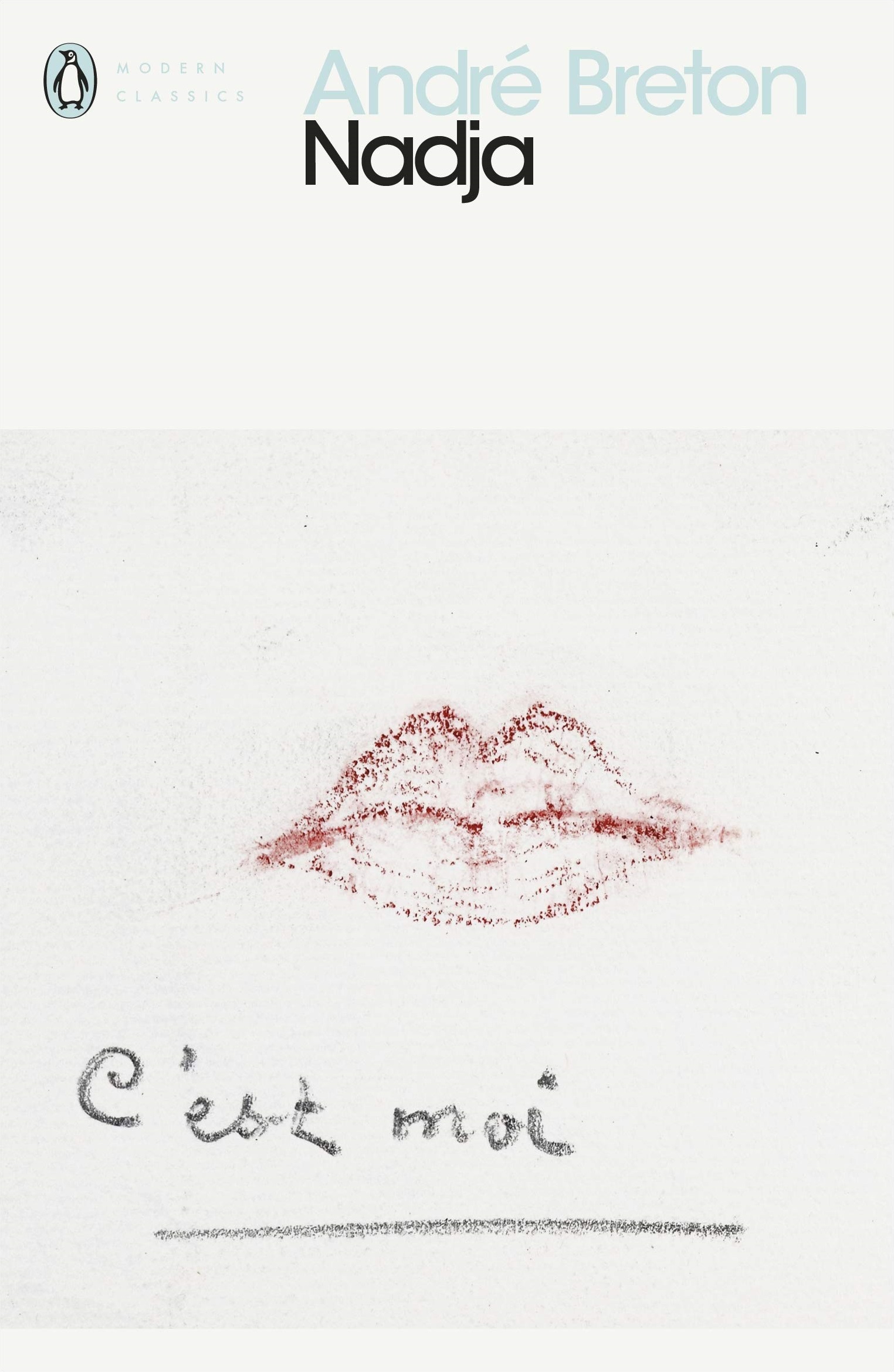
Nadja, originally published in France in 1928, is the first and perhaps best Surrealist romance ever written, a book which defined that movement's attitude toward everyday life.The principal narrative is an account of the author's relationship with a girl in the city of Paris, the story of an obsessional presence haunting his life. The first-person narrative is supplemented by forty-four photographs which form an integral part of the work -- pictures of various surreal people, places, and objects which the author visits or is haunted by in naja's presence and which inspire him to mediate on their reality or lack of it. The Nadja of the book is a girl, but, like Bertrand Russell's definition of electricity as not so much a thing as a way things happen, Nadja is not so much a person as the way she makes people behave. She has been described as a state of mind, a feeling about reality, k a kind of vision, and the reader sometimes wonders whether she exists at all. yet it is Nadja who gives form and structure to the novel.

Les Champs magnétiques (1920; The Magnetic Fields) is known as the first major surrealist work.

Andre Breton (1896-1966) was the founder of Surrealism and a major leader of the avante-garde movement in France following World War I. This exceptional volume brings together the most comprehensive selection of poems by Breton available in the English language. Here, in a bilingual French-English format are 73 poems representing all styles and stages of the writer's career.

Best known in the United States as the mastermind of the Surrealist movement and as the author of the dream-logic fiction Nadja, André Breton has always enjoyed in Europe the additional reputation of being a brilliant poet. Bill Zavatsky’s and Zack Rogow’s excellent translation of Breton’s Earthlight (Clair de terre) introduces the English-language audience to the delights—and complexities—of Breton’s amazing poetry. Written to friends and fellow Surrealists such as Pablo Picasso, André Derain, Robert Desnos, Francis Picabia, Pierre Reverdy, and Max Ernst, the poems in the collection date from 1919 to 1936, spanning Breton’s involvement with Dadaism and his founding and development of Surrealism.

André Breton wrote Arcanum 17 during a trip to the Gaspé Peninsula in Quebec in the months after D-Day in 1944, when the Allied troops were liberating Occupied Europe. Using the huge Percé Rock—its impermanence, its slow-motion crumbling, its singular beauty—as his central metaphor, Breton considers love and loss, aggression and war, pacifism, feminism and the occult, in a book that is part prose and part poetry, part reality and part dream. In the 17th card in the Major Arcana of the Tarot deck, a naked woman beneath a sky of stars pours water from two urns into water and onto land. This card represents hope, renewal and resurrection—the themes that permeate Arcanum 17 . Considered radical at the time, Breton’s ideas today seem almost prescient, yet still breathtaking in their passionate underlying belief in the indestructibility of life and the freedom of the human spirit.Translator Zack Rogow shared the 1993 PEN/Book-of-the-Month Club Translation Prize for Earthlight by André Breton. His translation of George Sand’s Horace won the Bay Area Book Reviewers’ Association Award. He currently coordinates the Lunch Poems Reading Series at the University of California at Berkeley and teaches at the California College of the Arts.

What Freud did for dreams, André Breton (1896–1966) does for despair: in its distortions he finds the marvelous, and through the marvelous the redemptive force of imagination. Originally published in 1932 in France, Les Vases communicants is an effort to show how the discoveries and techniques of surrealism could lead to recovery from despondency. This English translation makes available "the theories upon which the whole edifice of surrealism, as Breton conceived it, is based." In Communicating Vessels Breton lays out the problems of everyday experience and of intellect. His involvement with political thought and action led him to write about the relations between nations and individuals in a mode that moves from the quotidian to the lyrical. His dreams triggered a curious correspondence with Freud, available only in this book. As Caws writes, "The whole history of surrealism is here, in these pages."
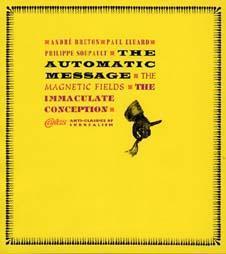
This book collects together the two most vital "automatic" texts of Surrealism -- The Magnetic Fields (1919) and The Immaculate Conception (1930) -- with Breton's prefatory essay "The Automatic Message" which relates this technique to the underlying concepts and aesthetic of the Surrealist movement.

Originally published in 1928 and augmented throughout the author's life, Surrealism and Painting is the single most important statement ever written on Surrealist art. While many pages have been devoted to visual Surrealism, this is the only book on the suject by the movement's founder and prime theorist. It contains Andra Breton's seminal treatise on the origins and foundations of artistic Surrealism, with his trenchant assessments of its precursors and practitioners, and his call for the plastic arts to "refer to a purely internal model." Also included are essays--many of them classics in their own right--on Picasso, Duchamp, Kahlo, Dal', Ernst, Masson, Gorky, Picabia, MirA, Magritte, Kandinsky, and others, as well as pieces on Gaulish art, outsider art, and the folk arts of Haiti and Oceania. But above and beyond the subject matter, what makes this book so enduringly compelling is Breton's signature mixture of rigorous erudition and visceral passion, his sense of adventure, and his discoveries of many of Modernism's most prominent figures early in their careers. Long unavailable in English, Surrealism and Painting is not only a supremely exciting work of art criticism, but also one of the three or four indispensable references for any serious discussion of modern art.

Writings of the best-known leader of the Surrealist movement. Includes a facsimile reproduction of the 1942 Surrealist Album by Andre Breton.

The closest Andre Breton has ever come to writing an autobiography, Conversations--based on a series of radio interviews conducted with the founder of Surrealism in 1952--chronicles the entire Surrealist movement as lived from within, tracing the origins and development of Surrealism from the discovery of automatic writing in 1919 to the Surrealists' ideological debate with communism and their opposition to Stalin.

Founder of the Surrealist movement, André Breton has also come to be recognized as one of the twentieth century's most innovative and influential poets. The inaugural volume in the Poets for the Millennium series, André Breton offers the most comprehensive selection available in English of Breton's poetry, along with a selection of his major prose writings. The translations, a number of which are published here for the first time, are by some of the most notable poets in our language, including David Antin, Paul Auster, Samuel Beckett, Michael Benedikt, Robert Duncan, David Gascoyne, and Charles Simic. This volume also includes an extensive biographical and thematic introduction by Mark Polizzotti, which sets the poems in the context of Breton's life and overall career.

This book collects together the two most vital "automatic" texts of Surrealism. Breton s prefatory essay The Automatic Message relates this technique to the underlying concepts and aesthetic of the Surrealist movement. The Magnetic Fields (1919) was the first work of literary Surrealism and is thus one of the foundations of modern European thought and writing. This authorised translation is by the poet David Gascoyne, himself a member of the group and a friend of both authors. The Immaculate Conception (1930) traces the interior and exterior life of man from Conception and Intra-Uterine Life to Death and The Original Judgement. The central section is a celebrated series of "simulations" of various types of mental instability. Maurice Nadeau (in The History of Surrealism) described the book as "An astonishing series of poems in prose, more brilliant than those of either Breton or Eluard on his own . . . if all that remained of the Surrealist movement were the pages of The Immaculate Conception, man, alerted, could not turn away from the astounding mystery of his condition."

Neste livro são desenhadas as principais conquistas do pensamento revolucionário em relação à autonomia da produção artística e à função do intelectual na sociedade contemporânea. Compõe o livro o manifesto Por uma arte revolucionária e independente e uma série de ensaios sobre o tema.

In 1941, as the Vichy regime consolidated its control of France, André Breton left the country for the island of Martinique. A poet and the principal founder of surrealism, Breton did not stay long, but his visit inspired the essays and poems of this book. Martinique: Snake Charmer is one of surrealism's most important texts, and it has been called "the most beautiful of all books" about the island. (Martinique: Snake Charmer also includes nine evocative drawings by the surrealist André Masson, a companion of Breton's during his stay on the island.) First collected into a single volume in 1948 and in print in France ever since, this is the first English translation of a work that, in series editor Franklin Rosemont's view, seeks "not merely to question the dogmas and platitudes of so-called common sense and 'established facts,' but to deviate from them, absolutely, in an imaginative quest for new and untried solutions to society's gravest problems." In the tropical beauty of Martinique, Breton found what he called "the Marvelous"; he also found outrageous greed, corruption, and colonial brutality. His guide through this schizophrenic place was Aimé Césaire, a Martinican surrealist and writer who Breton later championed in the book's most important essay, "A Great Black Poet." Breton recognized how Césaire and others had adapted surrealism to the specific conditions of the West Indies, enriching the movement in ways he could not have imagined. As a result, Breton never succumbed to the gloom that afflicted postwar Europe. He and Césaire and others continued the surrealists' quest undaunted, propelled in large part by the spirit they captured in this dynamic book.

Poisson soluble, on l'a oublié, était préfacé, à l'origine, par le Manifeste du surréalisme ; Breton proposait à la fois l'exigence esthétique subversive et l'une de ses possibles réalisations. Témoignage du premier élan du surréalisme, Poisson soluble était déjà situé par Breton dans une perspective historique : "Les caractères communs à tous les textes de ce genre [...] ne s'opposent pas à une certaine évolution de la prose surréaliste dans le temps." Gracq souligne bien l'originalité de ce que le Pape du surréalisme venait ainsi de réaliser : "Le poème redevient soluble dans la poésie, son orient fragile et changeant nous parle sans cesse d'une eau mère, d'un plasma poétique dont la pulsation l'irrigue et auquel continue de l'unir une vivante consanguinité. Le diamant mallarméen cède la place à la perle des mers."

Previously untranslated poems of love and desperation written by Andre Breton between 1926 and 1931, most of them unpublished during his lifetime. Sometimes sharply autobiographical, sometimes dizzyingly oblique, these poems trace Bretons tumultuous love affair with Suzanne Muzard, the woman who changed the course of his life in the early years of Surrealism. The volume includes an introduction by translator and Breton biographer Mark Polizzotti, discussing the poems' background and history. Printed in a limited edition of 300 copies, with three period photographs of Breton and Muzard. The first one hundred copies are signed by the translator.

The Lost Steps ( Les Pas perdus ) is André Breton’s first collection of critical and polemical essays. Composed between 1917 and 1923, these pieces trace his evolution during the years when he was emerging as a central figure in French (and European) intellectual life. They chronicle his tumultuous passage through the Dada movement, proclaim his explosive views on Modernism and its heroes, and herald the emergence of Surrealism itself. Along the way, we are given Breton’s serious commentaries on his Modernist predecessors, Guillaume Apollinaire and Alfred Jarry, followed by his not-so-serious Dada manifestoes. Also included are portraits of Marcel Duchamp, Francis Picabia, and Breton’s mysterious friend Jacques Vaché, as well as a crisis-by-crisis account of his dealing with Dada’s leader, Tristan Tzara. Finally, Breton offers a first glimpse of Surrealism, the movement that was forever after identified with his name and that stands as a defining force in twentieth-century aesthetics.

All'origine dell'"Arte magica" vi è un progetto che aveva appassionato Breton fin dagli anni Trenta, e quindi dall'epoca di "Miniature": scrivere una storia dell'arte "rivisitata da cima a fondo dal pensiero e dallo sguardo surrealista". Il fondo magico dell'arte, le sue implicazioni religiose, la visione romantica, il tutti gli elementi essenziali della teoria e della pratica surrealista vengono così rivendicati e riconosciuti nelle loro metamorfosi attraverso la storia dell'arte, a partire dalle pitture paleolitiche. Breton è provocatorio e come sempre le sue indicazioni corrispondono a importanti sviluppi nella storia del gusto.

Great for keeping randy, authoritarian surrealists out of your arbors.

Ce petit recueil de trente brefs poèmes, précédés de trois non moins brèves préfaces par chacun des auteurs, est le fruit d'une expression poétique collective, née des retrouvailles de Breton, Char et Éluard à Avignon au printemps de 1930."L'unité de ces poèmes à trois voix est tout à fait remarquable, l'engrenage d'une parole sur l'autre s'effectue en effet aisément.Tantôt c'est une forme syntaxique – temps, mode du verbe, jeu des pronoms – qui ordonne le poème, tantôt la reprise directe d'un terme, d'une expression ou divers parallélismes plus ou moins directs.(...) Outre leur apparentement formels, ces poèmes ont en commun une thématique aisément repérable. (...) Elle a trait à l'errance, aux découvertes que ménage le trajet."


Las distintas facciones del surrealismo sintieron siempre una gran fascinacion por los diccionarios y explotaron en muchas ocasiones sus posibilidades poeticas. El mas fascinante de todos ellos es el presente volumen, publicado por primera vez en 1938 como un acompanamiento de la Exposicion Internacional del Surrealismo: los poetas Andre Breton y Paul Eluard proponen una suerte de diccionario-collage en el que los terminos caros al movimiento son definidos con gran humor y agudeza por escritores o artistas plasticos muy diversos. Por sus paginas desfilan las extraordinarias definiciones de los propios Breton y Eluard, pero tambien las de Louis Aragon, Salvador Dali, Man Ray, Max Ernst, Benjamin Peret, Rene Crevel, o de mentores mas o menos remotos del movimiento como Lautreamont, Rimbaud, Lenin, Marcel Duchamp o Pablo Picasso, entre otros. Se incluyen las 220 ilustraciones de la edicion original.

Poem by André Breton translated by Clark Mills with illustrations by Wilfredo Lam.

Grand spécialiste de Gobineau et des utopistes du XIXe, Jean Gaulmier donne au texte célèbre de Breton (ici publié intégralement) un très substanciel commentaire qui est à la fois un passionnant essai sur Fourier et l'histoire du fouriérisme.

Originally published in France in 1934, Break of Day is André Breton’s second collection of critical and polemical essays, following The Lost Steps (Nebraska 1996). In fewer than two hundred pages, it captures the first full decade of the surrealist movement. The collection opens with an essay composed in 1924 that examines key elements of surrealism and concludes with Breton’s harsh revaluation in 1933 of automatic writing. Among the other essays in the volume are “Burial Denied” and “In Self-Defense,” two pieces that, in translator Mark Polizzotti’s words, “mark surrealism’s conscious break from the mainstream and the beginning of its attempts to work alongside the French Communist Party.” Also included are “Psychiatry Standing before Surrealism,” which addresses Breton’s complex, ambivalent views on mental illness and the emerging psychiatric establishment; “Introduction to Achim von Arnim's Strange Tales ,” which reveals surrealism’s debt to such precursors as the German romantics and delineates a surrealistic aesthetic of the macabre; and “Picasso in His Element,” in which Breton demonstrates his formidable talents as a critic of the visual arts.

Unen hiekkarannoilla – Valitut runot esittelee ensimmäistä kertaa suomeksi surrealismin johtohahmon ranskalaisen Andre Bretonin (1896–1966) merkittävimmän runotuotannon. Kokoelmaan on valittu tekstejä varhaisista dadakokeiluista 1920-luvun surrealistiseen automaattikirjoitukseen ja unikuvauksiin sekä 1930-luvun intiimistä rakkauslyriikasta seuraavan vuosikymmenen jylhiin, tietoisuuden rajoilla häilyviin runoelmiin. Teoksen viiteosio valottaa tekstien taustoja ja avaa Surrealismin manifestin ja omaelämäkerrallisten kertomusten Nadja ja Hullu rakkaus kirjoittajan ajattelua ja poetiikkaa – tämän kapinallisen uneksijan, joka ikänsä kaiken vannoi runouden, rakkauden ja vapauden nimeen ja jonka usko mielikuvituksen ja ihmeellisen voimaan ei koskaan hiipunut. Teoksessa on runot myös ranskaksi ja sen on ansiokkaasti suomentanut Janne Salo.”Sanokaamme asia kerrasta poikki: ihmeellinen on aina kaunista, mikä tahansa ihmeellinen on kaunista, eikä mikään muu kuin ihmeellinen ole kaunista.”

Free Rein is a gathering of seminal essays by André Breton, the foremost figure among the French surrealists. Written between 1936 and 1952, they include addresses, manifestoes, prefaces, exhibition pamphlets, and theoretical, polemical, and lyrical essays. Together they display the full span of Breton’s preoccupations, his abiding faith in the early principles of surrealism, and the changing orientations, in light of crucial events of those years, of the surrealist movement within which he remained the leading force. Having broken decisively with Marxism in the mid-1930s, Breton repeatedly addresses the horrors of the Stalinist regime (which denounced him during the Moscow trials of 1936). He argues for the autonomy of art and poetry and condemns the subservience to “revolutionary” aims exemplified by socialist realism. Other articles reflect on aesthetic issues, cinema, music, and education and provide detailed meditations on the literary, artistic, and philosophical topics for which he is best known. Free Rein will prove indispensable for students of Breton, surrealism, and modern French and European culture.