
Chinua Achebe
Works, including the novel Things Fall Apart (1958), of Nigerian writer Chinua Achebe describe traditional African life in conflict with colonial rule and westernization. This poet and critic served as professor at Brown University. People best know and most widely read his first book in modern African literature. Christian parents in the Igbo town of Ogidi in southeastern Nigeria reared Achebe, who excelled at school and won a scholarship for undergraduate studies. World religions and traditional African cultures fascinated him, who began stories as a university student. After graduation, he worked for the Nigerian broadcasting service and quickly moved to the metropolis of Lagos. He gained worldwide attention in the late 1950s; his later novels include No Longer at Ease (1960), Arrow of God (1964), A Man of the People (1966), and Anthills of the Savannah (1987). Achebe defended the use of English, a "language of colonizers," in African literature. In 1975, controversy focused on his lecture An Image of Africa: Racism in Conrad's "Heart of Darkness" for its criticism of Joseph Conrad as "a bloody racist." When the region of Biafra broke away from Nigeria in 1967, Achebe, a devoted supporter of independence, served as ambassador for the people of the new nation. The war ravaged the populace, and as starvation and violence took its toll, he appealed to the people of Europe and the Americas for aid. When the Nigerian government retook the region in 1970, he involved in political parties but witnessed the corruption and elitism that duly frustration him, who quickly resigned. He lived in the United States for several years in the 1970s, and after a car accident left him partially disabled, he returned to the United States in 1990. Novels of Achebe focus on the traditions of Igbo society, the effect of Christian influences, and the clash of values during and after the colonial era. His style relied heavily on the Igbo oral tradition, and combines straightforward narration with representations of folk stories, proverbs, and oratory. He also published a number of short stories, children's books, and essay collections. He served as the David and Marianna Fisher university professor of Africana studies at Brown University in Providence, Rhode Island, United States. ollowing a brief illness, Achebe died.
28 Books Written

The final novel in Chinua Achebe's masterful "African trilogy," Arrow of God—like Things Fall Apart and No Longer at Ease—takes up the ongoing struggle between continuity and change. It is a powerful drama about the downfall of a traditional leader in a society forever altered by colonialism.Ezeulu, the chief priest of several Nigerian villages, is a prominent member of the Igbo people. So prominent, in fact, that he is invited to join the British colonial administration. But when he refuses to be a "white man's chief" and is thrown in jail, Ezeulu's influence begins to wane, as the resentful decisions he makes from prison have adverse effects on his people. As Christian missionaries flood Ezeulu's villages, Western culture may very well unravel the traditions he has spent his life protecting.

Things Fall Apart tells two intertwining stories, both centering on Okonkwo, a "strong man" of an Ibo village in Nigeria. The first, a powerful fable of the immemorial conflict between the individual and society, traces Okonkwo's fall from grace with the tribal world. The second, as modern as the first is ancient, concerns the clash of cultures and the destruction of Okonkwo's world with the arrival of aggressive European missionaries. These perfectly harmonized twin dramas are informed by an awareness capable of encompassing at once the life of nature, human history, and the mysterious compulsions of the soul.

An alternate cover for this ISBN can be found here.Obi Okonkwo is an idealistic young man who has now returned to Nigeria for a job in the civil service. However in his new role he finds that the way of government seems to be corruption. Obi manages to resist the bribes offered to him, but when he falls in love with an unsuitable girl, he sinks further into emotional and financial turmoil.

From the renowned author of The African Trilogy, a political satire about an unnamed African country navigating a path between violence and corruptionAs Minister for Culture, former school teacher M. A. Nanga is a man of the people, as cynical as he is charming, and a roguish opportunist. When Odili, an idealistic young teacher, visits his former instructor at the ministry, the division between them is vast. But in the eat-and-let-eat atmosphere, Odili's idealism soon collides with his lusts--and the two men's personal and political tauntings threaten to send their country into chaos. When Odili launches a vicious campaign against his former mentor for the same seat in an election, their mutual animosity drives the country to revolution.Published, prophetically, just days before Nigeria's first attempted coup in 1966, A Man of the People is an essential part of Achebe's body of work.

Chris, Ikem and Beatrice are like-minded friends working under the military regime of His Excellency, the Sandhurst-educated President of Kangan. In the pressurized atmosphere of oppression and intimidation they are simply trying to live and love - and remain friends. But in a world where each day brings a new betrayal, hope is hard to cling on to. Anthills of the Savannah (1987), Achebe's candid vision of contemporary African politics, is a powerful fusion of angry voices. It continues the journey that Achebe began with his earlier novels, tracing the history of modern Africa through colonialism and beyond, and is a work ultimately filled with hope.

From the legendary author of Things Fall Apart comes a longawaited memoir about coming of age with a fragile new nation, then watching it torn asunder in a tragic civil warThe defining experience of Chinua Achebe’s life was the Nigerian civil war, also known as the Biafran War, of 1967–1970. The conflict was infamous for its savage impact on the Biafran people, Chinua Achebe’s people, many of whom were starved to death after the Nigerian government blockaded their borders. By then, Chinua Achebe was already a world-renowned novelist, with a young family to protect. He took the Biafran side in the conflict and served his government as a roving cultural ambassador, from which vantage he absorbed the war’s full horror. Immediately after, Achebe took refuge in an academic post in the United States, and for more than forty years he has maintained a considered silence on the events of those terrible years, addressing them only obliquely through his poetry. Now, decades in the making, comes a towering reckoning with one of modern Africa’s most fateful events, from a writer whose words and courage have left an enduring stamp on world literature.Achebe masterfully relates his experience, both as he lived it and how he has come to understand it. He begins his story with Nigeria’s birth pangs and the story of his own upbringing as a man and as a writer so that we might come to understand the country’s promise, which turned to horror when the hot winds of hatred began to stir. To read There Was a Country is to be powerfully reminded that artists have a particular obligation, especially during a time of war. All writers, Achebe argues, should be committed writers—they should speak for their history, their beliefs, and their people.Marrying history and memoir, poetry and prose, There Was a Country is a distillation of vivid firsthand observation and forty years of research and reflection. Wise, humane, and authoritative, it will stand as definitive and reinforce Achebe’s place as one of the most vital literary and moral voices of our age.

He needed to hear Africa speak for itself after a lifetime of hearing Africa spoken about by othersElectrifying essays on the history, complexity, diversity of a continent, from the father of modern African literature.Penguin Modern: fifty new books celebrating the pioneering spirit of the iconic Penguin Modern Classics series, with each one offering a concentrated hit of its contemporary, international flavour. Here are authors ranging from Kathy Acker to James Baldwin, Truman Capote to Stanislaw Lem and George Orwell to Shirley Jackson; essays radical and inspiring; poems moving and disturbing; stories surreal and fabulous; taking us from the deep South to modern Japan, New York's underground scene to the farthest reaches of outer space.

Girls at War and Other Stories reveals the essence of life in Nigeria and traces twenty years in the literary career of one of this century's most acclaimed writers. In this collection of stories, Chinua Achebe takes us inside the heart and soul of a people whose pride and ideals must compete with the simple struggle to survive. Hailed by critics everywhere, Chinua Achebe's fiction re-creates with energy and authenticity the major issues of daily life in Africa.

The African Trilogy: Things Fall Apart, No Longer at Ease, Arrow of God
by Chinua Achebe
Rating: 4.3 ⭐
Things Fall Apart, Chinua Achebe's first novel, has received widespread critical acclaim since its first publication thirty years ago. It has sold over 3 million copies and has been translated into more than forty languages. No Longer at Ease, its sequel, won the Nigerian national trophy, while Arrow of God confirmed Achebe's standing as the founder of modern African fiction. These three novels, collected here in a single volume with a new introduction by the author, chronicle the story of twentieth century West Africa.'The Story is the tragedy of Okonkwo, an important man in the Obi tribe in the days when white men were first appearing on the scene. Mr Achebe handles the macabre with telling restraint and the pathetic without any false embarrassment.'THE OBSERVER
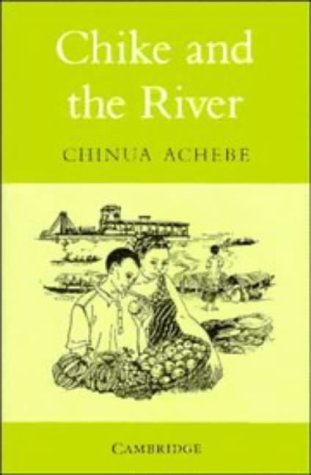
This is a children's book, sweet as a folk-tale from the author of Things Fall Apart

From the celebrated author of Things Fall Apart and winner of the Man Booker International Prize comes a new collection of autobiographical essays—his first new book in more than twenty years.Chinua Achebe’s characteristically measured and nuanced voice is everywhere present in these seventeen beautifully written pieces. In a preface, he discusses his historic visit to his Nigerian homeland on the occasion of the fiftieth anniversary of the publication of Things Fall Apart , the story of his tragic car accident nearly twenty years ago, and the potent symbolism of President Obama’s election. In “The Education of a British-Protected Child,” Achebe gives us a vivid portrait of growing up in colonial Nigeria and inhabiting its “middle ground,” recalling both his happy memories of reading novels in secondary school and the harsher truths of colonial rule. In “Spelling Our Proper Name,” Achebe considers the African-American diaspora, meeting and reading Langston Hughes and James Baldwin, and learning what it means not to know “from whence he came.” The complex politics and history of Africa figure in “What Is Nigeria to Me?,” “Africa’s Tarnished Name,” and “Politics and Politicians of Language in African Literature.” And Achebe’s extraordinary family life comes into view in “My Dad and Me” and “My Daughters,” where we observe the effect of Christian missionaries on his father and witness the culture shock of raising “brown” children in America.Charmingly personal, intellectually disciplined, and steadfastly wise, The Education of a British-Protected Child is an indispensable addition to the remarkable Achebe oeuvre.

Chinua Achebe is Africa's most prominent writer. His fiction and poetry burn with a passionate commitment to political justice, bringing to life not only Africa's troubled encounters with Europe but also the dark side of contemporary African political life. Now, in Home and Exile, Achebe reveals the man behind his powerful work.

Beautifully written yet highly controversial, An Image of Africa asserts Achebe's belief in Joseph Conrad as a 'bloody racist' and his conviction that Conrad's novel Heart of Darkness only serves to perpetuate damaging stereotypes of black people. Also included is The Trouble with Nigeria, Achebe's searing outpouring of his frustrations with his country.

A collection of poetry spanning the full range of the African-born author's acclaimed career has been updated to include seven never-before-published works, as well as much of his early poetry that explores such themes as the African consciousness, the tragedy of Biafra, and the mysteries of human relationships.
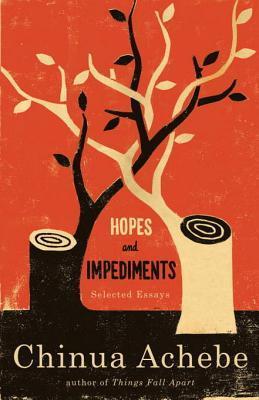
One of the most provocative and original voices in contemporary literature, Chinua Achebe here considers the place of literature and art in our society in a collection of essays spanning his best writing and lectures from the last twenty-three years. For Achebe, overcoming Eurocentrism goes hand in hand with eradicating the destructive effects of racism and injustice in Western society. He reveals the impediments that still stand in the way of open, equal dialogue between Africans and Europeans, between blacks and whites, but also instills us with hope that they will soon be overcome.

The eminent African novelist and critic, here addresses Nigeria's problems, aiming to challenge the resignation of Nigerians and inspire them to reject old habits which inhibit Nigeria from becoming a modern and attractive country. In this famous book now reprinted, he professes that the only trouble with Nigeria is the failure of leadership, because with good leaders Nigeria could resolve its inherent problems such as tribalism; lack of patriotism; social injustice and the cult of mediocrity; indiscipline; and corruption.

Dead Men's Path is a short story by the Nigerian writer Chinua Achebe, first published in 1953. The short-story has been noted as an example of cultural conflict.
Things Fall ApartThe choice: traditional or alien culture?novel by Chinua AchebeThe Second ComingA vision of society's breakdownpoem by William Butler YeatsGenesis 22: 1-19The Sacrifice of Isaac Father, son, and God's willthe BibleMother Was a Great ManThe story of a strong Ibo womanshort story by CatherineObianuju AcholonuPrayer to MasksA promise of the masked spiritspoem by Leopold Sedar SenghorShooting an ElephantThe dirty work of empiresessay by George OrwellThe Significance of a Veteran's DayHow to survive "progress"poem by Simon OrtizAble, Baker, Charlie, DogAn officer and his loving daughtershort story by Stephanie VaughnExilesWhere can you go when you must go away?poem by Mark Strand

One of Chinua Achebe's many achievements in his acclaimed first novel, Things Fall Apart, is his relentlessly unsentimental rendering of Nigerian tribal life before and after the coming of colonialism. First published in 1958, just two years before Nigeria declared independence from Great Britain, the book eschews the obvious temptation of depicting pre-colonial life as a kind of Eden. Instead, Achebe sketches a world in which violence, war, and suffering exist, but are balanced by a strong sense of tradition, ritual, and social coherence. His Ibo protagonist, Okonkwo, is a self-made man. The son of a charming ne'er-do-well, he has worked all his life to overcome his father's weakness and has arrived, finally, at great prosperity and even greater reputation among his fellows in the village of Umuofia. Okonkwo is a champion wrestler, a prosperous farmer, husband to three wives and father to several children. He is also a man who exhibits flaws well-known in Greek tragedy: Okonkwo ruled his household with a heavy hand. His wives, especially the youngest, lived in perpetual fear of his fiery temper, and so did his little children. Perhaps down in his heart Okonkwo was not a cruel man. But his whole life was dominated by fear, the fear of failure and of weakness. It was deeper and more intimate than the fear of evil and capricious gods and of magic, the fear of the forest, and of the forces of nature, malevolent, red in tooth and claw. Okonkwo's fear was greater than these. It was not external but lay deep within himself. It was the fear of himself, lest he should be found to resemble his father. And yet Achebe manages to make this cruel man deeply sympathetic. He is fond of his eldest daughter, and also of Ikemefuna, a young boy sent from another village as compensation for the wrongful death of a young woman from Umuofia. He even begins to feel pride in his eldest son, in whom he has too often seen his own father. Unfortunately, a series of tragic events tests the mettle of this strong man, and it is his fear of weakness that ultimately undoes him. Achebe does not introduce the theme of colonialism until the last 50 pages or so. By then, Okonkwo has lost everything and been driven into exile. And yet, within the traditions of his culture, he still has hope of redemption. The arrival of missionaries in Umuofia, however, followed by representatives of the colonial government, completely disrupts Ibo culture, and in the chasm between old ways and new, Okonkwo is lost forever. Deceptively simple in its prose, Things Fall Apart packs a powerful punch as Achebe holds up the ruin of one proud man to stand for the destruction of an entire culture. --Alix Wilber

“In this powerful illustrated fable for older picture book readers, Achebe, the celebrated Nigerian writer, offers a parable about how power corrupts.” — The New York Times Book ReviewIn the beginning, all the animals lived as friends. Their leopard king was strong but gentle and wise. Only Dog had sharp teeth and lived as an outsider before attacking the leopard and taking over as king — until the angry leopard returned to regain his throne by force with his own threatening new claws. In a riveting fable for young readers about the potency and dangers of power taken by force, Nigerian writer Chinua Achebe, author of Things Fall Apart, evokes his frequent themes of liberation and justice. Glowing with vibrant color, Mary GrandPré’s expressive and action-filled paintings bring the unforgettable tale to dramatic life.

Should a grown man and woman decide if they will marry? Or should their parents decide for them?

Book is in excellent shape, although the inside fly leaf shows evidence of a coffee Stain on the lower left corner. Dust cover is in reasonably good shape, some wear on the corners and a small tear on the upper front cover.
In The Sacrificial Egg and Other Short Stories, Achebe included two stories from his student days and three written after his first two novels: The Sacrificial Egg, Dead Men's Path, Chike's School Days, Beginning of the End, and Akueke. Intro. by M. J. C. Echero. Illus. by R. Nedfo.

Written during the Nigerian Civil War, this collection of poetry won the Commonwealth Poetry Prize in 1972.


Book by NO AUTHOR