
Tobias Wolff
Tobias Jonathan Ansell Wolff is a writer of fiction and nonfiction. He is best known for his short stories and his memoirs, although he has written two novels. Wolff is the Ward W. and Priscilla B. Woods Professor in the School of Humanities and Sciences at Stanford University, where he has taught classes in English and creative writing since 1997. He also served as the director of the Creative Writing Program at Stanford from 2000 to 2002.
27 Books Written

In the Garden of the North American Martyrs: Stories
by Tobias Wolff
Rating: 4.1 ⭐
• 2 recommendations ❤️
Among the characters you'll find in this collection of twelve stories by Tobias Wolff are a teenage boy who tells morbid lies about his home life, a timid professor who, in the first genuine outburst of her life, pours out her opinions in spite of a protesting audience, a prudish loner who gives an obnoxious hitchhiker a ride, and an elderly couple on a golden anniversary cruise who endure the offensive conviviality of the ship's social director.Fondly yet sharply drawn, Wolff's characters stumble over each other in their baffled yet resolute search for the "right path."

The 30th anniversary edition of Tobias Wolff's "extraordinary memoir" (SF Chronicle), now with a new introduction by the author

The protagonist of Tobias Wolff’s shrewdly—and at times devastatingly—observed first novel is a boy at an elite prep school in 1960. He is an outsider who has learned to mimic the negligent manner of his more privileged classmates. Like many of them, he wants more than anything on earth to become a writer. But to do that he must first learn to tell the truth about himself.The agency of revelation is the school literary contest, whose winner will be awarded an audience with the most legendary writer of his time. As the fever of competition infects the boy and his classmates, fraying alliances, exposing weaknesses, Old School explores the ensuing deceptions and betrayals with an unblinking eye and a bottomless store of empathy. The result is further evidence that Wolff is an authentic American master.

A man is shot dead while standing in line at the bank, another is fired for printing an obituary of a citizen as yet undeceased. A young woman visits her father following his nervous breakdown, and a devoted sister is profoundly unsettled by the sermon her brother insists on reciting. Whether in childhood or Vietnam, in memory or the eternal present, these people are revealed in the extenuating, sometimes extreme circumstances of everyday life, and in the complex consequences of their decisions—that, for instance, can bring together an innocent inner-city youth and a little girl attacked, months earlier, by a dog in a wintry park. Yet each story, however crucial, is marked by Mr. Wolff’s compassionate understanding and humor.In short, fiction of dazzling emotional range and absolute authority.

Whether he is evoking the blind carnage of the Tet offensive, the theatrics of his fellow Americans, or the unraveling of his own illusions, Wolff brings to this work the same uncanny eye for detail, pitiless candor and mordant wit that made This Boy's Life a modern classic.
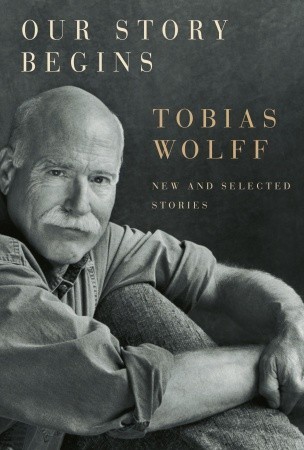
“One of our most exquisite storytellers” (Esquire) gives us his first collection in over a decade: ten potent new stories that, along with twenty-one classics, display his mastery over a quarter century.Tobias Wolff’s first two books, In the Garden of the North American Martyrs and Back in the World, were a powerful demonstration of how the short story can “provoke our amazed appreciation,” as The New York Times Book Review wrote then. In the years since, he’s written a third collection, The Night in Question, as well as a pair of genre-defining memoirs (This Boy’s Life and In Pharaoh’s Army), the novella The Barracks Thief, and, most recently, a novel, Old School.Now he returns with fresh revelations—about biding one’s time, or experiencing first love, or burying one’s mother—that come to a variety of characters in circumstances at once everyday and extraordinary: a retired Marine enrolled in college while her son trains for Iraq, a lawyer taking a difficult deposition, an American in Rome indulging the Gypsy who’s picked his pocket. In these stories, as with his earlier, much-anthologized work, he once again proves himself, according to the Los Angeles Times, “a writer of the highest order: part storyteller, part philosopher, someone deeply engaged in asking hard questions that take a lifetime to resolve.”

The Barracks Thief is the story of three young paratroopers waiting to be shipped out to Vietnam. Brought together one sweltering afternoon to stand guard over an ammunition dump threatened by a forest fire, they discover in each other an unexpected capacity for recklessness and violence. Far from being alarmed by this discovery, they are exhilarated by it; they emerge from their common danger full of confidence in their own manhood and in the bond of friendship they have formed. This confidence is shaken when a series of thefts occur. The author embraces the perspectives of both the betrayer and the betrayed, forcing us to participate in lives that we might otherwise condemn, and to recognize the kinship of those lives to our own.

To American soldiers in Vietnam, "back in the world" meant America and safety. To Tobias Wolff's characters, Back in the World is where lives that have veered out of control just might become normal again. Unfortunately, the men and women in these gripping, pungent, and wonderfully skewed stories have only the vaguest notion of what normal is. A gentle priest finds himself in a Vegas hotel with a hysterical, sun-burned stranger. A show-biz hopeful undergoes a dubious audition in a hearse speeding across the California desert. An aging soldier is distracted from a night of philandering by a gun-toting neighbor and a suicidal enlisted man. As he moves among these unfortunates, Wolff observes the disparity between their realities and their dreams, in ten stories of exhilarating lucidity and grace.Stories included "The Missing Person," "Say Yes," "The Poor Are Always With Us," "Sister," "Soldier's Joy," "Desert Breakdown," "Our Story Begins," "Leviathan," and "The Rich Brother.""Terrific...The magic of his fiction cannot be explained. It is the ancient art of the master storyteller."--Tim O'Brien

The story of a book critic and his final thoughts from short-story master Tobias Wolff...Anders is an angry, cynical man. A book critic known for his scathing reviews, he finds any excuse to dismiss, belittle, or insult. This afternoon is no more agitating than the next. Angers finds himself in a long line at the bank, waiting to reach a teller. Even after two men - wearing masks and carrying guns - take control of the building, Anders is unfazed. It's this behavior that lands him with a pistol against his stomach and a man screamingin his face. And when the bank robber, indignant over Anders' behavior, shoots the book critic in the head, his mind floats through the memories of his life, settling on one particular event....

Hunters in the Snow is a classic short story by Tobias Wolff centered around the suburbs of Spokane and featured in In the Garden of the North American Martyrs. The story deals with three characters hunting together in the woods; Kenny, who is hard and brutal; Tub, who is fat, a target of ridicule, and lags behind the rest of the party; and Frank, who is the most "frank" of the group. Each character has a distinct personality which changes as the story progresses. The story reaches its climax when Tub shoots Kenny in what appears to be an accident. Tub and Frank seem to be taking Kenny to a hospital, but wind up stopping in a diner and a roadhouse in a strange chain of events. The story ends with them driving in a direction that is opposite to the one of the hospital. This story is believed to be based upon the painting Hunters in the Snow by Pieter Bruegel, a painter involved in the realism movement.

This volume brings together all the stories from Tobias Wolff's collections Hunters in the Snow (1982) and Back in the World (1985) with his intense short novel The Barrack's Thief - winner of the 1984 PEN/Faulkner Award. These are works which impart powerful realisations of the discrepancy between the everyday world and our secret dreams and aspirations, hallmarked with a craftsmanship that has eaned the author three O. Henry Prizes.

With his marriage on the rocks, a father takes his son skiing for the weekend. After insisting on staying just a bit longer - despite a growing blizzard - the boy's father finds they're snowed in at the resort, the road blockaded by state troopers. To what lengths will he go to keep his marriage intact?

In this short story from Our Story Begins, three friends confront their relationships to one another as they work on plans to build their very own airplane.Clark's parents are rich, supplying the boys with all they need to follow their pursuits, making films and building catapults. Meanwhile, Freddy's family is dealing with the loss of his older brother, and Freddy's friends are having a hard time knowing how to act around him anymore. The boys all have their troubles, but maybe their airplane can help them escape....


A classic tale of brotherly love and rivalry from short story master Tobias Wolff.Pete has always been successful. Happily married with two daughters, he lives a comfortable life in Santa Cruz. Pete is a practical, hardworking man and he enjoys life's monetary pleasures.His younger brother, Donald, is a gaunt, troubled man. Unmarried and without children, Donald earns what little money he has by occasionally painting houses. He's a religious man, unlike Pete, and has spent several years as a member of various Christian groups.When Pete receives a call from Donald, telling him that his most recent religious commune has failed, Pete decides to pick him up - a trip that will test the limits of the brothers' relationship.

Η Χαρά του πολεμιστή συγκεντρώνει δέκα από τα αρτιότερα διηγήματα του κορυφαίου Αμερικανού διηγηματογράφου Τομπάιας Γουλφ. Επιλεγμένα από το σύνολο του έργου του, τα διηγήματα της ανθολογίας ξεδιπλώνουν ένα γοητευτικό πανόραμα της καθημερινότητας, με τις μικρές χαρές και λύπες της, γεμάτο χιούμορ, ευαισθησία και συγκρατημένη μελαγχολία. Είτε στη νωθρή ενδοχώρα είτε στις πολύβουες μεγαλουπόλεις, είτε ως γιοι που πασχίζουν να συμφιλιωθούν με τους γονείς τους είτε ως νάρκισσοι που υποχρεώνονται παρά τη θέλησή τους να ωριμάσουν, οι ήρωες του Γουλφ έρχονται αντιμέτωποι με διλήμματα που αφορούν τον καθένα μας. Χάρη στη σπάνια δεξιοτεχνία του συγγραφέα, ανάγλυφη στη ζυγισμένη οικονομία του λόγου και στο παιγνιώδες ύφος του, τα δέκα διηγήματα της Χαράς του πολεμιστή είναι δέκα λαμπρές στιγμές της αμερικανικής διηγηματογραφίας.01. Κυνηγοί στο χιόνι02. Ένα επεισόδιο από τη ζωή του καθηγητή Μπρουκ03. Ο ψεύτης04. Η χαρά του πολεμιστή05. Λεβιάθαν06. Θνητοί07. Φρέσκο χιόνι08. Σφαίρα στο κεφάλι09. Δικό της σκυλί10. Άγρυπνος


When Gold's daughter is viciously attacked by a neighbor's dog and barely escapes with her life, Gold's world is torn open. Haunted by the incident and unable to convince local authorities to take action, he agrees to a friend's offer of retaliation. When he feels compelled to return the favor, one bad turn leads to another—and this time, Gold finds the repercussions much worse than he ever could have anticipated.

در راه بازگشت به هتل پدرلئو از پشت شیشه تاکسی جمعیت را تماشا میکرد. گروهی ملوان رد میشدند، آن که جلوی بقیه راه میرفت سکههایی را از روی شانهاش پرت میکرد و بقیه میپریدند تا برشان دارند. تابلوها برق میزدند. صورت آدمها در انعکاس نور چراغها ضربان پیدا کرده بود. پدرلئو خم شد جلو و پرسید: شنیدم که سالی صد تا قتل تو این شهر اتفاق میافته، حقیقت داره؟ راننده تاکسی گفت: فکر کنم همین طور باشه، این شهر دردسرهای خودش رو داره، درسته. ولی بوتیکا خیلی بدتره، الان اون جا یه برف اومده تازه باز هم قراره بیاد.

A mother and her son dream of a life beyond their means in this classic short story by Tobias Wolff."Firelight" tells the story of a mother and her son who are spending the afternoon viewing apartments on a chilly day in Seattle, Washington. The two have no intention of renting one - they can only afford to live in a meager boarding house. Nevertheless, they spend every Saturday wandering through apartments and department stores, dreaming of a different life.On this particular afternoon, their last stop is a beautiful Victorian home - far beyond anything they could ever afford. And for the first time, wishful thoughts blur with harsh reality as the son becomes entranced by the apartment and the life it represents.

Miller is unlucky. That's why he's in a foxhole with the rest of Bravo Company. That's why his dad is gone and his mother remarried. That's why his teeth are falling out. Then, when the first sergeant tells Miller his mother has passed away, Miller thinks he's finally gotten lucky. Surely it's another Miller's mother, and now he can get away from the battalion for a couple days thanks to the Army's error. But Miller knows the future rarely has happiness in store.

Burke, a San Francisco lawyer, is defending a woman who has been disabled by a botched surgery. His client has a personal connection to Burke, and the trial happens to be taking place in his Ohio hometown, a place ravaged by fallen industries and greedy corporations. While taking a deposition from a particularly difficult witness, Burke calls for a break and takes a walk around the neighborhood where he grew up. A chance encounter with a beautiful woman sets in motion a series of events that Burke could never have foreseen—and is unlikely to forget.

Mr. Givens' obituary is nothing remarkable, hardly something to remember at all. He led a quiet life, served in the Army, was married to the same woman for 42 years, and worked at the same job practically his whole life. He wasn't a baseball player or a movie star, he was the furthest thing from a celebrity. In fact, the only thing noteworthy about his obituary is what happens after it runs in the newspaper, when he shows up in the office of the Metro editor wondering who decided to pronounce him dead.

Offers a collection of short stories that combines, in mostly domestic settings, intense feeling with wild imagination and familiar situations with extraordinary events.

Eager for independence and adult-like freedom, a teenage boy takes a summer job baling hay on a rural farm. Savoring the farm wife's attention and the extra change in his pocket, the boy feels like a grown man. The fellow hands give him a sense of camaraderie - Clemson, a fastidious boy who attends the same high school; Eduardo, a talkative Mexican seasonal worker; and Miguel, a quiet man and Eduardo's brother.