Loading genres...
Explore the best books about Literature genre.
Acclaimed by many as the world's greatest novel, Anna Karenina provides a vast panorama of contemporary life in Russia and of humanity in general. In it Tolstoy uses his intense imaginative insight to create some of the most memorable characters in all of literature. Anna is a sophisticated woman who abandons her empty existence as the wife of Karenin and turns to Count Vronsky to fulfil her passionate nature - with tragic consequences. Levin is a reflection of Tolstoy himself, often expressing the author's own views and convictions.Throughout, Tolstoy points no moral, merely inviting us not to judge but to watch. As Rosemary Edmonds comments, 'He leaves the shifting patterns of the kaleidoscope to bring home the meaning of the brooding words following the title, 'Vengeance is mine, and I will repay.
Brave New World is a dystopian novel by English author Aldous Huxley, written in 1931 and published in 1932. Largely set in a futuristic World State, inhabited by genetically modified citizens and an intelligence-based social hierarchy, the novel anticipates huge scientific advancements in reproductive technology, sleep-learning, psychological manipulation and classical conditioning that are combined to make a dystopian society which is challenged by only a single individual: the story's protagonist.Plongez dans la version originale et intégrale de la première grande dystopie du siècle. Avec la collection NOT SO CLASSIC, lire en anglais devient un vrai plaisir grâce à : des notes de vocabulaire en marge (en français et en anglais) un dossier complet pour comprendre l'oeuvre, ses personnages, ses grands thèmes et son contexte des quiz pour mémoriser l'essentiel, de façon ludique des activités pour progresser en anglais, grâce au texte d'un auteur d'exception + les vidéos "Previously on" La synthèse (en anglais) du roman pour ne pas perdre le fil de l'histoire.English with French in the margins.

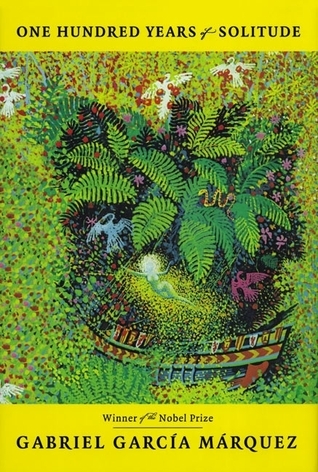
Probably García Márquez finest and most famous work. One Hundred Years of Solitude tells the story of the rise and fall, birth and death of a mythical town of Macondo through the history of the Buendia family. Inventive, amusing, magnetic, sad, alive with unforgettable men and women, and with a truth and understanding that strike the soul. One Hundred Years of Solitude is a masterpiece of the art of fiction.

The searing, postapocalyptic novel destined to become Cormac McCarthy's masterpiece.A father and his son walk alone through burned America. Nothing moves in the ravaged landscape save the ash on the wind. It is cold enough to crack stones, and when the snow falls it is gray. The sky is dark. Their destination is the coast, although they don't know what, if anything, awaits them there. They have nothing; just a pistol to defend themselves against the lawless bands that stalk the road, the clothes they are wearing, a cart of scavenged food—and each other.The Road is the profoundly moving story of a journey. It boldly imagines a future in which no hope remains, but in which the father and his son, "each the other's world entire," are sustained by love. Awesome in the totality of its vision, it is an unflinching meditation on the worst and the best that we are capable of: ultimate destructiveness, desperate tenacity, and the tenderness that keeps two people alive in the face of total devastation.From the Trade Paperback edition.--penguinrandomhouse
Machiavelli needs to be looked at as he really was. Hence: Can Machiavelli, who makes the following observations, be Machiavellian as we understand the disparaging term?1. So it is that to know the nature of a people, one need be a Prince; to know the nature of a Prince, one need to be of the people.2. If a Prince is not given to vices that make him hated, it is unsusal for his subjects to show their affection for him.3. Opportunity made Moses, Cyrus, Romulus, Theseus, and others; their virtue domi-nated the opportunity, making their homelands noble and happy. Armed prophets win; the disarmed lose.4. Without faith and religion, man achieves power but not glory.5. Prominent citizens want to command and oppress; the populace only wants to be free of oppression.6. A Prince needs a friendly populace; otherwise in diversity there is no hope.7. A Prince, who rules as a man of valor, avoids disasters,8. Nations based on mercenary forces will never be solid or secure.9. Mercenaries are dangerous because of their cowardice10. There are two ways to fight: one with laws, the other with force. The first is rightly man’s way; the second, the way of beasts.

Raskolnikov, an impoverished student living in the St. Petersburg of the tsars, is determined to overreach his humanity and assert his untrammeled individual will. When he commits an act of murder and theft, he sets into motion a story that, for its excruciating suspense, its atmospheric vividness, and its depth of characterization and vision is almost unequaled in the literatures of the world. The best known of Dostoevsky’s masterpieces, Crime and Punishment can bear any amount of rereading without losing a drop of its power over our imaginations.Dostoevsky’s drama of sin, guilt, and redemption transforms the sordid story of an old woman’s murder into the nineteenth century’s profoundest and most compelling philosophical novel.

At its heart, the story is all too simple: a man and his son take a lengthy motorcycle trip through America. But this is not a simple trip at all, for around every corner, through mountain and desert, wind and rain, and searing heat and biting cold, their pilgrimage leads them to new vistas of self-discovery and renewal.Zen and the Art of Motorcycle Mantenance is an elemental work that has helped to shape and define the past twenty-five years of American culture. This special audio edition presents this adventure in a compelling way - for the millions who have already taken this journey and want to travel these roads again, and for the many more who will discover for the first time the wonders and challenges of a journey that will change the way they think and feel about their lives.
“All animals are equal, but some animals are more equal than others.”In his story of a downtrodden society of overworked, mistreated animals and their quest to create a paradise of progress, justice, and equality, George Orwell gave us one of the most scathing satiric fables ever written. As ferociously fresh as it was more than a half century ago,

Tony Award-winning actor Leslie Odom Jr., who starred in the original cast of Hamilton, breathes new life into F. Scott Fitzgerald’s entertaining Jazz Age classic.The Roaring Twenties are in full effect in the fictional Long Island beach towns of West and East Egg when Midwesterner Nick Carraway gets caught up in the orbit of man-about-town Jay Gatsby, host of some of the wildest, most extravagant parties you could ever imagine.The Great Gatsby is a cautionary tale of wealth and excess and a bit of a scathing takedown of celebrity culture. With his mellifluous voice and acting chops, Leslie Odom Jr. is the perfect reader. He pulls us into this timeless story of an outsider looking in—and the impossible, but uniquely human, longing to return to the past.

Over a century and a half after its publication, Moby-Dick still stands as an indisputable literary classic. It is the story of an eerily compelling madman pursuing an unholy war against a creature as vast and dangerous and unknowable as the sea itself. But more than just a novel of adventure, more than an encyclopedia of whaling lore and legend, Moby-Dick is a haunting, mesmerizing, and important social commentary populated with several of the most unforgettable and enduring characters in literature. Written with wonderfully redemptive humor, Moby-Dick is a profound and timeless inquiry into character, faith, and the nature of perception.This edition includes a foreword by Nathaniel Philbrick, author of the phenomenal bestseller In the Heart of the Sea, an introduction by Andrew Delbanco, and Notes and Explanatory Commentary by Tom Quirk.Enriched eBook Features Editor Mary K. Bercaw Edwards provides the following speciallycommissioned features for this Enriched eBook Classic:* Chronology* Filmography of Herman Melville’s Moby-Dick(1851)* Nineteenth-Century Reviews* Suggested Further Reading* Moby-Dick in Popular Culture* Melville’s Whaling Years* Cannibal Talk in Moby-Dick* Sermons in Moby-Dick* Enriched eBook Notes* Illustrationsfor Moby-DickThe enriched eBook format invites readers to go beyond the pages of these beloved works and gain more insight into the life and times of an author and the period in which the book was originally written for a rich reading experience.

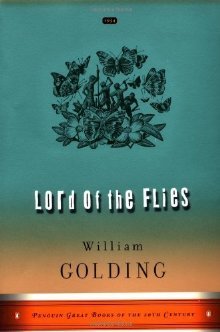
At the dawn of the next world war, a plane crashes on an uncharted island, stranding a group of schoolboys. At first, with no adult supervision, their freedom is something to celebrate; this far from civilization the boys can do anything they want. Anything. They attempt to forge their own society, failing, however, in the face of terror, sin and evil. And as order collapses, as strange howls echo in the night, as terror begins its reign, the hope of adventure seems as far from reality as the hope of being rescued. Labeled a parable, an allegory, a myth, a morality tale, a parody, a political treatise, even a vision of the apocalypse, Lord of the Flies is perhaps our most memorable novel about “the end of innocence, the darkness of man’s heart.”

The Old Man and the Sea, an apparently simple fable, represents the mature Hemingway at his best. He was awarded the Nobel Prize for Literature soon after its publication, and half a century later it is still one of his most read books.

Fifty years after its original publication, Catch-22 remains a cornerstone of American literature and one of the funniest—and most celebrated—books of all time. In recent years it has been named to “best novels” lists by Time, Newsweek, the Modern Library, and the London Observer.Set in Italy during World War II, this is the story of the incomparable, malingering bombardier, Yossarian, a hero who is furious because thousands of people he has never met are trying to kill him. But his real problem is not the enemy—it is his own army, which keeps increasing the number of missions the men must fly to complete their service. Yet if Yossarian makes any attempt to excuse himself from the perilous missions he’s assigned, he’ll be in violation of Catch-22, a hilariously sinister bureaucratic rule: a man is considered insane if he willingly continues to fly dangerous combat missions, but if he makes a formal request to be removed from duty, he is proven sane and therefore ineligible to be relieved.This fiftieth-anniversary edition commemorates Joseph Heller’s masterpiece with a new introduction by Christopher Buckley; a wealth of critical essays and reviews by Norman Mailer, Alfred Kazin, Anthony Burgess, and others; rare papers and photos from Joseph Heller’s personal archive; and much more. Here, at last, is the definitive edition of a classic of world literature.

Tempest Two Gentlemen of Verona Merry Wives of Windsor Measure for Measure Comedy of Errors Much Ado About Nothing Love's Labour's Lost Midsummer Night's Dream Merchant of Venice As You Like It Taming of the Shrew All's Well That Ends Well Twelfth Night Winter's Tale King John King Richard II King Henry IV. Part 1 King Henry IV. Part 2 King Henry V King Henry VI. Part 1 King Henry VI. Part 2 King Henry VI. Part 3 King Richard III King Henry VIII Troilus and Cressida Coriolanus Titus Andronicus Romeo and Juliet Timon of Athens Julius Caesar Macbeth Hamlet King Lear Othello Anthony and Cleopatra Cymbeline Pericles Venus and Adonis Rape of Lucrece Sonnets Lover's Complaint Passionate Pilgrim Sonnets to Sundry Notes of Music Phoenix and the Turtle

Published in 1942 by French author Albert Camus, The Stranger has long been considered a classic of twentieth-century literature. Le Monde ranks it as number one on its "100 Books of the Century" list. Through this story of an ordinary man unwittingly drawn into a senseless murder on a sundrenched Algerian beach, Camus explores what he termed "the nakedness of man faced with the absurd."

John Crowley's masterful Little, Big is the epic story of Smoky Barnable, an anonymous young man who travels by foot from the City to a place called Edgewood—not found on any map—to marry Daily Alice Drinkawater, as was prophesied. It is the story of four generations of a singular family, living in a house that is many houses on the magical border of an otherworld. It is a story of fantastic love and heartrending loss; of impossible things and unshakable destinies; and of the great Tale that envelops us all. It is a wonder.

Wear on edges of covers and spine. Bookstore stamp on first page.

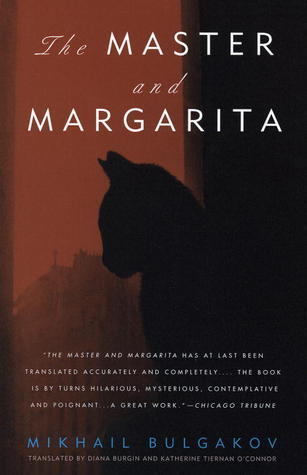
The first complete, annotated English Translation of Mikhail Bulgakov's comic masterpiece.An audacious revision of the stories of Faust and Pontius Pilate, The Master and Margarita is recognized as one of the essential classics of modern Russian literature. The novel's vision of Soviet life in the 1930s is so ferociously accurate that it could not be published during its author's lifetime and appeared only in a censored edition in the 1960s. Its truths are so enduring that its language has become part of the common Russian speech.One hot spring, the devil arrives in Moscow, accompanied by a retinue that includes a beautiful naked witch and an immense talking black cat with a fondness for chess and vodka. The visitors quickly wreak havoc in a city that refuses to believe in either God or Satan. But they also bring peace to two unhappy Muscovites: one is the Master, a writer pilloried for daring to write a novel about Christ and Pontius Pilate; the other is Margarita, who loves the Master so deeply that she is willing literally to go to hell for him. What ensues is a novel of inexhaustible energy, humor, and philosophical depth, a work whose nuances emerge for the first time in Diana Burgin's and Katherine Tiernan O'Connor's splendid English version.

A stunning new translation of the classic book—and basis for the beloved Oscar-winning film—brings the clarity and beauty of Kazantzakis’s language and story alive.First published in 1946, Zorba the Greek , is, on one hand, the story of a Greek working man named Zorba, a passionate lover of life, the unnamed narrator who he accompanies to Crete to work in a lignite mine, and the men and women of the town where they settle. On the other hand it is the story of God and man, The Devil and the Saints; the struggle of men to find their souls and purpose in life and it is about love, courage and faith.Zorba has been acclaimed as one of the truly memorable creations of literature—a character created on a huge scale in the tradition of Falstaff and Sancho Panza. His years have not dimmed the gusto and amazement with which he responds to all life offers him, whether he is working in the mine, confronting mad monks in a mountain monastery, embellishing the tales of his life or making love to avoid sin. Zorba’s life is rich with all the joys and sorrows that living brings and his example awakens in the narrator an understanding of the true meaning of humanity. This is one of the greatest life-affirming novels of our time.Part of the modern literary canon, Zorba the Greek , has achieved widespread international acclaim and recognition. This new edition translated, directly from Kazantzakis’s Greek original, is a more faithful rendition of his original language, ideas, and story, and presents Zorba as the author meant him to be.

Presented in the form of a dialogue between Socrates and three different interlocutors, this classic text is an enquiry into the notion of a perfect community and the ideal individual within it. During the conversation, other questions are raised: what is goodness?; what is reality?; and what is knowledge? The Republic also addresses the purpose of education and the role of both women and men as guardians of the people. With remarkable lucidity and deft use of allegory, Plato arrives at a depiction of a state bound by harmony and ruled by philosopher kings.

A quintessential novel of America & the Beat Generation On the Road chronicles Jack Kerouac's years traveling the N. American continent with his friend Neal Cassady, "a sideburned hero of the snowy West." As "Sal Paradise" & "Dean Moriarty," the two roam the country in a quest for self-knowledge & experience. Kerouac's love of America, compassion for humanity & sense of language as jazz combine to make On the Road an inspirational work of lasting importance. This classic novel of freedom & longing defined what it meant to be "Beat" & has inspired every generation since its initial publication.

By virtue of its casual, off-handedly brilliant wisdom and the easy splendor of its nature writing, Thoreau’s account of his adventure in self-reliance on the shores of a pond in Massachusetts is one of the signposts by which the modern mind has located itself in an increasingly bewildering world. Deeply sane, invigorating in its awareness of humanity’s place in the moral and natural order, Walden represents the progressive spirit of nineteenth-century America at its eloquent best.

Ulysses is one of the most influential novels of the twentieth century. It was not easy to find a publisher in America willing to take it on, and when Jane Jeap and Margaret Anderson started printing extracts from the book in their literary magazine The Little Review in 1918, they were arrested and charged with publishing obscenity. They were fined $100, and even The New York Times expressed satisfaction with their conviction. Ulysses was not published in book form until 1922, when another American woman, Sylvia Beach, published it in Paris her Shakespeare & Company. Ulysses was not available legally in any English-speaking country until 1934, when Random House successfully defended Joyce against obscenity charges and published it in the Modern Library.

Kahlil Gibran’s masterpiece, The Prophet, is one of the most beloved classics of our time. Published in 1923, it has been translated into more than twenty languages, and the American editions alone have sold more than nine million copies.The Prophet is a collection of poetic essays that are philosophical, spiritual, and, above all, inspirational. Gibran’s musings are divided into twenty-eight chapters covering such sprawling topics as love, marriage, children, giving, eating and drinking, work, joy and sorrow, housing, clothes, buying and selling, crime and punishment, laws, freedom, reason and passion, pain, self-knowledge, teaching, friendship, talking, time, good and evil, prayer, pleasure, beauty, religion, and death.

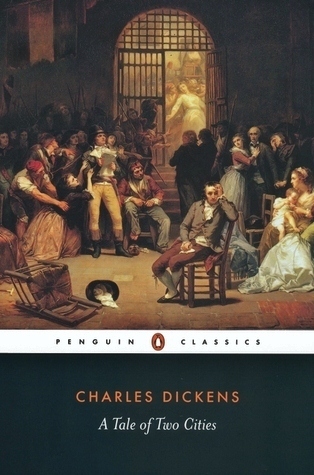
A Tale of Two Cities is Charles Dickens’s great historical novel, set against the violent upheaval of the French Revolution. The most famous and perhaps the most popular of his works, it compresses an event of immense complexity to the scale of a family history, with a cast of characters that includes a bloodthirsty ogress and an antihero as believably flawed as any in modern fiction. Though the least typical of the author’s novels, A Tale of Two Cities still underscores many of his enduring themes—imprisonment, injustice, social anarchy, resurrection, and the renunciation that fosters renewal.

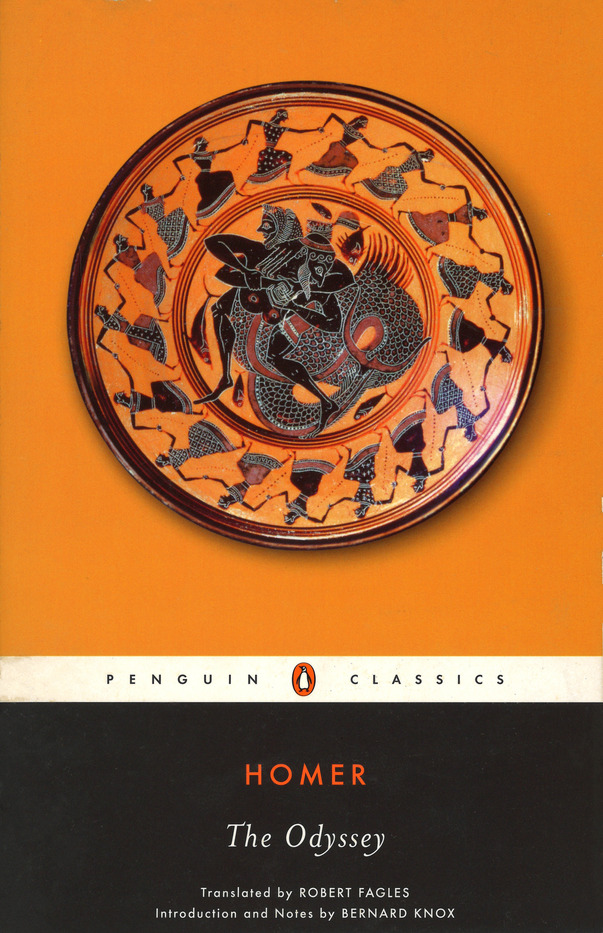
The Iliad has had a far-reaching impact on Western literature and culture, inspiring writers, artists and classical composers across the ages. Part of the Macmillan Collector’s Library; a series of stunning, clothbound, pocket-sized classics with gold foiled edges and ribbon markers. These beautiful books make perfect gifts or a treat for any book lover. This edition is translated into prose by Andrew Lang, Walter Leaf and Ernest Myers, and features an introduction by author and classicist Natalie Haynes.Paris, a Trojan prince, wins Helen as his prize for judging a beauty contest between three goddesses, and abducts her from her Greek husband Menelaos. The Greeks, enraged by his audacity, sail to Troy and begin a long siege of the city. The Iliad is set in the tenth year of the war. Achilles – the greatest Greek warrior – is angry with his commander, Agamemnon, for failing to show him respect. He refuses to fight any longer, which is catastrophic for the Greeks, and results in personal tragedy for Achilles, too. With themes of war, rage, grief and love, The Iliad remains powerful and enthralling more than 2,700 years after it was composed.

Alice, a young girl, sits bored by a riverbank and spots a White Rabbit with a pocket watch and waistcoat lamenting that he is late. Surprised, Alice follows him down a rabbit hole, which sends her into a lengthy plummet....

This revised and expanded edition of The Essential Rumi includes a new introduction by Coleman Barks and more than 80 never-before-published poems.Through his lyrical translations, Coleman Barks has been instrumental in bringing this exquisite literature to a remarkably wide range of readers, making the ecstatic, spiritual poetry of thirteenth-century Sufi Mystic Rumi more popular than ever.The Essential Rumi continues to be the bestselling of all Rumi books, and the definitive selection of his beautiful, mystical poetry.

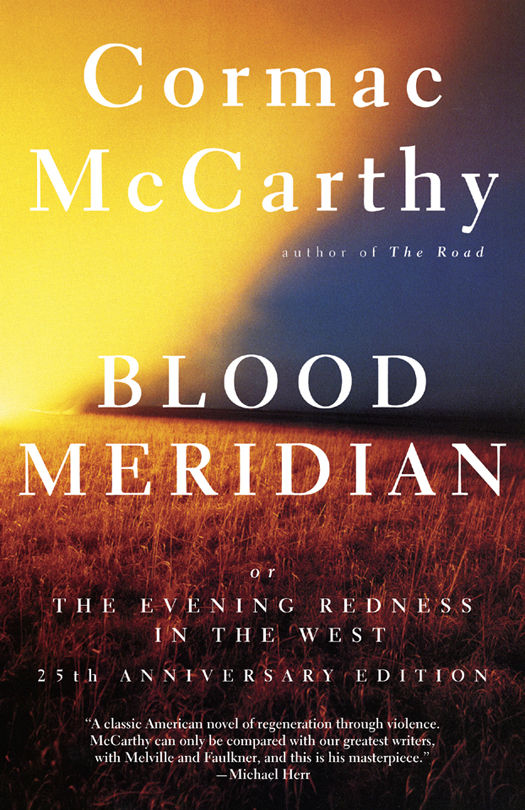
Blood Meridian is an epic novel of the violence and depravity that attended America's westward expansion, brilliantly subverting the conventions of the Western novel and the mythology of the Wild West. Based on historical events that took place on the Texas-Mexico border in the 1850s, it traces the fortunes of the Kid, a fourteen-year-old Tennesseean who stumbles into a nightmarish world where Indians are being murdered and the market for their scalps is thriving.

Simply written, but powerful and unforgettable, The Man Who Planted Trees is a parable for modern times. In the foothills of the French Alps the narrator meets a shepherd who has quietly taken on the task of planting one hundred acorns a day in an effort to reforest his desolate region. Not even two world wars can keep the shepherd from continuing his solitary work. Gradually, this gentle, persistent man's work comes to the region is transformed; life and hope return; the world is renewed.

The most famous and controversial novel from one of the greatest writers of the twentieth century tells the story of Humbert Humbert’s obsessive, devouring, and doomed passion for the nymphet Dolores Haze."The conjunction of a sense of humor with a sense of horror [results in] satire of a very special kind." —The New YorkerAwe and exhilaration—along with heartbreak and mordant wit—abound in Lolita, which tells the story of the aging Humbert Humbert's obsession for the nymphet Dolores Haze. Lolita is also the story of a hypercivilized European colliding with the cheerful barbarism of postwar America. Most of all, it is a meditation on love—love as outrage and hallucination, madness and transformation.

A wickedly clever satire uses comic inversions to offer telling insights into the nature of man and society. Nominated as one of America’s best-loved novels by PBS’s The Great American Read.Gulliver's Travels describes the four voyages of Lemuel Gulliver, a ship's surgeon. In Lilliput he discovers a world in miniature; towering over the people and their city, he is able to view their society from the viewpoint of a god. However, in Brobdingnag, a land of giants, tiny Gulliver himself comes under observation, exhibited as a curiosity at markets and fairs. In Laputa, a flying island, he encounters a society of speculators and projectors who have lost all grip on everyday reality; while they plan and calculate, their country lies in ruins. Gulliver's final voyage takes him to the land of the Houyhnhnms, gentle horses whom he quickly comes to admire - in contrast to the Yahoos, filthy bestial creatures who bear a disturbing resemblance to humans. This text, based on the first edition of 1726, reproduces all the original illustrations and includes an introduction by Robert Demaria, Jr, which discusses the ways Gulliver's Travels has been interpreted since its first publication. Jonathan Swift (1667-1745) was born in Dublin. For more than seventy years, Penguin has been the leading publisher of classic literature in the English-speaking world. With more than 1,700 titles, Penguin Classics represents a global bookshelf of the best works throughout history and across genres and disciplines. Readers trust the series to provide authoritative texts enhanced by introductions and notes by distinguished scholars and contemporary authors, as well as up-to-date translations by award-winning translators.

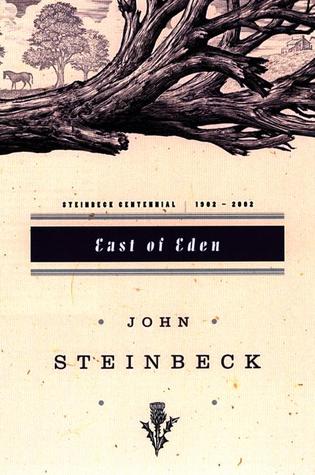
In his journal, Nobel Prize winner John Steinbeck called East of Eden “the first book,” and indeed it has the primordial power and simplicity of myth. Set in the rich farmland of California’s Salinas Valley, this sprawling and often brutal novel follows the intertwined destinies of two families—the Trasks and the Hamiltons—whose generations helplessly reenact the fall of Adam and Eve and the poisonous rivalry of Cain and Abel.Adam Trask came to California from the East to farm and raise his family on the new rich land. But the birth of his twins, Cal and Aaron, brings his wife to the brink of madness, and Adam is left alone to raise his boys to manhood. One boy thrives nurtured by the love of all those around him; the other grows up in loneliness enveloped by a mysterious darkness.First published in 1952, East of Eden is the work in which Steinbeck created his most mesmerizing characters and explored his most enduring themes: the mystery of identity, the inexplicability of love, and the murderous consequences of love's absence. A masterpiece of Steinbeck's later years, East of Eden is a powerful and vastly ambitious novel that is at once a family saga and a modern retelling of the Book of Genesis.

Madame Bovary is the debut novel of French writer Gustave Flaubert, published in 1856. The character lives beyond her means in order to escape the banalities and emptiness of provincial life. When the novel was first serialized in La Revue de Paris between 1 October 1856 and 15 December 1856, public prosecutors attacked the novel for obscenity. The resulting trial in January 1857 made the story notorious. After Flaubert's acquittal on 7 February 1857, Madame Bovary became a bestseller in April 1857 when it was published in two volumes. A seminal work of literary realism, the novel is now considered Flaubert's masterpiece, and one of the most influential literary works in history.

Published as part of a four-book series alongside Beloved (introduced by Bernardine Evaristo), The Bluest Eye (introduced by Candice Carty-Williams) and Sula (Namwali Serpell) this series is Vintage Classics' lead publishing for Spring 2022

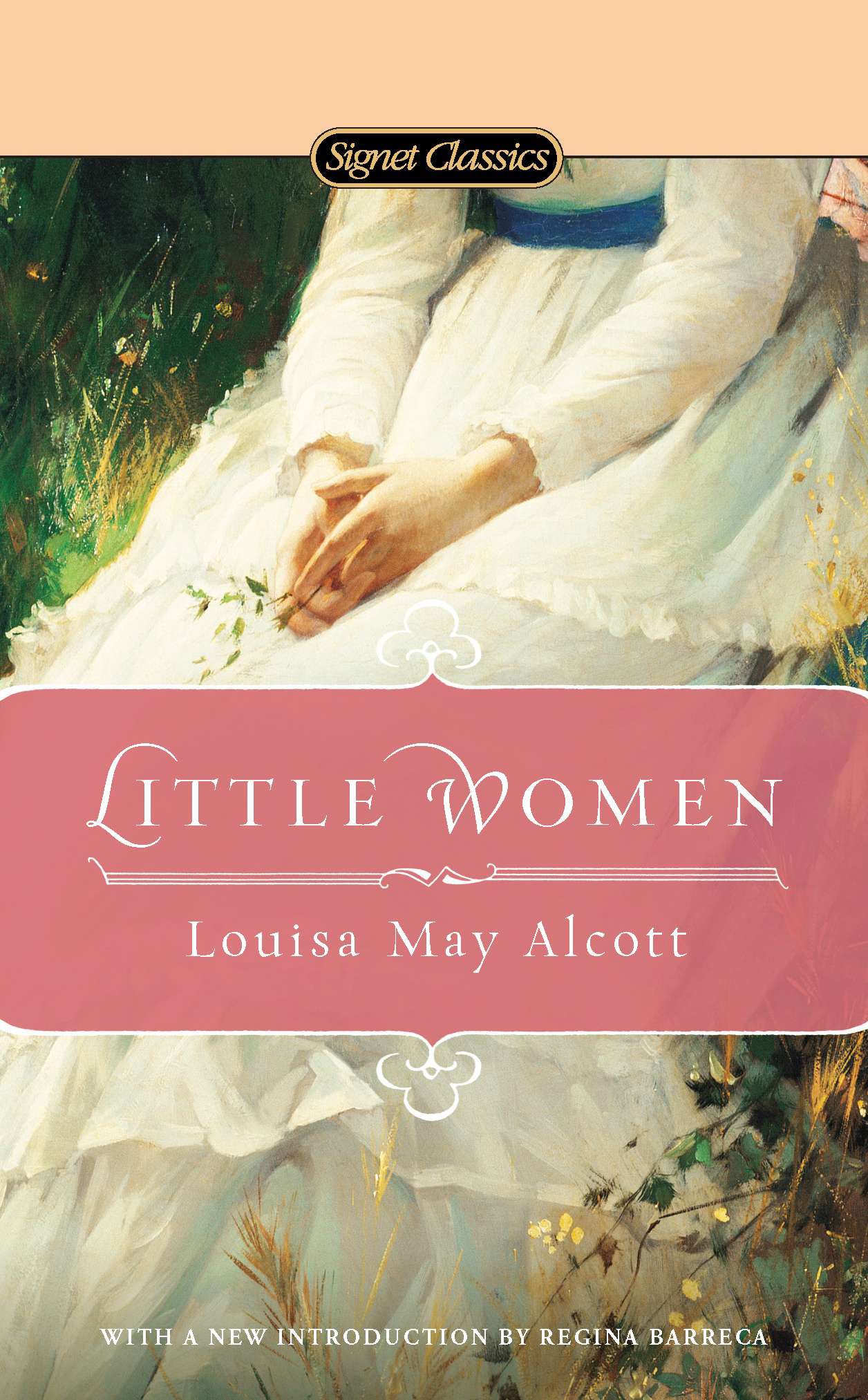
This is an alternate cover edition of ISBN 9780451529305.Generations of readers young and old, male and female, have fallen in love with the March sisters of Louisa May Alcott’s most popular and enduring novel, Little Women. Here are talented tomboy and author-to-be Jo, tragically frail Beth, beautiful Meg, and romantic, spoiled Amy, united in their devotion to each other and their struggles to survive in New England during the Civil War.It is no secret that Alcott based Little Women on her own early life. While her father, the freethinking reformer and abolitionist Bronson Alcott, hobnobbed with such eminent male authors as Emerson, Thoreau, and Hawthorne, Louisa supported herself and her sisters with "woman’s work,” including sewing, doing laundry, and acting as a domestic servant. But she soon discovered she could make more money writing. Little Women brought her lasting fame and fortune, and far from being the "girl’s book” her publisher requested, it explores such timeless themes as love and death, war and peace, the conflict between personal ambition and family responsibilities, and the clash of cultures between Europe and America.

A gargantuan, mind-altering tragi-comedy about the Pursuit of Happiness in America. Set in an addicts' halfway house and a tennis academy, and featuring the most endearingly screwed-up family to come along in recent fiction, Infinite Jest explores essential questions about what entertainment is and why it has come to so dominate our lives; about how our desire for entertainment affects our need to connect with other people; and about what the pleasures we choose say about who we are. Equal parts philosophical quest and screwball comedy, Infinite Jest bends every rule of fiction without sacrificing for a moment its own entertainment value. It is an exuberant, uniquely American exploration of the passions that make us human—and one of those rare books that renew the idea of what a novel can do.

One of the best-loved stories of all time, To Kill a Mockingbird has been translated into more than forty languages, sold more than forty million copies worldwide, served as the basis for an enormously popular motion picture, and was voted one of the best novels of the twentieth century by librarians across the country. A gripping, heart-wrenching, and wholly remarkable coming-of-age tale in a South poisoned by virulent prejudice, it views a world of great beauty and savage iniquities through the eyes of a young girl, as her father — a crusading local lawyer — risks everything to defend a black man unjustly accused of a terrible crime.

In their youth, Florentino Ariza and Fermina Daza fall passionately in love. When Fermina eventually chooses to marry a wealthy, well-born doctor, Florentino is heartbroken, but he is a romantic. As he rises in his business career he whiles away the years in 622 affairs—yet he reserves his heart for Fermina. Her husband dies at last, and Florentino purposefully attends the funeral. Fifty years, nine months, and four days after he first declared his love for Fermina, he will do so again.

The Brothers Karamazov is a murder mystery, a courtroom drama, and an exploration of erotic rivalry in a series of triangular love affairs involving the “wicked and sentimental” Fyodor Pavlovich Karamazov and his three sons―the impulsive and sensual Dmitri; the coldly rational Ivan; and the healthy, red-cheeked young novice Alyosha. Through the gripping events of their story, Dostoevsky portrays the whole of Russian life, is social and spiritual striving, in what was both the golden age and a tragic turning point in Russian culture.This award-winning translation by Richard Pevear and Larissa Volokhonsky remains true to the verbal inventiveness of Dostoevsky’s prose, preserving the multiple voices, the humor, and the surprising modernity of the original. It is an achievement worthy of Dostoevsky’s last and greatest novel.

The 50th anniversary one-volume edition of J.R.R. Tolkien's epic "An extraordinary work -- pure excitement." -- New York Times Book Review One Ring to rule them all, One Ring to find them, One Ring to bring them all and in the darkness bind themIn ancient times the Rings of Power were crafted by the Elven-smiths, and Sauron, the Dark Lord, forged the One Ring, filling it with his own power so that he could rule all others. But the One Ring was taken from him, and though he sought it throughout Middle-earth, it remained lost to him. After many ages it fell by chance into the hands of the hobbit Bilbo Baggins.From Sauron's fastness in the Dark Tower of Mordor, his power spread far and wide. Sauron gathered all the Great Rings, but always he searched for the One Ring that would complete his dominion.When Bilbo reached his eleventy-first birthday he disappeared, bequeathing to his young cousin Frodo the Ruling Ring and a perilous quest: to journey across Middle-earth, deep into the shadow of the Dark Lord, and destroy the Ring by casting it into the Cracks of Doom.The Lord of the Rings tells of the great quest undertaken by Frodo and the Fellowship of the Ring: Gandalf the Wizard; the hobbits Merry, Pippin, and Sam; Gimli the Dwarf; Legolas the Elf; Boromir of Gondor; and a tall, mysterious stranger called Strider.

In The Unbearable Lightness of Being, Milan Kundera tells the story of a young woman in love with a man torn between his love for her and his incorrigible womanizing and one of his mistresses and her humbly faithful lover. This magnificent novel juxtaposes geographically distant places, brilliant and playful reflections, and a variety of styles, to take its place as perhaps the major achievement of one of the world’s truly great writers.

A collection of quintessentially American poems, the seminal work of one of the most influential writers of the nineteenth century.

An assemblage of reflections on the nature of writing and the writer from one the greatest American writers of the twentieth century.Throughout Hemingway’s career as a writer, he maintained that it was bad luck to talk about writing—that it takes off “whatever butterflies have on their wings and the arrangement of hawk’s feathers if you show it or talk about it.”Despite this belief, by the end of his life he had done just what he intended not to do. In his novels and stories, in letters to editors, friends, fellow artists, and critics, in interviews and in commissioned articles on the subject, Hemingway wrote often about writing. And he wrote as well and as incisively about the subject as any writer who ever lived…This book contains Hemingway’s reflections on the nature of the writer and on elements of the writer’s life, including specific and helpful advice to writers on the craft of writing, work habits, and discipline. The Hemingway personality comes through in general wisdom, wit, humor, and insight, and in his insistence on the integrity of the writer and of the profession itself.—From the Preface by Larry W. Phillips

First published in 1952 and immediately hailed as a masterpiece, Invisible Man is one of those rare novels that have changed the shape of American literature. For not only does Ralph Ellison's nightmare journey across the racial divide tell unparalleled truths about the nature of bigotry and its effects on the minds of both victims and perpetrators, it gives us an entirely new model of what a novel can be.As he journeys from the Deep South to the streets and basements of Harlem, from a horrifying "battle royal" where black men are reduced to fighting animals, to a Communist rally where they are elevated to the status of trophies, Ralph Ellison's nameless protagonist ushers readers into a parallel universe that throws our own into harsh and even hilarious relief. Suspenseful and sardonic, narrated in a voice that takes in the symphonic range of the American language, black and white, Invisible Man is one of the most audacious and dazzling novels of our century.

The Godfather—the epic tale of crime and betrayal that became a global phenomenon.Almost fifty years ago, a classic was born. A searing portrayal of the Mafia underworld, The Godfather introduced readers to the first family of American crime fiction, the Corleones, and their powerful legacy of tradition, blood, and honor. The seduction of power, the pitfalls of greed, and the allegiance to family—these are the themes that have resonated with millions of readers around the world and made The Godfather the definitive novel of the violent subculture that, steeped in intrigue and controversy, remains indelibly etched in our collective consciousness.

Friedrich Nietzsche's Beyond Good and Evil is translated from the German by R.J. Hollingdale with an introduction by Michael Tanner in Penguin Classics.Beyond Good and Evil confirmed Nietzsche's position as the towering European philosopher of his age. The work dramatically rejects the tradition of Western thought with its notions of truth and God, good and evil. Nietzsche demonstrates that the Christian world is steeped in a false piety and infected with a 'slave morality'. With wit and energy, he turns from this critique to a philosophy that celebrates the present and demands that the individual imposes their own 'will to power' upon the world.This edition includes a commentary on the text by the translator and Michael Tanner's introduction, which explains some of the more abstract passages in Beyond Good and Evil.Frederich Nietzsche (1844-1900) became the chair of classical philology at Basel University at the age of 24 until his bad health forced him to retire in 1879. He divorced himself from society until his final collapse in 1899 when he became insane. A powerfully original thinker, Nietzsche's influence on subsequent writers, such as George Bernard Shaw, D.H. Lawrence, Thomas Mann and Jean-Paul Sartre, was considerable.If you enjoyed Beyond Good and Evil you might like Nietzsche's Thus Spoke Zarathustra, also available in Penguin Classics."One of the greatest books of a very great thinker." —Michael Tanner

The classic samurai novel about the real exploits of the most famous swordsman. Miyamoto Musashi was the child of an era when Japan was emerging from decades of civil strife. Lured to the great Battle of Sekigahara in 1600 by the hope of becoming a samurai-without really knowing what it meant-he regains consciousness after the battle to find himself lying defeated, dazed and wounded among thousands of the dead and dying. On his way home, he commits a rash act, becomes a fugitive and brings life in his own village to a standstill-until he is captured by a weaponless Zen monk. The lovely Otsu, seeing in Musashi her ideal of manliness, frees him from his tortuous punishment, but he is recaptured and imprisoned. During three years of solitary confinement, he delves into the classics of Japan and China. When he is set free again, he rejects the position of samurai and for the next several years pursues his goal relentlessly, looking neither to left nor to right. Ever so slowly it dawns on him that following the Way of the Sword is not simply a matter of finding a target for his brute strength. Continually striving to perfect his technique, which leads him to a unique style of fighting with two swords simultaneously, he travels far and wide, challenging fighters of many disciplines, taking nature to be his ultimate and severest teacher and undergoing the rigorous training of those who follow the Way. He is supremely successful in his encounters, but in the Art of War he perceives the way of peaceful and prosperous governance and disciplines himself to be a real human being. He becomes a reluctant hero to a host of people whose lives he has touched and been touched by. And, inevitably, he has to pit his skill against the naked blade of his greatest rival.

A quest across America, from the northernmost tip of Maine to California’s Monterey PeninsulaTo hear the speech of the real America, to smell the grass and the trees, to see the colors and the light—these were John Steinbeck's goals as he set out, at the age of fifty-eight, to rediscover the country he had been writing about for so many years.With Charley, his French poodle, Steinbeck drives the interstates and the country roads, dines with truckers, encounters bears at Yellowstone and old friends in San Francisco. Along the way he reflects on the American character, racial hostility, the particular form of American loneliness he finds almost everywhere, and the unexpected kindness of strangers.

Librarian note: An alternative cover edition for this ASIN can be found here.** THE SUNDAY TIMES NO. 1 BESTSELLER **Discover the dystopian novel that started a phenomenon.Offred is a Handmaid in The Republic of Gilead. She is placed in the household of The Commander, Fred Waterford – her assigned name, Offred, means ‘of Fred’. She has only one function: to breed. If Offred refuses to enter into sexual servitude to repopulate a devastated world, she will be hanged. Yet even a repressive state cannot eradicate hope and desire. As she recalls her pre-revolution life in flashbacks, Offred must navigate through the terrifying landscape of torture and persecution in the present day, and between two men upon which her future hangs.'A fantastic, chilling story. And so powerfully feminist' Bernadine Evaristo‘As relevant today as it was when Atwood wrote it’ Guardian

The classic boyhood adventure tale, updated with a new introduction by noted Mark Twain scholar R. Kent Rasmussen In recent years, neither the persistent effort to "clean up" the racial epithets in Mark Twain’s Adventures of Huckleberry Finn nor its consistent use in the classroom have diminished, highlighting the novel’s wide-ranging influence and its continued importance in American society. An incomparable adventure story, it is a vignette of a turbulent, yet hopeful epoch in American history, defining the experience of a nation in voices often satirical, but always authentic.---Taken from back cover:Of all the contenders for the title of The Great American Novel, none has a better claim than Adventures of Huckleberry Finn. Written against the backdrop of the nation's desire to "light out" and expand into the promised future of the West, the novel stands as a reminder of the difficulty of escaping inherited traditions. Huck and Jim's voyage portrays a turbulent yet hopeful epoch in American history, defining the experience of a nation in voices often satirical but always authentic. By turns praised, derided, banned, and celebrated, Adventures of Huckleberry Finn is Mark Twain's enduring masterpiece, an incomparable adventure story, and a classic work of American humor.This edition features a new introduction by noted Mark Twain scholar R. Kent Rasmussen that situates the novel for a contemporary audience, and a forward by Azar Nafisi, author of The Republic of Imagination.Cover illustration: Edward Kinsella III.

Larry Darrell is a young American in search of the absolute. The progress of this spiritual odyssey involves him with some of Maugham's most brillant characters - his fiancee Isabel, whose choice between love and wealth have lifelong repercussions, and Elliot Templeton, her uncle, a classic expatriate American snob. The most ambitious of Maugham's novels, this is also one in which Maugham himself plays a considerable part as he wanders in and out of the story, to observe his characters struggling with their fates.

In 1937 Ernest Hemingway traveled to Spain to cover the civil war there for the North American Newspaper Alliance. Three years later he completed the greatest novel to emerge from "the good fight," For Whom the Bell Tolls. The story of Robert Jordan, a young American in the International Brigades attached to an antifascist guerilla unit in the mountains of Spain, it tells of loyalty and courage, love and defeat, and the tragic death of an ideal. In his portrayal of Jordan's love for the beautiful Maria and his superb account of El Sordo's last stand, in his brilliant travesty of La Pasionaria and his unwillingness to believe in blind faith, Hemingway surpasses his achievement in The Sun Also Rises and A Farewell to Arms to create a work at once rare and beautiful, strong and brutal, compassionate, moving and wise. "If the function of a writer is to reveal reality," Maxwell Perkins wrote to Hemingway after reading the manuscript, "no one ever so completely performed it." Greater in power, broader in scope, and more intensely emotional than any of the author's previous works, it stands as one of the best war novels of all time.

Shakespeare’s King Lear challenges us with the magnitude, intensity, and sheer duration of the pain that it represents. Its figures harden their hearts, engage in violence, or try to alleviate the suffering of others. Lear himself rages until his sanity cracks. What, then, keeps bringing us back to King Lear? For all the force of its language, King Lear is almost equally powerful when translated, suggesting that it is the story, in large part, that draws us to the play.The play tells us about families struggling between greed and cruelty, on the one hand, and support and consolation, on the other. Emotions are extreme, magnified to gigantic proportions. We also see old age portrayed in all its vulnerability, pride, and, perhaps, wisdom—one reason this most devastating of Shakespeare’s tragedies is also perhaps his most moving.The authoritative edition of King Lear from The Folger Shakespeare Library, the trusted and widely used Shakespeare series for students and general readers, includes:-Freshly edited text based on the best early printed version of the play-Full explanatory notes conveniently placed on pages facing the text of the play-Scene-by-scene plot summaries-A key to the play’s famous lines and phrases-An introduction to reading Shakespeare’s language-An essay by a leading Shakespeare scholar providing a modern perspective on the play-Fresh images from the Folger Shakespeare Library’s vast holdings of rare books-An annotated guide to further readingEssay by Susan SnyderThe Folger Shakespeare Library in Washington, DC, is home to the world’s largest collection of Shakespeare’s printed works, and a magnet for Shakespeare scholars from around the globe. In addition to exhibitions open to the public throughout the year, the Folger offers a full calendar of performances and programs. For more information, visit Folger.edu.

John Steinbeck's Pulitzer Prize-winning epic of the Great Depression follows the western movement of one family & a nation in search of work & human dignity. Perhaps the most American of American classics. The novel focuses on the Joads, a poor family of sharecroppers driven from their Oklahoma home by drought, economic hardship, & changes in financial & agricultural industries. Due to their nearly hopeless situation, & in part because they were trapped in the Dust Bowl, the Joads set out for California. Along with thousands of other "Okies", they sought jobs, land, dignity & a future. When preparing to write the novel, Steinbeck wrote: "I want to put a tag of shame on the greedy bastards who are responsible for this [the Great Depression & its effects]." The book won Steinbeck a large following among the working class, perhaps due to the book's sympathy to the workers' movement & its accessible prose style.This edition is printed by the Folio Society. Set in Palatino with Kabel Heavy display. Bound in full brown cloth (second edition) with a design by the artist.

Toru, a quiet and preternaturally serious young college student in Tokyo, is devoted to Naoko, a beautiful and introspective young woman, but their mutual passion is marked by the tragic death of their best friend years before. Toru begins to adapt to campus life and the loneliness and isolation he faces there, but Naoko finds the pressures and responsibilities of life unbearable. As she retreats further into her own world, Toru finds himself reaching out to others and drawn to a fiercely independent and sexually liberated young woman. A magnificent blending of the music, the mood, and the ethos that was the sixties with the story of one college student's romantic coming of age, Norwegian Wood brilliantly recaptures a young man's first, hopeless, and heroic love.

In Island, his last novel, Huxley transports us to a Pacific island where, for 120 years, an ideal society has flourished. Inevitably, this island of bliss attracts the envy and enmity of the surrounding world. A conspiracy is underway to take over Pala, and events begin to move when an agent of the conspirators, a newspaperman named Faranby, is shipwrecked there. What Faranby doesn't expect is how his time with the people of Pala will revolutionize all his values and—to his amazement—give him hope.

The unforgettable, heartbreaking story of the unlikely friendship between a wealthy boy and the son of his father's servant, The Kite Runner is a beautifully crafted novel set in a country that is in the process of being destroyed. It is about the power of reading, the price of betrayal, and the possibility of redemption; and an exploration of the power of fathers over sons—their love, their sacrifices, their lies.A sweeping story of family, love, and friendship told against the devastating backdrop of the history of Afghanistan over the last thirty years, The Kite Runner is an unusual and powerful novel that has become a beloved, one-of-a-kind classic.The 10th anniversary edition of the New York Times bestseller and international classic loved by millions of readers.

Charlie Gordon is about to embark upon an unprecedented journey. Born with an unusually low IQ, he has been chosen as the perfect subject for an experimental surgery that researchers hope will increase his intelligence - a procedure that has already been highly successful when tested on a lab mouse named Algernon.As the treatment takes effect, Charlie's intelligence expands until it surpasses that of the doctors who engineered his metamorphosis. The experiment appears to be a scientific breakthrough of paramount importance, until Algernon suddenly deteriorates. Will the same happen to Charlie?

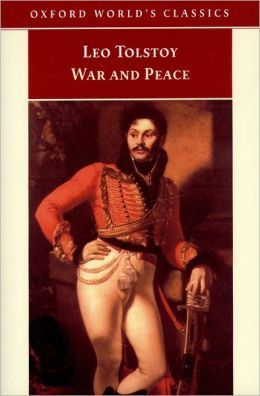
In Russia's struggle with Napoleon, Tolstoy saw a tragedy that involved all mankind. War and Peace broadly focuses on Napoleon’s invasion of Russia in 1812 and follows three of the most well-known characters in literature: Pierre Bezukhov, the illegitimate son of a count who is fighting for his inheritance and yearning for spiritual fulfillment; Prince Andrei Bolkonsky, who leaves his family behind to fight in the war against Napoleon; and Natasha Rostov, the beautiful young daughter of a nobleman who intrigues both men.As Napoleon’s army invades, Tolstoy brilliantly follows characters from diverse backgrounds—peasants and nobility, civilians and soldiers—as they struggle with the problems unique to their era, their history, and their culture. And as the novel progresses, these characters transcend their specificity, becoming some of the most moving—and human—figures in world literature.Tolstoy gave his personal approval to this translation, published here in a new single volume edition, which includes an introduction by Henry Gifford, and Tolstoy's important essay `Some Words about War and Peace'.

Michel de Montaigne, often called ‘the first modern man’, was one of the most influential figures of the Renaissance, singlehandedly responsible for popularizing the essay as a literary form. In 1571, Montaigne retired from ‘the slavery of the court and of public duties’ to his estates in order to devote himself to reflection, reading and writing. The result was 20 years of observations distilled into what he called ‘essais’, and an instant bestseller. How to get on with people, how to deal with violence, how to bring up children, how to live? These questions obsessed the nobleman and philosopher whose free-roaming explorations of his own thoughts and experiences were unlike anything written before. Wise but questioning, witty and idiosyncratic, and incredibly modern in outlook, Montaigne’s thoughts are still relatable 400 years after his death. An exclusive selection of his best essays chosen by acclaimed Montaigne biographer Sarah Bakewell showing the vast variety and originality of his work. Bakewell has also provided a comprehensive and insightful introduction on the man, his life, his work and his everlasting influence.

A book that redefines both family and narrative for the twenty-first century. A Heartbreaking Work of Staggering Genius is the moving memoir of a college senior who, in the space of five weeks, loses both of his parents to cancer and inherits his eight-year-old brother. Here is an exhilarating debut that manages to be simultaneously hilarious and wildly inventive as well as a deeply heartfelt story of the love that holds a family together.A Heartbreaking Work of Staggering Genius is an instant classic that will be read for decades to come.

"Solennels parmi les couples sans amour, ils dansaient, d'eux seuls préoccupés, goûtaient l'un à l'autre, soigneux, profonds, perdus. Béate d'être tenue et guidée, elle ignorait le monde, écoutait le bonheur dans ses veines, parfois s'admirant dans les hautes glaces des murs, élégante, émouvante, exceptionnelle, femme aimée, parfois reculant la tête pour mieux le voir qui lui murmurait des merveilles point toujours comprises, car elle le regardait trop, mais toujours de toute son âme approuvées, qui lui murmurait qu'ils étaient amoureux, et elle avait alors un impalpable rire tremblé, voilà, oui, c'était cela, amoureux, et il lui murmurait qu'il se mourait de baiser et bénir les longs cils recourbés, mais non pas ici, plus tard, lorsqu'ils seraient seuls, et alors elle murmurait qu'ils avaient toute la vie, et soudain elle avait peur de lui avoir déplu, trop sûre d'elle, mais non, ô bonheur, il lui souriait et contre lui la gardait et murmurait que tous les soirs ils se verraient."Ariane devant son seigneur, son maître, son aimé Solal, tous deux entourés d'une foule de comparses : ce roman n'est rien de moins que le chef-d'œuvre de la littérature amoureuse de notre époque.Grand Prix de l'Académie Française 1968.

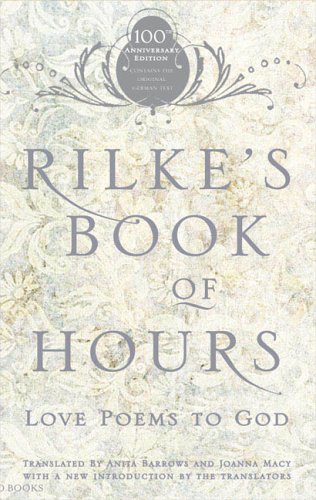
While visiting Russia in his twenties, Rainer Maria Rilke, one of the twentieth century's greatest poets, was moved by a spirituality he encountered there. Inspired, Rilke returned to Germany and put down on paper what he felt were spontaneously received prayers. Rilke's Book of Hours is the invigorating vision of spiritual practice for the secular world, and a work that seems remarkably prescient today, one hundred years after it was written. Rilke's Book of Hours shares with the reader a new kind of intimacy with God, or the divine--a reciprocal relationship between the divine and the ordinary in which God needs us as much as we need God. Rilke influenced generations of writers with his Letters to a Young Poet, and now Rilke's Book of Hours tells us that our role in the world is to love it and thereby love God into being. These fresh translations rendered by Joanna Macy, a mystic and spiritual teacher, and Anita Barrows, a skilled poet, capture Rilke's spirit as no one has done before.

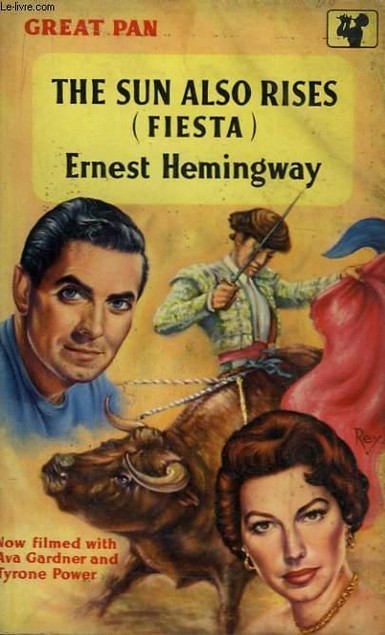
The quintessential novel of the Lost Generation, The Sun Also Rises (Fiesta) is one of Ernest Hemingway's masterpieces and a classic example of his spare but powerful writing style. A poignant look at the disillusionment and angst of the post-World War I generation, the novel introduces two of Hemingway's most unforgettable characters: Jake Barnes and Lady Brett Ashley. The story follows the flamboyant Brett and the hapless Jake as they journey from the wild nightlife of 1920s Paris to the brutal bullfighting rings of Spain with a motley group of expatriates. It is an age of moral bankruptcy, spiritual dissolution, unrealized love, and vanishing illusions. First published in 1926, The Sun Also Rises helped to establish Hemingway as one of the greatest writers of the twentieth century.

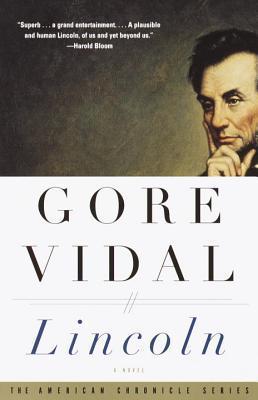
Gore Vidal's Narratives of Empire series spans the history of the United States from the Revolution to the post-World War II years. With their broad canvas and large cast of fictional and historical characters, the novels in this series present a panorama of the American political and imperial experience as interpreted by one of its most worldly, knowing, and ironic observers.To most Americans, Abraham Lincoln is a monolithic figure, the Great Emancipator and Savior of the Union, beloved by all. In Gore Vidal's Lincoln we meet Lincoln the man and Lincoln the political animal, the president who entered a besieged capital where most of the population supported the South and where even those favoring the Union had serious doubts that the man from Illinois could save it. Far from steadfast in his abhorrence of slavery, Lincoln agonizes over the best course of action and comes to his great decision only when all else seems to fail. As the Civil War ravages his nation, Lincoln must face deep personal turmoil, the loss of his dearest son, and the harangues of a wife seen as a traitor for her Southern connections. Brilliantly conceived, masterfully executed, Gore Vidal's Lincoln allows the man to breathe again.

A harrowing story that follows the wanderings of a boy abandoned by his parents during World War II, The Painted Bird is a dark novel that examines the proximity of terror and savagery to innocence and love.

Two ebullient young men search for Truth the Zen way: from marathon wine-drinking bouts, poetry jam sessions, and "yabyum" in San Francisco's Bohemia to solitude in the high Sierras and a vigil atop Desolation Peak in Washington State. Published just a year after On the Road put the Beat Generation on the map, The Dharma Bums is sparked by Kerouac's expansiveness, humor, and a contagious zest for life. One of the best and most popular of Kerouac's autobiographical novels, The Dharma Bums is based on experiences the writer had during the mid-1950s while living in California, after he'd become interested in Buddhism's spiritual mode of understanding. One of the book's main characters, Japhy Ryder, is based on the real poet Gary Snyder, who was a close friend and whose interest in Buddhism influenced Kerouac.RUNNING TIME ➼ 7hrs. and 16mins.©1958 Jack Kerouac (P)2020 Penguin Audio

This is the first integral collection of Pessoa's Caeiro heteronym in English, and the poems are accompanied by the introductions of Ricardo Reis and a memoir by Álvaro de Campos, two of Pessoa's other major poetic heteronyms, as well as a poem dedicated to Caeiro by Coelho Pacheco, believed by many commentators to be another one-off heteronym.Ricardo Reis "Alberto Caeiro da Silva was born in Lisbon on April 16, 1889, and died of tuberculosis in the same city on (. . .), 1915. He spent nearly all his life in a village in Ribatejo, and only returned to the city of his birth in his final months. In Ribatejo he wrote nearly all his poems . . ."Fernando Pessoa was educated in English in Durban, as the stepson of a Portuguese diplomat, and was completely bilingual. During his lifetime he was to publish only one collection of his poems in Portuguese, although many appeared in literary journals, under a number of alter egos, or heteronyms, chief amongst them Alberto Caeiro, Alvaro de Campos and Ricardo Reis. At his death in 1935, Pessoa left more than 20,000 manuscripts, both poetry and prose, in a large trunk, the contents of which are still being transcribed and deciphered to this day. He is the greatest modern poet in the Portuguese language, but also always considered himself a poet in the English tradition.

Here is Ignatius Reilly: slob extraordinary, a mad Oliver Hardy, a fat Don Quixote, a perverse Thomas Aquinas rolled into one, who is in violent revolt against the entire modern age, lying in his flannel nightshirt in a back bedroom on Constantinople Street in New Orleans, who between gigantic seizures of flatulence and eructations is filling dozens of Big Chief tablets with invective.His mother thinks he needs to go to work. He does, in a succession of jobs. Each job rapidly escalates into a lunatic adventure, a full-blown disaster; yet each has, like Don Quixote's, its own eerie logic.His girlfriend, Myrna Minkoff of the Bronx, thinks he needs sex. Ignatius is an intellectual, ideologue, deadbeat, goof-off, glutton, who should repel the reader with his gargantuan bloats, his thunderous contempt, and one-man war against everybody: Freud, homosexuals, heterosexuals, Protestants, and the assorted excesses of modern times. A tragicomedy, set in New Orleans.

EDITION INTEGRALE EXCEPTIONNELLE Avec Atlantic Editions, plongez dans la lecture d'un des plus grands chefs-d'oeuvre de la litterature Francaise dans une tres belle edition brochee.Seduisant, intelligent et ambitieux, Julien Sorel, fils de charpentier, est determine a depasser ses origines provinciales modestes. Realisant rapidement que le succes ne peut etre atteint que par l'adoption du code subtil de l'hypocrisie par lequel la societe opere, il accede au sommet de la hierarchie sociale en agissant par interet personnel et tromperies. Mais il n'est pas satisfait de son sort - il reve de devenir une sorte de nouveau Napoleon Bonaparte et meprise les gens de la haute societe. Son ambition demesuree le pousse a courtiser Mme de Renal, epouse devouee et naive du maire de Verrieres, et a conquerir Mathilde, fille altiere et passionnee du marquis de la Mole. Mais le temperament fier et ombrageux de Julien lui fera commettre l'irreparable et le menera a sa perte.Le Rouge et le Noir, d'abord paru en 1830, est un portrait satirique de la societe Francaise sous la Restauration, rongee par la corruption et la cupidite. Ce chef-d'oeuvre, noir par son realisme, et teinte du rouge de la passion et du crime, temoigne de l'immense talent litteraire de l'auteur.Henri Beyle, connu sous le pseudonyme de Stendhal (1783-1842), est l'un des plus grands ecrivains Francais. Il a marque la litterature par la profondeur de ses analyses psychologiques, son souci du realisme et de la recherche de la Verite, ses portraits de jeunes gens aux aspirations romantiques, et par la force de son style.Ce chef-d'oeuvre, incontournable et intemporel, ravira les lecteurs de tous ages.Dans la meme collection brochee de l'editeur Atlantic Editions, retrouvez un autre chef-d'oeuvre de Stendhal: La Chartreuse de Parme

An angry account of working class life in the 1930's and a call to embrace social equality. With an introduction by Amelia Gentleman. The Road to Wigan Pier is an insightful and powerful account of lives lived in poverty and deprivation in a time of low wages and meagre government support. Orwell describes dismal housing (including the lodging house where he stays), harsh working conditions and the devastating effects of unemployment. And he also vividly describes the courage and dignity of the people he meets. In the second half of the book, Orwell examines his own political and social affiliations with an impressive ability to provoke and to question. He defends middle class values whilst critiquing the failures of his own class, he advocates socialism whilst criticising the socialist movement in England.Part of the Macmillan Collector's Library, a series of stunning, pocket sized classics with ribbon markers. These beautiful books make perfect gifts or a treat for any book lover.

In 480 B.C., two million Persian invaders come to the mountain pass of Thermopylae in eastern Greece, where they are met by 300 of Sparta's finest warriors. The Greek loyalists battle for six days in a prelude to their ultimate victory.

A fresh perspective on a beloved classic by acclaimed translators Anita Barrows and Joanna Macy.German poet Rainer Maria Rilke’s (1875–1926) Letters to a Young Poet has been treasured by readers for nearly a century. Rilke’s personal reflections on the vocation of writing and the experience of living urge an aspiring poet to look inward, while also offering sage wisdom on further issues including gender, solitude, and romantic love. Barrows and Macy’s translation extends this compilation of timeless advice and wisdom to a fresh generation of readers. With a new introduction and commentary, this edition places the letters in the context of today’s world and the unique challenges we face when seeking authenticity.

Nearly seventy years after its original publication, Ray Bradbury’s internationally acclaimed novel Fahrenheit 451 stands as a classic of world literature set in a bleak, dystopian future. Today its message has grown more relevant than ever before.Guy Montag is a fireman. His job is to destroy the most illegal of commodities, the printed book, along with the houses in which they are hidden. Montag never questions the destruction and ruin his actions produce, returning each day to his bland life and wife, Mildred, who spends all day with her television “family.” But when he meets an eccentric young neighbor, Clarisse, who introduces him to a past where people didn’t live in fear and to a present where one sees the world through the ideas in books instead of the mindless chatter of television, Montag begins to question everything he has ever known.

Fear and Loathing in Las Vegas is the best chronicle of drug-soaked, addle-brained, rollicking good times ever committed to the printed page. It is also the tale of a long weekend road trip that has gone down in the annals of American pop culture as one of the strangest journeys ever undertaken.

Il saggio Moscardo, l’ingegnoso Mirtillo, il prode Argento e tanti altri sono gli eroi di questo fantastico romanzo epico. Un drappello di piccoli coraggiosi conigli, alla ricerca di un avvenire più sicuro, migra attraverso le ridenti colline del Berkshire e affronta mille nemici in un indimenticabile cammino verso il più prezioso dei beni: la libertà. Con La collina dei conigli la letteratura contemporanea ha ricreato la sua Iliade e la sua Odissea: i piccoli e coraggiosi protagonisti vivono avventure ed emozioni, nella quiete di splendidi pascoli, e raccontano leggende sul Popolo dei Conigli, i suoi dèi e i suoi eroi.A 50 anni dalla sua prima uscita della Collina dei conigli, con la prefazione originale di Madeline Miller che illumina il potere della mitologia in quest'epica storia di conigli.

"People are almost always better than their neighbours think they are"George Eliot’s most ambitious novel is a masterly evocation of diverse lives and changing fortunes in a provincial community. Peopling its landscape are Dorothea Brooke, a young idealist whose search for intellectual fulfillment leads her into a disastrous marriage to the pedantic scholar Casaubon; the charming but tactless Dr Lydgate, whose pioneering medical methods, combined with an imprudent marriage to the spendthrift beauty Rosamond, threaten to undermine his career; and the religious hypocrite Bulstrode, hiding scandalous crimes from his past. As their stories interweave, George Eliot creates a richly nuanced and moving drama, hailed by Virginia Woolf as "one of the few English novels written for grown-up people".

Alternate Cover Edition ISBN 0679734511. (ISBN13: 9780679734512)Inspired by the true story of a political murder that horrified Russians in 1869, Fyodor Dostoevsky conceived of Demons as a "novel-pamphlet" in which he would say everything about the plague of materialist ideology that he saw infecting his native land. What emerged was a prophetic and ferociously funny masterpiece of ideology and murder in pre-revolutionary Russia.

William Stoner ha una vita che sembra essere assai piatta e desolata. Non si allontana mai per più di centocinquanta chilometri da Booneville, il piccolo paese rurale in cui è nato, mantiene lo stesso lavoro per tutta la vita, per quasi quarantanni è infelicemente sposato alla stessa donna, ha sporadici contatti con l'amata figlia e per i suoi genitori è un estraneo, per sua ammissione ha soltanto due amici, uno dei quali morto in gioventù. Non sembra materia troppo promettente per un romanzo e tuttavia, in qualche modo, quasi miracoloso, John Williams fa della vita di William Stoner una storia appassionante, profonda e straziante. Come riesce l'autore in questo miracolo letterario? A oggi ho letto Stoner tre volte e non sono del tutto certo di averne colto il segreto, ma alcuni aspetti del libro mi sono apparsi chiari. E la verità è che si possono scrivere dei pessimi romanzi su delle vite emozionanti e che la vita più silenziosa, se esaminata con affetto, compassione e grande cura, può fruttare una straordinaria messe letteraria. È il caso che abbiamo davanti. (Dalla postfazione di Peter Cameron)

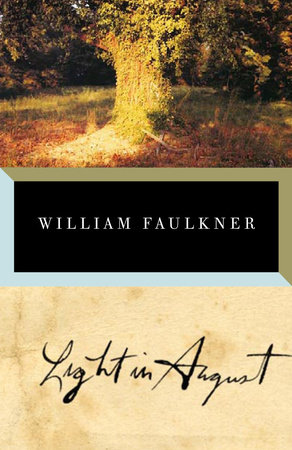
Light in August, a novel that contrasts stark tragedy with hopeful perseverance in the face of mortality, which features some of Faulkner’s most memorable characters: guileless, dauntless Lena Grove, in search of the father of her unborn child; Reverend Gail Hightower, a lonely outcast haunted by visions of Confederate glory; and Joe Christmas, a desperate, enigmatic drifter consumed by his mixed ancestry.

Kurt Vonnegut's absurdist classic Slaughterhouse-Five introduces us to Billy Pilgrim, a man who becomes unstuck in time after he is abducted by aliens from the planet Tralfamadore. In a plot-scrambling display of virtuosity, we follow Pilgrim simultaneously through all phases of his life, concentrating on his (and Vonnegut's) shattering experience as an American prisoner of war who witnesses the firebombing of Dresden. Slaughterhouse-Five is not only Vonnegut's most powerful book, it is as important as any written since 1945. Like Catch- 22, it fashions the author's experiences in the Second World War into an eloquent and deeply funny plea against butchery in the service of authority. Slaughterhouse-Five boasts the same imagination, humanity, and gleeful appreciation of the absurd found in Vonnegut's other works, but the book's basis in rock-hard, tragic fact gives it a unique poignancy--and humor.

A modern classic, Einstein's Dreams is a fictional collage of stories dreamed by Albert Einstein in 1905, when he worked in a patent office in Switzerland. As the defiant but sensitive young genius is creating his theory of relativity, a new conception of time, he imagines many possible worlds. In one, time is circular, so that people are fated to repeat triumphs and failures over and over. In another, there is a place where time stands still, visited by lovers and parents clinging to their children. In another, time is a nightingale, sometimes trapped by a bell jar.Now translated into thirty languages, Einstein's Dreams has inspired playwrights, dancers, musicians, and painters all over the world. In poetic vignettes, it explores the connections between science and art, the process of creativity, and ultimately the fragility of human existence.

Publicado em livro pela primeira vez em 1891, O retrato de Dorian Gray levou seu autor à prisão após um processo judicial sobre moralismo e obscenidade. Já no século XXI, descobriram-se versões anteriores à do livro, dando início a outro debate acerca de todas as versões da obra. A edição da Antofágica traz o texto de 1891 com notas de rodapé comentando o processo de escrita do autor ao longo de todas as versões deste clássico que é um dos mais amados e analisados da literatura mundial.Até onde você iria em troca da juventude eterna? Rico, jovem e extremamente atraente, Dorian Gray está no auge de sua vida. Mas quando torna-se inspiração para o pintor Basil Hallward a ponto de ganhar dele um retrato, algo imediatamente se transforma: perturbado pela consciência do envelhecimento, faz uma espécie de barganha para que a pintura carregue o peso da idade enquanto sua própria juventude se mantenha preservada.Entregue à liberdade do prazer e da satisfação de todos os seus desejos, Dorian Gray passa a viver uma vida secreta. Embora aos olhos do conservadorismo inglês seja visto como um homem de moral intocada, no submundo londrino deixa-se levar por um hedonismo extremo, envolvido em relações violentas e com um distorcido senso de ética que degradam apenas o retrato. Polêmico, O retrato de Dorian Gray carrega não somente a análise de uma época, mas também uma profunda crítica à sociedade, ao moralismo vitoriano e, sobretudo, ao desejo de uma juventude permanente. É a história de uma vida dupla marcada tanto pela culpa quanto pelo prazer.A edição da Antofágica é recheada de notas assinadas pelos pesquisadores Manoel Carlos Alves (UFBA) e Liciane Guimarães Corrêa (UERJ) e conta com tradução inédita de Samir Machado de Machado. As artes ficaram à cargo do artista Marcelo Tolentino, que usou a técnica da monotipia para gravar mais de 60 ilustrações. A apresentação é do escritor best-seller Vitor Martins, e assinam os posfácios Manoel Carlos Alves, doutorando em Literatura e Cultura pela UFBA, a vencedora do Jabuti Natalia Borges Polesso e Samuel Gomes, escritor e criador de conteúdo.

An astonishing effort on the part of the leading Klingon scholars of today, telling a story of blood, honour and vengeance in true Klingon tradition. With the English-language version printed on the left and the Klingon on the right, this best-known of Shakespeare's plays, a tour-de-force of Elizabethan theatre, can now be read and understood in the great warrior tongue even by non-Klingon speakers. As General Chang (Christopher Plummer) was heard to remark in the movie Star Trek IV: The Undiscovered Country: "Shakespeare is better in the original Klingon."Building on the groundwork of linguist Marc Okrand, author of The Klingon Dictionary, who constructed a fully spoken language out of what began as little more than a background prop, the Klingon Language Institute in Flourtown, Pennsylvania, is dedicated to the study and teaching of Klingon as a living tongue. Translating the great works of literature, Hamlet among them, is central to their philosophy of education and discovery.

In his new work, Michel Houellebecq combines erotic provocation with a terrifying vision of a world teetering between satiety and fanaticism, to create one of the most shocking, hypnotic, and intelligent novels in years.In his early forties, Michel Renault skims through his days with as little human contact as possible. But following his father’s death he takes a group holiday to Thailand where he meets a travel agent—the shyly compelling Valérie—who begins to bring this half-dead man to life with sex of escalating intensity and audacity. Arcing with dreamlike swiftness from Paris to Pattaya Beach and from sex clubs to a terrorist massacre, Platform is a brilliant, apocalyptic masterpiece by a man who is widely regarded as one of the world’s most original and daring writers.

This tells the poignant tale of a Chinese farmer and his family in old agrarian China. The humble Wang Lung glories in the soil he works, nurturing the land as it nurtures him and his family. Nearby, the nobles of the House of Hwang consider themselves above the land and its workers; but they will soon meet their own downfall.Hard times come upon Wang Lung and his family when flood and drought force them to seek work in the city. The working people riot, breaking into the homes of the rich and forcing them to flee. When Wang Lung shows mercy to one noble and is rewarded, he begins to rise in the world, even as the House of Hwang falls.

Alternate cover edition of ISBN 0553213695 / 9780553213690"As Gregor Samsa awoke one morning from uneasy dreams he found himself transformed in his bed into a gigantic insect. He was laying on his hard, as it were armor-plated, back and when he lifted his head a little he could see his domelike brown belly divided into stiff arched segments on top of which the bed quilt could hardly keep in position and was about to slide off completely. His numerous legs, which were pitifully thin compared to the rest of his bulk, waved helplessly before his eyes." With it's startling, bizarre, yet surprisingly funny first opening, Kafka begins his masterpiece, The Metamorphosis. It is the story of a young man who, transformed overnight into a giant beetle-like insect, becomes an object of disgrace to his family, an outsider in his own home, a quintessentially alienated man. A harrowing—though absurdly comic—meditation on human feelings of inadequacy, guilt, and isolation, The Metamorphosis has taken its place as one of the most widely read and influential works of twentieth-century fiction. As W.H. Auden wrote, "Kafka is important to us because his predicament is the predicament of modern man."

"[This book] mirrors all of Nietzsche's thought and could be related in hundreds of ways to his other books, his notes, and his letters. And yet it is complete in itself. For it is a work of art." —Walter Kaufmann in the IntroductionNietzsche called The Gay Science "the most personal of all my books." It was here that he first proclaimed the death of God—to which a large part of the book is devoted—and his doctrine of the eternal recurrence.Walter Kaufmann's commentary, with its many quotations from previously untranslated letters, brings to life Nietzsche as a human being and illuminates his philosophy. The book contains some of Nietzsche's most sustained discussions of art and morality, knowledge and truth, the intellectual conscience and the origin of logic.Most of the book was written just before Thus Spoke Zarathustra, the last part five years later, after Beyond Good and Evil. We encounter Zarathustra in these pages as well as many of Nietzsche's most interesting philosophical ideas and the largest collection of his own poetry that he himself ever published.Walter Kaufmann's English versions of Nietzsche represent one of the major translation enterprises of our time. He is the first philosopher to have translated Nietzsche's major works, and never before has a single translator given us so much of Nietzsche.

The narrative drive of Stowe's classic novel is often overlooked in the heat of the controversies surrounding its anti-slavery sentiments. In fact, it is a compelling adventure story with richly drawn characters and has earned a place in both literary and American history. Stowe's religious beliefs show up in the novel's final, overarching theme—the exploration of the nature of Christianity and how Christian theology is fundamentally incompatible with slavery.

One by one the boys begin to fall…In 1914 a room full of German schoolboys, fresh-faced and idealistic, are goaded by their schoolmaster to troop off to the ‘glorious war’. With the fire and patriotism of youth they sign up. What follows is the moving story of a young ‘unknown soldier’ experiencing the horror and disillusionment of life in the trenches.

Alternate editions can be found here and here.A gothic masterpiece of tempestuous passions and dark secrets, Charlotte Brontë's Jane Eyre is edited with an introduction and notes by Stevie Davis in Penguin Classics.Charlotte Brontë tells the story of orphaned Jane Eyre, who grows up in the home of her heartless aunt, enduring loneliness and cruelty. This troubled childhood strengthens Jane's natural independence and spirit - which prove necessary when she finds employment as a governess to the young ward of Byronic, brooding Mr Rochester. As her feelings for Rochester develop, Jane gradually uncovers Thornfield Hall's terrible secret, forcing her to make a choice. Should she stay with Rochester and live with the consequences, or follow her convictions - even if it means leaving the man she loves? A novel of intense power and intrigue, Jane Eyre dazzled readers with its passionate depiction of a woman's search for equality and freedom.

How Do You Write a Love Story? THE STORY GRID WILL TEACH YOU The Story Grid is a writing tool that... 1. Tells you if your Story “works” or “doesn’t work.” 2. Pinpoints Story problems without abusing you, the writer. The Story Grid asserts that you are not the problem. The problem is the problem. 3. Reveals—in very specific terms—what you must do to fix your Story’s problems. 4. Guides you in re-envisioning and resuscitating a seemingly irredeemable pile of paper you’ve stuck in an attic drawer. 5. Helps to inspire an original creation. Why Is Pride and Prejudice the Consummate Love Story? THE STORY GRID WILL SHOW YOU You’ve read Jane Austen’s classic Love Story and you aspire to write one yourself. What do you do now? In a magical world, Jane Austen would sit down with you and explain how she wrote a novel that sells approximately 400,000 copies a year...more than two centuries after it was published! In the real world, Pride and Prejudice, The Story Grid Edition is the next best thing. By transforming the reading experience into writing inspiration, it breaks down how Jane Austen abided by the five commandments of storytelling in each and every scene of her novel. And it shows you how she delivered the obligatory scenes and conventions of the Love Story genre. Pride and Prejudice, The Story Grid Edition details the craft behind the dazzling storytelling and shows you how to tell your own best Love Story.

Frasier star Kelsey Grammer is the perfect narrator to anchor us in this time-traveling, mind-bending classic.The Time Machine is the uncontested granddaddy of all modern time travel stories. H.G. Wells’ 1895 adventure sweeps us up alongside a brilliant scientist who is determined to expand his experience beyond the confines of the present day. His journey through space and time brings him face-to-face with the darkest and most brilliant aspects of human existence. On an adventure this unpredictable, you want an extremely dependable narrator. This Apple Books exclusive is read by Frasier actor Kelsey Grammer, whose august voice imparts calm certainty, even as the story propels us into the thrilling unknown.

This epic tale about the effects of the Russian Revolution and its aftermath on a bourgeois family was not published in the Soviet Union until 1987. One of the results of its publication in the West was Pasternak's complete rejection by Soviet authorities; when he was awarded the Nobel Prize for Literature in 1958 he was compelled to decline it. The book quickly became an international best-seller.Dr. Yury Zhivago, Pasternak's alter ego, is a poet, philosopher, and physician whose life is disrupted by the war and by his love for Lara, the wife of a revolutionary. His artistic nature makes him vulnerable to the brutality and harshness of the Bolsheviks. The poems he writes constitute some of the most beautiful writing featured in the novel.