
J.R.R. Tolkien
John Ronald Reuel Tolkien: writer, artist, scholar, linguist. Known to millions around the world as the author of The Lord of the Rings, Tolkien spent most of his life teaching at the University of Oxford where he was a distinguished academic in the fields of Old and Middle English and Old Norse. His creativity, confined to his spare time, found its outlet in fantasy works, stories for children, poetry, illustration and invented languages and alphabets. Tolkien’s most popular works, The Hobbit and The Lord of the Rings are set in Middle-earth, an imagined world with strangely familiar settings inhabited by ancient and extraordinary peoples. Through this secondary world Tolkien writes perceptively of universal human concerns – love and loss, courage and betrayal, humility and pride – giving his books a wide and enduring appeal. Tolkien was an accomplished amateur artist who painted for pleasure and relaxation. He excelled at landscapes and often drew inspiration from his own stories. He illustrated many scenes from The Silmarillion, The Hobbit and The Lord of the Rings, sometimes drawing or painting as he was writing in order to visualize the imagined scene more clearly. Tolkien was a professor at the Universities of Leeds and Oxford for almost forty years, teaching Old and Middle English, as well as Old Norse and Gothic. His illuminating lectures on works such as the Old English epic poem, Beowulf, illustrate his deep knowledge of ancient languages and at the same time provide new insights into peoples and legends from a remote past. Tolkien was born in Bloemfontein, South Africa, in 1892 to English parents. He came to England aged three and was brought up in and around Birmingham. He graduated from the University of Oxford in 1915 and saw active service in France during the First World War before being invalided home. After the war he pursued an academic career teaching Old and Middle English. Alongside his professional work, he invented his own languages and began to create what he called a mythology for England; it was this ‘legendarium’ that he would work on throughout his life. But his literary work did not start and end with Middle-earth, he also wrote poetry, children’s stories and fairy tales for adults. He died in 1973 and is buried in Oxford where he spent most of his adult life.
28 Books Written
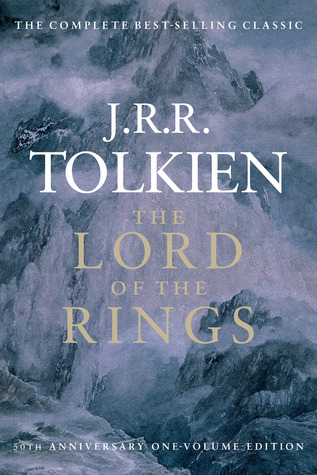
One Ring to rule them all, One Ring to find them, One Ring to bring them all and in the darkness bind themIn ancient times the Rings of Power were crafted by the Elven-smiths, and Sauron, the Dark Lord, forged the One Ring, filling it with his own power so that he could rule all others. But the One Ring was taken from him, and though he sought it throughout Middle-earth, it remained lost to him. After many ages it fell by chance into the hands of the hobbit Bilbo Baggins.From Sauron's fastness in the Dark Tower of Mordor, his power spread far and wide. Sauron gathered all the Great Rings to him, but always he searched for the One Ring that would complete his dominion.When Bilbo reached his eleventy-first birthday he disappeared, bequeathing to his young cousin Frodo the Ruling Ring and a perilous quest: to journey across Middle-earth, deep into the shadow of the Dark Lord, and destroy the Ring by casting it into the Cracks of Doom.The Lord of the Rings tells of the great quest undertaken by Frodo and the Fellowship of the Ring: Gandalf the Wizard; the hobbits Merry, Pippin, and Sam; Gimli the Dwarf; Legolas the Elf; Boromir of Gondor; and a tall, mysterious stranger called Strider.

When Thorin Oakenshield and his band of dwarves embark upon a dangerous quest to reclaim their home from the ruthless dragon Smaug, Gandalf the wizard suggests an unlikely accomplice: Bilbo Baggins, an unassuming hobbit dwelling in peaceful Hobbiton.As they journey from the wonders of Rivendell to the terrors of Mirkwood and beyond, Bilbo discovers within himself unexpected qualities of courage and cunning. And with each step, a newfound love of adventure propels him toward his great destiny . . . a destiny that waits in the dark caverns beneath the Misty Mountains, where a twisted creature known as Gollum jealously guards a precious magic ring.

These magical adaptations became instant classics when they were first broadcast on BBC Radio 4, and continue to delight today. Tolkien's epic tale of Middle-earth has all the classic ingredients of fantasy and adventure: dwarves, elves, goblins and trolls, a terrifying dragon, a great wizard, a fearsome evil, a perilous quest and a dramatic climax. With an all-star cast including Ian Holm, Michael Hordern, Robert Stephens, John le Mesurier and Bill Nighy, these enchanting dramatisations are a must for all Tolkien fans. 'For those who find the books too long-winded and the films too noisy, this is the perfect way to assimilate the myth and magic of Middle-earth' - Guardian.19 CDs. 17 hrs 30 mins.

Sauron, the Dark Lord, has gathered to him all the Rings of Power – the means by which he intends to rule Middle-earth. All he lacks in his plans for dominion is the One Ring – the ring that rules them all – which has fallen into the hands of the hobbit, Bilbo Baggins.In a sleepy village in the Shire, young Frodo Baggins finds himself faced with an immense task, as his elderly cousin Bilbo entrusts the Ring to his care. Frodo must leave his home and make a perilous journey across Middle-earth to the Cracks of Doom, there to destroy the Ring and foil the Dark Lord in his evil purpose.

Begin your journey into Middle-earth.The inspiration for the upcoming original series on Prime Video, The Lord of the Rings: The Rings of Power.The Two Towers is the second part of J.R.R. Tolkien’s epic adventure The Lord of the Rings.One Ring to rule them all, One Ring to find them, One Ring to bring them all and in the darkness bind them.Frodo and his Companions of the Ring have been beset by danger during their quest to prevent the Ruling Ring from falling into the hands of the Dark Lord by destroying it in the Cracks of Doom. They have lost the wizard, Gandalf, in a battle in the Mines of Moria. And Boromir, seduced by the power of the Ring, tried to seize it by force. While Frodo and Sam made their escape, the rest of the company was attacked by Orcs. Now they continue the journey alone down the great River Anduin—alone, that is, save for the mysterious creeping figure that follows wherever they go.

The Return of the King is the third part of J.R.R. Tolkien’s epic adventure The Lord of the Rings.One Ring to rule them all, One Ring to find them, One Ring to bring them all and in the darkness bind them.The Dark Lord has risen, and as he unleashes hordes of Orcs to conquer all Middle-earth, Frodo and Sam struggle deep into his realm in Mordor.To defeat Sauron, the One Ring must be destroyed in the fires of Mount Doom. But the way is impossibly hard, and Frodo is weakening. The Ring corrupts all who bear it and Frodo’s time is running out.Will Sam and Frodo succeed, or will the Dark Lord rule Middle-earth once more?
Smaug certainly looked fast asleep, when Bilbo peeped once more from the entrance. He was just about to step out onto the floor when he caught a sudden thin ray of red from under the drooping lid of Smaug's left eye. He was only pretending to be sleep! He was watching the tunnel entrance!Whisked from his comfortable hobbit-hole by Gandalf the wizard and a band of dwarves, Bilbo Baggins finds himself caught up in a plot to raid the treasure hoard of Smaug the Magnificent, a large and very dangerous dragon.

The Silmarillion is an account of the Elder Days, of the First Age of Tolkien’s world. It is the ancient drama to which the characters in The Lord of the Rings look back, and in whose events some of them such as Elrond and Galadriel took part. The tales of The Silmarillion are set in an age when Morgoth, the first Dark Lord, dwelt in Middle-Earth, and the High Elves made war upon him for the recovery of the Silmarils, the jewels containing the pure light of Valinor.

This tale of Middle-earth's First Age, which appeared in incomplete forms in the posthumously published The Silmarillion and Unfinished Tales , also edited by Tolkien's son, Christopher, only hinted at the depth and power of the tragic story of Túrin and Niënor, the children of Húrin, the lord of Dor-lómin, who achieved renown for having confronted Morgoth, who was the master of Sauron, the manifestation of evil in the Lord of the Rings.Six thousand years before the One Ring is destroyed, Middle-earth lies under the shadow of the Dark Lord Morgoth. The greatest warriors among elves and men have perished, and all is in darkness and despair. But a deadly new leader rises, Túrin, son of Húrin, and with his grim band of outlaws begins to turn the tide in the war for Middle-earth -- awaiting the day he confronts his destiny and the deadly curse laid upon him.

Classic hardback edition of this fascinating collection of stories, featuring Tolkien’s own painting of the dragon Glaurung on the cover, which continues the tales of The Hobbit, The Lord of the Rings and The Silmarillion and contains an alternative version of The Children of Hurin.Unfinished Tales is a collection of narratives ranging in time from the Elder Days of Middle-earth to the end of the War of the Ring, and provides those who have read The Lord of the Rings with a whole collection of background and new stories from the twentieth century’s most acclaimed popular author.The book concentrates on the realm of Middle-earth and comprises such elements as Gandalf’s lively account of how it was that he came to send the Dwarves to the celebrated party at Bag-End, the emergence of the sea-god Ulmo before the eyes of Tuor on the coast of Beleriand, and an exact description of the military organization of the Riders of Rohan.Unfinished Tales also contains the only story about the long ages of Numenor before its downfall, and all that is known about such matters as the Five Wizards, the Palantiri and the legend of Amroth. The tales were collated and edited by JRR Tolkien’s son and literary heir, Christopher Tolkien, who provides a short commentary on each story, helping the reader to fill in the gaps and put each story into the context of the rest of his father’s writings.

BOOK DESCRIPTION:Can you imagine writing to Father Christmas and actually getting a reply? For more than twenty years, the children of J.R.R. Tolkien received letters from the North Pole - from Father Christmas himself! They told wonderful stories of mischief and disaster, adventures, and battles: how the reindeer got loose and scattered presents all over the place, how the accident-prone Polar Bear climbed the North Pole and fell through the roof of Father Christmas's house, and many others.Now, for the first time, these letters are brought to life with specially arranged holiday music.REVIEW:"Tolkien at his relaxed and ingenious best." The Times of LondonABOUT THE AUTHOR:J.R.R. TOLKIEN (1892-1973) is the creator of Middle-earth and author of such classic extraordinary works of fiction as 'The Hobbit', 'The Lord of the Rings', and 'The Silmarillion.' His books have been translated into more than fifty languages and have sold many millions of copies worldwide.©1997, 2004 (P)1997 Harper Collins UK

The tale of Beren and Lúthien was, or became, an essential element in the evolution of The Silmarillion, the myths and legends of the First Age of the World conceived by J.R.R. Tolkien. Returning from France and the battle of the Somme at the end of 1916, he wrote the tale in the following year. Essential to the story, and never changed, is the fate that shadowed the love of Beren and Lúthien: for Beren was a mortal man, but Lúthien was an immortal elf. Her father, a great elvish lord, in deep opposition to Beren, imposed on him an impossible task that he must perform before he might wed Lúthien. This is the kernel of the legend; and it leads to the supremely heroic attempt of Beren and Lúthien together to rob the greatest of all evil beings, Melkor, called Morgoth, the Black Enemy, of a Silmaril. In this book Christopher Tolkien has attempted to extract the story of Beren and Lúthien from the comprehensive work in which it was embedded; but that story was itself changing as it developed new associations within the larger history. To show something of the process whereby this legend of Middle-earth evolved over the years, he has told the story in his father's own words by giving, first, its original form, and then passages in prose and verse from later texts that illustrate the narrative as it changed. Presented together for the first time, they reveal aspects of the story, both in event and in narrative immediacy, that were afterwards lost. Published on the tenth anniversary of the last Middle-earth book, the international bestseller The Children of Húrin, this new volume will similarly include drawings and color plates by Alan Lee, who also illustrated The Lord of the Rings and The Hobbit and went on to win Academy Awards for his work on The Lord of the Rings film trilogy.

Pad Gondolina posljednja je Tolkienova knjiga o Međuzemlju. Između dva sukobljena moćna boga – zlog Morgotha, koji vlada nad vojnom silom u tvrđavi Angbandu, i vladara mora Ulma – nalazi se divni grad Gondolin. Sagradili su ga Noldori, vilenjaci koji su nekad živjeli u božanskom Valinoru, ali su se pobunili i pobjegli u Međuzemlje. Morgoth mrzi Gondolin i njegova vladara Turgona, ali uzalud traži taj skriveni grad. Za to vrijeme bogovi u Valinoru ne žele se miješati usprkos Ulmovu nagovoru.Prolaze stoljeća. Za ostvarenje svojih nauma Ulmo bira Túrinova rođaka Tuora i u jednom od najveličanstvenijih trenutaka u povijesti Međuzemlja Tuor gleda kako se morski bog diže iz olujna oceana. Tuor pođe u Gondolin, postane glasovit i oženi se Turgonovom kćeri Idril. Ulmo već zna da će njihov sin Eärendel imati ključnu ulogu u budućnosti.Međutim, grad je izdan i Morgoth šalje vojsku balroga, zmajeva i orka. Nakon detaljno opisane bitke za Gondolin, iz uništenoga grada bježe Túrin i Idril s malim Eärendelom. Trebali su otputovati u Priču o Eärendelu, koju Tolkien nije napisao, ali iz raznih njegovih izvora ona je rekonstruirana u ovoj knjizi.Pad Gondolina »možda najživlje prikazuje svijet Međuzemlja od svih Tolkienovih djela, a k tome najdublje izražava njegove filozofske teme« (Kane). Knjiga okuplja građu koja je već objavljivana, ali je uspješno zaokružuje, i podastire dojmljivu priču o Gondolinu s minimalnim uredničkim intervencijama. Od tri »velike priče« Drugoga doba Pad Gondolina je napisan prvi, a objavljen posljednji, nakon Húrinove djece i Berena i Lúthien. Čitatelja vodi natrag sve do početne točke cijelog Tolkienova »legendarija« – priče o Eärendelu.

The Book of Lost Tales: Part One is the first of a two-volume set that contains the early myths and legends which led to the writing of J.R.R. Tolkien’s epic tale of war, The Silmarillion.The Book of Lost Tales was the first major work of imagination by J.R.R. Tolkien, begun in 1916-17 when he was twenty-five years old and left incomplete several years later. It stands at the beginning of the entire conception of Middle-earth and Valinor, for these tales were the first form of the myths and legends that came to be called The Silmarillion. Embedded in English legend, they are set in the narrative frame of a great westward voyage over the Ocean by a mariner named Eriol (or Ælfwine) to Tol Eressea, the Lonely Isle, where elves dwelt; from him they learned their true history, the Lost Tales of Elfinesse.In these Tales are found the earliest accounts and original ideas of Gods and Elves, Dwarves, Balrogs, and Orcs; of the Silmarils and the Two Trees of Valinor; of Nargothrond and Gondolin; of the geography and cosmology of Middle-earth.Part One contains the tales of The Music of the Ainur, The Building of Valinor, The Chaining of Melko, The Coming of the Elves, and The Flight of the Noldoli, among others. Each tale is followed by a short essay by Christopher Tolkien, the author's son and literary executor.
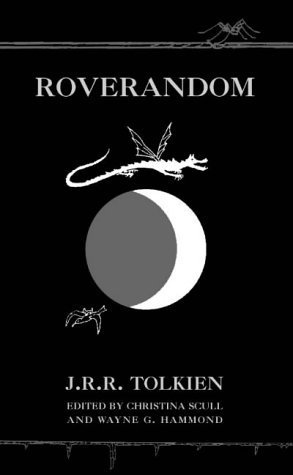
A classic children's story by the author of The HobbitRover should never have bitten the wizard's trousers. His punishment was to be transformed into a toy, and now he is forced to track down the magician so he can be returned to normal. His adventures will take him to the moon and under the sea, introducing him to many fabulous - and dangerous - creatures.Inspired by the loss of his own child's favourite toy, this charming tale was written by J.R.R. Tolkien long before The Hobbit, yet remained unpublished for more than 70 years. This new paperback edition includes a full introduction and detailed notes about the story.This is an old-fashioned story, yet it still speaks freshly today... would leap to life when read aloud to a child. - INDEPENDENTLord of the Rings buffs will enjoy picking out bits of Nordic mythology and will relish Tolkien's fabulous sense of landscape - THE TIMESCover illustration by J.R.R. Tolkien

'Four classic tales from the author of The Hobbit The fat and unheroic Farmer Giles of Ham is called upon to do battle with the dragon Chrysophylax: Niggle the painter sets out to paint the perfect tree: Hobbits, princesses, dwarves and trolls partake in the adventures of Tom Bombadil: and Smith of Wootton Major journeys to the land of Faery via the magical ingredients of a giant cake. This definitive collection of J.R.R. Tolkien's acclaimed short stories and poems reaffirms his status as a master storyteller for readers young and old. FARMER GILES OF HAM 1949 A fabulous tale of the days when giants and dragons walked the kingdom - SUNDAY TIMES LEAF BY NIGGLE 1964 A haunting and successful demonstration of the qualities of faerie - NEW YORK TIMES THE ADVENTURES OF TOM BOMBADIL 1961 Something close to genius - THE LISTENER SMITH OF WOOTTON MAJOR 1967 Whoever reads it at eight will no doubt still be going back to it at eighty - NEW STATESMAN

This is the 50th anniversary edition of Tolkien's best-loved short fairy story, originally told to his children in the 1920s and expanded for publication in 1949. Bluff Farmer Giles lives in a land-of-fable England, full of giants and dragons. A reluctant hero like the Brave Little Tailor or Bilbo in The Hobbit, Giles wins a great reputation by firing his blunderbuss at a wandering giant--who retreats not in fear but to avoid this tiresome stinging "insect". One thing leads to another, and despite all his excuses the now famous Giles is called to save his country from the marauding dragon Chrysophylax. He has a legendary anti-dragon sword and a lot of luck, but dragons can be as devious as politicians... Tolkien crammed much sly wit into his little story, plus jokey philological explanations that Giles's amazing adventures are commemorated in Thames Valley placenames like Worminghall and Thame. It's illustrated with nearly 50 line drawings by Paula Baynes: Tolkien loved these, but some look sadly faded here, like fourth-generation photocopies. As a bonus, the anniversary edition includes an introduction telling the story's history, a transcription of the original, unfinished draft, and 23 pages of notes on allusions and names (Chrysophylax means "keeper of gold", which is indeed what dragons do). A pleasant gift book. --David Langford

This adventure book tells of Tom's encounters with the River-woman's beautiful daughter, Old Man Willow, the Badger-folk, the ghostly Barrowwight, a lovely princess, trolls, dwarves, and legendary beasts. A delightful volume of 16 songs, rhymes and poems from the acclaimed The Hobbit. Illustrated.

Two bewitching fantasies by J.R.R. Tolkien, beloved author of THE HOBBIT. In SMITH OF WOOTTON MAJOR, Tolkien explores the gift of fantasy, and what it means to the life and character of the man who receives it. And FARMER GILES OF HAM tells a delightfully ribald mock-heroic tale, where a dragon who invades a town refuses to fight, and a farmer is chosen to slay him.Farmer Giles of Ham first published in 1949. Smith of Wootton Major was first published in November 1965.

Leaf by Niggle is a short story about a painter who is working on a picture leaf by leaf. Niggle, the painter, is a kind hearted soul and goes out of his way to help his friends and neighbours but eventually finds that this prevents him from completing his masterpiece. He has a hard decision to make; when engrossed in his work, his neighbour asks him to fix his roof using his art supplies.
Первое серьезное художественное произведе- ние Джона Р. Р. Толкина, начатое им в 1916–1917 годах, когда автору было двадцать пять лет, и оставленное незавершенным несколькими годами позже. "Утраченные Сказания" — прообраз тех мифов и легенд, что впоследствии будут названы "Силь- мариллионом". "Сказания", в которых чувствуется несомненное влияние английских легенд, обрамлены историей о предпринятом мореходом Эриолом грандиозном путе- шествии через океан на запад, к берегам Тол Эрэссэа, Одинокого Острова, где обита- ют эльфы. Здесь отважный Эриол узнает истинную историю волшебного народа — Утраченные Сказания Эльфинесса.

Best-selling Tolkien expert Brian Sibley (The Lord of the The Making of the Movie Trilogy and The Lord of the Rings Official Movie Guide) presents a slipcased collection of four full-color, large-format maps of Tolkien's imaginary realm illustrated by John Howe, a conceptual designer for the blockbuster films directed by Peter Jackson. The set includes a hardcover book describing in detail the importance and evolution of geography within Tolkien's epic fiction and four color maps presented with minimal folds, including two (Beleriand and Númenor) never before published in this country.

Many years ago, J.R.R. Tolkien composed his own version, now published for the first time, of the great legend of Northern antiquity, in two closely related poems to which he gave the titles The New Lay of the Völsungs and The New Lay of Gudrún.In the "Lay of the Völsungs" is told the ancestry of the great hero Sigurd, the slayer of Fáfnir most celebrated of dragons, whose treasure he took for his own; of his awakening of the Valkyrie Brynhild, who slept surrounded by a wall of fire, and of their betrothal; and of his coming to the court of the great princes who were named the Niflungs (or Nibelungs), with whom he entered into blood-brotherhood. In that court there sprang great love but also great hate, brought about by the power of the enchantress of the Niflungs, skilled in the arts of magic, of shape-changing and potions of forgetfulness.In scenes of dramatic intensity, of confusion of identity, thwarted passion, jealousy, and bitter strife, the tragedy of Sigurd and Brynhild, of Gunnar the Niflung and Gudrún his sister, mounts to its end in the murder of Sigurd at the hands of his blood-brothers, the suicide of Brynhild, and the despair of Gudrún. In the "Lay of Gudrún" her fate after the death of Sigurd is told, her marriage against her will to the mighty Atli, ruler of the Huns (the Attila of history), his murder of her brothers the Niflung lords, and her hideous revenge.Deriving his version primarily from his close study of the ancient poetry of Norway and Iceland known as the Poetic Edda (and where no old poetry exists, from the later prose work Völsunga Saga), J.R.R. Tolkien employed a verse-form of short stanzas whose lines embody in English the exacting alliterative rhythms and the concentrated energy of the poems of the Edda.

This collection will entertain all who appreciate the art of masterful letter writing. The Letters of J.R.R Tolkien sheds much light on J.R.R. Tolkien's creative genius and grand design for the creation of a whole new Middle-earth. Featuring a radically expanded index, this volume contains 354 letters, dating between October 1914, when Tolkien was an undergraduate at the University of Oxford, and August 29, 1973, four days before his death. This is a valuable research tool for all fans wishing to trace the evolution of The Hobbit and The Lord of the Rings.

J. R. R. Tolkien’s writings on the Second Age of Middle-earth, collected for the first time in one volume complete with new illustrations in watercolor and pencil by renowned artist Alan Lee.J.R.R. Tolkien famously described the Second Age of Middle-earth as a "dark age, and not very much of its history is (or need be) told." And for many years readers would need to be content with the tantalizing glimpses of it found within the pages of The Lord of the Rings and its appendices, including the forging of the Rings of Power, the building of the Barad-dûr and the rise of Sauron.It was not until Christopher Tolkien published The Silmarillion after his father’s death that a fuller story could be told. Although much of the book’s content concerned the First Age of Middle-earth, there were at its close two key works that revealed the tumultuous events concerning the rise and fall of the island of Númenor. Raised out of the Great Sea and gifted to the Men of Middle-earth as a reward for aiding the angelic Valar and the Elves in the defeat and capture of the Dark Lord Morgoth, the kingdom became a seat of influence and wealth; but as the Númenóreans’ power increased, the seed of their downfall would inevitably be sown, culminating in the Last Alliance of Elves and Men.Even greater insight into the Second Age would be revealed in subsequent publications, first in Unfinished Tales of Númenor and Middle-earth, then expanded upon in Christopher Tolkien’s magisterial twelve-volume The History of Middle-earth, in which he presented and discussed a wealth of further tales written by his father, many in draft form.Now, adhering to the timeline of "The Tale of Years" in the appendices to The Lord of the Rings, editor Brian Sibley has assembled into one comprehensive volume a new chronicle of the Second Age of Middle-earth, told substantially in the words of Tolkien from the various published texts, with new illustrations in watercolor and pencil by the doyen of Tolkien art, Alan Lee.

The Fall of Arthur recounts in verse the last campaign of King Arthur, who, even as he stands at the threshold of Mirkwood, is summoned back to Britain by news of the treachery of Mordred. Already weakened in spirit by Guinevere’s infidelity with the now-exiled Lancelot, Arthur must rouse his knights to battle one last time against Mordred’s rebels and foreign mercenaries. Powerful, passionate, and filled with vivid imagery, this unfinished poem reveals Tolkien’s gift for storytelling at its brilliant best. Christopher Tolkien, editor, contributes three illuminating essays that explore the literary world of King Arthur, reveal the deeper meaning of the verses and the painstaking work his father applied to bring the poem to a finished form, and investigate the intriguing links between The Fall of Arthur and Tolkien’s Middle-earth.

If it is the author's job to paint word-pictures, few writers have accomplished the task more brilliantly than J.R.R. Tolkien, whose timeless fantasy classics have literally taken readers to another place.And what a place it is! The Middle-earth so graphically depicted in The Hobbit, The Rings Trilogy, and The Silmarillion is a breathtaking world of misty valleys and craggy tors, placid lakes and raging rivers, steamy bogs and glad green glades -- a magical kingdom inhabited by such unforgettable characters as the Great Goblin, Smaug the dragon, and the great wizard Gandolf. Small wonder this wonderland has provided such a rich source of inspiration for artists!In this book nine talented painters contribute powerful interpretations of Middle-earth, each one accompanied by the text that inspired it. Artists include Inger Edelfeldt, Tony Galuidi, Roger Garland, Robert Goldsmith, Michael Hague, John Howe, Alan Lee, Ted Nasmith, and Carol Emery Phenix.

Bilbo’s Last Song is considered by many to be Tolkien’s epilogue to his classic work The Lord of the Rings. As Bilbo Baggins takes his final voyage to the Undying Lands, he must say goodbye to Middle-earth. Poignant and lyrical, the song is both a longing to set forth on his ultimate journey and a tender farewell to friends left behind.Pauline Baynes’s jewel-like illustrations lushly depict both this final voyage and scenes from The Hobbit, as Bilbo remembers his first journey while he prepares for his last.