
John Steinbeck
John Ernst Steinbeck was an American writer. He won the 1962 Nobel Prize in Literature "for his realistic and imaginative writings, combining as they do sympathetic humor and keen social perception". He has been called "a giant of American letters." During his writing career, he authored 33 books, with one book coauthored alongside Edward F. Ricketts, including 16 novels, six non-fiction books, and two collections of short stories. He is widely known for the comic novels Tortilla Flat (1935) and Cannery Row (1945), the multi-generation epic East of Eden (1952), and the novellas The Red Pony (1933) and Of Mice and Men (1937). The Pulitzer Prize–winning The Grapes of Wrath (1939) is considered Steinbeck's masterpiece and part of the American literary canon. By the 75th anniversary of its publishing date, it had sold 14 million copies. Most of Steinbeck's work is set in central California, particularly in the Salinas Valley and the California Coast Ranges region. His works frequently explored the themes of fate and injustice, especially as applied to downtrodden or everyman protagonists.
31 Books Written
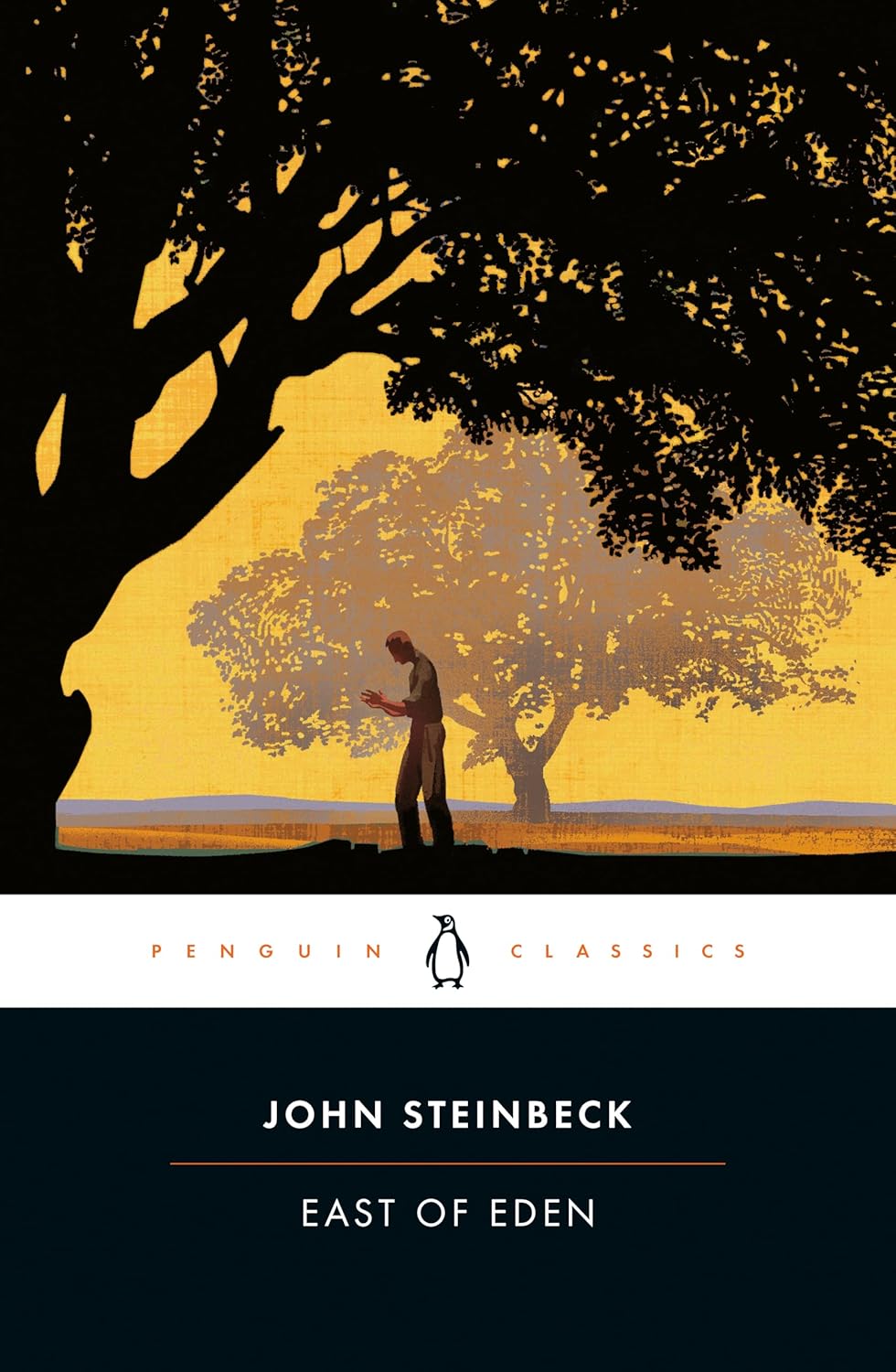
Phía đông vườn địa đàng là câu chuyện của những người Mỹ, khoảng những năm từ nửa cuối thế kỷ trước đến chiến tranh thế giới lần thứ nhất. Tác giả cho nó diễn ra ở chính quê hương mình. Tiểu thuyết được xuất bản năm 1952. Có thể là nhà văn đã thai nghén nó trong thời kỳ chiến tranh thế giới lần thứ hai. Phải chăng cuộc “người tàn sát người” khủng khiếp ấy đã làm cho Steinbeck băn khoăn về ý nghĩa cuộc sống, về bản chất của con người và cố tìm ra lời đáp. Phía đông vườn Địa đàng, đây là cuốn truyện về con người. Nhận vật trung tâm mang cái tên Adam, con người đầu tiên của nhân loại. Với nó nhà văn muốn đặt cơ sở cho một chủ nghĩa nhân đạo hữu hiệu. Steinbeck khẳng định niềm tin vào con người, vào cuộc sống, nhưng không phải một niềm tin lý tưởng hóa. Niềm tin ấy phải là cái cây đứng chắc, bắt rễ sâu vào miếng đất thực tế có cả đất màu mỡ lẫn sỏi đá, biết tránh sỏi đá, hút màu mỡ mà sinh trái ngọt.Trong phong trào đổi mới của ta hiện nay Phía đông vườn Địa đàng là cuốn sách nên đọc.

The Pulitzer Prize-winning epic of the Great Depression, a book that galvanized—and sometimes outraged—millions of readers. First published in 1939, Steinbeck’s Pulitzer Prize-winning epic of the Great Depression chronicles the Dust Bowl migration of the 1930s and tells the story of one Oklahoma farm family, the Joads-driven from their homestead and forced to travel west to the promised land of California. Out of their trials and their repeated collisions against the hard realities of an America divided into Haves and Have-Nots evolves a drama that is intensely human yet majestic in its scale and moral vision, elemental yet plainspoken, tragic but ultimately stirring in its human dignity. A portrait of the conflict between the powerful and the powerless, of one man’s fierce reaction to injustice, and of one woman’s stoical strength, the novel captures the horrors of the Great Depression and probes into the very nature of equality and justice in America. The Grapes of Wrath summed up its era in the way that Uncle Tom’s Cabin summed up the years of slavery before the Civil War. Sensitive to fascist and communist criticism, Steinbeck insisted that “The Battle Hymn of the Republic” be printed in its entirety in the first edition of the book—which takes its title from the first verse: “He is trampling out the vintage where the grapes of wrath are stored.” At once a naturalistic epic, captivity narrative, road novel, and transcendental gospel, Steinbeck’s powerful landmark novel is perhaps the most American of American Classics. This edition contains an introduction and notes by Steinbeck scholar Robert Demott.

A collectible 50th anniversary deluxe edition featuring an updated introduction by Jay Parini and first edition cover art and illustrated maps of Steinbeck’s route by Don Freeman In September 1960, John Steinbeck embarked on a journey across America. He felt that he might have lost touch with the country, with its speech, the smell of its grass and trees, its color and quality of light, the pulse of its people. To reassure himself, he set out on a voyage of rediscovery of the American identity, accompanied by a distinguished French poodle named Charley; and riding in a three-quarter-ton pickup truck named Rocinante. His course took him through almost forty states: northward from Long Island to Maine; through the Midwest to Chicago; onward by way of Minnesota, North Dakota, Montana (with which he fell in love), and Idaho to Seattle, south to San Francisco and his birthplace, Salinas; eastward through the Mojave, New Mexico, Arizona, to the vast hospitality of Texas, to New Orleans and a shocking drama of desegregation; finally, on the last leg, through Alabama, Virginia, Pennsylvania, and New Jersey to New York. Travels with Charley in Search of America is an intimate look at one of America's most beloved writers in the later years of his life—a self-portrait of a man who never wrote an explicit autobiography. Written during a time of upheaval and racial tension in the South—which Steinbeck witnessed firsthand—Travels with Charley is a stunning evocation of America on the eve of a tumultuous decade. This Penguin Classics Deluxe Edition also features French flaps and deckle-edged paper.For more than seventy years, Penguin has been the leading publisher of classic literature in the English-speaking world. With more than 1,700 titles, Penguin Classics represents a global bookshelf of the best works throughout history and across genres and disciplines. Readers trust the series to provide authoritative texts enhanced by introductions and notes by distinguished scholars and contemporary authors, as well as up-to-date translations by award-winning translators.

They are an unlikely pair: George is “small and quick and dark of face”; Lennie, a man of tremendous size, has the mind of a young child. Yet they have formed a “family,” clinging together in the face of loneliness and alienation.Laborers in California’s dusty vegetable fields, they hustle work when they can, living a hand-to-mouth existence. For George and Lennie have a plan: to own an acre of land and a shack they can call their own. When they land jobs on a ranch in the Salinas Valley, the fulfillment of their dream seems to be within their grasp. But even George cannot guard Lennie from the provocations of a flirtatious woman, nor predict the consequences of Lennie’s unswerving obedience to the things George taught him.

"Steinbeck is an artist; and he tells the stories of these lovable thieves and adulterers with a gentle and poetic purity of heart and of prose." -- New York Herald TribuneAdopting the structure and themes of the Arthurian legend, Steinbeck created a "Camelot" on a shabby hillside above the town of Monterey,California and peopled it with a colorful band of knights. At the center of the tale is Danny, whose house, like Arthur's castle, becomes a gathering place for men looking for adventure, camaraderie, and a sense of belonging. These "knights" are paisanos, men of mixed heritage, whose ancestors settled California hundreds of years before. Free of ties to jobs and other complications of the American way of life, they fiercely resist the corrupting tide of honest toil in the surrounding ocean of civil rectitude.As Steinbeck chronicles their deeds--their multiple loves, their wonderful brawls, their Rabelaisian wine-drinking--he spins a tale as compelling and ultimately as touched by sorrow as the famous legends of the Round Table, which inspired him.

A retelling of an old Mexican folk tale involving the discovery of a great pearl and the ensuing misfortune of the fisherman who found it.Today, nearly forty years after his death, Nobel Prize winner John Steinbeck remains one of America's greatest writers and cultural figures. Over the next year, his many works published as black-spine Penguin Classics for the first time and will feature eye-catching, newly commissioned art. Penguin Classics is proud to present these seminal works to a new generation of readers and to the many who revisit them again and again.

John Steinbeck wrote The Grapes of Wrath during an astonishing burst of activity between June and October of 1938. Throughout the time he was creating his greatest work, Steinbeck faithfully kept a journal revealing his arduous journey toward its completion.The journal, like the novel it chronicles, tells a tale of dramatic proportions—of dogged determination and inspiration, yet also of paranoia, self-doubt, and obstacles. It records in intimate detail the conception and genesis of The Grapes of Wrath and its huge though controversial success. It is a unique and penetrating portrait of an emblematic American writer creating an essential American masterpiece.

Cannery Row is a book without much of a plot. Rather, it is an attempt to capture the feeling and people of a place, the cannery district of Monterey, California, which is populated by a mix of those down on their luck and those who choose for other reasons not to live "up the hill" in the more respectable area of town. The flow of the main plot is frequently interrupted by short vignettes that introduce us to various denizens of the Row, most of whom are not directly connected with the central story. These vignettes are often characterized by direct or indirect reference to extreme violence: suicides, corpses, and the cruelty of the natural world.The "story" of Cannery Row follows the adventures of Mack and the boys, a group of unemployed yet resourceful men who inhabit a converted fish-meal shack on the edge of a vacant lot down on the Row.Sweet Thursday is the sequel to Cannery Row.

Ethan Allen Hawley, the protagonist of Steinbeck’s last novel, works as a clerk in a grocery store that his family once owned. With Ethan no longer a member of Long Island’s aristocratic class, his wife is restless, and his teenage children are hungry for the tantalizing material comforts he cannot provide. Then one day, in a moment of moral crisis, Ethan decides to take a holiday from his own scrupulous standards.Set in Steinbeck’s contemporary 1960 America, the novel explores the tenuous line between private and public honesty that today ranks it alongside his most acclaimed works of penetrating insight into the American condition. This edition features an introduction and notes by Steinbeck scholar Susan Shillinglaw.
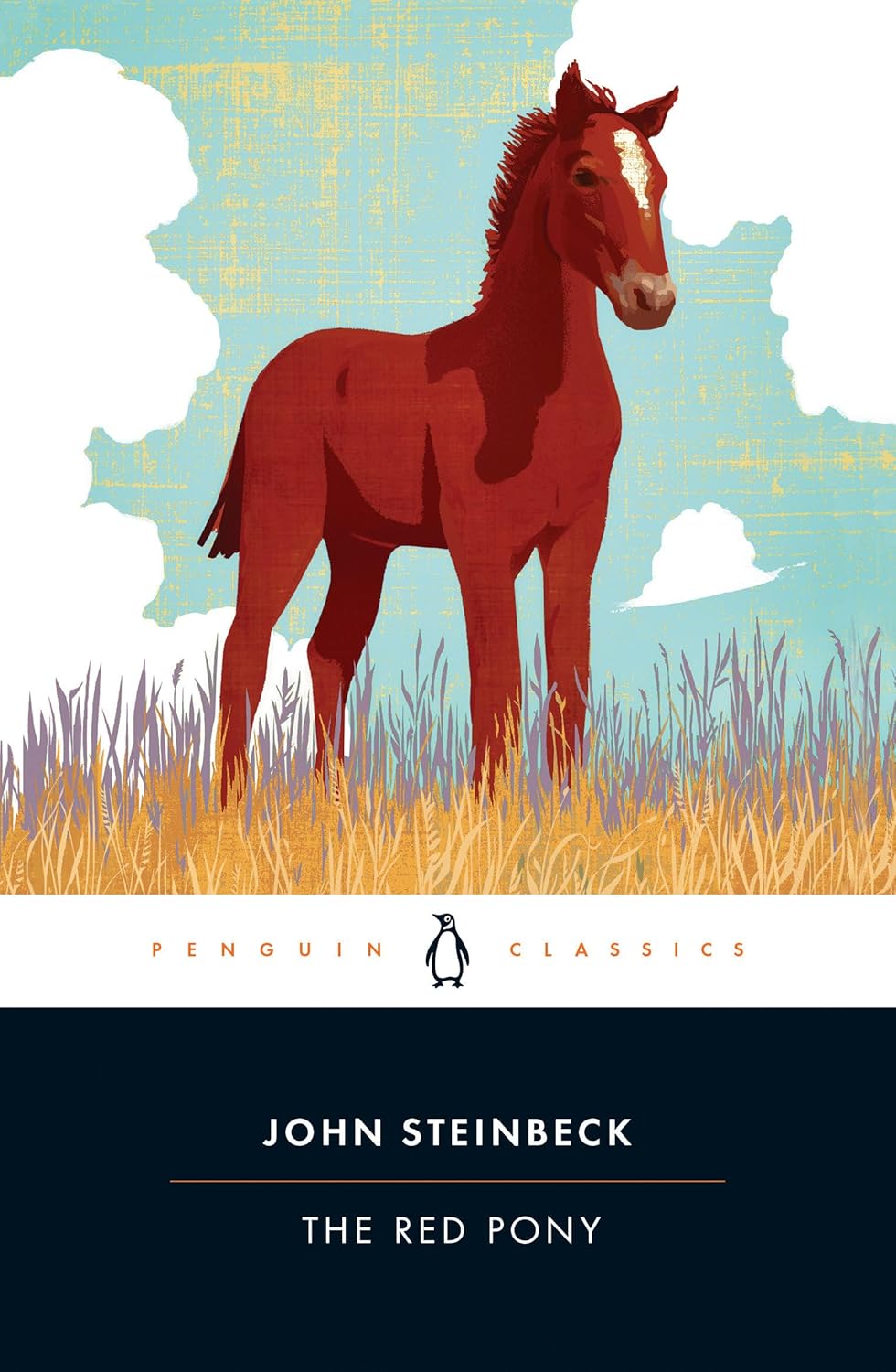
Young Jody Tiflin lives on his father's California ranch. He is thrilled when his father gives him a red pony, and later promises him the colt of a bay mare. Both these gifts bring joy to Jody's life--but tragedy soon follows. As Jody begins to learn the harsh lessons of life and death, he starts to understand what growing up and becoming an adult really means.

Taken by surprise, a small coastal town is overrun by an invading army with little resistance. The town is important because it is a port that serves a large coal mine. Colonel Lanser, the head of the invading battalion, along with his staff establishes his HQ in the house of the democratically elected and popular Mayor Orden.In The Moon is Down, a small, peaceable town comes face-to-face with evil imposed from the outside and betrayal from within the close-knit community. As he delves into the motivations and emotions of the enemy, Steinbeck uncovers profound and often unsettling truths both about war and human nature.

In Monterey, on the California coast, Sweet Thursday is what they call the day after Lousy Wednesday, which is one of those days that are just naturally bad. Returning to the scene of Cannery Row, the weedy lots and junk heaps and flophouses of Monterey, John Steinbeck once more brings to life the denizens of a netherworld of laughter and tears from Fauna, new headmistress of the local brothel, to Hazel, a bum whose mother must have wanted a daughter.

At once a relentlessly fast-paced, admirably observed novel of social unrest and the story of a young man’s struggle for identity, In Dubious Battle is set in the California apple country, where a strike by migrant workers against rapacious landowners spirals out of control. Caught in the upheaval is Jim Nolan, a once aimless man who finds himself in the course of the strike.
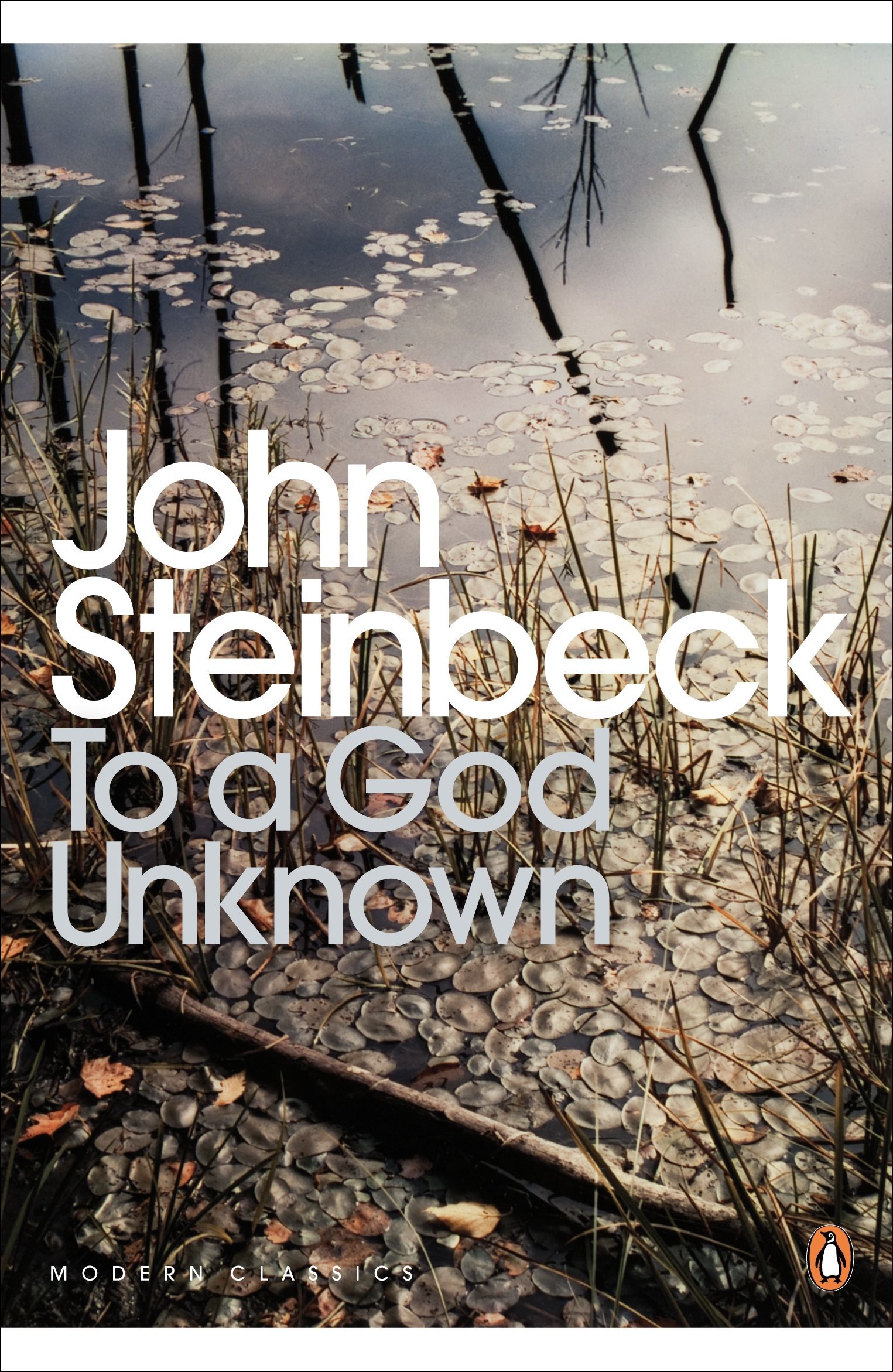
While fulfilling his dead father's dream of creating a prosperous farm in California, Joseph Wayne comes to believe that a magnificent tree on the farm embodies his father's spirit. His brothers and their families share in Joseph's prosperity and the farm flourishes - until one brother, scared by Joseph's pagan belief, kills the tree and brings disease and famine on the farm. Set in familiar Steinbeck country, To a God Unknown is a mystical tale, exploring one man's attempt to control the forces of nature and to understand the ways of God.

In his first novel to follow the publication of his enormous success, The Grapes of Wrath, Steinbeck’s vision comes to life in this imaginative and unsentimental chronicle of a bus traveling California’s back roads, transporting the lost and the lonely, the good and the greedy, the stupid and the scheming, the beautiful and the vicious away from their shattered dreams and, possibly, toward the promise of the future. This edition features an introduction by Gary Scharnhorst.

Collected here for the first time in a deluxe paperback volume are six of John Steinbeck's most widely read and beloved novels. From the tale of commitment, loneliness and hope in Of Mice and Men, to the tough yet charming portrait of people on the margins of society in Cannery Row, to The Pearl's examination of the fallacy of the American dream, Steinbeck stories of realism, that were imbued with energy and resilience.

Each of these delightful interconnected tales is devoted to a family living in a fertile valley on the outskirts of Monterey, California, and the effects that one particular family has on them all. Steinbeck tackles two important literary traditions here; American naturalism, with its focus on the conflict between natural instincts and the demand to conform to society's norms, and the short story cycle. Set in the heart of 'Steinbeck land', the lush Californian valleys.
Steinbeck's first posthumously published work, The Acts of King Arthur and His Noble Knights is a reinterpretation of tales from Malory's Morte d'Arthur. In this highly successful attempt to render Malory into Modern English, Steinbeck recreated the rhythm and tone of the original Middle English.

First published in 1938, this volume of stories collected with the encouragement of his longtime editor Pascal Covici serves as a wonderful introduction to the work of Nobel Prize winner John Steinbeck. Set in the beautiful Salinas Valley of California, where simple people farm the land and struggle to find a place for themselves in the world, these stories reflect Steinbeck’s characteristic interests: the tensions between town and country, laborers and owners, past and present. Included here are the O. Henry Prize-winning story “The Murder”; “The Chrysanthemums,” perhaps Steinbeck’s most challenging story, both personally and artistically; “Flight,” “The Snake,” “The White Quail,” and the classic tales of “The Red Pony.”

An alternate edition can be found here.In 1940 Steinbeck sailed in a sardine boat with his great friend the marine biologist, Ed Ricketts, to collect marine invertebrates from the beaches of the Gulf of California. The expedition was described by the two men in Sea of Cortez, published in 1941. The day-to-day story of the trip is told here in the Log, which combines science, philosophy and high-spirited adventure.Log from the Sea of Cortez includes the narrative of the journey and the essay “About Ed Ricketts.” It does not include pictures and detailed descriptions of the species collected by Steinbeck and Ricketts. (See also Sea of Cortez.)

Just after the iron curtain fell on Eastern Europe John Steinbeck and acclaimed war photographer, Robert Capa ventured into the Soviet Union to report for the New York Herald Tribune. This rare opportunity took the famous travellers not only to Moscow and Stalingrad - now Volgograd - but through the countryside of the Ukraine and the Caucasus. A RUSSIAN JOURNAL is the distillation of their journey and remains a remarkable memoir and unique historical document. Steinbeck and Capa recorded the grim realities of factory workers, government clerks, and peasants, as they emerged from the rubble of World War II. This is an intimate glimpse of two artists at the height of their powers, answering their need to document human struggle
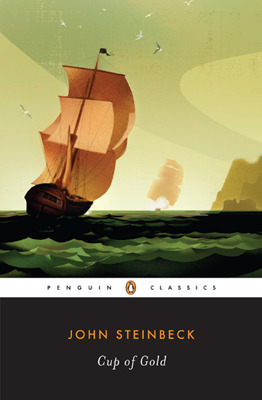
From the mid-1650s through the 1660s, Henry Morgan, a pirate and outlaw of legendary viciousness, ruled the Spanish Main. He ravaged the coasts of Cuba and America, striking terror wherever he went. Morgan was obsessive. He had two driving ambitions: to possess the beautiful woman called La Santa Roja and to conquer Panama, the “cup of gold.” Steinbeck’s first novel and sole work of historical fiction, Cup of Gold is a lush, lyrical swashbuckling pirate fantasy, and sure to add new dimensions to readers’ perceptions of this all-American writer. This edition features an introduction by Susan F. Beegel.

Nobel laureate John Steinbeck's bracing from-the-frontlines account of World War II-now with a new cover and introduction** In 1943 John Steinbeck was on assignment for The New York Herald Tribune, writing from Italy and North Africa, and from England in the midst of the London blitz. In his dispatches he focuses on the human-scale effect of the war, portraying everyone from the guys in a bomber crew to Bob Hope on his USO tour and even fighting alongside soldiers behind enemy lines. Taken together, these writings create an indelible portrait of life in wartime.

'Of Mice and Men' revolves around two central characters: Lennie and George. Lennie is a man with the strength of two, but with it the mind of a child — simple, unaffected, and kindly. His whole world centres around George, who steers him through life and protects him when his superhuman strength and child's mind unwittingly entangle him in trouble.Of 'Cannery Row' John Steinbeck said he just "opened the pages and let the stories crawl in by themselves'. 'Cannery Row' is a street bordered by houses, shacks, and boiler pipes, in which live all kinds of people, good and bad, kind and cruel, the industrious and the idle, who have one thing at least in common — their poverty.The cover shows a detail from 'Threshing' by Joe Jones in the Metropolitan Museum of Art, New York (photo Don Hunstein)[copied verbatim from back cover, Great Britain edition]

Elisa Allen is tending her chrysanthemums. Strong, with a handsome face she skilfully and proudly cultivates the best in the valley. Tonight, her husband is taking her to town. While she works, a squeak of heels and a plod of hoofs bring a curious vehicle, curiously drawn: a tradesman looking for directions and a job. He is met with curt replies and a hardened resistance. Then he notices her chrysanthemums. With his characteristic insight and evocative language, John Steinbeck creates a short story of a brief but striking encounter. Set in Salinas Valley, where he grew up, it dissects the myriad complexities of humanity, society and hidden longings.' to 'Elisa Allen is tending her chrysanthemums. Strong, with a handsome face she skilfully and proudly cultivates the best in the valley. Tonight, her husband is taking her to town. While she works, a squeak of heels and a plod of hoofs bring a curious vehicle, curiously a tradesman looking for directions and a job. He is met with curt replies and a hardened resistance. Then he notices her chrysanthemums. With his characteristic insight and evocative language, John Steinbeck creates a short story of a brief but striking encounter. Set in Salinas Valley, where he grew up, it dissects the myriad complexities of humanity, society and hidden longings.

Steinbeck's only work of political satire turns the French Revolution on its head, as amateur astronomer Pippin Heristal is drafted in to rule the unruly French. Enchanting comedy ensues as Steinbeck creates the most hilarious royal court ever around the brief, bold reign of the corduroy-clad Pippin, his social-climbing wife Maria, his star-struck daughter Clotilde and her Californian beau, Todd.

Written as a play in story form, this novel traces the story of a man ignorant of his own sterility, a wife who commits adultery to give her husband a child, the father of that child, and the outsider whose actions affect them all.

The Grapes of Wrath/The Moon Is Down/Cannery Row/East of Eden/Of Mice and Men
by John Steinbeck
Rating: 4.3 ⭐
The Grapes of Wrath / The Moon Is Down / Cannery Row / East of Eden / Of Mice and Men

'Everything was dead, everything unreal; the dark mob was made up of stiff lay-figures'One of America's greatest writers explores mob violence, voyeurism and betrayal in these unforgettable tales of Californian life.Penguin Modern: fifty new books celebrating the pioneering spirit of the iconic Penguin Modern Classics series, with each one offering a concentrated hit of its contemporary, international flavour. Here are authors ranging from Kathy Acker to James Baldwin, Truman Capote to Stanislaw Lem and George Orwell to Shirley Jackson; essays radical and inspiring; poems moving and disturbing; stories surreal and fabulous; taking us from the deep South to modern Japan, New York's underground scene to the farthest reaches of outer space.

Each working day from January 29 to November 1, 1951, John Steinbeck warmed up to the work of writing East of Eden and a letter to the late Pascal Covici, his friend and editor of the Viking Press. It was his way, he said, of "getting my mental arm in shape to pitch a good game."Steinbeck's letters were written on the left-handed pages of a notebook in which the facing pages would be filled with the text of East of Eden. They touched on many subjects - story arguements, trial flights of workmanship, concern for his sons.Part autobiography, part writer's workshop, these letters offer an illuminating perspective on Steinbeck's creative process, and a fascinating glimpse of Steinbeck, the private man.

The Pearl:When Kino, an Indian pearl-diver, finds 'the Pearl of the world' he believes that his life will be magically transformed. He will marry Juana in church and their little boy, Coyotito, will be able to attend school. Obsessed by his dreams, Kino is blind to the greed, fear and even violence the pearl arouses in him and his neighbours. The Red Pony: Set on a ranch in the Calidornia mountains this is the story of the joy and sorrow a young boy finds in his responsibility for his horse.