
Mark Twain
Librarian Note: There is more than one author by this name in the Goodreads database. Samuel Langhorne Clemens, known by the pen name Mark Twain, was an American writer, humorist and essayist. He was praised as the "greatest humorist the United States has produced," with William Faulkner calling him "the father of American literature." His novels include The Adventures of Tom Sawyer (1876) and its sequel, Adventures of Huckleberry Finn (1884), with the latter often called the "Great American Novel." Twain also wrote A Connecticut Yankee in King Arthur's Court (1889) and Pudd'nhead Wilson (1894), and co-wrote The Gilded Age: A Tale of Today (1873) with Charles Dudley Warner.
35 Books Written

Referring to Adventures of Huckleberry Finn, H. L. Mencken noted that his discovery of this classic American novel was "the most stupendous event of my whole life"; Ernest Hemingway declared that "all modern American literature stems from this one book," while T. S. Eliot called Huck "one of the permanent symbolic figures of fiction, not unworthy to take a place with Ulysses, Faust, Don Quixote, Don Juan, Hamlet."The novel's preeminence derives from its wonderfully imaginative re-creation of boyhood adventures along the Mississippi River, its inspired characterization, the author's remarkable ear for dialogue, and the book's understated development of serious underlying themes: "natural" man versus "civilized" society, the evils of slavery, the innate value and dignity of human beings, and other topics. Most of all, Huckleberry Finn is a wonderful story, filled with high adventure and unforgettable characters. (back cover)Reprint of the Charles L. Webster and Company, New York, 1885 edition.

Mark Twain's Weapons of Satire: Anti-imperialist Writings on the Philippine-American War
by Mark Twain
Rating: 4.0 ⭐
• 2 recommendations ❤️
Mark Twain was described by a contemporary newspaper as the "most influential anti-imperialist and the most dreaded critic of the sacrosanct person in the White House that the country contains." Although not a pacifist, Twain was the most prominent opponent of the Philippine-American War. Today, however, this aspect of Mark Twain's career is barely known. His writings on the war have never been collected in a single volume, and a number of them are published here for the first time. Although he was a vice president of the Anti-Imperialist League from 1901 to 1910, until now no thorough study had been made of his relationship with the organized opposition to the war. Drawing upon the unpublished manuscripts of Mark Twain and various leaders of the League, Jim Zwick's Introduction and headnotes provide the most complete account of Twain's involvement in the anti-imperialist movement. Mark Twain's writings sparked intense controversy when they were written. Readers will appreciate the continuing relevance and quotability of his statements on the abuse of patriotism, the "treason" of requiring school children to salute the flag, the right to dissent, the importance of self-government, and the value of America's democratic and anticolonial traditions. This book will prove valuable to all who are interested in Twain and his works as well as to teachers of literature, peace studies, and history.

In 1936, the Heritage Press, a publisher of fine editions, commissioned Norman Rockwell to illustrate Mark Twain’s Adventures of Tom Sawyer; four years later, they asked him to illustrate The Adventures of Huckleberry Finn as well. For each book, Rockwell created eight full-color paintings and numerous pen-and-ink drawings, the product of extensive on-the-ground research in Twain’s hometown of Hannibal, Missouri. Famously, Rockwell even tried to buy some Hannibal residents’ old clothes, to dress his models in.For years, the Rockwell editions of Tom Sawyer and Huckleberry Finn have been unavailable in stores. Now, Abbeville Press is proud to reissue them as a handsome new clothbound set. The color plates are reproduced from new photography of Rockwell’s original paintings, the typesetting has been done anew to a high standard, and new introductions—illustrated with Rockwell’s rarely seen preliminary sketches—examine this unique encounter between two legendary chroniclers of America.Publisher’s note: These volumes present Mark Twain’s text unabridged and unedited, as it appeared in the original American editions of The Adventures of Tom Sawyer (1876) and The Adventures of Huckleberry Finn (1885).

The exploits of Tom Sawyer, a consummate prankster with a quick wit, captivate children of all ages. Yet through the novel's humorous escapades, from the episodes of the whitewashed fence and the ordeal in the cave to the trial of Injun Joe, Mark Twain explores deeper themes within the adult world Tom will one day join. These include the baser human instincts of dishonesty and superstition, murder and revenge, starvation and slavery.

This treasured historical satire, played out in two very different socioeconomic worlds of 16th-century England, centers around the lives of two boys born in London on the same day: Edward, Prince of Wales and Tom Canty, a street beggar. During a chance encounter, the two realize they are identical and, as a lark, decide to exchange clothes and roles--a situation that briefly, but drastically, alters the lives of both youngsters. The Prince, dressed in rags, wanders about the city's boisterous neighborhoods among the lower classes and endures a series of hardships; meanwhile, poor Tom, now living with the royals, is constantly filled with the dread of being discovered for who and what he really is.
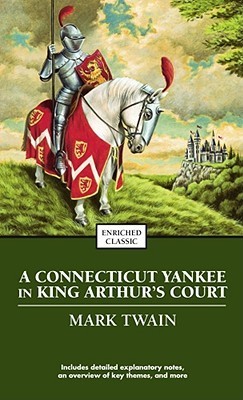
One of the greatest satires in American literature, Mark Twain's 'A Connecticut Yankee in King Arthur's Court' begins when Hank Morgan, a skilled mechanic in a nineteenth-century New England arms factory, is struck on the head during a quarrel and awakens to find himself among the knights and magicians of King Arthur's Camelot. The 'Yankee' vows brashly to "boss the whole country inside of three weeks" and embarks on an ambitious plan to modernize Camelot with 19th c. industrial inventions like electricity and gunfire. It isn't long before all hell breaks loose!Written in 1889, Mark 'A Connecticut Yankee in King Arthur's Court' is one of literature's first genre mash-ups and one of the first works to feature time travel. It is one of the best known Twain stories, and also one of his most unique. Twain uses the work to launch a social commentary on contemporary society, a thinly veiled critique of the contemporary times despite the Old World setting.While the dark pessimism that would fully blossom in Twain's later works can be discerned in 'A Connecticut Yankee in King Arthur's Court, ' the novel will nevertheless be remembered primarily for its wild leaps of imagination, brilliant wit, and entertaining storytelling.

THE ADVENTURES OF TOM SAWYERTake a lighthearted, nostalgic trip to a simpler time, seen through the eyes of a very special boy named Tom Sawyer. It is a dreamlike summertime world of hooky and adventure, pranks and punishment, villains and first love, filled with memorable characters. Adults and young readers alike continue to enjoy this delightful classic of the promise and dreams of youth from one of America’s most beloved authors. ADVENTURES OF HUCKLEBERRY FINNHe has no mother, his father is a brutal drunkard, and he sleeps in a barrel. He’s Huck Finn—liar, sometime thief, and rebel against respectability. But when Huck meets a runaway slave named Jim, his life changes forever. On their exciting flight down the Mississippi aboard a raft, the boy nobody wanted matures into a young man of courage and conviction. As Ernest Hemingway said of this glorious novel, “All modern American literature comes from one book by Mark Twain called Huckleberry Finn.”--back cover

"Good deal of fog this morning. I do not go out in the fog myself," notes Adam in his diary, adding, "The new creature does. It goes out in all weathers. And talks. It used to be so pleasant and quiet here." Adam has a lot to learn about Eve, and even more from her, as she names the animals, discovers fire, and introduces all manner of innovations to their garden home. Mark Twain's "translation" of the diaries of the first man and woman offers a humorous "he said/she said" narrative of biblical events. The great American storyteller found comfort and inspiration in the company of women, and his irreverent look at conventional religion is also a thoughtful -- and humorous -- argument for gender equality.

At the beginning of Pudd'nhead Wilson a young slave woman, fearing for her infant son's life, exchanges her light-skinned child with her master's. From this rather simple premise Mark Twain fashioned one of his most entertaining, funny, yet biting novels. On its surface, Pudd'nhead Wilson possesses all the elements of an engrossing nineteenth-century mystery: reversed identities, a horrible crime, an eccentric detective, a suspenseful courtroom drama, and a surprising, unusual solution. Yet it is not a mystery novel. Seething with the undercurrents of antebellum southern culture, the book is a savage indictment in which the real criminal is society, and racial prejudice and slavery are the crimes. Written in 1894, Pudd'nhead Wilson glistens with characteristic Twain humor, with suspense, and with pointed irony: a gem among the author's later works.

A stirring account of America's vanished past... The book that earned Mark Twain his first recognition as a serious writer... Discover the magic of life on the Mississippi. At once a romantic history of a mighty river, an autobiographical account of Mark Twain's early steamboat days, and a storehouse of humorous anecdotes and sketches, Life on the Mississippi is the raw material from which Twain wrote his finest novel: Adventures of Huckleberry Finn . "The Lincoln of our literature." (William Dean Howells)

The Innocents Abroad, or The New Pilgrims' Progress is a travel book by American author Mark Twain published in 1869 which humorously chronicles what Twain called his "Great Pleasure Excursion" on board the chartered vessel Quaker City (formerly USS Quaker City) through Europe and the Holy Land with a group of American travelers in 1867. It was the best-selling of Twain's works during his lifetime, as well as one of the best-selling travel books of all time.

relates the adventures of Satan, the sinless nephew of the biblical Satan, in Eseldorf, an Austrian village in the year 1702. Twain wrote this version between November 1897 and September 1900. "Eseldorf" is German for "Assville" or "Donkeytown".

"I like Joan of Arc best of all my books; and it is the best; I know it perfectly well. And besides, it furnished me seven times the pleasure afforded me by any of the others; twelve years of preparation, and two years of writing. The others needed no preparation and got none." --Mark Twain

Letters from the Earth is one of Mark Twain's posthumously published works. The essays were written during a difficult time in Twain's life; he was deep in debt and had lost his wife and one of his daughters. The book consists of a series of short stories, many of which deal with God and Christianity. Twain penned a series of letters from the point-of-view of a dejected angel on Earth. This title story consists of letters written by the archangel Satan to archangels, Gabriel and Michael, about his observations on the curious proceedings of earthly life and the nature of man's religions. By analyzing the idea of heaven and God that is widely accepted by those who believe in both, Twain is able to take the silliness that is present and study it with the common sense that is absent. Not so much an attack as much as a cold dissection. Other short stories in the book include a bedtime story about a family of cats Twain wrote for his daughters, and an essay explaining why an anaconda is morally superior to Man. Twain's writings in Letters From the Earth find him at perhaps his most quizzical and questioning state ever.
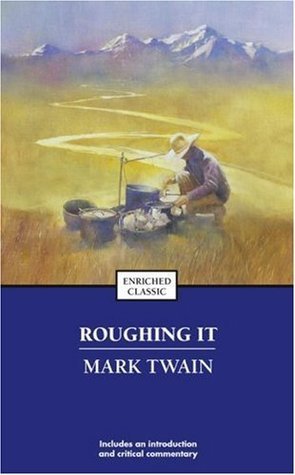
Roughing It is a book of semi-autobiographical travel literature written by American humorist Mark Twain. He wrote it during 1870–71 and published in 1872, as a prequel to his first book The Innocents Abroad (1869). This book tells of Twain's adventures prior to his pleasure cruise related in Innocents Abroad.

This Reader’s Edition, a portable paperback in larger type, republishes the text of the New York Times bestselling hardcover Autobiography in a form that is convenient for the general reader, without the editorial explanatory notes. It includes a brief introduction describing the evolution of Mark Twain’s ideas about writing his autobiography, as well as a chronology of his life, brief family biographies, and an excerpt from the forthcoming Autobiography of Mark Twain, Volume 2—a controversial but characteristically humorous attack on Christian doctrine.The year 2010 marked the 100th anniversary of Mark Twain’s death. In celebration of this important milestone and in honor of the cherished tradition of publishing Mark Twain’s works, UC Press published Autobiography of Mark Twain, Volume 1, the first of a projected three-volume edition of the complete, uncensored autobiography. The book became an immediate bestseller and was hailed as the capstone of the life’s work of America’s favorite author.Read an excerpt here: Autobiography of Mark Twain, Volume 1:The Complete and Authoritative Edition by Mark Twain by University of California Press

The Celebrated Jumping Frog of Calaveras County” is a wild yarn involving a case of mistaken identity, a gambler who’d bet on anything, and a very unusual frog named Daniel Webster.

The sustained popularity of The Adventures of Tom Sawyer and especially The Adventures of Huckleberry Finn has tended to obscure for the general reader Mark Twain's other novels, reminiscences, sketches, tales, and stories. This eclipse is not surprising, but even a cursory examination of Twain's lesser known works reveals a substantial body of literature well worthy of contemporary attention. The tradition of Southwestern humor, which flourished in America from about 1835 to the Civil War, culminates in the writings of Mark Twain. That tradition is exemplified by many of the stories in this collection. They are representative of certain themes and techniques, such as the use of vernacular speech, the telling of tall tales, and realism, that were the hallmarks of that group of writers. However, Mark Twain leaves his own special stamp in the form of his probing, sometimes cynical, view of mankind. In these stories, it is possible to trace Twain's increasing skepticism about the validity of current social morality. It is this aspect of Twain which gives his humor a bitterness and a sting. It may perhaps be credited to Twain's piercing view that his works survive and are frequently read while other writers of that period have long since been relegated to the literary specialist.

On the Decay of the Art of Lying is a short essay written by Mark Twain in 1885 for a meeting of the Historical and Antiquarian Club of Hartford, Connecticut. In the essay, Twain laments the dour ways in which men of America's Gilded Age employ man's "most faithfull friend." He concludes by insisting that: "the wise thing is for us diligently to train ourselves to lie thoughtfully, judiciously; to lie with a good object, and not an evil one; to lie for others' advantage, and not our own; to lie healingly, charitably, humanely, not cruelly, hurtfully, maliciously; to lie gracefully and graciously, not awkwardly and clumsily; to lie firmly, frankly, squarely, with head erect, not haltingly, tortuously, with pusillanimous mien, as being ashamed of our high calling."

Mark Twain's autobiography is a classic of American letters, to be ranked with the autobiographies of Benjamin Franklin and Henry Adams.... It has the marks of greatness in it--style, scope, imagination, laughter, tragedy."--From the Introduction by Charles NeiderMark Twain was a figure larger than life: massive in talent, eruptive in temperament, unpredictable in his actions. He crafted stories of heroism, adventure, tragedy, and comedy that reflected the changing America of the time, and he tells his own story--which includes sixteen pages of photos--with the same flair he brought to his fiction. Writing this autobiography on his deathbed, Twain vowed to he "free and frank and unembarrassed" in the recounting of his life and his experiences. Twain was more than a match for the expanding America of riverboats, gold rushes, and the vast westward movement, which provided the material for his novels and which served to inspire this beloved and uniquely American autobiography.

Widely acknowledged as the greatest of his later works, this story of switched babies and slavery is Twain's darkest vision of race in America. It began life as a slapstick comedy about Siamese twins, but as he wrote, something deepened. "The tale kept spreading along, and spreading along, and other people got to intruding themselves and taking up more and more time with their talk and their affairs. It changed from a farce to a tragedy while I was going along with it," Twain wrote in his frank afternote to the novel. In the end, the voice that comes to dominate the tale is Roxana's, a light-skinned slave who switches her infant son with her master's son to keep him from being sold down the river. Roxana, Twain's most complex and fully-realized adult female character, is a compelling and memorable tragic heroine, trapped with her son by the brutal system of slavery and by their own inescapable racial identities. At his best, Twain is the most uniquely American of writers, and it is inevitable that his best work revolves around the issues of race and of slavery embedded in the American psyche. The Tragedy of Pudd'nhead Wilson is a dark and powerful novel of race in America, written by the American master.
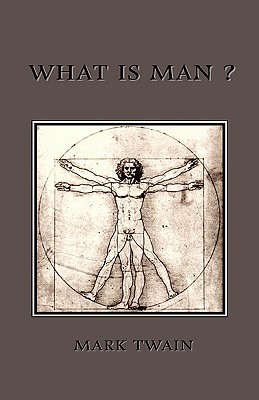
This was Twain's most serious, philosophical and above all, private book. He kept it locked in his desk, considered it to be his Bible, and spoke of it as such to friends when he read them passages. He had written it, rewritten it, was finally satisfied with it, but still chose not to release it until after his death. The book appears in the form of a dialogue between an old man and a young man who discuss who and what mankind really is. The arguments presented can change the reader's entire outlook on life because it provides a completely new and different way of looking at who we are and the way we live. Anyone who thinks Twain was not a brilliant philosopher should read this book. We all like to see ourselves as completely free and autonomous individuals, yet this book puts forth the ideas that 1) We are nothing more than machines and originate nothing - not even a single thought; 2) All conduct arises from one motive - self-satisfaction; 3) Our temperament is completely permanent and unchangeable; and 4) Man is of course a product of heredity and the future, being fixed, is irrevocable -- which makes life completely pre-determined. If these points are true, then buying and reading this book is not in your control, but simply must be done because it was meant to be. If these points are not true you might still wish to make an independent decision to enjoy a thought-provoking book by a great and legendary writer.
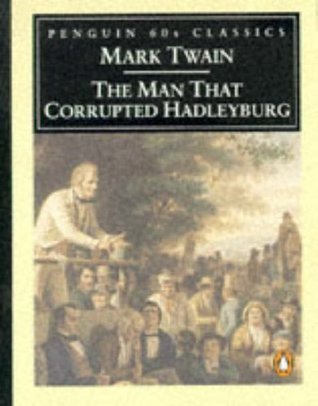
"Why, you simple creatures, the weakest of all weak things is a virtue which has not been tested in the fire."Written on hotel stationary while in Europe on the run from American creditors, soon after the death of a daughter, The Man That Corrupted Handleyburg is often cited as a work of bitter cynicism—a statement on America, to some, on the Dreyfus Case, to others—created by a weary author at the end of his career.Another appreciation, however, is that it is, simply, Mark Twain at his best. The story of a mysterious stranger who orchestrates a fraud embarrassing the hypocritical citizens of "incorruptible" Hadleyburg. The novella is an exceptionally crafted work intertwining a devious and suspenseful plot with some of the wittiest dialogue Twain ever wrote. And like the most masterful literature, it subverts any notion of easy is Hadleyburg ruined, or liberated? Is the mysterious stranger Satan, or a hero? Is this a book of revenge, or redemption? One thing is This brilliant novella is a complex and compassionate consideration of the human character by a master at the height of his form.The Art of The Novella SeriesToo short to be a novel, too long to be a short story, the novella is generally unrecognized by academics and publishers. Nonetheless, it is a form beloved and practiced by literature's greatest writers. In the Art Of The Novella series, Melville House celebrates this renegade art form and its practitioners with titles that are, in many instances, presented in book form for the first time.

Twain's abundant humor waxes as freely as ever; this time, however, his amusement bears a more cynical cast, as he regards the grand tourist sights of 'Innocents' through older and more experienced eyes.

Tom Sawyer attempts to solve a mysterious murder in this burlesque of the immensely popular detective novels of the time. Like Adventures of Huckleberry Finn, the story is told using the first-person narrative voice of Huck Finn.

Tom Sawyer Abroad is a novel by Mark Twain published in 1894. It features Tom Sawyer & Huckleberry Finn in a parody of Jules Verne-esque adventure stories. In the story, Tom, Huck & Jim set sail to Africa in a futuristic hot air balloon, where they survive encounters with lions, robbers & fleas to see some of the world's greatest wonders, including the Pyramids & the Sphinx. Like Adventures of Huckleberry Finn & Tom Sawyer, Detective, the story is told using the 1st-person narrative voice of Huck Finn.Excerpt:So he did it. He had a little wee bit of steamboating, and some stage-coaching, but all the rest of the way was horseback, and it took him three weeks to get to Washington. He saw lots of land and lots of villages and four cities. He was gone 'most eight weeks, and there never was such a proud man in the village as he when he got back. His travels made him the greatest man in all that region, and the most talked about; and people come from as much as thirty miles back in the country, and from over in the Illinois bottoms, too, just to look at him and there they'd stand and gawk, and he'd gabble. You never see anything like it.

Written by Mark Twain during the Philippine-American War in the first decade of the twentieth century, The War Prayer tells of a patriotic church service held to send the town's young men off to war. During the service, a stranger enters and addresses the gathering. He tells the patriotic crowd that their prayers for victory are double-edged-by praying for victory they are also praying for the destruction of the enemy... for the destruction of human life. Originally rejected for publication in 1905 as "not quite suited to a woman's magazine," this antiwar parable remained unpublished until 1923, when Twain's literary executor collected it in the volume Europe and Elsewhere. Handsomely illustrated by the artist and war correspondent Philip Groth, The War Prayer remains a relevant classic by an American icon.

"Some things you can't find out; but you will never know you can't by guessing and supposing: no, you have to be patient and go on experimenting until you find out that you can't find out." Eve's Diary is a comic short story first published in 1906, and is Twain's perspective on the ever-lasting rivalry between the two sexes. The story is witty, humorous and inspired, with the story beginning with Eve's perspective, only to later transition to Adam's.Samuel Langhorne Clemens, (1835-1910) better known by his pen name Mark Twain, was an American author and humorist. He is noted for his novels 'Adventures of Huckleberry Finn' (1885), called "the Great American Novel", and 'The Adventures of Tom Sawyer' (1876). He achieved great success as a writer and public speaker. His wit & satire earned praise from critics and peers, and he was a friend to presidents, artists, industrialists, and European royalty, eventually earning the moniker or "the father of American literature".
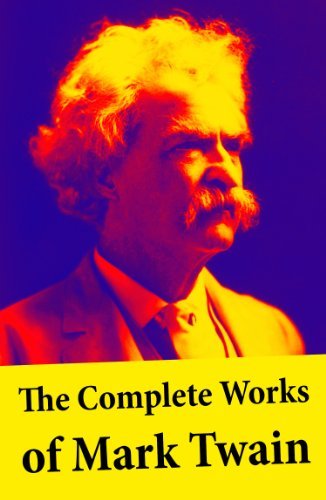
The Complete Works of Mark Twain: The Novels, Short Stories, Essays and Satires, Travel Writing, Non-Fiction, the Complete Letters, the Complete Speeches, and the Autobiography of Mark Twain
by Mark Twain
Rating: 4.4 ⭐
This carefully crafted ebook: “The Complete Works of Mark Twain” is formatted for your eReader with a functional and detailed table of contents.This is The Complete Works of America’s favourite storyteller Mark Twain. The eBook contains over 60 novels and shorter texts (short stories, essays, letters, speeches). Twain began his career writing light, humorous verse, but evolved into a chronicler of the vanities, hypocrisies and murderous acts of mankind. At mid-career, with Huckleberry Finn, he combined rich humor, sturdy narrative and social criticism. Twain was a master at rendering colloquial speech and helped to create and popularize a distinctive American literature built on American themes and language. Samuel Langhorne Clemens (1835 – 1910), better known by his pen name Mark Twain, was an American author and humorist. He wrote The Adventures of Tom Sawyer (1876) and its sequel, Adventures of Huckleberry Finn (1885), the latter often called "the Great American Novel."
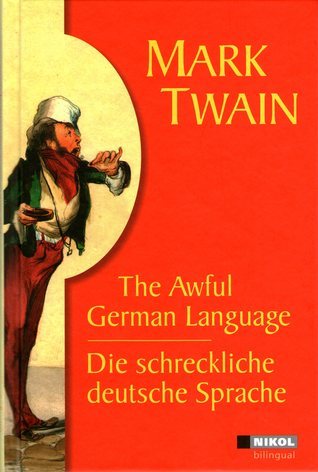
Vielen der Eigenheiten, die den Gestaltungs- und Differenzierungsreichtum unserer Muttersprache prägen – Genus, relativ freie Wortstellung, vielfältige Möglichkeiten der Wortbildung und spannungsreiche Parenthesen etwa –, stehen Ausländer oft fassungslos gegenüber. Noch immer ist Mark Twains Klage über die »schreckliche deutsche Sprache« das wohl amüsanteste Beispiel für das – eher vergebliche – Bemühen, der Tücken des Deutschen Herr zu werden.

For deft plotting, riotous inventiveness, unforgettable characters, and language that brilliantly captures the lively rhythms of American speech, no American writer comes close to Mark Twain. This sparkling anthology covers the entire span of Twainâ s inimitable yarn-spinning, from his early broad comedy to the biting satire of his later years.Every one of his sixty stories is ranging from the frontier humor of â The Celebrated Jumping Frog of Calaveras County,â to the bitter vision of humankind in â The Man That Corrupted Hadleyburg,â to the delightful hilarity of â Is He Living or Is He Dead?â Surging with Twainâ s ebullient wit and penetrating insight into the follies of human nature, this volume is a vibrant summation of the career ofâ in the words of H. L. Menckenâ â the father of our national literature.â
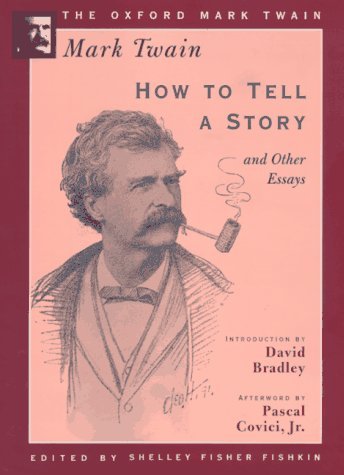
"Fenimore Cooper's Literary Offences," the best-known and best-loved essay in this collection, is Mark Twain's how-to guide for the would-be author. A hilarious and cutting critique of what not to do, this deliciously wicked essay also lays out what writers should and must do if they wanttheir fiction to live and breathe--as Twain's own fiction always does. In "How to Tell a Story," the title piece, Twain takes on such mysteries as the perfectly-timed pause and the uses of the dead-pan mask, and candidly describes his own efforts to hone his platform skills. In "What Paul BourgetThinks of Us," Twain lays out a job description for the "native novelist" that is as fresh and accurate today as when Twain first wrote it. Anyone who cares about storytelling or writing will find Twain's sage suggestions in this volume compelling and engaging.

Collected Nonfiction of Mark Twain, Volume 1: Selections from the Autobiography, Letters, Essays, and Speeches; Introduction by Adam Hochschild
by Mark Twain
Rating: 4.4 ⭐
The first of two hardcover volumes collecting the major nonfiction by the "father of American literature": more than 150 letters, essays, and speeches selected to showcase the dazzling range of his interests and passions. An Everyman's Library Original.Whether crossing the Atlantic and Pacific Oceans or blazing through Europe and the Americas, Twain turned his trademark wit, candor, and acerbic sarcasm on all his experiences. We can trace his personal evolution through his ambition-filled missives home to Missouri after moving out West to be a fledgling reporter, his raucous stories of navigating a steamboat down the Mississippi, his romantic-turned-elegiac sentiments for his wife, Livy, and, later in life, his darker reflections on the ills of society. Often too outrageous not to be true, Twain’s real-life adventures added to his enduring legend, while his clear-eyed view of humanity has provided an unmatched blend of entertainment and moral integrity for generations of readers.
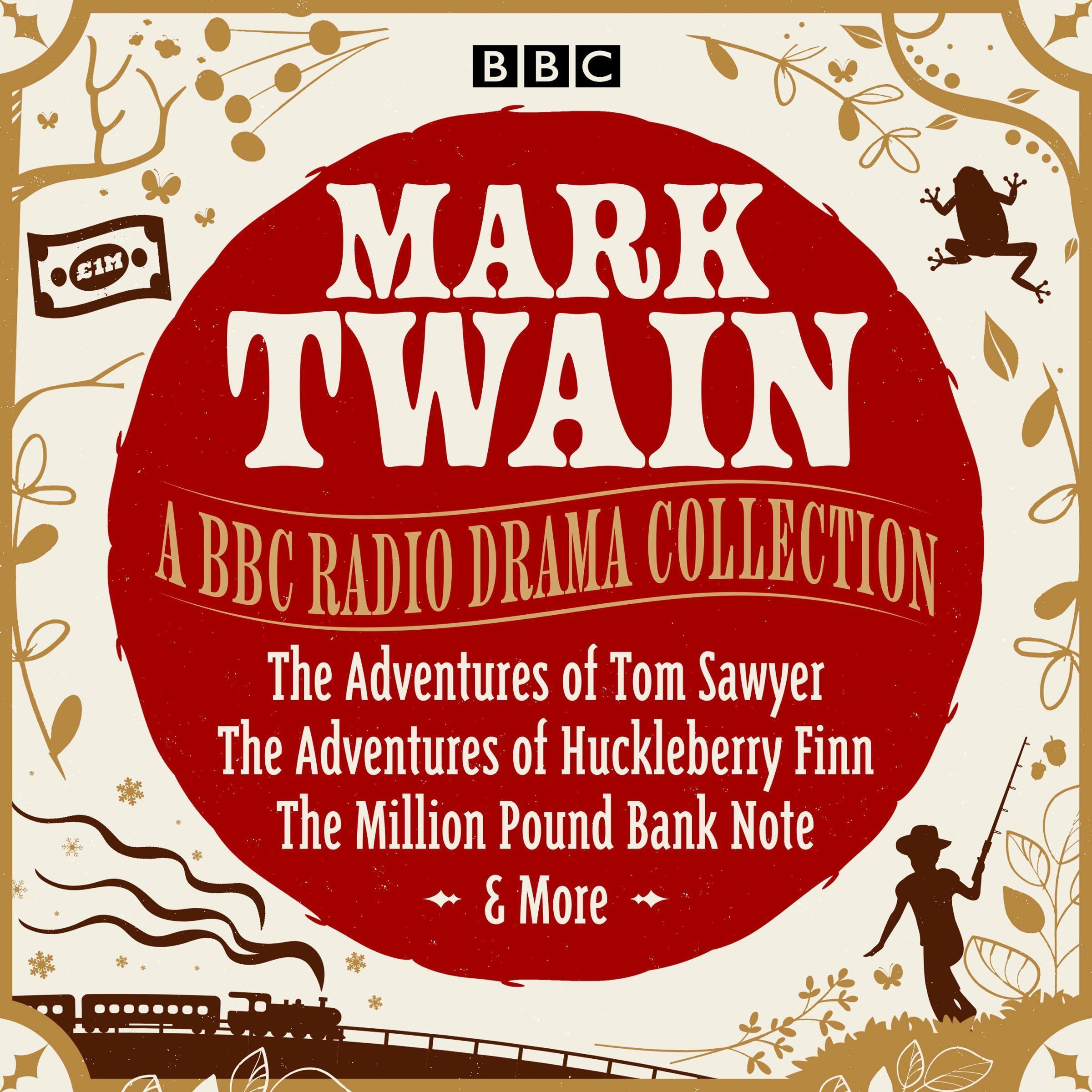
BBC radio productions of Mark Twain's very best novels and short stories - plus bonus materialMark Twain (real name Samuel Langhorne Clemens), was one of the foremost writers and humorists to come out of the United States. Hailed by William Faulkner as 'the father of American literature', he is renowned worldwide for his classic novels The Adventures of Tom Sawyer and The Adventures of Huckleberry Finn. This wide-ranging collection comprises dramatisations and readings of a host of his much-loved stories, from well-known works to less familiar gems.The adaptations include Tony Award-winning Bryony Lavery's rhythmic reworking of The Million Pound Bank Note; The Adventures of Huckleberry Finn, dramatised by award-winning playwright Marcy Kahan; and The Diary of Adam and Eve, Twain's affectionate satire about the battle of the sexes. They are performed by full casts including Trevor White, Mark Caven, Christopher Jacot, Inika Leigh Wright and Tom Goodman-Hill.Among the readings are an abridged version of The Adventures of Tom Sawyer, in which Ed Bishop brings Tom's escapades to colourful life; the little-known yarn The Notorious Jumping Frog of Calaveras County (read by Jon Glover) telling the tall tale of an inveterate gambler and a talented amphibian; and The Prince and the Pauper (read by Jason Isaacs), an abridgement of Twain's historical fantasy about two identical boys born on the same day - one rich, the other poor. And in Mark Twain Stories, Frasier star Kelsey Grammer reads five of the great author's finest short stories.Also included is Kaleidoscope The Further Adventures of Huckleberry Finn, charting the troubled 100-year history of Twain's controversial novel, which has gone from being banned to being beloved - and back again. Contains language that listeners may find offensive Cast and credits Written by Mark Twain. First published 1867 (The Celebrated Jumping Frog of Calaveras County), 1868 (Cannibalism in the Cars), 1870 (The Facts in the Case of the Great Beef Contract, A Ghost Story), 1875 (The Experience of the McWilliamses with Membranous Croup, Niagara), 1876 (The Adventures of Tom Sawyer), 1881 (The Prince and the Pauper), 1884 (The Adventures of Huckleberry Finn), 1893 (The Million Pound Bank Note), 1931 (The Private Life of Adam and Eve) The Million Pound Bank Note Dramatised by Bryony Lavery. Produced by Pauline Harris and Sharon Sephton First broadcast BBC Radio 4, 31 December 2011 The Adventures of Tom Sawyer Abridged by Brian Miller. Read by Ed Bishop. First broadcast BBC Radio 5, 20-31 May 1991 The Adventures of Huckleberry Finn Dramatised by Marcy Kahan. Directed by Ned Chaillet. First broadcast BBC Radio 4, 15-29 December 2002 The Notorious Jumping Frog of Calaveras County Read by Jon Glover. Produced by Mitch Raper. First broadcast BBC Radio 4, 4 September 1978 The Diary of Adam and Eve Dramatised by Martin Glynn. Produced by Jenny Stephens. Directed by Peter Leslie Wild First broadcast BBC Radio 4, 20 March 2005 The Prince and the Pauper Read by Jason Isaacs. First broadcast BBC Radio 7, 17 October 2009 Mark Twain The Facts in the Great Beef Contract, A Day at Niagara, Cannibalism in the Cars, A Ghost Story and Experiences of the MacWilliamses Read by Kelsey Grammar. Abridged and produced by Duncan Minshull. First broadcast BBC Radio 4, 15-19 September 1997 Kaleidoscope The Further Adventures of Huckleberry Finn Produced by Paul Quinn. First broadcast BBC Radio 4, 25 May 1996

As featured in Maria Popova's Brain Pickings . . .America's Master Humorist on MasturbationOne evening in Paris, 1879, Mark Twain rose to the podium and tackled the touchiest of masturbation. His remarks rubbed Victorian society the wrong way and were censored for over a century.Here, at long last, is Twain's hilarious lecture on "The Science of Onanism." This book includes 30 vintage illustrations and an introduction by Sam Torode, author of The Dirty Parts of the Bible .