
Gore Vidal
Works of American writer Eugene Luther Gore Vidal, noted for his cynical humor and his numerous accounts of society in decline, include the play The Best Man (1960) and the novel Myra Breckinridge (1968) . People know his essays, screenplays, and Broadway. They also knew his patrician manner, transatlantic accent, and witty aphorisms. Vidal came from a distinguished political lineage; his grandfather was the senator Thomas Gore, and he later became a relation (through marriage) to Jacqueline Kennedy. Vidal, a longtime political critic, ran twice for political office. He was a lifelong isolationist Democrat. The Nation, The New Yorker, Vanity Fair, The New York Review of Books, and Esquire published his essays. Essays and media appearances long criticized foreign policy. In addition, he from the 1980s onwards characterized the United States as a decaying empire. Additionally, he was known for his well publicized spats with such figures as Norman Mailer, William F. Buckley, Jr., and Truman Capote. They fell into distinct social and historical camps. Alongside his social, his best known historical include Julian, Burr, and Lincoln. His third novel, The City and the Pillar (1948), outraged conservative critics as the first major feature of unambiguous homosexuality. At the time of his death he was the last of a generation of American writers who had served during World War II, including J.D. Salinger, Kurt Vonnegut, Norman Mailer and Joseph Heller. Perhaps best remembered for his caustic wit, he referred to himself as a "gentleman bitch" and has been described as the 20th century's answer to Oscar Wilde Also used the pseudonym Edgar Box. +++++++++++++++++++++++ Gore Vidal é um dos nomes centrais na história da literatura americana pós-Segunda Guerra Mundial. Nascido em 1925, em Nova Iorque, estudou na Academia de Phillips Exeter (Estado de New Hampshire). O seu primeiro romance, Williwaw (1946), era uma história da guerra claramente influenciada pelo estilo de Hemingway. Embora grande parte da sua obra tenha a ver com o século XX americano, Vidal debruçou-se várias vezes sobre épocas recuadas, como, por exemplo, em A Search for the King (1950), Juliano (1964) e Creation (1981). Entre os seus temas de eleição está o mundo do cinema e, mais concretamente, os bastidores de Hollywood, que ele desmonta de forma satírica e implacável em títulos como Myra Breckinridge (1968), Myron (1975) e Duluth (1983). Senhor de um estilo exuberante, multifacetado e sempre surpreendente, publicou, em 1995, a autobiografia Palimpsest: A Memoir. As obras 'O Instituto Smithsonian' e 'A Idade do Ouro' encontram-se traduzidas em português. Neto do senador Thomas Gore, enteado do padrasto de Jacqueline Kennedy Onassis, primo distante de Al Gore, Gore Vidal sempre se revelou um espelho crítico das grandezas e misérias dos EUA. Faleceu a 31 de julho de 2012, aos 86 anos, na sua casa em Hollywood, vítima de pneumonia.
30 Books Written
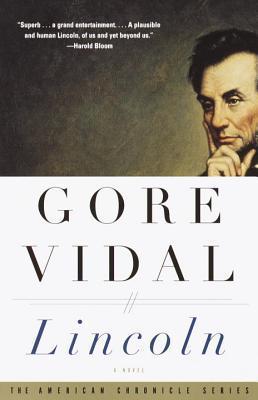
Gore Vidal's Narratives of Empire series spans the history of the United States from the Revolution to the post-World War II years. With their broad canvas and large cast of fictional and historical characters, the novels in this series present a panorama of the American political and imperial experience as interpreted by one of its most worldly, knowing, and ironic observers.To most Americans, Abraham Lincoln is a monolithic figure, the Great Emancipator and Savior of the Union, beloved by all. In Gore Vidal's Lincoln we meet Lincoln the man and Lincoln the political animal, the president who entered a besieged capital where most of the population supported the South and where even those favoring the Union had serious doubts that the man from Illinois could save it. Far from steadfast in his abhorrence of slavery, Lincoln agonizes over the best course of action and comes to his great decision only when all else seems to fail. As the Civil War ravages his nation, Lincoln must face deep personal turmoil, the loss of his dearest son, and the harangues of a wife seen as a traitor for her Southern connections. Brilliantly conceived, masterfully executed, Gore Vidal's Lincoln allows the man to breathe again.

Gore Vidal's Narratives of Empire series spans the history of the United States from the Revolution to the post-World War II years. With their broad canvas and large cast of fictional and historical characters, the novels in this series present a panorama of the American political and imperial experience as interpreted by one of its most worldly, knowing, and ironic observers. Burr is a portrait of perhaps the most complex and misunderstood of the Founding Fathers. In 1804, while serving as vice president, Aaron Burr fought a duel with his political nemesis, Alexander Hamilton, and killed him. In 1807, he was arrested, tried, and acquitted of treason. In 1833, Burr is newly married, an aging statesman considered a monster by many. Burr retains much of his political influence if not the respect of all. And he is determined to tell his own story. As his amanuensis, he chooses Charles Schermerhorn Schuyler, a young New York City journalist, and together they explore both Burr's past and the continuing political intrigues of the still young United States.


A literary cause célèbre when first published more than fifty years ago, Gore Vidal's now-classic The City and the Pillar stands as a landmark novel of the gay experience.Jim, a handsome, all-American athlete, has always been shy around girls. But when he and his best friend, Bob, partake in "awful kid stuff", the experience forms Jim's ideal of spiritual completion. Defying his parents’ expectations, Jim strikes out on his own, hoping to find Bob and rekindle their amorous friendship. Along the way he struggles with what he feels is his unique bond with Bob and with his persistent attraction to other men. Upon finally encountering Bob years later, the force of his hopes for a life together leads to a devastating climax. The first novel of its kind to appear on the American literary landscape, The City and the Pillar remains a forthright and uncompromising portrayal of sexual relationships between men.

This is an alternate cover ed. for ISBN 037572706X.The remarkable bestseller about the fourth-century Roman emperor who famously tried to halt the spread of Christianity, Julian is widely regarded as one of Gore Vidal’s finest historical novels.Julian the Apostate, nephew of Constantine the Great, was one of the brightest yet briefest lights in the history of the Roman Empire. A military genius on the level of Julius Caesar and Alexander the Great, a graceful and persuasive essayist, and a philosopher devoted to worshiping the gods of Hellenism, he became embroiled in a fierce intellectual war with Christianity that provoked his murder at the age of thirty-two, only four years into his brilliantly humane and compassionate reign. A marvelously imaginative and insightful novel of classical antiquity, Julian captures the religious and political ferment of a desperate age and restores with blazing wit and vigor the legacy of an impassioned ruler.

Once again the incomparable Gore Vidal interprets and animates history -- this time in a panoramic tour of the 5th century B.C. -- and embellishes it with his own ironic humor, brilliant insights, and piercing observations. We meet a vast array of historical figures in a staggering novel of love, war, philosophy, and adventure . . . "There isn't a page of CREATION that doesn't inform and very few pages that do not delight."-- John Leonard, The New York Times
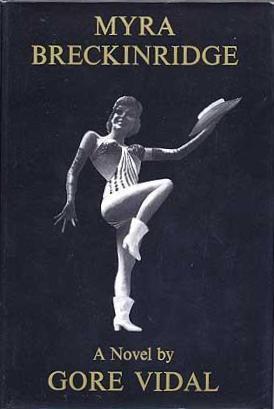
Determined to reinvent himself and explore new territory in his work, Gore Vidal published a provocative satirical work destined to be on a collision course with social conventions in 1968. Written as a diary, Myra Breckinridge, someone determined not to be possessed by any man, recounts her day as she lives it out in the Hollywood of the '60s. Feminism, transsexuality, and a host of cinematic jokes abound.

The centennial of the United States was celebrated with great fanfare—fireworks, exhibitions, pious calls to patriotism, and perhaps the most underhanded political machination in the country's history: the theft of the presidency from Samuel Tilden in favor of Rutherford B. Hayes. This was the Gilded Age, when robber barons held the purse strings of the nation, and the party in power was determined to stay in power. Gore Vidal's novel 1876 gives us the news of the day through the eyes of Charlie Schuyler, who has returned from exile to regain a lost fortune and arrange a marriage into New York society for his widowed daughter. And although Tammany Hall has faltered and Boss Tweed has fled, the effects of corruption reach deep, even into Schuyler's own family.

In this extraordinarily powerful epic Gore Vidal recreates America's Gilded Age—a period of promise and possibility, of empire-building and fierce political rivalries. In a vivid and breathtaking work of fiction, where the fortunes of a sister and brother intertwine with the fates of the generation, their country, and some of the greatest names of their day, including President McKinley, Theodore Roosevelt, William Jennings Bryan, William and Henry James, the Astors, the Vanderbilts, and the Whitneys, Gore Vidal sweeps us from the nineteenth century into the twentieth, from the salvaged republic of Lincoln to a nation boldly reaching for the world.From the Paperback edition.

"I am not my own subject," Gore Vidal used to say. But now, surprisingly, he has turned his wit and elegant storytelling gifts to a candid memoir of the first forty years of his life. Palimpsest is written from the vantage point of Vidal's library in his villa on the Italian coast. As visitors come and go, his memory ranges back and forth across a rich history. Vidal's childhood was spent in Washington, D.C., in the household of his grandfather, the blind senator from Oklahoma, T. P. Gore, and in the various domestic situations of his complicated and exasperating mother, Nina. Then come schooldays at St. Albans and Exeter; the army; life as a literary wunderkind in New York, London, Rome, and Paris in the forties and fifties; sex in an age of promiscuity; and a campaign for Congress in 1960. Vidal's famous skills as a raconteur, his forthrightness, and his wicked wit are brilliantly at work in these recollections of a difficult family, talented friends, and interesting enemies. The cast includes Tennessee Williams, the Kennedys, Eleanor Roosevelt, Truman Capote, Paul Newman and Joanne Woodward, Christopher Isherwood, Jack Kerouac, Jane and Paul Bowles, Santayana, Anais Nin, Norman Mailer, Leonard Bernstein, and the Duke and Duchess of Windsor, among others. Beautifully rendered anecdotes are intermixed with meditations on writing, history, acting, and politics. Perhaps most surprising is the leitmotif of a great, lost love. "A memoir is how one remembers one's own life," Vidal says, "while an autobiography is history." Palimpsest is a true story, but also an extraordinary work of literary imagination.

Washington, D.C., is the sixth installment in Gore Vidal's acclaimed seven-volume series of historical novels about the American past. It offers an illuminating portrait of our republic from the time of the New Deal to the McCarthy era.Widely regarded as Vidal's ultimate comment on how the American political system degrades those who participate in it, Washington, D.C. is a stunning tale of corruption and diseased ambitions. It traces the fortunes of James Burden Day, a powerful conservative senator who is eyeing the presidency; Clay Overbury, a pragmatic young congressional aide with political aspirations of his own; and Blaise Sanford, a ruthless newspaper tycoon who understands the importance of money and image in modern politics. With characteristic wit and insight, Vidal chronicles life in the nation's capital at a time when these men and others transformed America into "possibly the last empire on earth."

Like his National Book Award—winning United States, Gore Vidal’s scintillating ninth collection, The Last Empire, affirms his reputation as our most provocative critic and observer of the modern American scene. In the essays collected here, Vidal brings his keen intellect, experience, and razor-edged wit to bear on an astonishing range of subjects. From his celebrated profiles of Clare Boothe Luce and Charles Lindbergh and his controversial essay about the Bill of Rights–which sparked an extended correspondence with convicted Oklahoma City Bomber Timothy McVeigh–to his provocative analyses of literary icons such as John Updike and Mark Twain and his trenchant observations about terrorism, civil liberties, the CIA, Al Gore, Tony Blair, and the Clintons, Vidal weaves a rich tapestry of personal anecdote, critical insight, and historical detail. Written between the first presidential campaign of Bill Clinton and the electoral crisis of 2000, The Last Empire is a sweeping coda to the last century’s conflicted vision of the American dream.

The United States has been engaged in what the great historian Charles A. Beard called "perpetual war for perpetual peace." The Federation of American Scientists has cataloged nearly 200 military incursions since 1945 in which the United States has been the aggressor. In a series of penetrating and alarming essays, whose centerpiece is a commentary on the events of September 11, 2001 (deemed too controversial to publish in this country until now) Gore Vidal challenges the comforting consensus following September 11th and goes back and draws connections to Timothy McVeigh's bombing of the federal building in Oklahoma City. He asks were these simply the acts of "evil-doers?" "Gore Vidal is the master essayist of our age." - Washington Post "Our greatest living man of letters."-Boston Globe "Vidal's imagination of American politics is so powerful as to compel awe."-Harold Bloom, The New York Review of Books

Who is Kalki, and why is he planning to destroy the world -- and everything in it? And if Kalki is a mystical legend, then why does his ultimate world include only a select few chosen to breed a new human race?

Gore Vidal’s uniquely irreverent take on America’s founding fathers will enliven all future discussion of the enduring power of their nation-building ideasGore Vidal, one of the master stylists of American literature and one of the most acute observers of American life and history, turns his immense literary and historiographic talent to a portrait of the formidable trio of George Washington, John Adams, and Thomas Jefferson. In Inventing a Nation, Vidal transports the reader into the minds, the living rooms (and bedrooms), the convention halls, and the salons of Washington, Jefferson, Adams, and others. We come to know these men, through Vidal’s splendid and percipient prose, in ways we have not up to now—their opinions of each other, their worries about money, their concerns about creating a viable democracy. Vidal brings them to life at the key moments of decision in the birthing of our nation. He also illuminates the force and weight of the documents they wrote, the speeches they delivered, and the institutions of government by which we still live. More than two centuries later, America is still largely governed by the ideas championed by this triumvirate.

Timothy (later St. Timothy) is in his study in Thessalonika, where he is bishop of Macedonia. It is A.D. 96, and Timothy is under terrific pressure to record his version of the Sacred Story, since, far in the future, a cyberpunk (the Hacker) has been systematically destroying the tapes that describe the Good News, and Timothy's Gospel is the only one immune to the Hacker's deadly virus. Meanwhile, thanks to a breakthrough in computer software, an NBC crew is racing into the past to capture--live from the suburb of Golgotha--the Crucifixion, for a TV special guaranteed to boost the network's ratings in the fall sweeps.As a stream of visitors from twentieth-century America channel in to the first-century Holy Land--Mary Baker Eddy, Shirley MacLaine, Oral Roberts and family--Timothy struggles to complete his story. But is Timothy's text really Hacker-proof? And how will he deal with the truth about Jesus' eating disorder? Above all, will he get the anchor slot for the Big Show at Golgotha without representation by a major agency, like CAA 1,896 years in the future? Tune in.

Hollywood marks the 5th episode in Gore Vidal's "Narratives of Empire," his celebrated series of six historical novels that form his extended biography of the USA.It's 1917. President Woodrow Wilson is about to lead the country into the Great War in Europe. In California, a new industry is born that will irreversibly transform America. Caroline Sanford, the alluring heroine of Empire, discovers the power of moving pictures to manipulate reality as she vaults to screen stardom under the name of Emma Traxler. Just as Caroline must balance her two lives -- West Coast movie star & East Coast newspaper publisher & senator's mistress -- so too must America balance its two power centers: Hollywood & Washington. Here's history as only Gore Vidal can recreate it: brimming with intrigue & scandal, peopled by the greats of the silver screen & American politics. With a new Introduction by the author.

When a mortician appears on television to declare that death is infinitely preferable to life, he sparks a religious movement that quickly leaves Christianity and most of Islam in the dust.Gore Vidal’s deft and daring blend of satire and prophecy, first published in 1954, eerily anticipates the excesses of Jim Jones, David Koresh, and the Heaven’s Gate suicide cult.

The Golden Age is Vidal's crowning achievement, a vibrant tapestry of American political and cultural life from 1939 to 1954, when the epochal events of World War II and the Cold War transformed America, once and for all, for good or ill, from a republic into an empire. The sharp-eyed and sympathetic witnesses to these events are Caroline Sanford, Hollywood actress turned Washington D.C., newspaper publisher, and Peter Sanford, her nephew and publisher of the independent intellectual journal The American Idea. They experience at first hand the masterful maneuvers of Franklin Roosevelt to bring a reluctant nation into the Second World War, and, later, the actions of Harry Truman that commit the nation to a decade-long twilight struggle against Communism—developments they regard with a decided skepticism even though it ends in an American global empire. The locus of these events is Washington D.C., yet the Hollywood film industry and the cultural centers of New York also play significant parts. In addition to presidents, the actual characters who appear so vividly in the pages of The Golden Age include Eleanor Roosevelt, Harry Hopkins, Wendell Willkie, William Randolph Hearst, Dean Acheson, Tennessee Williams, Joseph Alsop, Dawn Powell—and Gore Vidal himself.The Golden Age offers up U.S. history as only Gore Vidal can, with unrivaled penetration, wit, and high drama, allied to a classical view of human fate. It is a supreme entertainment that is not only sure to be a major bestseller but that will also change listeners' understanding of American history and power.

From the age of Eisenhower to the dawning of the Clinton era, Gore Vidal’s United States offers an incomparably rich tapestry of American intellectual and political life in a tumultuous period. It also provides the best, most sustained exposure possible to the most wide-ranging, acute, and original literary intelligence of the post—World War II years. United States is an essential book in the canon of twentieth-century American literature and an endlessly fascinating work.

Myra's personality is altered by her sex change operation and Myron is transported back through time to the year 1948
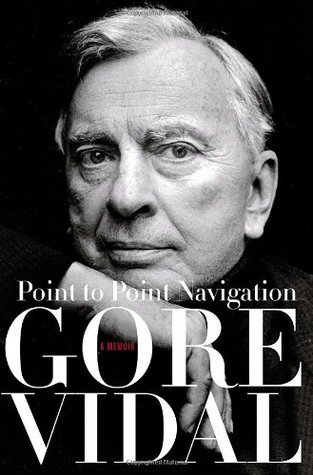
The brilliant sequel to Gore Vidal ’ s acclaimed, bestselling memoir, Palimpsest .In Point to Point Navigation , the celebrated novelist, essayist, critic, and controversialist Gore Vidal ranges freely over his remarkable life with the signature wit and literary elegance that is uniquely his. The title refers to a form of navigation he resorted to as a first mate in the Navy during World War II. As he says, “As I was writing this account of my life and times since Palimpsest , I felt as if I were again dealing with those capes and rocks in the Bering Sea that we had to navigate so often with a compass made inoperable by weather.” It is a beautifully apt analogy for the hazards (mostly) eluded during his eventful life and for the way this memoir proceeds—far from linear but always on course.From his desks in Ravello and the Hollywood Hills, Gore Vidal travels in memory through the arenas of literature, television, film, theater, politics and international society where he has cut a broad swath, recounting achievements and defeats, friends and enemies made (and on a number of occasions lost). Among the gathering of notables to be found in these pages, sketched with a draftsman’s ease and evoked with the panache of one of our great raconteurs, are Jack and Jacqueline Kennedy, Tennessee Williams (the “Glorious Bird”), Eleanor Roosevelt, Orson Welles, Johnny Carson, Greta Garbo, Federico Fellini, Rudolph Nureyev, Elia Kazan, and Francis Ford Coppola. Some of the book’s most moving pages are devoted to the illness and death of his partner of five decades, Howard Austen, and indeed the book is, among other things, a meditation on mortality written in the spirit of Montaigne.Elegiac yet vital and even ornery, Point to Point Navigation is a summing-up of Gore Vidal’s time on the planet that manages to be at once supremely entertaining, endlessly provocative, and thoroughly moving.

Perhaps Vidal's most outrageous novel, this is an indescribable fantasy purportedly set in the city of Duluth (which, however, is near the Mexican border) & involving a tv show also named "Duluth" (a parody of "Dallas"), a spaceship that has landed nearby, the antics of a policewoman, Darlene Ecks, & much else. "A wild spoof of absolutely everything: social pretenses, law enforcement, marriage, open marriage, racism, literature, tv, science fiction, and sex. Dozens of plots perk along at an amazing pace...raunchy, dirty, outrageous, rife with cliches--& often very funny."--People "One of the most brilliant, most radical, & most subversive pieces of writing to emerge from America in recent years."--The New Statesman "Vidal belongs to that group of writers of our time who, precisely because they have always kept their eyes open to the disorders & distortions of our age, have chosen irony, humor, comedy--in other words, the whole range of literary instruments belonging to the universe of the laugh--as their means of settling accounts."--Italo Calvino

When Gore Vidal's recent New York Times bestseller Perpetual War for Perpetual Peace was published, the Los Angeles Times described Vidal as the last defender of the American republic. In Dreaming War, Vidal continues this defense by confronting the Cheney-Bush junta head on in a series of devastating essays that demolish the lies American Empire lives by, unveiling a counter-history that traces the origins of America's current imperial ambitions to the experience of World War Two and the post-war Truman doctrine. And now, with the Cheney-Bush leading us into permanent war, Vidal asks whose interests are served by this doctrine of pre-emptive war? Was Afghanistan turned to rubble to avenge the 3,000 slaughtered on September 11? Or was "the unlovely Osama chosen on aesthetic grounds to be the frightening logo for our long contemplated invasion and conquest of Afghanistan?" After all he was abruptly replaced with Saddam Hussein once the Taliban were overthrown. And while "evidence" is now being invented to connect Saddam with 9/11, the current administration are not helped by "stories in the U.S. press about the vast oil wealth of Iraq which must- for the sake of the free world- be reassigned to U.S. consortiums."

It's 1939, and a teenage math genius is mysteriously summoned to the Smithsonian Institution, where a crash program to develop the atomic bomb is being conducted in the basement. The boy turns out to hold the key to both the secrets of nuclear fission and breakthroughs in the time continuum. As he brainstorms with Robert Oppenheimer, he catches a glimpse of the coming war and becomes determined to ward off the cataclysm. In a race against time-and surrounded by figures from American history past and present, including Albert Einstein, Grover Cleveland, and Abraham Lincoln-he battles to save not just himself, but humanity. Gore Vidal has written some of the finest and most inventive novels in modern times. Readers of such bestsellers as Burr, Lincoln, Duluth, and 1876 will revel in this, his latest foray into the American scene. A brilliant and vividly imaginative tale about some of the key events of the twentieth century, The Smithsonian Institution is a dramatic masterwork of comedy and allusion.

Gore Vidal has been described as the last ‘noble defender" of the American republic. In Imperial America, Vidal steals the thunder of a right wing America—those who have camouflaged their extremist rhetoric in the Old Glory and the Red, White, and Blue—by demonstrating that those whose protest arbitrary and secret government, those who defend the bill of rights, those who seek to restrain America's international power, are the true patriots. "Those Americans who refuse to plunge blindly into the maelstrom of European and Asiatic politics are not defeatist or neurotic," he writes. "They are giving evidence of sanity, not cowardice, of adult thinking as distinguished from infantilism. They intend to preserve and defend the Republic. America is not to be Rome or Britain. It is to be America."

The lost pulp crime novel by great American novelist Gore Vidal! Hired to smuggle an ancient artefact out of Egypt, Pete Wells finds himself the target of killers and femme fatales - and just one step away from triggering a revolution that will set Cairo aflame!

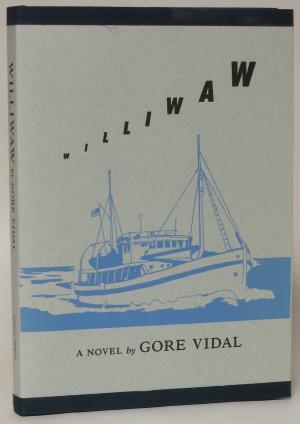
Vidal's first novel - written when he was 19 - takes place aboard an Army boat in the Aleutian Islands near Alaska, and is as turbulent a drama as the Arctic wind from which it takes its name. Into the minds of a half dozen men aboard a ship making a three day voyage among the treacherous Aleutians, nature projects the conflict of her forces. Battling the sea and struggling against each other as the dreaded williwaw approaches, strikes, and subsides, the men reveal the storms within their souls, stark, fierce, and compelling. And pervading all is the grim atmosphere, set down with a mastery of description, of the desolate Arctic and the harsh destructive storm. Illustrated with photos.
