
Margaret Atwood
Margaret Atwood was born in 1939 in Ottawa and grew up in northern Ontario, Quebec, and Toronto. She received her undergraduate degree from Victoria College at the University of Toronto and her master's degree from Radcliffe College. Throughout her writing career, Margaret Atwood has received numerous awards and honourary degrees. She is the author of more than thirty-five volumes of poetry, children’s literature, fiction, and non-fiction and is perhaps best known for her novels, which include The Edible Woman (1970), The Handmaid's Tale (1983), The Robber Bride (1994), Alias Grace (1996), and The Blind Assassin, which won the prestigious Booker Prize in 2000. Atwood's dystopic novel, Oryx and Crake, was published in 2003. The Tent (mini-fictions) and Moral Disorder (short stories) both appeared in 2006. Her most recent volume of poetry, The Door, was published in 2007. Her non-fiction book, Payback: Debt and the Shadow Side of Wealth in the Massey series, appeared in 2008, and her most recent novel, The Year of the Flood, in the autumn of 2009. Ms. Atwood's work has been published in more than forty languages, including Farsi, Japanese, Turkish, Finnish, Korean, Icelandic and Estonian. In 2004 she co-invented the Long Pen TM. Margaret Atwood currently lives in Toronto with writer Graeme Gibson. Associations: Margaret Atwood was President of the Writers' Union of Canada from May 1981 to May 1982, and was President of International P.E.N., Canadian Centre (English Speaking) from 1984-1986. She and Graeme Gibson are the Joint Honourary Presidents of the Rare Bird Society within BirdLife International. Ms. Atwood is also a current Vice-President of PEN International.
34 Books Written

Offred is a Handmaid in the Republic of Gilead. She may leave the home of the Commander and his wife once a day to walk to food markets whose signs are now pictures instead of words because women are no longer allowed to read. She must lie on her back once a month and pray that the Commander makes her pregnant, because in an age of declining births, Offred and the other Handmaids are valued only if their ovaries are viable. Offred can remember the years before, when she lived and made love with her husband, Luke; when she played with and protected her daughter; when she had a job, money of her own, and access to knowledge. But all of that is gone now…Funny, unexpected, horrifying, and altogether convincing, The Handmaid's Tale is at once scathing satire, dire warning, and tour de force.

The Blind Assassin opens with these simple, resonant words: "Ten days after the war ended, my sister Laura drove a car off a bridge." They are spoken by Iris, whose terse account of her sister's death in 1945 is followed by an inquest report proclaiming the death accidental. But just as the reader expects to settle into Laura's story, Atwood introduces a novel-within-a-novel. Entitled The Blind Assassin, it is a science fiction story told by two unnamed lovers who meet in dingy backstreet rooms. When we return to Iris, it is through a 1947 newspaper article announcing the discovery of a sailboat carrying the dead body of her husband, a distinguished industrialist. Brilliantly weaving together such seemingly disparate elements, Atwood creates a world of astonishing vision and unforgettable impact.

MADDADDAM TRILOGY BOX: Oryx & Crake; The Year of the Flood; Maddaddam
by Margaret Atwood
Rating: 4.5 ⭐
• 2 recommendations ❤️
From Booker Prize–winner and #1 national bestseller Margaret Atwood, The MaddAddam Trilogy is so utterly compelling, so prescient, so relevant, so all-too-likely-to-be-true, that readers may find their view of the world forever changed after reading it. This is Margaret Atwood at the absolute peak of her powers. With breathtaking command of her brilliantly conceived material, and with her customary sharp wit and dark humour, she projects us into an outlandish yet wholly believable realm populated by characters who will continue to inhabit our dreams long after the last chapter. In the tradition of The Handmaid’s Tale, Oryx and Crake and The Year of the Flood envision a near future that is both beyond our imagining and all too familiar: a world devastated by uncontrolled genetic engineering and a widespread plague, with only a few remaining humans fighting for survival. Combining adventure, humour, romance and superb storytelling that is at once dazzlingly inventive and grounded in a recognizable world, MaddAddam is a moving and dramatic conclusion to this internationally celebrated dystopian trilogy.
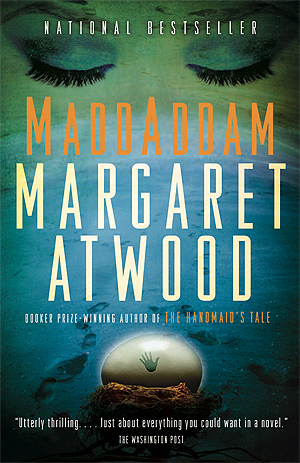
In this final volume of the internationally celebrated MaddAddam trilogy, the Waterless Flood has wiped out most of the population. Toby is part of a small band of survivors, along with the Children of Crake: the gentle, bioengineered quasi-human species who will inherit this new earth.As Toby explains their origins to the curious Crakers, her tales coheres into a luminous oral history that sets down humanity's past--and points toward its future. Blending action, humor, romance, and an imagination at once dazzlingly inventive and grounded in a recognizable world, MaddAddam is vintage Atwood--a moving and dramatic conclusion to her epic work of speculative fiction.

A previously published cover of this ISBN can be found here.Fifteen years after the events of The Handmaid’s Tale, the theocratic regime of the Republic of Gilead maintains its grip on power, but there are signs it is beginning to rot from within. At this crucial moment, the lives of three radically different women converge, with potentially explosive results. Two have grown up on opposite sides of the border: one in Gilead as the privileged daughter of an important Commander, and one in Canada, where she marches in anti-Gilead protests and watches news of its horrors on TV. The testimonies of these two young women, part of the first generation to come of age in the new order, are braided with a third voice: that of one of the regime's enforcers, a woman who wields power through the ruthless accumulation and deployment of secrets. Long-buried secrets are what finally bring these three together, forcing each of them to come to terms with who she is and how far she will go for what she believes. As Atwood unfolds the stories of the women of The Testaments, she opens up our view of the innermost workings of Gilead in a triumphant blend of riveting suspense, blazing wit, and virtuosic world-building.
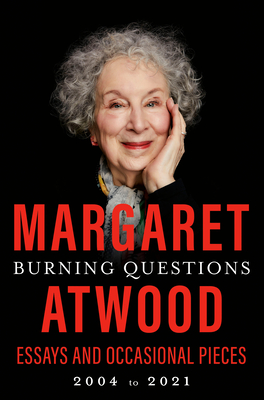
Burning Questions: Essays and Occasional Pieces, 2004 to 2021
by Margaret Atwood
Rating: 4.1 ⭐
• 1 recommendation ❤️
This brilliant selection of essays—funny, erudite, endlessly curious, uncannily prescient—seeks answers to Burning Questions such as: • Why do people everywhere, in all cultures, tell stories?• How much of yourself can you give away without evaporating?• How can we live on our planet?• Is it true? And is it fair?• What do zombies have to do with authoritarianism? In over fifty pieces Atwood aims her prodigious intellect and impish humor at the world, and reports back to us on what she finds. The roller-coaster period covered in the collection brought an end to the end of history, a financial crash, the rise of Trump and a pandemic. From debt to tech, the climate crisis to freedom, from when to dispense advice to the young (answer: only when asked) and how to define granola, we have no better guide than Atwood to the many and varied mysteries of our universe.

Comoventes, lúdicos e sábios, os poemas aqui reunidos falam de ausências e finais, envelhecimento e retrospecção, mas também de presentes e renovações. Eles exploram corpos e mentes em transição, bem como os objetos e rituais cotidianos que nos inserem no presente. Lobisomens, sereias e sonhos surgem ao lado de diferentes formas de vida animal e fragmentos de nosso ambiente danificado.Poemas tardios reúne muitos dos temas mais reconhecidos e celebrados de Margaret Atwood, permeados por descrições minuciosas do mundo natural, passando por encontros espirituosos com alienígenas, situações triviais e divertidas (como guardar passaportes velhos), questões políticas urgentes, lendas, mitos e a sempre obstinada defesa da mulher.Mestre da escrita, Atwood nos lembra de viver o momento e não apenas estar vivos. O mais importante, segundo a autora, é aproveitar todos os dias, seja esculpindo lanternas de Halloween em abóboras, fazendo sexo ou simplesmente lembrando-nos de ver os cogumelos de setembro brotarem.

Cat's Eye is the story of Elaine Risley, a controversial painter who returns to Toronto, the city of her youth, for a retrospective of her art. Engulfed by vivid images of the past, she reminisces about a trio of girls who initiated her into the fierce politics of childhood and its secret world of friendship, longing, and betrayal. Elaine must come to terms with her own identity as a daughter, a lover, and artist, and woman—but above all she must seek release from her haunting memories. Disturbing, hilarious, and compassionate, Cat's Eye is a breathtaking novel of a woman grappling with the tangled knots of her life.

In Alias Grace, bestselling author Margaret Atwood has written her most captivating, disturbing, and ultimately satisfying work since The Handmaid's Tale. She takes us back in time and into the life of one of the most enigmatic and notorious women of the nineteenth century.Grace Marks has been convicted for her involvement in the vicious murders of her employer, Thomas Kinnear, and Nancy Montgomery, his housekeeper and mistress. Some believe Grace is innocent; others think her evil or insane. Now serving a life sentence, Grace claims to have no memory of the murders.Dr. Simon Jordan, an up-and-coming expert in the burgeoning field of mental illness, is engaged by a group of reformers and spiritualists who seek a pardon for Grace. He listens to her story while bringing her closer and closer to the day she cannot remember. What will he find in attempting to unlock her memories? Is Grace a female fiend? A bloodthirsty femme fatale? Or is she the victim of circumstances?

William Shakespeare's The Tempest retold as Hag-SeedFelix is at the top of his game as Artistic Director of the Makeshiweg Theatre Festival. His productions have amazed and confounded. Now he's staging a Tempest like no other: not only will it boost his reputation, it will heal emotional wounds.Or that was the plan. Instead, after an act of unforeseen treachery, Felix is living in exile in a backwoods hovel, haunted by memories of his beloved lost daughter, Miranda. And also brewing revenge.After twelve years, revenge finally arrives in the shape of a theatre course at a nearby prison. Here, Felix and his inmate actors will put on his Tempest and snare the traitors who destroyed him. It's magic! But will it remake Felix as his enemies fall?Margaret Atwood's novel take on Shakespeare's play of enchantment, retribution, and second chances leads us on an interactive, illusion-ridden journey filled with new surprises and wonders of its own.

Reissued in a handsome A List edition, the largest collection of critical prose to date from world renowned author and poet Margaret Atwood, featuring an introduction by Lennie Goodings. Originally published in 1982, Second Words brings together fifty of Margaret Atwood’s finest essays and reviews spanning two decades, beginning in 1962, with an introduction and commentary by the author. With her incomparable wit and originality, Atwood discusses the process of writing and the literary life, with insightful looks at the work of such figures as Erica Jong, E. L. Doctorow, Northrop Frye, Roch Carrier, Marie-Claire Blais, Gwendolyn MacEwen, Marge Piercy, Adrienne Rich, Sylvia Plath, and many more. In several pieces, we see the development of her ideas on Canadian identity and the American dream, as well as her controversial attitudes toward feminism, sexism, and the strange mythologies imposed on men and women in contemporary North America. Second Words remains the largest collection of Atwood’s critical prose to date.
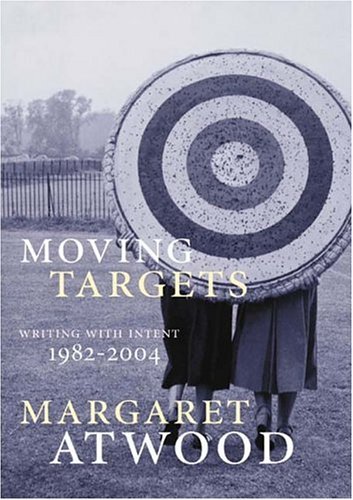
The most precious treasure of this collection is that it gives us the rich back-story and diverse range of influences on Margaret Atwood's work. From the aunts who encouraged her nascent writing career to the influence of George Orwell's Nineteen Eighty-Four on The Handmaid's Tale, we trace the movement of Atwood's fertile and curious mind in action over the years.Atwood's controversial political pieces, Napoleon's Two Biggest Mistakes and Letter to America -- both not-so-veiled warnings about the repercussions of the war in Iraq -- also appear, alongside pieces that exhibit her active concern for the environment, the North, and the future of the human race. Atwood also writes about her John Updike, Marina Warner, Italo Calvino, Marian Engel, Toni Morrison, Angela Carter, Gabriel Garcia Marquez, Mordecai Richler, Elmore Leonard, and Ursula Le Guin.This is a landmark volume from a major writer whose worldwide readership is in the millions, and whose work has influenced and entertained generations. Moving Targets is the companion volume to Second Words.

The New York Times Magazine, 12 July 2020 | The Decameron Project: new Margaret Atwood story, "Impatient Griselda"
by Margaret Atwood
Rating: 3.1 ⭐
The July 12, 2020 issue of New York Times Magazine, the Sunday supplement that has become a worthy periodical in its own right, in part through insightful selection of significant lead articles and themes - in the case of the remarkable Decameron Project, 23 new short stories, including the first appearance of Margaret Atwood's "Impatient Griselda". Also, direction to other new stories, online. Samuel A. Donaldon crossword, "Chores Galore". Other puzzles by Frank Longo, Patrick Berry, Thinh Van Duc Lai, and Alex Eaton-Salners.When reality is surreal, only fiction can make sense fo it!As the Covid-19 pandemic swept the world, we asked 29 authors to write new short stories inspired by the moment. We were inspired by Giovanni Boccaccio’s “The Decameron,” written as the plague ravaged Florence in the 14th century. Read the stories in our all-fiction issue. Plus the usual puzzles, and letters.

Okie's fifteen. She lives in New York. She's got a few problems: she's failing geography, her dad's a wimp, and her mother, Sumatra, is a stone cold bitch. But things get a lot worse when Sumatra turns into a zombie and eats Okie's dad.Clio, Okie's grandmother, lives in Toronto; but since the zombie apocalypse, Toronto's a lot further away than it used to be. Clio suggests that Okie transport Sumatra across the border, because family is family. But coaching Okie by cellphone isn't easy, and Clio has some zombies of her own to contend with. Luckily she has some garden tools.Naomi Alderman and Margaret Atwood team up for this unusual two-hander. Encompassing love, death, sex, and the meaning of family, The Happy Zombie Sunrise Home will surprise, delight, and convince you of the vital importance of keeping ready supplies of rhubarb and mini-wieners in your freezer at all times.(Description from Wattpad)
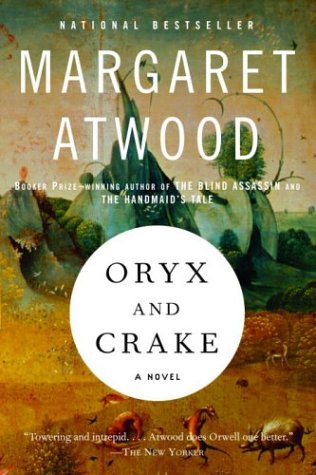
Alternate cover edition of ISBN 9780385721677.Oryx and Crake is at once an unforgettable love story and a compelling vision of the future. Snowman, known as Jimmy before mankind was overwhelmed by a plague, is struggling to survive in a world where he may be the last human, and mourning the loss of his best friend, Crake, and the beautiful and elusive Oryx whom they both loved. In search of answers, Snowman embarks on a journey–with the help of the green-eyed Children of Crake–through the lush wilderness that was so recently a great city, until powerful corporations took mankind on an uncontrolled genetic engineering ride. Margaret Atwood projects us into a near future that is both all too familiar and beyond our imagining.
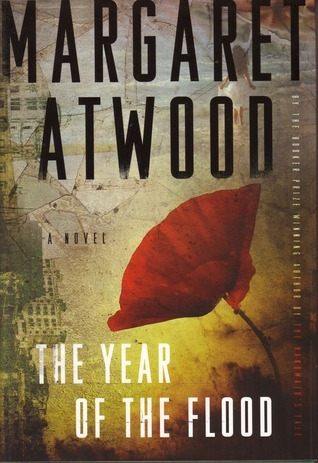
The times and species have been changing at a rapid rate, and the social compact is wearing as thin as environmental stability. Adam One, the kindly leader of the God's Gardeners—a religion devoted to the melding of science and religion, as well as the preservation of all plant and animal life—has long predicted a natural disaster that will alter Earth as we know it. Now it has occurred, obliterating most human life. Two women have survived: Ren, a young trapeze dancer locked inside the high-end sex club Scales and Tails, and Toby, a God's Gardener barricaded inside a luxurious spa where many of the treatments are edible. Have others survived? Ren's bioartist friend Amanda? Zeb, her eco-fighter stepfather? Her onetime lover, Jimmy? Or the murderous Painballers, survivors of the mutual-elimination Painball prison? Not to mention the shadowy, corrupt policing force of the ruling powers... Meanwhile, gene-spliced life forms are proliferating: the lion/lamb blends, the Mo'hair sheep with human hair, the pigs with human brain tissue. As Adam One and his intrepid hemp-clad band make their way through this strange new world, Ren and Toby will have to decide on their next move. They can't stay locked away... By turns dark, tender, violent, thoughtful, and uneasily hilarious, The Year of the Flood is Atwood at her most brilliant and inventive.

Life is hard enough for a teenage girl in 1950s suburbia without having a mother who may—or may not—be a witch. A single mother at that. Sure, she fits in with her starched dresses, string of pearls, and floral aprons. Then there are the hushed and mystical consultations with neighborhood women in distress. The unsavory, mysterious plants in the flower beds. The divined warning to steer clear of a boyfriend whose fate is certainly doomed. But as the daughter of this bewitching homemaker comes of age and her mother’s claims become more and more outlandish, she begins to question everything she once took for granted.

Now that all the others have run out of air, it's my turn to do a little story-making.In Homer's account in The Odyssey, Penelope—wife of Odysseus and cousin of the beautiful Helen of Troy—is portrayed as the quintessential faithful wife, her story a salutary lesson through the ages. Left alone for twenty years when Odysseus goes off to fight in the Trojan War after the abduction of Helen, Penelope manages, in the face of scandalous rumors, to maintain the kingdom of Ithaca, bring up her wayward son, and keep over a hundred suitors at bay, simultaneously. When Odysseus finally comes home after enduring hardships, overcoming monsters, and sleeping with goddesses, he kills her suitors and—curiously—twelve of her maids.In a splendid contemporary twist to the ancient story, Margaret Atwood has chosen to give the telling of it to Penelope and to her twelve hanged maids, asking: "What led to the hanging of the maids, and what was Penelope really up to?" In Atwood's dazzling, playful retelling, the story becomes as wise and compassionate as it is haunting, and as wildly entertaining as it is disturbing. With wit and verve, drawing on the story-telling and poetic talent for which she herself is renowned, she gives Penelope new life and reality—and sets out to provide an answer to an ancient mystery.
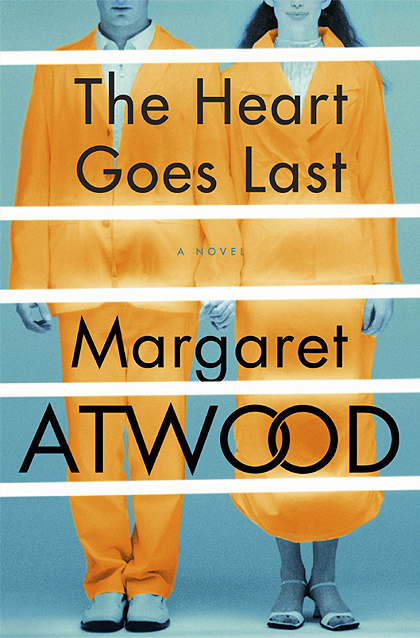
Margaret Atwood puts the human heart to the ultimate test in an utterly brilliant new novel that is as visionary as The Handmaid's Tale and as richly imagined as The Blind Assassin.Stan and Charmaine are a married couple trying to stay afloat in the midst of an economic and social collapse. Job loss has forced them to live in their car, leaving them vulnerable to roving gangs. They desperately need to turn their situation around - and fast. The Positron Project in the town of Consilience seems to be the answer to their prayers. No one is unemployed and everyone gets a comfortable, clean house to live in... for six months out of the year. On alternating months, residents of Consilience must leave their homes and function as inmates in the Positron prison system. Once their month of service in the prison is completed, they can return to their "civilian" homes.At first, this doesn't seem like too much of a sacrifice to make in order to have a roof over one's head and food to eat. But when Charmaine becomes romantically involved with the man who lives in their house during the months when she and Stan are in the prison, a series of troubling events unfolds, putting Stan's life in danger. With each passing day, Positron looks less like a prayer answered and more like a chilling prophecy fulfilled.

Margaret Atwood's The Robber Bride is inspired by "The Robber Bridegroom," a wonderfully grisly tale from the Brothers Grimm in which an evil groom lures three maidens into his lair and devours them, one by one. But in her version, Atwood brilliantly recasts the monster as Zenia, a villainess of demonic proportions, and sets her loose in the lives of three friends, Tony, Charis, and Roz. All three "have lost men, spirit, money, and time to their old college acquaintance, Zenia. At various times, and in various emotional disguises, Zenia has insinuated her way into their lives and practically demolished them. To Tony, who almost lost her husband and jeopardized her academic career, Zenia is 'a lurking enemy commando.' To Roz, who did lose her husband and almost her magazine, Zenia is 'a cold and treacherous bitch.' To Charis, who lost a boyfriend, quarts of vegetable juice and some pet chickens, Zenia is a kind of zombie, maybe 'soulless'" (Lorrie Moore, New York Times Book Review). In love and war, illusion and deceit, Zenia's subterranean malevolence takes us deep into her enemies' pasts.

Marian is determined to be ordinary. She lays her head gently on the shoulder of her serious fiancé and quietly awaits marriage. But she didn't count on an inner rebellion that would rock her stable routine, and her digestion. Marriage à la mode, Marian discovers, is something she literally can't stomach... The Edible Woman is a funny, engaging novel about emotional cannibalism, men and women, and the desire to be consumed.

A collection of highly imaginative short pieces that speak to our times with deadly accuracy.A recently widowed fantasy writer is guided through a stormy winter evening by the voice of her late husband. An elderly lady with Charles Bonnet syndrome comes to terms with the little people she keeps seeing, while a newly formed populist group gathers to burn down her retirement residence. A woman born with a genetic abnormality is mistaken for a vampire, and a crime committed long ago is revenged in the Arctic via a 1.9 billion-year-old stromatolite.In these nine tales, Margaret Atwood ventures into the shadowland earlier explored by fabulists and concoctors of dark yarns such as Robert Louis Stevenson, Daphne du Maurier and Arthur Conan Doyle - and also by herself, in her award-winning novel Alias Grace. In Stone Mattress, Margaret Atwood is at the top of her darkly humorous and seriously playful game.

Part detective novel, part psychological thriller, Surfacing is the story of a talented woman artist who goes in search of her missing father on a remote island in northern Quebec. Setting out with her lover and another young couple, she soon finds herself captivated by the isolated setting, where a marriage begins to fall apart, violence and death lurk just beneath the surface, and sex becomes a catalyst for conflict and dangerous choices. Surfacing is a work permeated with an aura of suspense, complex with layered meanings, and written in brilliant, diamond-sharp prose. Here is a rich mine of ideas from an extraordinary writer about contemporary life and nature, families and marriage, and about women fragmented... and becoming whole.

Three women scheme to avenge an old friend in a darkly witty short story about loyalty, ambition, and delicious retribution by Margaret Atwood, the #1 bestselling author of The Handmaid’s Tale.Myrna, Leonie, and Chrissy meet every Thursday to sample fine cheeses, to reminisce about their former lives as professors, and lately, to muse about murder. Decades ago, a vicious cabal of male poets contrived—quite publicly and successfully—to undermine the writing career, confidence, and health of their dear friend Fern. Now, after Fern has taken a turn for the worse, her three old friends decide that it’s finally time to strike back—in secret, of course, since Fern is far too gentle to approve of a vendetta. All they need is a plan with suitably Shakespearean drama. But as sweet and satisfying as revenge can be, it’s not always so cut and dried.

From the bestselling author of The Handmaid's Tale and The Testaments—the"brilliant and funny" story (Joan Didion, bestselling author of Let Me Tell You What I Mean) of a woman whose attempts to escape herself become instead an occasion for confronting the self-deception that has driven her since childhood.Joan Foster is a woman with numerous identities and a talent for shedding them at will. She has written trashy gothic romances, had affairs with a Polish count and an absurd avant-garde artist, and played at being a politically engaged partner to her activist husband.After a volume of her poetry becomes an unexpected literary sensation, her new fame attracts a blackmailer threatening to reveal her secrets. Joan’s response is to fake her own death and flee to a hill town in Italy. Studded with hair-raising comic escapades and piercing psychological insights, Lady Oracle is both hilarious and profound.

Margaret Atwood is acknowledged as one of the foremost writers of our time. In Moral Disorder she has created a series of interconnected stories that trace the course of a life and also the lives intertwined with it--those of parents, of siblings, of children, of friends, of enemies, of teachers, and even of animals. As in a photograph album, time is measured in sharp, clearly observed moments. The '30s, the '40s, the '50s, the '60s, the '70s, the '80s, the '90s, and the present --all are here. The settings vary: large cities, suburbs, farms, northern forests. The first story, "The Bad News," is set in the present, as a couple no longer young situate themselves in a larger world no longer safe. The narrative then switches time as the central character moves through childhood and adolescence in "The Art of Cooking and Serving," "The Headless Horseman," and "My Last Duchess." We follow her into young adulthood in "The Other Place" and then through a complex relationship, traced in four of the stories: "Monopoly," "Moral Disorder," "White Horse," and "The Entities." The last two stories, "The Labrador Fiasco" and "The Boys at the Lab," deal with the heartbreaking old age of parents but circle back again to childhood, to complete the cycle. By turns funny, lyrical, incisive, tragic, earthy, shocking, and deeply personal, Moral Disorder displays Atwood's celebrated storytelling gifts and unmistakable style to their best advantage. As the New York Times has said: "The reader has the sense that Atwood has complete access to her people's emotional histories, complete understanding of their hearts and imaginations."

A dazzling collection of short stories from the internationally acclaimed, award-winning author of The Handmaid's Tale and The Testaments, stories that look deeply into the heart of family relationships, marriage, loss and memory, and what it means to spend a life togetherMargaret Atwood has established herself as one of the most visionary and canonical authors in the world. This collection of fifteen extraordinary stories--some of which have appeared in The New Yorker and The New York Times Magazine--explore the full warp and weft of experience, speaking to our unique times with Atwood's characteristic insight, wit and intellect.The two intrepid sisters of the title story grapple with loss and memory on a perfect summer evening; "Impatient Griselda" explores alienation and miscommunication with a fresh twist on a folkloric classic; and "My Evil Mother" touches on the fantastical, examining a mother-daughter relationship in which the mother purports to be a witch. At the heart of the collection are seven extraordinary stories that follow a married couple across the decades, the moments big and small that make up a long life of uncommon love--and what comes after.Returning to short fiction for the first time since her 2014 collection Stone Mattress, Atwood showcases both her creativity and her humanity in these remarkable tales which by turns delight, illuminate, and quietly devastate.

In each of these tales Margaret Atwood deftly illuminates the single instant that shapes a whole life: in a few brief pages we watch as characters progress from the vulnerabilities of adolescence through the passions of youth into the precarious complexities of middle age. By superimposing the past on the present, Atwood paints interior landscapes shaped by time, regret, and life's lost chances, endowing even the banal with a sense of mystery. Richly layered and disturbing, poignant at times and scathingly witty at others, the stories in Wilderness Tips take us into the strange and secret places of the heart and inform the familiar world in which we live with truths that cut to the bone.Contents:True trash --Hairball --Isis in darkness --The bog man --Death by landscape --Uncles --The age of lead --Weight --Wilderness tips --Hack Wednesday.
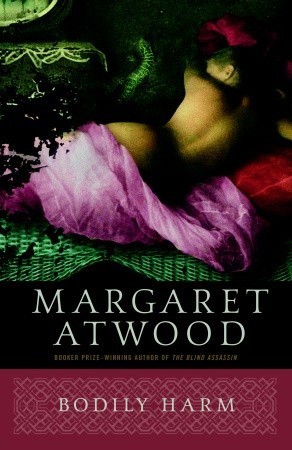
Rennie Wilford is a freelance journalist who takes an assignment in the Caribbean in the hopes of recuperating from her recently shattered life. On the tiny island of St. Antoine, she tumbles into a corrupt world where no one is what they seem, where her rules for survival no longer apply. This is a thoroughly gripping novel of intrigue and betrayal, which explores human defensiveness, the lust for power both sexual and political, and the need for a compassion that goes beyond what we ordinarily mean by love. The enigma unfolds as it would for any innocent bystander swept up by events, bringing along the scruples, and the fears, of the past.

By turns humorous and warm, stark and frightening, Bluebeard'S Egg glows with childhood memories, the reality of parents growing old, and the casual cruelty men and women inflict on each other. Here is the familiar outer world of family summers at remote lakes, winters of political activism, and seasons of exotic friends, mundane lives, and unexpected loves. But here too is the inner world of hidden places and all that emerges from them-the intimately personal, the fantastic, the shockingly real...whether it's what lives in a mysterious locked room or the secret feelings we all conceal. In this dramatic and far-ranging collection, Margaret Atwood proves why she is a true master of the genre.

Imprisoned by walls of their own construction, here are three people, each in midlife, in midcrisis, forced to make choices--after the rules have changed. Elizabeth, with her controlled sensuality, her suppressed rage, is married to the wrong man. She has just lost her latest lover to suicide. Nate, her gentle, indecisive husband, is planning to leave her for Lesje, a perennial innocent who prefers dinosaurs to men. Hanging over them all is the ghost of Elizabeth's dead lover...and the dizzying threat of three lives careening inevitably toward the same climax.

One of the world's most celebrated authors, Margaret Atwood has penned a collection of smart and entertaining fictional essays, in the genre of her popular books Good Bones and Murder in the Dark, punctuated with wonderful illustrations by the author. Chilling and witty, prescient and personal, delectable and tart, these highly imaginative, vintage Atwoodian mini-fictions speak on a broad range of subjects, reflecting the times we live in with deadly accuracy and knife-edge precision.In pieces ranging in length from a mere paragraph to several pages, Atwood gives a sly pep talk to the ambitious young; writes about the disconcerting experience of looking at old photos of ourselves; gives us Horatio's real views on Hamlet; and examines the boons and banes of orphanhood. Bring Back Mom: An Invocation; explores what life was really like for the "perfect" homemakers of days gone by, and in The Animals Reject Their Names she runs history backward, with surprising results.Chilling and witty, prescient and personal, delectable and tart, The Tent is vintage Atwood, enhanced by the author's delightful drawings.
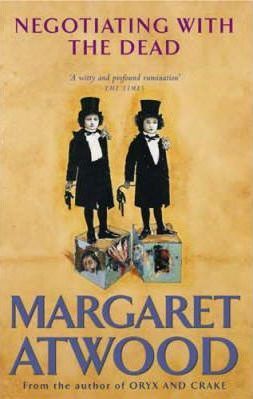
What is the role of the writer? Prophet? High Priest of Art? Court Jester? Or witness to the real world? Looking back on her childhood and the development of her writing career, Margaret Atwood examines the metaphors that writers of fiction and poetry have used to explain - or excuse! - their activities, looking at what costumes they have seen fit to assume, what roles they have chosen to play. In her final chapter she takes up the challenge of the book's title: if a writer is to be seen as "gifted", who is doing the giving and what are the terms of the gift?

From the #1 New York Times bestselling author of The Handmaid's TaleThis splendid volume of short fiction testifies to Margaret Atwood's startlingly original voice, full of a rare intensity and exceptional intelligence. Her men and women still miscommunicate, still remain separate in different rooms, different houses, or even different worlds. With brilliant flashes of fantasy, humor, and unexpected violence, the stories reveal the complexities of human relationships and bring to life characters who touch us deeply, evoking terror and laughter, compassion and recognition--and dramatically demonstrate why Margaret Atwood is one of the most important writers in English today.