
Haruki Murakami
Haruki Murakami (村上春樹) is a Japanese writer. His novels, essays, and short stories have been best-sellers in Japan and internationally, with his work translated into 50 languages and having sold millions of copies outside Japan. He has received numerous awards for his work, including the Gunzo Prize for New Writers, the World Fantasy Award, the Tanizaki Prize, Yomiuri Prize for Literature, the Frank O'Connor International Short Story Award, the Noma Literary Prize, the Franz Kafka Prize, the Kiriyama Prize for Fiction, the Goodreads Choice Awards for Best Fiction, the Jerusalem Prize, and the Princess of Asturias Awards. Growing up in Ashiya, near Kobe before moving to Tokyo to attend Waseda University, he published his first novel Hear the Wind Sing (1979) after working as the owner of a small jazz bar for seven years. His notable works include the novels Norwegian Wood (1987), The Wind-Up Bird Chronicle (1994–95), Kafka on the Shore (2002) and 1Q84 (2009–10); the last was ranked as the best work of Japan's Heisei era (1989–2019) by the national newspaper Asahi Shimbun's survey of literary experts. His work spans genres including science fiction, fantasy, and crime fiction, and has become known for his use of magical realist elements. His official website cites Raymond Chandler, Kurt Vonnegut and Richard Brautigan as key inspirations to his work, while Murakami himself has named Kazuo Ishiguro, Cormac McCarthy and Dag Solstad as his favourite currently active writers. Murakami has also published five short story collections, including First Person Singular (2020), and non-fiction works including Underground (1997), an oral history of the Tokyo subway sarin attack, and What I Talk About When I Talk About Running (2007), a memoir about his experience as a long distance runner. His fiction has polarized literary critics and the reading public. He has sometimes been criticised by Japan's literary establishment as un-Japanese, leading to Murakami's recalling that he was a "black sheep in the Japanese literary world". Meanwhile, Murakami has been described by Gary Fisketjon, the editor of Murakami's collection The Elephant Vanishes (1993), as a "truly extraordinary writer", while Steven Poole of The Guardian praised Murakami as "among the world's greatest living novelists" for his oeuvre.
31 Books Written

From the bestselling author of Kafka on the A magnificent coming-of-age story steeped in nostalgia, “a masterly novel” ( The New York Times Book Review ) blending the music, the mood, and the ethos that were the sixties with a young man’s hopeless and heroic first love.Toru, a serious young college student in Tokyo, is devoted to Naoko, a beautiful and introspective young woman, but their mutual passion is marked by the tragic death of their best friend years before. As Naoko retreats further into her own world, Toru finds himself drawn to a fiercely independent and sexually liberated young woman.Stunning and elegiac, Norwegian Wood first propelled Haruki Murakami into the forefront of the literary scene.
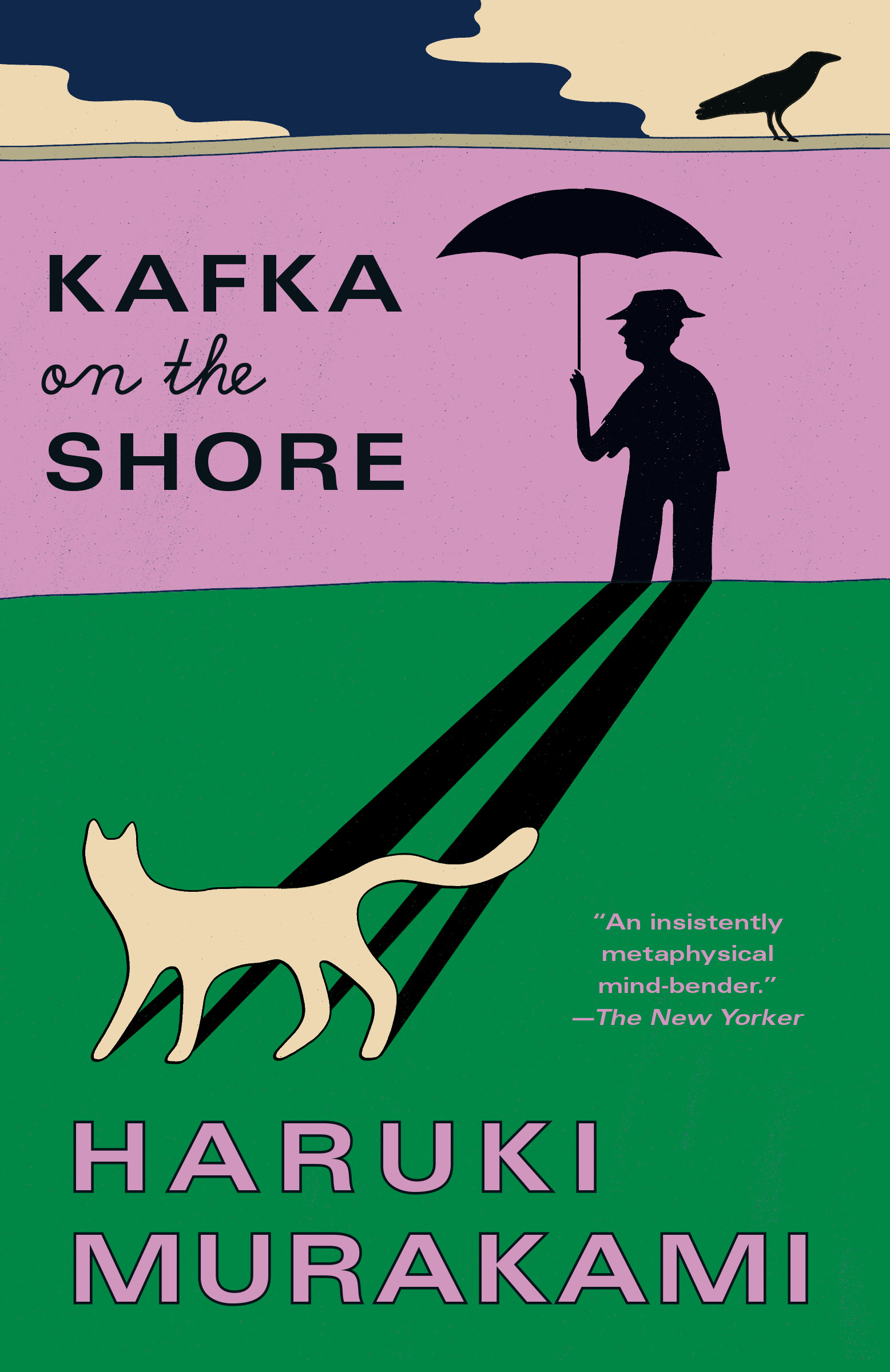
Kafka on the Shore, a tour de force of metaphysical reality, is powered by two remarkable characters: a teenage boy, Kafka Tamura, who runs away from home either to escape a gruesome oedipal prophecy or to search for his long-missing mother and sister; and an aging simpleton called Nakata, who never recovered from a wartime affliction and now is drawn toward Kafka for reasons that, like the most basic activities of daily life, he cannot fathom. Their odyssey, as mysterious to them as it is to us, is enriched throughout by vivid accomplices and mesmerizing events. Cats and people carry on conversations, a ghostlike pimp employs a Hegel-quoting prostitute, a forest harbors soldiers apparently unaged since World War II, and rainstorms of fish (and worse) fall from the sky. There is a brutal murder, with the identity of both victim and perpetrator a riddle—yet this, along with everything else, is eventually answered, just as the entwined destinies of Kafka and Nakata are gradually revealed, with one escaping his fate entirely and the other given a fresh start on his own.
An intimate look at writing, running, and the incredible way they intersect, from the incomparable, bestselling author Haruki Murakami. While simply training for New York City Marathon would be enough for most people, Haruki Murakami's decided to write about it as well. The result is a beautiful memoir about his intertwined obsessions with running and writing, full of vivid memories and insights, including the eureka moment when he decided to become a writer. By turns funny and sobering, playful and philosophical, What I Talk About When I Talk About Running is rich and revelatory, both for fans of this masterful yet guardedly private writer and for the exploding population of athletes who find similar satisfaction in athletic pursuit.

The year is 1984 and the city is Tokyo.A young woman named Aomame follows a taxi driver’s enigmatic suggestion and begins to notice puzzling discrepancies in the world around her. She has entered, she realizes, a parallel existence, which she calls 1Q84 —“Q is for ‘question mark.’ A world that bears a question.” Meanwhile, an aspiring writer named Tengo takes on a suspect ghostwriting project. He becomes so wrapped up with the work and its unusual author that, soon, his previously placid life begins to come unraveled. As Aomame’s and Tengo’s narratives converge over the course of this single year, we learn of the profound and tangled connections that bind them ever closer: a beautiful, dyslexic teenage girl with a unique vision; a mysterious religious cult that instigated a shoot-out with the metropolitan police; a reclusive, wealthy dowager who runs a shelter for abused women; a hideously ugly private investigator; a mild-mannered yet ruthlessly efficient bodyguard; and a peculiarly insistent television-fee collector.A love story, a mystery, a fantasy, a novel of self-discovery, a dystopia to rival George Orwell’s—1Q84 is Haruki Murakami’s most ambitious undertaking yet: an instant best seller in his native Japan, and a tremendous feat of imagination from one of our most revered contemporary writers.

Colorless Tsukuru Tazaki and His Years of Pilgrimage
by Haruki Murakami
Rating: 3.8 ⭐
• 2 recommendations ❤️
INSTANT #1 NEW YORK TIMES BESTSELLER • One of the most revered voices in literature today gives us a story of love, friendship, and heartbreak for the ages.“Mesmerizing, immersive, hallucinogenic.”—Entertainment WeeklyColorless Tsukuru Tazaki and His Years of Pilgrimage is the remarkable story of a young man haunted by a great loss; of dreams and nightmares that have unintended consequences for the world around us; and of a journey into the past that is necessary to mend the present.ONE OF THE BEST BOOKS OF THE YEAR: The New York Times Book Review, The Washington Post, Financial Times, St. Louis Post-Dispatch, Slate, Mother Jones, The Daily Beast, BookPage

Hard-Boiled Wonderland and the End of the World
by Haruki Murakami
Rating: 4.1 ⭐
• 2 recommendations ❤️
Hyperkinetic and relentlessly inventive, Hard-Boiled Wonderland and the End of the World is Haruki Murakami’s deep dive into the very nature of consciousness.Across two parallel narratives, Murakami draws readers into a mind-bending universe in which Bob Dylan, Lauren Bacall, a split-brained data processor, a deranged scientist, his shockingly undemure granddaughter, and various thugs, librarians, and subterranean monsters collide to dazzling effect. What emerges is a novel that is at once hilariously funny and a deeply serious meditation on the nature and uses of the mind.

A dazzling new collection of short stories--the first major new work of fiction from the beloved, internationally acclaimed, Haruki Murakami since his #1 best-selling Colorless Tsukuru Tazaki and His Years of Pilgrimage. Across seven tales, Haruki Murakami brings his powers of observation to bear on the lives of men who, in their own ways, find themselves alone. Here are vanishing cats and smoky bars, lonely hearts and mysterious women, baseball and the Beatles, woven together to tell stories that speak to us all. Marked by the same wry humor that has defined his entire body of work, in this collection Murakami has crafted another contemporary classic.

Japan's most highly regarded novelist now vaults into the first ranks of international fiction writers with this heroically imaginative novel, which is at once a detective story, an account of a disintegrating marriage, and an excavation of the buried secrets of World War II.In a Tokyo suburb a young man named Toru Okada searches for his wife's missing cat. Soon he finds himself looking for his wife as well in a netherworld that lies beneath the placid surface of Tokyo. As these searches intersect, Okada encounters a bizarre group of allies and a psychic prostitute; a malevolent yet mediagenic politician; a cheerfully morbid sixteen-year-old-girl; and an aging war veteran who has been permanently changed by the hideous things he witnessed during Japan's forgotten campaign in Manchuria.Gripping, prophetic, suffused with comedy and menace, The Wind-Up Bird Chronicle is a tour de force equal in scope to the masterpieces of Mishima and Pynchon.From the Trade Paperback edition.

His life was like a recurring nightmare: a train to nowhere. But an ordinary life has a way of taking an extraordinary turn. Add a girl whose ears are so exquisite that, when uncovered, they improve sex a thousand-fold, a runaway friend, a right-wing politico, an ovine-obsessed professor and a manic-depressive in a sheep outfit, implicate them in a hunt for a sheep, that may or may not be running the world, and the upshot is another singular masterpiece from Japan's finest novelist.

A charmingly idiosyncratic look at writing, creativity, and the author’s own novels.Haruki Murakami’s myriad fans will be delighted by this unique look into the mind of a master storyteller. In this engaging book, the internationally best-selling author and famously reclusive writer shares with readers what he thinks about being a novelist; his thoughts on the role of the novel in our society; his own origins as a writer; and his musings on the sparks of creativity that inspire other writers, artists, and musicians. Readers who have long wondered where the mysterious novelist gets his ideas and what inspires his strangely surreal worlds will be fascinated by this highly personal look at the craft of writing.

In After Dark—a gripping novel of late night encounters—Murakami’s trademark humor and psychological insight are distilled with an extraordinary, harmonious mastery.Nineteen-year-old Mari is waiting out the night in an anonymous Denny’s when she meets a young man who insists he knows her older sister, thus setting her on an odyssey through the sleeping city. In the space of a single night, the lives of a diverse cast of Tokyo residents—models, prostitutes, mobsters, and musicians—collide in a world suspended between fantasy and reality. Utterly enchanting and infused with surrealism, After Dark is a thrilling account of the magical hours separating midnight from dawn.

alternate cover can be found hereSumire is in love with a woman seventeen years her senior. But whereas Miu is glamorous and successful, Sumire is an aspiring writer who dresses in an oversized second-hand coat and heavy boots like a character in a Kerouac novel.Sumire spends hours on the phone talking to her best friend K about the big questions in life: what is sexual desire, and should she ever tell Miu how she feels for her? Meanwhile K wonders whether he should confess his own unrequited love for Sumire.Then, a desperate Miu calls from a small Greek island: Sumire has mysteriously vanished...

Alternate cover edition here.Growing up in the suburbs of post-war Japan, it seemed to Hajime that everyone but him had brothers and sisters. His sole companion was Shimamoto, also an only child. Together they spent long afternoons listening to her father's record collection. But when his family moved away, the two lost touch. Now Hajime is in his thirties. After a decade of drifting he has found happiness with his loving wife and two daughters, and success running a jazz bar. Then Shimamoto reappears. She is beautiful, intense, enveloped in mystery. Hajime is catapulted into the past, putting at risk all he has in the present.

Alternate cover edition here.High-class call girls billed to Mastercard. A psychic 13-year-old dropout with a passion for Talking Heads. A hunky matinee idol doomed to play dentists and teachers. A one-armed beach-combing poet, an uptight hotel clerk and one very bemused narrator caught in the web of advanced capitalist mayhem. Combine this offbeat cast of characters with Murakami's idiosyncratic prose and out comes Dance Dance Dance.
The epic new novel from the internationally acclaimed and best-selling author of 1Q84In Killing Commendatore, a thirty-something portrait painter in Tokyo is abandoned by his wife and finds himself holed up in the mountain home of a famous artist, Tomohiko Amada. When he discovers a previously unseen painting in the attic, he unintentionally opens a circle of mysterious circumstances. To close it, he must complete a journey that involves a mysterious ringing bell, a two-foot-high physical manifestation of an Idea, a dapper businessman who lives across the valley, a precocious thirteen-year-old girl, a Nazi assassination attempt during World War II in Vienna, a pit in the woods behind the artist’s home, and an underworld haunted by Double Metaphors. A tour de force of love and loneliness, war and art—as well as a loving homage to The Great Gatsby—Killing Commendatore is a stunning work of imagination from one of our greatest writers.
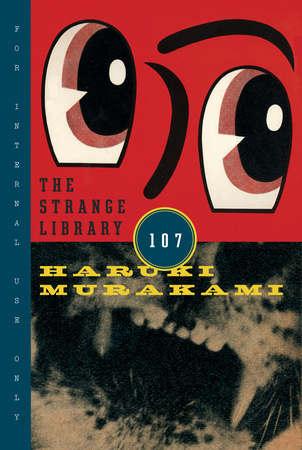
From internationally acclaimed author Haruki Murakami—a fantastical illustrated short novel about a boy imprisoned in a nightmarish library. Opening the flaps on this unique little book, readers will find themselves immersed in the strange world of best-selling Haruki Murakami's wild imagination.The story of a lonely boy, a mysterious girl, and a tormented sheep man plotting their escape from a nightmarish library, the book is like nothing else Murakami has written. Designed by Chip Kidd and fully illustrated in full color throughout, this small format, 96-page volume is a treat for book lovers of all ages.

Alternate cover edition of ISBN 9780679750536With the same deadpan mania and genius for dislocation that he brought to his internationally acclaimed novels A Wild Sheep Chase and Hard-Boiled Wonderland and the End of the World, Haruki Murakami makes this collection of stories a determined assault on the normal. A man sees his favorite elephant vanish into thin air; a newlywed couple suffers attacks of hunger that drive them to hold up a McDonald's in the middle of the night; and a young woman discovers that she has become irresistible to a little green monster who burrows up through her backyard.By turns haunting and hilarious, The Elephant Vanishes is further proof of Murakami's ability to cross the border between separate realities -- and to come back bearing treasure.

1995年1月、地震はすべてを一瞬のうちに壊滅させた。そして2月、流木が燃える冬の海岸で、あるいは、小箱を携えた男が向かった釧路で、かえるくんが地底でみみずくんと闘う東京で、世界はしずかに共振をはじめる……。大地は裂けた。神は、いないのかもしれない。でも、おそらく、あの震災のずっと前から、ぼくたちは内なる廃墟を抱えていた――。深い闇の中に光を放つ6つの黙示録。

1949年にジョージ・オーウェルは、近未来小説としての『1984』を刊行した。そして2009年、『1Q84』は逆の方向から1984年を描いた近過去小説である。そこに描かれているのは「こうであったかもしれない」世界なのだ。私たちが生きている現在が、「そうではなかったかもしれない」世界であるのと、ちょうど同じように。

A riveting new collection of short stories from the beloved, internationally acclaimed, Haruki Murakami.The eight masterful stories in this new collection are all told in the first person by a classic Murakami narrator: a lonely man. Some of them (like With the Beatles, Cream and On a Stone Pillow ) are nostalgic looks back at youth. Others are set in adulthood--Charlie Parker Plays Bossa Nova, Carnaval, Confessions of a Shinagawa Monkey and the stunning title story. Occasionally, a narrator who may or may not be Haruki himself is present, as in The Yakult Swallows Poetry Collection. Is it memoir or fiction? The reader decides. The stories all touch beautifully on love and loss, childhood and death . . . all with a signature Murakami twist.'

Collection of twenty-four stories that generously expresses Murakami’s mastery of the form. From the surreal to the mundane, these stories exhibit his ability to transform the full range of human experience in ways that are instructive, surprising, and relentlessly entertaining. Here are animated crows, a criminal monkey, and an iceman, as well as the dreams that shape us and the things we might wish for. Whether during a chance reunion in Italy, a romantic exile in Greece, a holiday in Hawaii, or in the grip of everyday life, Murakami’s characters confront grievous loss, or sexuality, or the glow of a firefly, or the impossible distances between those who ought to be closest of all.
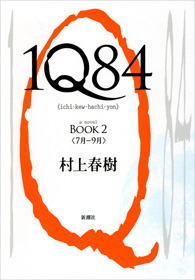
1949年にジョージ・オーウェルは、近未来小説としての『1984』を刊行した。そして2009年、『1Q84』は逆の方向から1984年を描いた近過去小説である。そこに描かれているのは「こうであったかもしれない」世界なのだ。私たちが生きている現在が、「そうではなかったかもしれない」世界であるのと、ちょうど同じように。
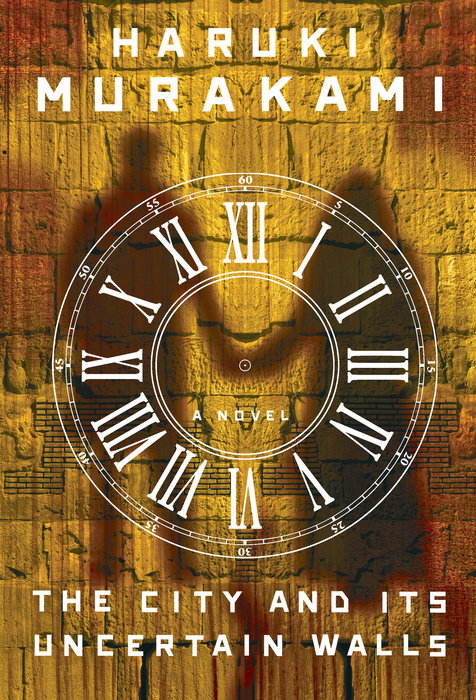
From the bestselling author of Norwegian Wood and Hard-Boiled Wonderland and the End of the World comes a love story, a quest, an ode to books and to the libraries that house them, and a parable for our peculiar times.We begin with a nameless young couple: a boy and a girl, teenagers in love. One day, she disappears . . . and her absence haunts him for the rest of his life.Thus begins a search for this lost love that takes the man into middle age and on a journey between the real world and an other world—a mysterious, perhaps imaginary, walled town where unicorns roam, where a Gatekeeper determines who can enter and who must remain behind, and where shadows become untethered from their selves. Listening to his own dreams and premonitions, the man leaves his life in Tokyo behind and ventures to a small mountain town, where he becomes the head librarian, only to learn the mysterious circumstances surrounding the gentleman who had the job before him. As the seasons pass and the man grows more uncertain about the porous boundaries between these two worlds, he meets a strange young boy who helps him to see what he’s been missing all along.The City and Its Uncertain Walls is a singular and towering achievement by one of modern literature’s most important writers.

Discover Haruki Murakami's first two novels.'If you're the sort of guy who raids the refrigerators of silent kitchens at three o'clock in the morning, you can only write accordingly.That's who I am.'Hear the Wind Sing and Pinball, 1973 are Haruki Murakami's earliest novels. They follow the fortunes of the narrator and his friend, known only by his nickname, the Rat. In Hear the Wind Sing the narrator is home from college on his summer break. He spends his time drinking beer and smoking in J's Bar with the Rat, listening to the radio, thinking about writing and the women he has slept with, and pursuing a relationship with a girl with nine fingers.Three years later, in Pinball, 1973, he has moved to Tokyo to work as a translator and live with indistinguishable twin girls, but the Rat has remained behind, despite his efforts to leave both the town and his girlfriend. The narrator finds himself haunted by memories of his own doomed relationship but also, more bizarrely, by his short-lived obsession with playing pinball in J's Bar. This sends him on a quest to find the exact model of pinball machine he had enjoyed playing years earlier: the three-flipper Spaceship.

Hear the Wind Sing is the first novel by Haruki Murakami; it first appeared in the June 1979 issue of Gunzo, one of the most influential literary magazines in Japan.There’s not a whole lot to say story wise. A young man drinks a lot of beer and has strange conversations with a mysterious young lady he just met. So, classic Murakami.

The year is 1984 and the city is Tokyo.A young woman named Aomame follows a taxi driver’s enigmatic suggestion and begins to notice puzzling discrepancies in the world around her. She has entered, she realizes, a parallel existence, which she calls 1Q84 —“Q is for ‘question mark.’ A world that bears a question.” Meanwhile, an aspiring writer named Tengo takes on a suspect ghostwriting project. He becomes so wrapped up with the work and its unusual author that, soon, his previously placid life begins to come unraveled. A love story, a mystery, a fantasy, a novel of self-discovery, a dystopia to rival George Orwell’s—1Q84 is Haruki Murakami’s most ambitious undertaking yet: an instant best seller in his native Japan, and a tremendous feat of imagination from one of our most revered contemporary writers

In De moord op Commendatore van Haruki Murakami neemt een zesendertigjarige portretschilder zijn intrek in een oud atelier in de bergen ten zuidwesten van Tokio. Hij is onlangs gescheiden, na zes jaar huwelijk. Behalve door hartzeer wordt hij geplaagd door een ‘painter’s block’. Hij hoopt in het afgelegen atelier tot rust te komen en zijn inspiratie terug te vinden, maar het loopt anders. Een mysterieus schilderij lijkt tot leven te komen. Vanuit een heuvel in het bos achter het huis klinkt ’s nachts het geluid van een bel. Een flamboyante buurman biedt hulp, maar hij heeft zijn eigen agenda. Het leidt tot een zoektocht waarin de hoofdpersoon met zijn diepste angsten wordt geconfronteerd.

It was a clear spring day, Monday, March 20, 1995, when five members of the religious cult Aum Shinrikyo conducted chemical warfare on the Tokyo subway system using sarin, a poison gas twenty-six times as deadly as cyanide. The unthinkable had happened, a major urban transit system had become the target of a terrorist attack. In an attempt to discover why, Haruki Murakami, internationally acclaimed author of The Wind-Up Bird Chronicle and arguably Japan’s most important contemporary novelist, talked to the people who lived through the catastrophe—from a Subway Authority employee with survivor guilt, to a fashion salesman with more venom for the media than for the perpetrators, to a young cult member who vehemently condemns the attack though he has not quit Aum. Through these and many other voices, Murakami exposes intriguing aspects of the Japanese psyche. And as he discerns the fundamental issues leading to the attack, we achieve a clear vision of an event that could occur anytime, anywhere. Hauntingly compelling and inescapably important, Underground is a powerful work of journalistic literature from one of the world’s most perceptive writers.

The plot centers on the narrator's brief but intense obsession with pinball, his life as a freelance translator, and his later efforts to reunite with the old pinball machine that he used to play. He describes living with a pair of identical unnamed female twins, who mysteriously appear in his apartment one morning, and disappear at the end of the book. Interspersed with the narrative are his memories of the Japanese student movement, and of his old girlfriend Naoko. The plot alternates between describing the life of narrator and that of his friend, The Rat.

«النعاس» تلك اليد الشفّافة التي تتسلّل إلى وعينا كلّ يوم فتعبث به وتأخذنا في جولة سحريّة عبر عالم مليء بالألغاز. أيّ معنى لحياتنا في غيابه؟ كذا تساءلنا جميعاً في لحظة بعينها من لحظات حياتنا مستمتعين بلعبة الاحتمالات المنسابة أمامنا كفقاعات الصابون… ولم نظفر بشيء لكنّ بطلة هذه الرواية استطاعت أن تحوّل الاحتمال إلى واقع حين وضعها المصير في غمار التجربة. وبمجرّد وقوفها هناك عند الضفّة الأخرى ضفّة اللانوم واليقظة الدائمة لم يعد يشغلها سوى الإجابة عن سؤالها الأكثر إلحاحاً: «أيّ معنى لذهابنا اليوميّ إلى الفراش وإغماضنا أعيننا في انتظار النوم؟» فإذا بها تنقّب عن الأجوبة الممكنة في رفوف الذاكرة وبين طيّات الكتب من دون أن تحظى بجواب شاف تتخذه بديلاً من إجابتها الموقتة: «حتّى ذلك الحين كنت أعتبر النعاس دفعة تحت الحساب من رصيد الموت». هكذا كانت إجابتها لكن من تراه يعود من عالم الأموات ليؤكّد الإجابة أو ينفيها؟ حتما لا أحد! رواية هاروكي موراكامي هذه ليست مجرّد سرد شائق فحسب بقدر ما هي منظار مكبّر يسمح لنا بتأمّل ما لا يُرى من تفاصيل وجودنا في دهشة مشوبة بحزن شفيف. وإذا كانت بطلة الرواية توقفت عن النعاس نهائياً فإنّ قدرة موراكامي على الإدهاش سرعان ما تنقل عدوى البطلة إلى قارئ الرواية ليحد نفسه متورّطاً في عوالمها الغريبة غير قادر على النوم قبل إنهائها».
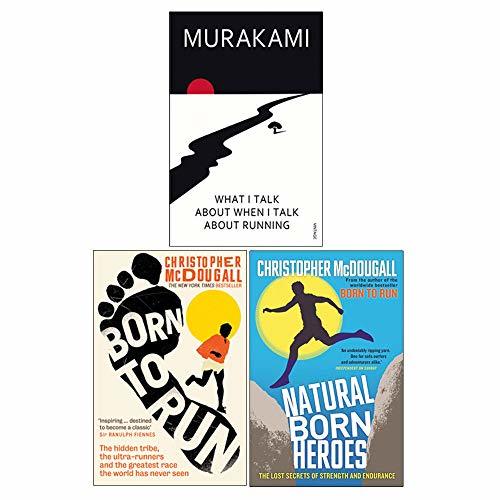
What I Talk About When I Talk About Running, Born To Run, Natural Born Heroes 3 Books Collection Set
by Haruki Murakami
Rating: 4.2 ⭐
What I Talk About When I Talk About Running, Born To Run, Natural Born Heroes 3 Books Collection Set Description: What I Talk About When I Talk About Running In 1982, having sold his jazz bar to devote himself to writing, Murakami began running to keep fit. A year later, he'd completed a solo course from Athens to Marathon, and now, after dozens of such races, he reflects upon the influence the sport has had on his life and on his writing. Equal parts travelogue, training log, and reminiscence, this revealing memoir covers his four-month preparation for the 2005 New York City Marathon and settings ranging from Tokyo's Jingu Gaien gardens, where he once shared the course with an Olympian, to the Charles River in Boston. Born to Run At the heart of Born to Run lies a mysterious tribe of Mexican Indians, the Tarahumara, who live quietly in canyons and are reputed to be the best distance runners in the world; in 1993, one of them, aged 57, came first in a prestigious 100-mile race wearing a toga and sandals. A small group of the world's top ultra-runners (and the awe-inspiring author) make the treacherous journey into the canyons to try to learn the tribe's secrets and then take them on over a course 50 miles long. Natural Born Heroes Soon McDougall was in the middle of a modern fitness revolution taking place everywhere from Parisian parkour routes to state-of-the-art laboratories, and based on the know-how of Shanghai street-fighters and Wild West gunslingers. Just as Born to Run got runners off the treadmill and into nature, Natural Born Heroes will inspire casual athletes to dump the gym membership for cross-training, mud runs and free-running.