
Gustave Flaubert
Gustave Flaubert was a French novelist. He has been considered the leading exponent of literary realism in his country and abroad. According to the literary theorist Kornelije Kvas, "in Flaubert, realism strives for formal perfection, so the presentation of reality tends to be neutral, emphasizing the values and importance of style as an objective method of presenting reality". He is known especially for his debut novel Madame Bovary (1857), his Correspondence, and his scrupulous devotion to his style and aesthetics. The celebrated short story writer Guy de Maupassant was a protégé of Flaubert.
30 Books Written

L'Éducation sentimentale - Gustave Flaubert, Les oeuvres classiques: (5)
by Gustave Flaubert
• 2 recommendations ❤️
"I want to write the moral history of the men of my generation—or, more accurately, the history of their feelings," declared Gustave Flaubert, who envisioned "a book about love, about passion; but passion such as can exist nowadays—that is to say, inactive." First published in 1869, this novel fulfills Flaubert's conception with a realistic, ironic portrait of bourgeois lives played out against France's tumultuous revolution of 1848 and the founding of its Second Empire.Frédéric Moreau, a law student in Paris, dreams of achieving success in art, business, journalism, and politics. His aspirations take a romantic turn upon a chance encounter with a married woman, who inspires a lifelong obsession. Frédéric befriends his idol's husband, an influential art dealer, and quickly finds himself seduced by society life—and bedeviled by financial problems, ideological conflicts, and betrayals of trust. Blending romance, historical authenticity, and satire, Flaubert's Sentimental Education ranks among the nineteenth century's great novels.

"... for her, life was as cold as an attic with a window looking to the north and ennui, like a spider, was silently spinning its shadowy web in every cranny of her heart."Married to Charles, a provincial doctor, Emma Bovary yearns for a more glamorous life. Disenchanted with her devoted and dependable husband and seeking an escape from their dull marriage, she is soon lured into romantic liaisons and tempted by the finer things in life. Considered scandalous in mid-19th century French society, Emma Bovary's superficial and immoral behaviour shocked readers and caused moral outcry. Flaubert holds up to ridicule not only Madame Bovary herself, but the society that dares to judge her

A Simple Heart, also published as A Simple Soul. In A Simple Heart, the poignant story that inspired Julian Barnes's Flaubert's Parrot, Felicite, a French housemaid, approaches a lifetime of servitude with human-scaled but angelic aplomb. No other author has imparted so much beauty and integrity to so modest an existence. Flaubert's "great saint" endures loss after loss by embracing the rich, true rhythms of life: the comfort of domesticity, the solace of the Church, and the depth of memory. This novella showcases Flaubert's perfectly honed realism: a delicate counterpoint of daily events with their psychological repercussions.

First published in 1877, these three stories are dominated by questions of doubt, love, loneliness, and religious experience; together they confirm Flaubert as a master of the short story. A Simple Heart (also published as A Simple Soul), relates the story of Félicité, an uneducated serving-woman who retains her Catholic faith despite a life of desolation and loss. The Legend of Saint Julian Hospitator, inspired by a stained-glass window in Rouen cathedral, describes the fate of a sadistic hunter destined to murder his own parents. The blend of faith and cruelty that dominates this story may also be found in Herodias, a reworking of the tale of Salome and John the Baptist.

An epic story of lust, cruelty, and sensuality, this historical novel is set in Carthage in the days following the First Punic War with Rome.

In his own words, the novel is "a kind of encyclopedia made into farce . . . A book in which I shall spit out my bile." At the center of this book are Bouvard and Pécuchet, two retired clerks who set out in a search for truth and knowledge with persistent optimism in light of the fact that each new attempt at learning about the world ends in disaster.In the literary tradition of Rabelais, Cervantes, and Swift, this story is told in that blend of satire and sympathy that only genius can compound, and the reader becomes genuinely fond of these two Don Quixotes of Ideas. Apart from being a new translation, this edition includes Flaubert's Dictionary of Received Ideas.

Hallucinations and spectral visitations by people and gods from the past cause Saint Anthony to consider a number of metaphysical questions
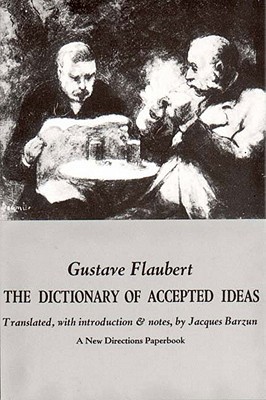
Throughout his life Flaubert made it a game to eavesdrop for the cliché, the platitude, the borrowed and unquestioned idea with which the “right thinking” swaddle their minds. After his death his little treasury of absurdities, of half-truths and social lies, was published as a Dictionnaire des idées reçues. Because its devastating humor and irony are often dependent on the phrasing in vernacular French, the Dictionnaire was long considered untranslatable. This notion was taken as a challenge by Jacques Barzun. Determined to find the exact English equivalent for each “accepted idea” Flaubert recorded, he has succeeded in documenting our own inanities. With a satirist’s wit and a scholar’s precision, Barzun has produced a very contemporary self-portrait of the middle-class philistine, a species as much alive today as when Flaubert railed against him.

An intense, passionate, and profoundly moving work, Flaubert's November explores the notions of desire and longing to most remarkable effect. Wrestling with the agony of loneliness, a young man withdraws deeper into himself, believing he has now reached the autumn of his life. His increasing hopelessness gives way to a yearning for romance—surely the love of a woman can deliver him the purpose he so craves? Convinced of the truth of this, he visits Marie, a kindhearted prostitute—yet Marie, too, is starved of love and longs for acceptance. Together, they form a tragic portrait of personal anguish, heralding the extraordinary outpouring of romantic longing found in Flaubert’s later novels. Most famous for Madame Bovary and Sentimental The Story of a Young Man, Gustave Flaubert is one of the undisputed masters of 19th-century fiction.

A captivating and evocative work, Memoirs of a Madman is one of Flaubert's earliest writings, and forms the basis for his highly renowned L'Education Sentimentale. As a young man looks back on the years that have brought him to "madness," he recalls the innocence of his boyhood and his fond belief that he was blessed with a mind of genius. Yet, painfully, wretchedly, he also recounts his all-too-sudden entry into the adult world. For the day he caught sight of a beautiful woman by the sea marked the end of his flamboyant philosophizing, and the beginning of a tragic coming of age.

This short story was based on the true story of a 19th-century Spanish monk who literally killed for books.

At once a classic of travel literature and a penetrating portrait of a “sensibility on tour,” Flaubert in Egypt wonderfully captures the young writer’s impressions during his 1849 voyages. Using diaries, letters, travel notes, and the evidence of Flaubert’s traveling companion, Maxime Du Camp, Francis Steegmuller reconstructs his journey through the bazaars and brothels of Cairo and down the Nile to the Red Sea.

Gustave Flaubert (1821-1880) was a French writer who is counted among the greatest Western novelists. He is known especially for his first published novel, Madame Bovary (1857), and for his scrupulous devotion to his art and style, best exemplified by his endless search for “le mot juste” (“the precise word”). In September 1849, he completed the first version of a novel, The Temptation of Saint Anthony. In 1858, he travelled to Carthage to gather material for his next novel, Salammbo (1862). It is now commonly admitted that he was one of the greatest writers who ever lived in France and his greatness principally depends upon the extraordinary vigour and exactitude of his style. His private letters show that he was not one of those to whom easy and correct language came naturally; he gained his extraordinary perfection with the unceasing sweat of his brow. Many critics consider Flaubert’s best works to be models of style. His other works include Over Strand and A Record of Travel Through Brittany (1904), Herodias (1877) and A Simple Soul (1877).
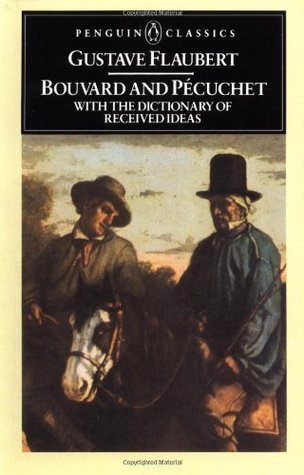
Bouvard and Pécuchet are two Chaplinesque copy-clerks who meet on a park bench in Paris. Following an unexpected inheritance, they decide to give up their jobs and explore the world of ideas.In this, his last novel, unfinished on his death in 1880, Flaubert attempted to encompass his lifelong preoccupation with bourgeois stupidity and his disgust at the banalities of intellectual life in France. Into it he poured all his love of detail, his delight in the life of the mind, his despair of human nature, and his pleasure in passionate friendship. The result is “a kind of encyclopedia made into farce,” wholly grotesque and wholly original, in the spirit of Gargantua and Pantagruel , Don Quixote or Ulysses .
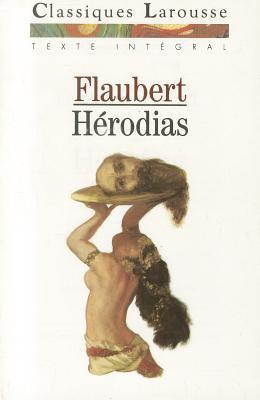
Dans sa citadelle de Makawir, au bord de la Mer morte, Hérode retient prisonnier Jean-Baptiste, qui condamne publiquement son union incestueuse avec Hérodias, sa nièce. Celle-ci, qui n'était poussée que par l'intérêt, craint d'être répudiée. Lors d'un grand festin, Salomé, fille d'Hérodias, danse pour Hérode, puis demande, et obtient, la tête de Jean-Baptiste.

Book by Flaubert, Gustave; Sand, George; Jacobs, Alphonse (editor); ; Steegmuller, Francis (translator); Bray, Barbara (translator)

Gustave Flaubert wrote to his mistress, Louise “An author in his book must be like God in the universe, present everywhere and visible nowhere.” In his books, Flaubert sought to observe that principle; but in his many impassioned letters he allowed his feelings to overflow, revealing himself in all of his human complexity. Sensuous, witty, exalted, ironic, grave, analytical, the letters illustrate the artist’s life―and they trumpet his artistic opinions―in an outpouring of uninhibited eloquence.An acknowledged master of translation, Francis Steegmuller has given us by far the most generous and varied selection of Flaubert’s letters in English. He presents these with an engrossing narrative that places them in the context of the writer’s life and times. We follow Flaubert through his unhappy years at law school, through his tumultuous affair with Louise Colet; we share his days and nights amid the temples and brothels of Egypt, then on to Palestine, Turkey, Greece, and Rome. And the letters chronicle one of the central events in literary history―the conception and composition of what has been called the first modern novel, Madame Bovary . Steegmuller’s selection concludes with Flaubert’s standing trial for immoral writing, Madame Bovary ’s immediate popular success, and Baudelaire’s celebration of its psychological and literary power.Throughout this exposition in Flaubert’s own words of his views on life, literature, and the passions, readers of his novels will be powerfully reminded of the fertility of his genius, and delighted by his poetic enthusiasm. “Let us sing to Apollo as in ancient days,” he wrote to Louise Colet, “and breathe deeply of the fresh cold air of Parnassus; let us strum our guitars and clash our cymbals and whirl like dervishes in the eternal hubbub of forms and ideas!”Flaubert’s letters are documents of life and art; lovers of literature and of the literary adventure can rejoice in this edition.

“If there is one article of faith that dominates the Credo of Gustave Flaubert’s correspondence,” Francis Steegmuller writes in the introduction to this selection of Flaubert’s letters, “it is that the function of great art is not to provide ‘answers.’” The Letters of Gustave Flaubert is above all a record of the intransigent questions—personal, political, artistic—with which Flaubert struggled throughout his life.Here we have Flaubert’s youthful, sensual outpourings to his mistress, the poet Louise Colet, and, as he advances, still unknown, into his thirties, the wrestle to write Madame Bovary . We hear, too, of his life-changing trip to Egypt, as described to family and friends, and then there are lively exchanges with Baudelaire, with the influential critic Sainte-Beuve, and with Guy de Maupassant, his young protégé. Flaubert’s letters to George Sand reveal her as the great confidante of his later years.Steegmuller’s book, a classic in its own right, is both a splendid life of Flaubert in his own words and the ars poetica of the master who laid the foundations for modern writers from James Joyce to Lydia Davis. Originally issued in two volumes, the book appears here for the first time under a single cover.

Selectie uit de brieven van de Franse letterkundige (1821-1880). Gustave Flaubert geldt als een van de grootste prozaïsten in het algemeen en van de Franse literatuur van de negentiende eeuw in het bijzonder. Een van zijn opvattingen was dat een schrijver zich in romans en verhalen diende te onthouden van elke persoonlijke mening. Hij diende in zijn schepping overal aanwezig te zijn maar nergens zichtbaar. Inderdaad is de auteur van Madame Bovary. De leerschool der liefde en de Drie verhalen, afgezien van enkele vage sympathieën en vooral antipathieën, onzichtbaar gebleven. We zouden alleen via memoires en getuigenissen van anderen iets over zijn leven geweten hebben, ware het niet dat Flaubert de gewoonte had om na zijn dagelijkse `worsteling met de stijl' geregeld een of meer brieven te schrijven om het contact met de buitenwereld te onderhouden. Van deze omvangrijke correspondentie, die door sommigen als hét meesterwerk van Flaubert wordt beschouwd, is het overgrote deel bewaard gebleven. Het vormt een van de meest ontroerende, tragische, komische en leerzame brievenverzamelingen die er bestaan.Jarenlang is de correspondentie van Flaubert de lectuur geweest die op mijn nachtkastje prijkte in plaats van de bijbel. - André Gide Ik heb de brieven gelezen en herlezen en ik aarzel niet ze te houden voor het ware meesterwerk van Flaubert. - Enid Starkie De eerste schrijver die vooruitliep op het moderne levensgevoel. - Michel ButorAnders dan als een persoonlijke confrontatie met een superieure dwingeland is lezing van zijn brieven niet te beschrijven. - Kees Fens in De Volkskrant
![مدام بوفاري - الجزء الأول [Madame Bovary, I]](https://m.media-amazon.com/images/S/compressed.photo.goodreads.com/books/1380812547i/18623730.jpg)
عزيزى القـارئ :فى الفصل السادس من كتاب ( وجـوه الحب السبعة ) ، أول كتاب من الإصدار الجديد لسلاسل ( كتـابى ) ، حدثنا الكاتب العالمى ( أندريه موروا ) عن رواية ( مدام بوڤارى ) باعتبارها تمثل الوجه السادس من وجوه الحب السبعة ، وهو الحب الذى يوحى به ( الغجـر ) والرغبـة فى الفـرار من الواقع .. واليوم أقدم لك الجزء الأول من الترجمـة الكاملة الأمينـة لهذه الرواية الخالدة ، التى كتبت لمؤلفها ( جوستاف فلوبير ) الخلـود فى عالم الأدب ، ودفعت به إلى قمة المجد ، تقديرًا لبراعته الفائقة فى تحليل خلجات نفس الزوجـة الخائنة ( إيما بوڤارى ) زوجة الطبيب الريفى الطيب ( شارل بوڤارى ) ، التى تمردت على زوجها لترتمى فى أحضان عشيقها ، حالمة بأن يحملهـا إلى عوالم خيالية طـالما سمعت وقرأت عنها .. ولكن ..وفى نهاية الجـزء الثـانى والأخير من الرواية ـ الذى تقرؤه فى الكتاب القادم بإذن الله ـ أقدم لك تفاصيل المحاكمة التاريخية التى تعرض لها المؤلف على إثر نشر الرواية ، فى عصر لم يكن مهيأ لتقبل هذا النموذج الفذ من نماذج الأدب ( الواقعى ) !

Gustave Flaubert a certainement consacré beaucoup de temps à sa correspondance car dans sa totalité, elle occupe quatre volumes de la collection Pléiade. Dans cette nouvelle et volumineuse édition de poche, il n'était pas possible de présenter cette abondance de lettres, une sélection de près de trois cents morceaux choisis a été effectuée. Les destinataires sont variés, on trouve ses amis de toujours (Maxime Du Camp, Alfred Le Poittevin, Louis Bouilhet), ses maîtresses, notamment Louise Colet, "sa muse" (les lettres qu'il lui envoie fourmillent de réflexions littéraires, en particulier sur la composition de Madame Bovary), sa famille (mère, nièce.), on y rencontre aussi des noms célèbres George Sand, Guy de Maupassant, Sainte-Beuve, Baudelaire... Flaubert endosse le rôle de l'ami, du confident, du fils, de l'amant, mais reste toujours un écrivain préoccupé par son travail et sa philosophie. Présentéees chronologiquement avec une introduction sur chaque grande période de la vie de l'écrivain, ces lettres donnent d'inestimables éléments pour se faire une idée de son caractère et de son existence. Il apparaît comme un homme sans concession, révolté et las. Acide observateur de son temps, il déclare ressentir une "haine de la vie" et sa correspondance recèle de très nombreux jugements édifiants sur son époque. Il est aussi un travailleur acharné, passant des journées à trouver le mot, la juste tournure, rêvant à des ouvres grandioses et des conceptions littéraires élevées. Pour tenter de cerner la personnalité d'un des fondateurs de la littérature moderne, ces lettres arrivent à point nommé. Elles se dévorent comme une excellente biographie.

Escrita entre 1843 y 1845, esta novela constituye el primer intento narrativo serio del joven Flaubert. Insatisfecho con el resultado, sin embargo, sólo consideró aprovechable el título, que utilizaría para una de sus obras maestras, La educación sentimental (1869); y la novela, pese a no tratarse de una «primera versión», sino de una pieza autónoma y distinta, no sería publicada hasta veinte años después de su muerte. Esta «primera» Educación sentimental analiza la trayectoria vital -diferente pero complementaria- de dos muchachos de provincias, Henry y Jules, desde su ingreso en la vida adulta. Henry conocerá el mundo universitario de París, tendrá una aventura con una mujer casada, con la que huirá a América, y de la que pronto se cansará. Jules, por su parte, permanecerá en su región natal, como asalariado: enamorado de una actriz y traicionado por ella, se replegará en sí mismo, buscando en el arte una serenidad imposible

Трагическая судьба Эммы Бовари заставляет нас задуматься о судьбе человека, женщины. Как не просто без оглядки отдаться своим чувствам, чтобы потом превратить в страдание жизнь всех близких.

Aceste texte de tinerete, pasionante, rascolitoare, strabatute de angoasa adolescentei si de fervoarea, dar si de spiritul autocritic ale celui care se stie predestinat literaturii, ne ofera o imagine captivanta, inedita, a scriiturii unuia dintre cei mai mari prozatori ai secolului al XIX-lea. Memoriile unui nebun, text aproape in intregime autobiografic, este jurnalul crizei sentimentale si existentiale prin care trece un adolescent exaltat, al primelor incercari si deceptii amoroase si al drumului lung si dificil spre maturizare. Temele si o parte din personajele de aici vor fi dezvoltate apoi in romanele de maturitate, cu precadere in Educatia sentimentala. Inspirat din betia iubirii pe care Flaubert a cunoscut-o in bratele frumoasei Eulalie Foucaud, Noiembrie exploreaza natura dorintei si a erotismului si conflictul dintre nevoia de insingurare si foamea de afectiune. Marie, personajul care aduna la un loc energiile textului, este o tinara prostituata, o fiinta de o senzualitate aparte, in care violenta se uneste neasteptat cu erotismul frust si care aminteste de chipul ascuns al Emmei Bovary. „Un nebun! Asta e ceva ce stirneste oroare. Tu ce esti, cititorule? In ce categorie te incadrezi – a prostilor sau a nebunilor? Daca ti s-ar da sa alegi, vanitatea te-ar impinge sa o preferi pe ultima. Da, inca o data intreb, la ce foloseste o carte care nu este nici instructiva, nici amuzanta, nici stiintifica, nici filosofica, nici de agricultura, nici elegiaca, o carte care nu ofera nici o reteta contra cosurilor ori contra puricilor, in care nu scrie nimic nici despre caile ferate, nici despre bursa, nici despre strafundurile sufletului omenesc, nici despre vesmintele din Evul Mediu, nici despre Dumnezeu, nici despre diavol, ci in care este vorba despre un nebun, adica despre lume, aceasta mare neroada care se roteste de secole in spatiu fara sa faca un pas; si care urla, careia ii curg balele si apoi se sfisie singura.” (Gustave Flaubert)

La pubblicazione di Madame Bovary ha creato il primo e più clamoroso caso di intervento censorio pubblico ai danni di un’opera moderna: insieme al successo, infatti, lo scrittore ottenne una incriminazione per oltraggio alla morale pubblica e alla religione, da cui, peraltro, fu assolto. La sua Emma è diventata immediatamente il simbolo del disagio e dell’insofferenza borghese: vittima di una sorta di “vampirismo” che le procura appetiti e desideri sempre crescenti e un’infelicità sempre più vorticosa, è destinata a soccombere alla sua stessa smaniosa irrequietezza.I Tre racconti sono considerati autentici vertici dell’arte di Flaubert, per alcuni critici addirittura il suo capolavoro. Alla lirica essenzialità di Un cuore semplice, “epos” della più umile realtà quotidiana, segue la conversione mistica al culmine di una vita dissoluta in La leggenda di San Giuliano Ospitaliere, fino agli splendori materiali e alle miserie morali della Giudea precristiana dell’Erodiade. Tre gioielli di perfezione stilistica ed essenzialità espressiva.
![مدام بوفاري - الجزء الثاني [Madame Bovary, II]](https://m.media-amazon.com/images/S/compressed.photo.goodreads.com/books/1380812656i/18623733.jpg)
عزيزى القـارئ :فى الكتاب السابق قرأت الترجمة الكاملة الأمينة للجزء الأول من هذه الرواية الخالدة ، التى رفعت مؤلفها الروائى الفرنسى الشهير ( جوستاف فلوبير ) إلى مصاف كبار أدباء العالم ، وإن كان قد أصيب من جراء رومانسية بطلة الرواية ( إيما بوڤارى ) بلون من الاكتئاب النفسى دفعه إلى الحضور إلى مصر والتجوال فى أنحائها بصحبة صديقه ( ماكسيم دى كامب ) لمدة ستة أشهر ، تابعت خلالها إمبراطورة فرنسا الشهيرة ( أوجينى ) أنباءهما باهتمام وانبهار ، حتى شقى ( فلوبير ) بتأثير شمس مصر وسمائها الصافية من اكتئابه ، وعاد إلى بلاده ليكمل مسيرته الأدبية ويستمتع بالشهرة التى حظى بها نتيجة لنجاح ورواج هذه الرواية الخالدة !على أن حُساده ومنافسيه لم يكفوا عن مهاجمته بتهمة ( الواقعية ) الصرفة التى التزمها فى تصوير خلجات بطلة القصة ونوازعها ، مما اضطرت السلطات إلى تقديمـه للمحاكمة الجنائية بتهمـة انحيازه لمذهب ( الفن للفن ) ضد مذهب ( الفن فى خدمة المجتمع ) الذى ينادى به المتزمتون من أعداء ( الواقعية ) التى تصور الحياة كما هى فى حقيقتها ، لا الحياة كما ينبغى أن تكون .وقد رأيت أن أنشر لك فى ختـام هذا الجزء الثانى والأخير من الرواية تفاصيل تلك المحاكمة جنـح باريس خلال الأيام من 31 يناير إلى 7 فبراير عام 1857م والتى انتهت بتبرئة مؤلف الرواية وتسجيل احترامه للآدب العـامة والمقاييس الخلقيـة والدينية .. وبذلك أسدل الستار على ذلك الاتهام ورد اعتبار المؤلف .

«Ho seno, collo e spalle di grande bellezza. La pettinatura (di un castano chiarissimo, bionda al tempo della mia infanzia), composta di lunghissimi boccoli che ricadono sulle tempie, velano le gote e scendono fino alle spalle, mi attira molti complimenti. Ho la fronte alta, ben fatta, molto espressiva, le sopracciglia folte e finemente disegnate, gli occhi azzurro cupo, grandi, bellissimi quando ardono al fuoco del pensiero e delle sensazioni». Ecco l'autoritratto che Louise Colet consegna al suo diario, il 14 giugno 1845. Un anno dopo, tra questa donna e Gustave Flaubert nasce una relazione, tenera e tempestosa. Ventiquattrenne, «di una bellezza eroica», Gustave trova in Louise «la sola donna che ho amato e che ho avuto». Trentaseienne, già amante del filosofo Victor Cousin, Louise crede, romanticamente ostinata, alle ragioni del cuore. Sono entrambi scrittori, l'una di qualche fama, l'altro appena agli inizi. Sono entrambi legati a un nucleo familiare, lei a un marito e a una figlia, lui a una madre. La loro vicenda è un ininterrotto tentativo di trasformare gli equilibri tra la «generosità» di un grande amore che diventa per Louise il centro della vita, e l'«avarizia» di un amore che per Gustave ha un posto ben definito tra gli affetti, le amicizie, i progetti di viaggi esotici e il sogno d'Arte che ne domina l'esistenza. Agli slanci dell'amica, Gustave oppone la riserva dell'amato, la malinconica autosufficienza del prigioniero volontario. Alle sofferenze, alle rappacificazioni, alle accuse, all'addio seguirà il silenzio; placate le tensioni, la relazione riprenderà poi in un altro tono e con altri ruoli: sarà un artista compiuto che dettaglia alla sua confidente i lineamenti di una nuova estetica che si sta incarnando in uno «scandaloso romanzo», "Madame Bovary". Di questa storia d'amore le lettere mostrano giorno per giorno la traccia fresca. Ed è una traccia che ci rivela uno scrittore che ha fatto dire ad André Gide: «Se l'opera intera di Flaubert dovesse essere messa su un piatto della bilancia, la sola Corrispondenza, gettata sull'altro, la supererebbe; e se mi fosse permesso di conservare soltanto l'una o l'altra, io sceglierei quest'ultima».

در کتاب «نوشتن مادام بوواری» نامهٔ بلند و نه چندان مستندی را میخوانید که از حدود ۲۵۰ نامه تشکیل شده است. گوستاو فلوبر این نامهها را خطاب به محبوب و معشوقش نوشته و دربارهٔ چگونگی نوشتن رمان «مادام بوواری» و ادبیات آن روزگار سخن گفته است. نامهها در فاصلهٔ سالهای ۱۸۱۵ تا ۱۸۸۵ نوشته شدهاند و از طریق آنها میتوان با فرایند نگارش یک شاهکار ادبی و ماندگار آشنا شد و حتی شناخت کاملتری نسبت به نویسندهٔ اثر پیدا کرد.

L'ouvrage le PLUS COMPLET des oeuvres de Gustave Flaubert, soit plus de 69 titres abondamment annotés et illustrés.Dans cette édition, vous trouverez:- Les 69 titres de Gustave Flaubert.- Plus de 500 notes explicatives.- Des centaines d'illustrations originales.- Un système de navigation intuitif et et ergonomique: • Naviguez par simple clic de chapitre à chapitre ou de livre à livre.• Accédez instantanément à la table des matières hyperliée globale.• Une table des matières est placée également au début de chaque titre.Vous bénéficiez également de:- Un service qualité qui s'engage à vous répondre sous 2 jours: servicequalite@arvensa.com- L'assurance de mises à jour gratuites régulières, sur la base des recommandations des lecteurs.Contenu détaillé:— Une INTRODUCTION— Les 6 OEUVRES MAJEURES:Madame Bovary • l’Éducation sentimentale (1869) • Salammbô • La tentation de saint Antoine • Bouvard et Pécuchet • Trois Contes— Les 4 titres du THÉÂTRE :Introduction – les romanciers au théâtre, par Paul Alexis • Le candidat • Le sexe faible • Le château des coeurs— Les 2 titres de l'oeuvre DIVERS :Dictionnaire des idées reçues • la spirale— Les 2 titres des VOYAGES:Par les champs et par les grèves • notes de voyages— Les 40 titres des OEUVRES DE JEUNESSE:Art et progrès • San Pietro Ornano • Matteo Falcone • Chevrin et le roi de Prusse • Dernière scène de la mort de Marguerite de Bourgogne. • Portrait de Lord Byron • Le moine des Chartreux • Mort du duc de Guise • Deux mains sur une couronne • Un secret de Philippe le prudent • Un parfum à sentir • La femme du monde • La peste à florence • Bibliomanie • Rage et impuissance • Rêve d'enfer • Une leçon d'histoire naturelle • Quidquid volueris • Passion et vertu • Loys XI • Agonies. angoisses • La danse des morts • Ivre et mort • Mémoires d'un fou • Les arts et le commerce • Smarh • Les funérailles du docteur Mathurin • Rabelais • Mademoiselle Rachel • Novembre • Chronique normande du Xe siècle • La dernière heure • La main de fer • Rome et les césars • Souvenirs, notes et pensées intimes • l’Éducation sentimentale. (version de 1845) • Lutte du sacerdoce et de l'empire • Une nuit de don Juan. • Pierrot au sérail • La découverte de la vaccine— Les 3 PRÉFACES et ARTICLES :Des pierres de Carnac • Préface des « dernières chansons et poésies » de Louis Bouilhet • Préface « des vers » de Maupassant— CORRESPONDANCE :Plus de 1500 lettres ou fragments— les 9 titres ANNEXES :L'enterrement de Flaubert par Emile Zola • La presse et la critique a la mort de Flaubert. • Discours de Paul Bourget • Gustave Flaubert par Albert Thibaudet • L'érudition dans le roman • Revue littéraire – Correspondance de Gustave Flaubert avec George Sand • A propos du style de

Le thème de l'Orient obsède Flaubert depuis sa jeunesse. On le trouve dès ses premières œuvres. C'est grâce à son ami Maxime Du Camp qu'il fait le grand voyage de sa vie (1849-1851). Rien de commun avec les voyages d'aujourd'hui : la croisière sur le Nil dure quatre mois et demi. Après six mois de préparatifs, les deux amis se rendent en Égypte, en Syrie-Palestine, et reviennent par la Grèce et l'Italie.Flaubert affirme «regarder sans songer à aucun livre», parce que, «quand on voit les choses dans un but, on ne voit qu'un côté des choses». Et pourtant, ce texte est un bel exemple de l'art de voir et de l'art d'écrire de Flaubert. Il ne cesse de penser à la peinture, à la couleur, au rendu de l'impression. Et il est lui-même un des éléments pittoresques de ses tableaux, bon vivant, jouisseur, ne se prenant pas au sérieux, mélancolique aussi, amer parfois.