
William Shakespeare
William Shakespeare was an English playwright, poet, and actor. He is widely regarded as the greatest writer in the English language and the world's pre-eminent dramatist. He is often called England's national poet and the "Bard of Avon" (or simply "the Bard"). His extant works, including collaborations, consist of some 39 plays, 154 sonnets, three long narrative poems, and a few other verses, some of uncertain authorship. His plays have been translated into every major living language and are performed more often than those of any other playwright. Shakespeare remains arguably the most influential writer in the English language, and his works continue to be studied and reinterpreted. Shakespeare was born and raised in Stratford-upon-Avon, Warwickshire. At the age of 18, he married Anne Hathaway, with whom he had three children: Susanna, and twins Hamnet and Judith. Sometime between 1585 and 1592, he began a successful career in London as an actor, writer, and part-owner ("sharer") of a playing company called the Lord Chamberlain's Men, later known as the King's Men after the ascension of King James VI and I of Scotland to the English throne. At age 49 (around 1613), he appears to have retired to Stratford, where he died three years later. Few records of Shakespeare's private life survive; this has stimulated considerable speculation about such matters as his physical appearance, his sexuality, his religious beliefs, and even certain fringe theories as to whether the works attributed to him were written by others. Shakespeare produced most of his known works between 1589 and 1613. His early plays were primarily comedies and histories and are regarded as some of the best works produced in these genres. He then wrote mainly tragedies until 1608, among them Hamlet, Romeo and Juliet, Othello, King Lear, and Macbeth, all considered to be among the finest works in the English language. In the last phase of his life, he wrote tragicomedies (also known as romances) and collaborated with other playwrights. Many of Shakespeare's plays were published in editions of varying quality and accuracy during his lifetime. However, in 1623, John Heminge and Henry Condell, two fellow actors and friends of Shakespeare's, published a more definitive text known as the First Folio, a posthumous collected edition of Shakespeare's dramatic works that includes 36 of his plays. Its Preface was a prescient poem by Ben Jonson, a former rival of Shakespeare, that hailed Shakespeare with the now famous epithet: "not of an age, but for all time".
36 Books Written

Hailed by The Washington Post as "a definitive synthesis of the best editions" and by The Times of London as "a monument to Shakespearean scholarship," The Oxford Shakespeare is the ultimate anthology of the Bard's work: the most authoritative edition of the plays and poems ever published.Now, almost two decades after the original volume, Oxford is proud to announce a thoroughly updated second edition, including for the first time the texts of The Reign of Edward III and Sir Thomas More, recognizing these two plays officially as authentic works by Shakespeare. This beautiful collection is the product of years of full-time research by a team of British and American scholars and represents the most thorough examination ever undertaken of the nature and authority of Shakespeare's work. The editors reconsidered every detail of the text in the light of modern scholarship and they thoroughly re-examined the earliest printed versions of the plays, firmly establishing the canon and chronological order of composition. All stage directions have been reconsidered in light of original staging, and many new directions for essential action have been added. This superb volume also features a brief introduction to each work as well as an illuminating General Introduction. Finally, the editors have added a wealth of secondary material, including an essay on language, a list of contemporary allusions to Shakespeare, an index of Shakespearean characters, a glossary, a consolidated bibliography, and an index of first lines of the Sonnets.Compiled by the world's leading authorities, packed with information, and attractively designed, The Oxford Shakespeare is the gold standard of Shakespearean anthologies.Table of ContentsIntroductionContemporary Allusions to ShakespeareCommendatory Poems and Prefaces (1599-1640)1. The Two Gentlemen of Verona2. The Taming of the Shrew3. The First Part of the Contention of the Two Famous Houses of York and Lancaster (2 Henry VI)4. The True Tragedy of Richard Duke of York and the Good King Henry the Sixth (3 Henry VI)5. The First Part of Henry the Sixth6. The Most Lamentable Tragedy of Titus Andronicus7. The Tragedy of King Richard the Third8. Venus and Adonis9. The Rape of Lucrece10. The Reign of King Edward the Third11. The Comedy of Errors12. Love's Labour's Lost13. Love's Labour's Won: A Brief Account14. The Tragedy of King Richard the Second15. The Most Excellent and Lamentable Tragedy of Romeo and Juliet16. A Midsummer Night's Dream17. The Life and Death of King John18. The Comical History of The Merchant of Venice, or Otherwise Called the Jew of Venice19. The History of Henry the Fourth (1 Henry IV)20. The Merry Wives of Windsor21. The Second Part of Henry the Fourth (2 Henry IV)22. Much Ado About Nothing23. The Life of Henry the Fifth24. The Tragedy of Julius Caesar25. As You Like It26. The Tragedy of Hamlet, Prince of Denmark27. Twelfth Night, or What You Will28. Troilus and Cressida29. Sonnets and 'A Lover's Complaint'30. Various Poems31. Sir Thomas More32. Measure for Measure33. The Tragedy of Othello, the Moor of Venice34. The Life of Timon of Athens35. The History of King Lear: The Quarto Text36. The Tragedy of Macbeth37. The Tragedy of Antony and Cleopatra38. All's Well That Ends Well39. Pericles, Prince of Tyre: A Reconstructed Text40. The Tragedy of Coriolanus41. The Winter's Tale42. The Tragedy of King Lear: The Folio Text43. Cymbeline, King of Britain44. The Tempest45. Cardenio: A Brief Account46. All Is True (Henry VIII)47. The Two Noble KinsmenSelect Glossary

Many consider the tragedy of "Hamlet" to be Shakespeare's masterpiece and one of the greatest plays of all time. It has entertained audiences for centuries and the role of Hamlet is one of the most sought after by actors. It is the story of Hamlet, the Prince of Denmark who learns of the death of his father at the hands of his uncle, Claudius. Claudius murders Hamlet's father, his own brother, to take the throne of Denmark and to marry Hamlet's widowed mother. Hamlet is sunk into a state of great despair as a result of discovering the murder of his father and the infidelity of his mother. Hamlet is torn between his great sadness and his desire for the revenge of his father's murder. "Hamlet" is a work of great complexity and as such has drawn many different critical interpretations. Hamlet has been seen as a victim of circumstance, as an impractical idealist, as the sufferer of an Oedipus complex, as an opportunist wishing to kill his Uncle not for revenge but to ascend to the throne, as the sufferer of a great melancholy, and as a man blinded by his desire for revenge. The true motivations of Hamlet are complex and enigmatic and have been debated for centuries. Read this classic tragedy and decide for yourself where Hamlet's true motivations lie and how they influence his ultimate demise.

The authoritative edition of King Lear from The Folger Shakespeare Library, the trusted and widely used Shakespeare series for students and general readers.Shakespeare’s King Lear challenges us with the magnitude, intensity, and sheer duration of the pain that it represents. Its figures harden their hearts, engage in violence, or try to alleviate the suffering of others. Lear himself rages until his sanity cracks. What, then, keeps bringing us back to King Lear? For all the force of its language, King Lear is almost equally powerful when translated, suggesting that it is the story, in large part, that draws us to the play.The play tells us about families struggling between greed and cruelty, on the one hand, and support and consolation, on the other. Emotions are extreme, magnified to gigantic proportions. We also see old age portrayed in all its vulnerability, pride, and, perhaps, wisdom—one reason this most devastating of Shakespeare’s tragedies is also perhaps his most moving.This edition includes:-Freshly edited text based on the best early printed version of the play-Full explanatory notes conveniently placed on pages facing the text of the play-Scene-by-scene plot summaries-A key to the play’s famous lines and phrases-An introduction to reading Shakespeare’s language-An essay by a leading Shakespeare scholar providing a modern perspective on the play-Fresh images from the Folger Shakespeare Library’s vast holdings of rare books-An annotated guide to further reading

One night on the heath, the brave and respected general Macbeth encounters three witches who foretell that he will become king of Scotland. At first sceptical, he’s urged on by the ruthless, single-minded ambitions of Lady Macbeth, who suffers none of her husband’s doubt. But seeing the prophecy through to the bloody end leads them both spiralling into paranoia, tyranny, madness, and murder.This shocking tragedy - a violent caution to those seeking power for its own sake - is, to this day, one of Shakespeare’s most popular and influential masterpieces.
Comedy of ErrorsTaming of the ShrewTwo Gentlemen of VeronaLove's Labour's LostMidsummer Night's DreamMerchant of VeniceMerry Wives of WindsorMuch Ado About NothingAs You Like ItTwelfth NightTroilus and CressidaAll's Well That Ends WellMeasure for MeasureKing Henry VI. Part 1King Henry VI. Part 2King Henry VI. Part 3King Richard IIIKing JohnKing Henry IV. Part 1King Henry IV. Part 2King Henry VKing Henry VIIITitus AndronicusRomeo and JulietJulius CaesarHamletOthelloKing LearMacbethAntony and CleopatraCoriolanusTimon of AthensPericlesCymbelineWinter's TaleTempestTwo Noble KinsmenSir Thomas MoreVenus and AdonisRape of LucreceSonnetsLover's ComplaintPassionate PilgrimPhoenix and the Turtle
Measure for Measure is among the most passionately discussed of Shakespeare’s plays. In it, a duke temporarily removes himself from governing his city-state, deputizing a member of his administration, Angelo, to enforce the laws more rigorously. Angelo chooses as his first victim Claudio, condemning him to death because he impregnated Juliet before their marriage.Claudio’s sister Isabella, who is entering a convent, pleads for her brother’s life. Angelo attempts to extort sex from her, but Isabella preserves her chastity. The duke, in disguise, eavesdrops as she tells her brother about Angelo’s behavior, then offers to ally himself with her against Angelo.

Shakespeare's tragic and comic dramatization of the Trojan War endures in one of his most intriguing plays. Shakespeare's portrayal of the snares of young love set against a backdrop of a senseless and endless war can be fully appreciated for the beauty of its verse and the profundity of its themes.

In Othello, Shakespeare creates a powerful drama of a marriage that begins with fascination (between the exotic Moor Othello and the Venetian lady Desdemona), with elopement, and with intense mutual devotion and that ends precipitately with jealous rage and violent deaths. He sets this story in the romantic world of the Mediterranean, moving the action from Venice to the island of Cyprus and giving it an even more exotic coloring with stories of Othello's African past. Shakespeare builds so many differences into his hero and heroine—differences of race, of age, of cultural background—that one should not, perhaps, be surprised that the marriage ends disastrously. But most people who see or read the play feel that the love that the play presents between Othello and Desdemona is so strong that it would have overcome all these differences were it not for the words and actions of Othello's standard-bearer, Iago, who hates Othello and sets out to destroy him by destroying his love for Desdemona. As Othello succumbs to Iago's insinuations that Desdemona is unfaithful, fascination—which dominates the early acts of the play—turns to horror, especially for the audience. We are confronted by spectacles of a generous and trusting Othello in the grip of Iago's schemes; of an innocent Desdemona, who has given herself up entirely to her love for Othello only to be subjected to his horrifying verbal and physical assaults, the outcome of Othello's mistaken convictions about her faithlessness.

The authoritative edition of Titus Andronicus from The Folger Shakespeare Library, the trusted and widely used Shakespeare series for students and general readers.Titus Andronicus is the earliest tragedy and the earliest Roman play attributed to Shakespeare. Titus, a model Roman, has led twenty-one of his twenty-five sons to death in Rome’s wars; he stabs another son to death for what he views as disloyalty to Rome. Yet Rome has become “a wilderness of tigers.” After a death sentence is imposed on two of his three remaining sons, and his daughter is raped and mutilated, Titus turns his loyalty toward his family.Aaron the Moor, a magnificent villain and the empress’s secret lover, makes a similar transition. After the empress bears him a child, Aaron devotes himself to preserving the baby. Retaining his thirst for evil, he shows great tenderness to his little family—a tenderness that also characterizes Titus before the terrifying conclusion.This edition -Freshly edited text based on the best early printed version of the play-Full explanatory notes conveniently placed on pages facing the text of the play-Scene-by-scene plot summaries-A key to the play’s famous lines and phrases-An introduction to reading Shakespeare’s language-An essay by a leading Shakespeare scholar providing a modern perspective on the play-Fresh images from the Folger Shakespeare Library’s vast holdings of rare books-An annotated guide to further readingEssay by Alexander LeggattThe Folger Shakespeare Library in Washington, DC, is home to the world’s largest collection of Shakespeare’s printed works, and a magnet for Shakespeare scholars from around the globe. In addition to exhibitions open to the public throughout the year, the Folger offers a full calendar of performances and programs. For more information, visit Folger.edu.

Named for the twelfth night after Christmas, the end of the Christmas season, Twelfth Night plays with love and power. The Countess Olivia, a woman with her own household, attracts Duke (or Count) Orsino. Two other would-be suitors are her pretentious steward, Malvolio, and Sir Andrew Aguecheek.Onto this scene arrive the twins Viola and Sebastian; caught in a shipwreck, each thinks the other has drowned. Viola disguises herself as a male page and enters Orsino’s service. Orsino sends her as his envoy to Olivia—only to have Olivia fall in love with the messenger. The play complicates, then wonderfully untangles, these relationships.Background information about Shakespeare, Elizabethan theater, and the text accompany his play about unrequited love and mistaken identity.

Helena, a ward of the Countess of Rousillion, falls in love with the Countess's son, Bertram. Daughter of a famous doctor, and a skilled physician in her own right, Helena cures the King of France-who feared he was dying-and he grants her Bertram's hand as a reward. Bertram, however, offended by the inequality of the marriage, sets off for war, swearing he will not live with his wife until she can present him with a son, and with his own ring-two tasks which he believes impossible. However with the aid of a bed trick, Helena fulfils his tasks, Bertram realises the error of his ways, and they are reconciled. We are delighted to publish this classic book as part of our extensive Classic Library collection. Many of the books in our collection have been out of print for decades, and therefore have not been accessible to the general public. The aim of our publishing program is to facilitate rapid access to this vast reservoir of literature, and our view is that this is a significant literary work, which deserves to be brought back into print after many decades. The contents of the vast majority of titles in the Classic Library have been scanned from the original works. To ensure a high quality product, each title has been meticulously hand curated by our staff. Our philosophy has been guided by a desire to provide the reader with a book that is as close as possible to ownership of the original work. We hope that you will enjoy this wonderful classic work, and that for you it becomes an enriching experience.
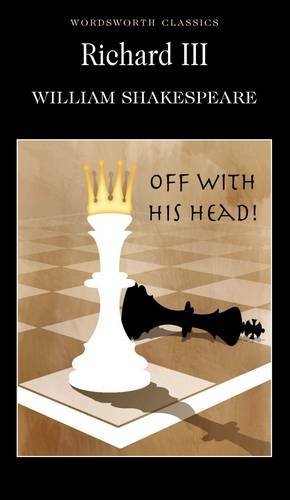
It was probably written c. 1592–1594. It is labeled a history in the First Folio and is usually considered one, but it is sometimes called a tragedy, as in the quarto edition. Richard III concludes Shakespeare's first tetralogy (also containing Henry VI, Part 1, Henry VI, Part 2, and Henry VI, Part 3) and depicts the Machiavellian rise to power and subsequent short reign of King Richard III of England.

William Shakespeare: 5 plus belles tragedies Volume I Hamlet Macbeth Othello Le Roi Lear Roméo et Juliette Édition intégrale et annotée
by William Shakespeare
• 1 recommendation ❤️
Collection complète annotée des 5 meilleurs échanges écrits par le célèbre dramaturge anglais William Shakespeare. 5 livres en 1 : Hamlet; Macbeth ; Othello ; Le Roi Lear ; Roméo et Juliette. Roméo et Juliette, où les amants de Vérone incarnent le drame de l'innocence mise en échec face à l'intrigue. Hamlet, dont le héro torturé par ses doutes, montre le mythe d'une humanité confrontée à ses propres démons. Othello, tragédie de l'amour passionnel, rythmée par les convulsions de la jalousie. Le Roi Lear, tragédie à double intrigue, où fierté et conflits d'intérêt occultent la raison et les sentiments. Macbeth, qui incarne la lutte de la raison et de la probité face aux mécanismes destructeurs de l'ambition.William Shakespeare (1564 - 1616) était un dramaturge, poète et acteur anglais, largement considéré comme le plus grand écrivain de langue anglaise et le plus grand dramaturge du monde.

In Romeo and Juliet, Shakespeare creates a violent world, in which two young people fall in love. It is not simply that their families disapprove; the Montagues and the Capulets are engaged in a blood feud.In this death-filled setting, the movement from love at first sight to the lovers’ final union in death seems almost inevitable. And yet, this play set in an extraordinary world has become the quintessential story of young love. In part because of its exquisite language, it is easy to respond as if it were about all young lovers.
Shakespeare's intertwined love polygons begin to get complicated from the start--Demetrius and Lysander both want Hermia but she only has eyes for Lysander. Bad news is, Hermia's father wants Demetrius for a son-in-law. On the outside is Helena, whose unreturned love burns hot for Demetrius. Hermia and Lysander plan to flee from the city under cover of darkness but are pursued by an enraged Demetrius (who is himself pursued by an enraptured Helena). In the forest, unbeknownst to the mortals, Oberon and Titania (King and Queen of the faeries) are having a spat over a servant boy. The plot twists up when Oberon's head mischief-maker, Puck, runs loose with a flower which causes people to fall in love with the first thing they see upon waking. Throw in a group of labourers preparing a play for the Duke's wedding (one of whom is given a donkey's head and Titania for a lover by Puck) and the complications become fantastically funny.

In Much Ado About Nothing, Shakespeare includes two quite different stories of romantic love. Hero and Claudio fall in love almost at first sight, but an outsider, Don John, strikes out at their happiness. Beatrice and Benedick are kept apart by pride and mutual antagonism until others decide to play Cupid.

Alternate Cover/publisher Edition ISBN 0743482832 (ISBN13: 9780743482837)Each edition includes:• Freshly edited text based on the best early printed version of the play• Full explanatory notes conveniently placed on pages facing the text of the play• Scene-by-scene plot summaries• A key to famous lines and phrases• An introduction to reading Shakespeare's language• An essay by an outstanding scholar providing a modern perspective on the play• Illustrations from the Folger Shakespeare Library's vast holdings of rare books
The Oxford School Shakespeare has become the preferred introduction to the literary legacy of the greatest playwright in the English language. This exclusive collection of the Bard's best works has been designed specifically for readers new to Shakespeare's rich literary legacy. Each play ispresented complete and unabridged, in large print. Every book is well illustrated, and starts with a commentary and character summary. Scene synopses and character summaries clarify confusing plots, while incisive essays explore the historical context and Shakespeare's sources. Each book ends with a complete list of Shakespeare's plays and a brief chronology of the Bard's life. The detailed explanatory notes are written clearly and positioned right next to the text--no more squinting at microscopic footnotes or flipping pages back and forth in search of endnotes!The new edition of the series features new covers and new illustrations, including both new drawings and photos from recent productions of Shakespeare's plays around the globe. In addition, the notes and the introductory material have been completely revised in line with new research and in order tomake them clearer and more accessible. Finally, the entire text has been redesigned and reset to enhance readability. The new edition achieves the feat of unprecedented clarity of presentation without any cuts to the original text or the detailed explanations.

In this lively comedy of love and money in sixteenth-century Venice, Bassanio wants to impress the wealthy heiress Portia but lacks the necessary funds. He turns to his merchant friend, Antonio, who is forced to borrow from Shylock, a Jewish moneylender. When Antonio's business falters, repayment becomes impossible--and by the terms of the loan agreement, Shylock is able to demand a pound of Antonio's flesh. Portia cleverly intervenes, and all ends well (except of course for Shylock).

Love and wit conquer all in Shakespeare's sparkling comedy of self-delusion and disguise.Padua holds many suitors for the hand of fair Bianca, but Bianca may not be married until her spinster sister, Kate, is wed. Could any man be rash enough to take on Kate?The witty adventurer Petruchio undertakes the task. While he sets about transforming Kate from foul-tempered termagant to loving wife, young Lucentio and his clever servant, Tranio, plot to win Bianca.Frances Barber and Roger Allam are Kate and Petruchio. Lucentio is played by Alan Cox.

The Arden Shakespeare has long been acclaimed as the established scholarly edition of Shakespeare's work. Now being totally reedited for the third time, Arden editions offer the very best in contemporary scholarship. Each volume provides a clear and authoritative text, edited to the highest standards; detailed textual notes and commentary on the same page of the text; full contextual, illustrated introduction, including an in-depth survey of critical and performance approaches to the play; and selected bibliography.

Readers and audiences have long greeted As You Like It with delight. Its characters are brilliant conversationalists, including the princesses Rosalind and Celia and their Fool, Touchstone. Soon after Rosalind and Orlando meet and fall in love, the princesses and Touchstone go into exile in the Forest of Arden, where they find new conversational partners. Duke Frederick, younger brother to Duke Senior, has overthrown his brother and forced him to live homeless in the forest with his courtiers, including the cynical Jaques. Orlando, whose older brother Oliver plotted his death, has fled there, too.Recent scholars have also grounded the play in the issues of its time. These include primogeniture, passing property from a father to his oldest son. As You Like It depicts intense conflict between brothers, exposing the human suffering that primogeniture entails. Another perspective concerns cross-dressing. Most of Orlando’s courtship of Rosalind takes place while Rosalind is disguised as a man, “Ganymede.” At her urging, Orlando pretends that Ganymede is his beloved Rosalind. But as the epilogue reveals, the sixteenth-century actor playing Rosalind was male, following the practice of the time. In other words, a boy played a girl playing a boy pretending to be a girl.

Henry V is Shakespeare’s most famous “war play”; it includes the storied English victory over the French at Agincourt. Some of it glorifies war, especially the choruses and Henry’s speeches urging his troops into battle. But we also hear bishops conniving for war to postpone a bill that would tax the church, and soldiers expecting to reap profits from the conflict. Even in the speeches of Henry and his nobles, there are many chilling references to the human cost of war.The authoritative edition of Henry V from The Folger Shakespeare Library, the trusted and widely used Shakespeare series for students and general readers, includes:-Freshly edited text based on the best early printed version of the play-Full explanatory notes conveniently placed on pages facing the text of the play-Scene-by-scene plot summaries-A key to the play’s famous lines and phrases-An introduction to reading Shakespeare’s language-An essay by a leading Shakespeare scholar providing a modern perspective on the play-Fresh images from the Folger Shakespeare Library’s vast holdings of rare books-An annotated guide to further reading

A romantic tragedy about the relationship between Mark Antony and the Queen of Egypt, including notes and critical commentary.

You can find an alternative cover for this ISBN here.The New Cambridge Shakespeare appeals to students worldwide for its up-to-date scholarship and emphasis on performance. The series features line-by-line commentaries and textual notes on the plays and poems and an extensive introduction. The Winter's Tale is one of Shakespeare's most varied, theatrically self-conscious, and emotionally wide-ranging plays. Much of the play's copiousness inheres in its generic intermingling of tragedy, comedy, romance, pastoral, and the history play. In addition to dates and sources, the introduction attends to iterative patterns, the nature and cause of Leontes' jealousy, the staging and meaning of the bear episode, and the thematic and structural implications of the figure of Time. Special attention is paid to the ending and its tempered happiness. Performance history is integrated throughout the introduction and commentary. Appendices include the theatrical practice of doubling.

The authoritative edition of The Comedy of Errors from The Folger Shakespeare Library, the trusted and widely used Shakespeare series for students and general readers.Shakespeare’s The Comedy of Errors is the slapstick farce of his youth. In it, the lost twin sons of the old merchant Egeon—both named Antipholus—find themselves in Ephesus, without either one even knowing of the other’s existence. Meanwhile, Egeon has arrived in search of the son he thinks is still alive—and has been sentenced to death for the “crime” of being from Syracuse.To add to the confusion, the two Antipholuses have twin servants, both named Dromio. As the four men unwittingly encounter each other, the play is crammed with wildly escalating misunderstandings before the truth emerges and Egeon is pardoned.Shakespeare bases his story on Plautus’s Menaechmi, a play about identical twins who accidentally meet after a lifetime apart. He borrows from another Plautus play by having Adriana, the wife of one Antipholus, entertain the other. The spirited Adriana often gives speeches evoking strong emotions—as do other characters at times. Even here, Shakespeare suggests complexities beyond the farce.This edition -Freshly edited text based on the best early printed version of the play-Full explanatory notes conveniently placed on pages facing the text of the play-Scene-by-scene plot summaries-A key to the play’s famous lines and phrases-An introduction to reading Shakespeare’s language-An essay by a leading Shakespeare scholar providing a modern perspective on the play-Fresh images from the Folger Shakespeare Library’s vast holdings of rare books-An annotated guide to further readingEssay by Arthur F. KinneyThe Folger Shakespeare Library in Washington, DC, is home to the world’s largest collection of Shakespeare’s printed works, and a magnet for Shakespeare scholars from around the globe. In addition to exhibitions open to the public throughout the year, the Folger offers a full calendar of performances and programs. For more information, visit Folger.edu.

This acclaimed edition is especially designed for students, with accessible on-page notes and explanatory illustrations, clear background information, and rigorous but accessible scholarly credentials. Henry IV Part 1 includes illustrations, preliminary notes, reading lists and classroom notes.

Written in 1595, Richard II occupies a significant place in the Shakespeare canon, marking the transition from the earlier history plays dominated by civil war and stark power to a more nuanced representation of the political conflicts of England's past where character and politics are inextricably intertwined. It is the first of four connected plays--including 1 Henry IV, 2 Henry IV, and Henry V--generally considered Shakespeare's finest history plays. The drama of Richard II centers on the power struggle between the grandiloquent King Richard and the plain-spoken, blunt Henry Bolingbroke, who is banished from Britain at the beginning of the play. But when Henry's father John of Gaunt dies, Richard confiscates his property with no regard to his son's rights, and Bolingbroke returns to confront the king, who surrenders his crown and is imprisoned in Pomfret Castle, where he is soon murdered. This new edition in the acclaimed Oxford Shakespeare series features a freshly edited version of the text. The wide-ranging introduction describes the play's historical circumstances, both the period that it dramatizes (the start of the "wars of the roses") and the period in which it was written (late Elizabethan England), and the play's political significance in its own time and our own. It also focuses on the play's richly poetic language and its success over the centuries as a play for the stage. Extensive explanatory notes help readers at all levels understand and appreciate the language, characters, and dramatic action and the book's lively illustrations provide a sense of the historical background and performance of the play.

BBC Radio has a unique heritage when it comes to Shakespeare. Since 1923, when the newly formed company broadcast its first full-length play, generations of actors and producers have honed and perfected the craft of making Shakespeare to be heard. Titles include Othello, Hamlet, King Lear, and Macbeth. Revitalized, original, and comprehensive, this is Shakespeare for the new millennium.

This edition offers a fully modernized text of one of Shakespeare's most fascinating plays. Henry IV, Part 2 is the only play in the canon whose structure almost exactly mirrors that of its predecessor, and thereby affords unique perspectives on Shakespeare's art and craft. Far from being the impoverished country cousin of an illustrious work, Part 2 introduces unforgettable new characters like Pistol and Shallow, and memorable minor players such as Doll Tearsheet and the reluctant Goucestershire recruits. Above all, it gives us more Falstaff. Although he is now politically distanced from Hal, he looms larger than ever as a mischievous figure who never ceases to fascinate with his unique blend of native wit, inventiveness, and corruption. Through a radical reconsideration of the play's text(s) and date, it is argued here for the first time that the character of Falstaff was called Oldcastle in Part 2 as well as in as in Part 1 , and that it was the vetting of Part 2 for the 1596-7Christmas performances at Court which led to the change of name in both plays. This edition moreover takes the view that the Folio-only passages in the play reflect the text of the original prompt-book.

"I feel that I have spent half my career with one or another Pelican Shakespeare in my back pocket. Convenience, however, is the least important aspect of the new Pelican Shakespeare series. Here is an elegant and clear text for either the study or the rehearsal room, notes where you need them and the distinguished scholarship of the general editors, Stephen Orgel and A. R. Braunmuller who understand that these are plays for performance as well as great texts for contemplation." (Patrick Stewart)The distinguished Pelican Shakespeare series, which has sold more than four million copies, is now completely revised and repackaged.Each volume features:* Authoritative, reliable texts* High quality introductions and notes* New, more readable trade trim size* An essay on the theatrical world of Shakespeare and essays on Shakespeare's life and the selection of texts

While the word “gentlemen” suggests that its heroes are adults, The Two Gentlemen of Verona is more intelligible if we think of them as boys, leaving home for the first time. One has a crush on a girl, Julia, though he hasn’t yet told her. Sent to court to learn to be “perfect gentlemen,” Valentine and Proteus are derailed by their attraction to Sylvia, the ruler’s daughter. Valentine’s mental denseness does not deter Sylvia from returning his love, but he is caught, and banished, when he tries to elope with her. Proteus’s desire for Sylvia wipes out his former love, leading him into despicable acts that win scorn from Sylvia and wound Julia, who has pursued him disguised as a boy. When Sylvia follows Valentine into banishment, Proteus follows Sylvia, and Julia follows Proteus, the stage is set for a disturbing ending. But the stage is also set for the “gentlemen” to take small steps toward maturity. The authoritative edition of The Two Gentlemen of Verona from The Folger Shakespeare Library, the trusted and widely used Shakespeare series for students and general readers, includes: -Freshly edited text based on the best early printed version of the play -Full explanatory notes conveniently placed on pages facing the text of the play -Scene-by-scene plot summaries -A key to the play’s famous lines and phrases -An introduction to reading Shakespeare’s language -An essay by a leading Shakespeare scholar providing a modern perspective on the play -Fresh images from the Folger Shakespeare Library’s vast holdings of rare books -An annotated guide to further reading Essay by Jeffrey Masten The Folger Shakespeare Library in Washington, DC, is home to the world’s largest collection of Shakespeare’s printed works, and a magnet for Shakespeare scholars from around the globe. In addition to exhibitions open to the public throughout the year, the Folger offers a full calendar of performances and programs. For more information, visit Folger.edu.

In this charming comedy of manners, one of Shakespeare's earliest efforts in the genre, a well-intentioned king vows to forego all fleshly delights, setting the stage for romantic hijinks. Ferdinand, the king of Navarre, insists that his court join him in a pledge to undertake a strict regimen of study and celibacy. The grudging compliance of three noblemen is sorely tested — as is the king's own resolve — with the arrival of a French princess and a trio of comedy attendants.

Heinrich der IV. 3 CDs
by William Shakespeare
Testo inglese a fronteLa tragedia comincia durante il terzo anno di regno (siamo nel 1402) di re Enrico IV.Dopo aver deposto con l'aiuto di molti nobili Riccardo II, re Enrico si trova a dover fronteggiare il malcontento degli stessi nobili che lo hanno portato sul trono, tra i capi della ribellione vi sono il conte di Northumberland, suo figlio Enrico Percy detto Hotspur, l'arcivescovo di York, il ribelle gallese Owen Glendower e soprattutto il conte di March, Edmondo Mortimer che era stato nominato da Riccardo II come suo legittimo erede.Un altro grosso problema che il re deve affrontare è la vita dissoluta che suo figlio Enrico ( futuro Enrico V ) conduce facendosi accompagnare da personaggi come Falstaff.La tragedia è suddivisa in due parti : la parte I si conclude con la battaglia di Shrewsbury in cui buona parte dell'esercito ribelle è sconfitto, la parte II prosegue con la morte di re Enrico e l'ascesa al trono di Enrico V che contro ogni aspettativa conclude le lotte e rinnega il suo passato pronto ad essere re.In Enrico IV , Shakespeare passa continuamente da una fase più storica ( la preparazione della ribellione, gli intrighi e le battaglie ) ad una fase più privata in cui è descritta la vita di Enrico V insieme ai suoi amici e la sua successiva " redenzione " che si svolge in un bellissimo dialogo con il padre morente nella seconda parte.Non è quindi solo una tragedia storica , inserita nel contesto della tetralogia definita come Enrieide, ma anche una tragedia che scava nel rapporto tra padre e figlio e sulla eterno problema delle aspettative di un genitore verso i figli.

Hamlet ; Romeo und Julia ; Macbeth ; Der Kaufmann von Venedig
by William Shakespeare

Set in an enchanted forest, Shakespeare’s A Midsummer Night’s Dream is the ideal subject for artist Marcel Dzama, whose work frequently references dreams, fairy tales, and mythical worlds.Inspired by Ovid’s Metamorphoses , Shakespeare’s celebrated romantic comedy intertwines multiple narratives under the influence of transformation and witchcraft. The play is often staged with actors wearing animal masks, an aspect which appeals particularly to Dzama, whose work is characterized by the fusion of human and animal, fantasy and reality.The second title in David Zwirner Books’s Seeing Shakespeare series revisits the ultimate fairy tale through the eyes of a contemporary artist who feels a special affinity for its imagery.