
Gabriel García Márquez
Gabriel José de la Concordia García Márquez was a Colombian novelist, short-story writer, screenwriter and journalist. García Márquez, familiarly known as "Gabo" in his native country, was considered one of the most significant authors of the 20th century. In 1982, he was awarded the Nobel Prize in Literature. He studied at the University of Bogotá and later worked as a reporter for the Colombian newspaper El Espectador and as a foreign correspondent in Rome, Paris, Barcelona, Caracas, and New York. He wrote many acclaimed non-fiction works and short stories, but is best-known for his novels, such as One Hundred Years of Solitude (1967) and Love in the Time of Cholera (1985). His works have achieved significant critical acclaim and widespread commercial success, most notably for popularizing a literary style labeled as magical realism, which uses magical elements and events in order to explain real experiences. Some of his works are set in a fictional village called Macondo, and most of them express the theme of solitude. Having previously written shorter fiction and screenplays, García Márquez sequestered himself away in his Mexico City home for an extended period of time to complete his novel Cien años de soledad, or One Hundred Years of Solitude, published in 1967. The author drew international acclaim for the work, which ultimately sold tens of millions of copies worldwide. García Márquez is credited with helping introduce an array of readers to magical realism, a genre that combines more conventional storytelling forms with vivid, layers of fantasy. Another one of his novels, El amor en los tiempos del cólera (1985), or Love in the Time of Cholera, drew a large global audience as well. The work was partially based on his parents' courtship and was adapted into a 2007 film starring Javier Bardem. García Márquez wrote seven novels during his life, with additional titles that include El general en su laberinto (1989), or The General in His Labyrinth, and Del amor y otros demonios (1994), or Of Love and Other Demons. (Arabic: جابرييل جارسيا ماركيز) (Hebrew: גבריאל גארסיה מרקס) (Ukrainian: Ґабріель Ґарсія Маркес) (Belarussian: Габрыель Гарсія Маркес) (Russian: Габриэль Гарсия Маркес)
30 Books Written

One of the most influential literary works of our time, One Hundred Years of Solitude remains a dazzling and original achievement by the masterful Gabriel Garcia Marquez, winner of the Nobel Prize in Literature.One Hundred Years of Solitude tells the story of the rise and fall, birth and death of the mythical town of Macondo through the history of the Buendiá family. Inventive, amusing, magnetic, sad and alive with unforgettable men and women—brimming with truth, compassion, and a lyrical magic that strikes the soul—this novel is a masterpiece in the art of fiction.

In their youth, Florentino Ariza and Fermina Daza fall passionately in love. When Fermina eventually chooses to marry a wealthy, well-born doctor, Florentino is devastated, but he is a romantic. As he rises in his business career he whiles away the years in 622 affairs--yet he reserves his heart for Fermina. Her husband dies at last, and Florentino purposefully attends the funeral. Fifty years, nine months, and four days after he first declared his love for Fermina, he will do so again.

General Simon Bolivar, “the Liberator” of five South American countries, takes a last melancholy journey down the Magdalena River, revisiting cities along its shores, and reliving the triumphs, passions, and betrayals of his life. Infinitely charming, prodigiously successful in love, war and politics, he still dances with such enthusiasm and skill that his witnesses cannot believe he is ill. Aflame with memories of the power that he commanded and the dream of continental unity that eluded him, he is a moving exemplar of how much can be won—and lost—in a life.

A man returns to the town where a baffling murder took place twenty-seven years earlier, determined to get to the bottom of the story. Just hours after marrying the beautiful Angela Vicario, everyone agrees, Bayardo San Roman returned his bride in disgrace to her parents. Her distraught family forced her to name her first lover; and her twin brothers announced their intention to murder Santiago Nasar for dishonoring their sister.Yet if everyone knew the murder was going to happen, why did no one intervene to try and stop it? The more that is learned, the less is understood, and as the story races to its inexplicable conclusion, an entire society--not just a pair of murderers—is put on trial.

On the eve of his ninetieth birthday a bachelor decides to give himself a wild night of love with a virgin. As is his habit–he has purchased hundreds of women–he asks a madam for her assistance. The fourteen-year-old girl who is procured for him is enchanting, but exhausted as she is from caring for siblings and her job sewing buttons, she can do little but sleep. Yet with this sleeping beauty at his side, it is he who awakens to a romance he has never known. Tender, knowing, and slyly comic, Memories of My Melancholy Whores is an exquisite addition to the master’s work.--back cover

On her twelfth birthday, Sierva Maria, the only child of a decaying noble family in an eighteenth-century South American seaport, is bitten by a rabid dog. Believed to be possessed, she is brought to a convent for observation. And into her cell stumbles Father Cayetano Delaura, who has already dreamed about a girl with hair trailing after her like a bridal train. As he tends to her with holy water and sacramental oils, Delaura feels something shocking begin to occur. He has fallen in love, and it isn't long until Sierva Maria joins him in his fevered misery. Unsettling and indelible, Of Love and Other Demons is an evocative, majestic tale of the most universal experiences known to woman and man.

El coronel no tiene quien le escriba fue escrita por Gabriel García Márquez durante su estancia en París, adonde había llegado como corresponsal de prensa y con la secreta intención de estudiar cine, a mediados de los años cincuenta. El cierre del periódico para el que trabajaba le sumió en la pobreza, mientras redactaba en tres versiones distintas esta excepcional novela, que fue rechazada por varios editores antes de su publicación. Tras el barroquismo faulkneriano de La hojarasca, esta segunda novela supone un paso hacia la ascesis, hacia la economía expresiva, y el estilo del escritor se hace más puro y transparente. Se trata también de una historia de injusticia y violencia: un viejo coronel retirado va al puerto todos los viernes a esperar la llegada de la carta oficial que responda a la justa reclamación de sus derechos por los servicios prestados a la patria. Pero la patria permanece muda.

Un maravilloso regalo inesperado para los innumerables lectores de García Márquez Cada mes de agosto Ana Magdalena Bach toma el transbordador hasta la isla donde está enterrada su madre para visitar la tumba en la que yace. Esas visitas acaban suponiendo una irresistible invitación a convertirse en una persona distinta durante una noche al año. Escrita en el inconfundible y fascinante estilo de García Márquez, En agosto nos vemos es un canto a la vida, a la resistencia del goce pese al paso del tiempo y al deseo femenino. Un regalo inesperado para los innumerables lectores del Nobel colombiano.

In Barcelona, an aging Brazilian prostitute trains her dog to weep at the grave she has chosen for herself. In Vienna, a woman parlays her gift for seeing the future into a fortunetelling position with a wealthy family. In Geneva, an ambulance driver and his wife take in the lonely, apparently dying ex-President of a Caribbean country, only to discover that his political ambition is very much intact. In these twelve masterful short stories about the lives of Latin Americans in Europe, García Márquez conveys the peculiar amalgam of melancholy, tenacity, sorrow, and aspiration that is the émigré experience.Bon voyage, Mr. President --The saint --Sleeping beauty and the Airplane --I sell my dreams --"I only came to use the phone" --The ghosts of August --Maria dos Prazeres --Seventeen poisoned Englishmen --Tramontana --Miss Forbes's summer of happiness --Light is like water --The trail of your blood in the snow

One of Gabriel Garcia Marquez's most intricate and ambitious works, The Autumn of the Patriarch is a brilliant tale of a Caribbean tyrant and the corruption of power.From charity to deceit, benevolence to violence, fear of God to extreme cruelty, the dictator of The Autumn of the Patriarch embodies the best but also the worst of human nature. Gabriel Garcia Marquez, the renowned master of magical realism, vividly portrays the dying tyrant caught in the prison of his own dictatorship. Employing an innovative, dreamlike style, and overflowing with symbolic descriptions, the novel transports the reader to a world that is at once fanciful and vividly real.

Aunque conocida con este título abreviado, el verdadero título de esta obra, mucho más largo, resume perfectamente la Relato de un náufrago que estuvo diez días a la deriva en una balsa sin comer ni beber, que fue proclamado héroe de la patria, besado por las reinas de la belleza y hecho rico por la publicidad, y luego aborrecido por el gobierno y olvidado para siempre. Publicado por entregas en El Espectador de Bogotá en 1955 y más tarde en libro (en 1970), no una novela, sino un reportaje periodístico que da cuenta de un suceso real. Con impecable técnica literaria y profesional estilo noticioso, García Márquez relata un suceso acaecido a un marinero de la armada colombiana llamado Luis Alejandro Velasco. La historia, reconstruida minuciosamente por el escritor sudamericano en primera persona a partir del testimonio del protagonista, fue tácticamente atribuida a éste en la prensa y sólo legitimada tras el formidable éxito de Cien años de soledad.

"The stories are rich and startling in their matter and confident in their manner....They are--the word cannot be avoided--magical."--John Updike, The New YorkerThis collection of fiction, representing some of García Márquez's earlier work, includes eleven short stories and a novella, Innocent Eréndira, in which a young girl who dreams of freedom cannot escape the reach of her vicious and avaricious grandmother."García Márquez's fictional universe has the same staggeringly gratifying density and texture as Proust's Faubourg Saint-Germain and Joyce's Dublin....Arguably the best of the Latin Americans."--Martin Kaplan, The New Republic"It is the genius of the mature García Márquez that fatalism and possibility somehow coexist, that dreams redeem, that there is laughter even in death.'--John Leonard, New York Times

THIS ASTONISHING BOOK by the Nobel laureate Gabriel García Márquez chronicles the 1990 kidnappings of ten Colombian man and women--all journalists but one--by the Medellín drug boss Pablo Escobar. The carefully orchestrated abductions were Escobar's attempt to extort from the government its assurance that he, and other narcotics traffickers, would not be extradited to the United States if they were to surrender.From the highest corridors of government to the domain of the ruthless drug cartels, we watch the unfolding of a bizarre drama replete with fascinating characters Cesar Gaviria, the nation's cool and secretive president; Diana Turbay, a famous television journalist and magazine editor; three indomitable women who are imprisoned for miserable months in a small room with a light perpetually on; an eighty-two-year-old priest with a mission to bring the regime and the cartel to the negotiating table; and Escobar himself, the legendary drug baron who changes his bodyguards daily and maintains a private zoo with giraffes and hippos from Africa.All of this takes place in a country where presidential candidates and cabinet officers are routinely assassinated; where police go into the Medellín slums to murder boys they think may be working for Escobar; but where brave and honest citizens are trying desperately to make democracy survive.An international best-seller, News of a Kidnapping combines journalistic tenacity with the breathtaking language and perception that distinguish the writings of Gabriel García Márquez. It draws us unto into a world that, like some phantasmagorical setting in a great García Márquez novel, we can scarcely believe exists--but that continually shocks us with its cold, hard reality.

El primer libro de Gabriel García Márquez —de 1955— contiene el germen estilístico y de las ideas que nutrirían su vasta producción. La hojarasca es el recuente infausto de una callada venganza colectiva que tiene lugar en Macondo, en la época cuando el pueblo recibe al torrente desordenado que sigue a la explotación del banano, y su estela desastrosa tras la sangrienta rebelión de los trabajadores. Prefiguración impregnada de un aura sobrenatural y a la vez incuestionablemente realista, este relato a tres voces es la piedra fundamental del reino espléndido del colombiano universal.
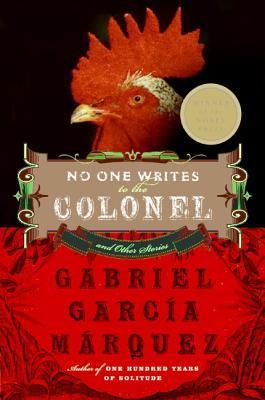
Written with compassionate realism and wit, the stories in this mesmerizing collection depict the disparities of town and village life in South America, of the frightfully poor and the outrageously rich, of memories and illusions, and of lost opportunities and present joys.

He is perhaps the most acclaimed, revered and widely read writer of our time, and in this first volume of a planned trilogy, Gabriel Garcia Marquez begins to tell the story of his life. Living to Tell the Tale spans Marquez's life from his birth in 1927 through the beginning of his career as a writer to the moment in the 1950s when he proposed to the woman who would become his wife. It is a tale of people, places and events as they occur to him: family, work, politics, books and music, his beloved Colombia, parts of his history until now undisclosed and incidents that would later appear, transmuted and transposed in his fiction. A vivid, powerful, beguiling memoir that gives us the formation of Marquez as a writer and as a man.

Aunque conocida con este título abreviado, el verdadero título de esta obra, mucho más largo, resume perfectamente la historia: Relato de un náufrago que estuvo diez días a la deriva en una balsa sin comer ni beber, que fue proclamado héroe de la patria, besado por las reinas de la belleza y hecho rico por la publicidad, y luego aborrecido por el gobierno y olvidado para siempre. Publicado por entregas en El Espectador de Bogotá en 1955 y más tarde en libro (en 1970), no una novela, sino un reportaje periodístico que da cuenta de un suceso real. Con impecable técnica literaria y profesional estilo noticioso, García Márquez relata un suceso acaecido a un marinero de la armada colombiana llamado Luis Alejandro Velasco. La historia, reconstruida minuciosamente por el escritor sudamericano en primera persona a partir del testimonio del protagonista, fue tácticamente atribuida a éste en la prensa y sólo legitimada tras el formidable éxito de Cien años de soledad.

En Los funerales de la Mamá Grande (1962) se reunen siete cuentos y la novela corta que da titulo al volumen, en la que se narran las fastuosas exequias de esa mujer muerta en olor de santidad a los noventa y dos anos de edad, autentica soberana de Macondo.

Written just before One Hundred Years of Solitude, this fascinating novel of a Colombian river town possessed by evil points to the author's later flowering and greatness. Translated by Gregory Rabassa."More than a prelude...the dazzling sense of place, the colorful idiosyncrasy of character are present for us to marvel over once again."--The New Republic"An openly political novel posing the people of the land against the forces of oppression...it has the virtues of wit and compassion and reveals the foundation upon which the later novels were constructed."--Jonathan Yardley, Washington Star"One Hundred Years of Solitude is just around the rain-drenched corner."--Boston Globe

Collected here are twenty-six of Gabriel Garcia Marquez's most brilliant and enchanting short stories, presented in the chronological order of their publication in Spanish from three volumes: Eyes of a Blue Dog, Big Mama's Funeral, and The Incredible and Sad Tale of lnnocent Eréndira and Her Heartless Grandmother. Combining mysticism, history, and humor, the stories in this collection span more than two decades, illuminating the development of Marquez's prose and exhibiting the themes of family, poverty, and death that resound throughout his fiction.

Estos relatos tempranos de Gabriel García Márquez fueron escritos y publicados entre 1947 y 1955, aunque, como libro, Ojos de perro azul no aparecería hasta 1974 cuando el escritor ya había publicado otros dos libros de relatos y cuatro novelas, de las que la última, "Cien años de soledad", le proporcionaría su primer gran éxito internacional. En este libro se incluye su primer cuento célebre, el "Monólogo de Isabel viendo llover en Macondo", escenario de sus obras posteriores. El personaje de Isabel reaparecerá en su primera novela, y el tema de la lluvia cayendo interminablemente, en su personal versión del diluvio universal, acabaría integrándose suave y flexiblemente en "Cien años de soledad". Este relato, incluido en todas las antologías del cuento latinoamericano de nuestros días, fue la primera piedra de ese gigantesco edificio, tan imaginario como real, que terminaría fundando el espacio literario más poderoso de las letras universales de nuestro tiempo: Macondo.

“A Very Old Man with Enormous Wings” is a short story that begins with a couple, Pelayo and Elisenda, finding a very old man in their courtyard during a stormy afternoon. They watch in astonishment the enormous wings attached to the body of the old man as he struggles to get up from the mud. Their neighbour comes over and lets them know that the old man is an angel. Pelayo locks the angel in a chicken coop overnight. Tired of having too many visitors, the couple decides to charge an entrance fee to see the angel. The story progresses and describes the community's reduction of the old man to a freak and its brief fascination with him, only to be replaced with a new spectacle.

In 1973, the film director Miguel Littín fled Chile after a U.S.-supported military coup toppled the democratically elected socialist government of Salvador Allende. The new dictator, General Augusto Pinochet, instituted a reign of terror and turned Chile into a laboratory to test the poisonous prescriptions of the American economist Milton Friedman. In 1985, Littín returned to Chile disguised as a Uruguayan businessman. He was desperate to see the homeland he’d been exiled from for so many years; he also meant to pull off a very tricky stunt: with the help of three film crews from three different countries, each supposedly busy making a movie to promote tourism, he would secretly put together a film that would tell the truth about Pinochet’s benighted Chile—a film that would capture the world’s attention while landing the general and his secret police with a very visible black eye. Afterwards, the great novelist Gabriel García Márquez sat down with Littín to hear the story of his escapade, with all its scary, comic, and not-a-little surreal ups and downs. Then, applying the same unequaled gifts that had already gained him a Nobel Prize, García Márquez wrote it down. Clandestine in Chile is a true-life adventure story and a classic of modern reportage.

Cuento de Gabriel García Márquez. Acompañado por fotografías de Hernán Díaz.

Contains the Novella Leaf Storm: 'SUDDENLY, AS IF A WHIRLWIND HAD SET DOWN ROOTS IN THE CENTRE OF THE TOWN, THE BANANA COMPANY ARRIVED, PURSUED BY THE LEAF STORM' As a blizzard of warehouses and amusement parlours and slums descends on the small town of Macondo, the inhabitants reel at the accompanying stench of rubbish that makes their home unrecognisable. When the banana company leaves town as fast as it arrived, all they are left with is a void of decay. Living in this devastated and soulless wasteland is one last honourable man, the Colonel, who is determined to fulfil a long standing promise, no matter how unpalatable it may be. With the death of the detested Doctor, he must provide an honourable burial - and incur the wrath of the rest of Macondo, who would rather see the Doctor rot, forgotten and unattended.Also contains the stories: The Handsomest Drowned Man in the World, A Very Old Man With Enormous Wings, Blacaman the Good, Vendor of Miracles, The Last Voyage of the Ghost Ship, Monologue of Isabel Watching It Rain in Macondo, Nabo

Em Viagem pela Europa de Leste é a crónica testemunhal da viagem que o jovem Gabriel García Márquez realiza pelos países socialistas nos anos de 1950. Nas suas páginas o leitor encontrará, a par das observações dos companheiros de viagem, uma análise perspicaz e não isenta de ironia dos acontecimentos sociais e políticos de uma época.A sua viagem pelo enclave comunista inicia-se na Alemanha Oriental e prossegue pela Checoslováquia, pela Polónia, pela Hungria e pela antiga União Soviética. Ali tentará desvendar a verdadeira face do comunismo idealizado por Lenine: um regime kafkiano que quase não é questionado por um povo assustado que parece resignar-se ao seu destino.Escrito e publicado em fascículos na mesma época que o lendário Relato de Um Náufrago, esta reportagem é outro exemplo inestimável de árduo trabalho de investigação, rigor histórico e fidelidade aos factos narrados, todos eles pilares do jornalismo de qualidade. Com a sua indiscutível mestria literária, Gabriel García Márquez demonstra uma vez mais a sua vocação mais profunda: o prazer de contar uma boa história.

“¿Qué hago yo encaramado en esta percha de honor, yo que siempre he considerado los discursos como el más terrorífico de los compromisos humanos?” —Gabriel García Márquez Los textos que Gabriel García Márquez ha reunido en este libro fueron escritos por el autor con la intención de ser leídos por él mismo en público, ante una audiencia, y recorren prácticamente toda su vida, desde el primero, que escribe a los diecisiete años para despedir a sus compañeros del curso superior en Zipaquirá, hasta el que lee ante las Academias de la Lengua y los reyes de España al cumplir ochenta años. Estos discursos del premio Nobel nos ayudan a comprender más profundamente su vida y nos desvelan sus obsesiones fundamentales como escritor y su fervorosa vocación por la literatura, la pasión por el periodismo, su inquietud ante el desastre ecológico que se avecina, su propuesta de simplificar la gramática, los problemas de su tierra colombiana o el recuerdo emocionado de amigos escritores como Julio Cortázar o Álvaro Mutis, entre otros muchos. El lector tiene entra sus manos el complemento indispensable a una obra narrativa que nos seguirá hablando en un largo porvenir.****“What am I doing here on this perch of honor, when I have always considered speeches the most terrifying of human obligations?” The speeches that Gabriel García Márquez has gathered in this collection were written by the author with the intention of being read by him before an audience, and span the course of nearly his entire life; from the first, a farewell written at seventeen to his fellow students at Zipaquirá, to his appearance before the Spanish-language Academies and the kings of Spain on his eightieth birthday.Combined, these speeches provide a more profound understanding of the life of this Nobel Prize winner, revealing his fundamental creative and civil his intense aptitude for literature and writing; his passion for journalism; his concerns over looming environmental dangers; his proposal for the simplification of grammar; the problems facing his beloved Colombian homeland; and the loving memory of fellow writers like Julio Cortázar and Álvaro Mutis, among many others.In Yo no vengo a decir un discurso (I did not come to give a speech), the reader holds in his/her hands the essential complement to a body of work that will continue speaking to us for a long time to come.

WELCOME TO SELLER PAYITAHT'S LIBRARY!!!

In these conversations Gabriel Garcia Marquez, who won the Nobel Prize for Literature in 1982, speaks about his Colombian family background, his early travels and struggles as writer, his literary antecedents, and his personal artistic concerns. Marquez conveys, as he does in his work through the power of language, the heat and colour of the Spanish Caribbean, the mythological world of its inhabitants, and the exotic mentality of its leaders. Plinio Apuleyo Mendoza, the journalist and novelist who shares these conversations, is a friend and contemporary of Marques, and also of Colombian extraction.

Cien años de soledad y un homenaje: Discursos de Gabriel García Márquez y Carlos Fuentes
by Gabriel García Márquez
Rating: 4.5 ⭐
En una bella edición y dentro de su colección Centzontle, el FCE recupera los discursos de Gabriel García Márquez y Carlos Fuentes pronunciados en torno a una conmemoración ú los 80 años del Premio Nobel colombiano y los 40 años de la novela Cien años de soledad. Una celebración de la cual el lector puede ser testigo privilegiado a través de este libro. García Márquez recuerda en estas páginas que "ni en el más delirante" de sus sueños imaginó que su novela llegaría a ser leída por casi 50 millones de lectores, un número tal de personas que si vivieran en un solo pedazo de tierra sería uno de los 20 países más poblados del mundo.