
Alan Lightman
Alan Lightman is an American writer, physicist, and social entrepreneur. Born in 1948, he was educated at Princeton and at the California Institute of Technology, where he received a PhD in theoretical physics. He has received five honorary doctoral degrees. Lightman has served on the faculties of Harvard and the Massachusetts Institute of Technology (MIT) and was the first person at MIT to receive dual faculty appointments in science and in the humanities. He is currently professor of the practice of the humanities at MIT. His scientific research in astrophysics has concerned black holes, relativity theory, radiative processes, and the dynamics of systems of stars. His essays and articles have appeared in the Atlantic, Granta, Harper’s, the New Yorker, the New York Review of Books, Salon, and many other publications. His essays are often chosen by the New York Times as among the best essays of the year. He is the author of 6 novels, several collections of essays, a memoir, and a book-length narrative poem, as well as several books on science. His novel Einstein’s Dreams was an international bestseller and has been the basis for dozens of independent theatrical and musical adaptations around the world. His novel The Diagnosis was a finalist for the National Book Award. His most recent books are The Accidental Universe, which was chosen by Brain Pickings as one of the 10 best books of 2014, his memoir Screening Room, which was chosen by the Washington Post as one of the best books of the year for 2016, and Searching for Stars on an Island in Maine (2018), an extended meditation on science and religion – which was the basis for an essay on PBS Newshour. Lightman is an elected fellow of the American Academy of Arts and Sciences. He is also the founder of the Harpswell Foundation, a nonprofit organization whose mission is “to advance a new generation of women leaders in Southeast Asia.” He has received the gold medal for humanitarian service from the government of Cambodia.
29 Books Written

A modern classic, Einstein's Dreams is a fictional collage of stories dreamed by Albert Einstein in 1905, when he worked in a patent office in Switzerland. As the defiant but sensitive young genius is creating his theory of relativity, a new conception of time, he imagines many possible worlds. In one, time is circular, so that people are fated to repeat triumphs and failures over and over. In another, there is a place where time stands still, visited by lovers and parents clinging to their children. In another, time is a nightingale, sometimes trapped by a bell jar.Now translated into thirty languages, Einstein's Dreams has inspired playwrights, dancers, musicians, and painters all over the world. In poetic vignettes, it explores the connections between science and art, the process of creativity, and ultimately the fragility of human existence.

The Accidental Universe: The World You Thought You Knew
by Alan Lightman
Rating: 3.8 ⭐
• 2 recommendations ❤️
From the acclaimed author of Einstein's Dreams and Mr g, a meditation on the unexpected ways in which recent scientific findings have shaped our understanding of ourselves and our place in the cosmos.With all the passion, curiosity, and precise yet lyrical prose that have marked his previous books, Alan Lightman here explores the emotional and philosophical questions raised by discoveries in science, focusing most intently on the human condition and the needs of humankind. He looks at the difficult dialogue between science and religion; the conflict between our human desire for permanence and the impermanence of nature; the possibility that our universe is simply an accident; the manner in which modern technology has separated us from direct experience of the world; and our resistance to the view that our bodies and minds can be explained by scientific logic and laws. And behind all of these considerations is the suggestion—at once haunting and exhilarating—that what we see and understand of the world is only a tiny piece of the extraordinary, perhaps unfathomable whole.

From the acclaimed author of Einstein's Dreams, here is an inspires, lyrical meditation on religion and science that explores the tension between our yearning for permanence and certainty, and the modern scientific discoveries that demonstrate the impermanent and uncertain nature of the world.As a physicist, Alan Lightman has always held a scientific view of the world. As a teenager experimenting in his own laboratory, he was impressed by the logic and materiality of a universe governed by a small number of disembodied forces and laws that decree all things in the world are material and impermanent. But one summer evening, while looking at the stars from a small boat at sea, Lightman was overcome by the overwhelming sensation that he was merging with something larger than himself--a grand and eternal unity, a hint of something absolute and immaterial. Searching for Stars on an Island in Maine is Lightman's exploration of these seemingly contradictory impulses. He draws on sources ranging from Saint Augustine's conception of absolute truth to Einstein's theory of relativity, from the unity of the once-indivisible atom to the multiplicity of subatomic particles and the recent notion of multiple universes. What he gives us is a profound inquiry into the human desire for truth and meaning, and a journey along the different paths of religion and science that become part of that quest.

"As I remember, I had just woken up from a nap when I decided to create the universe." So begins Alan Lightman’s playful and profound new novel, Mr g, the story of Creation as told by God. Barraged by the constant advisements and bickerings of Aunt Penelope and Uncle Deva, who live with their nephew in the shimmering Void, Mr g proceeds to create time, space, and matter. Then come stars, planets, animate matter, consciousness, and, finally, intelligent beings with moral dilemmas. Mr g is all powerful but not all knowing and does much of his invention by trial and error. Even the best-laid plans can go awry, and Mr g discovers that with his creation of space and time come some unforeseen consequences—especially in the form of the mysterious Belhor, a clever and devious rival. An intellectual equal to Mr g, Belhor delights in provoking him: Belhor demands an explanation for the inexplicable, requests that the newly created intelligent creatures not be subject to rational laws, and maintains the necessity of evil. As Mr g watches his favorite universe grow into maturity, he begins to understand how the act of creation can change himself, the Creator. With echoes of Calvino, Rushdie, and Saramago, combining science, theology, and moral philosophy, Mr g is a stunningly imaginative work that celebrates the tragic and joyous nature of existence on the grandest possible scale.

In this timely and essential book that offers a fresh take on the qualms of modern day life, Professor Alan Lightman investigates the creativity born from allowing our minds to freely roam, without attempting to accomplish anything and without any assigned tasks.We are all worried about wasting time. Especially in the West, we have created a frenzied lifestyle in which the twenty-four hours of each day are carved up, dissected, and reduced down to ten minute units of efficiency. We take our iPhones and laptops with us on vacation. We check email at restaurants or our brokerage accounts while walking in the park. When the school day ends, our children are overloaded with “extras.” Our university curricula are so crammed our young people don’t have time to reflect on the material they are supposed to be learning. Yet in the face of our time-driven existence, a great deal of evidence suggests there is great value in “wasting time,” of letting the mind lie fallow for some periods, of letting minutes and even hours go by without scheduled activities or intended tasks.Gustav Mahler routinely took three or four-hour walks after lunch, stopping to jot down ideas in his notebook. Carl Jung did his most creative thinking and writing when he visited his country house. In his 1949 autobiography, Albert Einstein described how his thinking involved letting his mind roam over many possibilities and making connections between concepts that were previously unconnected. With In Praise of Wasting Time , Professor Alan Lightman documents the rush and heave of the modern world, suggests the technological and cultural origins of our time-driven lives, and examines the many values of “wasting time”—for replenishing the mind, for creative thought, and for finding and solidifying the inner self. Break free from the idea that we must not waste a single second, and discover how sometimes the best thing to do is to do nothing at all.

The acclaimed author of Einstein’s Dreams tackles "big questions like the origin of the universe and the nature of consciousness ... in an entertaining and easily digestible way” ( Wall Street Journal ) with a collection of meditative essays on the possibilities—and impossibilities—of nothingness and infinity, and how our place in the cosmos falls somewhere in between. Can space be divided into smaller and smaller units, ad infinitum? Does space extend to larger and larger regions, on and on to infinity ? Is consciousness reducible to the material brain and its neurons? What was the origin of life, and can biologists create life from scratch in the lab? Physicist and novelist Alan Lightman, whom The Washington Post has called “the poet laureate of science writers,” explores these questions and more—from the anatomy of a smile to the capriciousness of memory to the specialness of life in the universe to what came before the Big Bang.Probable Impossibilities is a deeply engaged consideration of what we know of the universe, of life and the mind, and of things vastly larger and smaller than ourselves.

Alan Lightman's first novel, Einstein's Dreams, became an international best seller and was hailed by Salman Rushdie as "at once intellectually provocative and touching and comic and so very beautifully written." His novel The Diagnosis, called "highly original and imaginative" by The New York Times, was a finalist for the National Book Award. Now comes a stunning and disturbing new novel about a man's encounter with the unfathomable.David is a person of modest ambitions who works in a bank, lives in a rooming house, enjoys books and quiet walks by the lake. Three months after unexpectedly being fired from his job, he takes a temporary position at a mortuary. And there, sitting alone in the "slumber room" one afternoon at dusk, he sees something that he cannot comprehend, something that will force him to question everything he believes in, including himself. After his metaphysical experience, all his relationships change—with his estranged wife, his girlfriend, his mother—and he grudgingly finds himself at the center of a bitter public controversy over the existence of the supernatural. As David struggles to understand what has happened to him, we embark on a provocative exploration of the delicate divide between the physical world and the spiritual world, between skepticism and faith, between the natural and the supernatural, and between science and religion.Combining a dramatic story with compelling characters and provocative ideas, Ghost investigates timeless questions that continue to challenge contemporary society.

Throughout his life, Bennett Long pursues a vision that compels him to become a scientist and that transforms the everyday world into one of purity, beauty, and order, whose very allure lies in its unattainable ideal. 100,000 first printing. $100,000 ad/promo. Tour.

From the bestselling author of Einstein’s Dreams comes this harrowing tale of one man's struggle to cope in a wired world, even as his own biological wiring short-circuits.As Boston’s Red Line shuttles Bill Chalmers to work one summer morning, something extraordinary happens. Suddenly, he can't remember which stop is his, where he works, or even who he is. The only thing he can remember is his corporate motto: the maximum information in the minimum time.Bill’s memory returns, but a strange numbness afflicts him. As he attempts to find a diagnosis for his deteriorating illness, he descends into a nightmarish tangle of inconclusive results, his company’s manic frenzy, and his family’s disbelief. Ultimately, Bill discovers that he is fighting not just for his body but also for his soul.

From the bestselling author of Einstein's Dreams comes this lyrical and insightful collection of science writing that delves into the mysteries of the scientific process--physics, astronomy, mathamatics--and exposes its beauty and intrigue.In these brilliant essays, Lightman explores the emotional life of science, the power of imagination, the creative moment, and the alternate ways in which scientists and humanists think about the world. Along the way, he provides in-depth portraits of some of the great geniuses of our time, including Albert Einstein, Richard Feynman, Edward Teller, and astronomer Vera Rubin. Thoughtful, beautifully written, and wonderfully original, A Sense of the Mysterious confirms Alan Lightman's unique position at the crossroads of science and art.

From the acclaimed author of Einstein's Dreams comes a rich, fascinating answer to the question, Can the scientifically inclined still hold space for spirituality?Gazing at the stars, falling in love, or listening to music, we sometimes feel a transcendent connection with a cosmic unity and things larger than ourselves. But these experiences are not easily understood by science, which holds that all things can be explained in terms of atoms and molecules. Is there space in our scientific worldview for these spiritual experiences?According to acclaimed physicist and novelist Alan Lightman, there may be. Drawing on intellectual history and conversations with contemporary scientists, philosophers, and psychologists, Lightman asks a series of thought-provoking questions that illuminate our strange place between the world of particles and forces and the world of complex human experience. Can strict materialism explain our appreciation of beauty? Or our feelings of connection to nature and to other people? Is there a physical basis for consciousness, the most slippery of all scientific problems?Lightman weaves these investigations together to propose what he calls "spiritual materialism"--the belief that we can embrace spiritual experiences without letting go of our scientific worldview. In his view, the breadth of the human condition is not only rooted in material atoms and molecules but can also be explained in terms of Darwinian evolution.What is revealed in this lyrical, enlightening book is that spirituality may not only be compatible with science, it also ought to remain at the core of what it means to be human.

The author of Einstein's Dreams tenderly traces the thirty-year-old love affair between Charles, now a fifty-two-year-old professor, as a twenty-two-year-old student, with a beautiful young dancer, set against the turbulent social and political upheaval of the 1960s. 60,000 first printing.

From the international bestselling author of Einstein’s Dreams comes a deeply compelling story about the lives of a Cambodian family—set between 1973, just before the Cambodian Genocide by the Khmer Rouge—to 2015.The stories of one Cambodian family are intricately braided together in Alan Lightman’s haunting Three Flames, his first work of fiction in six years.Three Flames portrays the struggles of a Cambodian farming family against the extreme patriarchal attitudes of their society and the cruel and dictatorial father, set against a rural community that is slowly being exposed to the modern world and its values. A mother must fight against memories of her father’s death at the hands of the Khmer Rouge, and her powerful desire for revenge. A daughter is married off at sixteen to a wandering husband and his domineering aunt; another daughter is sent to the city to work in the factories to settle her father’s gambling debt. A son dreams of marrying the most beautiful girl of the village and escaping the life of a farmer. And the youngest daughter bravely challenges her father so she can stay in school and strive for a better future.A vivid story of revenge and forgiveness, of a culture smothering the dreams of freedom, and of tradition against courage, Three Flames grows directly from Lightman’s work as the founder of the Harpswell Foundation, a nonprofit organization whose mission is to advance a new generation of female leaders in Cambodia and all of Southeast Asia.

Stargazers rejoice! In his first book for children, renowned physicist Alan Lightman and collaborators, with help from the Hubble telescope, light up the night sky.New York Times best-selling author Alan Lightman, in collaboration with Olga Pastuchiv, brings galaxies close in a stunning picture-book tribute to the interconnectedness of the natural world. Layering photographs taken from the Hubble telescope into charming and expressive art, illustrator Susanna Chapman zooms in on one child's experiences: Ada knows that the best place for star-gazing is on the island in Maine where she vacations with her grandparents. By day, she tracks osprey in the trees, paddles a kayak, and hunts for shells. But she's most in her element when the sun goes down and the stars blink to life. Will the fog this year foil her plans, or will her grandfather find a way to shine a spotlight on the vast puzzle of the universe . . . until the weather turns?
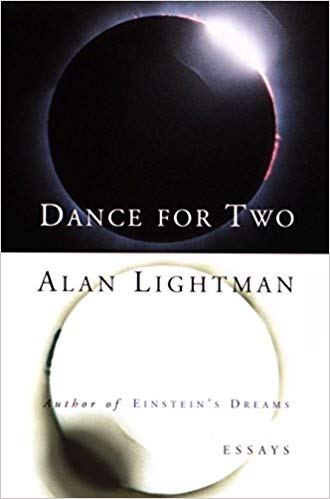
For the last twenty years, Alan Lightman has been writing essays that display his genius for bringing literary and scientific concerns into harmony. Dance for Two gathers the best of Lightman's work.Here are pieces that touch on both the ethereal and the corporeal; the dependence of a ballerina on the laws of physics, the choice of every scientist makes between tinkering and theorizing, the unscientific nature of discovery, the impulse behind an unprompted smile. Dance for Two is an intimate and fascinating look into the creative compulsions shared by the artist and the scientist.

The Discoveries: Great Breakthroughs in 20th-Century Science, Including the Original Papers
by Alan Lightman
Rating: 4.1 ⭐
In this captivating and lucid book, the bestselling author of Einstein's Dreams chronicles twenty-four great discoveries of twentieth-century science--everything from the theory of relativity to mapping the structure of DNA.These discoveries radically changed our notions of the world and our place in it. Here are Einstein, Fleming, Bohr, McClintock, Paul ing, Watson and Crick, Heisenberg and many others. With remarkable insight, Lightman charts the intellectual and emotional landscape of the time, portrays the human drama of discovery, and explains the significance and impact of the work. Finally he includes a fascinating and unique guided tour through the original papers in which the discoveries were revealed. Here is science writing at its best–beautiful, lyrical and completely accessible. It brings the process of discovery to life before our very eyes.

From the acclaimed author of the international best seller Einstein’s Dreams, here is a stunning, lyrical memoir of Memphis from the 1930s through the 1960s that includes the early days of the movies and a powerful grandfather whose ghost remains an ever-present force in the lives of his descendants. Alan Lightman’s grandfather M.A. Lightman was the family’s undisputed it was his movie theater empire that catapulted the Lightmans to prominence in the South, his fearless success that both galvanized and paralyzed his children and grandchildren. In this moving, impressionistic memoir, the author chronicles his return to Memphis in an attempt to understand the origins he so eagerly left behind forty years earlier. As aging uncles and aunts begin telling family stories, Lightman rediscovers his southern roots and slowly recognizes the errors in his perceptions of both his grandfather and his father, who was himself crushed by M.A. The result is an unforgettable family saga that extends from 1880 to the present, set against a throbbing century of Memphis—the rhythm and blues, the barbecue and pecan pie, the segregated society—and including personal encounters with Elvis, Martin Luther King Jr., and E. H. “Boss” Crump. At the heart of it all is a family haunted by the memory of its domineering patriarch and the author’s struggle to understand his conflicted loyalties.(With black-and-white illustrations throughout.)

A gorgeously illustrated exploration of the science behind the universe’s most stunning natural phenomena—from atoms and unicellular life to rainbows, snowflakes, spider webs, the rings of Saturn, galaxies, and moreNature is capable of extraordinary phenomena. Standing in awe of those phenomena, we experience a feeling of connection to others, to wildlife, or to the cosmos. For acclaimed physicist and novelist Alan Lightman, just as remarkable is that all of what we see around us—from soap bubbles and scarlet ibses to shooting stars—are made out of the same material stuff, and obey the same rules and laws. This is what Lightman calls “spiritual materialism,” the belief that we can embrace spiritual experiences without letting go of our scientific worldview. Pairing 36 beautiful, full-color photos evoking some of nature’s most awe-inspiring phenomena with accessible, lyrical essays, The Miraculous from the Material explores the fascinating science underlying the natural world. Why do rainbows make an arc? Why does a particular waterfall at Yosimite National Park sometimes glow like it’s on fire? How does a hummingbird fly? The world has so many things to marvel at—and the science is just as fascinating. Lightman journeys from the world of atoms and molecules to the animal kingdom, from places like Ha Long Bay, Vietnam and the Grand Canyon out to the solar system and beyond, illuminating the unbelievable majesty of the cosmos the remarkable science behind how it got to be the way it is. The Miraculous from the Material is a stunning, soaring ode to the beauty and wonder all around us.

Astronomi biliminin önde gelen isimlerinden olan Alan Lightman Yıldızların Zamanı'nda gezegenler, yıldızlar, galaksiler, yıldız sistemleri, evrenin başlangıç ve sonu ile ilgili yaklaşımını açık ve canlı bir anlatımla dile getiriyor. Yıldızların Zamanı iyi bir astronomi kitabı olmasının yanısıra iyi de bir öykü kitabı.

Renowned physicist Alan Lightman, author of Ada and the Galaxies, turns his focus to light waves in a second story for children.There’s only one gift Isabel wants for her sixth birthday: a way to see invisible things. She can hardly think of anything else! Finally, the day of her party arrives. Unwrapping a big box, Isabel finds a surprise inside—a glass prism—and a dazzling world of previously invisible color emerges, lighting up the room around her. What else could be out there, waiting for her eyes to discover? In simple, engaging language, complemented by luminous artwork from best-selling illustrator Ramona Kaulitzki, author and physicist Alan Lightman unveils the hidden world of light waves—the ones you can see and the ones you can’t. Back matter delves briefly into the subject of wavelengths, radio waves, and X-rays for readers curious to know more.

In Alan Lightman's new book, a verse narrative, we meet a man who has lost his faith in all things following a mysterious personal tragedy. After decades of living "hung like a dried fly," emptied and haunted by his past, the narrator awakens one morning revitalized and begins a Dante-like journey to find something to believe in, first turning to the world of science and then to the world of philosophy, religion, and human life. As his personal story is slowly revealed, little by little, we confront the great questions of the cosmos and of the human heart, some questions with answers and others without.

The conservation of energy, the second law of thermodynamics, the theory of relativity, quantum mechanicstogether, these concepts form the foundation upon which modern physics was built. But the influence of these four landmark ideas has extended far beyond hard science. There is no aspect of twentieth-century cultureincluding the arts, social sciences, philosophy, and politicsthat has not been profoundly influenced by them. In Great Ideas in Physics , Alan Lightman clearly explains the physics behind each of the four great ideas and deftly untangles for lay readers such knotty concepts as entropy, the relativity of time, and the Heisenberg uncertainty principle. Throughout the book he uses excerpts from the writings of scientific luminaries such as Newton, Kelvin, Einstein, and de Broglie to help place each in its proper historical perspective. And with the help of expertly annotated passages from the works of dozens of writers, philosophers, artists, and social theorists, Lightman explores the two-way influences of these landmark scientific concepts on our entire human culture and the world of ideas.
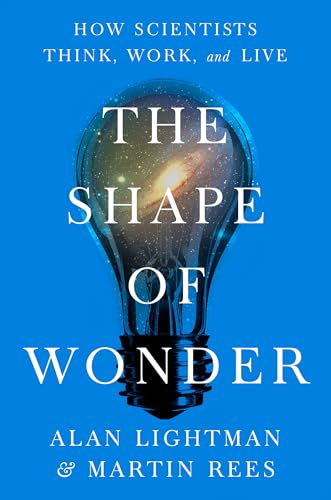
In this captivating, insightful book, acclaimed physicists Alan Lightman and Martin Rees illuminate the life and work of numerous scientists in order to demystify the scientific process and show that scientists are concerned citizens, just like the rest of us.In an age of rapid scientific discovery and technological advancement, it’s understandable that many feel uneasy about the future. While we might have confidence in these new developments when we go to the hospital for a medical procedure, fly in an airplane, or take an elevator to the top floor of a building, the motivations and lives of scientists themselves feel shrouded from public view. There is a growing sense that scientists are not to be trusted—that they may be guided by political or financial interests, or beholden to governments, or state institutions.This growing mistrust of scientists is an urgent problem. With the onset of climate change, the imminent threats of pandemic or nuclear war, and rapid acceleration in the fields of artificial intelligence and DNA sequencing, innovations in science have the potential to change the world. It’s crucial that we not only gain a better understanding of science as a field, but also reestablish trust with its practitioners.The Shape of Wonder guides us through the fascinating lives and minds of scientists around the world and throughout time, from a young theoretical physicist who works as a research assistant professor at the University of Washington and rock climbs in their free time; to German physicist Werner Heisenberg in his early life, when he was a student of music and philosophy; to Govind Swarup, an Indian astronomer whose work on radio telescopes was profoundly important. We get an inside peek at what makes scientists tick—their daily lives, passions, and concerns about the societies they live in.In this brilliant and elucidative work, Lightman and Rees pull back the curtain on the field of science, revealing that scientists are driven by the same sense of curiosity, wonder, and responsibility towards the future that shapes us all.

The science consultant and columnist lucidly establishes the connections between the farther reaches of scientific theory and research and everyday life

In the most comprehensive, up-to-date, and lucid exploration of cosmology available today, MIT astrophysicist and science writer Alan Lightman takes the reader on a grand tour of the universe. In this slim volume he explores the history of cosmology, the theories and the evidence, the new discoveries, the outstanding questions, and the controversies.
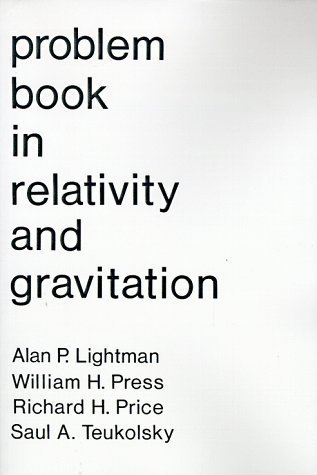
An essential resource for learning about general relativity and much more, from four leading expertsImportant and useful to every student of relativity, this book is a unique collection of some 475 problems--with solutions--in the fields of special and general relativity, gravitation, relativistic astrophysics, and cosmology. The problems are expressed in broad physical terms to enhance their pertinence to readers with diverse backgrounds.In their solutions, the authors have attempted to convey a mode of approach to these kinds of problems, revealing procedures that can reduce the labor of calculations while avoiding the pitfall of too much or too powerful formalism. Although well suited for individual use, the volume may also be used with one of the modem textbooks in general relativity.

ABOUT REPRISALS In the teeming market of a Cambodian village, Rina runs into the officer who murdered her father thirty-five years ago during the Khmer Rouge regime. What follows is the deeply moving portrait of how she seeks revenge, against the backdrop of a nation still coming to terms with this tragic era of its history. As Rina spends months watching Touch Pheng, a broken relic of the arrogant young camp commander she knew, haggling over mangoes and resting in the shade, memory and grief twist in unexpected ways, transforming her in the process. Her husband, her best friend, and her best friend’s husband all have their ideas of how Rina should deal with this killer. But Rina must make up her own mind, leading to a final scene that is likely to haunt you with its ambiguity and beauty for years to come. Bestselling novelist and National Book Award finalist Alan Lightman (Einstein’s Dreams, The Diagnosis) has always been known for his lyrical gifts and his knowledge of the human heart. But rarely has his mastery come quite so close to showing us our human core. Stunning in the simplicity of its prose, this is a story about the conflict between family and self, compassion and revenge, national and personal identity. PRAISE FOR ALAN LIGHTMAN “A gem of a novel that is strange witty erudite and alive with Lightman's playful genius.” -- Junot Díaz, Pulitzer-Prize winning author of The Brief Wondrous Life of Oscar Wao, on Mr. g "By turns whimsical and meditative, playful and provocative, Einstein's Dreams pulls the reader into a dream world like a powerful magnet.“ -- The New York Times "A profoundly human story, rich in depth and nuance . . . Lightman writes with a lightness, a lyrical understatedness that belies the underlying depths and complexities of the novel . . . Reunion is the work of a great writer." -- The Globe and Mail (Toronto) ABOUT ALAN LIGHTMAN Alan Lightman is the author of six novels including the international bestseller Einstein’s Dreams, The Diagnosis, which was a finalist for the National Book Award in fiction, and the forthcoming The Accidental Universe (Pantheon, Jan.'14). His essays and stories have appeared in The New Yorker, Harper’s, The Atlantic, and Story, among other places. In 2003, Lightman founded the Harpswell Foundation, a nonprofit organization empowering a new generation of women leaders in Cambodia through housing, education, and leadership training. The government of Cambodia has awarded Lightman the Gold Medal for humanitarian service to Cambodia for this work. He is professor of the Practice of the Humanities at the Massachusetts Institute of Technology.

Origins reveals the human being within the scientist in a study of the philosophical, personal, and social factors that enter into the scientific process. Twenty-seven active cosmologists--including Stephen Hawking, Roger Penrose, Steven Weinberg, Vera Rubin, Allan Sandage, Margaret Geller, and Alan Guth--talk candidly about their childhoods and early influences, their motivations, prejudices, and worldviews. The book's lucid introduction traces the explosion of new ideas that has recently shaken cosmological thinking. Origins explores not just the origin of the universe but also the origins of scientific thought.

"Alan Ligtman has a unique giftt for exploring science and connecting its ideas for meanings to our lives." This collection of essays and stories bring up questions that he probes with imagination and wit.