
John Williams
Librarian Note: There is more than one author in the GoodReads database with this name. John Edward Williams, Ph.D. (University of Missouri, 1954; M.A., University of Denver, 1950; B.A., U. of D., 1949), enlisted in the USAAF early in 1942, spending two and a half years as a sergeant in India and Burma. His first novel, Nothing But the Night, was published in 1948, and his first volume of poems, The Broken Landscape, appeared the following year. In the fall of 1955, Williams took over the directorship of the creative writing program at the University of Denver, where he taught for more than 30 years. After retiring from the University of Denver in 1986, Williams moved with his wife, Nancy, to Fayetteville, Arkansas, where he resided until he died of respiratory failure on March 3, 1994. A fifth novel, The Sleep of Reason, was left unfinished at the time of his death.
8 Books Written

William Stoner is born at the end of the nineteenth century into a dirt-poor Missouri farming family. Sent to the state university to study agronomy, he instead falls in love with English literature and embraces a scholar’s life, so different from the hardscrabble existence he has known. And yet as the years pass, Stoner encounters a succession of disappointments: marriage into a “proper” family estranges him from his parents; his career is stymied; his wife and daughter turn coldly away from him; a transforming experience of new love ends under threat of scandal. Driven ever deeper within himself, Stoner rediscovers the stoic silence of his forebears and confronts an essential solitude.John Williams’s luminous and deeply moving novel is a work of quiet perfection. William Stoner emerges from it not only as an archetypal American, but as an unlikely existential hero, standing, like a figure in a painting by Edward Hopper, in stark relief against an unforgiving world.
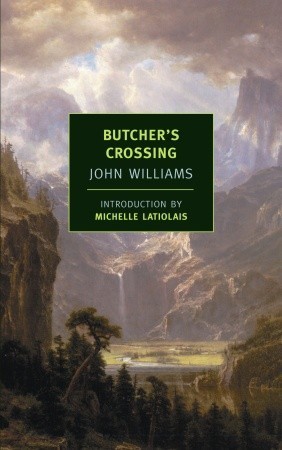
In his National Book Award–winning novel Augustus, John Williams uncovered the secrets of ancient Rome. With Butcher’s Crossing, his fiercely intelligent, beautifully written western, Williams dismantles the myths of modern America.It is the 1870s, and Will Andrews, fired up by Emerson to seek “an original relation to nature,” drops out of Harvard and heads west. He washes up in Butcher’s Crossing, a small Kansas town on the outskirts of nowhere. Butcher’s Crossing is full of restless men looking for ways to make money and ways to waste it. Before long Andrews strikes up a friendship with one of them, a man who regales Andrews with tales of immense herds of buffalo, ready for the taking, hidden away in a beautiful valley deep in the Colorado Rockies. He convinces Andrews to join in an expedition to track the animals down. The journey out is grueling, but at the end is a place of paradisal richness. Once there, however, the three men abandon themselves to an orgy of slaughter, so caught up in killing buffalo that they lose all sense of time. Winter soon overtakes them: they are snowed in. Next spring, half-insane with cabin fever, cold, and hunger, they stagger back to Butcher’s Crossing to find a world as irremediably changed as they have been.

A brilliant and beautifully written novel in the tradition of Robert Graves, Augustus is a sweeping narrative that brings vividly to life a compelling cast of historical figures through their letters, dispatches, and memoirs.A mere eighteen years of age when his uncle, Julius Caesar, is murdered, Octavius Caesar prematurely inherits rule of the Roman Republic. Surrounded by men who are jockeying for power–Cicero, Brutus, Cassius, and Mark Antony–young Octavius must work against the powerful Roman political machinations to claim his destiny as first Roman emperor. Sprung from meticulous research and the pen of a true poet, Augustus tells the story of one man’s dream to liberate a corrupt Rome from the fancy of the capriciously crooked and the wildly wealthy.

First published in 1948, Nothing but the Night marked the auspicious beginning of John Williams' career as a novelist—a career that would go on to include the classics Stoner and the National Book Award winning Augustus. In the person of Arthur Maxley, Williams investigates the terror and the waywardness of a man who has suffered an early traumatic experience. As a child, Maxley witnessed a scene of such violence and of such a nature that the evocation of Greek tragedy is inescapable. Now, years later, we move through a single significant day in the grown Arthur Maxley's life, the day when he is to meet his father, who has been absent for many years. With rare economy and clarity, the story moves at an ever-increasing pace to its unforgettable end.

As the spirit of experimentation swirled around him in the 1960s and ’70s, John Williams, working in relative obscurity as an English professor, wrote finely crafted novels distinguished by precise form, powerful but restrained prose, and close attention to physical detail and its symbolic import. His three major works—Butcher’s Crossing (1960), Stoner (1965), and the National Book Award–winning Augustus (1972)—have come to be recognized as masterpieces of American fiction. This authoritative Library of America volume brings all three together for the first time, along with editor Daniel Mendelsohn’s selection of essays in which Williams reflects on the context of his work.In Butcher’s Crossing (1960), Harvard student William Andrews, his imagination fired after hearing a lecture by Emerson, strikes out West, arriving in the small Kansas prairie town of Butcher’s Crossing, where he is quickly enticed to finance a buffalo hunting expedition to the Colorado Rockies. Driven deeper and deeper into the wild by unreasoning greed as winter approaches, beset by trouble without and within, the expedition stumbles toward a scene of slaughter no reader will ever forget.Stoner (1965) follows the life and unremarkable career of William Stoner, an English professor in a midwestern university in the early decades of the last century. Despite keen disappointments in his marriage and family and repeated failures in the fraught arena of faculty politics, Stoner fashions an inner life—rendered by Williams with consummate skill—that becomes a source of solace and strength. Writing for The New York Times, Morris Dickstein called Stoner “something rarer than a great novel—it is a perfect novel.”In Augustus (1972), Williams transports readers back to the turbulent final years of the Roman Republic and the beginning of the Empire, to contemplate, in the imagined words of his titular emperor, “the chaos of experience, the confusion of accident, and the incomprehensible realms of possibility—which is to say the world in which we all so intimately live that few of us take the trouble to examine it.” Narrated through letters, journals, and memoranda by Julius Caesar, Augustus, Augustus’s daughter Julia (banished by her father to a barren volcanic island for the crime of adultery), and an ever-changing cast of allies and enemies, Augustus is a masterwork of historical fiction that, as Daniel Mendelsohn has written, “suggests the past without presuming to recreate it.”Rounding out the volume is a selection of three essays by Williams—“The Western: Definition of the Myth” (1961), “Fact in Fiction: Problems for the Historical Novelist” (1973), and “The Future of the Novel” (1974)—as well as the author’s remarks upon accepting the National Book Award for Augustus in 1973.


«A quiet classic», «The man who wrote the perfect novel»: sono solo alcune delle definizioni coniate per identificare l’autore di Stoner, dopo la clamorosa riscoperta di questo libro da molti ritenuto il suo capolavoro. Questo Meridiano, che raccoglie l’intero corpus degli scritti editi e inediti di John Williams, getta nuova luce sulla sua scrittura, mettendo in evidenza i legami profondi e osmotici che la caratterizzano. Oltre a evidenziarne la peculiarità, l’introduzione di Francesco Pacifico incornicia l’opera di Williams nel contesto della letteratura americana a cavallo fra gli anni Cinquanta e Sessanta del secolo scorso; si devono invece a Charles J. Shields la Cronologia e le Notizie sui testi. Oltre ai quattro romanzi già noti al grande pubblico (Nulla, solo la notte, Butcher’s Crossing, Stoner e Augustus) il volume propone le due raccolte di versi pubblicate in vita dall’autore (Il paesaggio infranto e La necessaria menzogna), cinque racconti mai tradotti in italiano e due frammenti del romanzo incompiuto Il sonno della ragione.