
Henry David Thoreau
Henry David Thoreau (born David Henry Thoreau) was an American author, naturalist, transcendentalist, tax resister, development critic, philosopher, and abolitionist who is best known for Walden, a reflection upon simple living in natural surroundings, and his essay, Civil Disobedience, an argument for individual resistance to civil government in moral opposition to an unjust state. Thoreau's books, articles, essays, journals, and poetry total over 20 volumes. Among his lasting contributions were his writings on natural history and philosophy, where he anticipated the methods and findings of ecology and environmental history, two sources of modern day environmentalism. In 1817, Henry David Thoreau was born in Massachusetts. He graduated from Harvard University in 1837, taught briefly, then turned to writing and lecturing. Becoming a Transcendentalist and good friend of Emerson, Thoreau lived the life of simplicity he advocated in his writings. His two-year experience in a hut in Walden, on land owned by Emerson, resulted in the classic, Walden: Life in the Woods (1854). During his sojourn there, Thoreau refused to pay a poll tax in protest of slavery and the Mexican war, for which he was jailed overnight. His activist convictions were expressed in the groundbreaking On the Duty of Civil Disobedience (1849). In a diary he noted his disapproval of attempts to convert the Algonquins "from their own superstitions to new ones." In a journal he noted dryly that it is appropriate for a church to be the ugliest building in a village, "because it is the one in which human nature stoops to the lowest and is the most disgraced." (Cited by James A. Haught in 2000 Years of Disbelief.) When Parker Pillsbury sought to talk about religion with Thoreau as he was dying from tuberculosis, Thoreau replied: "One world at a time." Thoreau's philosophy of nonviolent resistance influenced the political thoughts and actions of such later figures as Leo Tolstoy, Mohandas K. Gandhi, and Martin Luther King, Jr. D. 1862. More: http://plato.stanford.edu/entries/tho... http://thoreau.eserver.org/ http://en.wikipedia.org/wiki/Henry_Da... http://transcendentalism-legacy.tamu.... http://www.biography.com/people/henry...
34 Books Written

Walden by noted transcendentalist Henry David Thoreau, is a reflection upon simple living in natural surroundings. The work is part personal declaration of independence, social experiment, voyage of spiritual discovery, satire, and manual for self-reliance. First published in 1854, it details Thoreau's experiences over the course of two years, two months, and two days in a cabin he built near Walden Pond, amidst woodland owned by his friend and mentor Ralph Waldo Emerson, near Concord, Massachusetts. The book compresses the time into a single calendar year and uses passages of four seasons to symbolize human development.By immersing himself in nature, Thoreau hoped to gain a more objective understanding of society through personal introspection. Simple living and self-sufficiency were Thoreau's other goals, and the whole project was inspired by transcendentalist philosophy, a central theme of the American Romantic Period. As Thoreau made clear in his book, his cabin was not in wilderness but at the edge of town, about two miles (3 km) from his family home.

Henry David Thoreau’s Journal was his life’s the daily practice of writing that accompanied his daily walks, the workshop where he developed his books and essays, and a project in its own right—one of the most intensive explorations ever made of the everyday environment, the revolving seasons, and the changing self. It is a treasure trove of some of the finest prose in English and, for those acquainted with it, its prismatic pages exercise a hypnotic fascination. Yet at roughly seven thousand pages, or two million words, it remains Thoreau’s least-known work.This reader’s edition, the largest one-volume edition of Thoreau’s Journal ever published, is the first to capture the scope, rhythms, and variety of the work as a whole. Ranging freely over the world at large, the Journal is no less devoted to the life within. As Thoreau says, “It is in vain to write on the seasons unless you have the seasons in you.”

"I wish to speak a word for Nature, for absolute freedom and wildness, as contrasted with a freedom and culture merely civil--to regard man as an inhabitant, or a part and parcel of Nature, rather than a member of society. I wish to make an extreme statement, if so I may make an emphatic one, for there are enough champions of the minister and the school committee and every one of you will take care of that." Henry David Thoreau, noted transcendentalist, wrote Walking as a message of the battle between the importance of nature and the pull of the demands of society, while at the same time writing his other environmental work, Walden. First delivered by Thoreau in 1851, Walking, or also known as The Wild, this essay was not only popular with the public, but also considered by Thoreau himself as, "... a sort of introduction to all that I may write hereafter."

Read Thoreau's most influential works in one stunning volume! With reflections on politics, simplicity, and independent living, Thoreau's writings ask readers to question the status quo and live in accordance with their principles.

Walden: Deluxe Edition - The Complete Unabridged Original Text from 1854
by Henry David Thoreau

Henry David Thoreau's masterwork, Walden, is a collection of his reflections on life and society. His simple but profound musings—as well as Civil Disobedience, his protest against the government's interference with civil liberty—have inspired many to embrace his philosophy of individualism and love of nature.

Resistance to Civil Government, called Civil Disobedience for short, is an essay by American transcendentalist Henry David Thoreau that was first published in 1849. In it, Thoreau argues that individuals should not permit governments to overrule or atrophy their consciences, and that they have a duty to avoid allowing such acquiescence to enable the government to make them the agents of injustice. Thoreau was motivated in part by his disgust with slavery and the Mexican–American War (1846–1848).

Civil Disobedience and Other Essays is a collection of some of Henry David Thoreau's most important essays. Contained in this volume are the following essays: Civil Disobedience, Natural History of Massachusetts, A Walk to Wachusett, The Landlord, A Winter Walk, The Succession of Forest Trees, Walking, Autumnal Tints, Wild Apples, Night and Moonlight, Aulus Persius Flaccus, Herald of Freedom, Life Without Principle, Paradise (to be) Regained, A Plea for John Brown, The Last Days of John Brown, After the Death of John Brown, The Service, Slavery in Massachusetts, and Wendell Phillips Before Concord Lyceum.

Introduction by Ralph Waldo EmersonCommentary by Van Wyck Brooks and E. B. White Naturalist, philosopher, champion of self-reliance and moral independence, Henry David Thoreau remains not only one of our most influential writers but also one of our most contemporary. This unique and comprehensive edition gathers all of Thoreau's most significant works, including his masterpiece, Walden (reproduced in its entirety); A Week on the Concord and Merrimack Rivers; selections from Cape Cod and The Maine Woods; as well as "Walking," "Civil Disobedience," "Slavery in Massachusetts," "A Plea for Captain John Brown," and "Life Without Principle." Taken together, they reveal the astounding range, subtlety, artistry, and depth of thought of this true American original.Includes a Modern Library Reading Group Guide

This Library of America edition collects for the first time in one volume the four full-length works in which Henry David Thoreau combined his poetic sensibility, classical learning, philosophical austerity, and Yankee love of practical detail into literary masterpieces on humanity’s communion with nature.A Week on the Concord and Merrimack Rivers is based on a boat trip Thoreau took with his brother in 1839 from Concord, Massachusetts, to Concord, New Hampshire. Ten years in the writing (it was the book he retired to Walden to work on) and incorporating essays, passages from his journal, and some of his best poems, it is a superbly crafted achievement, its texture enriched by the idealism of the Transcendentalists, the delighted wordplay of an imaginative linguist, the individualism of a young America, and the earthiness of a lover of nature.Walden is a personal declaration of independence, a social experiment, and a voyage of spiritual discovery, set within the seasonal cycle of a year’s “Life in the Woods.” “Simplify, simplify” is the beat of its “more distant drummer”—to abandon waste and illusion, to get to the bottom of life’s essential needs, and to practice a new economy for humane living. Its witty and pointed rhetoric brings together language and nature, the human and nonhuman in unusual conjunctions that resonate with symbolic meanings. A manual of self-reliance as well as a masterpiece of style, it is one of the most fervently loved classics of American literature.The Maine Woods is an account of three trips taken by boat and canoe in 1846, 1853, and 1857 through an unexplored interior bypassed by westward expansion. It describes the virgin rivers and forests of Maine, the customs of woodsmen and Indian guides, the hunting of moose, and the effects of the timber industry and encroaching settlement. An early and eloquent plea for conservation by a far-sighted naturalist, its close observation of the American wild becomes an examination of “the motives which carry men into the wilderness.”Cape Cod is the bleakest of Thoreau’s works, resembling Melville’s prose in its vision of the titanic indifference of nature. Cape Cod appears as both ocean and desert, a vast expanse of shipwrecks and barren soil, peopled by hardy, weathered inhabitants who seem survivors from the age of the first Pilgrims. Based upon his own visits and upon accounts from the earliest times, it is an unsentimental study of human endurance in the face of hostile elements, historical change, and natural decay.

Henry David Thoreau (American, 1817 -- 1862) extracted himself from the routines of employment and civilized sociability to spend two years in the woods. Walden, Thoreau's book about his experience published in 1854, has become one of the most highly respected works in American literature.In Thoughts from Walden Pond, Charles Gurche's brilliant photographs from the diverse regions of America are paired with excerpts from Thoreau's masterpiece. The pictures with the text transport us to a state of heightened awareness and impart an almost cellular sense of the importance of wild places. Dona Budd's introductory essay offers an engrossing biography of Thoreau along with her insightful reflections on Walden.

Qui décrira la douceur indicible et la vie immortelle de cette austère forêt, où la Nature, même au coeur de l'hiver, est toujours à son printemps, où les arbres couverts de mousse et en état de décomposition ne sont pas vieux mais semblent dotés d'une jeunesse éternelle : et la Nature bienheureuse et innocente, tel un enfant serein, est trop contente pour faire du bruit, à l'exception du gazouillement des oiseaux et du clapotis des ruisseaux ? Quel endroit pour vivre, pour mourir et y être enterré ! H.D. Thoreau

Thoreau's account of his solitary and self-sufficient home in New England woods remains an inspiration to the environmental movement -- a call to his fellow men to abandon their striving, materialistic existences of 'quiet desperation' for a simple life within their means, finding spiritual truth through awareness of the sheer beauty of their surroundings.

Kessinger Publishing is the place to find hundreds of thousands of rare and hard-to-find books with something of interest for everyone
Based on several trips to the Cape and originally published as a series of articles, Henry David Thoreau's Cape Cod is a remarkable work that depicts the natural beauty of Cape Cod and the nature that surrounds it. Thoreau, a consummate lover of the outdoors and nature is right at home in the Cape and he details his excitement of the area with naturalist portraits of the indigenous species and animals. Any lover of nature or of Cape Cod in general will delight in this captivating depiction of the area in the early to mid 1800s.

Henry David Thoreau dedicated his life to preserving his freedom as a man and an artist. Nature was the fountainhead of his inspiration and his refuge from what he considered the follies of society. Heedless of his friends’ advice to live in a more orthodox manner, he determinedly pursued his own inner bent, which was that of a poet-philosopher, in prose and verse. Carl Bode brings together the best of Thoreau’s works in The Portable Thoreau, a comprehensive collection of the writings of a unique and profoundly influential American thinker.
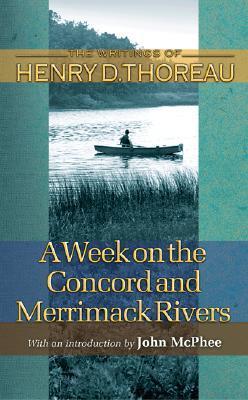
This book offers a selection of superb photographs by the famous turn-of-the-century photographer Herbert Gleason. Retracing one of Thoreau's early journeys, Gleason produced moving and dramatic pictures of life along the rivers of New England.Originally published in 1984.The Princeton Legacy Library uses the latest print-on-demand technology to again make available previously out-of-print books from the distinguished backlist of Princeton University Press. These editions preserve the original texts of these important books while presenting them in durable paperback and hardcover editions. The goal of the Princeton Legacy Library is to vastly increase access to the rich scholarly heritage found in the thousands of books published by Princeton University Press since its founding in 1905.

Walden / Civil Disobedience / and Other Writings: A Norton Critical Edition
by Henry David Thoreau
Rating: 3.9 ⭐
This revised and expanded Third Edition adds three important post-Walden essays, "Slavery in Massachusetts," "Walking," and "Wild Apples," bringing the full scope of Thoreau's mature powers to twenty-first-century readers. The texts are accompanied by explanatory annotations, Thoreau's survey of Walden Pond, and the 1852 Walling map of Concord village and its environs. As a unique feature, the Third Edition includes generous excerpts from Thoreau's journal, reprinted by special arrangements with Princeton University Press from the definitive edition of his writings. Spanning the years 1845-54, these selections vividly display Thoreau's intensive exploration of his local landscape; the fusion of literary and natural history field work that informs Walden , "Walking," and "Wild Apples"; and the growth of his environmental imagination.“Reviews and Posthumous Assessments” for this edition collects eight new reviews of Thoreau's antislavery and late environmental essays as well as of Walden . To the influential portraits of Thoreau by Ralph Waldo Emerson and James Russell Lowell, the Third Edition adds John Burroughs's "Another Word on Thoreau," his response to them and to his great predecessor.”Recent Criticism” includes eighteen selections of the best historical, political, philosophical, poststructuralist, and environmental criticism of Thoreau's writing since the mid-twentieth century. To classic pieces by E. B. White, Leo Marx, Barbara Johnson, and Stanley Cavell, the Third Edition adds essays by nine new contributors, among them Laurence Buell, Laura Dassow Walls, Evan Carton, Robert A. Gross, Albert J. von Frank, Steven Fink, and William Rossi.A Chronology of Thoreau's life and work, new to the Third Edition, and an expanded and updated Selected Bibliography are also included. 1 map

The works of Thoreau in one collection with active table of contents. Works On the Duty of Civil DisobedienceA Plea for Captain John BrownWaldenWalkingA Week on the Concord and Merrimack RiversWild Apples

Henry David Thoreau was an American author, poet, naturalist, tax resister, surveyor, historian, philosopher, and leading transcendentalist. He is best known for his book Walden. He was deeply interested in the idea of survival in the face of hostile elements, historical change, and natural decay. He was a strong abolitionist and his belief in a philosophy of civil disobedience influenced the political thoughts and actions of such later figures as Leo Tolstoy, Mahatma Gandhi, and Martin Luther King, Jr. First published in "The Atlantic Monthly" in 1862, Thoreau's essay begins with a history of the apple tree, and ends with a meditation on parallels between the wild apple and humanity.

Two institutions of New England, our fall colors and Henry David Thoreau, are brought together in this posthumously published rumination on Nature. Autumnal Tints was originally published in the October 1862 Atlantic Monthly. "October is the month for painted leaves. Their rich glow now flashes round the world. As fruits and leaves and the day itself acquire a bright tint just before they fall, so the year near its setting. October is its sunset sky; November the later twilight."

At the time Thoreau made this wilderness canoe trip he was forty years old. The record of the journey is the latter half of his The Maine Woods, which is perhaps the finest idyl of the forest ever written. It is particularly charming in its blending of meditative and poetic fancies with the minute description of the voyager’s experiences. The chief attraction that inspired Thoreau to make the trip was the primitiveness of the region. Here was a vast tract of almost virgin woodland, peopled only with a few loggers and pioneer farmers, Indians, and wild animals. No one could have been better fitted than Thoreau to enjoy such a region and to transmit his enjoyment of it to others.
This work has been selected by scholars as being culturally important and is part of the knowledge base of civilization as we know it. This work is in the public domain in the United States of America, and possibly other nations. Within the United States, you may freely copy and distribute this work, as no entity (individual or corporate) has a copyright on the body of the work. Scholars believe, and we concur, that this work is important enough to be preserved, reproduced, and made generally available to the public. To ensure a quality reading experience, this work has been proofread and republished using a format that seamlessly blends the original graphical elements with text in an easy-to-read typeface. We appreciate your support of the preservation process, and thank you for being an important part of keeping this knowledge alive and relevant.

"With quotable lines on every page, this is an important and affecting addition to the Thoreau shelf." ― Booklist The writing of Henry David Thoreau is as full of life today as it was when he published Walden one hundred years ago. In seeking to understand nature, Thoreau sought to "lead a fresh, simple life with God." In 1848 a seeker named Harrison Blake, yearning for a spiritual life of his own, asked the then-fledgling writer for guidance. The fifty letters that ensued, collected here for the first time in their own volume by Thoreau specialist Bradley P. Dean, are by turns earnest, oracular, witty, playful, practical― and deeply insightful and inspiring, as one would expect from America's best prose stylist and great moral philosopher.
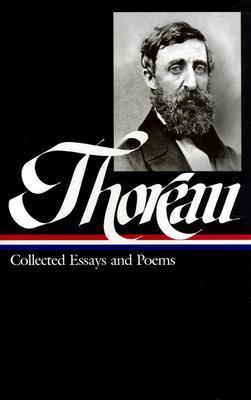
America's greatest nature writer and a political thinker of worldwide impact, Henry David Thoreau's remarkable essays reflect his speculative and probing cast of mind. In his poems, he gave voice to his private sentiments and spiritual aspirations in the plain style of New England speech. Now, The Library of America brings together these indispensable works in one authoritative volume.Spanning his entire career, the 27 essays gathered here vary in style from the ambling rhythm of "Natural History of Massachusetts" and "A Winter Walk" to the concentrated moral outrage of "Slavery in Massachusetts" and "A Plea for Captain John Brown". Included are "Civil Disobedience", Thoreau's great exploration of the conflict between individual conscience and state power that continues to influence political thinkers and activists; "Walking", a meditation on wildness and civilization; and "Life Without Principle", a passionate critique of American materialism and conformity. Also here are literary essays, including pieces on Homer, Chaucer, and Carlyle; the travel essay "A Yankee in Canada"; the three speeches in defense of John Brown; and essays such as "Autumnal Tints", "Wild Fruits", and "Huckleberries" that explore natural phenomena around Concord.Seven poems are published here for the first time, and others are presented in new, previously unpublished versions based on Thoreau's manuscripts.

Henry David Thoreau (1817-1862) championed the belief that people of conscience were at liberty to follow their own opinion. In these selections from his writings, we see Thoreau the individualist and opponent of injustice. "Civil Disobedience" (1849), composed following Thoreau's imprisonment for refusing to pay his taxes in protest against slavery and the Mexican War, is an eloquent declaration of the principles that make revolution inevitable in times of political dishonor. "Solitude," from his masterpiece, Walden (1854), poetically describes Thoreau's oneness with nature and the companionship solitude offers to those who want to be rid of the travails of the world to discover themselves. "Life without Principle" (posthumously published 1863) decries the way in which excessive devotion to business and money coarsens the fabric of society: in merely making a living, the meaning of life gets lost.

"A Desobediência Civil é e continuará a ser o livro-guia de todos os que, aqui e agora, têm consciência das injustiças a que estão sujeitas as minorias, num tempo em que os cidadãos são incitados a prestar culto ao dinheiro, porque o Estado sabe, como Thoreau denuncia, que o dinheiro silencia muitas perguntas que o homem de outro modo seria obrigado a fazer. Martin Luther King leu e releu A Desobediência Civil e nela aprendeu a estratégia da não-violência; Gandhi trazia sempre um exemplar na bagagem e leu outros ensaios do autor; Tolstoi aprendeu também em Thoreau a desobedecer e a organizar a resistência ao poder. O segundo texto de Thoreau, sobre John Brown, é límpido, torrencial, violento, mas profundamente humano e poético. A revolta é nele a consequência lógica dum desejo de harmonia."

Reunimos en este libro dos de los textos más bellos y menos conocidos del autor de «Walden»: «Un paseo invernal» relata una caminata inolvidable por el corazón de los Grandes Fríos hacia la primavera de la existencia; «Caminar» es un ensayo magistral sobre el arte del paseo y una defensa cerrada de la vida salvaje y libre, tanto de los animales como de los seres humanos.«En la profundidad del bosque, completamente solos, mientras el viento sacude la nieve de los árboles y dejamos atrás los últimos rastros humanos, nuestras reflexiones adquieren una riqueza y variedad muy superiores a las que ostentan cuando estamos inmersos en la vida de las ciudades. El zorzal y el trepador son una compañía más estimulante que la de políticos y filósofos, a los que volveremos a ver como quien se reencuentra con unos viejos y vulgares compañeros. En este valle solitario, en el que un riachuelo desagua las laderas cubiertas de hielo estriado y cristales de infinitos matices, entre los que sobresalen los juncos y la avena salvaje, y se elevan los abetos y las tsugas, nuestra vida es más serena y verdaderamente digna de contemplación».

Pocos escritores o pensadores han tenido la puntería y el pulso de Henry David Thoreau. Pero a Thoreau no le gustaba la caza, así que usaremos otra metáfora: digamos mejor que pocos escritores o pensadores han sabido extraer la miel del mundo a partir de una sola flor, pocos han estado tan dotados para ese aforismo, esa frase o ese breve fragmento tras cuya lectura sentimos que algo destella, que algo en nuestra vida puede cambiar, que se despliega un conjunto inédito de posibilidades existenciales. Los libros de Thoreau, sus ensayos, sus diarios, sus poemas, sus cartas y sus manuscritos inéditos son una fuente inagotable del pensamiento más luminoso e inmediato, aquel que nos golpea en la cara como una ráfaga inesperada de aire fresco y vivificador. Desde esta premisa, hemos recorrido toda su obra y hemos recogido en este volumen una amplia antología de los mejores pensamientos de Thoreau: aquí se trata sobre la belleza y el azar, la aurora y el crepúsculo, la amistad y la imaginación, la moda y la dieta, la libertad y la insumisión, la música y el silencio, los indios y la sabiduría, la simplicidad y el dinero, los viajes y la soledad, los árboles y los pájaros, el trabajo y el amor, la muerte y lo que nos salva, lo salvaje en la naturaleza y en nosotros mismos, los libros y el inextinguible deseo de leer, lo sagrado en el cielo y en la tierra, la felicidad de las marmotas y de los humanos, los paseos por el bosque y también por la ciudad, la estaciones y el ciclo interminable de la vida… Un verdadero regalo para todos aquellos que, tal como dijo Thoreau, saben que todo lo bueno es libre y salvaje.

""A Plea For Captain John Brown"" is a non-fiction book written by the renowned American author and philosopher, Henry David Thoreau. The book is a passionate defense of the controversial abolitionist and insurrectionist, John Brown, who was executed for his role in the raid on Harpers Ferry in 1859.Thoreau argues that Brown's actions were justified because he was fighting against the institution of slavery, which he believed was morally wrong. Thoreau also critiques the government's handling of Brown's trial and execution, arguing that they were complicit in perpetuating the injustice of slavery.The book is divided into several sections, each exploring different aspects of Brown's life and legacy. Thoreau draws on his own experiences and observations to make a compelling case for Brown's heroism and the importance of standing up for one's beliefs, even in the face of overwhelming opposition.Overall, ""A Plea For Captain John Brown"" is a powerful and thought-provoking work that challenges readers to reconsider their views on slavery, justice, and the role of government in protecting human rights.He was one of that class of whom we hear a great deal, but, for the most part, see nothing at all- the Puritans. It would be in vain to kill him. He died lately in the time of Cromwell, but he reappeared here. Why should he not? Some of the Puritan stock are said to have come over and settled in New England. They were a class that did something else than celebrate their forefathers' day, and eat parched corn in remembrance of that time.This scarce antiquarian book is a facsimile reprint of the old original and may contain some imperfections such as library marks and notations. Because we believe this work is culturally important, we have made it available as part of our commitment for protecting, preserving, and promoting the world's literature in affordable, high quality, modern editions, that are true to their original work.

"En iyi devlet, yönetmeyen devlettir."Walden'in yazarı, ünlü Amerikan düşünürü Henry David Thoreau'nun en önemli bu iki denemesini okurken modern devlet anlayışının ve onun yarattığı yaşam biçiminin çarpıcı bir biçimde gözler önüne serildiğine tanıklık edeceksiniz. Bu denemeler, doğadan koparılan insanın, kapitalizmin ve devletin elinde nasıl şekillendiğini görmek için de mutlaka okunmalı.

Excursions presents texts of nine essays, including some of Henry D. Thoreau's most engaging and popular works, newly edited and based on the most authoritative versions of each. These essays represent Thoreau in many stages of his writing career, ranging from 1842--when he accepted Emerson's commission to review four volumes of botanical and zoological catalogues in an essay that was published in The Dial as "Natural History of Massachusetts"--to 1862, when he prepared "Wild Apples," a lecture he had delivered during the Concord Lyceum's 1859-1860 season, for publication in the Atlantic Monthly after his death. Three other early meditations on natural history and human nature, "A Winter Walk," "A Walk to Wachusett," and "The Landlord," were originally published in 1842 and 1843. Lively, light pieces, they reveal Thoreau's early use of themes and approaches that recur throughout his work. "A Yankee in Canada," a book-length account of an 1850 trip to Quebec that was published in part in 1853, is a fitting companion to Cape Cod and The Maine Woods, Thoreau's other long accounts of explorations of internal as well as external geography. In the last four essays, "The Succession of Forest Trees" (1860), "Autumnal Tints" (1862), "Walking" (1862), and "Wild Apples" (1862), Thoreau describes natural and philosophical phenomena with a breadth of view and generosity of tone that are characteristic of his mature writing. In their skillful use of precisely observed details to arrive at universal conclusions, these late essays exemplify Transcendental natural history at its best.

Thoreau's major essays annotated and introduced by one of our most vital intellectuals.With The Essays of Henry D. Thoreau , Lewis Hyde gathers thirteen of Thoreau's finest short prose works and, for the first time in 150 years, presents them fully annotated and arranged in the order of their composition. This definitive edition includes Thoreau's most famous essays, "Civil Disobedience" and "Walking," along with lesser-known masterpieces such as "Wild Apples," "The Last Days of John Brown," and an account of his 1846 journey into the Maine wilderness to climb Mount Katahdin, an essay that ends on a unique note of sublimity and terror.Hyde diverges from the long-standing and dubious editorial custom of separating Thoreau's politics from his interest in nature, a division that has always obscured the ways in which the two are constantly entwined. "Natural History of Massachusetts" begins not with fish and birds but with a dismissal of the political world, and "Slavery in Massachusetts" ends with a meditation on the water lilies blooming on the Concord River.Thoreau's ideal reader was expected to be well versed in Greek and Latin, poetry and travel narrative, and politically engaged in current affairs. Hyde's detailed annotations clarify many of Thoreau's references and re-create the contemporary context wherein the nation's westward expansion was bringing to a head the racial tensions that would result in the Civil War.

The Essays of Henry David Thoreau
by Henry David Thoreau
A definitive collection of Henry David Thoreau’s major essays, annotated and introduced by Lewis Hyde.Diverging from the long-standing custom of separating Thoreau’s politics from his interest in nature, renowned author Lewis Hyde brings together essays that highlight the ways in which these two strands of thought were intertwined. Here, natural history begins not with fish and birds, but with a dismissal of the political world, and condemnation of slavery concludes with a meditation on the water lilies blooming on the Concord River.This definitive edition includes Thoreau’s most famous essays, “Civil Disobedience” and “Walking,” along with lesser-known masterpieces such as “Wild Apples,” “The Last Days of John Brown,” and an account of Thoreau’s 1846 journey into the Maine wilderness to climb Mount Katahdin—an essay that ends on a unique note of sublimity and terror in the face of raw nature. While Thoreau’s ideal reader was expected to be politically engaged in current affairs and well versed in Greek, Latin, poetry, and travel narrative, Hyde’s inviting annotations clarify many of Thoreau’s references and recreate the contemporary context of the day, when the nation’s westward expansion was bringing to a head the racial tensions that would result in the Civil War.Hyde deems Thoreau’s writing prophetic because “the prophet speaks of things that will be true in the future because they are true in all time.” Thoreau’s revelatory writing coupled with the luminous insights from Hyde—“one of our country’s greatest public thinkers” (Lawrence Weschler)—make The Essays of Henry David Thoreau essential reading at a moment in our nation’s history when his subversiveness, foresight, and lyricism are badly needed.