
Plato
Plato (Greek: Πλάτων), born Aristocles (c. 427 – 348 BC), was an ancient Greek philosopher of the Classical period who is considered a foundational thinker in Western philosophy and an innovator of the written dialogue and dialectic forms. He raised problems for what became all the major areas of both theoretical philosophy and practical philosophy, and was the founder of the Platonic Academy, a philosophical school in Athens where Plato taught the doctrines that would later become known as Platonism. Plato's most famous contribution is the theory of forms (or ideas), which has been interpreted as advancing a solution to what is now known as the problem of universals. He was decisively influenced by the pre-Socratic thinkers Pythagoras, Heraclitus, and Parmenides, although much of what is known about them is derived from Plato himself. Along with his teacher Socrates, and Aristotle, his student, Plato is a central figure in the history of philosophy. Plato's entire body of work is believed to have survived intact for over 2,400 years—unlike that of nearly all of his contemporaries. Although their popularity has fluctuated, they have consistently been read and studied through the ages. Through Neoplatonism, he also greatly influenced both Christian and Islamic philosophy. In modern times, Alfred North Whitehead famously said: "the safest general characterization of the European philosophical tradition is that it consists of a series of footnotes to Plato."
32 Books Written

The Republic by Plato is a landmark achievement in Ancient Greek philosophy - this edition combines an authoritative translation with affordability.The Republic is the most famous text written by Plato, which takes the form of a philosophical dialogue. The text is part conversation between a group of friends active in the Athens intellectual community, and part monologue from various participants in the discussion. The narrator and lead character is Socrates, Plato's friend and mentor, who appears in most of his pupil's dialogues and acts as surrogate to Plato's ideas. Throughout the text the 'Socratic method', whereby Socrates feigns ignorance and questions an adversary to receive insight on a given subject, is demonstrated.Ten books in total comprise The Republic , the divisions thought to have been made due to the length of a roll of papyrus in Ancient Greece. The discussion begins with an attempt to find a definition for justice, wherein a disagreement between Thrasymachus - who believes justice is what is good for who is strongest at a given place and time - and Socrates, who believes that all members of society should, for the highest benefit of all, conform to just action.In Book II, the discussion expands to include justice in the sense of a social contract. Whether or not justice happens only due to fear of reprisal, and whether justice is truly a high virtue of itself, are among the questions considered. Eventually the discussion expands further into the idea of a just city ideas of how such a society, embodying justice and order, might work commences with Socrates proposing an educated 'guardian' class of able-bodied men and women who would uphold order and defend such a city against threats from outside.After expanding their ideas on the guardians, the dialogue proceeds onto other classes. It is here that Plato's famous idea of the philosopher king arises - the notion of a ruler who is appointed for holding the highest understanding of good and just rule, imparted to him at an early age by capable educators.Plato as Socrates eventually proposes that the essence of justice is fulfilling one's role in society. The correct assignment of an occupation to each citizen, to which they can happily commit, will result in a just and capable society. Further stipulations upon this ideal society are given; that education be strictly regulated and human reproduction made a matter for the state, with no offspring knowing their parents.The Republic then covers four forms of injustice manifested in systems of government - timocracy, oligarchy, democracy, and finally tyranny. How these unjust societies occur is talked about at length, with examples from Ancient society cited as Socrates/Plato develops theories on how societies go astray. The most unjust ruler - the tyrant - is discussed at length, and determined to be among the most unhappy, unfree and unfulfilled types of man owing to his thrall to passions, and friendless owing to his commitment to hierarchy. Such malfeasant politics are excoriated; in the end, Socrates says, all are harmed and none benefit from tyranny.Between books VII and VIII Socrates establishes the famous Allegory of the Cave as a way of demonstrating education's effects upon the human mind. By using the image of people who have only lived in a dark caves their whole lives, he illustrates how mere shadows against the walls are the closest such individuals come to seeing reality. Philosophy, Socrates argues, is the way by which humans are freed from this cave of ignorance and propelled to an enlightenment.Socrates concludes the discussion of city politics and rulers, and commences to focus upon the nature of art and its place in the just and ideal city. He also discusses reincarnation, the indestructible nature of the human soul, concluding the epic text on a spiritual note.


Plato is among the most influential philosophers of all time. Along with his teacher Socrates and his pupil Aristotle, he can be said to have laid the foundations for Western philosophy, science and ethics, as well as establishing the first academy for higher learning in the Western world. Socrates is one of the great figures of Western history and the founding father of its philosophical tradition. In the Dialogues, by his pupil and fellow philosopher Plato, a fascinating portrait emerges of a man who spurned material wealth and believed above all in learning and inquiry. Apology, Crito, and Phaedo recount Socrates’ trial on charges of corrupting the youth of Athens, his defiance of the court, and his last days in jail passed in discussion with friends. They form an excellent introduction to a courageous and captivating figure who paid with his life for the right to free thought.

Benjamin Jowett's translations of Plato have long been classics in their own right. In this volume, Professor Hayden Pelliccia has revised Jowett's renderings of five key dialogues, giving us a modern Plato faithful to both Jowett's best features and Plato's own masterly style.Gathered here are many of Plato's liveliest and richest texts. Ion takes up the question of poetry and introduces the Socratic method. Protagoras discusses poetic interpretation and shows why cross-examination is the best way to get at the truth. Phaedrus takes on the nature of rhetoric, psychology, and love, as does the famous Symposium. Finally, Apology gives us Socrates' art of persuasion put to the ultimate test--defending his own life.Pelliccia's new Introduction to this volume clarifies its contents and addresses the challenges of translating Plato freshly and accurately. In its combination of accessibility and depth, Selected Dialogues of Plato is the ideal introduction to one of the key thinkers of all time.

“Plato is philosophy, and philosophy, Plato.”—Emerson The Republic and other great dialogues by the immortal Greek philosopher Plato are masterpieces that form part of the most important single body of writing in the history of philosophy. Beauty, love, immortality, knowledge, and justice are discussed in these dialogues, which magnificently express the glowing spirit of Platonic philosophy. Translated by W. H. D. Rouse, one of the world’s most outstanding classical scholars and translator of Homer’s The Odyssey and The Iliad, this volume features the complete texts of seven of Plato’s most revered works. “In Rouse’s pages Socrates’ strength of mind, his dedication to philosophical truth, are borne in on the modern reader with something of the power that impressed and disturbed the ancient Greeks.”—Time

A fascinating discussion on sex, gender, and human instincts, as relevant today as ever.In the course of a lively drinking party, a group of Athenian intellectuals exchange views on eros, or desire. From their conversation emerges a series of subtle reflections on gender roles, sex in society and the sublimation of basic human instincts. The discussion culminates in a radical challenge to conventional views by Plato's mentor, Socrates, who advocates transcendence through spiritual love. The Symposium is a deft interweaving of different viewpoints and ideas about the nature of love--as a response to beauty, a cosmic force, a motive for social action and as a means of ethical education.For more than seventy years, Penguin has been the leading publisher of classic literature in the English-speaking world. With more than 1,700 titles, Penguin Classics represents a global bookshelf of the best works throughout history and across genres and disciplines. Readers trust the series to provide authoritative texts enhanced by introductions and notes by distinguished scholars and contemporary authors, as well as up-to-date translations by award-winning translators.

With a masterful sense of the place of rhetoric in both thought and practice and an ear attuned to the clarity, natural simplicity, and charm of Plato's Greek prose, James H. Nichols, Jr., offers precise yet unusually readable translations of two great Platonic dialogues on rhetoric. The Gorgias presents an intransigent argument that justice is superior to injusticeto the extent that suffering an injustice is preferable to committing an unjust act. The dialogue contains some of Plato's most significant and famous discussions of major political themes, and focuses dramatically and with unrivaled intensity on Socrates as a political thinker and actor. Featuring some of Plato's most soaringly lyrical passages, the Phaedrus investigates the soul's erotic longing and its relationship to the whole cosmos, as well as inquiring into the nature of rhetoric and the problem of writing.Nichols's attention to dramatic detail brings the dialogues to life. Plato's striking variety in conversational address (names and various terms of relative warmth and coolness) is carefully reproduced, as is alteration in tone and implication even in the short responses. The translations render references to the gods accurately and non-monotheistically for the first time, and include a fascinating variety of oaths and invocations. A general introduction on rhetoric from the Greeks to the present shows the problematic relation of rhetoric to philosophy and politics, states the themes that unite the two dialogues, and outlines interpretive suggestions that are then developed more fully for each dialogue. The twin dialogues reveal both the private and the political rhetoric emphatic in Plato's philosophy, yet often ignored in commentaries on it. Nichols believes that Plato's thought on rhetoric has been largely misunderstood, and he uses his translations as an opportunity to reconstruct the classical position on right relations between thought and public activity.

The Apology of Socrates is Plato's version of the speech given by Socrates as he unsuccessfully defended himself in 399BCE against the charges of "corrupting the young, and by not believing in the gods in whom the city believes, but in other daimonia that are novel" (24b). "Apology" here has its earlier meaning (now usually expressed by the word "apologia") of speaking in defense of a cause or of one's beliefs or actions.The revised edition of this popular textbook features revised vocabulary and grammatical notes that now appear on the same page as the text, sentence diagrams, principal parts of verbs listed both by Stephanus page and alphabetically, word frequency list for words occurring more than twice, and complete vocabulary.

The second edition of Five Dialogues presents G. M. A. Grube's distinguished translations, as revised by John Cooper for Plato, Complete Works (Hacket, 1997). Cooper has also contributed a number of new or expanded footnotes and updated Suggestions for Further Reading.

The Phaedo is acknowledged to be one of Plato's masterpieces, showing him both as a philosopher and as a dramatist at the height of his powers. For its moving account of the execution of Socrates, the Phaedo ranks among the supreme literary achievements of antiquity. It is also a document crucial to the understanding of many ideas deeply ingrained in western culture, and provides one of the best introductions to Plato's thought.

The classic political dialogue, as relevant today as in Plato's timeTaking the form of a dialogue between Socrates, Gorgias, Polus and Callicles, Gorgias debates perennial questions about the nature of government and those who aspire to public office. Are high moral standards essential or should we give our preference to the pragmatist who gets things done or negotiates successfully? Should individuals be motivated by a desire for personal power and prestige, or genuine concern for the moral betterment of the citizens? These questions go to the heart of Athenian democratic principles and are more relevant than ever in today's political climate.

Outstanding translations by leading contemporary scholars--many commissioned especially for this volume--are presented here in the first single edition to include the entire surviving corpus of works attributed to Plato in antiquity. In his introductory essay, John Cooper explains the presentation of these works, discusses questions concerning the chronology of their composition, comments on the dialogue form in which Plato wrote, and offers guidance on approaching the reading and study of Plato's works. Also included are concise introductions by Cooper and Hutchinson to each translation, meticulous annotation designed to serve both scholar and general reader, and a comprehensive index. This handsome volume offers fine paper and a high-quality Smyth-sewn cloth binding in a sturdy, elegant edition.

Plato's Socrates, in prison and being urged to flee execution, raises in acute form, and for the first time in European thought, a central question: is it right to disobey the state? Socrates' controversial answer in "Crito" has generated much contemporary literature, but no English commentary of the Greek text for seventy-five years. This new edition aims to provide an up-to-date literary and philosophical analysis suitable for a wide range of readers, including those with post-beginners Greek. It represents an ideal introduction, not only to the social and philosophical world of Classical Greece, but also to the personality of one of its greatest thinkers.

Platon (MÖ 428/9-348/7): Atina’nın aristokrat gençlerinin gramer, müzik ve beden eğitiminden oluşan temel eğitimini aldıktan sonra filozof Kratylos’un öğrencisi olmuş, onun sayesinde Sokrates öncesi filozofların eserlerini tanımıştır. Bununla birlikte Platon’u en çok etkileyen düşünür Sokrates’tir, ancak tarihin en meşhur öğretmen öğrenci ikilisinin nerede ve nasıl karşılaştığına dair bilgiler çelişkilidir. Eserlerindeki atıflardan tanıştıkları sırada hocasının altmış, kendisinin de yirmi yaşlarında olduğu anlaşılmaktadır. Siyasetle de ilgilenen Platon, Sokrates’in ölüme mahkûm edilişinin ardından bu uğraşından vazgeçip hocasının düşüncelerini geliştirmeye ve kendi felsefe sistemini kurmaya yönelmiştir. MÖ 387 yılında Batı dünyasının en uzun ömürlü eğitim kurumlarından Akademia’yı kuran Platon, felsefesini işlediği diyaloglardan Phaidros’ta aşk, güzellik ve retorik hakkındaki düşüncelerini dile getirmiştir.

Meno (/ˈmiːnoʊ/; Greek: Μένων, Menōn) is a Socratic dialogue by Plato. In it, Socrates tries to determine the definition of virtue, or rather arete, meaning virtue in general, rather than particular virtues, such as justice or temperance. The first part of the work is written in the Socratic dialectical style, and depicts Meno as being reduced to confusion or aporia. In response to Meno's paradox (or the learner's paradox), however, Socrates introduces positive ideas: the immortality of the soul, the theory of knowledge as a recollection (anamnesis), which Socrates demonstrates by posing a mathematical puzzle to one of Meno's slaves, the method of hypothesis, and, in the final lines, the distinction between knowledge and true belief.

Set immediately prior to the trial and execution of Socrates in 399 BC, Theaetetus shows the great philosopher considering the nature of knowledge itself, in a debate with the geometrician Theodorus and his young follower Theaetetus. Their dialogue covers many questions, such is knowledge purely subjective, composed of the ever-changing flow of impressions we receive from the outside world? Is it better thought of as "true belief"? Or is it, as many modern philosophers argue, "justified true belief," in which the belief is supported by argument or evidence? With skill and eloquence, Socrates guides the debate, drawing out the implications of these theories and subjecting them to merciless and mesmerising criticism. One of the founding works of epistemology, this profound discussion of the problem of knowledge continues to intrigue and inspire.For more than seventy years, Penguin has been the leading publisher of classic literature in the English-speaking world. With more than 1,700 titles, Penguin Classics represents a global bookshelf of the best works throughout history and across genres and disciplines. Readers trust the series to provide authoritative texts enhanced by introductions and notes by distinguished scholars and contemporary authors, as well as up-to-date translations by award-winning translators.

Plato's Allegory of the Cave is what many believe to be the foundation of Western Philosophy. It addresses what is visible and invisible, seen and observed versus intuited and imagined, and what is public versus private and just versus unjust. It also concerns the meaning and importance of education, the state of the soul, the conflict between truth and beauty, animal urges versus higher aspirations, knowledge versus ignorance, and on and on...
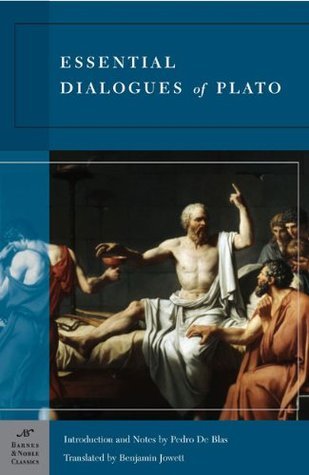
Essential Dialogues of Plato, by Plato, is part of the Barnes & Noble Classics series, which offers quality editions at affordable prices to the student and the general reader, including new scholarship, thoughtful design, and pages of carefully crafted extras. Here are some of the remarkable features of Barnes & Noble Classics:New introductions commissioned from today's top writers and scholarsBiographies of the authorsChronologies of contemporary historical, biographical, and cultural eventsFootnotes and endnotesSelective discussions of imitations, parodies, poems, books, plays, paintings, operas, statuary, and films inspired by the workComments by other famous authorsStudy questions to challenge the reader's viewpoints and expectationsBibliographies for further readingIndices & Glossaries, when appropriateAll editions are beautifully designed and are printed to superior specifications; some include illustrations of historical interest. Barnes & Noble Classics pulls together a constellation of influences—biographical, historical, and literary—to enrich each reader's understanding of these enduring works.Plato is one of those world-famed individuals, his philosophy one of those world-renowned creations, whose influence, as regards the culture and development of the mind, has from its commencement down to the present time been all-important.— G. W. F. HegelWestern philosophy starts with Socrates and his student Plato. By way of the dialectic that evolved between master and student, Plato invented the philosophical method of inquiry and analysis, and became the first to use a logical framework to ask—and try to answer—the eternal questions about ethics, politics, art, and life that still haunt humanity: What is virtue? What is justice? What is the ideal form of government? What is the individual’s relationship to the state? Do artists have a responsibility to society, or only to their own creative impulse? Plato explores these issues through a series of dialogues, records of supposed conversations between Socrates and other Greek aristocrats. Although Socrates is nominally the main speaker in all of them, only the earlier dialogues document his thoughts, while the latter ones present Plato’s own ideas.What is often ignored in commentaries on Plato’s work is its unique literary form. The dialogues are neither dramas, nor stories, yet they are skillfully fashioned by means of characters, narrative events, dramatic moments, and perhaps most surprising, a great deal of humor. Along with such exemplars of Plato’s thought as Symposium, Apology, and Phaedrus, this volume includes the first three books of Plato’s Laws.Pedro De Blas holds degrees in Law and Classics. He has worked as counsel for several international organizations, including the United Nations and the World Bank, and he is currently a Ph.D. candidate in Classics at Columbia University. He has taught classical languages and literature at Columbia, the CUNY Latin and Greek Institute, and New York University’s Gallatin School.

The Socratic Dialogues: Early Period, Volume 1: The Apology, Crito, Charmides, Laches, Lysis, Menexenus, Ion
by Plato
Rating: 4.1 ⭐
Here are the Socratic Dialogues presented as Plato designed them to be - living discussions between friends and protagonists, with the personality of Socrates himself coming alive as he deals with a host of subjects, from justice and inspiration to courage, poetry and the gods.Plato's Socratic Dialogues provide a bedrock for classical Western philosophy. For centuries they have been read, studied and discussed via the flat pages of books, but the ideal medium for them is the spoken word. Some are genuine dialogues while some are dialogues reported by a narrator supposedly at a later date.Ukemi Audiobooks presents all of the Socratic Dialogues in a series of recordings divided into Early Period (Volumes 1 & 2), Middle Period (Volumes 1 & 2) and Late Period (Volume 1) - based on their likely composition by Plato. This opening volume starts with perhaps the most famous speech, The Apology, Socrates' doomed defence against the charge of heresy and corrupting the young. It is followed by Crito, in which Socrates' friend offers to spirit him out of Athens to avoid execution. Among the others are discussions on Courage (Laches), and Friendship (Lysis).The role of Socrates is taken by David Rintoul, a widely admired and experienced audiobook reader who studied philosophy at university before taking a different path to RADA, TV, theatre and film. He is joined by a broad range of readers, most known to Audible listeners. Each Dialogue is prefaced with a short introduction to set the scene for newcomers to Plato. Benjamin Jowett.

«A competição do diálogo chega assim ao fim e até parece ter sido bem sucedida: Protágoras "conseguiu convencer" Sócrates de que pode ensinar a aretê, Sócrates "levou" Protágoras "a admitir" que se age bem por sabedoria. Contudo, esta aparente conciliação levanta um novo e redobrado problema. As objecções de cada um em relação à tese contrária acabam por entrar em conflito com as suas próprias teses. Por um lado, Protágoras, que diz ser capaz de ensinar a aretê, mostra-se reticente em identificá-la ao conhecimento — afinal, a única coisa passível de ser ensinada; por outro lado, Sócrates, que duvida da viabilidade do seu ensino, insiste em manter que se trata de conhecimento. Diante desta confusão de conclusões, é o próprio Sócrates que sugere que se retome o assunto desde o início, primeiro para procurar saber o que é a aretê, e, segundo, como se adquire.» - da Introdução.

Платон (ок. 427 – ок. 347 г. пр.н.е.) е древногръцки философ, математик, автор на философски диалози и основател на Атинската академия – първата известна институция за висше образование в Европа. Наред със своя учител Сократ и ученика си Аристотел, Платон поставя основите на Западната философия и Естествената философия.Най-хубавата характеристика за личността на Платон ни дават неговите съчинения, които благодарение на дълговременното им използване и умножение, преписвани в Академията, са достигнали до нас в своята пълнота. Те представляват високо-художествени произведения, написани под формата на драматичен разговор между две или повече лица. Затова и носят името "диалози" – творби, в които чрез устата на Сократ, в спор с ред други реални или измислени личности, Платон ни задължава да мислим. Може би това задължение е накарало Хегел да напише, че "един от най-красивите подаръци, които съдбата ни е запазила от древността, са без съмнение произведенията на Платон", а Уайтхед да отбележи, че "цялата наша философия не е нищо друго, освен забележки под линия на Платоновите диалози".Том 1 съдържа диалозите "Апология", "Критон", "Евтифрон", "Малкият Хипий", "Ион", "Големият Хипий", "Алкивиад", "Хармид", "Лахет", "Лизис" и "Протагор".

A fluent and accurate new translation of the dialogue that, of all Plato's works, has seemed to speak most directly to the interests of contemporary and analytical philosophers. White's extensive introduction explores the dialogue's central themes, its connection with related discussions in other dialogues, and its implicaiton for the interpretation of Plato's metaphysics.

First published in Complete Works , Donald J. Zeyl's masterful translation of Timaeus is presented along with his 75 page introductory essay, which discusses points of contemporary interest in the Timaeus , deals at length with long-standing and current issues of interpretation, and provides a consecutive commentary on the work as a whole. Includes an analytic table of contents and a select bibliography.

In Plato's Ion Socrates discusses with the titular character, a professional rhapsode who also lectures on Homer, the question of whether the rhapsode, a performer of poetry, gives his performance on account of his skill and knowledge or by virtue of divine possession. It is one of the shortest of Plato's dialogues

This is an English translation of one of the more challenging and enigmatic of Plato's dialogues between Socrates and Parmenides and Zeno of Elea, that begins with Zeno defending his treatise of Parmenidean monism against those partisans of plurality.Focus Philosophical Library translations are close to and are non-interpretative of the original text, with the notes and a glossary intending to provide the reader with some sense of the terms and the concepts as they were understood by Plato’s immediate audience.

The Laws , Plato's longest dialogue, has for centuries been recognized as the most comprehensive exposition of the practical consequences of his philosophy, a necessary corrective to the more visionary and utopian Republic . In this animated encounter between a foreign philosopher and a powerful statesman, not only do we see reflected, in Plato's own thought, eternal questions of the relation between political theory and practice, but we also witness the working out of a detailed plan for a new political order that embodies the results of Plato's mature reflection on the family, the status of women, property rights, criminal law, and the role of religion and the fine arts in a healthy republic."Because it succeeds in being both literal and comprehensive, it is by far superior to any translation available. By reproducing dramatic detail often omitted, such as oaths, hesitations, repetitions, and forms of address, Pangle allows the reader to follow the dialogue's interplay between argument and dramatic context. . . . Pangle's translation captures the excitement and the drama of Plato's text."—Mary P. Nichols, Ancient Philosophy"Pangle's achievement is remarkable. . . . The accompanying interpretive essay is an excellent distillation of a dialogue three times its size. The commentary is thoughtful, even profound; and it amply demonstrates the importance of reading Plato carefully and from a translation that is true to his language."—Patrick Coby, American Political Science Review


"The unexamined life is not worth living." Socrates's ancient words are still true, and the ideas sounded in Plato's "Dialogues" still form the foundation of a thinking person's education. This superb collection contains excellent contemporary translations selected for their clarity and accessibility to today's reader, as well as an incisive introduction by Erich Segal, which reveals Plato's life and clarifies the philosophical issues examined in each dialogue. The first four dialogues recount the trial execution of Socrates--the extraordinary tragedy that changed Plato's life and so altered the course of Western though. Other dialogues create a rich tableau of intellectual life in Athens in the fourth century B.C., and examine the nature of virtue and love, knowledge and truth, society and the individual. Resounding with the humor and astounding brilliance of Socrates, the immortal iconoclast, these great works remain powerful, probing, and essential.Alternate Edition of ISBN-10: 0553213717

Euthyphro, Apologia Socratis, Crito, Phaedo, Cratylus, Sophista, Politicus, Theaetetus
by Plato
Rating: 4.2 ⭐
This long awaited new edition contains seven of the dialogues of Plato, and is the first in the five-volume complete edition of Plato's works in the Oxford Classical Texts series. The result of many years of painstaking scholarship, the new volume will replace the now nearly one hundred-year-old original edition, and is destined to become just as long lasting a classic.


Lysis is a philosophical dialogue written by the ancient Greek philosopher Plato. The dialogue is set in Athens and follows a conversation between Socrates and two young boys named Lysis and Menexenus. The dialogue explores the nature of friendship and the qualities that make a true friend. Socrates questions the boys on their understanding of friendship and challenges them to think deeply about what it means to be a friend. He argues that true friendship cannot be based on superficial qualities such as wealth or beauty, but rather on a deeper connection of the soul. Throughout the dialogue, Socrates uses his trademark method of questioning to guide the boys towards a greater understanding of the nature of friendship. He also introduces the concept of self-knowledge and argues that true friendship requires an understanding of oneself as well as the other person. Lysis is a thought-provoking exploration of the nature of friendship and the qualities that make a true friend. It is a classic work of philosophy that continues to be studied and debated by scholars and students of philosophy today.Ah, Hippothales, I said; what a noble and really perfect love you have found! I wish that you would favour me with the exhibition which you have been making to the rest of the company, and then I shall be able to judge whether you know what a lover ought to say about his love, either to the youth himself, or to others.This scarce antiquarian book is a facsimile reprint of the old original and may contain some imperfections such as library marks and notations. Because we believe this work is culturally important, we have made it available as part of our commitment for protecting, preserving, and promoting the world's literature in affordable, high quality, modern editions, that are true to their original work.

"It is. . . remarkable that Reeve's is the first new English translation since Fowler's Loeb edition of 1926. Fortunately, Reeve has done an excellent job. His version is not slavishly literal but is in general very accurate. It is also very clear and readable. Reeve is particularly to be congratulated for having produced versions of some of the more torturous passages, which are not only faithful to the text but also make good sense in English. The long and detailed introduction is worth reading in its own right." --R. F. Stalley, The Classical Review