
Cormac McCarthy
Cormac McCarthy was a highly acclaimed American novelist and screenwriter celebrated for his distinctive literary style, philosophical depth, and exploration of violence, morality, and the human condition. His writing, often characterized by sparse punctuation and lyrical, biblical language, delved into the primal forces that shape human behavior, set against the haunting landscapes of the American South and Southwest. McCarthy’s early novels, including The Orchard Keeper and Outer Dark, established him as a powerful voice in Southern Gothic literature, while Blood Meridian (1985) is frequently cited as his magnum opus—a brutal, visionary epic about violence and manifest destiny in the American West. In the 1990s, his "Border Trilogy"—All the Pretty Horses, The Crossing, and Cities of the Plain—garnered widespread popularity and critical acclaim, blending coming-of-age themes with philosophical introspection and tragic realism. His 2005 novel No Country for Old Men was adapted into an Academy Award-winning film by the Coen brothers, and his harrowing post-apocalyptic tale The Road (2006) won the Pulitzer Prize for Fiction and was also made into a major motion picture. Both works brought him mainstream recognition and a broader readership later in his career. Despite his fame, McCarthy remained famously private and rarely gave interviews, preferring to let his work speak for itself. His legacy endures through his powerful, often unsettling portrayals of humanity’s struggle with fate, violence, and redemption, making him one of the most influential and original voices in modern American literature.
30 Books Written

The searing, post-apocalyptic novel about a father and son’s fight to survive.A father and his son walk alone through burned America. Nothing moves in the ravaged landscape save the ash on the wind. It is cold enough to crack stones, and when the snow falls it is gray. The sky is dark. Their destination is the coast, although they don’t know what, if anything, awaits them there. They have nothing; just a pistol to defend themselves against the lawless bands that stalk the road, the clothes they are wearing, a cart of scavenged food—and each other.The Road is the profoundly moving story of a journey. It boldly imagines a future in which no hope remains, but in which the father and his son, “each the other’s world entire,” are sustained by love. Awesome in the totality of its vision, it is an unflinching meditation on the worst and the best that we are capable of: ultimate destructiveness, desperate tenacity, and the tenderness that keeps two people alive in the face of total devastation.

Blood Meridian: Or the Evening Redness in the West
by Cormac McCarthy
Rating: 4.2 ⭐
• 6 recommendations ❤️
Blood Meridian is an epic novel of the violence and depravity that attended America's westward expansion, brilliantly subverting the conventions of the Western novel and the mythology of the Wild West. Based on historical events that took place on the Texas-Mexico border in the 1850s, it traces the fortunes of the Kid, a fourteen-year-old Tennesseean who stumbles into a nightmarish world where Indians are being murdered and the market for their scalps is thriving.

The setting is the Texas-Mexico border. The time is our own, when rustlers have given way to drug-runners and small towns have become free-fire zones. A good old boy named Llewellyn Moss finds a pickup truck surrounded by dead men. A load of heroin and two million dollars in cash are still in the back. When Moss takes the money, he sets off a chain reaction that not even the law can contain. Encompassing themes as ancient as the Bible and as bloodily contemporary as this morning’s headlines, No Country for Old Men is a triumph.

The Border Trilogy: All the Pretty Horses, The Crossing, Cities of the Plain
by Cormac McCarthy
Rating: 4.5 ⭐
• 1 recommendation ❤️
Beginning with All the Pretty Horses and continuing through The Crossing and Cities of the Plain, McCarthy chronicles the lives of two young men coming of age in the Southwest and Mexico, poised on the edge of a world about to change forever. Hauntingly beautiful, filled with sorrow and humor, The Border Trilogy is a masterful elegy for the American frontier.

Teenager John Grady Cole, the last of a long line of Texas ranchers, has nothing left to stay for. Across the border Mexico beckons—beautiful and desolate, rugged and cruelly civilized. With neighbor Rawlins, and scruffy boy, he rides toward an idyllic, sometimes comic adventure, to a place where dreams are paid for in blood.

Falsely accused of rape, Lester Ballard – a violent, dispossessed man who haunts the hill country of East Tennessee – is released from jail and allowed to roam at will, preying on the population with his strange lusts. His everyday actions are transformed into stunning scenes of the comic and the grotesque. And as the story hurtles toward its unforgettable conclusion, McCarthy depicts the most sordid aspects of life with dignity, humor, and characteristic lyrical brilliance.

Billy Parham, un cowboy aflat la varsta adolescentei, prinde in capcana o lupoaica, dupa ce aceasta atacase vitele de la ferma familiei sale. Dar, in loc sa o omoare, hotaraste sa o duca inapoi in tinuturile de unde venise, strabatand intinderile nesfarsite de prerie si muntii aflati la granita cu Mexicul. Calatoria lor curajoasa, prin locuri inspaimantator de pustii, insa atat de frumoase, ajunge in impas din clipa in care dau peste oameni. Baiatul devine martor al unor intamplari la limita dintre basm si cosmar, intr-o lume marcata de atata cruzime si violenta, incat nu pare a fi guvernata decat de legea implacabila a mortii.

980, PASS CHRISTIAN, It is three in the morning when Bobby Western zips the jacket of his wet suit and plunges from the Coast Guard tender into darkness. His dive light illuminates the sunken jet, nine bodies still buckled in their seats, hair floating, eyes devoid of speculation. Missing from the crash site are the pilot’s flight bag, the plane’s black box, and the tenth passenger. But how? A collateral witness to machinations that can only bring him harm, Western is shadowed in body and spirit—by men with badges; by the ghost of his father, inventor of the bomb that melted glass and flesh in Hiroshima; and by his sister, the love and ruin of his soul. Traversing the American South, from the garrulous barrooms of New Orleans to an abandoned oil rig off the Florida coast, The Passenger is a breathtaking novel of morality and science, the legacy of sin, and the madness that is human consciousness.

The concluding volume of the Border trilogy. In this magnificent new novel, the National Book Award-winning author of All the Pretty Horses and The Crossing fashions a darkly beautiful elegy for the American frontier. It is 1952 and John Grady Cole and Billy Parham are working as ranch hands in New Mexico, not far from the proving grounds of Alamogordo and the cities of El Paso and Juarez. Their life is made up of trail drives and horse auctions and stories told by campfire light. They value that life all the more because they know it is about to change forever.The change comes when John Grady falls in love with a beautiful, ill-starred Mexican prostitute and sets in motion a chain of events as violent as they are unstoppable. Haunting in its beauty, filled with sorrow, humor, and awe, Cities of the Plain is a genuine American epic.
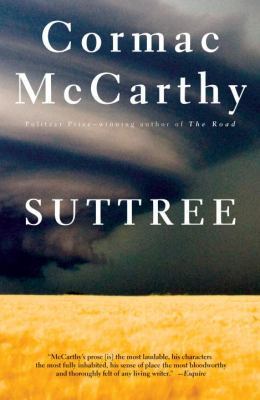
This compelling novel has as its protagonist Cornelius Suttree, living alone and in exile in a disintegrating houseboat on the wrong side of the Tennessee River close by Knoxville. He stays at the edge of an outcast community inhabited by eccentrics, criminals and the poverty-stricken. Rising above the physical and human squalor around him, his detachment and wry humour enable him to survive dereliction and destitution with dignity.

A woman bears her brother's child, a boy. The brother leaves the baby in the woods and tells her he died of natural causes. Discovering her brother's lie, she sets forth alone to find her son. Brother and sister wander through a countryside being scourged by three terrifying strangers, toward an apocalyptic resolution.

NEW YORK TIMES BEST SELLER. The Pulitzer Prize–winning author of The Road returns with the second volume of The Passenger Stella Maris is an intimate portrait of grief and longing, as a young woman in a psychiatric facility seeks to understand her own existence.1972, BLACK RIVER FALLS, Alicia Western, twenty years old, with forty thousand dollars in a plastic bag, admits herself to the hospital. A doctoral candidate in mathematics at the University of Chicago, Alicia has been diagnosed with paranoid schizophrenia, and she does not want to talk about her brother, Bobby. Instead, she contemplates the nature of madness, the human insistence on one common experience of the world; she recalls a childhood where, by the age of seven, her own grandmother feared for her; she surveys the intersection of physics and philosophy; and she introduces her cohorts, her chimeras, the hallucinations that only she can see. All the while, she grieves for Bobby, not quite dead, not quite hers. Told entirely through the transcripts of Alicia’s psychiatric sessions, Stella Maris is a searching, rigorous, intellectually challenging coda to The Passenger, a philosophical inquiry that questions our notions of God, truth, and existence.
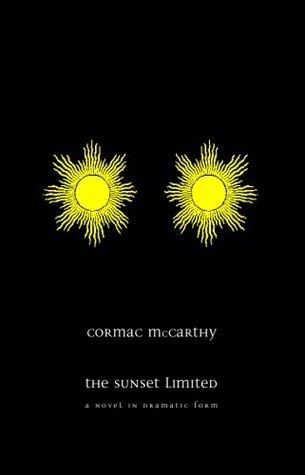
A startling encounter on a New York subway platform leads two strangers to a run-down tenement where a life or death decision must be made. In that small apartment, Black and White, as the two men are known, begin a conversation that leads each back through his own history, mining the origins of two fundamentally opposing world views. White is a professor whose seemingly enviable existence of relative ease has left him nonetheless in despair. Black, an ex-con and ex-addict, is the more hopeful of the men though he is just as desperate to convince White of the power of faith as White is desperate to deny it. Their aim is no less than this: to discover the meaning of life. Deft, spare, and full of artful tension, The Sunset Limited is a beautifully crafted, consistently thought-provoking, and deceptively intimate work by one of the most insightful writers of our time.

Set in a small, remote community in rural Tennessee in the years between the two world wars, "The Orchard Keeper" is an early classic from one of America's finest and most celebrated authors. It tells of John Wesley Rattner, a young boy, and Marion Sylder, an outlaw and bootlegger who, unbeknownst to either of them, has killed the boy's father. Cormac McCarthy's debut novel is a magnificent evocation of an American landscape, and of a lost American time. "The feeling for the land and seasons is so intense as to be part of the story and there are scenes one will never forget ...A complicated and evocative exposition of the transience of life" - "Harper's". "A true American original" - "Newsweek".

In early 2012 it was announced that Cormac McCarthy had written his first original screenplay - news which provoked huge excitement, a swift deal and the appointment of Ridley Scott to direct. But this is no ordinary screenplay. This is a work of extraordinary imagination which draws on many of the themes of McCarthy's work as well as taking it to new dark places. It is also written with great descriptive passages counteracting the dialogue, so the reader is given the full experience of the McCarthy prose. It is the story of a lawyer, the Counselor, a man who is so seduced by the desire to get rich, to impress his fiancée Laura, that he becomes involved in a drug-smuggling venture that quickly takes him way out of his depth. His contacts in this are the mysterious and probably corrupt Reiner and the seductive Malkina, so exotic her pets of choice are two cheetahs. As the action crosses the Mexican border, things become darker, more violent and more sexually disturbing than the Counselor has ever imagined.

From the Pulitzer Prize–winning author of The Road and the bestselling Border Trilogy comes a taut, expansively imagined drama about four generations of an American family.The setting is Louisville, Kentucky, in the 1970s. The Telfairs are stonemasons and have been for generations. Ben Telfair has given up his education to apprentice himself to his grandfather, Papaw, a man who knows that "true masonry is not held together by cement but...by the warp of the world."Out of the love that binds these two men and the gulf that separates them from the Telfairs who have forsaken — or dishonored — the family trade, Cormac McCarthy has crafted a drama that bears all the hallmarks of his great fiction: precise observation of the physical world; language that has the bite of common speech and the force of Biblical prose; and a breathtaking command of the art of storytelling.

In the Spring of 1975 the film director Richard Pearce approached Cormac McCarthy with the idea of writing a screenplay. Though already a widely acclaimed novelist, the author of such modern classics as "The Orchard Keeper" and "Child of God," McCarthy had never before written a screenplay. Using nothing more than a few photographs in the footnotes to a 1928 biography of a famous pre-Civil War industrialist as inspiration, the author and Pearce together roamed the mill towns of the South researching their subject. One year later McCarthy finished "The Gardener's Son," a taut, riveting drama of impotence, rage, and ultimately violence spanning two generations of mill owners and workers, fathers and sons, during the rise and fall of one of America's most bizarre utopian industrial experiments. Produced as a two-hour film and broadcast on PBS in 1976, "The Gardener's Son" recieved two Emmy Award nominations and was shown at the Berlin and Edinburgh Film Festivals. This is the first appearance of the film script in book form.Set in Graniteville, South Carolina, "The Gardener's Son" is the tale of two families: the Greggs, a wealthy family that owns and operates the local cotton mill, and the McEvoys, a family of mill workers beset by misfortune. The action opens as Robert McEvoy, a young mill worker, is having his leg amputated -- the limb mangled in an accident rumored to have been caused by James Gregg, son of the mill's founder. McEvoy, crippled and isolated, grows into a man with a "troubled heart"; consumed by bitterness and anger, he deserts both his job and his family. Returning two years later at the news of his mother's terminal illness, Robert McEvoy arrives only to confront the grave diggers preparing her final resting place. His father, the mill's gardener, is now working on the factory line, the gardens forgotten. These proceedings stoke the slow burning rage McEvoy carries within him, a fury that ultimately consumes both the McEvoys and the Greggs.

The best-selling, Pulitzer Prize–winning author of The Road returns with a two-volume masterpiece in an artfully designed box set. The Passenger is a fast-paced and sprawling novel while Stella Maris is a tightly controlled coda, told entirely in dialogue. Together they relate the thrilling story of a brother and sister, haunted by loss, pursued by conspiracy, and longing for a death they cannot reconcile with God. The Passenger 1980, PASS CHRISTIAN, MISSISSIPPI: It is three in the morning when Bobby Western, a salvage diver, zips the jacket of his wet suit and plunges from the boat deck into darkness. His dive light illuminates the sunken jet, nine bodies still buckled in their seats, hair floating, eyes devoid of speculation. Missing from the crash site are the pilot’s flight bag, the plane’s black box, and the tenth passenger. But how? A collateral witness to machinations that can only bring him harm, Western is shadowed in body and spirit—by men with badges; by the ghost of his father, inventor of the bomb that melted glass and flesh in Hiroshima; and by his sister, the love and ruin of his soul. Stella Maris 1972, BLACK RIVER FALLS, WISCONSIN: Alicia Western is twenty years old when she arrives at a psychiatric facility with forty thousand dollars in a plastic bag. A doctoral candidate in mathematics at the University of Chicago, Alicia has been diagnosed with paranoid schizophrenia, and she does not want to talk about her brother, Bobby. Instead, she contemplates the nature of madness, the human insistence on one common experience of the world; she surveys the intersection of physics and philosophy; and she introduces her cohorts, her chimeras, the hallucinations that only she can see. All the while, she grieves for Bobby, not quite dead, not quite hers.

Magazine article published in Nautilus.

Omnibus of Cormac McCarthy's three novels: The Orchard Keeper, Suttree and Blood Meridian.


The Road A father and his young son walk alone through burned America, heading slowly for the coast. Nothing moves in the ravaged landscape save the ash on the wind. They have nothing but a pistol to defend themselves against the men who stalk the road, the clothes they are wearing, a cart of scavenged food - and each other. Blood Meridian Blood Meridian by Cormac McCarthy is an epic novel of the violence and depravity that attended America's westward expansion, brilliantly subverting the conventions of the Western novel and the mythology of the Wild West. Based on historical events that took place on the Texas-Mexico border in the 1850s, it traces the fortunes of the Kid, a fourteen-year-old Tennessean who stumbles into a nightmarish world where Indians are being murdered and the market for their scalps is thriving. No Country for Old Men Llewelyn Moss, hunting antelope near the Rio Grande, stumbles upon a transaction gone horribly wrong. Finding bullet-ridden bodies, several kilos of heroin, and a caseload of cash, he faces a choice – leave the scene as he found it, or cut the money and run. Choosing the latter, he knows, will change everything. And so begins a terrifying chain of events, in which each participant seems determined to answer the question that one asks how does a man decide in what order to abandon his life?

Cormac McCarthy’s first two short stories: Wake for Susan and A Drowning Incident.

Free online fiction."He stands up and takes off the leather jacket and unzips a pocket and takes out a clear plastic bag and pitches it onto the table. It is full of hundred-dollar bills."Excerpted and adapted from the screenplay for the forthcoming movie “The Counselor” (directed by Ridley Scott; to be released in November).

داستانهای کوتاه کورمک مک کارتی آثاری ویژه هستند از نویسندهی جوانی که در مسیر تربیت یک زیبایی شناسی استثنایی قدم بر می داشت. این داستانها که در فاصلهی کوتاهی طی سالهای ۱۹۵۹ تا ١٩٦٥ به چاپ رسیدند جایزه دانشگاهی اینگرام مریل را برای او به ارمغان آوردند. داستانهای این مجموعه ما را با دغدغههای مک کارتی در ارتباط با روایت و داستانگویی آشنا میکند و سرآغازی بر این امر است که آثار مک کارتی چه گونه اساس اسطورههای جنوبی و فرهنگ آمریکایی را نقد و واژگون میکنند. بنمایههای طرح شده در مجموعهی حضور سوزان نشان میدهند که مک کارتی چهگونه در طول دوران کاریاش پای آنها ایستاد و نیز سایهی کمرنگ گاتیک در این مجموعه در واقع پیشدرآمدی ست بر مرگ و جنوبی که قرار است در همه ی کارهای بعدی او تا او استلا ماریس، زیبایی و عشق را به چالش بکشند.
From Book 1: An American classic, The Orchard Keeper is the first novel by one of America's finest, most celebrated novelists. Set is a small, remote community in rural Tennessee in the years between the two world wars, it tells of John Wesley Rattner, a young boy, and Marion Sylder, an outlaw and bootlegger who, unbeknownst to either of them, has killed the boy's father. Together with Rattner's Uncle Ather, who belongs to a former age in his communion with nature and his stoic independence, they enact a drama that seems born of the land itself. All three are heroes of an intense and compelling celebration of values lost to time and industrialization.

Este libro contiene los tres primeros cuentos de Cormac McCarthy (Estados Unidos, 1933-2023), que se publicaron entre 1959 y 1965, y no se habían reunido hasta ahora en un mismo libro, ni mucho menos traducido al español.Tomando en cuenta lo anterior, tiene una doble razón de ser. La primera es su valor como curiosidad literaria, ya que rescata y reúne los cuentos tempranos de un autor que más adelante se convertiría en una figura fundamental de la literatura norteamericana. La segunda es más emocional, pues permite a otros lectores entusiastas u obsesivos estar más cerca de completar la obra de McCarthy, que nos dejó doce novelas, unos cuantos guiones y algún ensayo.Incluye los cuentos:"Exequias para Susan" ("Wake for Susan")"Un ahogamiento" ("A Drowning Incident")"Las aguas oscuras" ("The Dark Waters")