
Kurt Vonnegut Jr.
Kurt Vonnegut, Junior was an American novelist, satirist, and most recently, graphic artist. He was recognized as New York State Author for 2001-2003. He was born in Indianapolis, later the setting for many of his novels. He attended Cornell University from 1941 to 1943, where he wrote a column for the student newspaper, the Cornell Daily Sun. Vonnegut trained as a chemist and worked as a journalist before joining the U.S. Army and serving in World War II. After the war, he attended University of Chicago as a graduate student in anthropology and also worked as a police reporter at the City News Bureau of Chicago. He left Chicago to work in Schenectady, New York in public relations for General Electric. He attributed his unadorned writing style to his reporting work. His experiences as an advance scout in the Battle of the Bulge, and in particular his witnessing of the bombing of Dresden, Germany whilst a prisoner of war, would inform much of his work. This event would also form the core of his most famous work, Slaughterhouse-Five, the book which would make him a millionaire. This acerbic 200-page book is what most people mean when they describe a work as "Vonnegutian" in scope. Vonnegut was a self-proclaimed humanist and socialist (influenced by the style of Indiana's own Eugene V. Debs) and a lifelong supporter of the American Civil Liberties Union. The novelist is known for works blending satire, black comedy and science fiction, such as Slaughterhouse-Five (1969), Cat's Cradle (1963), and Breakfast of Champions (1973)
32 Books Written
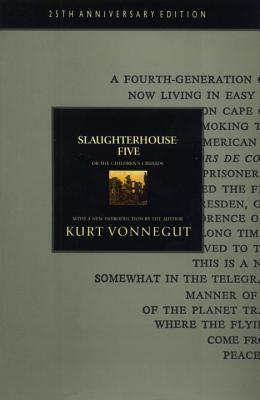
Slaughterhouse-Five, or The Children's Crusade
by Kurt Vonnegut Jr.
Rating: 4.0 ⭐
• 6 recommendations ❤️
This 25th anniversary edition of Slaughterhouse-Five introduces Billy Pilgrim, a man who becomes unstuck in time after he is abducted by aliens from the planet Tralfamadore. In a plot-scrambling display of virtuosity, we follow him simultaneously thru all his life's phases, concentrating on his (& Vonnegut's) shattering experience as an prisoner of war who witnesses the Dresden firebombing. Don't let ease of reading fool you--Vonnegut's isn't a conventional or simple novel. He writes, "There are almost no characters in this story, & almost no dramatic confrontations, because most of the people in it are so sick, & so much the listless playthings of enormous forces. One of the main effects of war, after all, is that people are discouraged from being characters..." Slaughterhouse-Five, named from the building where the POWs were held, isn't only Vonnegut's most powerful book, it's as important as any written since '45. Like Catch-22, it fashions the author's WWII experiences into an eloquent plea against butchery in authority's service. It boasts the same imaginative humanity & gleeful appreciation of the absurd found in his other works, but the book's basis in fact gives it a uniquely poignant humor.

Librarian note: Alternate cover edition for this ISBN can be found here.Mother Night is a daring challenge to our moral sense. American Howard W. Campbell, Jr., a spy during World War II, is now on trial in Israel as a Nazi war criminal. But is he really guilty? In this brilliant book rife with true gallows humor, Vonnegut turns black and white into a chilling shade of gray with a verdict that will haunt us all.

Alternate cover for this ISBN can be found hereCat's Cradle, one of Vonnegut's most entertaining novels, is filled with scientists and G-men and even ordinary folks caught up in the game. These assorted characters chase each other around in search of the world's most important and dangerous substance, a new form of ice that freezes at room temperature. At one time, this novel could probably be found on the bookshelf of every college kid in America; it's still a fabulous read and a great place to start if you're young enough to have missed the first Vonnegut craze.
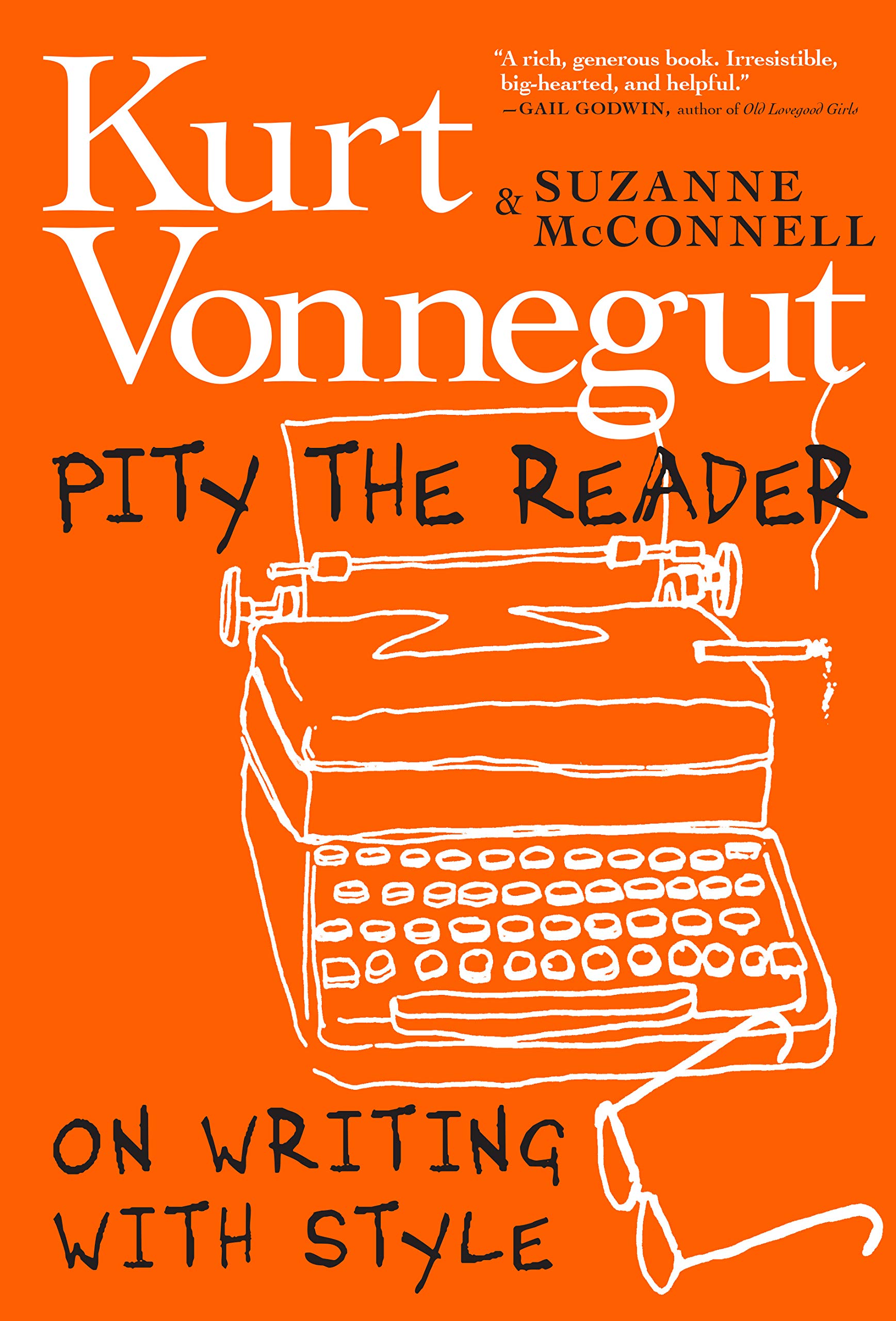
The art and craft of writing by one of the few grandmasters of American literature, a bonanza for writers and listeners written by Kurt Vonnegut's former student.Here is an entirely new side of Kurt Vonnegut, Vonnegut as a teacher of writing. Of course, he has given us glimpses in his aphorisms, short essays, articles, and speeches. But, never before has an entire book been devoted to Kurt Vonnegut, the teacher. Here is pretty much everything Vonnegut ever said or wrote having to do with the art and craft of writing - Plus - a wonderful, healing/nourishing expedition, of which McConnell has outfitted us for the journey, and in these 37 chapters, covers the waterfront of how one American writer brought himself to the pinnacle of the writing art; and the result only serves to benefit us.Kurt Vonnegut was one of the few grandmasters of American literature, whose novels continue to influence new generations about the ways in which our imaginations can help us to live. Few aspects of his contribution have not been plumbed - 14 novels, collections of his speeches, his essays, his letters, his plays - so this fresh view of him, written by a former student, is a bonanza for writers, readers, listeners and Vonnegut fans everywhere.©2019 Trust u/w of Kurt Vonnegut Jr. (P)2019 Highbridge, a division of Recorded Books

Alternate cover for this ISBN can be found hereIn Breakfast of Champions, one of Kurt Vonnegut’s most beloved characters, the aging writer Kilgore Trout, finds to his horror that a Midwest car dealer is taking his fiction as truth. What follows is murderously funny satire, as Vonnegut looks at war, sex, racism, success, politics, and pollution in America and reminds us how to see the truth.
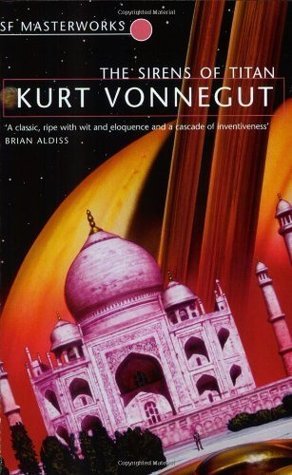
The Sirens of Titan is an outrageous romp through space, time, and morality. The richest, most depraved man on Earth, Malachi Constant, is offered a chance to take a space journey to distant worlds with a beautiful woman at his side. Of course there's a catch to the invitation—and a prophetic vision about the purpose of human life that only Vonnegut has the courage to tell.

Galápagos takes the reader back one million years, to A.D. 1986. A simple vacation cruise suddenly becomes an evolutionary journey. Thanks to an apocalypse, a small group of survivors stranded on the Galápagos Islands are about to become the progenitors of a brave, new, and totally different human race. In this inimitable novel, America’s master satirist looks at our world and shows us all that is sadly, madly awry—and all that is worth saving.

Second only to Slaughterhouse-Five of Vonnegut's canon in its prominence and influence, God Bless You, Mr. Rosewater (1965) presents Eliot Rosewater, an itinerant, semi-crazed millionaire wandering the country in search of heritage and philanthropic outcome, introducing the science fiction writer Kilgore Trout to the world and Vonnegut to the collegiate audience which would soon make him a cult writer.Trout, modeled according to Vonnegut on the science fiction writer Theodore Sturgeon (with whom Vonnegut had an occasional relationship) is a desperate, impoverished but visionary hack writer who functions for Eliot Rosewater as both conscience and horrid example. Rosewater, seeking to put his inheritance to some meaningful use (his father was an entrepreneur), tries to do good within the context of almost illimitable cynicism and corruption.It is in this novel that Rosewater wanders into a science fiction conference--an actual annual event in Milford, Pennsylvania--and at the motel delivers his famous monologue evoked by science fiction writers and critics for almost half a century: "None of you can write for sour apples... but you're the only people trying to come to terms with the really terrific things which are happening today." Money does not drive Mr. Rosewater (or the corrupt lawyer who tries to shape the Rosewater fortune) so much as outrage at the human condition. The novel was adapted for a 1979 Alan Menken musical. The novel is told mostly thru a collection of short stories dealing with Eliot's interactions with the citizens of Rosewater County, usually with the last sentence serving as a punch line. The antagonist's tale, Mushari's, is told in a similar short essay fashion. The stories reveal different hypocrisies of humankind in a darkly humorous fashion.

Welcome to the Monkey House is a collection of Kurt Vonnegut’s shorter works. Originally printed in publications as diverse as The Magazine of Fantasy and Science Fiction and The Atlantic Monthly, these superb stories share Vonnegut’s audacious sense of humor and extraordinary range of creative vision.Alternative cover edition here

Kurt Vonnegut’s first novel spins the chilling tale of engineer Paul Proteus, who must find a way to live in a world dominated by a supercomputer and run completely by machines. Paul’s rebellion is vintage Vonnegut—wildly funny, deadly serious, and terrifyingly close to reality.Alternate cover edition here

In a volume that is penetrating, introspective, incisive, and laugh-out-loud funny, one of the great men of letters of this era—or any era—holds forth on life, art, sex, politics, and the state of America’s soul. Whether he is describing his coming of age in America, his formative war experiences, or his life as an artist, this is Vonnegut doing what he does best: being himself. Whimsically illustrated by the author, A Man Without a Country is intimate, tender, and brimming with the scope of Kurt Vonnegut’s passions.

Broad humor and bitter irony collide in this fictional autobiography of Rabo Karabekian, who, at age seventy-one, wants to be left alone on his Long Island estate with the secret he has locked inside his potato barn. But then a voluptuous young widow badgers Rabo into telling his life story—and Vonnegut in turn tells us the plain, heart-hammering truth about man’s careless fancy to create or destroy what he loves.

Slapstick presents an apocalyptic vision as seen through the eyes of the current King of Manhattan (and last President of the United States), a wickedly irreverent look at the all-too-possible results of today’s follies. But even the end of life-as-we-know-it is transformed by Kurt Vonnegut’s pen into hilarious farce—a final slapstick that may be the Almighty’s joke on us all.

According to science-fiction writer Kilgore Trout, a global timequake will occur in New York City on 13th February 2001. It is the moment when the universe suffers a crisis of conscience. Should it expand or make a great big bang? It decides to wind the clock back a decade to 1991, making everyone in the world endure ten years of deja-vu and a total loss of free will – not to mention the torture of reliving every nanosecond of one of the tawdiest and most hollow decades.With his trademark wicked wit, Vonnegut addresses memory, suicide, the Great Depression, the loss of American eloquence, and the obsolescent thrill of reading books.

Here is the adventure of Eugene Debs Hartke. He's a Vietnam veteran, a jazz pianist, a college professor, and a prognosticator of the apocalypse (and other things Earth-shattering). But that's neither here no there. Because at Tarkington College—where he teaches—the excrement is about to hit the air-conditioning. And its all Eugene's fault.

Deadeye Dick is Kurt Vonnegut’s funny, chillingly satirical look at the death of innocence. Amid a true Vonnegutian host of horrors—a double murder, a fatal dose of radioactivity, a decapitation, an annihilation of a city by a neutron bomb—Rudy Waltz, aka Deadeye Dick, takes us along on a zany search for absolution and happiness. Here is a tale of crime and punishment that makes us rethink what we believe . . . and who we say we are.

“[Kurt Vonnegut] has never been more satirically on-target. . . . Nothing is spared.”— PeopleJailbird takes us into a fractured and comic, pure Vonnegut world of high crimes and misdemeanors in government—and in the heart. This wry tale follows bumbling bureaucrat Walter F. Starbuck from Harvard to the Nixon White House to the penitentiary as Watergate’s least known co-conspirator. But the humor turns dark when Vonnegut shines his spotlight on the cold hearts and calculated greed of the mighty, giving a razor-sharp edge to an unforgettable portrait of power and politics in our times.Praise for Jailbird“[Vonnegut] is our strongest writer . . . the most stubbornly imaginative.” —John Irving “A gem . . . a mature, imaginative novel—possibly the best he has written . . . Jailbird is a guided tour de force of America. Take it!” — Playboy“A profoundly humane comedy . . . Jailbird definitely mounts up on angelic wings—in its speed, in its sparkle, and in its high-flying intent.” — Chicago Tribune Book World “Joyously inventive . . . gleams with the loony magic Vonnegut alone can achieve.” — Cosmopolitan “Vonnegut is our great apocalyptic writer, the closest thing we’ve had to a prophet since . . . Lenny Bruce.” — Chicago Sun-Times “Vonnegut at his impressive best. . . . His imaginative leaps alone . . . are worth the price of admission. . . . His far-reaching metaphysical and cultural concerns . . . are ultimately serious and worth our contemplation.” — The Washington Post

"The year was 2081, and everybody was finally equal. They weren't only equal before God and the law. They were equal every which way..." It is the year 2081. Because of Amendments 211, 212 and 213 to the Constitution, every American is fully equal, meaning that no one is stupider, uglier, weaker, or slower than anyone else. The Handicapper General and a team of agents ensure that the laws of equality are enforced.One April, fourteen-year-old Harrison Bergeron is taken away from his parents, George and Hazel, by the government and to a place unknown. But what happens in the aftermath will challenge the status quo and inspire his peers about the hidden potential within one's own individuality. Kurt Vonnegut Jr. (1922–2007) was an American novelist, satirist, and most recently, graphic artist. He was born in Indianapolis, later the setting for many of his novels. His experiences as an advance scout in the Battle of the Bulge during WWII, and in particular his witnessing of the bombing of Dresden, Germany whilst a prisoner of war, would inform much of his work. The novelist is best known for works blending satire, black comedy and science fiction, such as 'Slaughterhouse-Five' (1969), 'Cat's Cradle' (1963), and 'Breakfast of Champions' (1973).

Through the progress of science, human lifespans have been extended indefinitely, leading the government to enact strict rules to keep the earth's population under control. So when Edward K. Wehling, Jr. finds out that he and his wife are expecting triplets, he has to find a way to meet the nearly impossible birth requirements for each of his three unborn children."2 B R 0 2 B," pronounced "to be or not to be," is an intentional reference to the famous line in William Shakespeare's Hamlet. The short story was originally published in the Worlds of IF Science Fiction magazine and is referenced by author Kurt Vonnegut in his later novel, God Bless You, Mr. Rosewater.HarperPerennial Classics brings great works of literature to life in digital format, upholding the highest standards in ebook production and celebrating reading in all its forms. Look for more titles in the HarperPerennial Classics collection to build your digital library.

From Slapstick's "Turkey Farm" to Slaughterhouse-Five's eternity in a Tralfamadorean zoo cage with Montana Wildhack, the question of the afterlife never left Kurt Vonnegut's mind. In God Bless You, Dr. Kevorkian, Vonnegut skips back and forth between life and the Afterlife as if the difference between them were rather slight. In thirty odd "interviews," Vonnegut trips down "the blue tunnel to the pearly gates" in the guise of a roving reporter for public radio, conducting interviews: with Salvatore Biagini, a retired construction worker who died of a heart attack while rescuing his schnauzer from a pit bull, with John Brown, still smoldering 140 years after his death by hanging, with William Shakespeare, who rubs Vonnegut the wrong way, and with socialist and labor leader Eugene Victor Debs, one of Vonnegut's personal heroes.What began as a series of ninety-second radio interludes for WNYC, New York City's public radio station, evolved into this provocative collection of musings about who and what we live for, and how much it all matters in the end. From the original portrait by his friend Jules Feiffer that graces the cover, to a final entry from Kilgore Trout, God Bless You, Dr. Kevorkian remains a joy.
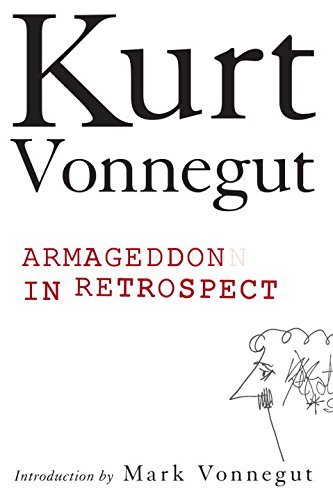
To be published on the first anniversary of Kurt Vonnegut's death, Armageddon in Retrospect is a collection of twelve new and unpublished writings on war and peace, imbued with Vonnegut's trademark rueful humor.
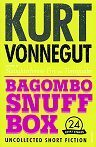
For this unusual collection, Kurt Vonnegut has selected 24 of his favourite stories never published before in book form. Included are "Any Reasonable Offer", "The Powder Blue Dragon", "Hal Irwin's Magic Lamp" and "Lovers Anonymous".
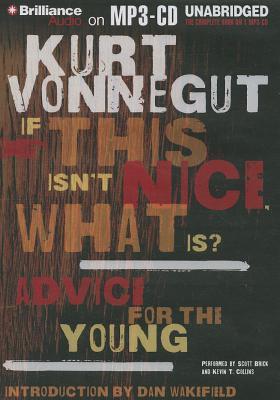
Master storyteller and satirist Kurt Vonnegut was one of the most in-demand commencement speakers of his time. For each occasion, Vonnegut's words were unfailingly unique, insightful, and witty, and they stayed with audience members long after graduation.This expanded second edition includes more than sixty pages of further thoughts from Kurt (whose good advice wasn’t limited to graduation speeches).As edited by Dan Wakefield, this book reads like a narrative in the unique voice that made Vonnegut a hero to readers of all ages. At times hilarious, razor-sharp, freewheeling, and deeply serious, these reflections are ideal for anyone undergoing what Vonnegut would call their “long-delayed puberty ceremony”—marking the passage from student to full-time adult.

Look at the Birdie is a collection of fourteen previously unpublished short stories from one of the most original writers in all of American fiction. In this series of perfectly rendered vignettes, written just as he was starting to find his comic voice, Kurt Vonnegut paints a warm, wise, and funny portrait of life in post—World War II America–a world where squabbling couples, high school geniuses, misfit office workers, and small-town lotharios struggle to adapt to changing technology, moral ambiguity, and unprecedented affluence. Here are tales both cautionary and hopeful, each brimming with Vonnegut's trademark humor and profound humanism. A family learns the downside of confiding their deepest secrets into a magical invention. A man finds himself in a Kafkaesque world of trouble after he runs afoul of the shady underworld boss who calls the shots in an upstate New York town. A quack psychiatrist turned "murder counselor" concocts a novel new outlet for his paranoid patients. While these stories reflect the anxieties of the postwar era that Vonnegut was so adept at capturing– and provide insight into the development of his early style–collectively, they have a timeless quality that makes them just as relevant today as when they were written. It's impossible to imagine any of these pieces flowing from the pen of another writer; each in its own way is unmistakably, quintessentially Vonnegut.Featuring a Foreword by author and longtime Vonnegut confidant Sidney Offit and illustrated with Vonnegut's characteristically insouciant line drawings, Look at the Birdie is an unexpected gift for readers who thought his unique voice had been stilled forever–and serves as a terrific introduction to his short fiction for anyone who has yet to experience his genius. Contents: Letter from Kurt Vonnegut, Jr., to Walter J. Miller, 1951. Confido F U B A R Shout About It from the Housetops Ed Luby's Key Club A Song for Selma Hall of Mirrors The Nice Little People Hello, Red Little Drops of Water The Petrified Ants The Honor of a Newsboy Look at the Birdie King and Queen of the Universe The Good Explainer

Wampeters, Foma & Granfalloons is a rare opportunity to experience Kurt Vonnegut speaking in his own voice about his own life, his views of the world, his writing, and the writing of others. An indignant, outrageous, witty, deeply felt collection of reviews, essays, and speeches, this is a window not only into Vonnegut’s mind but also into his heart.“A book filled with madness and truth and absurdity and self-revelation . . . [Vonnegut is] a great cosmic comedian and rattler of human skeletons, an idealist disguised as a pessimist.”— St. Louis Post-DispatchIncludes the following essays, speeches, and works:“Science Fiction”“Brief Encounters on the Inland Waterway”“Hello, Star Vega”“Teaching the Unteachable”“Yes, We Have No Nirvanas”“Fortitude”“‘There’s a Maniac Loose Out There’”“Excelsior! We’re Going to the Moon! Excelsior!”“Address to the American Physical Society”“Good Missiles, Good Manners, Good Night”“Why They Read Hesse”“Oversexed in Indianapolis”“The Mysterious Madame Blavatsky”“Biafra: A People Betrayed”“Address to Graduating Class at Bennington College, 1970”“Torture and Blubber”“Address to the National Institute of Arts and Letters, 1971”“Reflections on my Own Death”“In a Manner that Must Shame God Himself”“Thinking Unthinkable, Speaking Unspeakable”“Address at Rededication of Wheaton College Library, 1973”“Invite Rita Rait to America!”“Address to P.E.N. Conference in Stockholm, 1973”“A Political Disease”“ Playboy Interview”

Foreword by Dave EggersSmart, whimsical, and often scathing, the fiction of Kurt Vonnegut influenced a generation of American writers—including Dave Eggers, author of this volume’s Foreword. In these previously unpublished gems, Vonnegut’s originality infuses a unique landscape of factories, trailers, and bars—and characters who pit their dreams and fears against a cruel and sometimes comically indifferent world.Here are stories of men and machines, art and artifice, and how ideals of fortune, fame, and love take curious twists in ordinary lives. An ambitious builder of roads, commanding an army of bulldozers, graders, and asphalt spreaders, fritters away his free time with miniature trains—until the women in his life crash his fantasy land. Trapped in a stenography pool, a young dreamer receives a call from a robber on the run, who presents her with a strange proposition. A crusty newspaperman is forced onto a committee to judge Christmas displays—a job that leads him to a suspiciously ostentatious ex-con and then a miracle. A hog farmer’s widow receives cryptic, unsolicited letters from a man in Schenectady about “the indefinable sweet aches of the spirit.” But what will she find when she goes to meet him in the flesh?These beautifully rendered works are a testament to Vonnegut’s unique blend of observation and imagination. Like a present left behind by a departed loved one, While Mortals Sleep bestows upon us a shimmering Kurt Vonnegut gift: a poignant reflection of our world as it is and as it could be.

“[Kurt Vonnegut] is either the funniest serious writer around or the most serious funny writer.”— Los Angeles Times Book ReviewIn this self-portrait by an American genius, Kurt Vonnegut writes with beguiling wit and poignant wisdom about his favorite comedians, country music, a dead friend, a dead marriage, and various cockamamie aspects of his all-too-human journey through life. This is a work that resonates with Vonnegut’s singular the magic sound of a born storyteller mesmerizing us with truth.“Vonnegut is at the top of his form, and it is wonderful.”— Newsday

In his first published play, Kurt Vonnegut finds a powerful vehicle for his tragicomical imagination. When the great hunter Harold Ryan--missing and presumed dead--returns from Africa after eight years, his wife is aghast and his son is enchanted. Vonnegut's attack on phony heroes and male swagger uses some of the funniest dialogue ever created for the stage.

“An anthology in which Vonnegut freely quotes himself on everything from art and architecture to madness and mass murder...Uncompromising.”— Los Angeles Times“Honest and scarily funny, and it offers a rare insight into an author who has customarily hidden his heart.”— New York TimesHere we have a collection of essays and speeches by me, with breezy autobiographical commentary serving as connective tissue and splints and bandages. Here we go again with real life and opinions made to look like one big, preposterous animal not unlike an invention by Dr. Seuss...—Kurt Vonnegut, from Fates Worse Than Death

Available to readers for the first time, Sucker’s Portfolio showcases a collection of seven never before published works from Kurt Vonnegut, one of the greatest writers of the 20th century. Short, sardonic, and dark, these six brief fiction stories and one non-fiction piece are consummate Vonnegut with piercing satire and an eye for life’s obscene inanity. Also available for the first time is an unfinished science-fiction short story, included in the appendix. These stories trace trivial human lives and mundane desires, which is precisely where Vonnegut’s inimitable perspective as a humanist shines, illuminating his alternating hopeful and dismal outlook, although undoubtedly focusing on the latter. Here as in his greatest novels, Vonnegut’s writing takes us to the darkest corners of the human soul and with wit and humor, manages to remind us of our potential to be something greater.

The story is set in 2158 A.D., after the invention of a medicine called Anti-Gerasone, which is made from mud and dandelions and is thus inexpensive and widely available. Anti-Gerasone halts the aging process and prevents people from dying of old age as long as they keep taking it; as a result, America now suffers from severe overpopulation and shortages of food and resources. With the exception of the very wealthy, most of the population appears to survive on a diet of foods made from processed seaweed and sawdust. Gramps Ford, his chin resting on his hands, his hands on the crook of his cane, was staring irascibly at the five-foot television screen that dominated the room. On the screen, a news commentator was summarizing the day's happenings. Every thirty seconds or so, Gramps would jab the floor with his cane-tip and shout, "Hell, we did that a hundred years ago!" Emerald and Lou, coming in from the balcony, where they had been seeking that 2185 A.D. rarity--privacy--were obliged to take seats in the back row, behind about a dozen relatives with whom they shared the house. All save Gramps, who was somewhat withered and bent, seemed, by pre-anti-gerasone standards, to be about the same age--somewhere in their late twenties or early thirties. Gramps looked older because he had already reached 70 when anti-gerasone was invented. He had not aged in the 102 years since. "Next one shoots off his big bazoo while the TV's on is gonna find hisself cut off without a dollar--" his voice suddenly softened and sweetened--"when they wave that checkered flag at the Indianapolis Speedway, and old Gramps gets ready for the Big Trip Up Yonder." He sniffed sentimentally, while his heirs concentrated desperately on not making the slightest sound. For them, the poignancy of the prospective Big Trip had been dulled somewhat, through having been mentioned by Gramps about once a day for fifty years.

So It Goes: The Literary Journal of the Kurt Vonnegut Memorial Library
by Kurt Vonnegut Jr.
Rating: 5.0 ⭐
Issue 7 of So It Goes: The Literary Journal of the Kurt Vonnegut Memorial Library.