
George Orwell
Eric Arthur Blair was an English novelist, poet, essayist, journalist and critic who wrote under the pen name of George Orwell. His work is characterised by lucid prose, social criticism, opposition to all totalitarianism (both fascism and stalinism), and support of democratic socialism. Orwell is best known for his allegorical novella Animal Farm (1945) and the dystopian novel Nineteen Eighty-Four (1949), although his works also encompass literary criticism, poetry, fiction and polemical journalism. His non-fiction works, including The Road to Wigan Pier (1937), documenting his experience of working-class life in the industrial north of England, and Homage to Catalonia (1938), an account of his experiences soldiering for the Republican faction of the Spanish Civil War (1936–1939), are as critically respected as his essays on politics, literature, language and culture. Orwell's work remains influential in popular culture and in political culture, and the adjective "Orwellian"—describing totalitarian and authoritarian social practices—is part of the English language, like many of his neologisms, such as "Big Brother", "Thought Police", "Room 101", "Newspeak", "memory hole", "doublethink", and "thoughtcrime". In 2008, The Times named Orwell the second-greatest British writer since 1945.
33 Books Written

Written 75 years ago, 1984 was George Orwell’s chilling prophecy about the future. And while 1984 has come and gone, his dystopian vision of a government that will do anything to control the narrative is timelier than ever...This 75th Anniversary Edition includes:• A New Introduction by Dolen Perkins-Valdez, author of Take My Hand, winner of the 2023 NAACP Image Award for Outstanding Literary Work—Fiction• A New Afterword by Sandra Newman, author of Julia: A Retelling of George Orwell’s 1984“The Party told you to reject the evidence of your eyes and ears. It was their final, most essential command.”Winston Smith toes the Party line, rewriting history to satisfy the demands of the Ministry of Truth. With each lie he writes, Winston grows to hate the Party that seeks power for its own sake and persecutes those who dare to commit thoughtcrimes. But as he starts to think for himself, Winston can’t escape the fact that Big Brother is always watching...A startling and haunting novel, 1984 creates an imaginary world that is completely convincing from start to finish. No one can deny the novel’s hold on the imaginations of whole generations, or the power of its admonitions—a power that seems to grow, not lessen, with the passage of time.• Nominated as one of America’s best-loved novels by PBS’s The Great American Read •
Librarian's note: There is an Alternate Cover Edition for this edition of this book here.A farm is taken over by its overworked, mistreated animals. With flaming idealism and stirring slogans, they set out to create a paradise of progress, justice, and equality. Thus the stage is set for one of the most telling satiric fables ever penned –a razor-edged fairy tale for grown-ups that records the evolution from revolution against tyranny to a totalitarianism just as terrible. When Animal Farm was first published, Stalinist Russia was seen as its target. Today it is devastatingly clear that wherever and whenever freedom is attacked, under whatever banner, the cutting clarity and savage comedy of George Orwell’s masterpiece have a meaning and message still ferociously fresh.

The Road To Wigan Pier: (Authorized Orwell Edition): A Mariner Books Classic
by George Orwell
Rating: 3.9 ⭐
• 6 recommendations ❤️
George Orwell, the author of "1984" and "Animal Farm" and the prophet of dystopia, was always a staunch socialist throughout his life. This may confuse today's readers who do not understand the changes in the political spectrum, but for Orwell, this was a natural choice.In the 1930s, commissioned by a left-wing book club, Orwell went to the industrial areas of northern England to investigate and record the real situation of the working class. Orwell did more than just investigate; he went down to the deepest part of the mine, lived in dilapidated and filthy workers' houses, and used the tip of his pen to vividly reveal every aspect of the coal miners' lives. Reading today, 80 years later, Still shockingly true. The despair and poverty conveyed by this picture have a terrifying power that transcends time and national boundaries. At the same time, the Road to Wigan Pier is also Orwell's road to socialism as he examines his own inner self. Born in the British middle class, he recalled how he gradually began to doubt and then hate the strict class barriers that divided British society at that time. Because in his mind, socialism ultimately means only one concept: "justice and freedom."
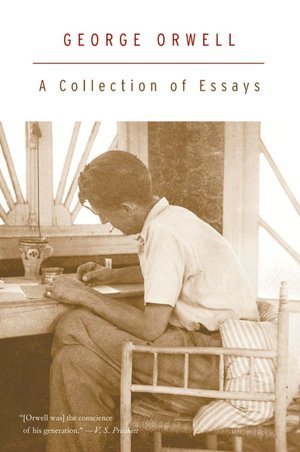
George Orwell's collected nonfiction, written in the clear-eyed and uncompromising style that earned him a critical following One of the most thought-provoking and vivid essayists of the twentieth century, George Orwell fought the injustices of his time with singular vigor through pen and paper. In this selection of essays, he ranges from reflections on his boyhood schooling and the profession of writing to his views on the Spanish Civil War and British imperialism. The pieces collected here include the relatively unfamiliar and the more celebrated, making it an ideal compilation for both new and dedicated readers of Orwell's work.

This unusual fictional memoir - in good part autobiographical - narrates without self-pity and often with humor the adventures of a penniless British writer among the down-and-outs of two great cities. The Parisian episode is fascinating for its expose of the kitchens of posh French restaurants, where the narrator works at the bottom of the culinary echelon as dishwasher, or plongeur. In London, while waiting for a job, he experiences the world of tramps, street people, and free lodging houses. In the tales of both cities we learn some sobering Orwellian truths about poverty and of society.

A generous and varied selection–the only hardcover edition available–of the literary and political writings of one of the greatest essayists of the twentieth century. Although best known as the author of Animal Farm and Nineteen Eighty-four , George Orwell left an even more lastingly significant achievement in his voluminous essays, which dealt with all the great social, political, and literary questions of the day and exemplified an incisive prose style that is still universally admired. Included among the more than 240 essays in this volume are Orwell’s famous discussion of pacifism, “My Country Right or Left”; his scathingly complicated views on the dirty work of imperialism in “Shooting an Elephant”; and his very firm opinion on how to make “A Nice Cup of Tea.” In his essays, Orwell elevated political writing to the level of art, and his motivating ideas–his desire for social justice, his belief in universal freedom and equality, and his concern for truth in language–are as enduringly relevant now, a hundred years after his birth, as ever.

This groundbreaking volume, never before published in the United States, at last introduces the interior life of George Orwell, the writer who defined twentieth-century political thought. Written as individual books throughout his career, the eleven surviving diaries collected here record Orwell’s youthful travels among miners and itinerant laborers, the fearsome rise of totalitarianism, the horrific drama of World War II, and the feverish composition of his great masterpieces Animal Farm and 1984 (which have now sold more copies than any two books by any other twentieth-century author). Personal entries cover the tragic death of his first wife and Orwell’s own decline as he battled tuberculosis. Exhibiting great brilliance of prose and composition, these treasured dispatches, edited by the world’s leading Orwell scholar, exhibit “the seeds of famous passages to come” (New Statesman) and amount to a volume as penetrating as the autobiography he would never write.

A pre-cursor to his more famous works of Animal Farm and 1984 , Keep the Aspidistra Flying is Orwell’s social commentary on capitalism’s constraints. Orwell captures the struggles of an aspiring writer with almost pitch-perfect attention to psychological detail, exploring the gulf between art and life.Gordon Comstock is a poor young man who works in a grubby London bookstore and spends his evenings shivering in a rented room, trying to write. He is determined to stay free of the “money world” of lucrative jobs, family responsibilities, and the kind of security symbolized by the homely aspidistra plant that sits in every middle-class British window.

Featuring the column Orwell wrote for the Socialist weekly Tribune (where he was the literary editor), As I Please also includes Orwell's spirited defense of English cooking, notes on the perfect cup of tea, and accounts of the difficulties with - and ultimate success of - Animal Farm.--From the 2000 edition.

This edition features George Orwell’s best-known novels—1984 and Animal Farm—with an introduction by Christopher Hitchens.In 1984, London is a grim city where Big Brother is always watching you and the Thought Police can practically read your mind. Winston Smith joins a secret revolutionary organisation called The Brotherhood, dedicated to the destruction of the Party. Together with his beloved Julia, he hazards his life in a deadly match against the powers that be. Animal Farm is Orwell’s classic satire of the Russian Revolution - an account of the bold struggle, initiated by the animals, that transforms Mr. Jones’s Manor Farm into Animal Farm - a wholly democratic society built on the credo that All Animals Are Created Equal. But are they? AUTHOR: George Orwell (1903-1950) was born in India and served with the Imperial Police in Burma before joining the Republican Army in the Spanish Civil War. Orwell was the author of six novels as well as numerous essays and nonfiction works.
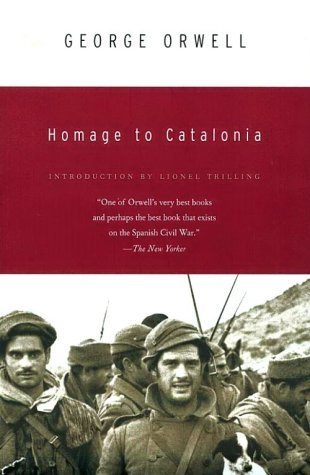
In 1936 George Orwell travelled to Spain to report on the Civil War and instead joined the fight against the Fascists. This famous account describes the war and Orwell’s own experiences. Introduction by Lionel Trilling.

Set in the days of the Empire, with the British ruling in Burma, Orwell's book describes corruption and imperial bigotry. Flory, a white timber merchant, befriends Dr Veraswami, a black enthusiast for the Empire, whose downfall can only be prevented by membership at an all-white club.

George Bowling, the hero of Orwell's comic novel, is a middle-aged insurance salesman who lives in an average English suburban row house with a wife and two children. One day, after winning some money from a bet, he goes back to the village where he grew up, to fish for carp in a pool he remembers from thirty years before. The pool, alas, is gone, the village has changed beyond recognition, and the principal event of his holiday is an accidental bombing by the RAF.
Whether puncturing the lies of politicians, wittily dissecting the English character or telling unpalatable truths about war, Orwell's timeless, uncompromising essays are more relevant, entertaining and essential than ever in today's era of spin.Contents:"Why I Write", first published 1946"The Lion and the Unicorn", first published 1940"A Hanging", first published 1931"Politics and the English Language", first published 1946
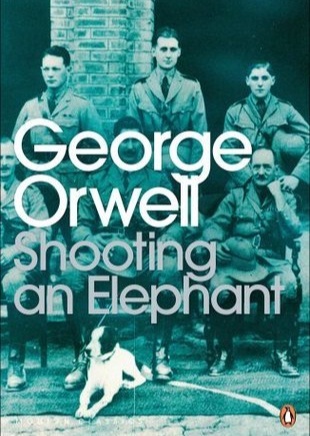
This is an alternate cover edition of Shooting an Elephant."Shooting an Elephant" is Orwell's searing and painfully honest account of his experience as a police officer in imperial Burma; killing an escaped elephant in front of a crowd 'solely to avoid looking a fool'. The other masterly essays in this collection include classics such as "My Country Right or Left", "How the Poor Die" and "Such, Such were the Joys", his memoir of the horrors of public school, as well as discussions of Shakespeare, sleeping rough, boys' weeklies, and a spirited defence of English cooking. Opinionated, uncompromising, provocative, and hugely entertaining, all show Orwell's unique ability to get to the heart of any subject.

Intimidated by her father, the rector of Knype Hill, Dorothy performs her submissive roles of dutiful daughter and bullied housekeeper. Her thoughts are taken up with the costumes she is making for the church school play, by the hopelessness of preaching to the poor and by debts she cannot pay in 1930s Depression England. Suddenly her routine shatters and Dorothy finds herself down and out in London. She is wearing silk stockings, has money in her pocket and cannot remember her name. Orwell leads us through a landscape of unemployment, poverty and hunger, where Dorothy's faith is challenged by a social reality that changes her life.
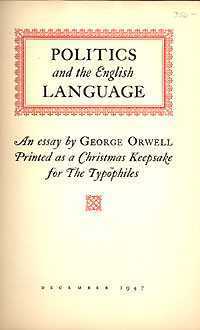
"Politics and the English Language" (1946) is an essay by George Orwell that criticises the "ugly and inaccurate" written English of his time and examines the connection between political orthodoxies and the debasement of language. The essay focuses on political language, which, according to Orwell, "is designed to make lies sound truthful and murder respectable, and to give an appearance of solidity to pure wind." Orwell believed that the language used was necessarily vague or meaningless because it was intended to hide the truth rather than express it.

Books v. Cigarettes --- Bookshop Memories --- Confessions of a Book Reviewer--- The Prevention of Literature --- My Country Right or Left --- How the Poor Die ---Such, Such Were the Joys.Beginning with a dilemma about whether he spends more money on reading or smoking, George Orwell's entertaining and uncompromising essays go on to explore everything from the perils of second-hand bookshops to the dubious profession of being a critic, from freedom of the press to what patriotism really means.

In this essay, Orwell discusses the notion of nationalism, and argues that it causes people to disregard common sense and become more ignorant towards factuality. Orwell shows his concern for the social state of Europe, and in a broader sense, the entire world, due to an increasing amount of influence of nationalistic sentiment occurring throughout a large number of countries.

"As I write, highly civilized human beings are flying overhead, trying to kill me." So starts this 1941 essay in which Orwell argues that the outdated British class system was hampering the war effort, and that in order to defeat Hitler, Britain needed a socialist revolution. (Source: http://en.wikipedia.org/wiki/The_Lion...)Part I: England Your EnglandPart II: Shopkeepers at WarPart III: The English Revolution

'The feeling that the very concept of objective truth is fading out of the world ... this prospect frightens me much more than bombs'On the 70th anniversary of George Orwell's death, a new collection of his brilliant essays written during the Second World WarFascism and Democracy collects five brilliant examples of Orwell's writing during the darkest days of World War Two. Grappling with the principles of democracy and the potential of reform, the meaning of literature and free speech in times of violence, and the sustainability of objective truth, Orwell offers a compelling portrayal of a nation where norms and ideals can no longer be taken for granted. Like the best of Orwell's writing, these essays also serve as timeless reminders of the fragility of freedom.

George Orwell might be best remembered for ANIMAL FARM and 1984, but it was his essays that launched him. In them he not only demonstrated how he thought, but proposed a rule as to how thinking ought to proceed. Tracing his arguments and their development in these essays is a rich and rewarding exercise. The range of Orwell's interests was limitless, and a glance at the titles of some of his subjects in this book gives us an idea..."Shooting an Elephant," "Lear, Tolstoy and the Fool" and "England Your England." "Orwell requires of himself that he think his way through things using truthfulness as his only star. His contribution to our culture came during a desperate era, and helped us navigate the trackless post-war years." (B-O-T Editorial Review Board)

Animal farm / novel by George Orwell --From The rise and fall of the Soviet Union / history by Michael Kort --The Stalin epigram / poem by Osip Mandelstam --The rebellion of the magical rabbits / short story by Ariel Dorfman --Crow song / poem by Margaret Atwood --Harrison Bergeron / short story by Kurt Vonnegut, Jr. --The birds / short story by Daphne du Maurier.

As a critic, George Orwell cast a wide net. Equally at home discussing Charles Dickens and Charlie Chaplin, he moved back and forth across the porous borders between essay and journalism, high art and low. A frequent commentator on literature, language, film, and drama throughout his career, Orwell turned increasingly to the critical essay in the 1940s, when his most important experiences were behind him and some of his most incisive writing lay ahead. All Art Is Propaganda follows Orwell as he demonstrates in piece after piece how intent analysis of a work or body of work gives rise to trenchant aesthetic and philosophical commentary."how to be interesting, line after line."Contents:Charles DickensBoys' WeekliesInside the WhaleDrama Reviews: The Tempest, The Peaceful InnFilm Review: The Great DictatorWells, Hitler and the World StateThe Art of Donald McGillNo, Not OneRudyard KiplingT.S. EliotCan Socialists Be Happy?Benefit of Clergy: Some Notes on Salvador DaliPropaganda and Demotic SpeechRaffles and Miss BlandishGood Bad BooksThe Prevention of LiteraturePolitics and the English LanguageConfessions of a Book ReviewerPolitics vs. Literature: An Examination of Gulliver's TravelsLear, Tolstoy and the FoolWriters and LeviathanReview of The Heart of the Matter by Graham GreeneReflections on Gandhi

George Orwell Omnibus: The Complete Novels: Animal Farm, Burmese Days, A Clergyman's Daughter, Coming up for Air, Keep the Aspidistra Flying, and Nineteen Eighty-Four
by George Orwell
Rating: 4.3 ⭐
The complete novels of George Orwell in a single tome - a can't miss for fans and those new to Orwell alike!

A selection of George Orwell's prescient, clear-eyed and stimulating writing on the subjects of truth and lies. With an introduction by Alan Johnson. 'Freedom is the freedom to say that two plus two equals four. If that is granted, all else follows.' This selection of George Orwell’s writing, from both his novels and non-fiction, gathers together his thoughts on the subject of truth. It ranges from discussion of personal honesty and morality, to freedom of speech and political propaganda. Orwell’s unique clarity of thought and illuminating scepticism provide the perfect defence against our post-truth world of fake news and confusion. 'The further a society drifts from the truth, the more it will hate those that speak it.' Includes an introduction by Alan Johnson and passages from Burmese Days, The Road to Wigan Pier, Coming Up for Air, The Lion and the Unicorn, Animal Farm, Nineteen Eighty-Four, Orwell’s letters, war-time diary, criticism and essays including ‘Fascism and Democracy’, ‘Culture and Democracy’, ‘Looking Back on the Spanish War’, ‘As I Please’, ‘Notes on Nationalism’, ‘The Prevention of Literature’, ‘Politics and the English Language’ and ‘Why I Write’.

In these timeless and witty essays George Orwell explores the English love of reading about a good murder in the papers (and lament the passing of the heyday of the 'perfect' murder involving class, sex and poisoning), as well as unfolding his trenchant views on everything from boys' weeklies and naughty seaside postcards to being arrested in East End.

A brief and amazing non fiction essay by the master of language himself: George Orwell. Orwell recounts a hanging at a Burmese prison.

A collection of essays by Orwell.Contents:Why I WriteSuch, Such Were the JoysWriters and LeviathanAnti-Semitism in BritainPoetry and the MicrophoneMarrakechLooking Back on the Spanish WarInside the WhaleEngland Your England

1984 (Nineteen Eighty-Four), Animal Farm, and over 40 Other Works by George Orwell
by George Orwell
Rating: 4.4 ⭐
Big Brother is Watching YouCollected here is the ultimate Kindle edition of every full-length work by George Orwell, including the classics 1984 and Animal Farm, as well as 38 of his most notable essays and articles.Included in 1984: A George Orwell Anthology are: The complete text of all six novels, all three full-length nonfiction narratives, and 38 essays of political and literary criticism written by George Orwell, each elegantly formatted for ease of use and enjoyment on your Kindle reader. An individual, active Table of Contents for each section accessible from the Kindle "go to" feature. Perfect formatting in rich text compatible with Kindle's Text-to-Speech features. A low, can't-say-no price! The Works of George OrwellAll six novels, all three full-length nonfiction works, and thirty-eight of Orwell's most notable essays. Works included:Novels: Burmese Days (1934) A Clergyman's Daughter (1935) Keep the Aspidistra Flying (1936) Coming Up for Air (1939) Animal Farm (1945) Nineteen Eighty-Four (1949) Narrative Documentaries: Down and Out in Paris and London (1933) The Road to Wigan Pier (1937) Homage to Catalonia (1938) Over 35 Essays, including such classics as: "Shooting an Elephant" "Good Bad Books" "Politics and the English Language" "The Prevention of Literature" "Why I Write" Additional Fan ResourcesAlso included are special features for any Orwell enthusiast, including: A comprehensive list of the many film, television, and media adaptations of the works of George Orwell. Orwell in Pop Culture: works in various media inspired by Animal Farm and 1984. Glossary of Orwellian Terms: over 60 terms and neologisms coined by Orwell, from 'Big Brother' to 'versificator.'

"England Your England" is an essay written by the British author George Orwell during The Blitz of 1941 as bombers of Nazi Germany flew overhead. It is his attempt to define British culture and the British people for the rest of the world as he fears that it might soon be wiped from earth by the Nazi armies. He also states that England would not change into a fascist state and cannot unless she is thoroughly broken.The essay is in fact the first part of The Lion and the Socialism and the English Genius, published 19 January 1941, as the first volume of a series edited by T. R. Fyvel and Orwell, in the Searchlight Books published by Secker & Warburg.

George Orwell was first and foremost an essayist. From his earliest published article in 1928 to his untimely death in 1950, he produced an extraordinary array of short nonfiction that reflectedas it was for Yeats to versify or Dickens to invent."Facing Unpleasant Facts charts Orwell's development as a master of the narrative-essay form and unites classics such as "Shooting an Elephant" with lesser-known journalism and passages from his wartime diary. Whether detailing the horrors of Orwell's boyhood in an English boarding school or bringing to life the sights, sounds, and smells of the Spanish Civil War, these narrative essays weave together the personal and the political in an unmistakable style that is at once plainspoken and brilliantly complex.Contents:The SpikeClinkA HangingShooting an ElephantBookshop MemoriesMarrakechMy Country Right or LeftWar-time DiaryEngland Your EnglandDear Doktor Goebbels - Your British Friends Are Feeding Fine!Looking Back on the Spanish WarAs I Please, 1As I Please, 2As I Please, 3As I Please, 16Revenge Is SourThe Case for the Open FireThe Sporting SpiritIn Defence of English CookingA Nice Cup of TeaThe Moon Under WaterIn Front of Your NoseSome Thoughts on the Common ToadA Good Word for the Vicar of BrayWhy I WriteHow the Poor DieSuch, Such Were the Joys

All Art Is Propaganda: (Authorized Orwell Edition): A Mariner Books Classic
by George Orwell
Rating: 4.5 ⭐