
Aldous Huxley
Aldous Leonard Huxley was an English writer and philosopher. His bibliography spans nearly 50 books, including non-fiction works, as well as essays, narratives, and poems. Born into the prominent Huxley family, he graduated from Balliol College, Oxford, with a degree in English literature. Early in his career, he published short stories and poetry and edited the literary magazine Oxford Poetry, before going on to publish travel writing, satire, and screenplays. He spent the latter part of his life in the United States, living in Los Angeles from 1937 until his death. By the end of his life, Huxley was widely acknowledged as one of the foremost intellectuals of his time. He was nominated for the Nobel Prize in Literature nine times, and was elected Companion of Literature by the Royal Society of Literature in 1962. Huxley was a pacifist. He grew interested in philosophical mysticism, as well as universalism, addressing these subjects in his works such as The Perennial Philosophy (1945), which illustrates commonalities between Western and Eastern mysticism, and The Doors of Perception (1954), which interprets his own psychedelic experience with mescaline. In his most famous novel Brave New World (1932) and his final novel Island (1962), he presented his visions of dystopia and utopia, respectively.
30 Books Written

Brave New World is a dystopian social science fiction novel by English author Aldous Huxley. Largely set in a futuristic World State, whose citizens are environmentally engineered into an intelligence-based social hierarchy, the novel anticipates huge scientific advancements in reproductive technology, sleep-learning, psychological manipulation and classical conditioning that are combined to make a dystopian society which is challenged by only a single individual: the story's protagonist.

In his final novel, which he considered his most important, Aldous Huxley transports us to the remote Pacific island of Pala, where an ideal society has flourished for 120 years. Inevitably, this island of bliss attracts the envy and enmity of the surrounding world. A conspiracy is underway to take over Pala, and events are set in motion when an agent of the conspirators, a newspaperman named Faranby, is shipwrecked there. What Faranby doesn't expect is how his time with the people of Pala will revolutionize all his values and-to his amazement-give him hope.

"A genuine spiritual quest. . . . Extraordinary." — New York Times Among the most profound and influential explorations of mind-expanding psychedelic drugs ever written, here are two complete classic books— The Doors of Perception and Heaven and Hell —in which Aldous Huxley, author of Brave New World , reveals the mind's remote frontiers and the unmapped areas of human consciousness. This edition also features an additional essay, "Drugs That Shape Men's Minds," now included for the first time.
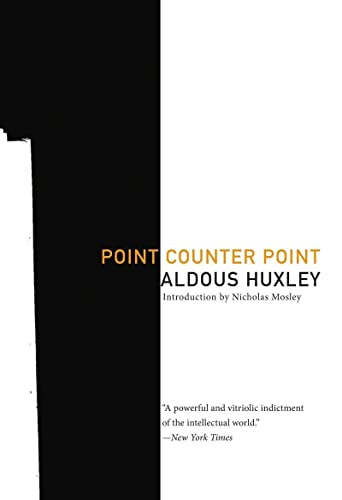
Aldous Huxley's lifelong concern with the dichotomy between passion and reason finds its fullest expression both thematically and formally in his masterpiece Point Counter Point. By presenting a vision of life in which diverse aspects of experience are observed simultaneously, Huxley characterizes the symptoms of "the disease of the modern man" in the manner of a composer--themes and characters are repeated, altered slightly, and played off one another in a tone that is at once critical and sympathetic.First published in 1928, Huxley's satiric view of intellectual life in the '20s is populated with characters based on such celebrities as D.H. Lawrence, Katherine Mansfield, Nancy Cunard, and John Middleton Murry, as well as Huxley himself.

🎧Run Time = 15 hours and 38 minutesA modernist classic from the author of Brave New World, who was hailed as “a genius” (The New Yorker): Cynical socialite Anthony Beavis searches for meaning in life — and his worldview is dramatically transformed after he joins the Mexican Revolution. “An important book” (The New York Times Book Review) performed by an Earphones Award–winning narrator!Though somewhat overshadowed by Brave New World and The Doors of Perception, Huxley’s modernist novel Eyeless in Gaza (1936) is often regarded as his finest work. The writer and historian Simon Heffer dubbed it, unequivocally, ‘his only great novel.’The plot centres on Anthony Beavis, a dilettante social theorist, a man inclined to recoil from life. The pleasures of the physical world disgust him and the universe of ideas is but a poor refuge. Having long lost the art of intimacy, he betrays friendships and toys with the affections of women. But as Beavis approaches middle age, his world of perfect detachment begins to lose its appeal. Finally realising that his withdrawal from life has been motivated not by intellectual honesty but by moral cowardice, Beavis, devastated and at crisis point, meets the remarkable and redoubtable Dr Miller.The novel’s style and setting create a unique atmosphere. Placed mainly in the inter-war years of the 20th century, the story is told in short, dated sections without following strict chronology: we encounter characters and events through fractured time, forward and backward, resulting in an unusual perspective. Eyeless in Gaza – a quotation from Milton’s Samson Agonistes – will come as an exciting, enriching surprise to many who know only the more popular Huxley. Especially in this persuasive recording by Jamie Parker.

The astonishing novel Brave New World, originally published in 1932, presents Aldous Huxley's vision of the future--of a world utterly transformed. Through the most efficient scientific and psychological engineering, people are genetically designed to be passive and therefore consistently useful to the ruling class. This powerful work of speculative fiction sheds a blazing critical light on the present and is considered to be Aldous Huxley's most enduring masterpiece.The non-fiction work Brave New World Revisited, published in 1958, is a fascinating work in which Huxley uses his tremendous knowledge of human relations to compare the modern-day world with his prophetic fantasy envisioned in Brave New World, including the threats to humanity, such as over-population, propaganda, and chemical persuasion.

When the novel Brave New World first appeared in 1932, its shocking analysis of a scientific dictatorship seemed a projection into the remote future. Here, in one of the most important and fascinating books of his career, Aldous Huxley uses his tremendous knowledge of human relations to compare the modern-day world with his prophetic fantasy. He scrutinizes threats to humanity, such as overpopulation, propaganda, and chemical persuasion, and explains why we have found it virtually impossible to avoid them. Brave New World Revisited is a trenchant plea that humankind should educate itself for freedom before it is too late. Brave New World Revisited (first published in 1958) is not a reissue or revision Brave New World. Brave New World is a novel, whereas Brave New World Revisited is a nonfiction exploration of the themes in Brave New World.

O primeiro romance de Aldous Huxley, autor de Admirável mundo novoUma crítica afiada à alta sociedade, seus luxos e interesses vaziosDenis é um jovem poeta tímido e cheio de incertezas sobre a vida. Ao chegar em Crome, no interior da Inglaterra, para passar as férias na mansão do sr. e da sra. Wimbush, se encontra com uma realidade à parte, em que pessoas ricas, escritores, jornalistas, pintores e socialites esbanjam o seu ócio pouco produtivo dia após dia.Entre horóscopos de cavalos, discussões existencialistas, flertes e um vaivém constante e desinteressado de personagens, Denis se mistura à excêntrica fauna do lugar e tenta se encaixar e se descobrir como homem e como poeta. Logo, porém, ele se dá conta de que aquelas pessoas, à primeira vista tão cultas e interessantes, possuem mentes tão caóticas quanto a dele.Em Amarelo-Cromo, publicado originalmente em 1921 mas ainda hoje atemporal, Huxley descreve como poucos a sensação de desconforto diante das extravagâncias vazias, hipocrisias e incoerências da aristocracia inglesa e, com detalhes nem sempre sutis, expõe os valores e princípios não tão admiráveis da alta sociedade.

The Perennial Philosophy is defined by its author as "The metaphysic that recognizes a divine Reality substantial to the world of things and lives and minds." With great wit and stunning intellect, Aldous Huxley examines the spiritual beliefs of various religious traditions and explains them in terms that are personally meaningful.An inspired gathering of religious writings that reveals the "divine reality" common to all faiths, collected by Aldous Huxley"The Perennial Philosophy," Aldous Huxley writes, "may be found among the traditional lore of peoples in every region of the world, and in its fully developed forms it has a place in every one of the higher religions."With great wit and stunning intellect—drawing on a diverse array of faiths, including Zen Buddhism, Hinduism, Taoism, Christian mysticism, and Islam—Huxley examines the spiritual beliefs of various religious traditions and explains how they are united by a common human yearning to experience the divine. The Perennial Philosophy includes selections from Meister Eckhart, Rumi, and Lao Tzu, as well as the Bhagavad Gita, Tibetan Book of the Dead, Diamond Sutra, and Upanishads, among many others.

In February 2108, the New Zealand Rediscovery Expedition reaches California at last. It is over a century since the world was devastated by nuclear war, but the blight of radioactivity and disease still gnaws away at the survivors. The expedition expects to find physical destruction but they are quite unprepared for the moral degradation they meet. Ape and Essence is Huxley's vision of the ruin of humanity, told with all his knowledge and imaginative genius.

In 1634 Urbain Grandier, a handsome and dissolute priest of the parish of Loudun was tried, tortured and burnt at the stake. He had been found guilty of conspiring with the devil to seduce an entire convent of nuns in what was the most sensational case of mass possession and sexual hysteria in history. Grandier maintained his innocence to the end and four years after his death the nuns were still being subjected to exorcisms to free them from their demonic bondage. Huxley's vivid account of this bizarre tale of religious and sexual obsession transforms our understanding of the medieval world.

Ljubovnyj treugolnik… Kazhetsja, dovolno banalnaja istorija. No eto ne tot sluchaj. Sjuzhet romana dejstvitelno dovolno u znamenitogo uchenogo est bozhestvennoj krasoty zhena. I molodoj talantlivyj uchenik. Konechno zhe, mezhdu uchenikom i «boginej» vspykhivaet strast. Ni k chemu khoroshemu eto privesti ne mozhet. Chego zhe esche zhdat ot ljubovnogo treugolnika? No Oldos Khaksli sumel napolnit etu istoriju glubinoj, zatronut vazhnejshie voprosy o roke i lichnom vybore, o protivostojanii emotsij razumnomu nachalu, o dolge, chesti i ljubvi.

A Hollywood millionaire with a terror of death, whose personal physician happens to be working on a theory of longevity-these are the elements of Aldous Huxley's caustic and entertaining satire on man's desire to live indefinitely. With his customary wit and intellectual sophistication, Huxley pursues his characters in their quest for the eternal, finishing on a note of horror. "This is Mr. Huxley's Hollywood novel, and you might expect it to be fantastic, extravagant, crazy and preposterous. It is all that, and heaven and hell too....It is the kind of novel that he is particularly the master of, where the most extraordinary and fortuitous events are followed by contemplative little essays on the meaning of life....The story is outrageously good."― New York Times . "A highly sensational plot that will keep astonishing you to practically the final sentence."― The New Yorker . "Mr. Huxley's elegant mockery, his cruel aptness of phrase, the revelations and the ingenious surprises he springs on the reader are those of a master craftsman; Mr. Huxley is at the top of his form." ―London Times Literary Supplement .

Antic Hay is one of Aldous Huxley's earlier novels, and like them is primarily a novel of ideas involving conversations that disclose viewpoints rather than establish characters; its polemical theme unfolds against the backdrop of London's post-war nihilistic Bohemia. This is Huxley at his biting, brilliant best: a novel, loud with derisive laughter, which satirically scoffs at all conventional morality and at stuffy people everywhere, a novel that's always charged with excitement.
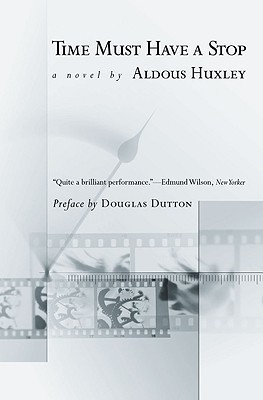
Sebastian Barnack, a handsome English schoolboy, goes to Italy for the summer, and there his real education begins. His teachers are two quite different men: Bruno Rontini, the saintly bookseller, who teaches him about things spiritual; and Uncle Eustace, who introduces him to life's profane pleasures.The novel that Aldous Huxley himself thought was his most successful at "fusing idea with story," Time Must Have a Stop is part of Huxley's lifelong attempt to explore the dilemmas of twentieth-century man and to create characters who, though ill-equipped to solve the dilemmas, all go stumbling on in their painfully serious comedies (in this novel we have the dead atheist who returns in a seance to reveal what he has learned after death but is stuck with a second-rate medium who garbles his messages).


Aldous Huxley spares no one in his ironic, piercing portrayal of a group gathered in an Italian palace by the socially ambitious and self-professed lover of art, Mrs. Aldwinkle. Here, Mrs. Aldwinkle yearns to recapture the glories of the Italian Renaissance, but her guests ultimately fail to fulfill her naive expectations. Among her entourage are: a suffering poet and reluctant editor of the "Rabbit Fanciers' Gazette" who silently bears the widowed Mrs. Aldwinkle's desperate advances; a popular novelist who records every detail of her affair with another guest, the amorous Calamy, for future literary endeavors; and an aging sensualist philosopher who pursues a wealthy yet mentally-disabled heiress. Stripping the houseguests of their pretensions, Huxley reveals the superficiality of the cultural elite. Deliciously satirical, Those Barren Leaves bites the hands of those who dare to posture or feign sophistication and is as comically fresh today as when first published.

Written in 1944 by Aldous Huxley as a Christmas gift for his niece, The Crows of Pearblossom tells the story of Mr. and Mrs. Crow, who live in a cottonwood tree. The hungry Rattlesnake that lives at the bottom of the tree has a nasty habit of stealing Mrs. Crow's eggs before they can hatch, so Mr. Crow and his wise friend, Old Man Owl, devise a sneaky plan to trick him. This funny story of cleverness triumphing over greed, similar in tone and wit to the work of A. A. Milne, shows a new side of a great writer.

Selected writings from the author of Brave New World and The Doors of Perception on the role of psychedelics in society. Includes letters and lectures by Huxley never published elsewhere. In May 1953 Aldous Huxley took four-tenths of a gram of mescaline. The mystical and transcendent experience that followed set him off on an exploration that was to produce a revolutionary body of work about the inner reaches of the human mind. Huxley was decades ahead of his time in his anticipation of the dangers modern culture was creating through explosive population increase, headlong technological advance, and militant nationalism, and he saw psychedelics as the greatest means at our disposal to "remind adults that the real world is very different from the misshapen universe they have created for themselves by means of their culture-conditioned prejudices." Much of Huxley's writings following his 1953 mescaline experiment can be seen as his attempt to reveal the power of these substances to awaken a sense of the sacred in people living in a technological society hostile to mystical revelations. Moksha, a Sanskrit word meaning "liberation," is a collection of the prophetic and visionary writings of Aldous Huxley. It includes selections from his acclaimed novels Brave New World and Island, both of which envision societies centered around the use of psychedelics as stabilizing forces, as well as pieces from The Doors of Perception and Heaven and Hell, his famous works on consciousness expansion.

Eighteen short stories from the 1920s, compiled from his earlier short story collections.

“A genius . . . a writer who spent his life decrying the onward march of the Machine.” — The New YorkerBrave New World author Aldous Huxley on enlightenment and the "ultimate reality."In this anthology of twenty-six essays and other writings, Aldous Huxley discusses the nature of God, enlightenment, being, good and evil, religion, eternity, and the divine. Huxley consistently examined the spiritual basis of both the individual and human society, always seeking to reach an authentic and clearly defined experience of the divine. Featuring an introduction by renowned religious scholar Huston Smith, this celebration of "ultimate reality" proves relevant and prophetic in addressing the spiritual hunger so many feel today.

Could drugs offer a new way of seeing the world? In 1953, in the presence of an investigator, Aldous Huxley took four-tenths of a gramme of mescalin, sat down and waited to see what would happen. When he opened his eyes everything, from the flowers in a vase to the creases in his trousers, was transformed. His account of his experience, and his vision for all that psychedelics could offer to mankind, has influenced writers, artists and thinkers around the world.The unabridged text of The Doors of Perception by Aldous HuxleyVINTAGE MINIS: GREAT MINDS. BIG IDEAS. LITTLE BOOKS.A series of short books by the world’s greatest writers on the experiences that make us humanFor the full list of books visit vintageminis.co.ukAlso in the Vintage Minis series:Drinking by John CheeverSwimming by Roger DeakinEating by Nigella LawsonDesire by Haruki Murakami

Both a document and a handbook The Art of Seeing records Aldous Huxley's victory over near-blindness and details the simple exercises anyone can follow to improve eyesight. Using the method devised by Dr. William H. Bates, "the pioneer of visual education," as Huxley called him, and heeding the advice of Dr. Bates' disciple, Margaret D. Corbett, Aldous Huxley conquered a vision problem that had plagued him for more than a quarter century.

Jacob Ericson is a shy, enigmatic, and somewhat inept ranch hand who works for crotchety Professor Carter and his crippled daughter, Sharon, on a ranch in California's Mojave Desert in the 1920s.One day he learns that his hands possess the mysterious gift of healing, a gift he uses to cure animals (whom he adores). Sharon (whom he also adores) then persuades him to heal her.When he successfully cures Sharon, his gift is quickly exploited and the boundaries of his charm and naivete begin to stretch. First he offers his healing powers for free at a church in Los Angeles - where Jacob has gone after Sharon, who fled her father and the ranch to pursue her dreams of stardom. Jacob and Sharon cross paths when they work for the same pair of exploitative showmen. Jacob stays with the seedy stage show only because Sharon is close by.It is when Jacob's gift is recruited to heal Earl Medwin, an eccentric, ailing young millionaire, that the love and security for which he has worked so hard begin to collapse.

The life of Father Joseph, Cardinal Richelieu's aide, was a shocking paradox. After spending his days directing operations on the battlefield, Father Joseph would pass the night in prayer, or in composing spiritual guidance for the nuns in his care. He was an aspirant to sainthood and a practising mystic, yet his ruthless exercise of power succeeded in prolonging the unspeakable horrors of the Thirty Years War. In his masterful biography, Huxley explores how an intensely religious man could lead such a life and how he could reconcile the seemingly opposing moral systems of religion and politics.

Aldous Huxley (1894-1963), the world-famous author of BRAVE NEW WORLD, was one of the great literary visionaries of the 20th century. The grandson of Thomas H, Huxley (Darwin's famous defender), he was born in England and educated at Eton and Oxford. He traveled widely in his youth and lived in Italy for a while in the 1920s. He began his literary career with poetry and critical essays, then turned to novels. Having been born just too late to participate in World War I, he was able, in his early works, such as CROME YELLOW (1921), ANTIC HAY (1923), THOSE BARREN LEAVES (1925), and POINT COUNTER POINT (1928), to perfectly capture a sense of purposeless aftermath which resonated strongly in British society at the time. A satirical strain already evident manifested itself spectacularly in BRAVE NEW WORLD (1932), after which much of his work began to show a fantastic or speculative cast, including AFTER MANY A SUMMER DIES THE SWAN (about immortality, 1939), TIMES MUST HAVE A STOP (1944), and APE AND ESSENCE (a dystopia, 1948). ISLAND, his last work, published in 1962, is a utopia. Late in life he developed an increasing disdain for Western society and an interest in Eastern mysticism and in the possibilities of psychedelic drugs, which he described in THE DOORS OF PERCEPTION (1954). MORTAL COILS is a short-story collection from Huxley's early period, including one of his most popular stories, "The Gioconda Smile."

Aldous Huxley's stature as one of the giants of modern English prose and of social commentary in our time is confirmed in this gathering of his distinguished stories into a single volume. Twenty-one pieces are here, including "The Gioconda Smile," "Little Mexican," "Young Archimedes," and "Chawdron." Together they offer a complete view of Huxley's work in the genre, in which he established himself as an acknowledged master.

The author recounts his experiences traveling through six countries, and offers his observations on their people, cultures, and customs

s/t: An Inquiry into the Nature of Ideals & into the Methods Employed for Their RealizationGoals, roads & contemporary starting point The nature of explanation Efficacy & limitations of large-scale social reformSocial reform & violenceThe planned society Nature of the modern stateCentralization & decentralizationDecentralization & self-governmentWar Individual work for reform InequalityEducation Religious practicesBeliefsEthics

Como decia T. S. Eliot, el lugar de Huxley en la literatura inglesa es unico y esta sin duda asegurado. En estos ensayos, con su habitual libertad y alegria, Huxley trata variados temas que abarcan desde el arte, la literatura, la musica, la ciencia, la filosofia, la religion y la historia. Un libro de una amenidad y una lucidez indiscutibles."