
Jonathan Swift
Jonathan Swift was an Anglo-Irish satirist, author, essayist, political pamphleteer (first for the Whigs, then for the Tories), poet, and Anglican cleric who became Dean of St Patrick's Cathedral, Dublin, hence his common sobriquet, "Dean Swift". Swift is remembered for works such as A Tale of a Tub (1704), An Argument Against Abolishing Christianity (1712), Gulliver's Travels (1726), and A Modest Proposal (1729). He is regarded by the Encyclopædia Britannica as the foremost prose satirist in the English language. He originally published all of his works under pseudonyms—such as Lemuel Gulliver, Isaac Bickerstaff, M.B. Drapier—or anonymously. He was a master of two styles of satire, the Horatian and Juvenalian styles. His deadpan, ironic writing style, particularly in A Modest Proposal, has led to such satire being subsequently termed "Swiftian".
32 Books Written

Regarded as the preeminent prose satirist in the English language, Jonathan Swift (1667–1745) intended this masterpiece, as he once wrote Alexander Pope, to "vex the world rather than divert it." Savagely ironic, it portrays man as foolish at best, and at worst, not much more than an ape.The direct and unadorned narrative describes four remarkable journies of ship's surgeon Lemuel Gulliver, among them, one to the land of Lilliput, where six-inch-high inhabitants bicker over trivialities; and another to Brobdingnag, a land where giants reduce man to insignificance.Written with disarming simplicity and careful attention to detail, this classic is diverse in its appeal: for children, it remains an enchanting fantasy. For adults, it is a witty parody of political life in Swift's time and a scathing send-up of manners and morals in 18th-century England.

Prose Writings. Chosen and arr. by Walter Lewin
by Jonathan Swift
This work has been selected by scholars as being culturally important, and is part of the knowledge base of civilization as we know it. This work was reproduced from the original artifact, and remains as true to the original work as possible. Therefore, you will see the original copyright references, library stamps (as most of these works have been housed in our most important libraries around the world), and other notations in the work.This work is in the public domain in the United States of America, and possibly other nations. Within the United States, you may freely copy and distribute this work, as no entity (individual or corporate) has a copyright on the body of the work.As a reproduction of a historical artifact, this work may contain missing or blurred pages, poor pictures, errant marks, etc. Scholars believe, and we concur, that this work is important enough to be preserved, reproduced, and made generally available to the public. We appreciate your support of the preservation process, and thank you for being an important part of keeping this knowledge alive and relevant.

Prose Writings of Swift
by Jonathan Swift
Some wear to cover edges and corners. Text is clean, tight and bright
Jonathan Swift’s classic essay A Modest Proposal is one of the most iconic essays ever written and is a perfect example of hyperbole and satire. A Modest Proposal for Preventing the Children of Poor People From Being a Burthen to Their Parents or Country, and for Making Them Beneficial to the Publick, commonly referred to as A Modest Proposal, is a Juvenalian satirical essay written and published anonymously by Jonathan Swift in 1729. Swift suggests that the impoverished Irish might ease their economic troubles by selling their children as food for rich gentlemen and ladies. This satirical hyperbole mocks heartless attitudes towards the poor, who were predominantly Irish Catholic, as well as British policy towards the Irish in general.
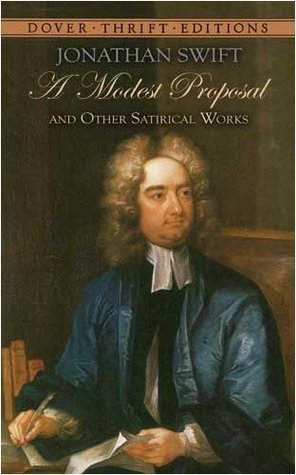
The originality, concentrated power and ‘fierce indignation’ of his satirical writing have earned Jonathan Swift a reputation as the greatest prose satirist in English literature. Gulliver’s Travels is, of course, his world renowned masterpiece in the genre; however, Swift wrote other, shorter works that also offer excellent evidence of his inspired lampoonery. Perhaps the most famous of these is A Modest Proposal, in which he straight-facedly suggests that Ireland could solve its hunger problems by using its children for food. Also included in this collection are The Battle of Books, A Meditation upon a Broomstick, A Discourse Concerning the Mechanical Operations of the Spirit and An Argument Against Abolishing Christianity in England.This inexpensive edition will certainly be welcomed by teachers and students of English literature, but its appeal extends to any reader who delights in watching a master satirist wield words as weapons.

Ted Danson reads the official tie-in to Hallmark Entertainments NBC-TV television event!Imagine the greatest adventure of all time....Rediscover the immortal story of Lemuel Gulliver and his fantastic voyage. Join him on his journey to the land of the six-inch-high Lilliputians...and into the royal court of the sixty-foot-tall Brobdingnagians. Ascend with him to the flying island of Laputa, whose inhabitants are endowed with uncommon intelligence, but no common sense at all. And follow him into the world of the Houyhnhnms, a race of civilized horses -- lords and masters of the brutish human Yahoos. The tale of a lifetime, "Gulliver's Travels" is filled with action, romance, danger, satirical wit, timeless wisdom, and the high drama only a classic of this caliber can convey. Set sail!
Enduring Literature Illuminated by Practical Scholarship By turns a children's fantasy and a social satire for adults, Gulliver's Travels is one of the most popular adventure tales of all time. "A Modest Proposal," also an imaginative, enduring work, is political lampoonery at its finest. This Enriched Classic Edition includes: A concise introduction that gives readers important background information A chronology of the author's life and work A timeline of significant events that provides the book's historical context An outline of key themes and plot points to help readers form their own interpretations Detailed explanatory notes Critical analysis, including contemporary and modern perspectives on the work Discussion questions to promote lively classroom and book group interaction A list of recommended related books and films to broaden the reader's experience Enriched Classics offer readers affordable editions of great works of literature enhanced by helpful notes and insightful commentary. The scholarship provided in Enriched Classics enables readers to appreciate, understand, and enjoy the world's finest books to their full potential. Series edited by Cynthia Brantley Johnson

'A Tale of a Tub' was the first big work written by Jonathan Swift. It is arguably his most difficult satire, and perhaps his most masterly. The Tale is a prose parody which is divided into sections of "digression" and a "tale" of three brothers, each representing one of the main branches of western Christianity. Composed between 1694 and 1697, it was eventually published in 1704.'A Tale' was long regarded as a satire on religion itself, and has famously been attacked for that, starting with William Wotton. The "tale" presents a consistent satire of religious excess, while the digressions are a series of parodies of contemporary writing in literature, politics, theology, Biblical exegesis, and medicine. The overarching parody is of enthusiasm, pride, and credulity. At the time it was written, politics and religion were still linked very closely in England, and the religious and political aspects of the satire can often hardly be separated. It was enormously popular, but Swift believed it damaged his prospect of advancement in the Church of England.
This volume includes "The Battle of the Books" and "The Mechanical Operation of the Spirit," both which accompanied "A Tale of a Tub" on its first publication in 1704.

Barron's brand new series of Classic Novels present complete, unabridged editions of six literary masterworks -- titles frequently taught as part of high school English curricula. However, all books in this series contain far more than simple text. Each title also gives students -- -- An illustrated introduction that places the novel and it author within the larger context of world history and literature-- Glossary notes on every page that explain unfamiliar words and phrases-- Running commentaries that summarize the narrative's action in sentence or two, located either at the start of each chapter or at the bottom of each page-- Fast Forward and Rewind features -- time savers that allow readers the option of skim-reading parts of the text without losing the story's sense-- A concluding chapter-by-chapter study guide that analyzes the novel and points out details that students should understand and rememberEdited by experienced educators, Barron's Classic Novels offer an entirely original approach to great works of American and English literature. These volumes serve as ideal classroom textbooks, and help to make many of the world's great novels approachable and enjoyable to students.

"The Battle of the Books" is the name of a short satire written by Jonathan Swift and published as part of the prolegomena to his A Tale of a Tub in 1704. It depicts a literal battle between books in the King's Library (housed in St James's Palace at the time of the writing), as ideas and authors struggle for supremacy. Because of the satire, "The Battle of the Books" has become a term for the Quarrel of the Ancients and the Moderns. It is one of his earliest well-known works.
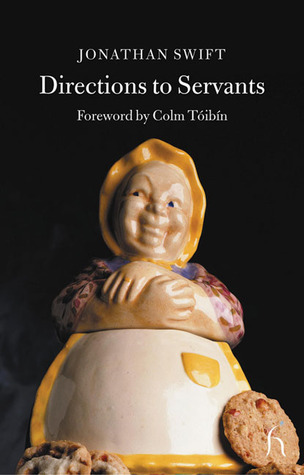
Directions to Servants is one of Jonathan Swift’s last completed works. It displays all his caustic skill as a satirist and his unerring eye for the little annoyances of life. Taking the form of a handbook of manners, and addressed to each servant individually, Directions to Servant s is the ultimate upstairs/downstairs battle. With scathing wit, Swift pits master against servant in an endless struggle for order, frugality, and the best bits of the roast. His servants are lazy, profligate, and acquisitive—always on the lookout for a shilling to be made on the sale of leftovers, or a half-bottle of wine to share with the cook. Written in Swift’s final years of sanity, Directions to Servants is a last hilarious outpouring of cynicism at a lifetime’s accumulation of poor service. Irish clergyman and satirist Jonathan Swift is best remembered for his philosophical parody Gulliver’s Travels.

This work has been selected by scholars as being culturally important, and is part of the knowledge base of civilization as we know it. This work was reproduced from the original artifact, and remains as true to the original work as possible. Therefore, you will see the original copyright references, library stamps (as most of these works have been housed in our most important libraries around the world), and other notations in the work.This work is in the public domain in the United States of America, and possibly other nations. Within the United States, you may freely copy and distribute this work, as no entity (individual or corporate) has a copyright on the body of the work.As a reproduction of a historical artifact, this work may contain missing or blurred pages, poor pictures, errant marks, etc. Scholars believe, and we concur, that this work is important enough to be preserved, reproduced, and made generally available to the public. We appreciate your support of the preservation process, and thank you for being an important part of keeping this knowledge alive and relevant.

The Adventure Collection: Treasure Island, The Jungle Book, Gulliver's Travels, White Fang, The Merry Adventures of Robin Hood
by Jonathan Swift
Rating: 4.2 ⭐
Find the classics of adventure literature Contents : Treasure Island The Jungle Book Gulliver's Travels White Fang The Merry Adventures of Robin Hood

Note: The University of Adelaide Library eBooks @ Adelaide.

The Writings of Jonathan Swift: Authoritative Texts, Backgrounds, Criticism
by Jonathan Swift
Rating: 4.3 ⭐
Backgrounds includes correspondence between Swift and members of his circle and observations by his contemporaries Criticism offers evaluations by Norman O. Brown, Samuel Holt Monk, Allan Bloom, Nigel Dennis, Edward W. Rosenheim, Jr., A. E. Dyson, William Frost, C. J. Rawson, Kathleen Williams, Martin Price, Robert M. Adams, and Jay Arnold Levine An Annotated Bibliography guides the reader to important works for further study.

Se considera a la sátira como el más simple de todos los juicios. Pero para mí resulta ser todo lo contrario en tiempos tan malos: es tan difícil satirizar bien a un hombre que se distingue por sus vicios, como elogiar correctamente a uno que se distingue por sus virtudes.

Leather spine with decorative gilt design and lettering on spine
A satire portraying a literal battle between books in the St. James library, together with fifteen other pieces

What is the nature, essence, and definition of a fart? What are the consequences and disadvantages of suppressing one? Why is farting considered to be a taboo? Swift's treatise argues eloquently, in a forceful and posteriori fashion, that most of the distempers thought to affect the fairer sex are due to flatulences not adequately vented. To complete the excursus into this venerable and age-old human activity, Charles James Fox's "Essay upon Wind" provides a detailed analysis, classification, and history of farting, peppered with wit and curious anecdotes about particularly eminent and historic farters.
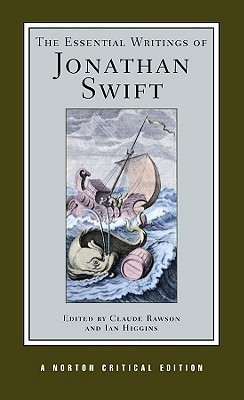
This Norton Critical Edition is the fullest single-volume collection of Jonathan Swift's writings, encompassing not only the major prose satires― A Tale of the Tub , Gulliver’s Travels , and A Modest Proposal ―but also a large number of other works, including his most important poems and political writings. The texts are accompanied by detailed explanatory annotations by Ian Higgins, thirty illustrations, and a full introduction by Claude Rawson. This is an indispensable edition for scholar and student alike. “Contexts” features a generous selection of contemporary materials, among them Swift's letters, autobiographical documents, and personal writings.“Criticism” provides readers with a wide chronological and thematic range of scholarly interpretations, divided into two sections. The first, “1745–1940,” includes assessments by Henry Fielding, Samuel Johnson, Samuel Taylor Coleridge, William Makepeace Thackeray, D. H. Lawrence, W. B. Yeats, F. R. Leavis, and André Breton, among others. The second, “After 1940,” is by subject and collects critical discussions of A Tale of the Tub , the poems, the English and Irish politics, and Gulliver’s Travels , by Hugh Kenner, Marcus Walsh, Irvin Ehrenpreis, Penelope Wilson, Derek Mahon, S. J. Connolly, George Orwell, R. S. Crane, Jenny Mezciems, Ian Higgins, and Claude Rawson.A Chronology and Selected Bibliography are also included. 1 map, illustrations

Este volumen recoge dos opúsculos deliciosos sobre la mentira y sus proverbiales vínculos con la política y los políticos. Pese a que fueron escritos en el siglo XVIII, en plena época de "las luces", lo que Swift y Condorcet exponen en sus respectivos escritos no ha perdido un ápice de su vigencia, tal como lo demuestra la práctica de la política contemporánea. Pues, como dice Swift en su acuerdo ensayo, "la mentira política es el arte de hacer creer al pueblo falsedades saludables y hacerlo a buen fin".

This authoritative edition brings together a unique selection from the full range of Swift's fifty-year career--prose, poetry, and letters--to give the essence of his work and thinking. Jonathan Swift (1667-1745) is best known as the author of Gulliver's Travels, which alone would have secured his place in the history of English literature. But in addition to this classic fictional satire, Swift wrote numerous works concerning politics, religion, and Ireland, some savage, others humorous, all suffused with his tremendous wit and inventiveness. This anthology includes satirical works such as A Tale of a Tub and The Battle of the Books, political pamphlets, pieces for the popular press, poems, and a generous selection from Swift's correspondence. Presented chronologically, the anthology offers a new and clearer awareness of the unity as well as the complexity of Swift's vision, andthe powerful bonds between disparate pieces.

In this critically acclaimed compendium of 11 outrageous commentaries and tales by the English language’s greatest satirist, Jonathan Swift reflects on the absurdity of organized religion, classical versus modern literature, astrological predictions, eating children, and other tantalizing topics.

Celtic Poets breathes vitality into the works of Swift, Burns, Wilde, and more. Cosham's finely honed delivery brings verdant valleys, quaint villages, and drunkards' and maidens' conversations to listeners' ears. What is not to love?!
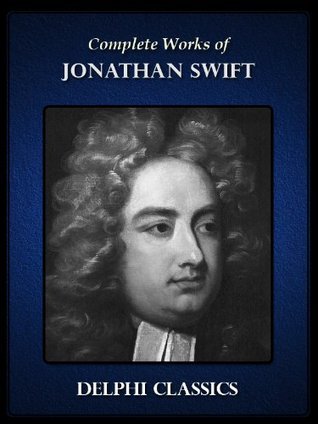
Jonathan Swift, the essayist, political pamphleteer, poet and cleric, is widely regarded as the foremost prose satirist of the English language, whose satirical novel ‘Gulliver's Travels’ remains one of the most enduring classics of English literature. This comprehensive eBook presents the complete works of Jonathan Swift, with numerous illustrations, informative introductions and the usual Delphi bonus material. (Version 1) * Beautifully illustrated with images relating to Swift's life and works * Concise introductions to the satires and other works * Images of how the books were first printed, giving your eReader a taste of the original texts * Excellent formatting of the texts * GULLIVER’S TRAVELS is illustrated with contemporary illustrations * Provides both the adapted 1726 and the authoritative 1735 versions of GULLIVER’S TRAVELS * Rare satires appearing for the first time in digital print * An exhaustive offering of political, religious and journalism works * Special chronological and alphabetical contents tables for the poetry * Easily locate the poems you want to read * Includes Swift's letters to ‘Stella’ - spend hours exploring the author’s personal correspondence * Features two biographies - discover Swift's literary life * Scholarly ordering of texts into chronological order and literary genres Please some obscure poems cannot appear in this eBook, being the result of more recent scholarship and so protected by copyright. Once these works enter the public domain, they will be added to the eBook as a free update. The Satires A TALE OF A TUB THE BATTLE OF THE BOOKS THE BICKERSTAFF-PARTRIDGE PAPERS THE SWEARER’S BANK GULLIVER’S TRAVELS, 1726 GULLIVER’S TRAVELS, 1735 A MODEST PROPOSAL AN EXAMINATION OF CERTAIN ABUSES A COMPLETE COLLECTION OF GENTEEL AND INGENIOUS CONVERSATION DIRECTIONS TO SERVANTS MINOR SATIRES The Sermons THREE SERMONS BROTHERLY LOVE AND OTHER SERMONS Other Religious Works LIST OF RELIGIOUS WORKS The Political Works DRAPIER’S LETTERS LIST OF POLITICAL WORKS The Historical Works THE HISTORY OF THE FOUR LAST YEARS OF THE QUEEN AN ABSTRACT OF THE HISTORY OF ENGLAND REMARKS ON THE CHARACTERS OF THE COURT OF QUEEN ANNE REMARKS ON LORD CLARENDON’S “HISTORY OF THE REBELLION” REMARKS ON BISHOP BURNET’S “HISTORY OF HIS OWN TIME” NOTES ON THE “FREEHOLDER” The Journalism CONTRIBUTIONS TO ‘THE TATLER’ CONTRIBUTIONS TO ‘THE EXAMINER’ CONTRIBUTION TO ‘THE SPECTATOR’ CONTRIBUTIONS TO ‘THE INTELLIGENCER’ The Poetry Collection THE POEMS OF JONATHAN SWIFT The Poems LIST OF POEMS IN CHRONOLOGICAL ORDER LIST OF POEMS IN ALPHABETICAL ORDER The Memoir A JOURNAL TO STELLA The Biographies SKETCH OF THE LIFE OF DR. JONATHAN SWIFT by R. Phillips DEAN SWIFT by James McGee
A Meditation Upon a Broomstick is a satire and parody written by Jonathan Swift in 1701. Edmund Curll, in an attempt to antagonize and siphon off money from Swift, published it in 1710.Jonathan Swift was an Irish author and satirist. Best known for writing Gulliver's Travels, he was dean of St. Patrick's Cathedral in Dublin. Born on November 30, 1667, Irish author, clergyman and satirist Jonathan Swift grew up fatherless. Under the care of his uncle, he received a bachelor's degree from Trinity College and then worked as a statesman's assistant. Eventually, he became dean of St. Patrick's Cathedral in Dublin. Most of his writings were published under pseudonyms. He best remembered for his 1726 book Gulliver's Travels. Irish author and satirist Jonathan Swift was born in Dublin, Ireland on November 30, 1667. His father, an attorney, also named Jonathan Swift, died just two months before he arrived. Without steady income, his mother struggled to provide for her newborn. Moreover, Swift was a sickly child. It was later discovered that he suffered from Meniere's Disease, a condition of the inner ear that leaves the afflicted nauseous and hard of hearing. In an effort to give her son the best upbringing possible, Swift's mother gave him over to Godwin Swift, her late husband's brother and a member of the respected professional attorney and judges group Gray's Inn. Godwin Swift enrolled his nephew in the Kilkenny Grammar School (1674-1682), which was perhaps the best school in Ireland at the time. Swift's transition from a life of poverty to a rigorous private school setting proved challenging. He did, however, make a fast friend in William Congreve, the future poet and playwright. At age 14, Swift commenced his undergraduate studies at Trinity College in Dublin. In 1686, he received a Bachelor of Arts degree, and went on to pursue a master's. Not long into his research, huge unrest broke out in Ireland. The king of Ireland, England and Scotland was soon to be overthrown. What became known as the Glorious Revolution of 1688 spurred Swift to move to England and start anew. His mother found a secretary position for him under the revered English statesman, Sir William Temple. For 10 years, Swift worked in Surrey's Moor Park and acted as an assistant to Temple, helping him with political errands, and also in the researching and publishing of his own essays and memoirs. Temple was impressed by Swift's abilities and after a time, entrusted him with sensitive and important tasks. During his decade of work for Temple, Swift returned to Ireland twice. On a trip in 1695, he took all necessary requirements to become an ordained priest in the Anglican tradition. Under Temple's influence, he also began to write, first short essays and then a manuscript for a later book. In 1699, Temple died. Swift completed the task of editing and publishing his memoirs--not without disputes by several of Temple's family members--and then, grudgingly, accepted a less prominent post as secretary and chaplain to the Earl of Berkeley. After making the long journey to the Earl's estate, Swift was informed the position had been filled. Discouraged but resourceful, he leaned on his priestly qualifications and found work ministering to a pea-sized congregation just 20 miles outside of Dublin. For the next 10 years, he gardened, preached and worked on the house provided to him by the church. He also returned to writing. His first political pamphlet was titled A Discourse on the Contests and Dissentions in Athens and Rome.

Numerous poems reflecting the satire and humanity of Swift's prose

A satiric poem about a prostitute going to bed. It explores with great wit the grossness of artifciality.

A Tale of a Tub: The Battle of the Books – The Mechanical Operation of the Spirit. Edited by Frank H. Ellis
by Jonathan Swift
Rating: 3.6 ⭐
Samuel Johnson, who did not like Swift, said that A Tale of a Tub «exhibits a vehemence and rapidity of mind, a copiousness of images, and vivacity of diction such as he afterwards never possessed or never exerted.» And in his old age «looking over the Tale,» Swift called out to Mrs. Whiteway, «Good God! What a genius I had when I wrote that book!»Harold Bloom says that A Tale of a Tub «is one of the handful of totally original works in the language.» This new edition presents the work as «an amazing comic book» which puts it in a class with Rabelais’ Pantagruel . Both of these works became banned books, greatly increasing the sales. In this edition for the first time the Narrator of the text is discovered to be an authentic comic-pathetic character, with cropped ears, ill-cured syphilis, and suicidal impulses, waiting to be admitted to Bedlam, the new insane asylum, as a terminal patient. This edition is also the first to recognize that the text of A Tale of a Tub is a mosaic, composed of quotations from other texts, which incidentally accounts for the necessity of many end notes.
Verses on the death of Dr. Swift. Occasioned by reading the following maxim in Rochfoucault. Written by himself; Nov. 1731.
by Jonathan Swift
Rating: 3.5 ⭐
The 18th century was a wealth of knowledge, exploration and rapidly growing technology and expanding record-keeping made possible by advances in the printing press. In its determination to preserve the century of revolution, Gale initiated a revolution of its digitization of epic proportions to preserve these invaluable works in the largest archive of its kind. Now for the first time these high-quality digital copies of original 18th century manuscripts are available in print, making them highly accessible to libraries, undergraduate students, and independent scholars.Western literary study flows out of eighteenth-century works by Alexander Pope, Daniel Defoe, Henry Fielding, Frances Burney, Denis Diderot, Johann Gottfried Herder, Johann Wolfgang von Goethe, and others. Experience the birth of the modern novel, or compare the development of language using dictionaries and grammar discourses.++++The below data was compiled from various identification fields in the bibliographic record of this title. This data is provided as an additional tool in helping to insure edition ++++Cambridge University LibraryT203137"One of a series of piratical reprints" (Foxon).[London] : Dublin, re-printed, and sold by the booksellers of London and Westminster, [1740?]. 12p.,plate ; 8°
Born of English parents in Dublin, Ireland, in 1667, Jonathan Swift lived in a time of unprecedented political and intellectual change, and his career and writing bear the marks of these momentous changes. Although his professional life centered on the Church of England, it was his brilliance as a writer that brought him, briefly, into the center of power as chief publicist for the Tory regime. With the dissolution of the Harley regime, however, Swift was "exiled" back to Ireland, where he spent the remaining decades of his life as Dean of St. Patrick's Cathedral.