
Rainer Maria Rilke
A mystic lyricism and precise imagery often marked verse of German poet Rainer Maria Rilke, whose collections profoundly influenced 20th-century German literature and include The Book of Hours (1905) and The Duino Elegies (1923). People consider him of the greatest 20th century users of the language. His haunting images tend to focus on the difficulty of communion with the ineffable in an age of disbelief, solitude, and profound anxiety — themes that tend to position him as a transitional figure between the traditional and the modernist poets. His two most famous sequences include the Sonnets to Orpheus , and his most famous prose works include the Letters to a Young Poet and the semi-autobiographical The Notebooks of Malte Laurids Brigge . He also wrote more than four hundred poems in French, dedicated to the canton of Valais in Switzerland, his homeland of choice.
31 Books Written
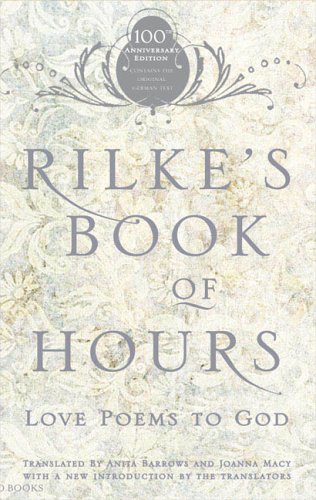
While visiting Russia in his twenties, Rainer Maria Rilke, one of the twentieth century's greatest poets, was moved by a spirituality he encountered there. Inspired, Rilke returned to Germany and put down on paper what he felt were spontaneously received prayers. Rilke's Book of Hours is the invigorating vision of spiritual practice for the secular world, and a work that seems remarkably prescient today, one hundred years after it was written. Rilke's Book of Hours shares with the reader a new kind of intimacy with God, or the divine--a reciprocal relationship between the divine and the ordinary in which God needs us as much as we need God. Rilke influenced generations of writers with his Letters to a Young Poet, and now Rilke's Book of Hours tells us that our role in the world is to love it and thereby love God into being. These fresh translations rendered by Joanna Macy, a mystic and spiritual teacher, and Anita Barrows, a skilled poet, capture Rilke's spirit as no one has done before.
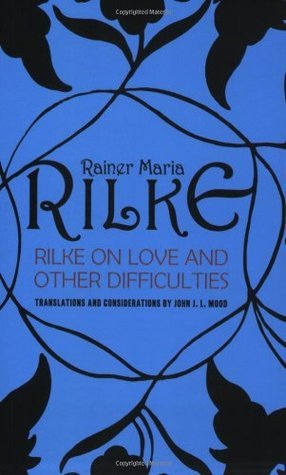
Rilke on Love and Other Difficulties: Translations and Considerations
by Rainer Maria Rilke
Rating: 4.2 ⭐
• 2 recommendations ❤️
Here is a mini-anthology of poetry and prose for both aficionados and those readers discovering Rainer Maria Rilke for the first time. John J. L. Mood has assembled a collection of Rilke's strongest work, presenting commentary along with the selections. Mood links into an essay passages from letters that show Rilke's profound understanding of men and women and his ardent spirituality, rooted in the senses.Combining passion and sensitivity, the poems on love presented here are often not only sensual but sexual as well. Others pursue perennial themes in his work—death and life, growth and transformation. The book concludes with Rilke's reflections on wisdom and openness to experience, on grasping what is most difficult and turning what is most alien into that which we can most trust.

An Unabridged, Unaltered Edition with All Ten Letters, to include three poems from The Book of Pictures: Kings In Legends, The Knight & The Woman Who Loves -
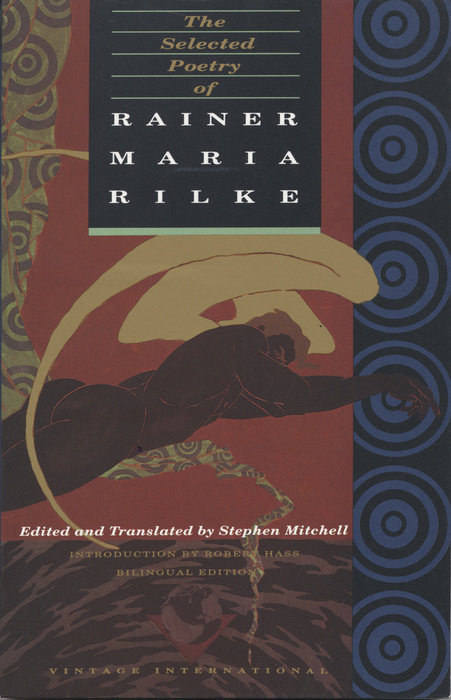
Parallel German text and English translation.The influence and popularity of Rilke’s poetry in America have never been greater than they are today, more than fifty years after his death. Rilke is unquestionably the most significant and compelling poet of romantic transformation, of spiritual quest, that the twentieth century has known. His poems of ecstatic identification with the world exert a seemingly endless fascination for contemporary readers.In Stephen Mitchell’s versions, many readers feel that they have discovered an English rendering that captures the lyric intensity, fluency, and reach of Rilke’s poetry more accurately and convincingly than has ever been done before.Mr. Mitchell is impeccable in his adherence to Rilke’s text, to his formal music, and to the complexity of his thoughts; at the same time, his work has authority and power as poetry in its own right. Few translators of any poet have arrived at the delicate balance of fidelity and originality that Mr. Mitchell has brought off with seeming effortlessness.Originally published: New York : Random House, 1982.

We have a marvelous, almost legendary image of the circumstances in which the composition of this great poem began. Rainer Maria Rilke was staying at Duino Castle, on a rocky headland of the Adriatic Sea near Trieste. One morning he walked out onto the battlements and climbed down to where the cliffs dropped sharply to the sea. From out of the fierce wind, Rilke seemed to hear a voice: Wer, wenn ich schriee, horte mich denn aus der Engel Ordnungen? (If I cried out, who would hear me up there, among the angelic orders?). He wrote these words, the opening of the first Duino Elegy, in his notebook, then went inside to continue what was to be his major opus—completely only after another ten, tormented years of effort—and one of the literary masterpieces of the century. Duino Elegies speaks in a voice that is both intimate and majestic on the mysteries of human life and our attempt, in the words of the translator David Young, “to use our self-consciousness to some advantage: to transcend, through art and the imagination, our self-deception and our fear.”
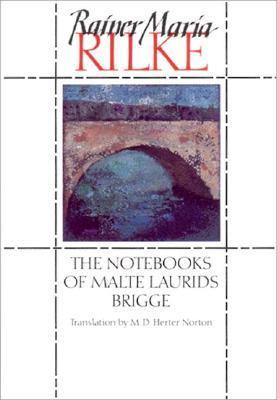
The Notebooks of Malte Laurids Brigge is Rilke’s major prose work and was one of the earliest publications to introduce him to American readers. The very wide audience which Rilke’s work commands today will welcome the reissue in paperback of this extremely perceptive translation of the Notebooks by M. D. Herter Norton. A masterly translation of one of the first great modernist novels by one of the German language's greatest poets, in which a young man named Malte Laurids Brigge lives in a cheap room in Paris while his belongings rot in storage. Every person he sees seems to carry their death within them and with little but a library card to distinguish him from the city's untouchables, he thinks of the deaths, and ghosts, of his aristocratic family, of which he is the sole living descendant. Suffused with passages of lyrical brilliance, Rilke's semi-autobiographical novel is a moving and powerful coming-of-age story.

One of the literary masterpieces of the century, this translation is now presented with facing-page German. To Rilke himself the Sonnets to Orpheus were "perhaps the most mysterious in the way they came up and entrusted themselves to me, the most enigmatic dictation I have ever held through and achieved; the whole first part was written down in a single breathless act of obedience, between the 2nd and 5th of February, without one word being doubtful or having to be changed." With facing-page German.

Rilke is one of the most widely read poets of the 20th century. In his poetry, Rilke addresses the problems of death, God, and "destructive time," and attempts to overcome and transform these problems into an indestructive inner world.

For the past twenty-five years, North Point Press has been working with Edward Snow, “Rilke’s best contemporary translator” (Brian Phillips, The New Republic ), to bring into English Rilke’s major poetic works. The Poetry of Rilke —the single most comprehensive volume of Rilke’s German poetry ever to be published in English—is the culmination of this effort. With more than two hundred and fifty selected poems by Rilke, including complete translations of the Sonnets to Orpheus and the Duino Elegies , The Poetry of Rilke spans the arc of Rilke’s work, from the breakthrough poems of The Book of Hours to the visionary masterpieces written only weeks before his death. This landmark bilingual edition also contains all of Snow’s commentaries on Rilke, as well as an important new introduction by the award-winning poet Adam Zagajewski. The Poetry of Rilke will stand as the authoritative single-volume translation of Rilke into English for years to come.

From the author of Letters to a Young Poet, one of the greatest letter collections of all time, comes a new selection of the great poet's writings to bereaved friends and acquaintances, reflecting on death and dying, providing comfort in a time of grief.Gleaned from Rainer Maria Rilke's voluminous, never-before-translated correspondence, this book collects the poet's best writings on grief and loss in one place for the first time. The result is a profound vision of the mourning process and a meditation on death's place in our lives, as well as a compilation of sensitive and moving expressions of consolation and condolence. Following the format of Rilke's classic, Letters to a Young Poet, this volume arranges a series of letters to Rilke's mourning friends, composed into a continuous, uninterrupted sequence, showcasing the full range of Rilke's thoughts on finding meaning and, perhaps, some form of comfort in the process of grieving.

Now substantially revised by Edward Snow, whom Denise Levertov once called "far and away Rilke's best translator," this bilingual edition of The Book of Images contains a number of the great poet's previously untranslated pieces. Also included are several of Rilke's best-loved lyrics, such as "Autumn," "Childhood," "Lament," "Evening," and "Entrance."

Composed in 1899 when Rilke was only twenty-three, the interconnected tales of Stories of God were inspired by a trip to Russia the young poet had made the year previously. It is said that the vastness of the Russian landscape and the profound spirituality he perceived in the simple people he met led him to an experience of finding God in all things, and to the conviction that God seeks to be known by us as passionately as we might seek to know God.All the great themes of Rilke's later powerful and complex poetry can be found in the Stories of God , yet their charming, folktale-like quality has made them among the most accessible of Rilke's works, beloved by all ages.

"[This collection] says more about art than any other book I know...These letters distill for the reader the essence of what a painting truly is...The greatness of Cézanne could be conveyed only by an artist equally great."--HOWARD MOSS, The New YorkerVirtually every day in the fall of 1907, Rainer Maria Rilke returned to a Paris gallery to view a Cézanne exhibition. Nearly as frequently, he wrote dense and joyful letters to his wife, Clara Westhoff, expressing his dismay before the paintings and his ensuing revelations about art and life.Rilke was knowledgeable about art and had even published monographs, including a famous study of Rodin that inspired his New Poems. But Cézanne's impact on him could not be conveyed in a traditional essay. Rilke's sense of kinship with Cézanne provides a powerful and prescient undercurrent in these letters -- passages from them appear verbatim in Rilke's great modernist novel, The Notebooks of Malte Laurids Brigge. Letters on Cézanne is a collection of meaningfully private responses to a radically new art."Rilke makes the feeling and views around great art real, weaving into his letters the indescribable thing that gives us beauty, truth, pleasure."--HELEN FRANKENTHALER, Art & Antiques"[These letters] are themselves extraordinarily peaceful and concentrated, seeping with the sense and recognition of Cézanne's colors, in nature as on canvas, colors which seem a part of Rilke himself, of the words and paper."--JOHN BAYLEY, The New York Review of Books

The reputation of Rainer Maria Rilke has grown steadily since his death in 1926; today he is widely considered to be the greatest poet of the twentieth century. This Modern Library edition presents Stephen Mitchell’s acclaimed translations of Rilke, which have won praise for their re-creation of the poet’s rich formal music and depth of thought. “If Rilke had written in English,” Denis Donoghue wrote in The New York Times Book Review, “he would have written in this English.” Ahead of All Parting is an abundant selection of Rilke’s lifework. It contains representative poems from his early collections The Book of Hours and The Book of Pictures; many selections from the revolutionary New Poems, which drew inspiration from Rodin and Cezanne; the hitherto little-known “Requiem for a Friend”; and a generous selection of the late uncollected poems, which constitute some of his finest work. Included too are passages from Rilke’s influential novel, The Notebooks of Malte Laurids Brigge, and nine of his brilliant uncollected prose pieces. Finally, the book presents the poet’s two greatest masterpieces in their the Duino Elegies and The Sonnets to Orpheus . “Rilke’s voice, with its extraordinary combination of formality, power, speed and lightness, can be heard in Mr. Mitchell’s versions more clearly than in any others,” said W. S. Merwin. “His work is masterful.”

Le Lettere a un giovane poeta furono realmente indirizzate da Rilke al giovane scrittore Kappus fra il 1903 e il 1908. Pubblicate postume nel 1929, si diffusero in breve tempo nei paesi di lingua tedesca come una specie di breviario – non tanto d’arte quanto di vita. Oggi, nella generale riscoperta di Rilke, ormai sfrondato di quegli omaggi sensibilistici che per molti avevano a lungo impedito l’accesso alla sua grande poesia, queste pagine tornano a essere una guida preziosa. Fin dalle prime righe, esse ci danno l’accordo che poi sentiremo risuonare in ogni parola di Rilke: «La maggior parte degli avvenimenti sono indicibili, si compiono in uno spazio che mai parola ha varcato, e più indicibili di tutto sono le opere d’arte, misteriose esistenze, la cui vita, accanto alla nostra che svanisce, perdura». Scrivere, per Rilke, era al tempo stesso un atto che poneva esigenze assolute, mutando la vita intera, e un oscuro processo biologico, una fermentazione delicata dove alla coscienza spettava soprattutto di stare in ascolto, esercitando un’ardua «passività attiva». E proprio in queste lettere Rilke ha saputo illustrare la sua «via» alla letteratura con le parole più precise e più dense. Unite a due altri brevi testi di carattere affine (le Lettere a una giovane signora e Su Dio), le Lettere a un giovane poeta vengono qui proposte nella celebrata versione di Leone Traverso, che fu uno dei primi e più felici interpreti di Rilke in Italia.

The formative work of the legendary poet who sought to write "not feelings but things I had felt"When Rainer Maria Rilke arrived in Paris for the first time in September 1902, commissioned by a German publisher to write a monograph on Rodin, he was twenty-seven and already the author of nine books of poems. His early work had been accomplished, but belonged tonally to the impressionistic, feeling-centered world of a late-nineteenth-century aesthetic.Paris was to change everything. Rilke's interest in Rodin deepened and his enthusiasm for the sculptor's "art of living surfaces" set the course for his own pursuit of an objective ideal. What was "new" about Rilke's New Poems , published in two independent volumes in 1907 and 1908, is a compression of statement and a movement away from "expression" and toward "making realities." Poems such as "The Panther" and "Archaic Torso of Apollo" are among the most successful and famous results of Rilke's impulse.This selection from both books unites the companion volumes in a torrent of brilliant work intoxicated with the materiality of the world. Edward Snow has now improved upon the translations for which he received the Harold Morton Landon Translation Award and with which he began his twenty-year project of translating Rilke.

German poet Rainer Maria Rilke(1875-1926) enjoys ever-increasing popularity. His Duino Elegies is considered on of the greatest long poems of the twentieth century. Yet translations from his native German have always presented the elusiveness of Rilke's imagery, the playful way he both distorts and subverts his own language, and the depth and complexity of his poetry make it difficult for translators to preserve the beauty and meaning of the original text. In his stunning bilingual selection that includes the entire Duino Elegies as well as a number of favorite and less familiar shorter poems, Galway Kinnell and Hannah Liebmann manage to retain power and grace of Rilke's words. Throughout his poetry, Rilke addresses questions of how to live in and relate to a world in a voice that is simultaneoulsy prophetic and intensely personel. These translations offer new insight into this enigmatic German poet whose work will continue to be read and admired throughout the world.

Rilke, Rainer Maria. The Lay of the Love and Death of Cornet Christopher Rilke. Translation by M.D. Herter Norton. First revised Norton edition. New York, W.W. Norton, 1963. 13 cm x 19,5 cm. 69, (10) pages. Original Softcover. Very good condition with some minor signs of external wear. From the library of swiss - american - irish poet Chuck Kruger. [The Norton Library].

French Sculptor Auguste Rodin once wrote that "one has only to look at a human face to find a soul, no feature deceives; hypocrisy is as transparent as sincerity. The inclining of the brow, the least furrowing of a look may reveal the -secrets of the heart." Rodin was fortunate to have as his -secretary Rainer Maria Rilke, one of the most sensitive poets of our time. These essays discussing Rodin’s work and development as an artist are as revealing of Rilke as they are of his subject. Written in 1903 and 1907, these meditations mark the entry of the poet into the world of letters. The book sheds light on the profound psychic connection between the two great artists, both masters of giving life to the invisible within the visible, concerned with "the unnoticed, the small, the concealed . . . with the profound and surprising unrest of living things." Over a dozen -reproductions of Rodin’s little known water-colors and drawings will accompany the essays.Rainer Maria Rilke, born in Prague in 1875, is arguably the greatest German poet since Goethe. His major works include his Duino Elegies, The Sonnets to Orpheus, The Notebooks of Malte Laurids Brigge, The Book of Hours, and Letters to a Young Poet.Daniel Slager (Translator) is an editor at Harcourt and a contributing editor to Grand Street. His translations of texts by Bertolt Brecht, Franz Kafka, and Heiner Müller have been widely acclaimed, and his renderings of Durs Grünbein, Marcel Beyer, Felicitas Hoppe, and Terézia Mora have marked these authors’ first publications in the U.S.William Gass (Introduction) is the author of four novels and five books of essays. He has been the recipient of grants from the Rockefeller, Lannan, and Guggenheim foundations. He has received two National Book Critics Circle Awards for Criticism. Gass lives in St. Louis where he is the Director of the -International Writers Center.

Between the New Poems of 1907 and 1908 and his death in 1926, Rainer Maria Rilke published only two major volumes of poetry--the Duino Elegies and the Sonnets to Orpheus , both in 1923. But during this period he was writing verse continually, often prolifically--in letters, in guest books, in presentation copies, and chiefly in the pocket-books he always carried with him. This body of uncollected work exceeds five hundred finished poems of great poise and brilliance, headlong statements that hurtle through their subjects, haunting "fragments," and short bursts that arc into the unpursuable. A remarkable number of them are among Rilke's finest poems.Snow's selection of more than a hundred of these little-known works distills the best of the uncollected poetry while offering a wide enough choice to convey Rilke's variety and industry during the years he wrote them. Uncollected Poems will lead students, scholars, and other readers to a fresh--and more accurate--understanding of this great poet's life and work.

The Everyman's Library Pocket Poets hardcover series is popular for its compact size and reasonable price which does not compromise content. Poems: Rilke contains poems from The Book of Images; New Poems; Requiem for a Friend; Poems, 1906-1926; French Poems; The Life of Mary; Sonnets to Orpheus; The Duino Elegies; Letters to a Young Poet; and an index of first lines.

A collection of haunting, mystical poems of the night by the great Rainer Maria Rilke - most of which have never before been translated into EnglishOne night I held between my handsyour face. The moon fell upon it.In 1916, Rainer Maria Rilke presented the writer Rudolf Kassner with a notebook, containing twenty-two poems, meticulously copied out in his own hand, which bore the title "Poems to Night." This cycle of poems which came about in an almost clandestine manner, are now thought to represent one of the key stages of this master poet's development.Never before translated into English, this collection brings together all Rilke's significant night poems in one volume.
Book by Rilke, Rainer Maria

“You have to live life to the limit, not according to each day but by plumbing its depth.”–RAINER MARIA RILKEIn this treasury of uncommon wisdom and spiritual insight, the best writings and personal philosophies of one of the twentieth century’s greatest poets, Rainer Maria Rilke, are gleaned by Ulrich Baer from thousands of pages of never-before translated correspondence.The result is a profound vision of how the human drive to create and understand can guide us in every facet of life. Arranged by theme–from everyday existence with others to the exhilarations of love and the experience of loss, from dealing with adversity to the nature of inspiration, here are Rilke’s thoughts on how to live life in a meaningful Life and “How good life is. How fair, how incorruptible, how impossible to not even by strength, not even by willpower, and not even by courage. How everything remains what it is and has only this to come true, or to exaggerate and push too far.” “The work of art is adjustment, balance, reassurance. It can be neither gloomy nor full of rosy hopes, for its essence consists of justice.” “I personally feel a greater affinity to all those religions in which the middleman is less essential or almost entirely suppressed.” “To be loved means to be ablaze. To love to shine with inexhaustible oil. To be loved is to pass away; to love is to last.”Intimate, stylistically masterful, brilliantly translated, and brimming with the wonder and passion of Rilke, The Poet’s Guide to Life is comparable to the best works of wisdom in all of literature and a perfect book for all occasions.

Gleaned from Rainer Maria Rilke’s voluminous, never-before-translated correspondence, this volume offers the best writings and personal philosophy of one of the twentieth century’s greatest poets. The result is a profound vision of how the human drive to create and understand can guide us in every facet of life. Arranged by theme–from everyday existence with others to the exhilarations of love and the experience of loss, from dealing with adversity to the nature of inspiration–here are Rilke’s thoughts on how to infuse everyday life with beauty, wonder, and meaning.Intimate, stylistically masterful, brilliantly translated and assembled, and brimming with the passion of Rilke, Letters on Life is a font of wisdom and a perfect book for all occasions.
The complete extant correspondence between a key fin-de-siecle intellectual and one of the most revered poets of the twentieth century. He would become one of the most important poets of the twentieth century; she was the über-muse of Europe's turn-of-the-century thinkers and artists. In this never-before-translated collection of letters spanning almost thirty years, the poet Rainer Maria Rilke and Lou Andreas-Salomé, a writer and intellectual fourteen years his senior, pen a relationship that moves from that of lovers to that of mentor and protégé, to that of deepest personal and literary allies. From the time of their first meeting and consequent affair to Rilke's death in 1926, Rilke and Salomé reeled through extremes of love, pain, annoyance, desire, and need―yet guided each other in one of the most fruitful artistic exchanges in twentieth-century literature. Despite illness, distance, and emotional and psychological pain, they managed to cultivate, through strikingly honest prose, an enduring and indispensable friendship, a decades-long heartfelt dialogue that encompassed love, art, and the imagination.

tr A Poulin Jr, bilingual

Possibility of Being is a selection of poems by one of the most moving and original writers of this century, Rainer Maria Rilke (1857-l926). The title (taken from one of the Sonnets to Orpheus , ''Ibis is the Creature") reflects the central concern of both Rilke's life and the achievement of "being,” which this most spiritual yet least doctrinaire of modern German poets defined as "the experiencing of the completest possible inner intensity.'' The eighty-four poems included in this small volume will serve as a sound and inviting introduction to Rilke's strategies in the pursuit of "being." And just as the unicorn in "This Is the Creature" has an eternal "possibility of being" but only becomes visible in the mirror held by a virgin, so can our own possibilities become manifest in the mirror held by the sensitive artist. The poems are chosen from The Book of Hours (1899-1903), The Book of Images (1902 and 1906), New Poems (1907 and 1908), Requiem (1909), Duino Elegies (1923), Sonnets to Orpheus (1923), and the posthumous Poems 1906-26 . This selection was made by Professor Theodore Ziolkowski of Princeton University, who drew from the various New Directions volumes of Rilke's work translated by J. B. Leishman.

Two short stories address Prague's relationship to Western Europe, particularly Germany, and the distemper of Europe at the turn of the century

En la primera obra que presentamos en esta edición, Cartas a un joven poeta, un joven con voluntad de poeta, Franz Xaver Kappus, envía sus mejores versos a un artista consagrado, Rainer Maria Rilke solicitando su opinión. En sus cartas de respuesta, Rilke no realiza una crítica literaria sino que se adentra en la esencia misma de la poesía y del arte: por qué escribir, por qué crear, qué y cómo buscar. La soledad y el sufrimiento como sustrato para el desarrollo del individuo. Un diálogo íntimo que cobra nueva vida en las Elegías de Duino que completan este volumen, diez poemas cuya temática oscila permanentemente entre la vida y la muerte y la relación del hombre con el mundo, y cuyo estilo lírico, sus simbólicas imágenes y reflexiones espirituales colocan a esta obra en la cumbre de la poesía universal.

VIE DE MARIE
by Rainer Maria Rilke
The German poet Rainer Maria Rilke began work on these poems in 1900 with three short pieces, while he was engaged in The Book of Hours, but it wasn't completed until 1911. The impulse for it may have come from his memory of Russian icons depicting the Mother of God. This slight work has the framework of a biblical narrative and charts the unfolding of the divine drama, culminating in Mary's assumption into heaven. A feeling of reverence pervades the sequence of thirteen poems. Although he did not hold any orthodox beliefs, as a poet he was of the firm conviction that his work was dictated from "above." One can read in the wonder and mystery conveyed in the poems Rilke's belief in the presence of a transpersonal wisdom to which every man has access, and which mediates between the ego and the Higher Self. Christine McNeill is a poet--Kissing the Night--and translator, and works as a tutor of German. The Waxwing Series.