
Jack Kerouac
Jean-Louis Lebris de Kérouac, known as Jack Kerouac, was an American novelist and poet who, alongside William S. Burroughs and Allen Ginsberg, was a pioneer of the Beat Generation. Of French-Canadian ancestry, Kerouac was raised in a French-speaking home in Lowell, Massachusetts. He "learned English at age six and spoke with a marked accent into his late teens." During World War II, he served in the United States Merchant Marine; he completed his first novel at the time, which was published more than 40 years after his death. His first published book was The Town and the City (1950), and he achieved widespread fame and notoriety with his second, On the Road, in 1957. It made him a beat icon, and he went on to publish 12 more novels and numerous poetry volumes. Kerouac is recognized for his style of stream of consciousness spontaneous prose. Thematically, his work covers topics such as his Catholic spirituality, jazz, travel, promiscuity, life in New York City, Buddhism, drugs, and poverty. He became an underground celebrity and, with other Beats, a progenitor of the hippie movement, although he remained antagonistic toward some of its politically radical elements. He has a lasting legacy, greatly influencing many of the cultural icons of the 1960s, including Bob Dylan, The Beatles, Jerry Garcia and The Doors. In 1969, at the age of 47, Kerouac died from an abdominal hemorrhage caused by a lifetime of heavy drinking. Since then, his literary prestige has grown, and several previously unseen works have been published.
30 Books Written

Pulsating with the rhythms of fifties underground America, jazz, sex, illicit drugs, and the mystery and promise of the open road, Jack Kerouac's classic novel of freedom and longing defined what it meant to be "Beat," and has inspired every generation since its initial publication in 1957. Based on Kerouac's adventures with Neal Cassady, On the Road tells the story of two friends, whose four cross-country road trips are a quest for meaning and true experience. Written with a mixture of sad-eyed naivete and wild abandon, and imbued with Kerouac's love of America, his compassion for humanity, and his sense of language as jazz, One the Road is the quintessential American vision of freedom and hope-vibrant, compelling, and full of wonder.

Two ebullient young men search for Truth the Zen way: from marathon wine-drinking bouts, poetry jam sessions, and "yabyum" in San Francisco's Bohemia to solitude in the high Sierras and a vigil atop Desolation Peak in Washington State. Published just a year after On the Road put the Beat Generation on the map, The Dharma Bums is sparked by Kerouac's expansiveness, humor, and a contagious zest for life.

"Each book by Jack Kerouac is unique, a telepathic diamond. With prose set in the middle of his mind, he reveals consciousness itself in all its syntactic elaboration, detailing the luminous emptiness of his own paranoiac confusion. Such rich natural writing is nonpareil in later half XX century, a synthesis of Proust, Céline, Thomas Wolfe, Hemingway, Genet, Thelonius Monk, Basho, Charlie Parker & Kerouac's own athletic sacred insight. "Big Sur's humane, precise account of the extraordinary ravages of alcohol delirium tremens on Kerouac, a superior novelist who had strength to complete his poetic narrative, a task few scribes so afflicted have accomplished—others crack up. Here we meet San Francisco's poets & recognize hero Dean Moriarty ten years after On the Road. Jack Kerouac was a 'writer,' as his great peer W.S. Burroughs says, and here at the peak of his suffering humorous genius he wrote through his misery to end with 'Sea,' a brilliant poem appended, on the hallucinatory Sounds of the Pacific Ocean at Big Sur."—Allen Ginsberg 10/10/91 N.Y.C.

Jack Kerouac, one of the great voices of the Beat generation and author of the classic On the Road, here continues his peregrinations in postwar, underground San Francisco. "The subterraneans" come alive at night, travel along dark alleyways, and live in a world filled with paint, poetry, music, smoke, and sex. Simmering in the center of it all is the brief affair between Leo Percepied, a writer, and Mardou Fox, a black woman ten years younger. Just at the moment when she is coolly leaving him, Leo realizes his passion for passion, his inability to function without it, and the puzzling futility of seeking redemption and fulfillment through writing.

This is the original the first ever publication of Kerouac's original draft for the book - transcribed from the famous 'scroll': hundreds of typed pages which constitute the manuscript taped together by Kerouac himself.

The classic autobiographical novel by Jack Kerouac featuring "one of the most true, comic, and grizzly journeys in American literature" ( Time )—now in a new editionOriginally published in 1965, this autobiographical novel covers a key year in Jack Kerouac's life—the period that led up to the publication of On the Road in September of 1957. After spending two months in the summer of 1956 as a fire lookout on Desolation Peak in the North Cascade Mountains of Washington, Kerouac's fictional self Jack Duluoz comes down from the isolated mountains to the wild excitement of the bars, jazz clubs, and parties of San Francisco, before traveling on to Mexico City, New York, Tangiers, Paris, and London. Duluoz attempts to extricate himself from the world but fails, for one must "live, travel, adventure, bless, and don't be sorry." Desolation Angels is quintessential Kerouac.

As he roams the US, Mexico, Morocco, Paris and London, Jack Kerouac breathlessly records, in prose of pure poetry, the life of the road. Standing on the engine of a train as it rushes past fields of prickly cactus; witnessing his first bullfight in Mexico while high on opium; catching up with the beat night life in New York; burying himself in the snow-capped mountains of north-west America; meditating on a sunlit roof in Tangiers; or falling in love with Montmartre and the huge white basilica of Sacré-Coeur – Kerouac reveals the endless diversity of human life and his own high-spirited philosophy of self-fulfilment.

Tristessa is the name with which Kerouac baptized Esperanza Villanueva, a Catholic Mexican young woman, a prostitute and addict to certain drugs, whom he fell in love with during one of his stays in Mexico -a country that he frequently visited - by the middle of the fifties. Wrapped in a spiritual atmosphere that expresses the yearnings of Kerouac to find himself, "Tristessa", translated by Jorge García- Robles, a specialist in the beat generation, is the story of the strange loving relationship that the author had with Esperanza, as well as the significant description of the atmosphere that surrounded it, which depicts some key places of Mexico City back then.Hero of the beat generation, the creator of a model of life that would be followed by thousands of young people in the entire world, a sui generis mystic, "Tristessa", which until recently was not known in Spanish and that was published in English, is one of his fresher and better achieved works. Tristessa es el nombre con el que Kerouac bautizó a Esperanza Villanueva, una joven mexicana católica, prostituta y adicta a ciertas drogas, de quien se enamoró durante una de sus estancias en México, país que visitaba con frecuencia, a mediados de los años cincuenta. Tristessa, en la traducción de Jorge García- Robles, especialista en la generación beat, es el relato de la extraña relación amorosa que tuvo con Esperanza, así como la significativa descripción del ambiente que la rodeaba, en la que aparecen retratos de algunos lugares clave de la Ciudad de México: Plaza Garibaldi, Niño Perdido, la colonia Roma. Escritor «al rojo vivo», como lo calificó Henry Miller, héroe de la generación beat, creador de un modelo de vida que seguirían miles de jóvenes en todo el mundo, místico sui géneris, Tristessa, que hasta hace poco no se conocía en español y que se publicó en inglés apenas hace diez años, es una de sus obras más frescas y mejor logradas.

Before Jack Kerouac expressed the spirit of a generation in his 1957 classic, On the Road, he spent years figuring out how he wanted to live and, above all, learning how to write. Atop an Underwood brings together more than sixty previously unpublished works that Kerouac wrote before he was twenty-two, ranging from stories and poems to plays and parts of novels, including an excerpt from his 1943 merchant marine novel, The Sea Is My Brother. These writings reveal what Kerouac was thinking, doing, and dreaming during his formative years, and reflect his primary literary influences. Readers will also find in these works the source of Kerouac's spontaneous prose style. Uncovering a fascinating missing link in Kerouac's development as a writer, Atop an Underwood is essential reading for Kerouac fans, scholars, and critics.

From the bard of the Beat Generation, Jack Kerouac's Maggie Cassidy is a profoundly moving, autobiographical novel of adolescence and first loveOne of the dozen books written by Jack Kerouac in the early and mid-1950s, Maggie Cassidy was not published until 1959, after the appearance of On the Road had made its author famous overnight. Long out of print, this touching novel of adolescent love in a New England mill town, with its straight-forward narrative structure, is one of Kerouac's most accesible works. It is a remarkable, bittersweet evocation of the awkwardness and the joy of growing up in America.

Kerouac's classic fictional tribute to Neal Cassady. Many years before its first unabridged publication, 'Visions of Cody' became an underground classic. Written by Kerouac at his creative zenith, the book is a celebration of the life of Neal Cassady, his great friend and inspiration. Appearing here as Cody Pomeray, Cassady was also immortalised as Dean Moriarty in 'On the Road'. The son of a drunken Denver drop-out, brought up homeless and motherless during the Depression, Cassady lived his life raw -- hustling in pool halls, stealing cars for marathon joy rides across the States, living wild and penniless amongst society's misfits and outcasts. He left a sizzling reputation in his wake, becoming the insane Beat Demon of San Francisco. Through him Kerouac created one of the few lasting heroes of 20th-century literature and established himself in the great tradition of American letters.
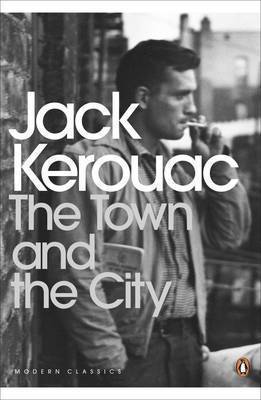
'It is the sum of myself, as far as the written word can go' - Kerouac on "The Town and the City". Kerouac's debut novel is a great coming of age story which can be read as the essential prelude to his later classics. Inspired by grief over his father's death and gripped by determination to write the Great American Novel, he draws largely on his own New England childhood.

Le poète Jack Kerouac nous livre, en 242 chorus poétiques, de superbes "méditations sensorielles". Une poésie folle, joyeuse, triste et magnifique où se dessine le portrait d'un homme complexe et doué d'une sensibilité suprême : "Je veux être considéré comme un poète de jazz soufflant un long blues au cours d'une jam-session." (Jack Kerouac)

"His life...ended when he was nine and the nuns of St. Louis de France Parochial School were at his bedside to take down his dying words because they'd heard his astonishing revelations of heaven delivered in catechism on no more encouragement than it was his turn to speak...."Unique among Jack Kerouac's novels, Visions of Gerard focuses on the scenes and sensations of childhood—the wisdom, anguish, intensity, innocence, evil, insight, suffering, delight, and shock—as they were revealed in the short tragic-happy life of his saintly brother, Gerard. Set in Kerouac's hometown of Lowell, Massachusetts, it is an unsettling, beautiful, and sad exploration of the meaning and precariousness of existence.

“Kerouac dreams of America in the authentic rolling rhythms of a Whitman or a Thomas Wolfe, drunk with eagerness for life.”—John K. Hutchens

In the spring of 1943, during a stint in the Merchant Marine, twenty-one-year old Jack Kerouac set out to write his first novel. Working diligently day and night to complete it by hand, he titled it The Sea Is My Brother. Now, nearly seventy years later, its long-awaited publication provides fascinating details and insight into the early life and development of an American literary icon. Written seven years before The Town and The City officially launched his writing career, The Sea Is My Brother marks a pivotal point in which Kerouac began laying the foundations for his pioneering method and signature style. A clear precursor to such landmark works as On the Road, The Dharma Bums, and Visions of Cody, it is an important formative work that bears all the hallmarks of classic Kerouac: the search for spiritual meaning in a materialistic world, spontaneous travel as the true road to freedom, late nights in bars and apartments engaged in intense conversation, the desperate urge to escape from society, and the strange, terrible beauty of loneliness.

The original manuscript of this book, written between 1954 and 1965, has been in the safekeeping of City Lights all the years since Kerouac’s death in 1969. Reaching beyond the scope of his Mexico City Blues, here are pomes about Mexico and Tangier, Berkeley and the Bowery. Mid-fifties road poems, hymns and songs of God, drug poems, wine poems, dharma poems and Buddhist meditations. Poems to Beat friends, goofball poems, quirky haiku, and a fine, long elegy in “Canuckian Child Patoi Probably Medieval . . . an English blues.” But more than a quarter of a century after it was written, Pomes All Sizes today would seem to be more than a sum of it parts, revealing a questing Kerouac grown beyond the popular image of himself as a Beat on the Road.

Spontaneous poetry by the author of On the Road, gathered from underground and ephemeral publications; including “San Francisco Blues,” the variant texts of “Pull My Daisy,” and American haiku.HERE DOWN ON DARK EARTH before we all go to Heaven VISIONS OF AMERICA All that hitchhikin All that railroadin All that comin back to America —Jack Kerouac

Renowned for his groundbreaking Beat Generation novel On the Road, Jack Kerouac was also a master of the haiku, the three-line, seventeen-syllable Japanese poetic form. Following in the tradition of Basho, Buson, Shiki, Issa, and other poets, Kerouac experimented with this centuries-old genre, taking it beyond strict syllable counts into what he believed was the form’s essence. He incorporated his ‘American’ haiku in novels and in his correspondence, notebooks, journals, sketchbooks, and recordings. In this beautifully packaged volume, Kerouac scholar Regina Weinreich has supplemented a core haiku manuscript from Kerouac’s archives with a generous selection of the rest of his haikus, from both published and unpublished sources. The result is a compact collection of more than five hundred poems that reveal a lesser known but important side of Jack Kerouac’s literary legacy.
Although he was born and raised in Massachusetts, Jack Kerouac's family was French-Canadian, a fact of which he was proud. Published in 1967, when Kerouac was at the height of his fame, this book tells the story of a ten-day visit to Paris and Brittany in search of his ancestors. On this hectic odyssey, fascinated by everything and everyone he met, from a faded French beauty in a Montparnasse gangster bar to one of his strange, foppish Breton namesakes, Kerouac experienced a feeling of transcendence, a Satori, which was to the Beat generation the culmination of all experience.

Originally subtitled "An Adventurous Education, 1935-1946," Vanity of Duluoz is a key volume in Jack Kerouac's lifework, the series of autobiographical novels he referred to as The Legend of Duluoz . With the same tender humor and intoxicating wordplay he brought to his masterpieces On the Road and The Dharma Bums , Kerouac takes his alter ego from the football fields of small-town New England to the playing fields and classrooms of Horace Mann and Columbia, out to sea on a merchant freighter plying the sub-infested waters of the North Atlantic during World War II, and back to New York, where his friends are the writers who would one day become known as the Beat generation and where he published his first novel. Written in 1967 from the vantage point ot the psychedelic sixties, Vanity of Duluoz gives a fascinating portrait of the young Kerouac, dedicated and disciplined in his determination from an early age to be an important American writer.
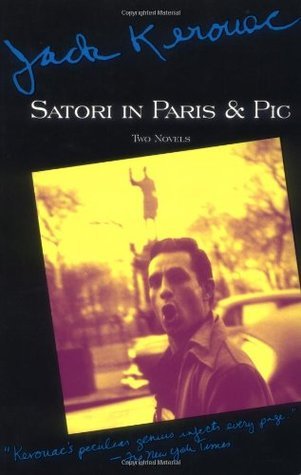
Satori in Paris and Pic, two of Jack Kerouac's last novels, showcase the remarkable range and versatility of his mature talent. Satori in Paris is a rollicking autobiographical account of Kerouac's search for his heritage in France, and lands the author in his familiar milieu of seedy bars and all-night conversations. Pic is Kerouac's final novel and one of his most unusual. Narrated by ten-year-old Pictorial Review Jackson in a North Carolina vernacular, the novel charts the adventures of Pic and his brother Slim as they travel from the rural South to Harlem in the 1940s.

Written during a critical period of his life, Some of the Dharma is a key volume in Jack Kerouac's vast autobiographical canon. He began writing it in 1953 as reading notes on Buddhism intended for his friend, poet Allen Ginsberg. As Kerouac's Buddhist study and meditation practice intensified, what had begun as notes evolved into a vast and all-encompassing work of nonfiction into which he poured his life, incorporating poems, haiku, prayers, journal entries, meditations, fragments of letters, ideas about writing, overheard conversations, sketches, blues, and more. The final manuscript, completed in 1956, was as visually complex as the writing: each page was unique, typed in patterns and interlocking shapes. The elaborate form which Kerouac so painstakingly gave the book on his manual typewriter is re-created in this typeset facsimile.

Though raised Catholic, in the early 1950s Jack Kerouac became fascinated with Buddhism, an interest that would have a profound impact on his ideas of spirituality and their expression in his writing from Mexico City Blues to The Dharma Bums . Published for the first time in book form, Wake Up is Kerouac’s retelling of the story of Prince Siddhartha Gautama, who as a young man abandoned his wealthy family and comfortable home for a lifelong search for Enlightenment. As a compendium of the teachings of the Buddha, Wake Up is a profound meditation on the nature of life, desire, wisdom, and suffering. Distilled from a wide variety of canonical scriptures, Wake Up serves as both a concise primer on the concepts of Buddhism and as an insightful and deeply personal document of Kerouac’s evolving beliefs. It is the work of a devoted spiritual follower of the Buddha who also happened to be one of the twentieth century’s most influential novelists. Wake A Life of the Buddha will be essential reading for the legions of Jack Kerouac fans and for anyone who is curious about the spiritual principles of one of the world’s great religions.

Best known for his "Legend of Duluoz" novels, including On the Road and The Dharma Bums, Jack Kerouac is also an important poet. In these eight extended poems, Kerouac writes from the heart of experience in the music of language, employing the same instrumental blues form that he used to fullest effect in Mexico City Blues, his largely unheralded classic of postmodern literature. Edited by Kerouac himself, Book of Blues is an exuberant foray into language and consciousness, rich with imagery, propelled by rhythm, and based in a reverent attentiveness to the moment."In my system, the form of blues choruses is limited by the small page of the breastpocket notebook in which they are written, like the form of a set number of bars in a jazz blues chorus, and so sometimes the word-meaning can carry from one chorus into another, or not, just like the phrase-meaning can carry harmonically from one chorus to the other, or not, in jazz, so that, in these blues as in jazz, the form is determined by time, and by the musicians spontaneous phrasing & harmonizing with the beat of time as it waves & waves on by in measured choruses." —Jack Kerouac

In 1948, Pictorial Review Jackson, a ten-year-old black boy, and his brother, Slim, hitchhike from North Carolina to New York City, observing the strange life-styles of people they encounter.
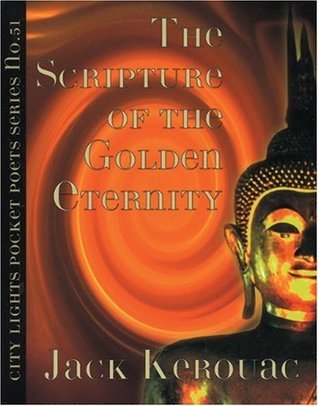
These classic Kerouac meditations, zen koans and prose poems express the poet’s beatific quest for peace and joy through oneness with the universe. " The Scripture of the Golden Eternity is fueled by Kerouac's discerning meditation on the nature of impermanence & consciousness, subtle like the dharma it invokes. We're here to disappear, therefore let's be as vivid & generous as we can. The intelligence & compassion behind this text is still alive."—Anne Waldman, The Jack Kerouac School of Disembodied Poetics Scripture of the Golden Eternity is Jack Kerouac's statement of confidence in his oneness with the universe of energy and form, a confidence to which his whole being swelled. His was not the search for the ecstasy of the mystic or psychedelic or the Artaud-mad. He sought a recognition in philosophy of his early sense that his body participated in the universal forms of energy with a quality of exuberance—that 'serious exuberance' which he so accurately called jazz."—Eric Mottram, Introduction Jack Kerouac (1922-1969) was a principal actor in the Beat Generation, a companion of Allen Ginsberg and Neal Cassady in that great adventure. His books include On the Road , The Dharma Bums , Mexico City Blues , Lonesome Traveler , Visions of Cody , Pomes All Sizes (City Lights), Scattered Poems (City Lights) and The Scripture of the Golden Eternity (City Lights).

This one-volume omnibus, planned by the author before his death and now completed by his biographer, Ann Charters, makes clear the ambition and accomplishment of Jack Kerouac's "Legend of Duluoz" - the story of his life told in the course of his many "true-story novels, " including "On the Road." As Kerouac once wrote, "The whole thing forms one enormous comedy, seen through the eyes of poor Ti Jean (me), otherwise known as Jack Duluoz, the world of raging action and folly and also of gentle sweetness seen through the keyhole of his eye." The only anthology of Kerouac's work ever published, this compilation presents selections from the "Legend of Duluoz" novels, in chronological order, and also includes poetry, letters, and essays on Buddhism, writing, and the Beat Generation. "The Portable Jack Kerouac" is an essential introduction to one of this country's most important modern writers.

"In the Book of Dreams I just continue the same story but in the dreams I had of the real-life characters I always write about."Excerpt:WALKING THROUGH SLUM SUBURBS of Mexico City I'm stopped by smiling threesome of cats who've disengaged themselves from the general fairly crowded evening street of brown lights, coke stands, tortillas—Unmistakably going to steal my bag—I struggled a little, gave up—Begin communicating with them my distress and in fact do so well they end up just stealing parts of my stuff…. We walk off leaving the bag with someone—arm in arm like a gang to the downtown lights of Letran, across a field—Jack Kerouac (1922–1969) was a principal actor in the Beat Generation, a companion of Allen Ginsberg and Neal Cassady in that great adventure. His books include On the Roa, The Dharma Bums, Mexico City Blues, Lonesome Traveler, Scattered Poems, Visions of Cody, Pomes All Sizes, and Scripture of the Golden Eternity.

Thirty years after his death, popular and academic interest in the life and work of Jack Kerouac have reached an all-time high. The first volume of his selected letters, edited by renowned biographer and Beat scholar Ann Charters, was widely regarded as a vital and momentous contribution to Kerouac scholarship. In Jack Kerouac: Selected Letters 1957-1969, the second and final volume of his correspondence, Charters highlights letters written to his closest friends and colleagues that paint a heart-wrenching portrait of this broken American genius.The first volume of Kerouac's letters documented the writer's discovery of his "spontaneous prose" method and the inspired composition of 11 books between 1951 and 1956. "The second volume," writes Charters, "demonstrates that the publication of his books and the attendant publicity and hostile critical response literally destroyed him." The book opens with letters written prior to the publication of On The Road, an event that would make Kerouac famous overnight and permanently alter the landscape of American literature, and concludes only days before his death in St. Petersburg, Florida, at age 47.Charters provides indispensable commentary between the letters to give the biographical background of what was happening in Kerouac's life, while allowing the writer to comment on his own work as much as possible. Charters also includes some letters from his friends, such as Gary Snyder's reaction to being the fictional hero of The Dharma Bums, and Lawrence Ferlinghetti's letter to Time magazine defending Kerouac from malicious attacks by critics on his books and lifestyle. Occasionally Kerouac responded to fan mail and queries from academics, and some of these replies have also been included. The few letters from his mother and from his third wife, Stella, show just how dependent the writer was on his family.Kerouac is often thought of as being very much like the rugged, wandering, Zen-loony characters that populate his books. But by the late '60s, while pals Snyder, Allen Ginsberg, and Peter Orlovsky were on pilgrimage in Nepal, he was living with his mother, getting rejected on credit card applications. A severe alcoholic, Kerouac suffered rapidly declining health, and he grew increasingly bitter and paranoid. Each book by Kerouac that was published in hardcover after The Dharma Bums was quickly remaindered, yet despite this, Kerouac kept writing right up to the day he died.Unfortunately, his greatest successes came too late for him to enjoy. At least eight works of Kerouac's fiction, poetry, and Buddhist writings have been published posthumously, not to mention the countless studies and biographies that fill the shelves of bookstores each year. In 1999, Jack Kerouac and the Beats are a business unto themselves.Soon after completing her own doctorate work in American literature at Columbia in 1966, Ann Charters had the crazy idea that the Beats needed a scholar like herself to secure a place for them in our nation's history. Thirty years later it is quite clear just how crucial a role she has played in the literary afterlife of Jack Kerouac.—Cary Goldstein