
Mikhail Bulgakov
Mikhail Afanasyevich Bulgakov (Russian: Михаил Булгаков) was a Russian writer, medical doctor, and playwright. His novel The Master and Margarita , published posthumously, has been called one of the masterpieces of the 20th century. He also wrote the novel The White Guard and the plays Ivan Vasilievich, Flight (also called The Run ), and The Days of the Turbins . He wrote mostly about the horrors of the Russian Civil War and about the fate of Russian intellectuals and officers of the Tsarist Army caught up in revolution and Civil War. Some of his works ( Flight , all his works between the years 1922 and 1926, and others) were banned by the Soviet government, and personally by Joseph Stalin, after it was decided by them that they "glorified emigration and White generals". On the other hand, Stalin loved The Days of the Turbins (also called The Turbin Brothers ) very much and reportedly saw it at least 15 times.
30 Books Written
The first complete, annotated English Translation of Mikhail Bulgakov's comic masterpiece.An audacious revision of the stories of Faust and Pontius Pilate, The Master and Margarita is recognized as one of the essential classics of modern Russian literature. The novel's vision of Soviet life in the 1930s is so ferociously accurate that it could not be published during its author's lifetime and appeared only in a censored edition in the 1960s. Its truths are so enduring that its language has become part of the common Russian speech.One hot spring, the devil arrives in Moscow, accompanied by a retinue that includes a beautiful naked witch and an immense talking black cat with a fondness for chess and vodka. The visitors quickly wreak havoc in a city that refuses to believe in either God or Satan. But they also bring peace to two unhappy Muscovites: one is the Master, a writer pilloried for daring to write a novel about Christ and Pontius Pilate; the other is Margarita, who loves the Master so deeply that she is willing literally to go to hell for him. What ensues is a novel of inexhaustible energy, humor, and philosophical depth, a work whose nuances emerge for the first time in Diana Burgin's and Katherine Tiernan O'Connor's splendid English version.
This satirical novel tells the story of the surgical transformation of a dog into a man, and is an obvious criticism of Soviet society, especially the new rich that arose after the Bolshevik revolution.
Brilliant stories that show the growth of a novelist's mind, and the raw material that fed the wild surrealism of Bulgakov's later fiction.With the ink still wet on his diploma, the twenty-five-year-old Dr. Mikhail Bulgakov was flung into the depths of freezing rural Russia which, in 1916-17, was still largely unaffected by such novelties as the motor car, the telephone or electric light. How his alter-ego copes (or fails to cope) with the new and often appalling responsibilities of a lone doctor in a vast country practice — on the eve of Revolution — is described in Bulgakov's delightful blend of candid realism and imaginative exuberance.
Although less famous than Mikhail Bulgakov's comic hit, The Master and Margarita, The White Guard is still an engrossing book, though completely different in tone. It is set in Kiev during the Russian revolution and tells the story of the Turbin family and the war's effect on the middle-classes (not workers). The story was not seen as politically correct, and thereby contributed to Bulgakov's lifelong troubles with the Soviet authorities. It was, however, a well-loved book, and the novel was turned into a successful play at the time of its publication in 1967.

Young Dr. Bromgard has come to a small country town to assume a new practice. No sooner has he arrived than he receives word that a colleague, Dr. Polyakov, has fallen gravely ill. Before Bromgard can go to his friend's aid, Polyakov is brought to his practice in the middle of the night with a self-inflicted gunshot wound, and, barely conscious, gives Bromgard his journal before dying. What Bromgard uncovers in the entries is Polyakov's uncontrollable and merciless descent into morphine addiction -- his first injection to ease his back pain, the thrill of the drug as it overtakes him, the looming signs of addiction, and the feverish final entries before his death.
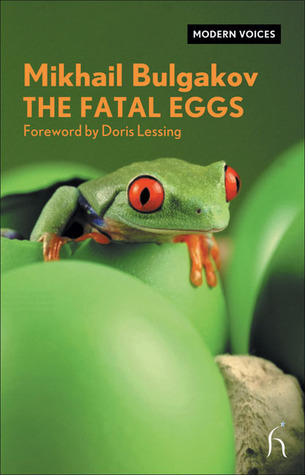
As the turbulent years following the Russian revolution of 1917 settle down into a new Soviet reality, the brilliant and eccentric zoologist Persikov discovers an amazing ray that drastically increases the size and reproductive rate of living organisms. At the same time, a mysterious plague wipes out all the chickens in the Soviet republics. The government expropriates Persikov's untested invention in order to rebuild the poultry industry, but a horrible mix-up quickly leads to a disaster that could threaten the entire world.This H. G. Wells-inspired novel by the legendary Mikhail Bulgakov is the only one of his larger works to have been published in its entirety during the author's lifetime. A poignant work of social science fiction and a brilliant satire on the Soviet revolution, it can now be enjoyed by English-speaking audiences through this accurate new translation.Includes annotations and afterword.

The five, irreverant, satirical and imaginative stories contained in Diaboliad caused an uproar upon the book's first publication in 1925. Full of invention, they display Bulgakov's breathtaking stylistic range, moving at dizzying speed from grotesque satire to science fiction, from the plainest realism to the most madcap of fantasies. Diaboliad is a wonderful introduction to literature's most uncategorisable and subversive genius.

A masterpiece of black comedy by the author of The Master and Margarita.When Maxudov's novel fails, he attempts suicide. When that fails, he dramatizes his novel. To Maxudov's surprise - and the resentment of literary Moscow - the play is accepted by the legendary Independent Theater, and Maxudov plunges into a vortex of inflated egos. Each rehearsal sees more and more sparks flying higher and higher, and less and less chance of poor Maxudov's play ever being performed. Black Snow is the ultimate backstage novel, and a masterly satire on Mikhail Bulgakov's ten-year love-hate relationship with Stanislavsky, Method acting, and the Moscow Arts Theater.This title comes with an introduction by Terry Gilliam. After a lifetime spent struggling against censorship, not least in the theater, Bulgakov died in 1940, not long after completing his masterpiece, The Master and Margarita. None of his major fiction was published during his lifetime.

Михаил Булгаков - уникальное явление в русской культуре XX века. О нем все слышали - но мало кто знает что-нибудь достоверно; его собственная биография переплелась с жизнью героев его книг и обросла множеством легенд, домыслов, анекдотов и необъяснимых совпадений. "Библиотека Великих Писателей. XX век" представляет самые знаменитые произведения Булгакова - мудрую печальную повесть "Собачье сердце" и блестящий роман "Мастер и Маргарита", ставший культовым для многих поколений читателей. Ни одно из этих произведений не было напечатано при жизни писателя. Сейчас справедливость отчасти восстановлена: увидели свет собрания сочинений Булгакова, по его произведениям сняты фильмы и сериалы. Но во все времена главным для писателя и его почитателей была и остается книга, обладающая магией печатного слова, с оригинальными иллюстрациями, полновесными комментариями, биографическими материалами, то есть именно то, что предлагает Вам серия "Библиотека Великих Писателей".

"Морфий. Записки юного врача" - уникальный сборник рассказов Михаила Булгакова, который раскрывает важную, но не всем известную сторону жизни автора - молодого врача, и, одновременно, пациента, пристрастившегося к дозам морфина и пытающегося вырваться из наркотического плена. Булгакову удалось пугающе подробно описать ощущения морфиниста, всю глубину отчаяния и бесконечную надежду на освобождение от разрушающей зависимости.Рассказы во многом основаны на опыте работы Булгакова врачом в сельской больнице, где будущий писатель, проводя сложнейшие операции, пытался осмыслить свое жизненное предназначение.

The life of Molière, born Jean-Baptiste Poquelin, is a story of struggle and dedication, and Bulgakov tells it with warmth and compassion.

Due romanzi brevi - o racconti lunghi, che dir si voglia - che mettono in risalto la vena fantastica e corrosiva di Michail Bulgakov. Si tratta a tutti gli effetti di opere di "scienza fantastica", più che di fantascienza in senso tradizionale, nelle quali Bulgakov utilizza le possibili conseguenze di pericolosi (e affascinanti) esperimenti scientifici per mettere in ridicolo la dittatura sovietica, la sua chiusura mentale, la sua rigidità normativa. Il protagonista di "Le uova fatali" è uno zoologo che, quasi per caso, mette a punto un "raggio della vita" in grado di accelerare miracolosamente lo sviluppo cellulare. Una scoperta destinata a provocare conseguenze mostruose e grottesche. "Cuore di cane" racconta invece il tentativo di trasformare un cane in una creatura in qualche modo umana tramite il trapianto di ipofisi e testicoli di un ubriacone morto. Il randagio finira con l'ereditare i peggiori difetti di entrambe le sue nature. Due piccoli ma incisivi capolavori della letteratura del Novecento, capofila di un intero filone di letteratura fantastica.

Alternate Cover edition of ISBN 9785699380367В эту книгу вошли первое печатное выступление Булгакова "Грядущие перспективы", роман "Белая гвардия", ставшие хрестоматийными "Записки юного врача" и "Собачье сердце", а также лучшие образцы булгаковской фантастической прозы 20-х годов - "Роковые яйца", "Багровый остров", "Дьяволиада" и др.

"Иван Васильевич" — пьеса выдающегося русского писателя и драматурга Михаила Булгакова. В основе сюжета — рокировка во времени, когда из-за сбоя в работе машины, изобретённой инженером Тимофеевым, московский управдом Бунша вместе с жуликом Жоржем Милославским перемещаются в XVI век, а царь Иван Грозный попадает в XX столетие... Комедия послужила основой для известного фильма Леонида Гайдая "Иван Васильевич меняет профессию", в котором действие было перенесено в 1970-е годы. Другими известными произведениями писателя являются "Белая гвардия", "Мастер и Маргарита", "Собачье сердце", "Театральный роман", "Записки на манжетах", "Роковые яйца", "Записки юного врача", "Дьяволиада".

«Дни Турбины́х» — пьеса М. А. Булгакова, написанная на основе романа «Белая гвардия».

Имя Михаила Афанасьевича Булгакова для читателей всего мира навсегда связано с его бессмертным романом "Мастер и Маргарита". Но его творческое наследие, конечно, не ограничивается этим шедевром. Булгаков — автор пьес, фельетонов, рассказов и повестей, среди которых пьеса "Бег" занимает особое место. Пьеса, повествующая о трагических событиях во время гражданской войны, была запрещена до премьеры, и первый спектакль состоялся только в 1957 году, через 16 лет после смерти автора. В 1970 году вышел одноименный двухсерийный фильм, снятый режиссерами А. Аловым и В. Наумовым. Сегодня это одно из наиболее популярных и любимых зрителями и читателями произведений автора.

Russian Book. Azbuka. 304. 2012. Paperback.

В книгу известного советского писателя М. А. Булгакова (1891 - 1940), чье творчество получило заслуженное признание и стало неотъемлемой частью советской культуры, вошли романы "Белая гвардия" и "Мастер и Маргарита". In the book of the famous Soviet writer MA Bulgakov (1891-1940), whose work received a well-deserved recognition and became an integral part of Soviet culture, the novels The White Guard and The Master and Margarita were included.

Lumea descrisa in Diavoliada si in Ouale fatale este una haotica si halucinanta, in care umorul, ironia, sarcasmul si dramatismul alterneaza sau se intrepatrund, iar fantasticul fuzioneaza cu realul vazut prin filtrul unei constiinte clare si indraznete.In Ouale fatale, un profesor nebun inventeaza o raza de lumina, „raza vietii”, care, printr-un accident, aduce lumea intr-un cosmar SF populat de struti gigantici si reptile uriase. In Diavoliada, un mediocru angajat al registraturii se trezeste prins, ca intr-o poveste kafkiana, in itele unui cosmar birocratic. Ambele personaje au in comun lupta acerba cu haosul sistemului, cu un mediu care, incet, dar sigur, denatureaza orice identitate.
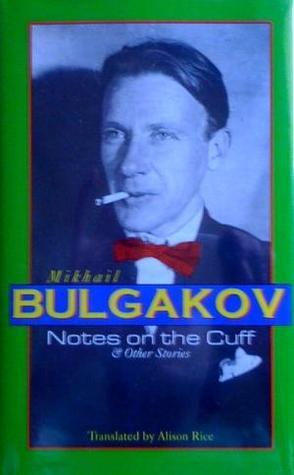
The stories collected here represent a sampling of the prose that first established Bulgakov as a major figure in the literary renaissance of Moscow in the 1920s, long before he became known as an influential playwright and novelist.The centerpiece of this collection is the long story "Notes on the Cuff," a comically autobiographical account of how the tenacious young writer managed to begin his literary career despite famine, typhus, civil war, the wrong political affiliation, and the Byzantine Moscow bureaucracy. This stylistically brilliant work was only partially published during Bulgakov's lifetime due to censorship, but was immediately recognized by the literati as an important work.The other stories collected here range from a sequence about the Civil War to Bulgakov's early reportage on the rebuilding of Moscow in the early 1920s, stories which now have a strikingly contemporary ring. Bulgakov describes the swindlers who arrived along with NEP, a program for the limited return to a market economy, as well as the vast reconstruction as the city is brought back from the destruction of civil war.Bulgakov, who burst on the world literary scene in the 1960s with the publication of his long-suppressed The Master and Margarita, has continued to enjoy tremendous success both in and out of Russia where productions of his plays and adaptations of his prose works have found new audiences.


В книгу вошли романы выдающегося русского писателя Михаила Афанасьевича Булгакова "Мастер и Маргарита" и "Белая гвардия", а также сборник рассказов "Записки на манжетах", ставшие неотъемлемой частью мировой литературы.

"Белая гвардия" - не просто роман, но своеобразная хроника времени - хроника, увиденная через восприятие "детей страшных лет России". Судьба издерганной дворянской семьи, задыхающейся в кровавом водовороте Гражданской войны, под пером Булгакова обретает черты эпической трагедии всей русской интеллигенции - трагедии, отголоски которой доносятся до нас и теперь...

В эту книгу вошли три повести Михаила Булгакова, настоящие шедевры его фантасмагорической сатиры: "Роковые яйца", притягивающие своей причудливостью и остроумием, и оказавшие огромное влияние на множество поколений российских читателей, раздерганное на цитаты, блестяще экранизированное Владимиром Бортко "Собачье сердце", а также повесть "Дьяволиада", которую литературоведы считают своеобразным эскизом, или наброском к бессмертному роману "Мастер и Маргарита".

«Записки на манжетах» – частично автобиографическая повесть Михаила Булгакова. Основным мотивом «Записок на манжетах» стала проблема отношений автора с властью. В повести достаточно подробно описана жизнь Булгакова на Кавказе и первые месяцы его пребывания в Москве.В этой книге объединены лучшие рассказы М.А.Булгакова, среди которых «Красная корона», «Китайская история», «Спиритический сеанс» и другие, а также знаменитый автобиографический цикл «Записки на манжетах». Именно в этих произведениях впервые появляются темы и сюжетные линии, которые писатель будет развивать далее в своих романах и пьесах. «Записки на манжетах» местами перекликаются с «Запискам сумасшедшего» Гоголя, а действительность как грань между реальностью и фантазией станет излюбленным художественным стилем Булгакова.

« Le docteur Iachvine se tourna brusquement vers moi, et je remarquai que son regard se faisait soudain pesant :- J'ai tué, précisa-t-il.- Quand cela ? repris-je de façon saugrenue.Iachvine indiqua le chiffre 2 et répondit :- Pensez un peu, quelle coïncidence. Dès que vous avez commencé à parler de la mort, j'ai regardé le calendrier, et j'ai vu que nous étions le 2. Du reste, chaque année cette nuit-là me revient en mémoire. Voyez-vous, il y a de cela sept ans nuit pour nuit, et même... Iachvine sortit une montre noire, la regarda... oui, presque heure pour heure, dans la nuit du 1er au 2 février, j'ai tué.- Qui cela ? Un patient ? demanda Guins.- Oui, un patient.- Mais non sciemment ? fis-je.- Si, de façon délibérée, répondit Iachvine. »

Protagonistul nuvelei Inima de ciine, un profesor vizionar, incearca imposibilul: transplanteaza creierul unui barbat in trupul unui ciine. Animalul evolueaza spectaculos si devine omul revolutionar pe dos: un proletar lenes, betiv, lipsit de orice urma a idealului care i-a dat viata. Ideile nobile ale profesorului se naruie, ca o reprezentare a contextului istoric al Rusiei revolutionare a anilor ’20 din secolul trecut. Parca pentru a intregi aceasta metafora a imposibilitatii, Insemnari pe mansete dezvolta imaginea vietii scriitorului in Rusia proaspat reformata: in haosul novator, un tinar scriitor se angajeaza intr-o institutie literara, careia incearca sa-i dea o identitate. Eforturile sale se pierd insa in labirintul birocratic, iar sperantele tinarului vor disparea odata cu locul pe care incearca in zadar sa-l schimbe.


В настоящий том включены роман "Мастер и Маргарита" и повести "Театральный роман" и "Собачье сердце" известного русского писателя Михаила Афанасьевича Булгакова (1891-1940).

Михаил Афанасьевич Булгаков (1891–1940) – великий русский писатель и драматург, автор повестей, рассказов, фельетонов, пьес, инсценировок, киносценариев и оперных либретто, по профессии врач. Одним из самых известных произведений М.Булгакова является роман «Мастер и Маргарита», который английская газета «The Times» назвала одним из литературных шедевров 20 века.В сборник произведений М.Булгакова от Animedia Company входит повесть «Роковые яйца» и цикл рассказов «Записки юного врача». «Роковые яйца» – фантастическая повесть М. Булгакова, впервые опубликованная в 1925 году. Сюжет книги перекликается с романами Герберта Уэллса «Пища богов» (1904г) и «Борьба миров» (1898).