
David Foster Wallace
David Foster Wallace was an acclaimed American writer known for his fiction, nonfiction, and critical essays that explored the complexities of consciousness, irony, and the human condition. Widely regarded as one of the most innovative literary voices of his generation, Wallace is perhaps best known for his 1996 novel Infinite Jest, which was listed by Time magazine as one of the 100 best English-language novels published between 1923 and 2005. His unfinished final novel, The Pale King, was published posthumously in 2011 and was a finalist for the Pulitzer Prize. Born in Ithaca, New York, Wallace was raised in Illinois, where he excelled as both a student and a junior tennis player—a sport he later wrote about with sharp insight and humor. He earned degrees in English and philosophy from Amherst College, then completed an MFA in creative writing at the University of Arizona. His early academic work in logic and philosophy informed much of his writing, particularly in his blending of analytical depth with emotional complexity. Wallace’s first novel, The Broom of the System (1987), established his reputation as a fresh literary talent. Over the next two decades, he published widely in prestigious journals and magazines, producing short stories, essays, and book reviews that earned him critical acclaim. His work was characterized by linguistic virtuosity, inventive structure, and a deep concern for moral and existential questions. In addition to fiction, he tackled topics ranging from tennis and state fairs to cruise ships, politics, and the ethics of food consumption. Beyond his literary achievements, Wallace had a significant academic career, teaching literature and writing at Emerson College, Illinois State University, and Pomona College. He was known for his intense engagement with students and commitment to teaching. Wallace struggled with depression and addiction for much of his adult life, and he was hospitalized multiple times. He died by suicide in 2008 at the age of 46. In the years since his death, his influence has continued to grow, inspiring scholars, conferences, and a dedicated readership. However, his legacy is complicated by posthumous revelations of abusive behavior, particularly during his relationship with writer Mary Karr, which has led to ongoing debate within literary and academic communities. His distinctive voice—by turns cerebral, comic, and compassionate—remains a defining force in contemporary literature. Wallace once described fiction as a way of making readers feel "less alone inside," and it is that emotional resonance, alongside his formal daring, that continues to define his place in American letters.
29 Books Written

This Is Water: Some Thoughts, Delivered on a Significant Occasion, about Living a Compassionate Life
by David Foster Wallace
Rating: 4.5 ⭐
• 9 recommendations ❤️
Only once did David Foster Wallace give a public talk on his views on life, during a commencement address given in 2005 at Kenyon College. The speech is reprinted for the first time in book form in THIS IS WATER. How does one keep from going through their comfortable, prosperous adult life unconsciously? How do we get ourselves out of the foreground of our thoughts and achieve compassion? The speech captures Wallace's electric intellect as well as his grace in attention to others. After his death, it became a treasured piece of writing reprinted in The Wall Street Journal and the London Times, commented on endlessly in blogs, and emailed from friend to friend.Writing with his one-of-a-kind blend of causal humor, exacting intellect, and practical philosophy, David Foster Wallace probes the challenges of daily living and offers advice that renews us with every reading.
A gargantuan, mind-altering comedy about the Pursuit of Happiness in America set in an addicts' halfway house and a tennis academy, and featuring the most endearingly screwed-up family to come along in recent fiction, Infinite Jest explores essential questions about what entertainment is and why it has come to so dominate our lives; about how our desire for entertainment affects our need to connect with other people; and about what the pleasures we choose say about who we are. Equal parts philosophical quest and screwball comedy, Infinite Jest bends every rule of fiction without sacrificing for a moment its own entertainment value. It is an exuberant, uniquely American exploration of the passions that make us human - and one of those rare books that renew the idea of what a novel can do.

String Theory: David Foster Wallace on Tennis
by David Foster Wallace
Rating: 4.2 ⭐
• 5 recommendations ❤️
An instant classic of American sportswriting—the tennis essays of David Foster Wallace, “the best mind of his generation” (A. O. Scott) and “the best tennis-writer of all time” ( New York Times ) Gathered for the first time in a deluxe collector's edition, here are David Foster Wallace's legendary writings on tennis, five tour-de-force pieces written with a competitor's insight and a fan's obsessive enthusiasm. Wallace brings his dazzling literary magic to the game he loved as he celebrates the other-worldly genius of Roger Federer; offers a wickedly witty disection of Tracy Austin's memoir; considers the artistry of Michael Joyce, a supremely disciplined athlete on the threshold of fame; resists the crush of commerce at the U.S. Open; and recalls his own career as a "near-great" junior player.Whiting Award-winning writer John Jeremiah Sullivan provides an introduction.

Do lobsters feel pain? Did Franz Kafka have a funny bone? What is John Updike's deal, anyway? And what happens when adult video starlets meet their fans in person? David Foster Wallace answers these questions and more in essays that are also enthralling narrative adventures. Whether covering the three-ring circus of John McCain's 2000 presidential race, plunging into the wars between dictionary writers, or confronting the World's Largest Lobster Cooker at the annual Maine Lobster Festival, Wallace projects a quality of thought that is uniquely his own and a voice as powerful and distinct as any in American letters.
David Foster Wallace made an art of taking readers into places no other writer even gets near. The series of stories from which this exuberantly acclaimed book takes its title is a sequence of imagined interviews with men on the subject of their relations with women. These portraits of men at their most self-justifying, loquacious, and benighted explore poignantly and hilariously the agonies of sexual connections.List of stories "A Radically Condensed History of Postindustrial Life" "Death Is Not the End" "Forever Overhead" "Brief Interviews with Hideous Men" "Yet Another Example of the Porousness of Certain Borders (XI)" "The Depressed Person" "The Devil Is a Busy Man" "Think" "Signifying Nothing" "Brief Interviews with Hideous Men" "Datum Centurio" "Octet" "Adult World (I)" "Adult World (II)" "The Devil Is a Busy Man" "Church Not Made with Hands" "Yet Another Example of the Porousness of Certain Borders (VI)" "Brief Interviews with Hideous Men" "Tri-Stan: I Sold Sissee Nar to Ecko" "On His Deathbed, Holding Your Hand, the Acclaimed New Young Off-Broadway Playwright's Father Begs a Boon" "Suicide as a Sort of Present" "Brief Interviews with Hideous Men" "Yet Another Example of the Porousness of Certain Borders (XXIV)"

In the stories that make up Oblivion, David Foster Wallace joins the rawest, most naked humanity with the infinite involutions of self-consciousness—a combination that is dazzlingly, uniquely his. These are worlds undreamt-of by any other mind. Only David Foster Wallace could convey a father's desperate loneliness by way of his son's daydreaming through a teacher's homicidal breakdown ("The Soul Is Not a Smithy"). Or could explore the deepest and most hilarious aspects of creativity by delineating the office politics surrounding a magazine profile of an artist who produces miniature sculptures in an anatomically inconceivable way ("The Suffering Channel"). Or capture the ache of love's breakdown in the painfully polite apologies of a man who believes his wife is hallucinating the sound of his snoring ("Oblivion"). Each of these stories is a complete world, as fully imagined as most entire novels, at once preposterously surreal and painfully immediate. Oblivion is an arresting and hilarious creation from a writer "whose best work challenges and reinvents the art of fiction" (Atlanta Journal-Constitution).Mister squishy --The soul is not a smithy --Incarnations of burned children --Another pioneer --Good old neon --Philosophy and the mirror of nature --Oblivion --The suffering channel

A Supposedly Fun Thing I'll Never Do Again: Essays and Arguments
by David Foster Wallace
Rating: 4.2 ⭐
• 1 recommendation ❤️
In this exuberantly praised book — a collection of seven pieces on subjects ranging from television to tennis, from the Illinois State Fair to the films of David Lynch, from postmodern literary theory to the supposed fun of traveling aboard a Caribbean luxury cruiseliner — David Foster Wallace brings to nonfiction the same curiosity, hilarity, and exhilarating verbal facility that has delighted readers of his fiction, including the bestselling Infinite Jest.

Published when Wallace was just twenty-four years old, The Broom of the System stunned critics and marked the emergence of an extraordinary new talent. At the center of this outlandishly funny, fiercely intelligent novel is the bewitching heroine, Lenore Stonecipher Beadsman. The year is 1990 and the place is a slightly altered Cleveland, Ohio. Lenore’s great-grandmother has disappeared with twenty-five other inmates of the Shaker Heights Nursing Home. Her beau, and boss, Rick Vigorous, is insanely jealous, and her cockatiel, Vlad the Impaler, has suddenly started spouting a mixture of psycho-babble, Auden, and the King James Bible. Ingenious and entertaining, this debut from one of the most innovative writers of his generation brilliantly explores the paradoxes of language, storytelling, and reality.

The agents at the IRS Regional Examination Center in Peoria, Illinois, appear ordinary enough to newly arrived trainee David Foster Wallace. But as he immerses himself in a routine so tedious and repetitive that new employees receive boredom-survival training, he learns of the extraordinary variety of personalities drawn to this strange calling. And he has arrived at a moment when forces within the IRS are plotting to eliminate even what little humanity and dignity the work still has.The Pale King remained unfinished at the time of David Foster Wallace's death, but it is a deeply compelling and satisfying novel, hilarious and fearless and as original as anything Wallace ever undertook. It grapples directly with ultimate questions--questions of life's meaning and of the value of work and society--through characters imagined with the interior force and generosity that were Wallace's unique gifts. Along the way it suggests a new idea of heroism and commands infinite respect for one of the most daring writers of our time.

Remarkable, hilarious and unsettling re-imaginations of reality by "a dynamic writer of extraordinary talent " (Jenifer Levin, New York Times Book Review).Girl with Curious Hair is replete with David Foster Wallace's remarkable and unsettling reimaginations of reality. From the eerily "real," almost holographic evocations of historical figures like Lyndon Johnson and overtelevised game-show hosts and late-night comedians to the title story, where terminal punk nihilism meets Young Republicanism, Wallace renders the incredible comprehensible, the bizarre normal, the absurd hilarious, and the familiar strange.This is an alternate cover edition for ISBN: 0393313964/9780393313963

Brilliant, dazzling, never-before-collected nonfiction writings by "one of America's most daring and talented writers." (Los Angeles Times Book Review).Both Flesh and Not gathers fifteen of Wallace's seminal essays, all published in book form for the first time.Never has Wallace's seemingly endless curiosity been more evident than in this compilation of work spanning nearly 20 years of writing. Here, Wallace turns his critical eye with equal enthusiasm toward Roger Federer and Jorge Luis Borges; Terminator 2 and The Best of the Prose Poem; the nature of being a fiction writer and the quandary of defining the essay; the best underappreciated novels and the English language's most irksome misused words; and much more.Both Flesh and Not restores Wallace's essays as originally written, and it includes a selection from his personal vocabulary list, an assembly of unusual words and definitions.

One of the outstanding voices of his generation, David Foster Wallace has won a large and devoted following for the intellectual ambition and bravura style of his fiction and essays. Now he brings his considerable talents to the history of one of math's most enduring puzzles: the seemingly paradoxical nature of infinity.Is infinity a valid mathematical property or a meaningless abstraction? The nineteenth-century mathematical genius Georg Cantor's answer to this question not only surprised him but also shook the very foundations upon which math had been built. Cantor's counterintuitive discovery of a progression of larger and larger infinities created controversy in his time and may have hastened his mental breakdown, but it also helped lead to the development of set theory, analytic philosophy, and even computer technology.Smart, challenging, and thoroughly rewarding, Wallace's tour de force brings immediate and high-profile recognition to the bizarre and fascinating world of higher mathematics.

“Ci sono tre spiegazioni valide per l’ascesa di Federer. La prima ha a che vedere col mistero e la metafisica ed è, a mio avviso, la più vicina alla verità. Le altre sono più tecniche e funzionano meglio come giornalismo”. Per l’edizione di Wimbledon 2006, il “New York Times” invia in Inghilterra un corrispondente d’eccezione, David Foster Wallace. La penna di uno dei più importanti scrittori americani degli ultimi decenni incrocia così la racchetta del giovane campione svizzero Roger Federer, allora sul punto di aggiudicarsi – in una finale da sogno contro lo spagnolo Rafael Nadal – l’ottavo titolo del Grande Slam. Il risultato è un intensissimo saggio narrativo nel quale Wallace, avvalendosi anche di un passato da tennista, riesce a offrirci una brillante analisi del tennis contemporaneo e, soprattutto, la possibilità di partecipare a un’esperienza che ci fa scorgere il legame profondo tra la bellezza e la grazia di un fuoriclasse come Federer e le forze ultime dell’universo.

When David Foster Wallace died in 2008, he left behind a vast unfinished novel—some 1,100 pages of loose chapters, sketches, notes, and fragments—published in 2011 as The Pale King.But the unfinished King did contain a finished novella that Wallace had already considered publishing as a stand-alone volume. It is the story of a young man, a self-described “wastoid,” adrift in the suburban Midwest of the 1970s, whose life is changed forever by an encounter with advanced tax law. It is, as Sarah McNally writes in her preface, “not just a complete story, but the best complete example we have of Wallace’s late style, where calm and poise replace the pyrotechnics of Infinite Jest and other early works.”
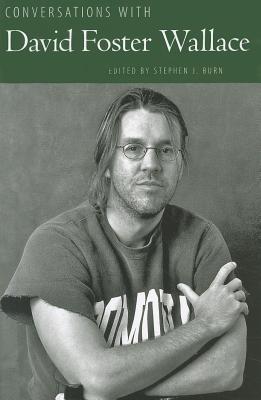
Across two decades of intense creativity, David Foster Wallace (1962-2008) crafted a remarkable body of work that ranged from unclassifiable essays to a book about transfinite mathematics to vertiginous fictions. Whether through essay volumes ( A Supposedly Fun Thing I'll Never Do Again, Consider the Lobster ), short story collections ( Girl with Curious Hair, Brief Interviews with Hideous Men, Oblivion ), or his novels ( Infinite Jest, The Broom of the System ), the luminous qualities of Wallace's work recalibrated our measures of modern literary achievement. Conversations with David Foster Wallace gathers twenty-two interviews and profiles that trace the arc of Wallace's career, shedding light on his omnivorous talent.Jonathan Franzen has argued that, for Wallace, an interview provided a formal enclosure in which the writer “could safely draw on his enormous native store of kindness and wisdom and expertise.” Wallace's interviews create a wormhole in which an author's private theorizing about art spill into the public record. Wallace's best interviews are vital extra-literary documents, in which we catch him thinking aloud about his signature concerns―irony's magnetic hold on contemporary language, the pale last days of postmodernism, the delicate exchange that exists between reader and writer. At the same time, his acute focus moves across MFA programs, his negotiations with religious belief, the role of footnotes in his writing, and his multifaceted conception of his work's architecture. Conversations with David Foster Wallace includes a previously unpublished interview from 2005, and a version of Larry McCaffery's influential Review of Contemporary Fiction interview with Wallace that has been expanded with new material drawn from the original raw transcript.

"The Depressed Person" was published in Harper's Magazine, January 1998.


The David Foster Wallace Reader is a selection of David Foster Wallace's work, introducing readers to his humour, kindness, sweeping intellect and versatility as a writer.A compilation from the one of the most original writers of our age, featuring:· the very best of his fiction and non-fiction;· previously unpublished writing· and original contributions from 12 prominent authors and critics about his workFrom classic short fiction to genre-defining reportage, this book is a must for new readers and confirmed David Foster Wallace fans alike'One of the most dazzling luminaries of contemporary American fiction' Sunday Times'There are times, reading his work, when you get halfway through a sentence and gasp involuntarily, and for a second you feel lucky that there was, at least for a time, someone who could make sense like no other of what it is to be a human in our era' Daily Telegraph'A prose magician, Mr. Wallace was capable of writing . . .about subjects from tennis to politics to lobsters, from the horrors of drug withdrawal to the small terrors of life aboard a luxury cruise ship, with humour and fervour and verve' Michiko Kakutani, The New York TimesDavid Foster Wallace wrote the novels The Pale King, Infinite Jest, and The Broom of the System and three story collections. His nonfiction includes Consider the Lobster and A Supposedly Fun Thing I'll Never Do Again. He died in 2008.

David Foster Wallace: The Last Interview and Other Conversations
by David Foster Wallace
Rating: 3.9 ⭐
In intimate and eloquent interviews, including the last he gave before his suicide, the writer hailed by A.O. Scott of the New York Times as “the best mind of his generation” considers the state of modern America, entertainment and discipline, adulthood, literature, and his own inimitable writing style.In addition to Wallace’s last interview, the volume features a conversation with Dave Eggers, a revealing Q&A with the magazine of his alma mater Amherst, his famous Salon interview with Laura Miller following the publication of Infinite Jest, and more.These conversations showcase and illuminate the traits for which Wallace remains so beloved: his incomparable humility and enormous erudition, his wit, sensitivity, and humanity. As he eloquently describes his writing process and motivations, displays his curiosity by time and again turning the tables on his interviewers, and delivers thoughtful, idiosyncratic views on literature, politics, entertainment and discipline, and the state of modern America, a fuller picture of this remarkable mind is revealed.

Two friends, both of them vocational snoots, sat down to film an interview in February 2006. Their subjects: language and writing. The interviewee drove more than an hour, from Claremont to downtown Los Angeles. The interviewer flew from Dallas. They spoke on film for 67 minutes and then walked uphill to a nearby seafood restaurant, where they continued the running conversation they had started five years earlier. They liked each other, and they seemed to understand each other. The rest is history. This is the last long interview with David Foster Wallace.

McCain's Promise: Aboard the Straight Talk Express with John McCain and a Whole Bunch of Actual Reporters, Thinking About Hope
by David Foster Wallace
Rating: 4.2 ⭐
Is John McCain "For Real?"That's the question David Foster Wallace set out to explore when he first climbed aboard Senator McCain's campaign caravan in February 2000. It was a moment when Mccain was increasingly perceived as a harbinger of change, the anticandidate whose goal was "to inspire young Americans to devote themselves to causes greater than their own self-interest." And many young Americans were beginning to take notice.To get at "something riveting and unspinnable and true" about John Mccain, Wallace finds he must pierce the smoke screen of spin doctors and media manipulators. And he succeeds-in a characteristically potent blast of journalistic brio that not only captures the lunatic rough-and-tumble of a presidential campaign but also delivers a compelling inquiry into John McCain the senator, the POW, the campaign finance reformer, the candidate, the man.

"[DFW's] delivery is dead-on and fresh, the words often springing from his mouth as if conceived on the spot . . . . an audible confirmation that modern American writing continues to gain strength." -- Publishers Weekly on Consider the LobsterCollected here for the first time are the stories and speeches of David Foster Wallace as read by the author himself. Over the course of his career, David Foster Wallace recorded a variety of his work in diverse circumstances -- from studio recordings to live performances -- that are finally compiled in this unique collection. Some of the pieces collected here are: "Another Pioneer," recorded at The University of Arizona Poetry Center; stories from Breif Interviews with Hiddeous Men and Consider the Lobster recorded in the studio; and the unforgettable "This Is Water," his 2005 commencement address given at Kenyon College. Also included are two interviews and a 2005 conversation with Rick Moody at Herbst Theater in San Francisco.This collection has a special introduction written and read by acclaimed writer and editor John Jeremiah Sullivan. For fans of David Foster Wallace who have read everything he ever wrote as well as those looking to familiarize themselves with his work, David Foster Wallace: In His Own Words is a special, unique collection unavailable anywhere else.

Wer das Wesen der Krankheit Depression verstehen will, muss diesen Text lesen Eine frühe Erzählung von David Foster Wallace, erstmals 1984 in The Amherst Review, einer literarischen Studentenzeitschrift, erschienen. Mit erschreckender Offenheit und Formulierungen, die später in seinen Romanen und Erzählungen Eingang finden werden, erzählt der damals 22-jährige David Foster Wallace über einen Studenten, der an Depressionen erkrankt ist. Die starken Medikamente haben ihn auf einen anderen Planeten geschossen, doch scheint ein Leben dort immer noch das kleinere Übel – einen Weg zurück auf die Erde wird es niemals geben. David Foster Wallace kämpfte zeitlebens mit Depressionen und suchte nach Bildern, um zu beschreiben, was ihn quält. Eine schmerzhafte Erzählung, die die Krankheit in ihrer ganzen monströsen Ausweglosigkeit beschreibt und für Nichterkrankte verstehbar macht.

In 1962, the philosopher Richard Taylor used six commonly accepted presuppositions to imply that human beings have no control over the future. David Foster Wallace not only took issue with Taylor's method, which, according to him, scrambled the relations of logic, language, and the physical world, but also noted a semantic trick at the heart of Taylor's argument.Fate, Time, and Language presents Wallace's brilliant critique of Taylor's work. Written long before the publication of his fiction and essays, Wallace's thesis reveals his great skepticism of abstract thinking made to function as a negation of something more genuine and real. He was especially suspicious of certain paradigms of thought-the cerebral aestheticism of modernism, the clever gimmickry of postmodernism-that abandoned "the very old traditional human verities that have to do with spirituality and emotion and community." As Wallace rises to meet the challenge to free will presented by Taylor, we witness the developing perspective of this major novelist, along with his struggle to establish solid logical ground for his convictions. This volume, edited by Steven M. Cahn and Maureen Eckert, reproduces Taylor's original article and other works on fatalism cited by Wallace. James Ryerson's introduction connects Wallace's early philosophical work to the themes and explorations of his later fiction, and Jay Garfield supplies a critical biographical epilogue.

کتاب این هم مثالی دیگر دربردارندۀ چهار جستار کوتاه از دیوید فاستر والاس است؛ یکی از خلاقترین نویسندگان معاصر آمریکا که به خاطر ارجاعات بیشمارش به فرهنگ عامه و رسانهها شناخته میشود. والاس در این روایتها اتفاقات ساده و پیشپاافتادۀ زندگی را بهانه میکند تا به حقایق پنهان و لایههای زیرین زندگی دست یابد. او با زبانی پیچیده و طنز به خواننده نشان میدهد که چطور میتوان به معنای زندگی پی برد و پیش از مرگ خود را شناخت.

Questa è la storia di sei personaggi in viaggio verso un luogo dove forse non arriveranno mai; è la storia di una poetessa ambiziosa che compone versi fatti tutti di consonanti, di un Ronald McDonald che si fa le canne, di un grande pubblicitario che spaccia rose fritte, di un gigantesco contadino che fa l’autostop in mezzo ai campi dell’Illinois e di un giovane arciere che possiede una freccia incantata. È il ritratto brillante e desolato di un’epoca in cui convivono opulenza e spossatezza, economie di scala e ossessioni solipsistiche. È una critica serrata alle insidie della cultura mediatica e dell’arte pubblicitaria, e alle degenerazioni della letteratura postmoderna. È un tour de force linguistico di cui solo il talento di David Foster Wallace poteva essere capace. È un libro visionario, impegnato, surreale, complesso ed esilarante. È un libro come non ne avete mai letti.

Cultural criticism; on television, fiction (and fiction-writing), postmodernity and irony.

“'[The Soul is Not a Smithy]' has a special place in my editor’s heart, I won’t deny it," writes Sven Birkerts, editor of AGNI (where this story originally appeared), in his introduction to this issue of Recommended Reading. "[David Foster] Wallace sent it to us as a way of wishing Godspeed—it was an act of kindness, one that we have since done everything we could to try to deserve. There is no flash summary possible, no shortcut I can offer through the bramble of it. I can only testify, as so many others have, that it is vintage Wallace, breaking expectation, compelling devoted attention, repaying in the way that the best art by letting us feel at the end that something has been rearranged and at a deep level."About the David Foster Wallace was born in Ithaca, New York, in 1962 and raised in Illinois, where he was a regionally ranked junior tennis player. He received bachelor of arts degrees in philosophy and English from Amherst College and wrote what would become his first novel, The Broom of the System, as his senior English thesis. He received a masters of fine arts from University of Arizona in 1987 and briefly pursued graduate work in philosophy at Harvard University. His second novel, Infinite Jest, was published in 1996. Wallace taught creative writing at Emerson College, Illinois State University, and Pomona College, and published the story collections Girl with Curious Hair, Brief Interviews with Hideous Men, Oblivion, the essay collections A Supposedly Fun Thing I'll Never Do Again, and Consider the Lobster. He was awarded the MacArthur Fellowship, a Lannan Literary Award, and a Whiting Writers' Award, and was appointed to the Usage Panel for The American Heritage Dictionary of the English Language. He died in 2008. His last novel, The Pale King, was published in 2011.About the Guest Like so many other ventures that first saw light in the counter-culture era, AGNI (founded in 1972 by Askold Melnyczuk) set itself up as an alternative to the status quo, a fly in whatever was the going ointment. Though much has changed and evolved, and though captains and crews have grown a bit older, we like to think that the founding spirit survives. Not so much as a politics, more as a feisty eclecticism, a welcoming of spirits from all parts of the world (we prize fine translation), and as an insistent celebration of the literature that represents the thorny complexity, the complex thorniness, of making a self in a world become “hyper” in so many respects. We look for language that gets our moment, that achieves excellence through the integration of perspectives, that strikes the note of the new. Our avatar is the Vedic god of fire, our goal is literary combustion.About the Electric Literature is an independent publisher working to ensure that literature remains a vibrant presence in popular culture. Electric Literature’s weekly fiction magazine, Recommended Reading, invites established authors, indie presses, and literary magazines to recommended great fiction. Once a month we feature our own recommendation of original, previously unpublished fiction, accompanied by a Single Sentence Animation. Single Sentence Animations are creative the author chooses a favorite sentence and we commission an artist to interpret it. Stay connected with us through email, Facebook, and Twitter, and find previous Electric Literature picks in the Recommended Reading archives.

In February 2000, "Rolling Stone" magazine sent David Foster Wallace, "NOT A POLITICAL JOURNALIST, " on the road for a week with Senator John McCain's campaign to win the Republican nomination for the Presidency. They wanted to know why McCain appealed so much to so many Americans, and particularly why he appealed to the "Young Voters" of America who generally show nothing but apathy. The "Director's Cut" (three times longer than the RS article) is an incisive, funny, thoughtful piece about life on "Bullshit One" -- the nickname for the press bus that followed McCain's Straight Talk Express. This piece becomes ever more relevant, as we discuss what we know, don't know, and don't want to know about the way our political campaigns work.