
Oscar Wilde
Oscar Fingal O'Fflahertie Wills Wilde was an Irish poet and playwright. After writing in different forms throughout the 1880s, he became one of the most popular playwrights in London in the early 1890s. He is best remembered for his epigrams and plays, his novel The Picture of Dorian Gray, and his criminal conviction for gross indecency for homosexual acts. Wilde's parents were Anglo-Irish intellectuals in Dublin. In his youth, Wilde learned to speak fluent French and German. At university, he read Greats; he demonstrated himself to be an exceptional classicist, first at Trinity College Dublin, then at Magdalen College, Oxford. He became associated with the emerging philosophy of aestheticism, led by two of his tutors, Walter Pater and John Ruskin. After university, Wilde moved to London into fashionable cultural and social circles. Wilde tried his hand at various literary activities: he wrote a play, published a book of poems, lectured in the United States and Canada on "The English Renaissance" in art and interior decoration, and then returned to London where he lectured on his American travels and wrote reviews for various periodicals. Known for his biting wit, flamboyant dress and glittering conversational skill, Wilde became one of the best-known personalities of his day. At the turn of the 1890s, he refined his ideas about the supremacy of art in a series of dialogues and essays, and incorporated themes of decadence, duplicity, and beauty into what would be his only novel, The Picture of Dorian Gray (1890). Wilde returned to drama, writing Salome (1891) in French while in Paris, but it was refused a licence for England due to an absolute prohibition on the portrayal of Biblical subjects on the English stage. Undiscouraged, Wilde produced four society comedies in the early 1890s, which made him one of the most successful playwrights of late-Victorian London. At the height of his fame and success, while An Ideal Husband (1895) and The Importance of Being Earnest (1895) were still being performed in London, Wilde issued a civil writ against John Sholto Douglas, the 9th Marquess of Queensberry for criminal libel. The Marquess was the father of Wilde's lover, Lord Alfred Douglas. The libel hearings unearthed evidence that caused Wilde to drop his charges and led to his own arrest and criminal prosecution for gross indecency with other males. The jury was unable to reach a verdict and so a retrial was ordered. In the second trial Wilde was convicted and sentenced to two years' hard labour, the maximum penalty, and was jailed from 1895 to 1897. During his last year in prison he wrote De Profundis (published posthumously in abridged form in 1905), a long letter that discusses his spiritual journey through his trials and is a dark counterpoint to his earlier philosophy of pleasure. On the day of his release, he caught the overnight steamer to France, never to return to Britain or Ireland. In France and Italy, he wrote his last work, The Ballad of Reading Gaol (1898), a long poem commemorating the harsh rhythms of prison life.
32 Books Written

In this celebrated work, his only novel, Wilde forged a devastating portrait of the effects of evil and debauchery on a young aesthete in late-19th-century England. Combining elements of the Gothic horror novel and decadent French fiction, the book centers on a striking premise: As Dorian Gray sinks into a life of crime and gross sensuality, his body retains perfect youth and vigor while his recently painted portrait grows day by day into a hideous record of evil, which he must keep hidden from the world. For over a century, this mesmerizing tale of horror and suspense has enjoyed wide popularity. It ranks as one of Wilde's most important creations and among the classic achievements of its kind.

Here is Oscar Wilde's most brilliant tour de force, a witty and buoyant comedy of manners that has delighted millions in countless productions since its first performance in London's St. James' Theatre on February 14, 1895. The Importance of Being Earnest is celebrated not only for the lighthearted ingenuity of its plot, but for its inspired dialogue, rich with scintillating epigrams still savored by all who enjoy artful conversation. Rich in humor, and memorable characters, Wilde offers a captivating satire of Victorian society and its repressive values and traditions, particularly in the pursuit of love and marriage . To recapture their freedom, the characters liberate themselves by leading double lives. From the play's effervescent beginnings in Algernon Moncrieff's London flat to its hilarious dénouement in the drawing room of Jack Worthing's country manor in Hertfordshire, this comic masterpiece keeps audiences breathlessly anticipating a new bon mot or a fresh twist of plot moment to moment. From ancient Greek dramas to great 20th-century masters, Dover publishes low-priced editions of just about every major work of drama, including those by William Shakespeare, Anton Chekhov, and Henrik Ibsen. Bestsellers include A Doll's House , Cyrano de Bergerac , Dr. Faustus , The Importance of Being Ernest , Medea , Oedipus Rex , Pygmalion , Romeo and Juliet , among many others.

This is a fully illustrated edition of Oscar Wilde's classic poetic account of his imprisonment following his sensational trial for homosexual offences. The poetry is rich in human sympathy and infused with the author's suffering.

Complete and unabridged paperback edition. An essay containing the most extensive statements of Wilde's aesthetic philosophy.First published in 1891.

This is Oscar Wilde's tale of the American family moved into a British mansion, Canterville Chase, much to the annoyance of its tired ghost. The family -- which refuses to believe in him -- is in Wilde's way a commentary on the British nobility of the day -- and on the Americans, too. The tale, like many of Wilde's, is rich with allusion, but ends as sentimental romance...

Combining epigrammatic brilliance and shrewd social observation, the works collected in Oscar Wilde's The Importance of Being Earnest and Other Plays are edited with an introduction, commentaries and notes by Richard Allen Cave in Penguin Classics.'To lose one parent may be regarded as a misfortune; to lose both looks like carelessness'The Importance of Being Earnest is a glorious comedy of mistaken identity, which ridicules codes of propriety and etiquette. Manners and morality are also victims of Wilde's sharp wit in Lady Windermere's Fan, A Woman of No Importance and An Ideal Husband, in which snobbery and hypocrisy are laid bare. In Salomé and A Florentine Tragedy, Wilde makes powerful use of historical settings to explore the complex relationship between sex and power. The range of these plays displays Wilde's delight in artifice, masks and disguises, and reveals the pretentions of the social world in which he himself played such a dazzling and precarious part.Richard Allen Cave's introduction and notes discuss the themes of the plays and Wilde's innovative methods of staging. This edition includes the excised 'Gribsby' scene from The Importance of Being Earnest.

"An Ideal Husband is an 1895 stage play by Oscar Wilde that revolves around blackmail and political corruption, and touches on the themes of public and private honour. The action is set in London, in the present, and takes place over the course of twenty four hours.Sooner or later, Wilde notes, we shall all have to pay for what we do. But he adds that, No one should be entirely judged by their past.Together with The Importance of Being Earnest, it is often considered Wilde's dramatic masterpiece. After Earnest, it is his most popularly produced play"

When he was alive, the Happy Prince lived in the Palace of Sans Souci, where sorrow was not allowed to enter, and where he knew only pleasure.Now, a gilded statute set atop a high column, he can see all the wretchedness of the poor, the sick and the lonely who inhabit the great city where he stands.A swallow, hurrying to reach the warmth of Egypt before winter sets in, stops to rest between the feet of the Happy Prince. He is moved by the prince's description of the helplessness and hopelessness he sees all around him, and agrees to stay with the prince and to assist him in bringing comfort to those in need.This story of sacrifice and redemption is a parable for our time, as it was for that time more than a hundred years ago when Oscar Wilde first published this moving tale. Oscar Wilde (1854–1900) was an Irish writer of great wit and talent who was born Oscar Fingall O'Flahertie Wills Wilde in 1854. He wrote a number of tales for children, but is perhaps best known for his 'Dorian Gray' (1890), 'Lady Windermere's Fan' (1892), 'The Importance of Being Earnest' (1895) and 'The Ballad of Reading Gaol' (1896). Wilde died in Paris in 1900.

The Complete Fairy Tales of Oscar Wilde includes the two definitive story collections The Happy Prince and Other Tales (1888) and A House of Pomegranates (1891). This volume collects exquisite and poignant tales of true beauty, selfless love, generosity, loyalty, brilliant wit, and moral aestheticism, such as "The Birthday of the Infanta," "The Selfish Giant," The Nightingale and the Rose," and "The Happy Prince," among others.A true classic of wonder for all ages.

De Profundis (Latin: "from the depths") is a 50,000 word letter written by Oscar Wilde during his imprisonment in Reading Gaol, to Lord Alfred Douglas, his lover. Wilde wrote the letter between January and March 1897; he was not allowed to send it, but took it with him upon release. In it he repudiates Lord Alfred for what Wilde finally sees as his arrogance and vanity; he had not forgotten Douglas's remark, when he was ill, "When you are not on your pedestal you are not interesting." He also felt redemption and fulfillment in his ordeal, realizing that his hardship had filled the soul with the fruit of experience, however bitter it tasted at the time.

Beautiful, aristocratic, an adored wife and young mother, Lady Windermere is 'a fascinating puritan' whose severe moral code leads her to the brink of social suicide. The only one who can save her is the mysterious Mrs Erlynne whose scandalous relationship with Lord Windermere has prompted her fatal impulse. And Mrs Erlynne has a secret - a secret Lady windermere must never know if she is to retain her peace of mind.

'It would be unfair to expect other people to be as remarkable as oneself'Wilde's celebrated witticisms on the dangers of sincerity, duplicitous biographers, the stupidity of the English - and his own genius. One of 46 new books in the bestselling Little Black Classics series, to celebrate the first ever Penguin Classic in 1946. Each book gives readers a taste of the Classics' huge range and diversity, with works from around the world and across the centuries - including fables, decadence, heartbreak, tall tales, satire, ghosts, battles and elephants.

Written originally in French in 1892, Wilde's one-act tragedy Salomé was translated into English by Lord Alfred Douglas, inspired some of Aubrey Beardsley's finest illustrations (long available in a Dover edition), and served as the text (in abridged form) for Strauss' renowned opera of the same name. The play's haunting poetic imagery, biblical cadences, and febrile atmosphere have earned it a reputation as a masterpiece of the Aesthetic movement of fin de siècle England. The present volume reprints the complete text of the first English edition (1894), including „A Note on Salomé” by Robert Ross. It will be welcomed by students and lovers of literature and drama, and any admirer of the incomparable Oscar Wilde.Languages: French, English

In print since 1948, this is a single-volume collection of Oscar Wilde's texts. It contains his only novel, The Portrait of Dorian Gray as well as his plays, stories, poems, essays and letters. Illustrated with many photographs, the book includes introductions to each section by Wilde's grandon, Merlin Holoand, Owen Dudley Edwards, Declan Kibertd and Terence Brown. A comprehensive bibliography of works by and about Oscar Wilde together with a chronological table of his life and work are also included.

Oscar Wilde's audacious drama of social scandal centres around the revelation of Mrs Arbuthnot's long-concealed secret. A house party is in full swing at Lady Hunstanton's country home, when it is announced that Gerald Arbuthnot has been appointed secretary to the sophisticated, witty Lord Illingworth. Gerald's mother stands in the way of his appointment, but fears to tell him why, for who will believe Lord Illingworth to be a man of no importance?
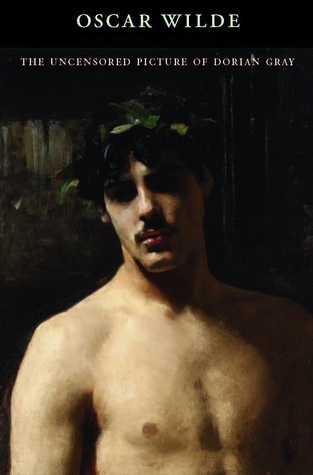
Over 120 years after Oscar Wilde submitted The Picture of Dorian Gray for publication, the uncensored version of his novel appears here for the first time in audio. This volume restores material, including instances of graphic homosexual content, removed by the novel's first editor, who feared it would be "offensive" to Victorians.

From start to finish, "The Nightingale and the Rose" is a story about the nature of love.A nightingale overhears a student complaining that his professor's daughter will not dance with him, as he is unable to give her a red rose. The nightingale visits all the rose-trees in the garden, and one of the white roses tell her that there's a way to produce a red rose, but only if the nightingale is prepared to sing the sweetest song for the rose all night, and sacrifice her life to do so.

Alternate cover edition of ISBN 9780486419251Renowned for his poetry, plays, essays, and conversational skills, Oscar Wilde also wrote scintillating works of short fiction. This volume includes four fine examples, including The Canterville Ghost, the comical tale of a spirit who terrorized the residents of Canterville Chase for three centuries. When the manor is acquired by a no-nonsense American family with no use for the supernatural, hilarity ensues.Three other stories feature "The Sphinx Without a Secret," a tale of an enigmatic woman who carries a mystery's key to her grave; "The Model Millionaire," recounting the exploits of a "delightful, ineffectual young man with a perfect profile and no profession"; and "Lord Arthur Savile's Crime," in which an aristocrat learns that he is destined to commit murder. Rounding out the volume are Wilde's lyrical Poems in Prose: "The Artist," "The Doer of Good," "The Disciple," "The Master," "The House of Judgment," and "The Teacher of Wisdom."

This magnificent new edition of Oscar Wilde's beloved tale tells the story of the selfish giant who built a wall around his beautiful garden to keep children out. It was always winter in the garden, for no other season would venture there. Then one morning, a special child brought Spring back, and the giant's heart melted along with the snow.

(sinopsis extraída de la edición con ISBN 9781475134544)El fantasma de Canterville es un relato escrito por Oscar Wilde. El mensaje que Wilde intenta expresar por medio del libro es lo preocupantes que se tornan las estructuras del materialismo, representados aquí por la familia Otis, la cual nunca se sorprende por el comportamiento del fantasma. Al contrario, intentan "combatirlo" utilizando distintos productos modernos (detergentes, aceite para cadenas, etc.) y su vida nunca es alterada, a pesar de los reiterados esfuerzos que lleva a cabo el fantasma. Éste encarna, en cierta forma, la figura del arte, porque necesita superarse constantemente y canalizarse de diferentes formas. Posteriormente, al ver inútiles sus esfuerzos, busca la máxima elevación, la que supera la Vida y la Muerte: el Amor.

The Importance of Being Earnest and Four Other Plays, by Oscar Wilde, is part of the Barnes & Noble Classics series, which offers quality editions at affordable prices to the student and the general reader, including new scholarship, thoughtful design, and pages of carefully crafted extras. Here are some of the remarkable features of Barnes & Noble New introductions commissioned from today's top writers and scholars Biographies of the authors Chronologies of contemporary historical, biographical, and cultural events Footnotes and endnotes Selective discussions of imitations, parodies, poems, books, plays, paintings, operas, statuary, and films inspired by the work Comments by other famous authors Study questions to challenge the reader's viewpoints and expectations Bibliographies for further reading Indices & Glossaries, when appropriateAll editions are beautifully designed and are printed to superior specifications; some include illustrations of historical interest. Barnes & Noble Classics pulls together a constellation of influences—biographical, historical, and literary—to enrich each reader's understanding of these enduring works. Oscar Wilde’s legendary wit dazzles in The Importance of Being Earnest, one of the greatest and most popular works of drama to emerge from Victorian England. A light-hearted satire of the absurdity of all forms and conventions, this comic masterpiece features an unforgettable cast of characters who, as critic Max Beerbohm observed, “speak a kind of beautiful nonsense—the language of high comedy, twisted into fantasy.” This collection also includes Oscar Wilde’s most famous comedies, Lady Windermere’s Fan, A Woman of No Importance, and An Ideal Husband, as well as his poetic tragedy Salomé—all written between 1891 and 1895, Wilde’s most creative period. George Bernard Shaw said of Oscar Wilde that he is “our most thorough playwright. He plays with with wit, with philosophy, with drama, with actors and audience, with the whole theater.”

Flamboyant and controversial, Oscar Wilde was a dazzling personality, a master of wit, and a dramatic genius whose sparkling comedies contain some of the most brilliant dialogue ever written for the English stage. Here in one volume are his immensely popular novel, The Picture of Dorian Gray; his last literary work, “The Ballad of Reading Gaol,” a product of his own prison experience; and four complete plays: Lady Windermere’s Fan, his first dramatic success, An Ideal Husband, which pokes fun at conventional morality, The Importance of Being Earnest, his finest comedy, and Salomé, a portrait of uncontrollable love originally written in French and faithfully translated by Richard Ellmann.Every selection appears in its entirety–a marvelous collection of outstanding works by the incomparable Oscar Wilde, who’s been aptly called “a lord of language” by Max Beerbohm.

Lord Arthur Savile's Crime and Other Stories is a collection of short semi-comic mystery stories that were written by Oscar Wilde and published in 1891. It includes Lord Arthur Savile's Crime, The Canterville Ghost, The Sphinx Without a Secret and The Model Millionaire.Written between 1887 and 1891, at the height of his creative powers, these stories confirm Oscar Wilde’s reputation as a master storyteller in their sense of fun, quick intelligence and witty dissection of Victorian society. They also reveal his compassion for the poor and downtrodden who were so readily ignored by that age.

'He was not blind to the fact that murder, like the religions of the Pagan world, requires a victim as well as a priest...'Wilde's supremely witty tale of dandies, anarchists and a murderous prophecy in London high society.Introducing Little Black Classics: 80 books for Penguin's 80th birthday. Little Black Classics celebrate the huge range and diversity of Penguin Classics, with books from around the world and across many centuries. They take us from a balloon ride over Victorian London to a garden of blossom in Japan, from Tierra del Fuego to 16th-century California and the Russian steppe. Here are stories lyrical and savage; poems epic and intimate; essays satirical and inspirational; and ideas that have shaped the lives of millions.Oscar Wilde (1854-1900). Wilde's works available in Penguin Classics are De Profundis and Other Prison Writings, The Complete Short Fiction, The Importance of Being Earnest and Other Plays, The Picture of Dorian Gray and The Soul of Man Under Socialism and Selected Critical Prose.

A renowned eccentric, dandy, and man-about-town, Oscar Wilde was foremost a dazzling wit and dramatic genius whose plays, poems, essays, and fiction contain some of the most frequently quoted quips and passages in the English language. This volume features a wide selection of Wilde’s literary output, including the comic masterpiece The Importance of Being Earnest, an immensely popular play filled with satiric epigrams that mercilessly expose Victorian hypocrisy; The Portrait of Mr. W. H., a story proposing that Shakespeare’s sonnets were inspired by the poet’s love for a young man; The House of Pomegranates, the author’s collection of fairy tales; lectures Wilde delivered, first in the United States, where he exhorted his audiences to love beauty and art, and then in England, where he presented his impressions of America; his two major literary-theoretical works, “The Decay of Lying” and “The Critic as Artist”; and a selection of verse, including his great poem The Ballad of Reading Gaol, in which Wilde famously declared that “each man kills the thing he loves.” A testament to Wilde’s incredible versatility, this collection displays his legendary wit, brilliant use of language, and penetrating insight into the human condition.

In The Soul of Man under Socialism Oscar Wilde expounds on an anarchist world view. Wilde argues that under capitalism the majority of people spoil their lives by an unhealthy and exaggerated altruism-are forced, indeed, so to spoil them: instead of realizing their true talents, they waste their time solving the social problems caused by capitalism, without taking their common cause away. Thus, caring people seriously and very sentimentally set themselves to the task of remedying the evils that they see in poverty, but their remedies do not cure the disease: they merely prolong it because, the proper aim is to try and reconstruct society on such a basis that poverty will be impossible.

For the first time in one volume, this complete collection of all the short fiction Oscar Wilde published contains such social and literary parodies as "Lord Arthur Savile's Crime" and "The Canterville Ghost;" such well-known fairy tales as "The Happy Prince," "The Young King," and "The Fisherman and his Soul;" an imaginary portrait of the dedicatee of Shakespeare's Sonnets entitled "The Portrait of Mr. W.H.;" and the parables Wilde referred to as "Poems in Prose," including "The Artist," "The House of Judgment," and "The Teacher of Wisdom."

The Picture of Dorian Gray and Other Short Stories is a compilation of short stories by Oscar Wilde, along with his only novel, The Picture of Dorian Gray. It was originally published in 1888 under the title Stories: Oscar Wilde. Some of the short stories within include "The Sphinx Without a Secret," "The Model Millionaire," and stories from the previously-published collections "A House of Pomegranates" and "The Happy Prince and Other Tales." This book is sure to interest Oscar Wilde fans and fans of Victorian literature. OSCAR WILDE (1854-1900) was a celebrated Irish-born playwright, short story writer, poet, and personality in Victorian London. He is best known for his involvement in the aesthetic movement and his only novel, The Picture of Dorian Gray, as well as his many plays, such as Lady Windermere's Fan, The Importance of Being Ernest, A Woman of No Importance, An Ideal Husband, and Salom . During his imprisonment for gross indecency, he wrote De Profundis, and later, The Ballad of Reading Gao.

"The Picture of Dorian Gray, " Wilde's only full-length novel, is the enduringly eerie fable of a portrait that ages and decays as its model remains ever young and beautiful. Dorian Gray, a naive and irresistible young man, is lured by decadent Lord Henry Wotton into a life of depravity. Dorian becomes steeped in sin, but his face remains perfect, unlined - while only his portrait, locked away, reveals the blackness of his soul.

A House of Pomegranates is a collection of whimsical short stories by Oscar Wilde. This collection includes the following tales:"The Young King""The Birthday of the Infanta" "The Fisherman and his Soul""The Star-child"Readers of all ages will be delighted by these fanciful tales.

This collection contains, too, many examples of that humorous and epigrammatic genius which captured the London theatre and, by suddenly casting light from an unexpected angle, widened the bounds of truth.

A haunting, magical fairy-tale collection, in which Oscar Wilde beautifully evokes (among others) The Happy Prince who was not so happy after all, The Selfish Giant who learned to love little children and The Star Child who did not love his parents as much as he should. Each of the stories shines with poetry and magic and will be enjoyed by children of every age.A perfect collection for children young and old, introduced by Markus Zusak, bestselling author of The Book Thief.